Lainema 14/3 g/100 ml rectal solution EFG
Spain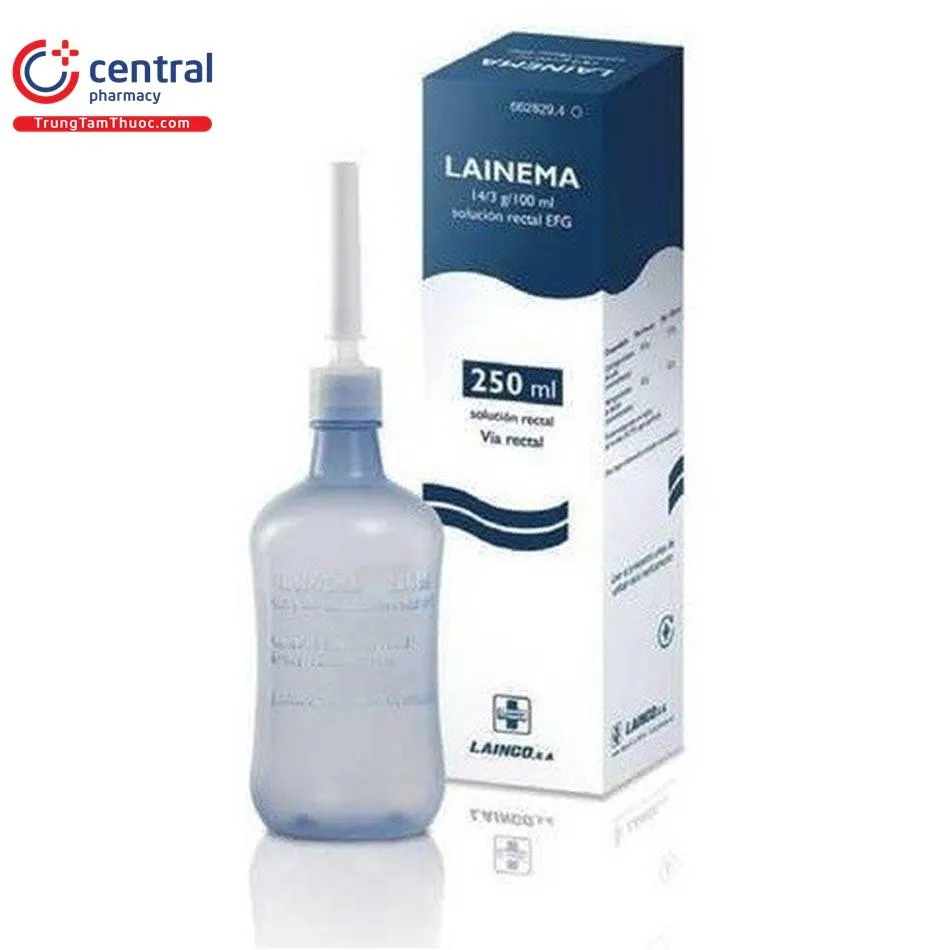
Table of Contents
- Package leaflet: Information for the user
- Introduction
- 1. What LAINEMA 14/3 g/100 ml rectal solution EFG is and what it is used for
- 2. Before using LAINEMA 14/3 g/100 ml rectal solution EFG
- 3. How to use LAINEMA 14/3 g/100 ml rectal solution EFG
- 4. Possible adverse effects
- 5. Storage of LAINEMA 14/3 g/100 ml rectal solution EFG
- 6. Additional Information
Package leaflet: Information for the user
Introduction
PACKAGE LEAFLET: INFORMATION FOR THE USER
LAINEMA 14/3 g/100 ml rectal solution EFG
sodium dihydrogen phosphate / disodium phosphate
Read the entire leaflet carefully before you start using this medicine.
- Keep this leaflet, as you may need to read it again.
- If you have any questions, ask your doctor or pharmacist.
- This medicine has been prescribed for you and should not be given to other people, even if they have the same symptoms, as it may harm them.
- If you consider any of the side effects you experience to be severe, or if you notice any side effects not listed in this leaflet, inform your doctor or pharmacist.
Leaflet contents:
- What LAINEMA 14/3 g/100 ml rectal solution EFG is and what it is used for
- Before you use LAINEMA 14/3 g/100 ml rectal solution EFG
- How to use LAINEMA 14/3 g/100 ml rectal solution EFG
- Possible side effects
- How to store LAINEMA 14/3 g/100 ml rectal solution EFG
- Further information
1. What LAINEMA 14/3 g/100 ml rectal solution EFG is and what it is used for
This medicinal product belongs to the pharmacotherapeutic group of rectally administered laxatives.
This medicine is indicated in cases where bowel evacuation is required, such as: pre- and post-surgery, childbirth and postpartum, prior to rectoscopy, sigmoidoscopy and colonoscopy (examination techniques of the large intestine), prior to radiological examinations, and fecal impaction (accumulation of hardened stools in the rectum).
2. Before using LAINEMA 14/3 g/100 ml rectal solution EFG
Do not use LAINEMA 14/3 g/100 ml rectal solution EFG
- if you are allergic (hypersensitive) to the active substances or to any of the other components of this medicine
- in children under 2 years of age
- if intestinal obstruction (inability to pass stools and gases) is suspected
- if you have megacolon (dilation of the colon), ileostomy (artificial anus), anorectal stenosis (narrowing of the rectum), imperforate anus (congenital absence or obstruction of the anal opening), or paralytic ileus (intestinal paralysis)
- if you have severe or moderate kidney problems
- if you have congestive heart failure (serious heart condition)
- if you have symptoms of appendicitis or intestinal perforation
- if you have undiagnosed rectal bleeding
- if you have uncontrolled high blood pressure (hypertension)
- if you are dehydrated, and in general, in all cases where distribution of the contents of LAINEMA in the body may be increased or its elimination reduced.
If you are in doubt about any of these conditions or about your own particular situation, consult your doctor.
Take special care with LAINEMA 14/3 g/100 ml rectal solution EFG
- If you do not have a bowel movement within 10 minutes after administration of the enema (bowel movement usually occurs about 5 minutes after administration), it is recommended that you consult your doctor, who will perform the necessary tests to minimize the risk of developing serious hyperphosphatemia.
- If you are elderly, weak, have ascites (fluid accumulation in the abdomen), anal ulcers or fissures, or suffer from kidney or heart disease.
- If you have undergone a colostomy (major colon surgery), you should consult your doctor.
-- If you have pre-existing electrolyte imbalances (altered levels of mineral salts in the body), you may develop hypocalcemia (low blood calcium levels), hypokalemia (low blood potassium levels), hyperphosphatemia (high blood phosphate levels), hypernatremia (high blood sodium levels), or acidosis.
-
- If electrolyte disorders are suspected, your doctor will perform a blood test to determine the levels of these substances before administering LAINEMA.
-
- If you experience nausea, vomiting, or abdominal pain, follow your doctor's instructions.
-
- Repeated and prolonged use of LAINEMA is not recommended, as it may lead to dependence. Do not use if symptoms worsen or persist without consulting your doctor.
-
- LAINEMA should be administered following the instructions for use and handling. Administration should be stopped if resistance is encountered, as forcing it may cause injury.
-
- If you experience rectal bleeding after administration of the enema, do not administer another enema and consult your doctor immediately.
-
- Consult your doctor if signs of irritation occur.
This medicine should not be used as a regular treatment for constipation.
Use of other medicines
Inform your doctor or pharmacist if you are taking, have recently taken, or might take any other medicines, including those obtained without a prescription, homeopathic medicines, herbal remedies, and other health-related products, as it may be necessary to interrupt treatment or adjust the dose of any of them.
It is especially important that your doctor knows if you are taking medicines for high blood pressure or angina (calcium channel blockers), medicines to empty the bladder (diuretics), medicines for certain behavioral disorders (lithium), or other drugs that may alter the balance of water or electrolytes (minerals) in the blood.
Pregnancy and breastfeeding
Consult your doctor or pharmacist before using any medicine.
Do not use this medicine during pregnancy or while breastfeeding without consulting your doctor.
If you are breastfeeding, you should express and discard the milk produced during the 24 hours following administration of LAINEMA.
Driving and using machines
This medicine does not affect your ability to drive or operate machinery.
Important information about some of the components of LAINEMA 14/3 g/100 ml rectal solution EFG
May cause allergic reactions (possibly delayed) and, exceptionally, bronchospasm, as it contains methylparahydroxybenzoate, sodium salt (E-219).
3. How to use LAINEMA 14/3 g/100 ml rectal solution EFG
Follow exactly the administration instructions provided by your doctor. Consult your doctor or pharmacist if you have any doubts.
This is a rectally administered medicine. It should be used at room temperature; there is no need to warm it.
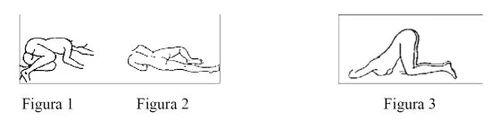
For self-administration of this medicine, it is recommended that the patient lie on their left side with both knees bent towards the chest (Figure 1), or lie with the left leg straight and the right leg bent towards the chest (Figure 2).
When this medicine is to be administered by another person, the recommended positions may be either those described for self-administration, or the position shown in Figure 3.
Remove the cap from the pre-lubricated cannula.
In the positions described above, carefully insert the cannula into the rectum to avoid damaging its wall, and gently and steadily squeeze the container until the required amount of liquid has been administered. The patient should maintain this position until a strong urge to defecate is felt. Generally, 2 to 5 minutes are sufficient to achieve the desired effect. If the product is not expelled after this time, refer to section 4: “Possible adverse effects”.
In general, the following doses are recommended:
Children
-Infants and children under 2 years: LAINEMA must not be administered to infants and children under 2 years of age; its use is contraindicated.
-Children aged 2 to 15 years: The recommended dose is a single dose of 5 ml/kg, up to a maximum of 140 ml. The maximum duration of treatment is one enema per day for no more than 6 consecutive days.
Adults
The recommended dose is a single enema of 140 ml or 250 ml. It may be administered once daily for a maximum of 6 consecutive days.
Patients over 65 years: The recommended dosage regimen is the same as for adults.
Patients with liver problems: In this case, no dose adjustment is necessary.
Patients with kidney problems: This medicine must not be administered to patients with moderate or severe kidney problems.
It should be used with caution in patients with mild kidney problems and only under medical prescription.
If you use more LAINEMA 14/3 g/100 ml rectal solution EFG than you should
In case of overdose or accidental ingestion, contact your doctor or pharmacist immediately or call the Toxicology Information Service at: 91 562 04 20, indicating the medicine and the amount ingested.
If you forget to use LAINEMA 14/3 g/100 ml rectal solution EFG
Do not use a double dose to make up for forgotten doses.
If you have any further questions about the use of this product, ask your doctor or pharmacist.
4. Possible adverse effects
Like all medicines, LAINEMA can cause adverse effects, although not everyone experiences them.
In very rare cases, tetany (painful muscle spasms in the limbs) may occur, associated with hypocalcemia (reduced calcium levels in the blood) and severe hyperphosphatemia (increased phosphorus levels in the blood). Serious cases of hyperphosphatemia associated with the administration of laxatives high in phosphates have been reported. Therefore, patients with risk factors for developing hyperphosphatemia should be monitored through laboratory tests (see section “Take special care with LAINEMA 14/3 g/100 ml rectal solution EFG”).
Patients who very rarely develop severe hyperphosphatemia may experience irritability, hypotension (low blood pressure), muscle cramps, cyanosis (bluish discoloration of the skin), tetany, tachycardia (increased heart rate), seizures, mental confusion, fatigue, weakness, or potentially, a comatose state.
The known adverse effects of LAINEMA are described below, listed according to their frequency of occurrence:
Rare adverse effects (affecting less than 1 in 1,000 patients):
Elevated phosphate levels in blood, low potassium levels in blood, elevated sodium levels in blood, low calcium levels in blood.
Very rare adverse effects (affecting less than 1 in 10,000 patients):
Tetany, hypocalcemia, severe hyperphosphatemia, blisters, stinging, itching, rectal irritation, pain.
Very common adverse effects (affecting at least 1 in 10 patients):
Transient hyperphosphatemia.
If you consider any of the adverse effects you experience to be severe, or if you notice any adverse effect not listed in this leaflet, inform your doctor or pharmacist.
5. Storage of LAINEMA 14/3 g/100 ml rectal solution EFG
No special storage conditions are required; however, in rare instances, some inorganic flocculations may appear in the solution, which in no way affect the integrity of the preparation.
Keep out of the reach and sight of children.
Do not use LAINEMA after the expiry date stated on the packaging after EXP. The expiry date refers to the last day of the month indicated.
Medicines should not be disposed of via wastewater or household waste. Ask your pharmacist how to properly dispose of any unused medicines and their packaging. This will help protect the environment.
6. Additional Information
Composition of LAINEMA 14/3 g/100 ml rectal solution EFG
Active substances per millilitre: sodium dihydrogen phosphate 139 mg, disodium phosphate 32 mg.
The other components (excipients) are: methylparahydroxybenzoate, sodium salt (E-219) and purified water.
Appearance of the medicine and contents of the pack
This medicine belongs to a group of medicines called rectal laxatives.
It is presented as a rectal solution in low-density polyethylene bottles of 80, 140 and 250 ml, together with a rectal applicator consisting of a lubricated low-density polyethylene cannula (lubricated with vaseline), a butyl anti-return valve and a low-density polyethylene cap.
Marketing Authorization Holder and Manufacturer
LAINCO, S.A. Avda. Bizet, 8-12 - 08191 Rubí (Barcelona)
This leaflet was approved in November 2025