Lacosamide Normon 50 mg film-coated tablets EFG
Spain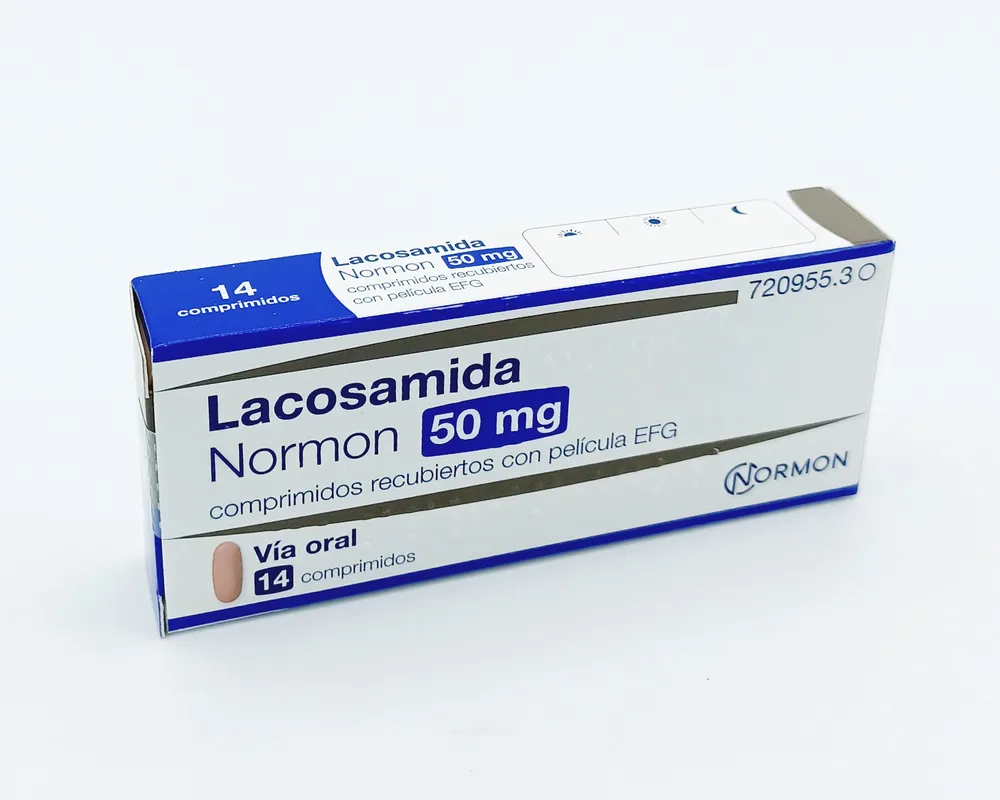
Table of Contents
- Package leaflet: Information for the user
- Introduction
- 1. What Lacosamida Normon is and what it is used for
- 2. What you need to know before starting to take Lacosamida Normon
- 3. How to take Lacosamida Normon
- 4. Possible adverse effects
- 5. Storage of Lacosamida Normon
- 6. Contents of the container and other information
Package leaflet: Information for the user
Introduction
Package leaflet: information for the patient
Lacosamida Normon 50 mg film-coated tablets EFG
Lacosamida Normon 100 mg film-coated tablets EFG
Lacosamida Normon 150 mg film-coated tablets EFG
Lacosamida Normon 200 mg film-coated tablets EFG
Read all of this leaflet carefully before you start taking this medicine, because it contains important information for you.
-
Keep this leaflet, as you may need to read it again.
-
If you have any questions, ask your doctor or pharmacist.
-
This medicine has been prescribed for you only; do not pass it on to other people, even if they have the same symptoms as you, because it may harm them.
- If you experience any adverse effects, consult your doctor or pharmacist, even if they are adverse effects not listed in this leaflet. See section 4.
Contents of this leaflet
-
What Lacosamida Normon is and what it is used for
-
What you need to know before taking Lacosamida Normon
-
How to take Lacosamida Normon
-
Possible side effects
-
Storage of Lacosamida Normon
-
Contents of the pack and other information
1. What Lacosamida Normon is and what it is used for
What is lacosamide
This medicine contains lacosamide, which belongs to a group of medicines called "antiepileptic medicines". These medicines are used to treat epilepsy.
- Your doctor has prescribed this medicine to reduce the number of seizures you experience.
What lacosamide is used for
-
Lacosamide is used:
- alone or together with other antiepileptic medicines in adults, adolescents, and children from 2 years of age onwards, to treat a certain type of epilepsy characterized by partial-onset seizures with or without secondary generalization. In this type of epilepsy, seizures affect only one side of the brain. However, they may then spread to larger areas on both sides of the brain;
-
together with other antiepileptic medicines in adults, adolescents, and children from 4 years of age onwards, to treat primary generalized tonic-clonic seizures (major seizures, with loss of consciousness) in patients with idiopathic generalized epilepsy (a type of epilepsy believed to have a genetic origin).
2. What you need to know before starting to take Lacosamida Normon
Do not take Lacosamida Normon
- if you are allergic to lacosamide or to any of the other ingredients of this medicine (listed in section 6). If you are unsure whether you are allergic, consult your doctor.
- if you have a heart rhythm problem called second- or third-degree AV block.
Do not take this medicine if either of the above applies to you. If you are unsure, consult your doctor or pharmacist before taking this medicine.
Warnings and precautions
Talk to your doctor before starting to take this medicine if:
- you have thoughts of self-harm or suicide. A small number of people being treated with antiepileptic medicines such as lacosamide have had thoughts of harming themselves or of suicide. If at any time you have such thoughts, contact your doctor immediately.
- you have a heart condition that affects your heartbeat and your pulse is often particularly slow, fast, or irregular (such as AV block, atrial fibrillation, or atrial flutter).
- you have severe heart disease such as heart failure or have had a myocardial infarction (heart attack).
- you feel dizzy or fall frequently. Lacosamide may cause dizziness, which could increase the risk of accidental injury or falls. This means you should be cautious until you are used to the effects of this medicine.
If any of the above apply to you (or you are unsure), consult your doctor or pharmacist before taking this medicine.
If you are taking Lacosamida Normon, consult your doctor if you experience a new type of seizure or a worsening of existing seizures.
If you are taking Lacosamida Normon and experience symptoms of abnormal heartbeat (such as slow, fast, or irregular heartbeat, palpitations, dyspnea (difficulty breathing), dizziness, or fainting), contact your doctor immediately (see section 4).
Children
Lacosamide is not recommended for children under 2 years of age with epilepsy characterized by partial-onset seizures, or for children under 4 years of age with generalized tonic-clonic seizures. This is because it is not yet known whether it is effective and safe in children of these age groups.
Other medicines and Lacosamida Normon
Inform your doctor or pharmacist if you are taking, have recently taken, or might need to take any other medicines.
In particular, inform your doctor or pharmacist if you are taking any of the following medicines that affect the heart, as lacosamide may also affect the heart:
- medicines used to treat heart problems.
- medicines that may increase the "PR interval" on a heart test (ECG or electrocardiogram), such as medicines for epilepsy or pain called carbamazepine, lamotrigine, or pregabalin.
- medicines used to treat certain types of arrhythmia or heart failure.
If any of the above apply to you (or you are unsure), speak with your doctor or pharmacist before taking this medicine.
Also inform your doctor or pharmacist if you are taking any of the following medicines, as they may increase or decrease the effect of lacosamide in your body:
- antifungal medicines such as fluconazole, itraconazole, or ketoconazole.
- medicines for HIV such as ritonavir.
- antibiotics such as clarithromycin or rifampicin.
- a herbal medicine used to treat mild anxiety and depression called St. John’s wort.
If any of the above apply to you (or you are unsure), speak with your doctor or pharmacist before taking lacosamide.
Taking lacosamide with alcohol
As a precaution, do not take this medicine with alcohol.
Pregnancy and breastfeeding
Women of childbearing potential should discuss the use of contraception with their doctor.
If you are pregnant or breastfeeding, think you may be pregnant, or plan to become pregnant, consult your doctor or pharmacist before using this medicine.
Lacosamide is not recommended during pregnancy, as the effects of this medicine on pregnancy and the fetus are not known.
Breastfeeding is not recommended while taking lacosamide, because lacosamide passes into breast milk.
Seek immediate advice from your doctor if you are pregnant or planning to become pregnant. They will help you decide whether or not you should take lacosamide.
Do not stop treatment without first talking to your doctor, as this could increase seizures. Worsening of your condition may also harm the fetus.
Driving and using machines
You must not drive, ride a bicycle, or operate any tools or machinery until you know how this medicine affects you. This is because lacosamide may cause dizziness or blurred vision.
3. How to take Lacosamida Normon
Follow exactly the administration instructions for this medicine as given by your doctor or pharmacist. If in doubt, consult your doctor or pharmacist again. Other formulation(s) of this medicine may be more suitable for children; please consult your doctor or pharmacist.
Taking lacosamida
- Take lacosamida twice daily, with an interval of approximately 12 hours.
- Try to take it at about the same time each day.
- Swallow the lacosamida tablet with a glass of water.
- You may take lacosamida with food or separately.
Usually, you will start with a low daily dose, and your doctor will gradually increase the dose over several weeks. Once you reach the dose that works well for you, called the “maintenance dose”, you will continue taking the same amount every day. Lacosamida is used as a long-term treatment. You must continue taking lacosamida until your doctor tells you to stop.
What dose to take
The following are the normally recommended doses of lacosamida for different age and weight groups. Your doctor may prescribe a different dose if you have kidney or liver problems.
Adolescents and children weighing 50 kg or more, and adults
When taking lacosamida alone:
The usual starting dose is 50 mg twice daily.
Your doctor may also prescribe a starting dose of 100 mg of lacosamida twice daily.
Your doctor may increase your twice-daily dose by 50 mg each week, until reaching a maintenance dose between 100 mg and 300 mg twice daily.
When taking lacosamida with other antiepileptic medicines:
The usual starting dose is 50 mg twice daily.
Your doctor may increase your twice-daily dose by 50 mg each week, until reaching a maintenance dose between 100 mg and 200 mg twice daily.
If you weigh 50 kg or more, your doctor may start lacosamida treatment with a single “loading dose” of 200 mg. You would then start taking the regular maintenance dose 12 hours later.
Children and adolescents weighing less than 50 kg
- In the treatment of partial-onset seizures: note that lacosamida is not recommended for children under 2 years of age.
- In the treatment of primary generalized tonic-clonic seizures: note that lacosamida is not recommended for children under 4 years of age.
The dose depends on body weight. Treatment is usually started with other more appropriate formulations (e.g. oral solution) and switched to tablets only if the patient is able to swallow them and can achieve the correct dose using tablets of different strengths. Your doctor will prescribe the pharmaceutical form best suited for you.
If you take more lacosamida than you should
If you have taken more lacosamida than you should, contact your doctor immediately. Do not attempt to drive.
You may experience:
- dizziness;
- feeling nauseous or vomiting;
- seizures, heart rhythm problems such as slow, fast or irregular pulse, coma, or low blood pressure with tachycardia and sweating.
If you forget to take lacosamida
- If you forget to take a dose within 6 hours of the scheduled time, take it as soon as you remember.
- If you forget to take a dose more than 6 hours after the scheduled time, do not take the missed dose; instead, take lacosamida at the next scheduled time.
- Do not take a double dose to make up for a missed dose.
If you stop taking lacosamida
- Do not stop taking lacosamida without telling your doctor, as epilepsy may return or worsen.
- If your doctor decides to discontinue your treatment with lacosamida, you will be given instructions on how to gradually reduce the dose.
If you have any further questions about the use of this medicine, ask your doctor or pharmacist.
4. Possible adverse effects
Like all medicines, lacosamide may cause adverse effects, although not everyone experiences them.
Nervous system effects, such as dizziness, may be greater after a single "loading" dose.
Inform your doctor or pharmacist if you experience any of the following effects:
Very common: may affect more than 1 in 10 people
- Headache;
- Feeling dizzy or sick (nausea);
- Double vision (diplopia).
Common: may affect up to 1 in 10 people
- Brief jerks of a muscle or group of muscles (myoclonic seizures);
- Difficulty coordinating movements or walking;
- Problems with balance, tremor, tingling (paraesthesia), or muscle spasms, tendency to fall and bruise easily;
- Memory problems, difficulty thinking or finding words, confusion;
- Rapid, uncontrolled eye movements (nystagmus), blurred vision;
- Feeling of dizziness (vertigo), sensation of drunkenness;
- Feeling dizzy (vomiting), dry mouth, constipation, indigestion, excessive gas in the stomach or intestines, diarrhoea;
- Reduced sensation, difficulty speaking, attention disturbance;
- Ringing in the ears such as buzzing, ringing, or hissing;
- Irritability, trouble sleeping, depression;
- Drowsiness, tiredness or weakness (asthenia);
- Itching, rash.
Uncommon: may affect up to 1 in 100 people
- Decreased heart rate, palpitations, irregular pulse, or other changes in the electrical activity of the heart (conduction disorder);
- Exaggerated feeling of well-being, seeing and/or hearing things that are not real;
- Allergic reaction to the medicine, hives;
- Blood tests may show abnormalities in liver function tests, liver damage;
- Thoughts of self-harm or suicide, or suicide attempt: inform your doctor immediately;
- Feeling angry or agitated;
- Abnormal thoughts or loss of sense of reality;
- Severe allergic reactions causing swelling of the face, throat, hands, feet, ankles, or lower legs;
- Fainting;
- Abnormal involuntary movements (dyskinesia).
Frequency not known: cannot be estimated from available data
- Abnormally fast heartbeat (ventricular tachyarrhythmia);
- Sore throat, high temperature, and increased frequency of infections. Blood tests may show a severe decrease in a specific type of white blood cells (agranulocytosis);
- Serious skin reaction, which may include high temperature and other flu-like symptoms, rash on the face, widespread rash with swollen lymph nodes (enlarged lymph nodes). Blood tests may show increased liver enzyme levels and an increase in a type of white blood cells (eosinophilia);
- Widespread rash with blisters and skin peeling, especially around the mouth, nose, eyes, and genitals (Stevens-Johnson syndrome), and a more severe form causing skin peeling over more than 30% of the body surface (toxic epidermal necrolysis);
- Seizures.
Other adverse effects in children
Additional adverse effects observed in children were fever (pyrexia), runny nose (nasopharyngitis), sore throat (pharyngitis), eating less than usual (decreased appetite), behavioural changes, not acting as they normally do (abnormal behaviour), and lack of energy (lethargy). Drowsiness (somnolence) is a very common side effect in children and may affect more than 1 in 10 children.
Reporting of adverse effects
If you experience any type of adverse effect, consult your doctor or pharmacist, even if it is a possible adverse effect not listed in this leaflet. You may also report them directly via the Spanish Pharmacovigilance System for Human Medicines website: www.notificaRAM.es. By reporting adverse effects, you can help provide more information on the safety of this medicine.
5. Storage of Lacosamida Normon
Keep this medicine out of the sight and reach of children.
Do not use this medicine after the expiry date stated on the carton and blister pack after EXP. The expiry date refers to the last day of the month indicated.
This medicine does not require any special storage conditions.
Medicines must not be disposed of via wastewater or household waste. Return unused medicines and their packaging to the SIGRE point at your pharmacy. If you are unsure, ask your pharmacist how to dispose of medicines and packaging you no longer need. This will help protect the environment.
6. Contents of the container and other information
Composition of Lacosamide Normon
- The active substance is lacosamide.
Lacosamide Normon 50 mg: each film-coated tablet contains 50 mg of lacosamide.
Lacosamide Normon 100 mg: each film-coated tablet contains 100 mg of lacosamide.
Lacosamide Normon 150 mg: each film-coated tablet contains 150 mg of lacosamide.
Lacosamide Normon 200 mg: each film-coated tablet contains 200 mg of lacosamide.
- The other components (excipients) are:
-
- Core: microcrystalline cellulose, silicified microcrystalline cellulose, hydroxypropylcellulose, low-substituted hydroxypropylcellulose, colloidal anhydrous silica, crospovidone and magnesium stearate.
-
- Coating: polyvinyl alcohol, titanium dioxide, macrogol, talc, red iron oxide (this excipient is only present in Lacosamide Normon 50 mg and 150 mg), yellow iron oxide (this excipient is only present in Lacosamide Normon 100 mg and 150 mg) and indigo carmine lake (this excipient is only present in Lacosamide Normon 200 mg).
-
Appearance of the product and contents of the container
- Lacosamide Normon 50 mg is presented as pink, elliptical, biconvex, film-coated tablets, engraved with “L50” on one side. Each pack contains 14 tablets.
- Lacosamide Normon 100 mg is presented as yellow, elliptical, biconvex, film-coated tablets, engraved with “L100” on one side. Each pack contains 56 tablets.
- Lacosamide Normon 150 mg is presented as salmon-coloured, elliptical, biconvex, film-coated tablets, engraved with “L150” on one side. Each pack contains 56 tablets.
- Lacosamide Normon 200 mg is presented as blue, elliptical, biconvex, film-coated tablets, engraved with “L200” on one side. Each pack contains 56 tablets.
Marketing Authorization Holder and Manufacturer
Laboratorios Normon, S.A.
Ronda de Valdecarrizo, 6
28760 Tres Cantos — Madrid
Spain
Date of the most recent review of this summary: November 2023
Detailed information on this medicine is available on the website of the Spanish Agency of Medicines and Medical Devices (AEMPS) http://www.aemps.gob.es/.