Ketoisdin 20 mg/g cream
Spain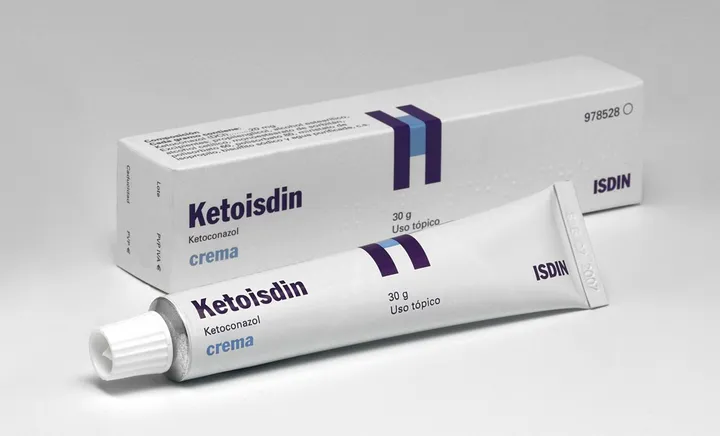
Table of Contents
Patient Information Leaflet
Introduction
Patient Information Leaflet
Ketoisdin 20 mg/g cream
ketoconazole
Read the entire leaflet carefully before you start using this medicine, as it contains important information for you.
-
Keep this leaflet as you may need to read it again.
-
If you have any questions, ask your doctor or pharmacist.
-
This medicine has been prescribed for you only, and you should not give it to other people, even if they have the same symptoms as you, because it may harm them.
-
If you experience any adverse effects, consult your doctor or pharmacist, even if they are adverse effects not listed in this leaflet. See section 4.
Leaflet Contents
- What Ketoisdin is and what it is used for
- What you need to know before using Ketoisdin
- How to use Ketoisdin
- Possible side effects
- How to store Ketoisdin
- Contents of the pack and other information
1. What Ketoisdin is and what it is used for
Ketoconazole belongs to a group of medicines called antifungals (medicines used to treat infections caused by fungi and yeasts).
This medicine is indicated in adults for the treatment of the following superficial skin infections:
- Cutaneous candidiasis, infections that typically affect warm, moist areas of the skin and mucous membranes.
- Pityriasis versicolor, a condition characterized by the appearance of discolored patches distributed across the skin.
- Seborrheic dermatitis, a condition affecting mainly the face and chest, causing redness and flaking of the skin.
- Tinea infections, which can affect the trunk (tinea corporis), groin (tinea cruris), feet (tinea pedis), and hands (tinea manuum).
2. What you need to know before using Ketoisdin
Do not use Ketoisdin
- If you are allergic to ketoconazole or to any of the other ingredients of this medicine (listed in section 6).
Warnings and precautions
Talk to your doctor or pharmacist before starting to use Ketoisdin.
For external use only. Contact with the eyes must be avoided. If accidental contact with the eyes occurs, rinse thoroughly with water and consult an ophthalmologist if necessary.
If you are using corticosteroid creams, ointments, or lotions, inform your doctor or pharmacist before starting treatment with this medicine. You may begin treatment with this medicine, but you must not stop applying the corticosteroid abruptly. The skin may react, causing redness or itching. Continue your treatment as follows:
- apply a mild corticosteroid to the skin in the morning and Ketoisdin cream in the evening for one week;
- subsequently, apply the corticosteroid in the morning every two or three days, and this medicine in the evening for 1 to 2 weeks;
- then discontinue the corticosteroid completely and, if necessary, continue using only this medicine.
In case of an allergic reaction, wash the cream off the skin, stop treatment immediately, and consult your doctor without delay.
Children
The safety and efficacy of ketoconazole cream in children have not been established.
Other medicines and Ketoisdin
Inform your doctor or pharmacist if you are taking, have recently taken, or might need to use any other medicines.
Pregnancy and breastfeeding
If you are pregnant or breastfeeding, think you may be pregnant, or are planning to become pregnant, consult your doctor or pharmacist before using this medicine.
As a precautionary measure, it is preferable to avoid using this medicine during pregnancy and breastfeeding.
Driving and using machines
Given the characteristics of this medicine, no effect on driving or operating machinery is expected.
Ketoisdin contains propylene glycol, cetyl alcohol, and stearyl alcohol.
This medicine contains 200 mg of propylene glycol per gram. Propylene glycol may cause skin irritation. This medicine contains propylene glycol; do not use on open wounds or large areas of damaged skin (such as burns) without consulting your doctor or pharmacist first. This medicine may cause local skin reactions (such as contact dermatitis) because it contains cetyl alcohol and stearyl alcohol.
3. How to use Ketoisdin
Follow exactly the instructions for use of this medicine given by your doctor. If in doubt, consult your doctor or pharmacist again.
This medicine should be applied once or twice daily, depending on the type of infection.
The recommended dosage is:
- Cutaneous candidiasis: 2 to 3 weeks
- Pityriasis versicolor: 2 to 3 weeks
- Tinea corporis (ringworm of the body): 3 to 4 weeks
- Tinea cruris (jock itch): 2 to 4 weeks
- Tinea pedis (athlete's foot): 4 to 6 weeks
- Tinea manuum (ringworm of the hands): your doctor will advise you on how and for how long this medicine should be applied.
For skin infections with reddish-brown patches and yellow or white scaling (seborrheic dermatitis), apply Ketoisdin cream once or twice daily. Skin infections usually improve within 2 to 4 weeks.
You will usually notice signs of improvement within 4 weeks. If this does not occur, speak with your doctor.
Continue using the cream for a few days after all symptoms have disappeared.
Sometimes it is necessary to apply the cream once a week or once every two weeks, even after the skin has completely healed. This helps prevent symptoms from recurring.
Elderly patients
There are no specific dosage recommendations for these patients.
Method of administration
For topical use only.
Wash and dry the infected skin area before applying the medicine. Gently rub the cream into the skin using the fingertips. Do not treat only the infected area—also apply the cream to the surrounding skin. Wash your hands thoroughly after applying the cream (this is important to avoid spreading the infection to other parts of the body or to other people).
To open the tube, unscrew the cap and use the top of the cap to pierce the seal of the tube.
If you use more Ketoisdin than you should
If you apply more Ketoisdin than your doctor has instructed, you may experience a burning sensation, redness, or swelling, which will disappear once treatment is discontinued.
This medicine must not be ingested. If accidentally swallowed, contact your doctor.
In case of overdose or accidental ingestion, contact your doctor or pharmacist immediately, or call the Toxicology Information Service at telephone number 91 562 04 20, indicating the medicine and the amount taken.
If you forget to use Ketoisdin
Do not apply a double dose to make up for forgotten doses.
If you stop using Ketoisdin
Do not interrupt treatment without consulting your doctor, as symptoms of your condition may return or worsen.
If you have any further questions about the use of this medicine, ask your doctor or pharmacist.
4. Possible adverse effects
Like all medicines, this medicine can cause adverse effects, although not everyone will experience them.
Frequent adverse effects (may affect up to 1 in 10 patients)
- Sensation of burning on the skin.
- Redness of the skin at the application site.
- Itching at the site of administration.
Uncommon adverse effects (may affect up to 1 in 100 patients)
- Allergic reactions (hypersensitivity).
- Localized eczema (contact dermatitis).
- Skin rash.
- Skin eruption.
- Skin peeling (desquamation).
- Sticky, oily skin.
- Other reactions at the site of administration: bleeding, discomfort, dryness, swelling, irritation, paresthesia (tingling, numbness).
Adverse effects of unknown frequency (cannot be estimated from the available data)
- Urticaria.
Reporting of adverse effects
If you experience any type of adverse effect, consult your doctor or pharmacist, even if it is a possible adverse effect not listed in this leaflet. You may also report them directly via the Spanish Pharmacovigilance System for Human Medicines: https://www.notificaram.es. By reporting adverse effects, you can help provide more information on the safety of this medicine.
5. Storage of Ketoisdin
Keep this medicine out of the sight and reach of children.
Do not use this medicine after the expiry date stated on the carton and on the tube after EXP. The expiry date refers to the last day of the month indicated.
Store below 25°C.
Do not use this medicine if you notice any signs of deterioration.
Medicines must not be disposed of via wastewater or household waste. Return unused medicines and their packaging to the SIGRE point at your pharmacy. If you are unsure, please ask your pharmacist how to dispose of medicines and packaging you no longer need. This will help protect the environment.
6. Contents of the pack and other information
Composition of Ketoisdin
-
The active substance is ketoconazole. Each gram of cream contains 20 mg of ketoconazole.
-
The other components (excipients) are:
-
propylene glycol,
-
stearyl alcohol,
-
cetyl alcohol,
-
sorbitan monostearate,
-
polysorbate 60,
-
polysorbate 80,
-
isopropyl myristate,
-
sodium sulfite (E-221), and
-
purified water.
Appearance of the medicinal product and contents of the pack
White, homogeneous cream.
This medicine is available in 30-gram tubes.
Marketing Authorization Holder
Isdin S.A.
Provençals, 33
08019-Barcelona
Spain
Manufacturer
Kern Pharma, S.L.
Venus, 72 – Pol. Ind. Colón II
08228 Terrassa- Barcelona
Spain
Date of the most recent review of this leaflet: March 2021
Detailed and up-to-date information on this medicine is available on the website of the Spanish Agency of Medicines and Health Products (AEMPS) http://www.aemps.gob.es/