Kesimpta 20 mg solution for injection in pre-filled pen
Spain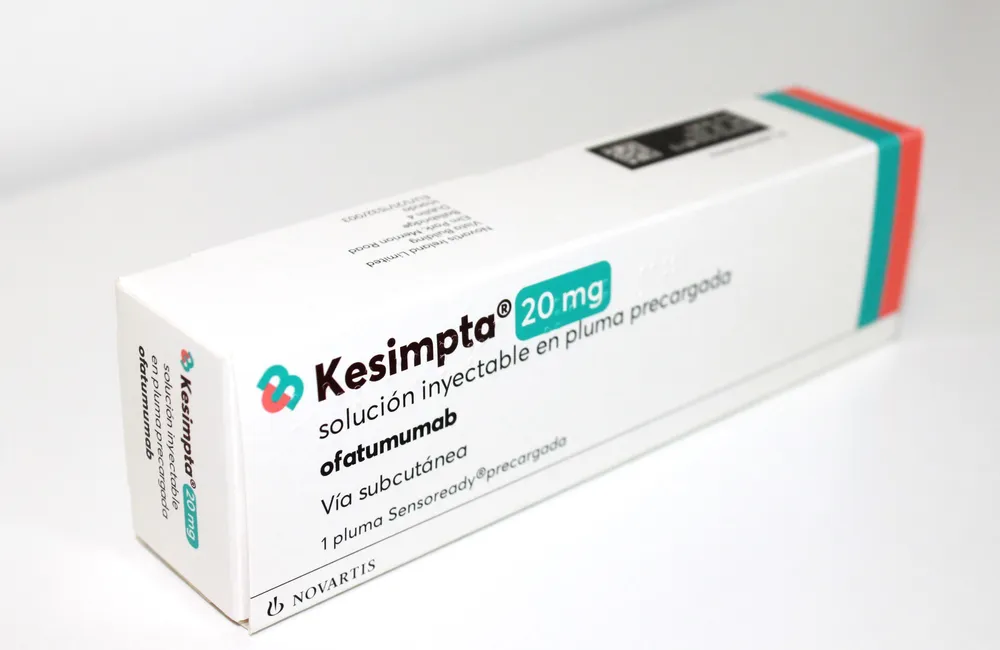
Instructions for Use
Package leaflet: Information for the user
Introduction
Package leaflet: information for the patient
Kesimpta 20 mg solution for injection in a pre-filled pen
ofatumumab
Read all of this leaflet carefully before you start using this medicine, because it contains important information for you.
- Keep this leaflet, as you may need to read it again.
- If you have any questions, ask your doctor, pharmacist or nurse.
- This medicine has been prescribed for you only, and you should not give it to other people, even if they have the same symptoms as you, because it may harm them.
- If you experience any adverse reactions, consult your doctor, pharmacist or nurse, even if they are adverse reactions not listed in this leaflet. See section 4.
Contents of this leaflet
- What Kesimpta is and what it is used for
- What you need to know before using Kesimpta
- How to use Kesimpta
- Possible side effects
- How to store Kesimpta
- Contents of the pack and other information
1. What Kesimpta is and what it is used for
What Kesimpta is
Kesimpta contains the active substance ofatumumab. Ofatumumab belongs to a group of medicines known as monoclonal antibodies.
What Kesimpta is used for
Kesimpta is used to treat adults with relapsing forms of multiple sclerosis (RMS).
How Kesimpta works
Kesimpta works by binding to a target known as CD20 located on the surface of B-lymphocytes. B-lymphocytes are a type of white blood cell that are part of the immune system (the body's defences). In multiple sclerosis, the immune system attacks the protective layer surrounding nerve cells. B-lymphocytes are involved in this process. Kesimpta targets B-lymphocytes and eliminates them. This reduces the likelihood of relapses, alleviates symptoms, and slows the progression of the disease.
2. What you need to know before using Kesimpta
Do not use Kesimpta
- if you are allergic to ofatumumab or to any of the other ingredients of this medicine (listed in section 6).
- if you have been diagnosed with serious problems in your immune system.
- if you have a severe infection.
- if you have cancer.
Warnings and precautions
Talk to your doctor before starting to use Kesimpta
- Kesimpta may cause reactivation of the hepatitis B virus. Your doctor will perform a blood test to check whether you are at risk of hepatitis B infection. If the test shows that you have had hepatitis B or are a carrier of the hepatitis B virus, your doctor will ask you to see a specialist.
- Before starting treatment with Kesimpta, your doctor may check your immune system.
- If you have an infection, your doctor may decide that you cannot use Kesimpta or that you should delay treatment with Kesimpta until the infection has resolved.
- Your doctor will check whether you need any vaccinations before starting treatment with Kesimpta. If you need a type of vaccine known as a live or live attenuated vaccine, it should be given at least 4 weeks before starting treatment with Kesimpta. Other types of vaccines should be given at least 2 weeks before starting treatment with Kesimpta.
While using Kesimpta
Inform your doctor:
- if you experience a systemic reaction related to the injection or a local reaction at the injection site. These are the most common side effects of treatment with Kesimpta and are described in section 4. They usually occur within 24 hours after injecting Kesimpta, especially after the first injection. The first injection should be administered under the supervision of a healthcare professional.
- if you have an infection. You may be more prone to infections, or if you already have an infection, it could worsen. This is because the immune cells affected by Kesimpta also help fight infections. Infections could be serious and sometimes even life-threatening.
- if you plan to get vaccinated. Your doctor will inform you whether the vaccine you need is a live vaccine, a live attenuated vaccine, or another type of vaccine. During treatment with Kesimpta, live or live attenuated vaccines must not be administered, as they could cause you an infection. Other types of vaccines may not work as well if given during treatment with Kesimpta.
Inform your doctor immediately if you experience any of the following symptoms during treatment with Kesimpta, as they could be signs of a serious illness:
- if you develop rash, hives, difficulty breathing, swelling of the face, eyelids, lips, mouth, tongue, or throat, chest tightness, or feel weak. These may be signs or symptoms of an allergic reaction.
- if you think your multiple sclerosis is worsening (e.g., weakness or changes in vision) or if you notice any new or unusual symptoms. These effects may indicate a rare brain disorder known as progressive multifocal leukoencephalopathy (PML), which is caused by a viral infection.
Children and adolescents
Do not give this medicine to children and adolescents under 18 years of age, as Kesimpta has not yet been studied in this age group.
Other medicines and Kesimpta
Tell your doctor or pharmacist if you are taking, have recently taken, or might need to take any other medicines.
In particular, inform your doctor or pharmacist:
- if you are taking, have recently taken, or might need to take medicines that affect the immune system. This is because their effects on the immune system could be additive.
- if you plan to get vaccinated (see above “Warnings and precautions”).
Pregnancy and breastfeeding
If you are pregnant or breastfeeding, think you may be pregnant, or plan to become pregnant, consult your doctor before using this medicine.
Pregnancy
You should avoid becoming pregnant while using Kesimpta and for 6 months after stopping treatment.
If you are a woman of childbearing potential, you should use an effective method of contraception during treatment and for 6 months after stopping treatment with Kesimpta. Discuss available options with your doctor.
If you become pregnant or think you may be pregnant during treatment or within 6 months after the last dose, inform your doctor immediately. Your doctor will inform you about the potential risks of Kesimpta during pregnancy. This is because Kesimpta can reduce the number of immune system cells (B-lymphocytes) in both the mother and the fetus. Your doctor must report your pregnancy to Novartis. You may also report your pregnancy by contacting the local Novartis representative (see section 6), in addition to informing your doctor.
Breastfeeding
Kesimpta may pass into breast milk. Consult your doctor about the benefits and risks before breastfeeding while using Kesimpta.
Vaccination of newborn babies
Consult your doctor or pharmacist before vaccinating your newborn baby if you have used Kesimpta during pregnancy (see above “Warnings and precautions”).
Driving and using machines
Kesimpta is unlikely to affect your ability to drive or use machines.
Kesimpta contains sodium
This medicine contains less than 1 mmol of sodium (23 mg) per dose; hence, it is essentially “sodium-free”.
Kesimpta contains polysorbate 80
This medicine contains 0.08 mg of polysorbate 80 per dose. Polysorbates may cause allergic reactions. Inform your doctor if you have any known allergies.
3. How to use Kesimpta
Follow exactly the instructions for using this medicine as given by your doctor. If in doubt, consult your doctor or pharmacist again.
Kesimpta is administered by subcutaneous injection (injection under the skin).
The first injection should be performed under the guidance of a healthcare professional.
Kesimpta pre-filled pens are for single use only.
Detailed instructions on how to inject Kesimpta can be found in the section “Instructions for use of Kesimpta in Sensoready Pen” at the end of this leaflet.
‘QR code to be included’ + www.kesimpta.eu
You may use Kesimpta at any time of day (morning, afternoon, or night).
How much Kesimpta and how often to administer
Do not exceed the dose prescribed by your doctor.
- The initial dose is 20 mg of Kesimpta administered on the first day of treatment (Week 0), and then after 1 week and 2 weeks (Week 1 and Week 2). After these first 3 injections, no injection should be administered the following week (Week 3).
- The recommended dose is 20 mg of Kesimpta once a month, starting at Week 4.
Time | Dosage |
Week 0 (first day of treatment) | 20 mg |
Week 1 | 20 mg |
Week 2 | 20 mg |
Week 3 | No injection |
Week 4 | 20 mg |
Thereafter, every month | 20 mg |
How long to use Kesimpta
Continue using Kesimpta every month for as long as your doctor tells you to.
Your doctor will periodically monitor your disease status to check whether the treatment is having the desired effect.
If you have any questions about how long you should use Kesimpta, ask your doctor, pharmacist, or nurse.
If you use more Kesimpta than you should
If you have administered too much Kesimpta, inform your doctor immediately.
If you forget to use Kesimpta
To get the full benefit from Kesimpta, it is important that you administer each injection on time.
If you have forgotten to give yourself a Kesimpta injection, you should administer it as soon as possible. Do not wait until your next scheduled dose. The administration times for subsequent injections should then be calculated from the day you administered this missed dose, and not based on the original schedule (see also the previous section “How much Kesimpta and how often is it administered”).
If you stop using Kesimpta
Do not stop treatment with Kesimpta or change your dose without first discussing it with your doctor.
Some adverse effects may be related to low levels of B-lymphocytes in the blood. After stopping treatment with Kesimpta, your blood B-lymphocyte levels will gradually increase until they return to normal. This may take several months, during which you may still experience some of the adverse effects described in this leaflet.
If you have any other questions about the use of this medicine, ask your doctor or pharmacist.
4. Possible adverse effects
Like all medicines, this medicine may cause adverse effects, although not everybody gets them.
Listed below are the adverse effects of Kesimpta. If any of these adverse effects affect you severely, inform your doctor, pharmacist or nurse.
Very common (may affect more than 1 in 10 people)
- upper respiratory tract infections, with symptoms such as sore throat and runny nose
- injection-related reactions such as fever, headache, muscle pain, chills and fatigue – these usually occur within 24 hours after a Kesimpta injection and mainly after the first injection
- urinary tract infections
- injection site reactions such as redness, pain, itching and swelling at the injection site
Common (may affect up to 1 in 10 people)
- decrease in blood levels of a protein known as immunoglobulin M, which helps protect against infections
- oral herpes
- nausea, vomiting (reported in association with injection-related reactions)
Frequency not known (cannot be estimated from available data)
- allergic reactions, with symptoms such as rash, hives, difficulty breathing, swelling of the face, eyelids, lips, mouth, tongue or throat, chest tightness, or feeling weak
Reporting of adverse effects
If you experience any adverse effect, consult your doctor or pharmacist, even if it is a possible adverse effect not listed in this leaflet. You may also report them directly through the national reporting system listed in Appendix V. By reporting adverse effects, you can help provide more information on the safety of this medicine.
5. Storage of Kesimpta
Keep this medicine out of the sight and reach of children.
Do not use this medicine after the expiry date which is stated on the carton after CAD and on the label after EXP. The expiry date refers to the last day of the month indicated.
Store the pre-filled pen(s) in the outer packaging to protect them from light. Store in a refrigerator (between 2 °C and 8 °C). Do not freeze.
If necessary, Kesimpta may be kept out of the refrigerator for a single period of up to 7 days at room temperature (not above 30 °C). If not used within this period, Kesimpta may be returned to the refrigerator for up to 7 days.
Do not use this medicine if you notice that the solution contains visible particles or is cloudy.
Medicines should not be disposed of via wastewater or household waste. Ask your pharmacist how to dispose of medicines and packaging that you no longer need. This will help protect the environment.
6. Contents of the container and other information
Composition of Kesimpta
- The active substance is ofatumumab. Each pre-filled pen contains 20 mg of ofatumumab.
- The other components are L-arginine, sodium acetate trihydrate, sodium chloride, polysorbate 80 (E 433), disodium edetate dihydrate, hydrochloric acid (for pH adjustment) and water for injections.
Appearance of the product and contents of the container
Kesimpta injectable solution is a solution ranging from transparent to slightly opalescent, and from colourless to yellowish-brown.
Kesimpta is available in single packs containing 1 Sensoready pre-filled pen and in multiple packs consisting of 3 boxes, each containing 1 Sensoready pre-filled pen.
Only certain pack sizes may be marketed.
Marketing Authorization Holder
Novartis Europharm Limited
Vista Building
Elm Park, Merrion Road
Dublin 4
Ireland
Manufacturer
Novartis Farmacéutica, S.A.
Gran Via de les Corts Catalanes, 764
08013 Barcelona
Spain
Novartis Pharma GmbH
Sophie-Germain-Strasse 10
90443 Nürnberg
Germany
For more information about this medicinal product, please contact the local representative of the Marketing Authorization Holder:
Belgium/Belgium/Belgium Novartis Pharma N.V. Tel/Tel: +32 2 246 16 11 | Lithuania SIA Novartis Baltics Lithuania branch Tel: +370 5 269 16 50 |
| Luxembourg/Luxembourg Novartis Pharma N.V. Tél/Tel: +32 2 246 16 11 |
Czech Republic Novartis s.r.o. Tel: +420 225 775 111 | Hungary Novartis Hungária Kft. Tel.: +36 1 457 65 00 |
Denmark Novartis Healthcare A/S Tlf.: +45 39 16 84 00 | Malta Novartis Pharma Services Inc. Tel: +356 2122 2872 |
Germany Novartis Pharma GmbH Tel: +49 911 273 0 | Netherlands Novartis Pharma B.V. Tel: +31 88 04 52 111 |
Estonia SIA Novartis Baltics Estonia branch Tel: +372 66 30 810 | Norway Novartis Norge AS Tlf: +47 23 05 20 00 |
Greece Novartis (Hellas) A.E.B.E. Tel: +30 210 281 17 12 | Austria Novartis Pharma GmbH Tel: +43 1 86 6570 |
Spain Novartis Farmacéutica, S.A. Tel: +34 93 306 42 00 | Poland Novartis Poland Sp. z o.o. Tel.: +48 22 375 4888 |
France Novartis Pharma S.A.S. Tél: +33 1 55 47 66 00 | Portugal Novartis Farma - Produtos Farmacêuticos, S.A. Tel: +351 21 000 8600 |
Croatia Novartis Hrvatska d.o.o. Tel. +385 1 6274 220 | Romania Novartis Pharma Services Romania SRL Tel: +40 21 31299 01 |
Ireland Novartis Ireland Limited Tel: +353 1 260 12 55 | Slovenia Novartis Pharma Services Inc. Tel: +386 1 300 75 50 |
Iceland Vistor ehf. Tel: +354 535 7000 | Slovakia Novartis Slovakia s.r.o. Tel: +421 2 5542 5439 |
Italy Novartis Farma S.p.A. Tel: +39 02 96 54 1 | Finland Novartis Finland Oy Puh/Tel: +358 (0)10 6133 200 |
Cyprus Novartis Pharma Services Inc. Tel: +357 22 690 690 | Sweden Novartis Sverige AB Tel: +46 8 732 32 00 |
Latvia SIA Novartis Baltics Tel: +371 67 887 070 |
Date of the most recent review of this leaflet:
Other sources of information
Detailed information on this medicine is available on the European Medicines Agency website: https://www.ema.europa.eu.
Instructions for use of Kesimpta in Sensoready pen
It is important that you understand and follow these instructions before injecting yourself with Kesimpta. If you have any questions, consult your doctor, pharmacist, or nurse before using Kesimpta for the first time.
Remember:
- Do not use the pen if the seal on the carton or the seal on the pen is broken. Keep the pen in its sealed carton until you are ready to use it.
- Do not shake the pen.
- If the pen is dropped, do not use it if it appears damaged, or if it was dropped without the cap in place.
- Dispose of the used pen immediately after use. Do not reuse a pen. See the section “How should I dispose of the used Kesimpta Sensoready pen?” at the end of these Instructions for Use.
How should I store Kesimpta?
- Keep the pen carton in the refrigerator at between 2 °C and 8 °C.
- Keep the pen in its original packaging to protect it from light, until you are ready to use it.
- Do not freeze the pen.
Keep Kesimpta out of the sight and reach of children.
Parts of the Kesimpta Sensoready pen (see Image A):
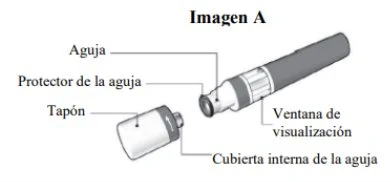
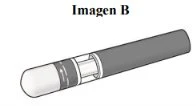
The Kesimpta Sensoready pen is shown with the cap removed. Do not remove the cap until you are ready for injection.
What you need for the injection: Included in the box:
|
|
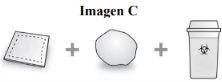
Not included in the pack (see Image C):
See the section “How should I dispose of the used Kesimpta Sensoready Pen?” at the end of these Instructions for Use. |
|
Before injection:
Remove the pen from the refrigerator 15 to 30 minutes before injection so it can reach room temperature.
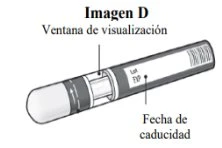
Step 1. Important safety checks before administering the injection (see Image D):
Do not use the pen if the liquid contains visible particles or is cloudy. You may see a small air bubble, which is normal.
Contact your pharmacist or healthcare professional if the pen does not meet any of these criteria. |
|
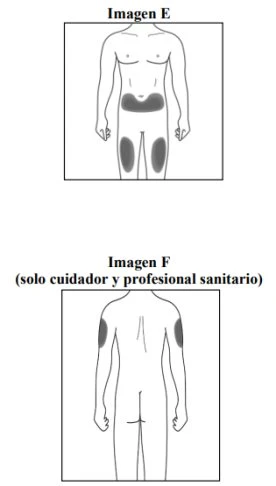
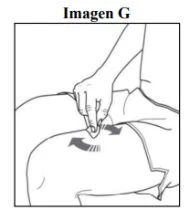
Step 2. Choose the injection site:
|
|
Step 3. Clean the injection site:
|
|
Your injection
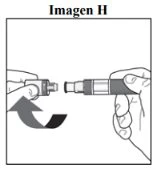
Step 4. Remove the cap:
You may notice a drop of medication at the needle tip. This is normal. |
|
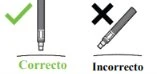
Step 5. Hold the pen:
|
|
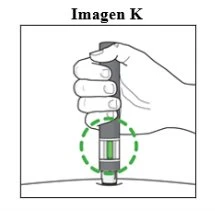
Important: During the injection, you will hear two loud clicks:
You must keep the pen firmly pressed against the skin until the green indicator fills the window and has stopped moving. |
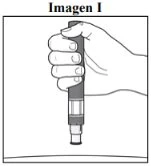
Step 6. Start the injection:
|
|
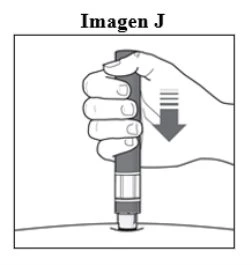
Step 7. Complete the injection:
|
|
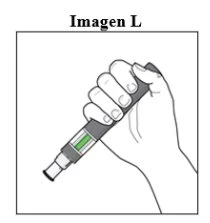
After injection:
|
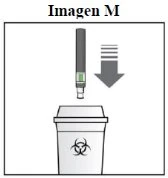
How should I dispose of the used Kesimpta Sensoready pen?
Step 8. Remove the Kesimpta Sensoread pen:
Keep the sharps disposal container out of reach of children. |
|
This page has been machine-translated and may contain inaccuracies. The original data is available in the manufacturing country's language.
Last data check: May 18, 2026 · Data source: CIMA — AEMPS