Keppra 250 mg film-coated tablets
Spain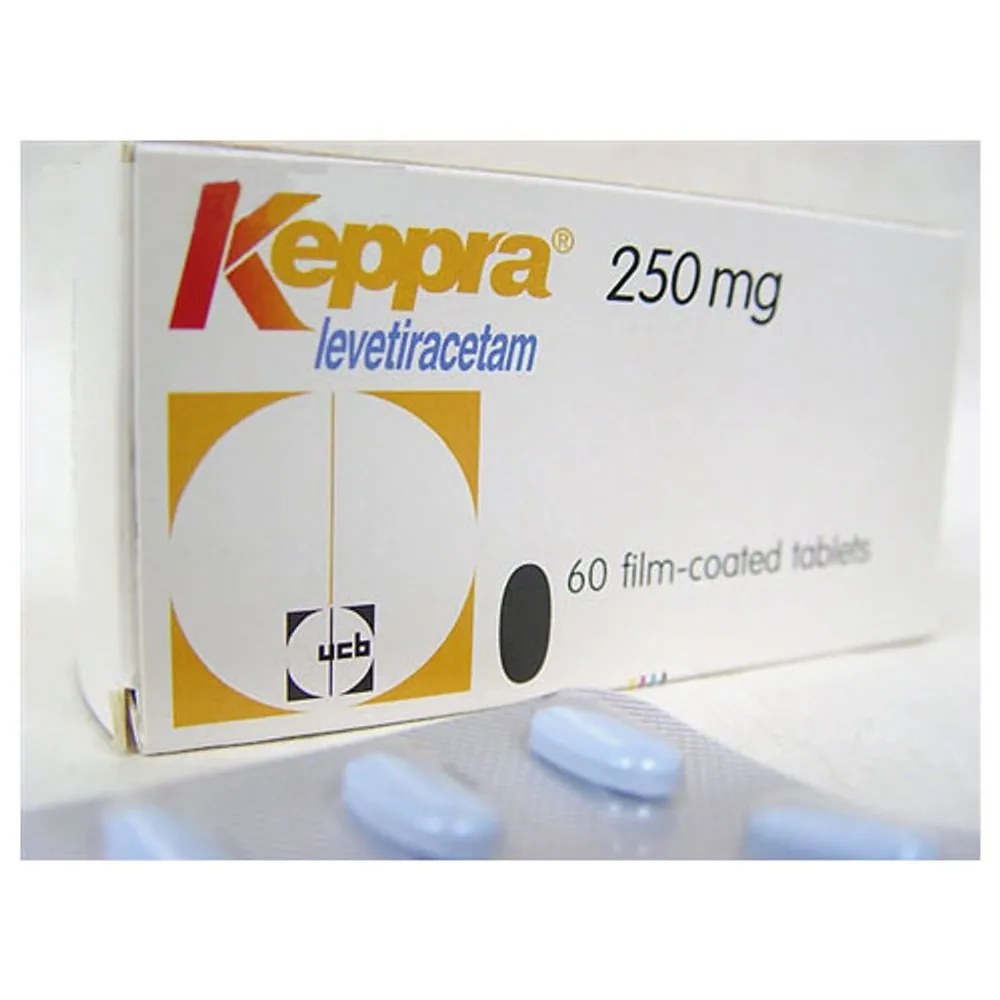
Table of Contents
Package leaflet: Information for the patient
Introduction
Package leaflet: information for the patient
Keppra 250 mg film-coated tablets
Keppra 500 mg film-coated tablets
Keppra 750 mg film-coated tablets
Keppra 1000 mg film-coated tablets
Levetiracetam
Read the entire leaflet carefully before you or your child starts taking this medicine, because it contains important information for you.
-
Keep this leaflet, as you may need to read it again.
-
If you have any questions, ask your doctor or pharmacist.
-
This medicine has been prescribed for you only, and you should not give it to others, even if they have the same symptoms as you, because it may harm them.
-
If you experience any adverse reactions, consult your doctor or pharmacist, even if they are adverse reactions not listed in this leaflet. See section 4.
Leaflet contents
- What Keppra is and what it is used for
- What you need to know before taking Keppra
- How to take Keppra
- Possible side effects
- How to store Keppra
- Contents of the pack and other information
1. What Keppra is and what it is used for
Levetiracetam is an antiepileptic medicine (a medicine used to treat seizures in epilepsy).
Keppra is used:
- as monotherapy in adults and adolescents 16 years of age or older with newly diagnosed epilepsy to treat a specific form of epilepsy. Epilepsy is a condition in which patients experience seizures. Levetiracetam is used for the type of epilepsy in which seizures initially affect only one side of the brain but may subsequently spread to broader areas on both sides of the brain (partial-onset seizures with or without secondary generalization). Your doctor has prescribed levetiracetam to reduce the number of seizures.
- in combination with other antiepileptic medicines to treat:
- partial-onset seizures with or without generalization in adults, adolescents, children, and infants from 1 month of age.
- myoclonic seizures (brief, shock-like jerks of a muscle or group of muscles) in adults and adolescents 12 years of age and older with juvenile myoclonic epilepsy.
- primary generalized tonic-clonic seizures (major seizures, including loss of consciousness) in adults and adolescents 12 years of age and older with idiopathic generalized epilepsy (a type of epilepsy believed to have a genetic cause).
2. What you need to know before taking Keppra
Do not take Keppra
- If you are allergic to levetiracetam, to pyrrolidone derivatives, or to any of the other ingredients of this medicine (listed in section 6).
Warnings and precautions
Talk to your doctor before taking Keppra
- If you have kidney problems, follow your doctor's instructions, as your dose may need to be adjusted.
- If you notice any growth delay in your child or unexpected development of puberty, contact your doctor.
- A small number of people taking antiepileptic medicines such as Keppra have had thoughts of harming themselves or suicide. If you experience any symptoms of depression and/or suicidal thoughts, contact your doctor immediately.
- If you have a personal or family history of irregular heartbeat (seen on electrocardiogram), or if you have a disease and/or are taking treatment that may make you prone to cardiac arrhythmias or electrolyte imbalances.
Inform your doctor or pharmacist if any of the following adverse effects worsen or last longer than a few days:
- Abnormal thoughts, feeling irritable, or reacting more aggressively than usual, or if you or your family and friends notice significant changes in mood or behaviour.
- Worsening of epilepsy:
Rarely, epileptic seizures may worsen or occur more frequently, especially during the first month after starting treatment or increasing the dose.
In a very rare early-onset form of epilepsy (epilepsy associated with SCN8A mutations) causing multiple seizure types and loss of skills, seizures may persist or worsen during treatment.
If you experience any of these new symptoms while taking Keppra, seek medical advice as soon as possible.
Children and adolescents
- Treatment with Keppra alone (monotherapy) is not indicated in children and adolescents under 16 years of age.
Taking Keppra with other medicines
Inform your doctor or pharmacist if you are taking, have recently taken, or might need to take any other medicines.
Do not take macrogol (a medicine used as a laxative) within one hour before or one hour after taking levetiracetam, as it may reduce its effectiveness.
Pregnancy and breastfeeding
If you are pregnant or breastfeeding, think you may be pregnant, or are planning to become pregnant, consult your doctor before using this medicine. Levetiracetam should only be used during pregnancy if, after careful evaluation, your doctor considers it necessary.
Do not stop your treatment without first discussing it with your doctor.
The risk of birth defects for the baby cannot be completely ruled out. Two studies do not suggest an increased risk of autism or intellectual disability in children born to mothers treated with levetiracetam during pregnancy. However, available data on the impact of levetiracetam on infant neurological development are limited.
Breastfeeding is not recommended during treatment.
Driving and using machines
Keppra may affect your ability to drive or operate tools or machinery, as it may cause drowsiness. This is more likely at the beginning of treatment or when the dose is increased. You should not drive or use machinery until you are certain that your ability to perform these activities is not impaired.
Keppra 750 mg tablets contain the colour sunset yellow FCF (E110).
Sunset yellow FCF (E110) may cause allergic reactions.
Keppra contains sodium
This medicine contains less than 1 mmol of sodium (23 mg) per tablet; i.e., essentially “sodium-free”.
3. How to take Keppra
Follow exactly the instructions for using this medicine as given by your doctor or pharmacist. If you are unsure, consult your doctor or pharmacist again.
Take the number of tablets prescribed by your doctor.
Keppra should be taken twice daily, once in the morning and once in the evening, approximately at the same time each day.
Concomitant therapy and monotherapy (from 16 years of age)
- Adults (≥18 years) and adolescents (12 to 17 years) weighing 50 kg or more:
Recommended dose: between 1,000 mg and 3,000 mg per day.
When you first start taking Keppra, your doctor will prescribe a lower dose for the first 2 weeks before increasing to the lowest daily dose.
For example: for a daily dose of 1,000 mg, your initial reduced dose is 1 tablet of 250 mg in the morning and 1 tablet of 250 mg in the evening, and the dose should be gradually increased to reach 1,000 mg per day after 2 weeks of treatment.
- Adolescents (12 to 17 years) weighing 50 kg or less:
Your doctor will prescribe the most appropriate pharmaceutical form of Keppra based on weight and dose.
- Dosing in infants (1 month to 23 months) and children (2 to 11 years) weighing less than 50 kg:
Your doctor will prescribe the most appropriate pharmaceutical form of Keppra based on age, weight, and dose.
Keppra 100 mg/ml oral solution is a more suitable formulation for infants and children under 6 years of age, and for children and adolescents (6 to 17 years) weighing less than 50 kg, and when tablets do not allow for precise dosing.
Method of administration
Swallow Keppra tablets with a sufficient amount of liquid (e.g., a glass of water). You may take Keppra with or without food. A bitter taste may be noticed after oral administration of levetiracetam.
Duration of treatment
- Keppra is used as a chronic treatment. You should continue Keppra treatment for the duration indicated by your doctor.
- Do not stop your treatment without your doctor's recommendation, as your seizures may increase.
If you take more Keppra than you should
Possible adverse effects of an overdose of Keppra include somnolence, agitation, aggressiveness, decreased alertness, respiratory depression, and coma.
Contact your doctor if you have taken more tablets than you should. Your doctor will determine the best treatment for the overdose.
If you forget to take Keppra:
Contact your doctor if you have missed one or more doses.
Do not take a double dose to make up for missed doses.
If you stop taking Keppra:
Discontinuation of Keppra treatment should be done gradually to avoid an increase in seizures. If your doctor decides to stop your Keppra treatment, they will provide instructions for the gradual withdrawal of Keppra.
If you have any further questions about the use of this medicine, ask your doctor or pharmacist.
4. Possible adverse effects
Like all medicines, Keppra can produce adverse effects, although not everyone experiences them.
Immediately inform your doctor or go to the nearest hospital emergency department if you experience:
- weakness, dizziness, or difficulty breathing, as these may be signs of a severe allergic (anaphylactic) reaction;
- swelling of the face, lips, tongue, or throat (angioedema);
- flu-like symptoms and facial rash followed by a prolonged rash with high fever, elevated liver enzymes in blood tests, and an increase in a type of white blood cells (eosinophilia), swollen lymph nodes, and involvement of other organs in the body (Drug Reaction with Eosinophilia and Systemic Symptoms (DRESS));
- symptoms such as low urine output, fatigue, nausea, vomiting, confusion, and swelling of legs, ankles, or feet, as these may indicate a sudden decrease in kidney function;
- a skin rash that may blister and may appear as small targets (dark centers surrounded by a paler area, with a dark ring around the edge) (erythema multiforme);
- a widespread rash with blisters and peeling of the skin, especially around the mouth, nose, eyes, and genitals (Stevens-Johnson syndrome);
- a more severe form causing skin peeling affecting more than 30% of the body surface (toxic epidermal necrolysis);
- signs of serious mental changes or if someone around you notices confusion, somnolence (drowsiness), amnesia (memory loss), memory impairment (forgetfulness), abnormal behavior, or other neurological signs including involuntary or uncontrolled movements. These may be symptoms of encephalopathy.
The most frequently reported adverse effects are nasopharyngitis, somnolence (feeling sleepy), headache, fatigue, and dizziness. Adverse effects such as sleepiness, weakness, and dizziness may be more common when treatment is started or when the dose is increased. However, these adverse effects should decrease over time.
Very common: may affect more than 1 in 10 people
- nasopharyngitis;
- somnolence (feeling sleepy), headache.
Common: may affect up to 1 in 10 people
- anorexia (loss of appetite);
- depression, hostility or aggression, anxiety, insomnia, restlessness or irritability;
- seizures, balance disorder, dizziness (feeling of unsteadiness), lethargy (lack of energy and enthusiasm), tremor (involuntary shaking);
- vertigo (sensation of spinning);
- cough;
- abdominal pain, diarrhea, dyspepsia (indigestion, burning sensation, and acid reflux), vomiting, nausea;
- skin rash;
- asthenia/fatigue (feeling of weakness).
Uncommon: may affect up to 1 in 100 people
- decreased platelet count, decreased white blood cells;
- weight loss, weight gain;
- suicide attempt and suicidal thoughts, mental disturbances, abnormal behavior, hallucinations, anger, confusion, panic attack, emotional instability/mood swings, agitation;
- amnesia (memory loss), memory impairment (memory problems), abnormal coordination/ataxia (impaired movement coordination), paresthesia (tingling), attention disturbances (loss of concentration);
- diplopia (double vision), blurred vision;
- elevated/abnormal liver function test results;
- hair loss, eczema, itching;
- muscle weakness, myalgia (muscle pain);
- injury.
Rare: may affect up to 1 in 1,000 people
- infection;
- decrease in all types of blood cells;
- severe allergic reactions (DRESS, anaphylactic reaction (severe and serious allergic reaction), angioedema (swelling of face, lips, tongue, and throat));
- decreased concentration of sodium in the blood;
- suicide, personality disorders (behavioral problems), abnormal thinking (slow thinking, difficulty concentrating);
- delirium;
- encephalopathy (see subsection “Inform your doctor immediately” for a detailed description of symptoms);
- epileptic seizures may worsen or occur more frequently;
- uncontrollable muscle spasms affecting the head, trunk, and limbs, difficulty controlling movements, hyperkinesia (hyperactivity);
- change in heart rhythm (electrocardiogram);
- pancreatitis (inflammation of the pancreas);
- liver failure, hepatitis (inflammation of the liver);
- sudden decrease in kidney function;
- skin rash, which may lead to blisters that may appear as small targets (dark centers surrounded by a paler area, with a dark ring around the edge) (erythema multiforme), a widespread rash with blisters and peeling of the skin, especially around the mouth, nose, eyes, and genitals (Stevens-Johnson syndrome), and a more severe form causing skin peeling affecting more than 30% of the body surface (toxic epidermal necrolysis);
- rhabdomyolysis (breakdown of muscle tissue) and associated increase in blood creatine phosphokinase. The prevalence is significantly higher in Japanese patients compared to non-Japanese patients;
- limping or difficulty walking;
- combination of fever, muscle rigidity, unstable blood pressure and heart rate, confusion, and decreased level of consciousness (may be signs of a disorder called neuroleptic malignant syndrome). The prevalence is significantly higher in Japanese patients compared to non-Japanese patients.
Very rare: may affect up to 1 in 10,000 people
- unwanted and repetitive thoughts or the urge to do something repeatedly (obsessive-compulsive disorder).
Reporting of adverse effects
If you experience any adverse effect, consult your doctor or pharmacist, even if it is a possible adverse effect not listed in this leaflet. You can also report them directly through the national reporting system included in Appendix V. By reporting adverse effects, you can help provide more information on the safety of this medicine.
5. Keppra Storage
Keep this medicine out of the sight and reach of children.
Do not use this medicine after the expiry date which is stated on the carton after EXP and on the blister after EXP.
The expiry date refers to the last day of the month indicated.
This medicine does not require any special storage conditions.
Medicines must not be disposed of via wastewater or household waste. Ask your pharmacist how to dispose of medicines and packaging you no longer need. This will help protect the environment.
6. Contents of the pack and other information
Composition of Keppra
The active substance is levetiracetam.
One Keppra 250 mg tablet contains 250 mg of levetiracetam.
One Keppra 500 mg tablet contains 500 mg of levetiracetam.
One Keppra 750 mg tablet contains 750 mg of levetiracetam.
One Keppra 1 000 mg tablet contains 1 000 mg of levetiracetam.
The other components are:
Tablet core: croscarmellose sodium, macrogol 6000, colloidal anhydrous silica, magnesium stearate.
Coating: partially hydrolysed polyvinyl alcohol, titanium dioxide (E171), macrogol 3350, talc, colourings*.
- The colourings are:
250 mg tablets: aluminium lake with indigo carmine (E132)
500 mg tablets: yellow iron oxide (E172)
750 mg tablets: aluminium lake with sunset yellow FCF (E110), red iron oxide (E172)
Presentation of the product and contents of the pack
Keppra 250 mg film-coated tablets are blue, 13 mm, oblong, scored, and marked with the code “ucb” and “250” on one side.
The score line is intended only to facilitate breaking the tablet for ease of swallowing and is not intended to divide the tablet into equal doses.
Keppra 500 mg film-coated tablets are yellow, 16 mm, oblong, scored, and marked with the code “ucb” and “500” on one side.
The score line is intended only to facilitate breaking the tablet for ease of swallowing and is not intended to divide the tablet into equal doses.
Keppra 750 mg film-coated tablets are orange, 18 mm, oblong, scored, and marked with the code “ucb” and “750” on one side.
The score line is intended only to facilitate breaking the tablet for ease of swallowing and is not intended to divide the tablet into equal doses.
Keppra 1 000 mg film-coated tablets are white, 19 mm, oblong, scored, and marked with the code “ucb” and “1 000” on one side.
The score line is intended only to facilitate breaking the tablet for ease of swallowing and is not intended to divide the tablet into equal doses.
Keppra tablets are packed in blisters contained in cardboard boxes and available in the following pack sizes:
-
250 mg: 20, 30, 50, 60, 100 x 1, 100 film-coated tablets, and multiple packs containing 200 (2 packs of 100) film-coated tablets
-
500 mg: 10, 20, 30, 50, 60, 100 x 1, 100, 120 film-coated tablets, and multiple packs containing 200 (2 packs of 100) film-coated tablets
-
750 mg: 20, 30, 50, 60, 80, 100 x 1, 100 film-coated tablets, and multiple packs containing 200 (2 packs of 100) film-coated tablets
-
1 000 mg: 10, 20, 30, 50, 60, 100 x 1, 100 film-coated tablets, and multiple packs containing 200 (2 packs of 100) film-coated tablets
The 100 x 1 tablet pack is available in single-dose pre-cut aluminium/PVC blisters. Other packs are available in standard aluminium/PVC blisters.
Not all pack sizes may be marketed.
Marketing Authorisation Holder
UCB Pharma SA, Allée de la Recherche 60, B-1070 Brussels, Belgium.
Manufacturer
UCB Pharma SA, Chemin du Foriest, B-1420 Braine-l'Alleud, Belgium.
or Aesica Pharmaceuticals S.r.l., Via Praglia 15, I-10044 Pianezza, Italy.
For further information about this medicinal product, please contact the local representative of the Marketing Authorisation Holder.
Belgium/Belgium/Belgium UCB Pharma SA/NV Tel/Tel: + 32 / (0)2 559 92 00 | Lithuania UAB Medfiles Tel: +370 5 246 16 40 |
| Luxembourg/Luxembourg UCB Pharma SA/NV Tél/Tel: + 32 / (0)2 559 92 00 (Belgium/Belgium) |
Czech Republic UCB s.r.o. Tel: + 420 221 773 411 | Hungary UCB Magyarország Kft. Tel.: + 36-(1) 391 0060 |
Denmark UCB Nordic A/S Tlf.: + 45 / 32 46 24 00 | Malta Pharmasud Ltd. Tel: + 356 / 21 37 64 36 |
Germany UCB Pharma GmbH Tel: + 49 (0) 2173 48 4848 | Netherlands UCB Pharma B.V. Tel: + 31 / (0)76-573 11 40 |
Estonia OÜ Medfiles Tel: +372 730 5415 | Norway UCB Nordic A/S Tlf: + 47 / 67 16 5880 |
Greece UCB Α.Ε. Tel: + 30 / 2109974000 | Austria UCB Pharma GmbH Tel: + 43 (0)1 291 80 00 |
Spain UCB Pharma, S.A. Tel: + 34 / 91 570 34 44 | Poland UCB Pharma Sp. z o.o. / VEDIM Sp. z o.o. Tel.: + 48 22 696 99 20 |
France UCB Pharma Tél: + 33 / (0)1 47 29 44 35 | Portugal UCB Pharma (Pharmaceutical Products), Lda. Tel: + 351 / 21 302 5300 |
Croatia Medis Adria d.o.o. Tel: +385 (0) 1 230 34 46 | Romania UCB Pharma România S.R.L. Tel: + 40 21 300 29 04 |
Ireland UCB (Pharma) Ireland Ltd. Tel: + 353 / (0)1-46 37 395 | Slovenia Medis, d.o.o. Tel: + 386 1 589 69 00 |
Iceland UCB Nordic A/S Tel: + 45 / 32 46 24 00 | Slovakia UCB s.r.o., organisational unit Tel: + 421 (0) 2 5920 2020 |
Italy UCB Pharma S.p.A. Tel: + 39 / 02 300 791 | Finland UCB Pharma Oy Finland Puh/Tel: +358 9 2514 4221 |
Cyprus Lifepharma (Z.A.M.) Ltd Tel: + 357 22 056300 | Sweden UCB Nordic A/S Tel: + 46 / (0) 40 29 49 00 |
Latvia Medfiles SIA Tel: +371 67 370 250 |

Date of the most recent review of this leaflet:
Other sources of information
Detailed information on this medicine is available on the website of the European Medicines Agency: https://www.ema.europa.eu.