Kefloridina Forte 500 mg hard capsules
Spain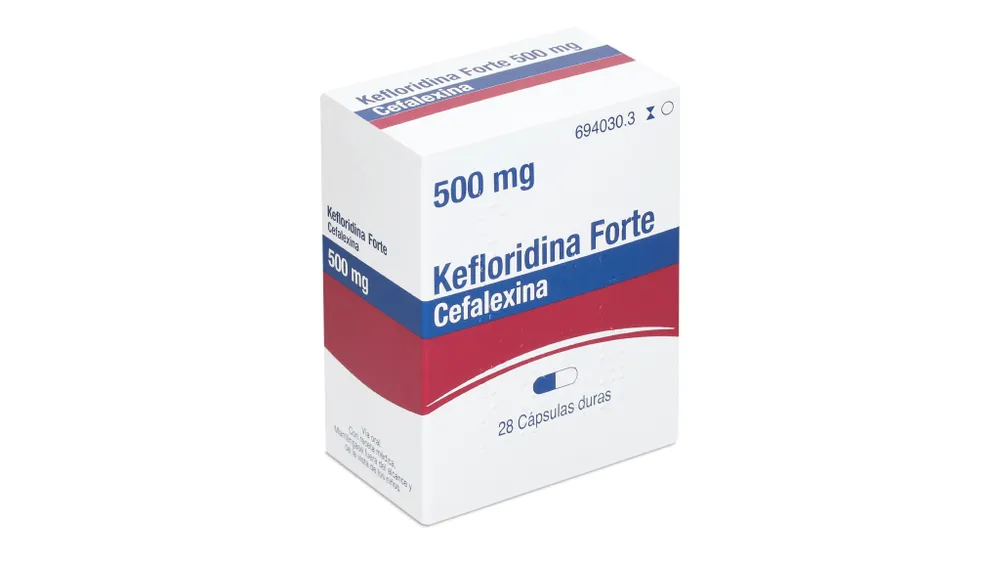
Instructions for Use
Package leaflet: Information for the user
Introduction
Package leaflet: Information for the user
Kefloridina Forte 500 mg hard capsules
Cefalexin monohydrate
Read the entire leaflet carefully before you start taking this medicine, as it contains important information for you.
- Keep this leaflet, as you may need to read it again.
- If you have any questions, ask your doctor or pharmacist.
- This medicine has been prescribed for you only and must not be given to other people, even if they have the same symptoms as you, because it could harm them.
- If you experience any adverse effects, consult your doctor or pharmacist, even if they are adverse effects not listed in this leaflet. See section 4.
Leaflet contents
- What Kefloridina Forte is and what it is used for
- What you need to know before taking Kefloridina Forte
- How to take Kefloridina Forte
- Possible adverse effects
- How to store Kefloridina Forte
- Contents of the pack and other information
1. What Kefloridina Forte is and what it is used for
Kefloridina Forte is a semi-synthetic antibiotic of the cephalosporin family, for oral administration.
Antibiotics are used to treat bacterial infections and are not effective against viral infections such as influenza or the common cold.
It is important that you follow your doctor's instructions regarding dosage, dosing interval, and duration of treatment.
Do not store or reuse this medicine. If you have any antibiotic left over after completing your treatment, return it to the pharmacy for proper disposal. Do not dispose of medicines via the sink or with household waste.
Cephalexin works by eliminating certain types of bacteria that can cause various bacterial infections in humans. Like all antibiotics, cephalexin is effective only against certain types of bacteria, and therefore is suitable only for treating specific types of infection.
Cephalexin may be used to treat the following infections:
- bacterial ear infection (otitis media)
- bacterial infections of the pharynx
- infections of the lungs and respiratory tract
- uncomplicated urinary bladder infection (cystitis)
- uncomplicated kidney and prostate infections
- dental infections
- uncomplicated skin infections
2. What you need to know before taking Kefloridina Forte
Do not take Kefloridina Forte:
- if you are allergic to cephalexin or to any of the other ingredients of this medicine (listed in section 6).
- if you are allergic (hypersensitive) to the group of antibiotics known as cephalosporins.
- if you have previously experienced immediate and severe hypersensitivity reactions to penicillin or to any other type of beta-lactam antibiotic.
Warnings and precautions
Talk to your doctor or pharmacist before starting Kefloridina Forte:
- if you have ever had an allergic reaction to cephalexin, cephalosporins, penicillins, or any other medicine.
- if you develop diarrhoea while taking an antibiotic.
- if you have kidney disease (you may require a reduced dose).
- prolonged use of cephalexin may lead to infection with microorganisms (bacteria) that are insensitive to cephalexin. Your doctor will monitor you carefully and initiate appropriate treatment.
- if you have ever developed a severe skin rash, skin peeling, blisters, and/or mouth sores after taking cephalexin or other antibacterial agents.
Acute generalized exanthematous pustulosis (AGEP) has been reported with the use of cephalexin. AGEP appears at the beginning of treatment as a widespread, red, scaly rash with bumps under the skin and blisters, accompanied by fever. The most common locations are skin folds, trunk, and upper limbs. The highest risk of this serious skin reaction occurs during the first week of treatment. If you develop a severe rash or any of these skin symptoms, stop taking cephalexin and contact your doctor or seek immediate medical attention.
Other medicines and Kefloridina Forte
Inform your doctor or pharmacist if you are taking, have recently taken, or might need to take any other medicines, including those obtained without a prescription. This is because they may interact with cephalexin.
In particular, consult your doctor or pharmacist if you are taking any of the following medicines:
-
probenecid (a medicine used in the treatment of gout). Probenecid may increase the amount of cephalexin in the blood, so you may need a lower dose if you are also taking probenecid.
-
metformin (medicines used in the treatment of diabetes), as cephalexin may increase the amount of metformin in your blood.
-
aminoglycosides, vancomycin, and other cephalosporins (medicines used to treat infections).
-
furosemide (a medicine used to increase urine production).
Effects on laboratory tests
Inform your doctor if you are taking Kefloridina Forte and are undergoing blood or urine tests, as cephalexin may interfere with the results of these tests.
Use of Kefloridina Forte with food and drinks
Kefloridina Forte may be taken with or without food.
Pregnancy and breastfeeding
If you are pregnant or breastfeeding, think you may be pregnant, or are planning to become pregnant, consult your doctor or pharmacist before using this medicine. Seek advice from your doctor or pharmacist before taking any medicine.
Driving and using machines
Kefloridina Forte may cause dizziness, restlessness, hallucinations, or confusion; therefore, caution should be exercised when driving or operating machinery.
Kefloridina Forte contains sodium
Kefloridina Forte contains less than 23 mg of sodium (1 mmol) per capsule; therefore, it is essentially "sodium-free".
Kefloridina Forte contains Patent Blue V (E131)
This medicine may cause allergic reactions because it contains Patent Blue V (E131). It may cause asthma, especially in patients allergic to acetylsalicylic acid.
3. How to take Kefloridina Forte
Follow exactly the instructions for use of this medicine provided by your doctor or pharmacist. If in doubt, consult your doctor or pharmacist again.
Method of administration
Kefloridina Forte is administered orally. The capsules should be swallowed whole with a full glass of water.
Use in adults (≥ 18 years)
The usual dose ranges from 1 to 4 g per day in divided doses, and most infections respond to a dose of 500 mg every 8 hours.
For certain infections such as skin and underlying tissue infections, sore throat, and cystitis, the recommended dose is 250 mg, if available, every 6 hours or 500 mg every 12 hours. If you have a more severe infection, you may require a higher dose.
Use in children (<18 years)
Kefloridina Forte 500 mg hard capsules are not suitable for the recommended dosing regimens in the pediatric population.
Use in patients with renal impairment
If you have severe kidney problems (glomerular filtration rate <10 ml/min), a dose reduction is required.
Use in elderly patients
The recommended dose is the same as for adults. However, for patients with renal impairment, a lower dose may be necessary.
If you take more Kefloridina Forte than you should
If you have taken more capsules than you should have, or if someone else has ingested your capsules, contact your doctor, pharmacist, or hospital emergency services immediately. Symptoms of overdose may include nausea, vomiting, abdominal pain, diarrhea, and blood in the urine.
In case of overdose or accidental ingestion, contact your doctor or pharmacist immediately or call the Poison Information Service at: 91 562 04 20, indicating the medication and the amount ingested.
If you forget to take Kefloridina Forte
If you forget to take a dose, take it as soon as you remember. However, if it is almost time for your next dose, skip the missed dose completely and continue your treatment as before.
Do not take a double dose to make up for missed doses.
If you stop taking Kefloridina Forte
Use all the capsules prescribed by your doctor. Do not stop taking them, even if you feel better.
If you have any further questions about the use of this medicine, ask your doctor or pharmacist.
4. Possible adverse effects
Like all medicines, this medicine can cause adverse effects, although not everyone will experience them.
If you think you are experiencing any of the following serious adverse effects, stop taking this medicine immediately and inform your doctor straight away or go to the nearest hospital emergency department:
- Swelling of the face, lips, tongue, or throat (angioedema)
- Sudden allergic reaction, with difficulty breathing, rash, wheezing, and drop in blood pressure
- Itchy spots or rash on the arms and legs, or severe widespread skin rash with blisters (erythema multiforme, Stevens-Johnson syndrome)
- Fever, sore throat, and joint pain accompanied by severe blistering, peeling, and red rash (toxic epidermal necrolysis)
- Severe or prolonged diarrhoea. This could be a sign of a more serious condition (pseudomembranous colitis)
The following adverse effects have also been reported:
Common adverse effects (may affect up to 1 in 10 people)
- Nausea and diarrhoea
Uncommon adverse effects (may affect up to 1 in 100 people)
- Changes in blood tests that check how your liver is working
- Increase in certain types of white blood cells
- Rash, hives, and itching
Rare adverse effects (may affect up to 1 in 1,000 people)
- Blood disorders: decreased number of different blood cells (symptoms may include new infections and increased tendency to bruise or bleed), including the small cells needed for blood clotting; haemolytic anaemia, a type of anaemia that can be severe and is caused by the breakdown of red blood cells
- Headaches, dizziness
- Abdominal pain, vomiting, indigestion
- Inflammation of the kidney
- Genital and anal problems: itching and inflammation of the vagina (vaginitis)
- Tiredness
- Liver inflammation and yellowing of the skin and eyes (jaundice)
Frequency not known (frequency cannot be estimated from the available data)
- Urine tests for sugar and Coombs test results may be affected
- Joint pain or inflammation
- Infections caused by other microorganisms (for example, vaginal candidiasis may occur)
- Fever
- Hallucinations, agitation, confusion
- Widespread red, scaly rash with lumps under the skin and blisters accompanied by fever at the start of treatment (acute generalised exanthematous pustulosis). Stop using cephalexin if you develop these symptoms and contact your doctor or seek immediate medical attention. See also section 2.
If you experience any adverse effect, speak to your doctor or pharmacist. This includes any possible adverse effect not listed in this leaflet.
Reporting of adverse effects
If you get any adverse effects, talk to your doctor or pharmacist, even if they are possible adverse effects not listed in this leaflet. You can also report them directly via the Spanish Pharmacovigilance System for Human Medicines: https://www.notificaram.es. By reporting adverse effects, you can help provide more information on the safety of this medicine.
5. Storage of Kefloridina Forte
Keep this medicine out of the sight and reach of children.
Special storage conditions are not required.
Do not use this medicine after the expiry date stated on the packaging, after EXP. The expiry date is the last day of the month indicated.
Medicines must not be disposed of via wastewater or household waste. Dispose of unused medicines and their containers at the SIGRE collection point at your pharmacy. Ask your pharmacist how to dispose of medicines and containers you no longer need. This will help protect the environment.
6. Contents of the pack and other information
Composition of Kefloridina Forte
- The active substance is cefalexin monohydrate. Each capsule contains 500 mg of cefalexin monohydrate.
- The other components are magnesium stearate, dimethicone, and sodium croscarmellose. Capsule shell: patent blue V, quinoline yellow (E104), titanium dioxide (E171), gelatin.
Appearance of the product and contents of the pack
Kefloridina Forte hard capsules have a dark opaque green cap and an opaque green body.
Available in packs of 28 and 500 (hospital pack) hard capsules.
Only certain pack sizes may be marketed.
Marketing Authorization Holder and Manufacturer
Marketing Authorization Holder
Laboratorio STADA, S.L.
Frederic Mompou, 5
08960 - Sant Just Desvern (Barcelona)
Spain
Manufacturer
ACS DOBFAR S.P.A.
Vía Laurentina, Km 24,
730 Pomezia (Rome)
Italy
Date of the most recent revision of this leaflet: September 2021
Detailed and up-to-date information on this medicinal product is available on the website of the Spanish Agency for Medicines and Health Products (AEMPS): http://www.aemps.gob.es/
This page has been machine-translated and may contain inaccuracies. The original data is available in the manufacturing country's language.
Last data check: May 18, 2026 · Data source: CIMA — AEMPS