Kalpress 160 mg film-coated tablets
Spain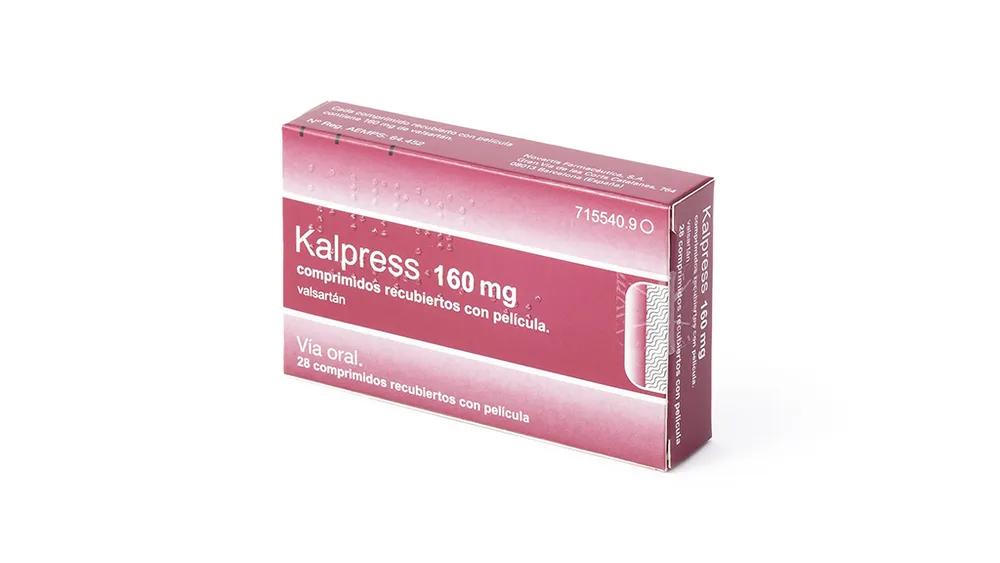
Table of Contents
Package leaflet: Information for the user
Introduction
Package leaflet: information for the user
Kalpress 160mg film-coated tablets
valsartan
Read the entire leaflet carefully before you start taking this medicine, because it contains important information for you.
- Keep this leaflet, as you may need to read it again.
- If you have any questions, ask your doctor or pharmacist.
- This medicine has been prescribed for you only, and you should not give it to other people, even if they have the same symptoms as you, because it may harm them.
- If you experience any adverse effects, consult your doctor or pharmacist, even if they are adverse effects not listed in this leaflet. See section 4.
Leaflet contents
- What Kalpress is and what it is used for
- What you need to know before taking Kalpress
- How to take Kalpress
- Possible side effects
- How to store Kalpress
- Contents of the pack and other information
1. What Kalpress is and what it is used for
Kalpress contains the active substance: valsartan and belongs to a class of medicines known as angiotensin II receptor antagonists, which help control high blood pressure. Angiotensin II is a substance in the body that causes blood vessels to narrow, resulting in increased blood pressure. Kalpress works by blocking the effect of angiotensin II. As a result, blood vessels relax and blood pressure decreases.
Kalpress 160 mg film-coated tablets can be used for three different conditions:
- to treat high blood pressure in adults and in children and adolescents from 6 to under 18 years of age. High blood pressure increases the workload of the heart and arteries. If left untreated, it can damage the blood vessels of the brain, heart, and kidneys, and may lead to stroke, heart failure, or kidney failure. High blood pressure increases the risk of heart attacks. Lowering blood pressure to normal levels reduces the risk of developing these disorders.
- to treat adult patients after a recent heart attack (myocardial infarction). "Recent" means within 12 hours to 10 days.
- to treat symptomatic heart failure in adult patients. Kalpress is used when a group of medicines called Angiotensin-Converting Enzyme Inhibitors (ACE inhibitors) (a medication used to treat heart failure) cannot be used, or may be added to ACE inhibitors when other medications for the treatment of heart failure cannot be used. Symptoms of heart failure include shortness of breath and swelling of the feet and legs due to fluid retention. This is due to the heart muscle being unable to pump blood strongly enough to supply all the blood needed by the body.
2. What you need to know before taking Kalpress
Do not take Kalpress:
- if you are allergic (hypersensitive) to valsartan or to any of the other components of this medicine (listed in section 6).
- if you have severe liver disease.
- if you are more than 3 months pregnant (it is also best to avoid Kalpress during the first months of pregnancy – see Pregnancy section).
- if you have diabetes or kidney failure and are being treated with a blood pressure-lowering medicine containing aliskiren.
If any of the above situations apply to you, inform your doctor and do not take Kalpress.
Warnings and precautions:
Consult your doctor
- if you have liver disease.
- if you have severe kidney disease or are undergoing dialysis.
- if you have narrowing of the artery to the kidney (renal artery stenosis).
- if you have recently undergone a kidney transplant (received a new kidney).
- if you have a serious heart condition other than heart failure or heart attack.
- if you have previously experienced swelling of the tongue and face due to an allergic reaction called angioedema while taking other medicines (including ACE inhibitors), inform your doctor. If you develop these symptoms while taking Kalpress, stop treatment immediately and never take Kalpress again. See also section 4 “Possible side effects”.
- if you experience abdominal pain, nausea, vomiting, or diarrhoea after taking Kalpress. Your doctor will decide whether to continue treatment. Do not stop taking Kalpress on your own.
- if you are taking medicines that increase potassium levels in the blood. These include potassium supplements or potassium-containing salt substitutes, potassium-sparing medicines, and heparin. Regular monitoring of blood potassium levels may be necessary.
- if you have aldosteronism, a condition in which the adrenal glands produce too much aldosterone hormone. In this case, taking Kalpress is not recommended.
- if you have lost a large amount of fluid (dehydration) due to diarrhoea, vomiting, or high doses of diuretics (medicines that increase urine output).
- if you are taking any of the following medicines used to treat high blood pressure:
- an angiotensin-converting enzyme inhibitor (ACE inhibitor) (e.g., enalapril, lisinopril, ramipril), particularly if you have kidney problems related to diabetes
- aliskiren
- if you are being treated with an ACE inhibitor together with other specific medicines for heart failure, known as mineralocorticoid receptor antagonists (MRAs) (e.g., spironolactone, eplerenone) or beta-blockers (e.g., metoprolol).
Your doctor may monitor your kidney function, blood pressure, and blood electrolyte levels (e.g., potassium) at regular intervals.
See also the information under the heading “Do not take Kalpress”.
You must inform your doctor if you think you are (or could be) pregnant. Kalpress is not recommended in early pregnancy, and must not be taken after the third month of pregnancy, as it may cause serious harm to your baby if used during this period (see Pregnancy section).
Taking Kalpress with other medicines
Inform your doctor or pharmacist if you are taking, have recently taken, or might need to take any other medicines.
The effect of Kalpress treatment may be altered when taken with certain medicines. Your doctor may need to adjust your dose and/or take other precautions or, in some cases, discontinue treatment with one of the medicines. This applies to both prescription and over-the-counter medicines, especially:
- other medicines that lower blood pressure, particularly diuretics (medicines that increase urine output), ACE inhibitors (such as enalapril, lisinopril, etc.), or aliskiren (see also information under the headings “Do not take Kalpress” and “Warnings and precautions”).
- medicines that increase potassium levels in the blood. These include potassium supplements or potassium-containing salt substitutes, potassium-sparing medicines, and heparin.
- certain pain medicines known as non-steroidal anti-inflammatory drugs (NSAIDs).
- some antibiotics (from the rifampicin group), a medicine used to prevent transplant rejection (cyclosporine), or an antiretroviral medicine used to treat HIV/AIDS infection (ritonavir). These medicines may increase the effect of Kalpress.
- lithium, a medicine used to treat certain psychiatric conditions.
In addition:
- if you are being treated after a heart attack, combination with ACE inhibitors (a medicine used to treat heart attack) is not recommended.
- if you are being treated for heart failure, the triple combination with ACE inhibitors and other specific medicines for heart failure, known as mineralocorticoid receptor antagonists (MRAs) (e.g., spironolactone, eplerenone) or beta-blockers (e.g., metoprolol) is not recommended.
Pregnancy and breastfeeding
-
Inform your doctor if you are pregnant or think you might be pregnant. Your doctor will usually advise you to stop taking Kalpress before becoming pregnant or as soon as you know you are pregnant, and will recommend another medicine instead of Kalpress. Kalpress is not recommended during early pregnancy, and must not be used from the third month of pregnancy onwards, as it may cause serious harm to your baby when used from that time.
-
Inform your doctor if you are breastfeeding or planning to breastfeed. The use of Kalpress during breastfeeding is not recommended, and your doctor will choose an alternative treatment if you wish to breastfeed, especially if your baby is a newborn or premature.
Driving and using machines
Before driving, operating tools, handling machinery, or engaging in other activities requiring concentration, make sure you know how Kalpress affects you. Like many other medicines used to treat high blood pressure, Kalpress may cause dizziness and affect your ability to concentrate.
3. How to take Kalpress
To achieve the best results and reduce the risk of adverse effects, always take this medicine exactly as prescribed by your doctor. If in doubt, consult your doctor or pharmacist. People with high blood pressure often do not experience any symptoms and may feel perfectly normal. This makes it very important to attend your medical appointments regularly, even if you feel well.
Adult patients with high blood pressure: The recommended dose is 80 mg once daily. In some cases, your doctor may prescribe higher doses (e.g. 160 mg or 320 mg). Kalpress may also be combined with another medicine (e.g. a diuretic).
Use in children and adolescents aged 6 to less than 18 years with high blood pressure:
In patients weighing less than 35 kg, the recommended starting dose of valsartan tablets is 40 mg once daily.
In patients weighing 35 kg or more, the recommended starting dose of Kalpress tablets is 80 mg once daily.
In some cases, your doctor may prescribe higher doses (the dose may be increased to 160 mg and up to a maximum of 320 mg).
For children who have difficulty swallowing tablets, administration of the oral solution is recommended.
Adult patients after a recent heart attack: Treatment is usually initiated 12 hours after the heart attack, normally starting with a low dose of 20 mg twice daily. The 20 mg dose is obtained by dividing the 40 mg tablet. Your doctor will gradually increase this dose over several weeks up to a maximum of 160 mg twice daily. The final dose will depend on your individual tolerance.
Kalpress may be administered together with other treatments for heart attack, and your doctor will decide which treatment is appropriate for you.
Adult patients with heart failure: Treatment is usually initiated with 40 mg twice daily. Your doctor will gradually increase the dose over several weeks up to a maximum of 160 mg twice daily. The final dose will depend on your individual tolerance.
Kalpress may be administered together with other treatments for heart failure, and your doctor will decide which treatment is appropriate for you.
You may take Kalpress with or without food. Swallow Kalpress with a glass of water.
Take Kalpress at approximately the same time each day.
Dosing not covered by available Kalpress presentations
The available Kalpress presentations (80 mg, 160 mg and 320 mg) do not allow administration of the recommended dose for the initial treatment of recent myocardial infarction or heart failure in adults, nor for the treatment of arterial hypertension in children < 35 kg. In such cases, presentations from other medicines allowing administration of 20 mg or 40 mg of valsartan should be used.
If you take more Kalpress than you should
If you experience severe dizziness and/or fainting, contact your doctor immediately and lie down. If you have accidentally taken too many tablets, contact your doctor, pharmacist, or hospital. You may also call the Toxicology Information Service at telephone number 91 562 04 20, indicating the medicine and the amount taken.
If you forget to take Kalpress
If you forget to take a dose, take it as soon as you remember. However, if it is almost time for your next dose, skip the missed dose.
Do not take a double dose to make up for forgotten doses.
If you stop taking Kalpress
If you discontinue treatment with Kalpress, your condition may worsen. Do not stop taking the medicine unless instructed by your doctor.
If you have any further questions about the use of this medicine, ask your doctor or pharmacist.
4. Possible adverse effects
Like all medicines, this medicine can cause adverse effects, although not everyone experiences them.
Some adverse effects may be serious and may require immediate medical attention:
You may experience symptoms of angioedema (a specific allergic reaction), such as:
- swelling of the face, lips, tongue, or throat
- difficulty breathing or swallowing
- hives, itching
If you experience any of these symptoms, stop taking Kalpress and contact your doctor immediately (see also section 2 “Warnings and precautions”).
Other adverse effects include:
Common (may affect up to 1 in 10 people):
- dizziness
- low blood pressure with or without symptoms such as dizziness and fainting upon standing
- reduced kidney function (signs of kidney impairment)
Uncommon (may affect up to 1 in 100 people):
- angioedema (see section “Some symptoms require immediate medical attention”)
- sudden loss of consciousness (syncope)
- sensation of spinning (vertigo)
- marked reduction in kidney function (signs of acute renal failure)
- muscle cramps, irregular heartbeat (signs of hyperkalemia)
- shortness of breath, difficulty breathing when lying down, swelling of feet or legs (signs of heart failure)
- headache
- cough
- abdominal pain
- nausea
- diarrhea
- fatigue
- weakness
Very rare (may affect up to 1 in 10,000 people):
- intestinal angioedema: swelling in the intestine accompanied by symptoms such as abdominal pain, nausea, vomiting, and diarrhea.
Frequency not known (cannot be estimated from available data):
- blisters on the skin (sign of bullous dermatitis)
- allergic reactions may occur with skin rash, itching, and hives; symptoms of fever, swelling and joint pain, muscle pain, swollen lymph nodes, and/or flu-like symptoms (signs of serum sickness)
- purplish red spots, fever, itching (signs of blood vessel inflammation, also called vasculitis)
- bleeding or bruising more easily than usual (signs of thrombocytopenia)
- muscle pain (myalgia)
- fever, sore throat, or mouth ulcers due to infections (symptoms of low white blood cell count, also called neutropenia)
- reduction in hemoglobin levels and reduced percentage of red blood cells in the blood (which, in severe cases, may lead to anemia)
- increased potassium levels in the blood (which, in severe cases, may cause muscle cramps and irregular heartbeat)
- elevation of liver function test values (which may indicate liver injury), including increased blood bilirubin levels (which, in severe cases, may cause yellowing of the skin and eyes)
- increased blood urea nitrogen and increased serum creatinine levels (which may indicate kidney function abnormalities)
- low sodium levels in the blood (which, in severe cases, may cause fatigue, confusion, muscle fasciculations, and/or seizures)
The frequency of some adverse effects may vary depending on your condition. For example, certain adverse effects such as dizziness and reduced kidney function were observed less frequently in adult patients treated for high blood pressure than in adult patients treated for heart failure or after a recent heart attack.
Adverse effects in children and adolescents are similar to those observed in adults.
Reporting of adverse effects
If you experience any type of adverse effect, talk to your doctor or pharmacist, even if it is a possible adverse effect not listed in this leaflet. You can also report them directly via the Spanish Pharmacovigilance System for Human Medicines (www.notificaRAM.es). By reporting adverse effects, you can help provide more information on the safety of this medicine.
5. Storage of Kalpress
- Keep out of the sight and reach of children.
- Do not use this medicine after the expiry date stated on the packaging. The expiry date refers to the last day of the month indicated.
- Do not store above 30°C. Keep in the original packaging to protect from moisture.
- Do not use this medicine if you notice that the packaging is damaged or shows signs of tampering.
- Medicines must not be disposed of via wastewater or household waste. Dispose of unused containers and medicines at the SIGRE collection point at your pharmacy. If in doubt, ask your pharmacist how to properly dispose of unused containers and medicines. This will help protect the environment.
6. Contents of the pack and other information
Composition of Kalpress
- The active substance is valsartan. Each film-coated tablet contains 160 mg of valsartan.
- The other components are microcrystalline cellulose, crospovidone type A, anhydrous colloidal silica, magnesium stearate. The tablet coating contains hypromellose, titanium dioxide (E 171), polyethylene glycol 8000, red iron oxide (E 172), yellow iron oxide (E 172), black iron oxide (E 172).
Appearance of the product and contents of the pack
Kalpress 160 mg film-coated tablets are greyish-orange in colour, oval-shaped, with a score line on one side. They are marked with “DX” on one side of the score line and “DX” on the other side of the score line, and “NVR” on the opposite face of the tablet. The score line is intended only to facilitate breaking the tablet for ease of swallowing, and not to divide it into equal doses.
The tablets are available in blister packs containing 7, 14, 28, 30, 56, 90 or 98 tablets, calendar blister packs containing 14, 28, 56, 98 and 280 tablets, and pre-cut single-dose blister packs of 56x1, 98x1 or 280x1 tablets.
Only certain pack sizes may be marketed.
Marketing Authorization Holder
Novartis Farmacéutica S.A.
Gran Vía de les Corts Catalanes, 764
08013 Barcelona, Spain
Tel: 93-306 42 00
Manufacturer
Novartis Farmacéutica, S.A.
Gran Vía de les Corts Catalanes, 764
08013 Barcelona, Spain
Novartis Farma – Productos Farmacêuticos, S.A.
Avenida Professor Doutor Cavaco Silva, n.° 10E (Taguspark, Porto Salvo)
Oeiras Parish. 2740 255
Portugal
Novartis Sverige AB
Torshamnsgatan 48
164 40 Kista
Sweden
Novartis Farma S.p.A.
Viale Luigi Sturzo 43
20154 Milano (MI)
Italy
Novartis Farma S.p.A.
Via Provinciale, Schito 131
80058 Torre Annunziata (NA)
Italy
For further information about this medicinal product, please contact the local representative of the Marketing Authorization Holder:
Laboratorios Gebro Pharma, S.A.
Avenida Tibidabo, 29
08022 Barcelona, Spain
Tel: +34 93 205 86 86
This medicinal product is authorized in the Member States of the European Economic Area under the following names:
Sweden | Angiosan |
Germany | Cordinate |
Greece | Dalzad |
Italy | Rixil |
Portugal | Tareg |
Spain | Kalpress |
Date of the last review of this leaflet: October 2020
Detailed and up-to-date information on this medicinal product is available on the website of the Spanish Agency for Medicines and Health Products (AEMPS) http://www.aemps.gob.es/