Kabipac Ringer Lactate solution for infusion
Spain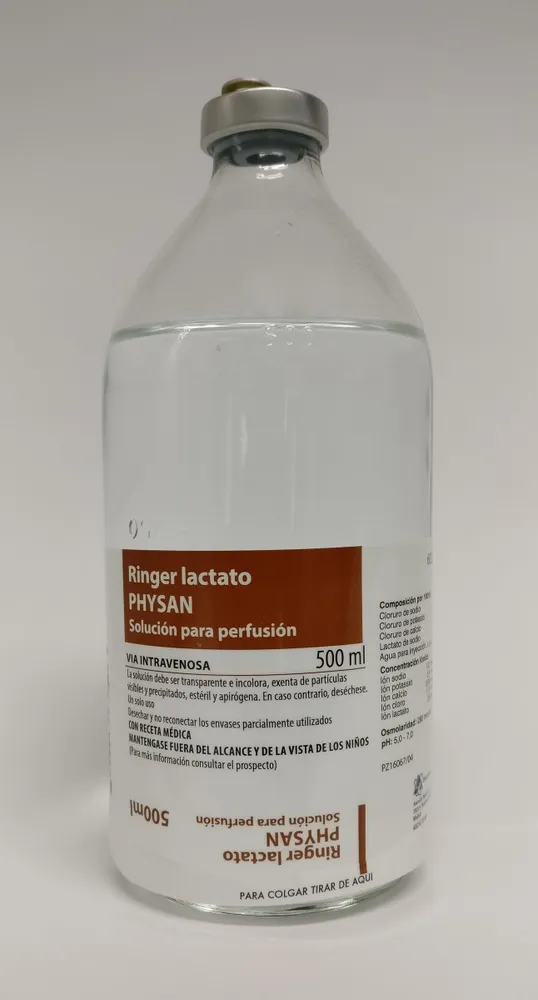
Table of Contents
- Package leaflet: Information for the user
- Introduction
- 1. What KabiPac Ringer Lactate is and what it is used for
- 2. What you need to know before using KabiPac Ringer Lactate
- **Warnings and precautions**
- 3. How to use KabiPac Ringer Lactate
- **If you use more KabiPac Ringer Lactate than you should**
- 4. Possible adverse effects
- 5. Storage of KabiPac Ringer Lactate
- 6. Contents of the pack and other information
Package leaflet: Information for the user
Introduction
Package leaflet: Information for the user
KabiPac Ringer Lactate solution for infusion
Sodium chloride/Potassium chloride/Calcium chloride dihydrate /Sodium lactate
Read the entire leaflet carefully before you start using this medicine, because it contains important information for you.
- Keep this leaflet as you may need to read it again.
- If you have any questions, ask your doctor, pharmacist or nurse.
- This medicine has been prescribed for you only, and you should not give it to other people, even if they have the same symptoms as you, because it may harm them.
- If you experience any adverse reactions, consult your doctor, pharmacist or nurse, even if they are adverse reactions not listed in this leaflet. See section 4.
Leaflet contents:
- What KabiPac Ringer Lactate is and what it is used for
- What you need to know before using KabiPac Ringer Lactate
- How to use KabiPac Ringer Lactate
- Possible side effects
- How to store KabiPac Ringer Lactate
- Contents of the pack and other information
1. What KabiPac Ringer Lactate is and what it is used for
KabiPac Ringer Lactate is an intravenous infusion solution that provides supplementation of mineral salts and water for hydration.
KabiPac Ringer Lactate belongs to a group of intravenous medicines known as infusion solutions.
This medicine will be administered intravenously by specialized personnel and is indicated in the following cases:
- When there is dehydration with significant losses of salts and water, as occurs with vomiting, diarrhea, fistulas, or severe burns.
- When body fluids are too acidic (mild or moderate metabolic acidosis).
- When there is a significant decrease in blood volume, such as in hemorrhage, burns, shock, etc.
- During or after surgical procedures to prevent a drop in blood pressure.
- As a vehicle for administering other compatible medicines.
2. What you need to know before using KabiPac Ringer Lactate
Do not use KabiPac Ringer Lactate
- if you are allergic to the active substances or to any of the other ingredients of this medicine (listed in section 6).
- if you have been diagnosed with excess fluid in the body (hyperhydration or hypervolemia) and this causes swelling (edema)
- if you suffer from high blood pressure problems.
- if you have excess potassium, sodium, calcium, or chloride in the body
- if the fluids in your body are too alkaline (metabolic alkalosis)
- if the fluids in your body are excessively acidic (severe metabolic acidosis)
- if you have been diagnosed with high levels of lactic acid in the blood.
- if you suffer from severe kidney or liver disease.
- if you suffer from severe heart disease.
- if you are undergoing prolonged treatment with steroids or with a hormone called ACTH.
Warnings and precautions
Consult your doctor or nurse before KabiPac Ringer Lactate is administered if your kidneys, heart and/or lungs are not functioning properly. In such cases, administration of large volumes of this solution must be carried out under strict clinical monitoring.
During administration of this solution, regular monitoring of your clinical condition and blood and urine tests (electrolytes in blood and urine, acid-base balance, hematocrit) is recommended. Blood potassium monitoring should be performed if you are at risk of developing hyperkalemia (high levels of potassium in the blood).
If you have any of the following conditions, this medicine will be administered with special caution and you may undergo additional tests to determine whether you can receive the medication:
- Due to the presence of sodium: If you have high blood pressure (hypertension), heart failure, pulmonary edema or edema in ankles, feet and legs, preeclampsia (a condition occurring during pregnancy or postpartum characterized by increased blood pressure), aldosteronism (a condition associated with increased secretion of a hormone called aldosterone), impaired renal function, or other conditions associated with sodium retention.
- Due to the presence of potassium: If you have heart disease or other conditions that may cause elevated blood potassium levels, such as renal or adrenocortical insufficiency, acute dehydration, or massive tissue destruction, as occurs in severe burns.
- Due to the presence of calcium: If you have impaired renal function or have had or currently have kidney stones caused by calcium accumulation, or diseases associated with elevated vitamin D levels such as sarcoidosis.
- Due to the presence of lactate ions: If KabiPac Ringer Lactate is administered in large quantities, metabolic alkalosis may occur.
- If you have severe potassium deficiency. Although KabiPac Ringer Lactate has a potassium concentration similar to that of plasma, this concentration is insufficient to produce a beneficial effect in these situations.
- If your liver is not functioning properly, KabiPac Ringer Lactate may not exert its intended effect, as lactate metabolism may be impaired.
- Ringer Lactate solution should be administered with caution if you are at risk of cerebral edema or increased intracranial pressure.
- If you are being treated with corticosteroids, adrenocorticotropic hormone, or digitalis medications, administration of KabiPac Ringer Lactate should be performed with caution (see section "Use with other medicines").
- If you suffer from acute illness, pain, postoperative stress, infections, burns, or central nervous system disorders.
- If you have any liver, heart, or kidney disease.
- If you have been treated with a medicine that increases the effect of vasopressin (a hormone regulating the body's water retention), as this may increase the risk of hospital-acquired low blood sodium levels (hyponatremia).
Particular attention should be paid to elderly patients, as they may have impaired renal, hepatic, and/or cardiac function.
Repeated or prolonged administration at the same injection site should be avoided due to the risk of thrombophlebitis.
All patients must be closely monitored. In cases where normal regulation of blood water content is impaired due to increased secretion of antidiuretic hormone (ADH), infusion of fluids with low sodium chloride concentration (hypotonic fluids) may result in low blood sodium levels (hyponatremia). This may lead to headache, nausea, seizures, lethargy, coma, brain swelling (cerebral edema), and death; therefore, these symptoms (acute symptomatic hyponatremic encephalopathy) are considered a medical emergency.
Children, women of childbearing age, and patients with brain disorders such as meningitis, cerebral hemorrhage, cerebral contusion, and cerebral edema are at particular risk of severe and potentially fatal brain swelling caused by acute hyponatremia.
Use of KabiPac Ringer Lactate with other medicines
Inform your doctor or pharmacist if you are currently using, have recently used, or might need to use any other medicines.
Certain medicines may interact with KabiPac Ringer Lactate. In such cases, it may be necessary to adjust the dose or discontinue treatment with one or more of the medicines.
In general, concomitant administration of Ringer Lactate solution with any medicine that has or may have renal toxicity should be avoided, as it may lead to fluid and electrolyte retention.
It is important that you inform your doctor if you are taking any of the following medicines, as they may interact with one or more of the electrolytes present in Ringer Lactate solution:
-
Corticosteroids/steroids or adrenocorticotropic hormone
-
Lithium carbonate
-
Potassium-sparing diuretics (amiloride, spironolactone, triamterene), alone or in combination
-
Angiotensin-converting enzyme inhibitors (ACE inhibitors) (captopril, enalapril) or angiotensin II receptor antagonists (candesartan, telmisartan, eprosartan, irbesartan, losartan, valsartan)
-
Tacrolimus and cyclosporine (medicines with renal toxicity)
-
Cardiotonic digitalis glycosides (digoxin, methyldigoxin)
-
Thiazide diuretics (hydrochlorothiazide, altizide, mebutizide, bendroflumethiazide) or vitamin D
-
Acidic medicines such as salicylates and/or barbiturates
-
Alkaline medicines such as sympathomimetics (ephedrine, pseudoephedrine) and/or stimulants (amphetamine, dexamphetamine)
-
Medicines that increase the effect of vasopressin (see also section "Warnings and precautions" above), for example:
-
Medicines that stimulate vasopressin release (e.g., antipsychotics, narcotics)
-
Medicines that enhance vasopressin action (e.g., nonsteroidal anti-inflammatory drugs)
-
Medicines that act like vasopressin, known as vasopressin analogs
-
Other medicines that increase the risk of hyponatremia, including diuretics in general and antiepileptic medicines.
Use of KabiPac Ringer Lactate with food and drink
No interaction with food and drink is known.
Pregnancy, breastfeeding, and fertility
If you are pregnant or breastfeeding, if you think you may be pregnant, or if you are planning a pregnancy, consult your doctor or pharmacist.
Provided administration is appropriate and controlled, adverse effects during pregnancy or breastfeeding are not expected.
This medicine should be administered with special caution to pregnant women during labor, especially if combined with oxytocin (a hormone that may be administered to induce labor and control bleeding), due to the risk of hyponatremia.
Driving and use of machines
KabiPac Ringer Lactate does not affect the ability to drive or operate machinery.
3. How to use KabiPac Ringer Lactate
Follow exactly the instructions given by your doctor for administering this medicine. If in doubt, consult your doctor again.
KabiPac Ringer Lactate will always be administered under the direct supervision of your doctor, who will closely monitor the dose given.
KabiPac Ringer Lactate is administered by slow injection into a vein (intravenous infusion). The rate and amount administered will depend on your individual needs and the condition being treated.
The usual dose is 500–2,500 ml/day, at a rate of 40–60 drops/minute. Your doctor will determine the duration of treatment with KabiPac Ringer Lactate.
Use in children
Children will be given lower doses, proportional to their body weight.4
If you use more KabiPac Ringer Lactate than you should
In case of overdose or administration that is too rapid, the following symptoms may occur:
-
Hyperhydration (edema, hypervolemia), disturbances in electrolyte balance and/or induction of metabolic alkalosis, especially in patients with impaired renal function. In such cases, administration will be reduced or discontinued and symptomatic treatment initiated. If renal function is compromised, dialysis may be necessary.
-
Water and sodium overload with risk of edema, particularly when there is defective renal sodium excretion.
Excessive administration of potassium salts may lead to the development of hyperkalemia, especially in patients with impaired renal function. Symptoms include tingling sensation, numbness and/or burning of hands and feet, muscle weakness, paralysis, cardiac arrhythmias, cardiac block, cardiac arrest, and mental confusion.
Excessive administration of calcium salts may lead to hypercalcemia. Symptoms of hypercalcemia may include anorexia, nausea, vomiting, constipation, abdominal pain, muscle weakness, mental disturbances, polydipsia (excessive thirst), polyuria (excessive urine volume), kidney stones, and in severe cases, cardiac arrhythmias and coma, as well as a sensation of calcium taste, burning, and peripheral vasodilation. Mild asymptomatic hypercalcemia will usually resolve by discontinuing the administration of calcium and stopping other contributing medications such as vitamin D. If hypercalcemia is severe, urgent treatment is required (e.g., diuretic regimens, hemodialysis, calcitonin, bisphosphonates, trisodium edetate).
Excessive administration of sodium lactate may lead to hypokalemia and metabolic alkalosis. Symptoms may include personality changes, fatigue, respiratory insufficiency, muscle weakness, and irregular heartbeat. Especially in hypocalcemic patients, increased muscle tone, muscle spasms, and tetany (neuromuscular hyperexcitability) may develop. Treatment of metabolic alkalosis associated with bicarbonate overdose primarily consists of appropriate correction of fluid and electrolyte balance.
When overdose is related to medication added to the infused solution, signs and symptoms of overinfusion may relate to the nature of the added medication used. In case of accidental overdose, treatment should be discontinued and the patient observed for any symptoms and signs related to the administered drug. If necessary, appropriate symptomatic and supportive measures should be taken.
If you have any further questions about the use of this product, ask your doctor or pharmacist.
4. Possible adverse effects
Like all medicines, KabiPac Ringer Lactate may cause adverse effects, although not everyone will experience them.
The most commonly reported adverse effects are hyperhydration (oedema) and electrolyte disturbances (mainly after administration of a large volume of Ringer's Lactate solution), as well as allergic reactions.
Possible adverse effects include:
-
Electrolyte disturbances
-
Venous thrombosis (blood clots), phlebitis (vein inflammation) (associated with intravenous administration)
-
Nasal congestion, cough, sneezing, breathing difficulty during administration of the solution, chest pain with changes in heart rhythm
-
Allergic reactions such as urticaria, skin rashes, skin redness, itching, swelling, fluid accumulation in tissues
-
Hyperhydration (oedema)
-
Fever, infection at injection site, local reaction or local pain (associated with intravenous administration)
-
Headache, nausea, seizures, lethargy. These may be caused by low blood sodium levels. When sodium levels in the blood fall, water enters the brain cells causing them to swell. This leads to increased intracranial pressure and results in hyponatraemic encephalopathy.
When Ringer's Lactate solution is used as a vehicle for administering other medicines, adverse effects may be related to the added medicines.
If any adverse effects occur, the infusion should be stopped.
If you consider any of the adverse effects you experience to be severe, or if you notice any adverse effects not listed in this leaflet, inform your doctor or pharmacist.
Reporting of adverse effects
If you experience any type of adverse effect, consult your doctor or nurse, even if it is a possible adverse effect not listed in this leaflet. You may also report them directly through the Spanish Pharmacovigilance System for Human Medicines: https://www.notificaram.es. By reporting adverse effects, you can help provide more information on the safety of this medicine.
5. Storage of KabiPac Ringer Lactate
No special storage conditions are required.
Keep this medicine out of the sight and reach of children.
Do not use KabiPac Ringer Lactate after the expiry date stated on the container after EXP. The expiry date refers to the last day of the month indicated.
Do not use this medicine if you notice that the solution is not clear and free from particles, or if the container is damaged.
Medicines must not be disposed of via wastewater or household waste. Ask your pharmacist how to dispose of medicines and containers you no longer need. This will help protect the environment.
6. Contents of the pack and other information
Composition of KabiPac Ringer Lactate
-
The active substances are: sodium lactate, sodium chloride, potassium chloride and calcium chloride dihydrate. Each 100 ml of solution contains 317 mg of sodium lactate, 600 mg of sodium chloride, 40 mg of potassium chloride and 27 mg of calcium chloride dihydrate (electrolytes: Ca2+ 3.7 mEq/l, K+ 5.4 mEq/l, Na+ 130.8 mEq/l, Lactate- 28.3 mEq/l, Cl- 109.75 mEq/l).
-
The other components are: hydrochloric acid and/or sodium hydroxide (for pH adjustment) and water for injections.
Appearance of the product and contents of the pack
KabiPac Ringer Lactate is a solution for intravenous infusion, transparent, colourless and free from visible particles, contained in polyethylene Kabipac bottles.
Clinical pack of 10 bottles of 500 ml and 1000 ml.
Clinical pack of 20 bottles of 100 ml and 250 ml.
Marketing Authorisation Holder and Manufacturer
Marketing Authorisation Holder
Fresenius Kabi España S.A.U.
Marina 16-18
08005 – Barcelona
Manufacturer
Fresenius Kabi Deutschland GmbH
Else-KrönerStrasse, 1
D-61346 Bad Homburg
Germany
Fresenius Kabi España, S.A.U.
Marina, 16-18 - 17
08005 Barcelona – Spain
Fresenius Kabi Italia S.r.l.
Via Camagre, 41
I - 37063 Isola della Scala - Verona
Italy
Labesfal - Laboratórios Almiro, S.A.
Zona Industrial do Lagedo
3465 157 Santiago de Besteiros
Portugal
Fresenius Kabi Polska Sp. Z.o.o.
Infusion Liquid Plant
P-99-300 Kutno, ul. Sienkiewicza, 25–
Poland
Date of the most recent review of this leaflet: December 2020
Detailed and up-to-date information on this medicine is available on the website of the Spanish Agency of Medicines and Health Products (AEMPS) http://www.aemps.gob.es/
This information is intended for healthcare professionals only:
This medicine is administered by infusion.
The contents of each bottle are intended for a single infusion. Once the container is opened, the solution should be administered immediately and any unused portion must be discarded.
The solution must be clear and free from precipitates. Do not administer if this is not the case.
To administer the solution, and especially when adding medications, maximum aseptic technique must be maintained. It is recommended to disinfect the rubber stopper before puncturing it with the infusion set. From a microbiological standpoint, when the solution is used as a vehicle for other drugs, it should be used immediately unless dilution has been carried out under controlled and validated aseptic conditions. If not used immediately, the storage conditions and duration of use are the responsibility of the user.
Compatibility tables should be consulted before adding medications to Ringer Lactate solution or administering concomitantly with other drugs. The package leaflet of the added drugs should be consulted, and their solubility and stability in aqueous solution at the pH of Ringer Lactate (pH 5.5–7.0) should be verified.
When compatible medication is added, the solution should be administered immediately.
Ringer Lactate solution should not be used as a vehicle for drugs containing ions capable of causing the formation of insoluble calcium salts.
It is recommended not to mix or administer Ringer Lactate solution simultaneously with whole blood or blood components preserved with a citrate-containing anticoagulant (such as CPD) in the same infusion set, because the calcium ions present in this solution may exceed the chelating capacity of citrate, potentially leading to clot formation. These clots could be infused directly into the circulation and cause embolism.
Dosage
General advice:
Fluid balance, serum electrolytes and acid-base balance may require monitoring before and during administration, with particular attention to serum sodium in patients with non-osmotic release of vasopressin (syndrome of inappropriate antidiuretic hormone secretion, SIADH) and in patients receiving concomitant treatment with vasopressin agonist drugs, due to the risk of hospital-acquired hyponatremia. Monitoring of serum sodium is particularly important for physiologically hypotonic fluids.
Paediatric population
The dose and infusion rate must be determined by a physician experienced in paediatric intravenous fluid therapy.