Jorveza 0.5 mg orodispersible tablets
Spain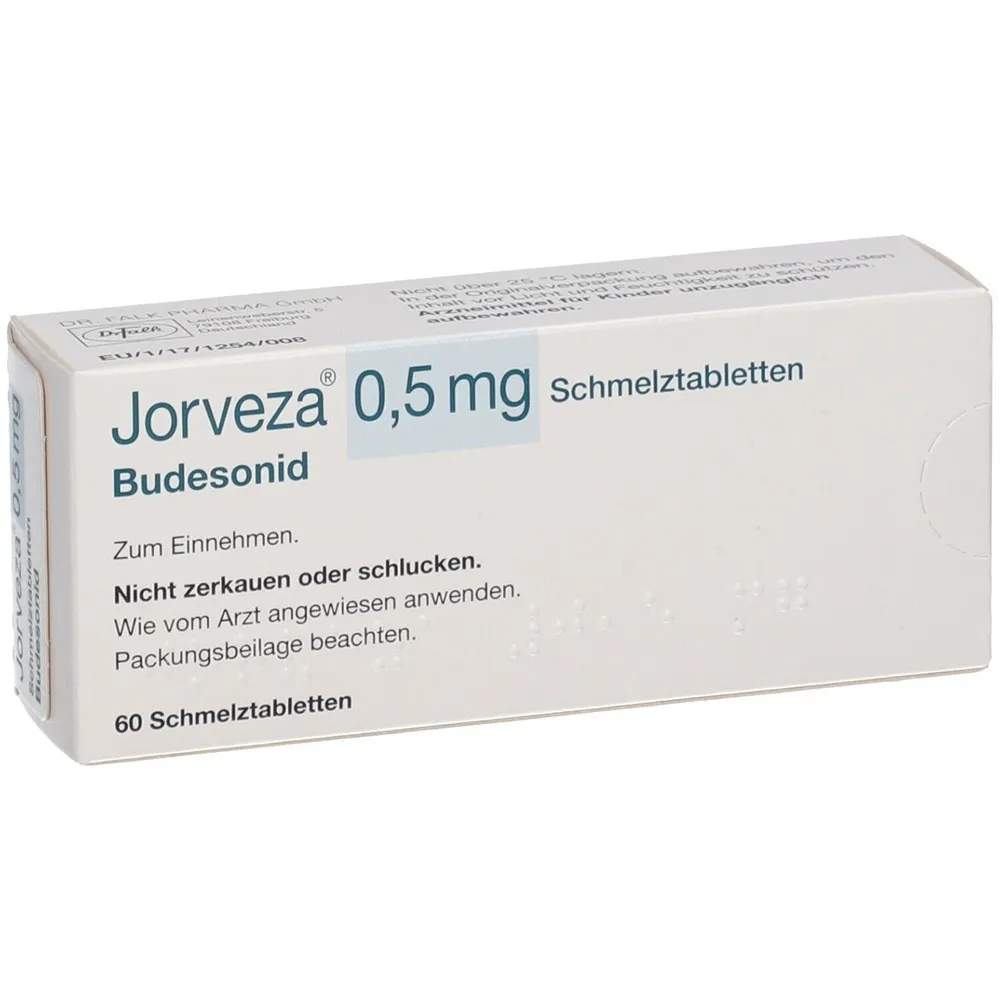
Table of Contents
Patient Information Leaflet
Introduction
Patient Information Leaflet
Jorveza 0.5 mg orodispersible tablets
Jorveza 1 mg orodispersible tablets
budesonide
Read the entire leaflet carefully before you start taking this medicine, because it contains important information for you.
- Keep this leaflet. You may need to read it again.
- If you have any questions, ask your doctor or pharmacist.
- This medicine has been prescribed for you only. Do not give it to others, even if they have the same symptoms as you, because it could harm them.
- If you experience any adverse effects, consult your doctor or pharmacist, even if they are effects not listed in this leaflet. See section 4.
Leaflet Contents
- What Jorveza is and what it is used for
- What you need to know before taking Jorveza
- How to take Jorveza
- Possible side effects
- How to store Jorveza
- Contents of the pack and other information
1. What Jorveza is and what it is used for
Jorveza contains the active substance budesonide, a corticosteroid medicine that reduces inflammation.
It is used in adults (over 18 years of age) to treat eosinophilic esophagitis, an inflammatory disorder of the esophagus that causes difficulty in swallowing food.
2. What you need to know before taking Jorveza
Do not take Jorveza
- if you are allergic to budesonide or to any of the other ingredients of this medicine (listed in section 6).
Warnings and precautions
Talk to your doctor or pharmacist before taking Jorveza if you have:
- tuberculosis;
- high blood pressure;
- diabetes or if someone in your family has diabetes;
- weakened bones (osteoporosis);
- ulcers in the stomach or the first part of the small intestine (peptic ulcer);
- increased pressure in the eye (which may cause glaucoma) or eye problems such as clouding of the lens (cataracts), or if someone in your family has glaucoma;
- liver disease.
If you have any of the conditions listed above, you may have an increased risk of experiencing adverse effects. Your doctor will decide on the appropriate measures to take and whether it is still suitable for you to take this medicine.
Jorveza may cause the typical adverse effects of corticosteroid medicines and may affect all parts of the body, especially if you take this medicine at high doses and for a long time (see section 4).
Additional precautions during treatment with Jorveza
- Contact your doctor if you experience blurred vision or other vision problems.
Take the following precautions during treatment with Jorveza, as your immune system may be weakened:
- Inform your doctor if you develop fungal infections in the mouth, throat, or esophagus, or if you think you have an infection while taking this medicine. Symptoms of fungal infections may include white patches in the mouth and throat and difficulty swallowing. Symptoms of some infections may be unusual or less noticeable.
- Avoid contact with people who have chickenpox or shingles (herpes zoster) if you have not had these infections. The effects of these diseases may be much more severe while you are being treated with this medicine. If you come into contact with chickenpox or shingles, see your doctor immediately. Also inform your doctor about your vaccination status.
- Inform your doctor if you have not had measles and/or when you last received a measles vaccine.
- If you need to receive any vaccine during treatment with this medicine, inform your doctor beforehand.
- Inform your doctor that you are taking Jorveza if you undergo surgery.
Jorveza may alter the results of adrenal function tests (ACTH stimulation test) requested by your doctor or in a hospital. Inform your doctors that you are taking Jorveza before any test is performed.
Children and adolescents
Jorveza must not be used in children and adolescents under 18 years of age. The use of this medicine has not yet been studied in children under 18 years of age.
Other medicines and Jorveza
Tell your doctor or pharmacist if you are taking, have recently taken, or might need to take any other medicines. Some of these medicines may increase the effects of Jorveza, so your doctor will monitor you closely if you are taking these medicines.
In particular:
- ketoconazole or itraconazole (used to treat fungal infections);
- clarithromycin, an antibiotic used to treat infections;
- ritonavir and cobicistat (used to treat HIV infection);
- estrogens (used for hormone replacement therapy or contraception);
- cardiac glycosides such as digoxin (medicines used to treat heart conditions);
- diuretics (medicines used to treat excess fluid in your body).
Taking Jorveza with food and drinks
You should not drink grapefruit juice during treatment with this medicine, as it may worsen its adverse effects.
Pregnancy and breastfeeding
If you are pregnant or breastfeeding, think you may be pregnant, or plan to become pregnant, consult your doctor or pharmacist before using this medicine.
Do not take this medicine during pregnancy without first consulting your doctor.
Do not take this medicine while breastfeeding unless you have discussed it with your doctor. Budesonide passes into breast milk in small amounts. Your doctor will help you decide whether to continue treatment and stop breastfeeding or to interrupt treatment during the time you are breastfeeding your baby.
Driving and using machines
Jorveza is not expected to affect your ability to drive or use machines.
Jorveza contains sodium
This medicine contains 52 mg of sodium (main component of table/cooking salt) per daily dose. This corresponds to 2.6% of the maximum daily intake of sodium recommended for an adult.
3. How to take Jorveza
Follow exactly the administration instructions for this medicine given by your doctor or pharmacist. If in doubt, consult your doctor or pharmacist again.
The recommended dose for the treatment of acute episodes is two 1 mg orodispersible tablets (2 mg of budesonide) per day. Take one 1 mg orodispersible tablet in the morning and another 1 mg orodispersible tablet in the evening.
The recommended dose for the prevention of new episodes is two 0.5 mg orodispersible tablets (1 mg of budesonide) per day or two 1 mg orodispersible tablets (2 mg of budesonide) per day, depending on your body's response to treatment. Take one orodispersible tablet in the morning and another orodispersible tablet in the evening.
Method of administration
Take the orodispersible tablet immediately after removing it from the blister pack.
Take the orodispersible tablet after a meal.
Place the orodispersible tablet on the tip of the tongue and close your mouth. Gently press it against the palate with your tongue until it has completely dissolved (this usually takes at least two minutes, but may take up to 20 minutes). Swallow the dissolved material gradually with saliva as the tablet disintegrates.
DO NOT take any liquid with the orodispersible tablet.
Do not chew or swallow the orodispersible tablet without dissolving it.
Do not eat, drink, brush your teeth, or rinse your mouth for at least 30 minutes after taking the orodispersible tablet. Do not use any kind of oral solution, spray, or chewable tablet for at least 30 minutes before or after administration of the orodispersible tablet. This will ensure the proper functioning of the medicine.
Renal and hepatic problems
If you have any kidney or liver problems, inform your doctor. If you have kidney problems, your doctor will decide whether Jorveza is suitable for you. If your kidney problems are severe, you must not take Jorveza. If you have any liver disease, you must not take Jorveza.
Duration of treatment
Initially, your treatment should last approximately 6 to 12 weeks.
After treatment of the acute episode, your doctor will decide for how long and at what dose you should continue treatment, depending on your condition and your response to treatment.
If you take more Jorveza than you should
If you have taken too many orodispersible tablets at once, simply take the prescribed dose at your next scheduled time. Do not take a lower dose. If you have any doubts, contact your doctor. If possible, bring the package and the leaflet with you.
If you forget to take Jorveza
If you forget to take a dose, take the next dose at the usual time. Do not take a double dose to make up for forgotten doses.
If you stop taking Jorveza
Talk to your doctor if you wish to stop or end your treatment early. It is important that you do not stop taking your medicine without speaking to your doctor. Continue taking your medicine until your doctor tells you otherwise, even if you feel better.
If you have any further questions about the use of this medicine, ask your doctor or pharmacist.
4. Possible adverse effects
Like all medicines, this medicine can cause adverse effects, although not everyone experiences them.
The following adverse effects have been reported during the use of Jorveza:
Very common: may affect more than 1 in 10 people
- Fungal infections in the oesophagus (which may cause pain or discomfort when swallowing).
Common: may affect up to 1 in 10 people
- Headache.
- Fungal infections in the mouth and throat (symptoms of which may include white patches).
- Heartburn.
- Indigestion.
- Nausea.
- Tingling or numbness in the mouth.
- Fatigue.
- Reduced levels of cortisol hormone in the blood.
Uncommon: may affect up to 1 in 100 people
- Difficulty sleeping.
- Anxiety.
- Dizziness.
- Taste disturbance.
- Dry eyes.
- High blood pressure.
- Cough, dry throat.
- Abdominal pain, upper abdominal pain.
- Difficulty swallowing.
- Inflammation of the stomach, stomach ulcers.
- Burning sensation in the tongue, swelling of the lips, dry mouth.
- Rash, itchy rash.
- Foreign body sensation.
- Pain in the mouth or throat.
The following adverse effects have been reported with medicines similar to Jorveza (corticosteroids) and may therefore also occur with this medicine. The frequency of these events is currently unknown:
- Increased risk of infection.
- Cushing's syndrome, associated with excessive corticosteroid use, causing facial rounding (moon face), increased body weight, elevated blood sugar, fluid accumulation in tissues (e.g., swollen legs), decreased potassium concentration in the blood (hypokalaemia), irregular menstrual periods in women, unwanted hirsutism in women, impotence, stretch marks on the skin, acne.
- Growth retardation in children.
- Mood changes such as depression, irritability, or euphoria.
- Restlessness with increased physical activity, anxiety, aggression.
- Increased intracranial pressure, possibly with elevated ocular pressure (optic disc swelling) in adolescents.
- Blurred vision.
- Increased risk of blood clots, inflammation of blood vessels (which may occur when the medicine is discontinued after long-term use).
- Constipation, ulcers in the small intestine.
- Pancreatitis, causing severe abdominal and back pain.
- Rash, red spots due to bleeding under the skin, delayed wound healing, skin reactions such as contact dermatitis, bruising.
- Muscle and joint pain, muscle weakness, muscle spasms.
- Weakening of bones (osteoporosis), bone damage due to poor blood supply (osteonecrosis).
- General feeling of malaise.
Reporting of adverse effects
If you experience any type of adverse effect, talk to your doctor or pharmacist, even if it is a possible adverse effect not listed in this leaflet. You may also report them directly through the national reporting system listed in Appendix V. By reporting adverse effects, you can help provide more information on the safety of this medicine.
5. Storage of Jorveza
Keep this medicine out of the sight and reach of children.
Do not use this medicine after the expiry date stated on the carton and blister after “EXP”. The expiry date refers to the last day of the month indicated.
Do not store above 25°C. Keep in the original packaging to protect from light and moisture.
Medicines should not be disposed of via wastewater or household waste. Ask your pharmacist how to dispose of medicines and packaging that you no longer need. This will help protect the environment.
6. Contents of the pack and other information
Composition of Jorveza
Jorveza 0.5 mg orodispersible tablet
-
The active substance is budesonide. Each orodispersible tablet contains 0.5 mg of budesonide.
-
The other components are disodium hydrogen citrate, sodium docusate, macrogol (6000), magnesium stearate, mannitol (E 421), anhydrous sodium citrate, povidone (K25), sodium hydrogen carbonate and sucralose (see also section 2, “Jorveza contains sodium”).
Jorveza 1 mg orodispersible tablet
-
The active substance is budesonide. Each orodispersible tablet contains 1 mg of budesonide.
-
The other components are disodium hydrogen citrate, sodium docusate, macrogol (6000), magnesium stearate, mannitol (E 421), anhydrous sodium citrate, povidone (K25), sodium hydrogen carbonate and sucralose (see also section 2, “Jorveza contains sodium”).
Appearance of the product and contents of the pack
Jorveza 0.5 mg orodispersible tablet
Jorveza 0.5 mg orodispersible tablets are white, round, and biconvex tablets. They are marked with “0.5” on one side. They are available in blisters of 20, 60, 90, 100, or 200 orodispersible tablets.
Jorveza 1 mg orodispersible tablet
Jorveza 1 mg orodispersible tablets are white, round, and biconvex tablets. They are available in blisters of 20, 30, 60, 90, 100, or 200 orodispersible tablets.
Only certain pack sizes may be marketed.
Marketing Authorization Holder and Manufacturer
Dr. Falk Pharma GmbH
Leinenweberstr. 5
79108 Freiburg
Germany
More information about this medicinal product is available upon request to the local representative of the Marketing Authorization Holder:
Belgium/Belgium/Belgium Dr. Falk Pharma Benelux Tel/Tel: +31-(0)76-5244200 | Lithuania UAB Morfejus Tel: +370 5 2796328 |
Germany Dr. Falk Pharma GmbH Tel: +49 761 1514 0 | Luxembourg/Luxembourg Dr. Falk Pharma Benelux Tel/Tel: +31-(0)76-5244200 |
Czech Republic Ewopharma, spol. s r. o. Tel: +420 267 311 613 | Hungary Medicons Kft. Tel: +36 23 444 773 |
Denmark Vifor Pharma Nordiska AB Tlf: +46 8 5580 6600 | Malta Dr. Falk Pharma GmbH Tel: +49 761 1514 0 |
Germany Dr. Falk Pharma GmbH Tel: +49 761 1514 0 | Netherlands Dr. Falk Pharma Benelux Tel: +31-(0)76-5244200 |
Estonia Dr. Falk Pharma GmbH Tel: +49 761 1514 0 | Norway Vifor Pharma Nordiska AB Tlf: +46 8 5580 6600 |
Greece GALENICA A.E Tel: +30 210 52 81 700 | Austria Dr. Falk Pharma Österreich GmbH Tel: +43 (1) 577 3516 0 |
Spain Dr. Falk Pharma España Tel: +34 91 372 95 08 | Poland Dr. Falk Pharma GmbH Tel: +49 761 1514 0 |
France Dr. Falk Pharma GmbH Tel: +49 761 1514 0 | Portugal Dr. Falk Pharma Portugal, Sociedade Unipessoal Lda. Tel: +351 21 412 61 70 |
Croatia Würth d.o.o. Tel: +385 1 4650358 | Romania Dr. Falk Pharma GmbH Tel: +49 761 1514 0 |
Ireland Dr. Falk Pharma GmbH Tel: +49 761 1514 0 | Slovenia Ewopharma d.o.o. Tel: +386 (0) 590 848 40 |
Iceland Dr. Falk Pharma GmbH Sími: +49 761 1514 0 | Slovakia Dr. Falk Pharma GmbH Tel: +49 761 1514 0 |
Italy Dr. Falk Pharma GmbH Tel: +49 761 1514 0 | Finland/Sweden Vifor Pharma Nordiska AB Puh/Tel: +46 8 5580 6600 |
Cyprus THESPIS PHARMACEUTICAL Ltd Tel: +357 22677710 | Sweden Vifor Pharma Nordiska AB Tel: +46 8 5580 6600 |
Latvia UAB Morfejus Tel: +370 5 2796328 | United Kingdom Dr. Falk Pharma UK Ltd Tel: +44 (0) 1628 536600 |
Date of the most recent review of this leaflet: {MM/YYYY}.
Detailed information on this medicine is available on the European Medicines Agency website: http://www.ema.europa.eu.