Jaypirca 100 mg film-coated tablets
Spain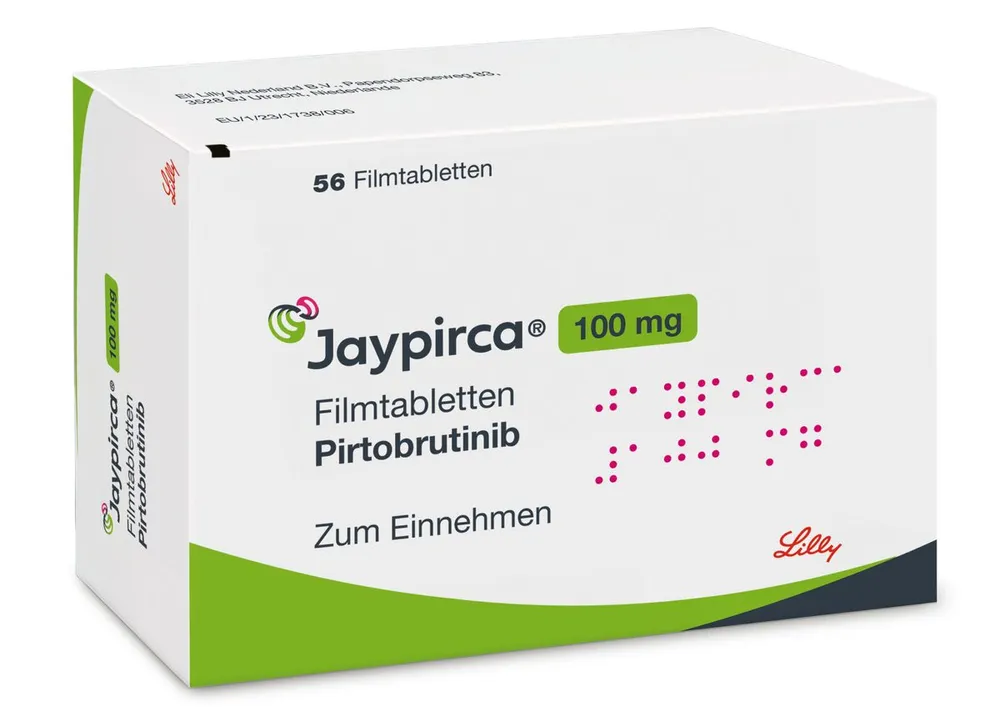
Table of Contents
Package leaflet: Information for the user
Introduction
Package leaflet: information for the patient
Jaypirca 50 mg film-coated tablets
Jaypirca 100 mg film-coated tablets
pirtobrutinib
This medicinal product is subject to additional monitoring, which will allow for quicker detection of new safety information. You can help by reporting any side effects you may experience. Section 4 at the end of this leaflet includes information on how to report these side effects.
Read the entire leaflet carefully before you start taking this medicine, because it contains important information for you.
- Keep this leaflet, as you may need to read it again.
- If you have any questions, ask your doctor, pharmacist or nurse.
- This medicine has been prescribed for you only, and you should not give it to other people, even if they have the same symptoms as you, because it may harm them.
- If you experience any side effects, consult your doctor, pharmacist or nurse, even if they are side effects not listed in this leaflet. See section 4.
Leaflet contents
- What Jaypirca is and what it is used for
- What you need to know before taking Jaypirca
- How to take Jaypirca
- Possible side effects
- How to store Jaypirca
- Contents of the pack and other information
1. What Jaypirca is and what it is used for
Jaypirca is a cancer medicine that contains the active substance pirtobrutinib. It belongs to a class of medicines called Bruton's tyrosine kinase (BTK) inhibitors.
It is used alone (monotherapy) to treat the following blood cancers in adult patients who have previously been treated with another BTK inhibitor:
- Mantle cell lymphoma (MCL). MCL is an aggressive (fast-growing) cancer of a type of white blood cells called B-lymphocytes. B-lymphocytes are part of the immune system (the body's natural defenses). This medicine is used when the cancer has returned (relapsed) or treatment has not worked (refractory).
- Chronic lymphocytic leukemia (CLL): a type of cancer affecting white blood cells called lymphocytes. This medicine is used when the cancer has returned (relapsed) or treatment has not worked (refractory).
How Jaypirca works
Jaypirca works by blocking BTK, a protein in the body that helps MCL and CLL cells grow and survive. By blocking BTK, Jaypirca helps destroy these cells and may reduce their numbers, which can slow down the progression of the cancer.
2. What you need to know before taking Jaypirca
Do not take Jaypirca
- if you are allergic to pirtobrutinib or to any of the other ingredients of this medicine (listed in section 6).
Warnings and precautions
Talk to your doctor, pharmacist, or nurse before starting Jaypirca:
- If you have an infection or are at increased risk of developing an opportunistic infection (infections seen in patients with weakened immune systems). Your doctor may give you medicines to treat or prevent infections.
- If you have or have ever had unusual bruising or bleeding, or are taking any medicines or supplements that may increase your risk of bleeding. See section “Other medicines and Jaypirca” below.
- If you have recently had low counts of red blood cells (anemia), neutrophils (a type of white blood cell that fights infections), or platelets (components that help blood to clot).
- If you have recently undergone surgery or are scheduled to have a surgical procedure. Your doctor may ask you to stop taking Jaypirca for a short period (3 to 5 days) before and after the procedure.
- If you have or have ever had irregular heartbeats or other heart or blood vessel problems, such as high blood pressure, history of heart attack, or heart valve damage.
You may develop infections during treatment with Jaypirca. Contact your doctor if you develop fever, chills, weakness, confusion, body aches, cough, cold or flu-like symptoms, fatigue, shortness of breath, or pain or burning when urinating. These could be signs of an infection.
Talk to your doctor if you develop a new skin lesion or any changes in the appearance of a skin area, as treatment with Jaypirca may increase your risk of developing skin cancer. Use sun protection and have regular dermatological examinations.
During treatment with Jaypirca, rare cases of abnormal levels of chemicals in the blood caused by the rapid breakdown of cancer cells, known as tumor lysis syndrome (TLS), have been reported. This may lead to changes in kidney function, unusual heartbeats, or seizures. Your doctor or other healthcare professional may perform blood tests to monitor for TLS.
During treatment, your doctor will monitor you for signs and symptoms of bleeding (see section 4) and will check your blood cell counts.
Your doctor may monitor your heart rhythm during treatment for any irregularities.
Children and adolescents
Do not give Jaypirca to children and adolescents under 18 years of age. This is because it has not been studied in this age group.
Other medicines and Jaypirca
Tell your doctor or pharmacist if you are taking, have recently taken, or might need to take any other medicines.
Jaypirca may make you bleed more easily. This means you should inform your doctor if you are taking other medicines that increase your risk of bleeding. This includes medicines such as:
- acetylsalicylic acid (aspirin) and non-steroidal anti-inflammatory drugs (NSAIDs) such as ibuprofen and naproxen,
- anticoagulants such as warfarin, heparin, and other medicines used to treat or prevent blood clots,
- supplements that may increase your risk of bleeding, such as fish oil, vitamin E, or flaxseed.
If any of the above situations apply to you (or if you are unsure), consult your doctor, pharmacist, or nurse before taking Jaypirca.
Tell your doctor or pharmacist if you are taking any of the following medicines, as Jaypirca may affect the effectiveness of these medicines:
- Repaglinide, rosiglitazone, or pioglitazone (used to treat diabetes)
- Dasabuvir (used for hepatitis C infection)
- Selexipag (used to treat a type of high blood pressure in the lungs called pulmonary arterial hypertension)
- Rosuvastatin (a statin, a type of medicine used to treat high cholesterol)
- Montelukast (used to treat asthma)
- Digoxin (used to treat heart conditions)
- Dabigatran etexilate (an anticoagulant, a type of medicine used to prevent blood clots)
- Phenobarbital (a barbiturate, a type of medicine used to treat seizures)
- Mephenytoin, phenytoin, and carbamazepine (types of medicines used to treat seizures)
- Midazolam (a sedative)
- Alfentanil (a medicine used for anesthesia)
- Tacrolimus (used to prevent organ rejection and for skin conditions)
- Rifampicin (an antibiotic)
- Methotrexate (a medicine used to treat other types of cancer or immune system disorders)
- Mitoxantrone (a medicine used to treat other types of cancer)
Pregnancy, breastfeeding, and fertility
If you are pregnant or breastfeeding, think you may be pregnant, or plan to become pregnant, consult your doctor or pharmacist before using this medicine.
Do not use Jaypirca during pregnancy. If you are a woman of childbearing potential, you must use an effective method of contraception during treatment and for 5 weeks after your last dose of Jaypirca. Inform your doctor immediately if you become pregnant.
If you are a man, you must use an effective method of contraception during treatment and for 3 months after your last dose of Jaypirca.
Do not breastfeed while taking Jaypirca and for one week after your last dose of Jaypirca. It is unknown whether Jaypirca passes into breast milk.
It is unknown whether Jaypirca will affect fertility. Speak with your doctor or pharmacist for advice if you are planning to have a baby.
Driving and using machines
Jaypirca has a minor effect on your ability to drive and use machines. You may experience fatigue, dizziness, or weakness after taking Jaypirca, which may affect your ability to drive or operate machinery.
Jaypirca contains lactose
If your doctor has informed you that you have an intolerance to certain sugars, consult with them before taking this medicine.
Jaypirca contains sodium
This medicine contains less than 1 mmol of sodium (23 mg) per daily dose of 200 mg; essentially, it is “sodium-free.”
3. How to take Jaypirca
Follow exactly the instructions for administering this medicine as given by your doctor or pharmacist. If in doubt, consult your doctor or pharmacist again.
The recommended dose of Jaypirca is 200 mg once daily.
If you experience certain adverse effects while taking Jaypirca, your doctor may temporarily interrupt treatment or reduce your dose.
Jaypirca should be taken at approximately the same time each day. You may take the tablets with or without food. Swallow the tablet whole with a glass of water. Do not chew, crush, or divide the tablets before swallowing to ensure you receive the correct dose.
If you take more Jaypirca than you should
If you have taken more Jaypirca than you should, contact a doctor or go immediately to a hospital for advice. Take the tablets and this leaflet with you. You may require medical treatment.
If you forget to take Jaypirca
- If less than 12 hours have passed since the usual time for taking a dose, take the missed dose immediately. Take the next dose the following day at the usual scheduled time.
- If more than 12 hours have passed since the usual time for taking a dose, skip the missed dose. Take the next dose the following day at the usual scheduled time.
- Do not take a double dose of Jaypirca to make up for a missed dose. Take the next dose at the usual scheduled time.
- Do not take a double dose of Jaypirca if you experience vomiting. Take the next dose at the usual scheduled time.
If you have any further questions about the use of this medicine, ask your doctor, pharmacist, or nurse.
4. Possible adverse effects
Like all medicines, this medicine can cause adverse effects, although not everyone will experience them.
Stop taking Jaypirca and contact a doctor immediately if you experience any of the following adverse effects:
- skin rash with lumps and itching, difficulty breathing, swelling of the face, lips, tongue or throat, as you may be having an allergic reaction to the medicine.
Contact your doctor immediately if you experience any of the following adverse effects:
- fever, chills, feeling weak or confused, cough, cold or flu-like symptoms, difficulty breathing, pain or burning sensation when urinating; these could be signs of an infection. These may include very common adverse effects (may affect more than 1 in 10 people) such as lung infection (pneumonia), nose, sinuses or throat (upper respiratory tract infection), or urinary tract infection (may affect up to 1 in 10 people).
- bleeding, which may affect more than 1 in 10 people. Signs may include frequent adverse effects (may affect up to 1 in 10 people) such as nosebleeds, collection of blood under the tissue (bruising), or bleeding from the tissue covering the eye. Other signs of bleeding may include pink or brown urine, black or bloody stools, bleeding from the gums, or vomiting or coughing up blood.
- irregular heartbeats, weak or irregular pulse, dizziness, difficulty breathing, chest discomfort, as these are symptoms of heart rhythm disorders (may affect up to 1 in 10 people).
Inform your doctor, pharmacist or nurse if you experience any of the following adverse effects:
Very common (may affect more than 1 in 10 people)
- tiredness (fatigue)
- low levels of neutrophils (a type of white blood cell that fights infections; neutropenia)
- loose or frequent stools (diarrhoea)
- bruising
- contusion
- feeling dizzy (nausea)
- low red blood cell count (anaemia), which may cause tiredness and pale skin
- joint pain (arthralgia)
- decreased platelet count in blood (cells that help blood to clot; thrombocytopenia)
- rash
- stomach ache (abdominal pain)
- swelling of hands, ankles or feet
- headache
Common (may affect up to 1 in 10 people)
- lymphocytosis (a higher than normal number of lymphocytes, a type of white blood cell, in the blood)
- small spots of blood under the skin (petechiae)
Reporting of adverse effects
If you experience any type of adverse effect, talk to your doctor, pharmacist or nurse, even if it is a possible adverse effect not listed in this leaflet. You can also report them directly through the national reporting system listed in Appendix V. By reporting adverse effects, you can help provide more information on the safety of this medicine.
5. Storage of Jaypirca
Keep this medicine out of sight and reach of children.
Do not use this medicine after the expiry date stated on the carton and blister after "CAD" and "EXP", respectively. The expiry date refers to the last day of the month indicated.
This medicine does not require any special storage conditions.
Medicines must not be disposed of via wastewater or household waste. Ask your pharmacist how to dispose of medicines and packaging you no longer need. This will help protect the environment.
6. Contents of the pack and other information
Composition of Jaypirca
The active substance is pirtobrutinib. Each film-coated tablet contains 50 or 100 mg of pirtobrutinib.
The other components are:
- Tablet core: hypromellose acetate succinate, microcrystalline cellulose, lactose monohydrate (see section 2 “Jaypirca contains lactose”), sodium croscarmellose (see section 2 “Jaypirca contains sodium”), magnesium stearate, colloidal hydrated silica.
- Film coating: hypromellose, titanium dioxide, triacetin; indigo carmine (E132).
Appearance of the product and contents of the pack
Jaypirca 50 mg is supplied as blue, film-coated, arched triangular tablets marked with "Lilly 50" on one side and "6902" on the other. It is available in blisters containing 28, 30 or 84 film-coated tablets.
Jaypirca 100 mg is supplied as blue, round, film-coated tablets marked with "Lilly 100" on one side and "7026" on the other. It is available in blisters containing 28, 30, 56, 60, 84 or 168 film-coated tablets.
Only certain pack sizes may be marketed.
Marketing Authorization Holder
Eli Lilly Nederland B.V.,
Papendorpseweg 83,
3528BJ Utrecht,
The Netherlands.
Manufacturer
Lilly S.A.,
Avda. de la Industria 30,
28108 Alcobendas,
Madrid, Spain.
Further information on this medicinal product is available upon request by contacting the local representative of the Marketing Authorization Holder:
Belgium/Belgium/Belgium Eli Lilly Benelux S.A./N.V. Tel/Tel: + 32-(0)2 548 84 84 | Lithuania Eli Lilly Lietuva Tel. +370 (5) 2649600 |
| Luxembourg/Luxembourg Eli Lilly Benelux S.A./N.V. Tél/Tel: + 32-(0)2 548 84 84 |
Czech Republic ELI LILLY CR, s.r.o. Tel: + 420 234 664 111 | Hungary Lilly Hungária Kft. Tel: + 36 1 328 5100 |
Denmark Eli Lilly Danmark A/S Tlf.: +45 45 26 60 00 | Malta Charles de Giorgio Ltd. Tel: + 356 25600 500 |
Germany Lilly Deutschland GmbH Tel. + 49-(0) 6172 273 2222 | Netherlands Eli Lilly Nederland B.V. Tel: + 31-(0) 30 60 25 800 |
Estonia Eli Lilly Nederland B.V. Tel: +372 6 817 280 | Norway Eli Lilly Norge A.S. Tlf: + 47 22 88 18 00 |
Greece PHARMASERV-LILLY S.A. Tel: +30 210 629 4600 | Austria Eli Lilly Ges.m.b.H. Tel: + 43-(0) 1 711 780 |
Spain Lilly S.A. Tel: + 34-91 663 50 00 | Poland Eli Lilly Polska Sp. z o.o. Tel: +48 22 440 33 00 |
France Lilly France Tél: +33-(0) 1 55 49 34 34 | Portugal Lilly Portugal Produtos Farmacêuticos, Lda Tel: + 351-21-4126600 |
Croatia Eli Lilly Hrvatska d.o.o. Tel: +385 1 2350 999 | Romania Eli Lilly România S.R.L. Tel: + 40 21 4023000 |
Ireland Eli Lilly and Company (Ireland) Limited Tel: + 353-(0) 1 661 4377 | Slovenia Eli Lilly farmacevtska družba, d.o.o. Tel: +386 (0)1 580 00 10 |
Iceland Icepharma hf. Sími + 354 540 8000 | Slovakia Eli Lilly Slovakia s.r.o. Tel: + 421 220 663 111 |
Italy Eli Lilly Italia S.p.A. Tel: + 39- 055 42571 | Finland Oy Eli Lilly Finland Ab Puh/Tel: + 358-(0) 9 85 45 250 |
Cyprus Phadisco Ltd Tel: +357 22 715000 | Sweden Eli Lilly Sweden AB Tel: + 46-(0) 8 7378800 |
Latvia Eli Lilly (Suisse) S.A. Representative Office Latvia Tel: +371 67364000 |

Date of the most recent review of this leaflet:
This medicinal product has been authorised under a "conditional approval".
This type of approval means that further information on this medicinal product is expected. The European Medicines Agency will review the new information at least once a year and this leaflet will be updated as necessary.
Other sources of information
Detailed information on this medicinal product is available on the website of the European Medicines Agency: https://www.ema.europa.eu.