Isentress 600 mg film-coated tablets
Spain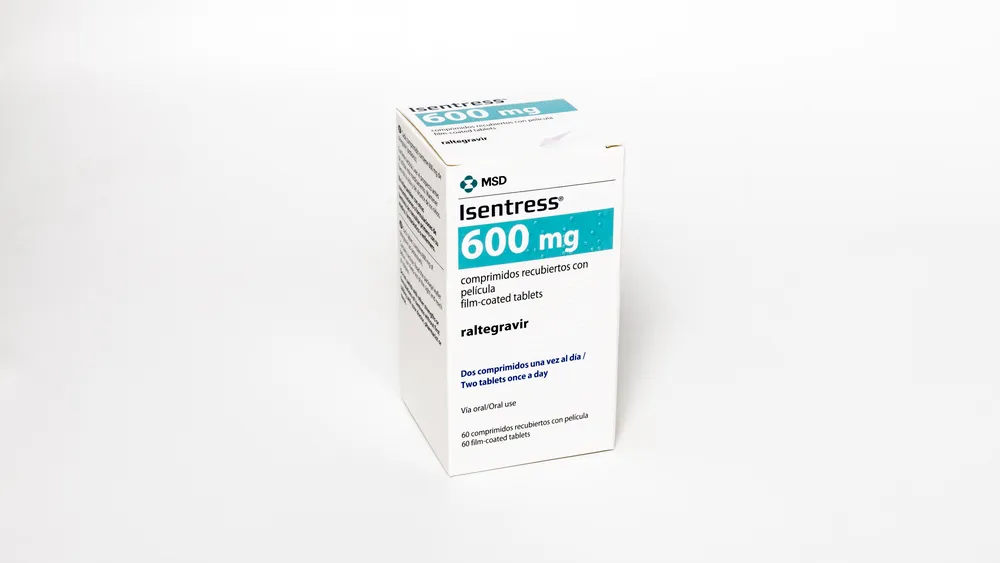
Table of Contents
Package leaflet: Information for the user
Introduction
Package leaflet: information for the user
Isentress 600mg film-coated tablets
raltegravir
Read all of this leaflet carefully before you start taking this medicine, because it contains important information for you.
If you are the parent of a child taking Isentress, please read this information carefully with your child.
- Keep this leaflet, as you may need to read it again.
- If you have any questions, ask your doctor, pharmacist or nurse.
- This medicine has been prescribed only for you or your child, and you should not give it to other people, even if they have the same symptoms as you, because it may harm them.
- If you experience any side effects, talk to your doctor, pharmacist or nurse, even if they are side effects not listed in this leaflet. See section 4.
Contents of the leaflet
- What Isentress is and what it is used for
- What you need to know before taking Isentress
- How to take Isentress
- Possible side effects
- How to store Isentress
- Contents of the pack and other information
1. What Isentress is and what it is used for
What Isentress is
Isentress contains the active substance raltegravir. Isentress is an antiviral medicine that acts against the human immunodeficiency virus (HIV). This is the virus that causes acquired immunodeficiency syndrome (AIDS).
How Isentress works
The virus produces an enzyme called HIV integrase, which helps the virus enter the body's cells and multiply. Isentress prevents this enzyme from working. When used with other medicines, Isentress can reduce the amount of HIV in the blood (this is called your “viral load”) and increase the CD4 cell count (a type of white blood cell that plays an important role in maintaining a healthy immune system to help fight infection). By reducing the amount of HIV in the blood, Isentress may improve the functioning of your immune system. This means your body can fight the infection more effectively.
When Isentress should be used
Isentress 600 mg film-coated tablets are used to treat adults and pediatric patients weighing at least 40 kg who are infected with HIV. Your doctor has prescribed Isentress to help you control your HIV infection.
2. What you need to know before taking Isentress
Do not take Isentress:
- if you are allergic to raltegravir or to any of the other ingredients of this medicine (listed in section 6).
Warnings and precautions
Talk to your doctor, pharmacist or nurse before starting Isentress.
Remember that Isentress does not cure HIV infection. This means you may still develop HIV-related infections or other illnesses. You must continue to visit your doctor regularly while taking this medicine.
Mental health problems
Inform your doctor if you have a history of depression or mental illness. Depression, including suicidal thoughts and behaviour, has been observed in some patients taking this medicine, particularly in those with a prior history of depression or mental illness.
Bone problems
Some patients receiving combination antiretroviral therapy may develop a bone condition called osteonecrosis (death of bone tissue caused by reduced blood supply to the bone). Factors that may contribute to the risk of developing this condition include length of combination antiretroviral therapy, use of corticosteroids, alcohol consumption, severely weakened immune system, and increased body mass index, among others. Signs of osteonecrosis include joint stiffness, discomfort, pain (especially in the hip, knee or shoulder), and difficulty moving. If you experience any of these symptoms, see your doctor.
Liver problems
Inform your doctor, pharmacist or nurse if you have previously had liver problems, including hepatitis B or C. Your doctor may assess the severity of your liver disease before deciding whether you can take this medicine.
Infections
If you notice any symptoms of infection, such as fever and/or feel unwell, inform your doctor, pharmacist or nurse immediately. Some patients with advanced HIV infection who have previously had opportunistic infections may develop signs and symptoms of inflammation from prior infections shortly after starting HIV treatment. These symptoms are believed to be due to improvement in the body's immune response, which enables the body to fight infections that may have been present but not causing obvious symptoms.
In addition to opportunistic infections, autoimmune disorders (a condition in which the immune system attacks healthy body tissue) may also occur after you start taking medicines for HIV infection. Autoimmune disorders may appear many months after treatment has started. If you notice any symptoms of infection or other symptoms such as muscle weakness, weakness starting in the hands and feet and moving up toward the trunk, palpitations, tremors, or hyperactivity, inform your doctor immediately to receive appropriate treatment.
Muscle problems
Contact your doctor, pharmacist or nurse immediately if you experience unexplained muscle pain, tenderness to pressure, or muscle weakness during treatment with this medicine.
Skin problems
Contact your doctor immediately if you develop a rash. Serious and potentially life-threatening skin reactions and allergic reactions have been reported in some patients taking this medicine.
Other medicines and Isentress
Inform your doctor, pharmacist or nurse if you are taking, have recently taken or might need to take any other medicines.
Isentress may interact with other medicines. Inform your doctor, pharmacist or nurse if you are taking, have recently taken or might need to take:
- antacids (a medicine that counteracts or neutralizes stomach acid and relieves indigestion and heartburn)
- iron salts (to treat or prevent iron deficiency or anaemia). You must wait at least two hours between taking iron salts and taking Isentress, as these medicines may reduce the effectiveness of Isentress.
- atazanavir (an antiretroviral medicine)
- rifampicin (a medicine used to treat certain infections such as tuberculosis)
- tipranavir/ritonavir (antiretroviral medicines)
Keep a list of all your medicines with you to show your doctor and pharmacist.
- You may ask your doctor or pharmacist for a list of medicines that interact with Isentress.
- Do not start taking a new medicine without informing your doctor. Your doctor can tell you whether it is safe to take Isentress with other medicines.
Taking Isentress with food and drink
See section 3.
Pregnancy and breastfeeding
If you are pregnant or breastfeeding, think you may be pregnant, or are planning to become pregnant, consult your doctor or pharmacist before using this medicine.
- Isentress 1,200 mg (two 600 mg tablets once daily) is not recommended during pregnancy because it has not been studied in pregnant women.
- Women living with HIV should not breastfeed because HIV infection can be transmitted to the baby through breast milk.
- If you are breastfeeding or considering breastfeeding, you should consult your doctor as soon as possible.
If you are pregnant or breastfeeding, consult your doctor, pharmacist or nurse before using any medicine.
Driving and using machines
Do not operate machinery, drive or ride a bicycle if you feel dizzy after taking this medicine.
Isentress contains lactose
This medicine contains lactose. If your doctor has told you that you have an intolerance to certain sugars, consult with him before taking this medicine.
Isentress contains sodium
This medicine contains less than 1 mmol of sodium (23 mg) per tablet; this is essentially “sodium-free”.
3. How to take Isentress
Follow exactly the instructions for using this medicine as given by your doctor, pharmacist, or nurse. If in doubt, consult your doctor, pharmacist, or nurse again. Isentress must be used in combination with other medicines for HIV infection.
How much to take
Adults, children and adolescents weighing at least 40 kg
The recommended dose is 1,200 mg taken as two 600 mg tablets orally once daily.
Do not chew, crush, or split the tablets, as this may alter the amount of medicine in your body. You may take this medicine with or without food or drink.
Isentress is also available as a 400 mg tablet, chewable tablet, and granules for oral suspension.
Do not switch between the 600 mg tablet, the 400 mg tablet, the chewable tablet, or the granules for oral suspension without first consulting your doctor, pharmacist, or nurse.
If you take more Isentress than you should
Do not take more tablets than your doctor has recommended. If you take more tablets than recommended, consult your doctor.
If you forget to take Isentress
- If you forget to take a dose, take it as soon as you remember.
- However, if it is almost time for your next dose, do not take the missed dose and continue with your regular dosing schedule.
- Do not take a double dose to make up for a missed dose.
If you stop taking Isentress
It is important that you take Isentress exactly as prescribed by your doctor. Do not change the dose or stop taking this medicine without first consulting your doctor, pharmacist, or nurse. Do not stop taking it because:
- It is very important that you take all HIV medicines exactly as prescribed and at the correct times of day. This helps the medicines work better and also reduces the chance that the virus will become resistant to them (this is also known as “drug resistance”).
- When you are running low on Isentress tablets, go to your doctor or pharmacy to get more. This is because it is very important not to run out of medicine, not even for a few days. If you stop taking the medicine for a few days, the amount of virus in your blood may increase, and as a result, HIV may develop resistance to Isentress, making the disease harder to treat.
If you have any further questions about the use of this medicine, ask your doctor, pharmacist, or nurse.
4. Possible adverse effects
Like all medicines, this medicine can cause adverse effects, although not everyone will experience them.
Serious adverse effects – these are uncommon (may affect up to 1 in 100 people)
Seek medical advice immediately if you notice any of the following adverse effects:
- herpes infections including herpes zoster
- anemia including iron deficiency anemia
- signs and symptoms of infection or inflammation
- mental disorder
- suicide attempt or suicidal thoughts
- stomach inflammation
- liver inflammation
- liver failure
- allergic-type rash
- certain types of kidney problems
- ingestion of the medicine in amounts higher than recommended
Seek medical advice immediately if you notice any of the adverse effects listed above.
Frequent: the following adverse effects may affect up to 1 in 10 people
- decreased appetite
- sleep problems; strange dreams; nightmares; abnormal behavior; feeling of deep sadness and low self-esteem
- dizziness; headache
- vertigo
- flatulence or gas; abdominal pain; diarrhea; excessive gas in the stomach or intestines; nausea; vomiting; indigestion; burping
- certain types of skin rash (more frequently when used in combination with darunavir)
- tiredness, unusual tiredness or weakness; fever
- elevated liver parameters; abnormal white blood cell counts; increased blood fat levels; increased levels of enzymes from salivary glands or pancreas
Uncommon: the following adverse effects may affect up to 1 in 100 people
- hair follicle infection; flu; viral skin infection; vomiting or diarrhea due to an infectious agent; upper respiratory tract infection; pus accumulation in lymph node
- warts
- lymph node pain; low count of white blood cells responsible for fighting infections; swelling of glands in neck, armpits, or groin
- allergic reaction
- increased appetite; diabetes; elevated cholesterol and blood lipids; increased blood sugar levels; excessive thirst; severe weight loss; high blood fat levels (such as cholesterol and triglycerides); body fat disorders
- feeling of distress; feeling confused; depressed mood; mood changes; panic attack
- memory loss; hand pain due to nerve compression; attention disturbance; dizziness upon rapid change in posture; abnormal taste; increased drowsiness; lack of energy; forgetfulness; migraine headache; loss of sensation, numbness, or weakness in arms and/or legs; tingling; drowsiness; tension headache; tremors; poor sleep
- vision disturbance
- tinnitus, high-pitched sounds, whistling, ringing, or other persistent noises in the ears
- palpitations; slow pulse; fast or irregular heartbeat
- hot flushes; increased blood pressure
- hoarse, rough, or strained voice; nosebleeds; nasal congestion
- upper abdominal pain; rectal discomfort; constipation; dry mouth; heartburn; pain when swallowing; pancreatitis; ulcer or sore in the stomach or upper intestine; bleeding from the anus; stomach discomfort; gum inflammation; swelling, red and ulcerated tongue
- fat accumulation in the liver
- acne; hair loss or thinning; skin redness; unusual body fat distribution, which may include loss of fat in legs, arms, and face and increased fat in the abdomen; excessive sweating; night sweats; thickened and itchy skin due to repeated scratching; skin lesion; dry skin
- joint pain; painful joint disease; back pain; bone/muscle pain; muscle soreness or weakness; neck pain; pain in arms or legs; tendon inflammation; decreased bone mineral content
- kidney stones; nocturnal urination; renal cyst
- erectile dysfunction; breast enlargement in men; menopausal symptoms
- chest discomfort; chills; facial swelling; feeling of nervousness; feeling of general malaise; lump in the neck; swelling of hands, ankles, or feet; pain
- low white blood cell count; low platelet count in blood (a type of cell involved in blood clotting); decreased kidney function in blood tests; high blood sugar levels; elevated muscle enzymes in blood; sugar in urine; red blood cells in urine; weight gain; increased waist circumference; decreased blood proteins (albumin); prolonged blood clotting time
Other adverse effects in children and adolescents
- hyperactivity
Reporting of adverse effects
If you experience any adverse effect, consult your doctor, pharmacist, or nurse, even if it is a possible adverse effect not listed in this leaflet. You may also report them directly through the national reporting system detailed in Appendix V. By reporting adverse effects, you can help provide more information on the safety of this medicine.
5. Storage of Isentress
- Keep this medicine out of the sight and reach of children.
- Do not use this medicine after the expiry date stated on the bottle after EXP. The expiry date is the last day of the month indicated.
- Keep the bottle tightly closed, with the desiccant (drying agent) inside, to protect it from moisture. Do not swallow the desiccant.
Medicines should not be disposed of via wastewater or household waste. Ask your pharmacist how to dispose of medicines and packaging you no longer need. This helps protect the environment.
6. Contents of the pack and other information
Composition of Isentress
The active substance is raltegravir. Each film-coated tablet contains 600 mg of raltegravir (potassium).
The other components are: microcrystalline cellulose, hypromellose 2910, sodium croscarmellose, and magnesium stearate. In addition, the coating contains the following inactive components: lactose monohydrate, hypromellose 2910, titanium dioxide, triacetin, yellow iron oxide, and black iron oxide. The tablet may also contain traces of carnauba wax.
Appearance of the product and contents of the pack
The 600 mg film-coated tablet is oval-shaped, yellow in colour, with the MSD corporate logo and the imprint "242" engraved on one side and the other side smooth.
Two pack sizes are available: packs containing 1 bottle of 60 tablets and multiple packs containing 3 bottles of 60 tablets each. The bottle contains a desiccant.
Only certain pack sizes may be marketed.
Marketing Authorization Holder and Manufacturer
Merck Sharp & Dohme B.V.
Waarderweg 39
2031 BN Haarlem
The Netherlands
For more information about this medicine, please contact the local representative of the Marketing Authorization Holder:
Belgium/Belgium/Belgium MSD Belgium Tel/Tel: +32(0)27766211 | Lithuania UAB Merck Sharp & Dohme Tel. +370 5 2780 247 |
| Luxembourg/Luxembourg MSD Belgium Tél/Tel: +32(0)27766211 |
Czech Republic Merck Sharp & Dohme s.r.o. Tel.: +420 277 050 000 | Hungary MSD Pharma Hungary Kft. Tel.: +36 1 888 5300 |
Denmark MSD Danmark ApS Tlf.: +45 4482 4000 | Malta Merck Sharp & Dohme Cyprus Limited Tel: 8007 4433 (+356 99917558) |
Germany MSD Sharp & Dohme GmbH Tel.: +49 (0) 89 20 300 4500 | Netherlands Merck Sharp & Dohme B.V. Tel: 0800 9999000 (+31 23 5153153) |
Estonia Merck Sharp & Dohme OÜ Tel: +372 614 4200 | Norway MSD (Norge) AS Tlf: +47 32 20 73 00 |
Greece MSD Α.Φ.Ε.Ε. Tel: +30 210 98 97 300 | Austria Merck Sharp & Dohme Ges.m.b.H. Tel: +43 (0) 1 26 044 |
Spain Merck Sharp & Dohme de España, S.A. Tel: +34 91 321 06 00 | Poland MSD Polska Sp. z o.o. Tel.: +48 22 549 51 00 |
France MSD France Tél: +33 (0)1 80 46 40 40 | Portugal Merck Sharp & Dohme, Lda Tel.: +351 21 4465700 |
Croatia Merck Sharp & Dohme d.o.o. Tel: +385 1 6611 333 | Romania Merck Sharp & Dohme Romania S.R.L. Tel.: +40 21 529 29 00 |
Ireland Merck Sharp & Dohme Ireland (Human Health) Limited Tel: +353 (0)1 2998700 | Slovenia Merck Sharp & Dohme, inovativna zdravila d.o.o. Tel: +386 1 520 4201 |
Iceland Vistor ehf. Tel: +354 535 7000 | Slovakia Merck Sharp & Dohme, s. r. o. Tel.: +421 2 58282010 |
Italy MSD Italia S.r.l. Tel: 800 23 99 89 (+39 06 361911) | Finland MSD Finland Oy Puh/Tel: +358 (0)9 804 650 |
Cyprus Merck Sharp & Dohme Cyprus Limited Tel: 800 00 673 (+357 22866700) | Sweden Merck Sharp & Dohme (Sweden) AB Tel: +46 77 5700488 |
Latvia SIA Merck Sharp & Dohme Latvija Tel.: +371 67025300 |
Date of the most recent revision of this leaflet: <{MM/YYYY}><{month YYYY}>.
Detailed information on this medicine is available on the European Medicines Agency website: https://www.ema.europa.eu.