Isdiben 10 mg soft capsules EFG
Spain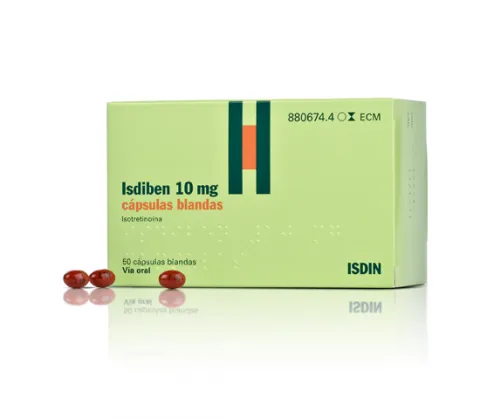
Table of Contents
Patient Information Leaflet
Introduction
PACKAGE LEAFLET: INFORMATION FOR THE PATIENT
Isdiben 10 mg Soft Capsules EFG
Isotretinoin
WARNING IF PREGNANT, MAY CAUSE SERIOUS HARM TO THE BABY. Women must use effective contraception throughout treatment. Do not use if pregnant or suspect you may be pregnant. |
You can help by reporting any side effects you may experience. The end of section 4 includes information on how to report these side effects.
Please read this entire leaflet carefully before starting to take this medicine, as it contains important information for you.
- Keep this leaflet, as you may need to read it again.
- If you have any questions, consult your doctor or pharmacist.
- This medicine has been prescribed for you personally; do not give it to others, even if they have the same symptoms as you, as it may harm them.
- If you experience any side effects, consult your doctor or pharmacist, even if they are side effects not listed in this leaflet. See section 4.
Leaflet contents
- What Isdiben is and what it is used for
- What you need to know before taking Isdiben
- How to take Isdiben
- Possible side effects
- How to store Isdiben
- Contents of the pack and other information
1. What Isdiben is and what it is used for
Isdiben soft capsules contain isotretinoin.
- Isotretinoin is related to vitamin A.
- It belongs to a group of medicines called "retinoids".
Isdiben is indicated for the treatment of severe forms of acne.
- This type of acne may cause permanent scarring.
- These forms of acne are also known as nodular or conglobata acne.
Isdiben is used when your acne has not improved with other treatments, which may include antibiotics or dermatological therapies.
Your treatment must be supervised by a dermatologist. These doctors are specialists in skin disorders.
2. What you need to know before taking Isdiben
Do not take Isdiben if:
-
You are pregnant or breastfeeding.
-
You plan to become pregnant.
-
If there is any possibility you could become pregnant, you must follow the precautions outlined in the “Pregnancy Prevention Programme”; see the section “Warnings and precautions”.
-
You are allergic to peanuts or soy, or to any of the components of Isdiben. This medicine contains soybean oil, in addition to isotretinoin. See section 6 (Other information) at the end of this leaflet for the full list of ingredients.
-
You have been diagnosed with liver problems.
-
You have been diagnosed with very high levels of fats in your blood (such as elevated cholesterol or triglycerides).
-
You have been diagnosed with very high levels of vitamin A in your body (known as hypervitaminosis A).
-
You are being treated simultaneously with a type of antibiotic called tetracyclines (see “Use with other medicines”).
If any of these situations apply to you, please consult your doctor again and do not take this medicine. Ask your doctor before taking it.
Use in children under 12 years
- Do not administer to children under 12 years of age. Only administer to those over 12 years if they have already reached puberty.
Special precautions with Isdiben
Do not take this medicine if you are pregnant.
Pregnancy Prevention Programme
Pregnant women must not take isotretinoin.
This medicine can seriously harm the unborn baby (the medicine is considered "teratogenic") – it may cause severe abnormalities in the baby's brain, face, ears, eyes, heart, and certain glands (thymus and parathyroid). It also increases the risk of miscarriage. This can occur even if Isdiben is taken for only a short time during pregnancy.
- Do not take Isdiben if you are pregnant or think you might be pregnant.
- Do not take Isdiben if you are breastfeeding. The medicine is likely to pass into your milk and may harm your baby.
- Do not take Isdiben if you could become pregnant during treatment.
- Do not become pregnant within one month after stopping treatment, as the medicine may still remain in your body.
Women who could become pregnant must be prescribed Isdiben under strict rules due to the risk of serious harm to the unborn baby.
These rules are:
- Your doctor must explain the risk of harm to the unborn baby – you must understand why you must not become pregnant and what you need to do to prevent it.
- You must have discussed contraception (birth control) with your doctor. Your doctor will provide information on how to avoid pregnancy. Your doctor may refer you to a specialist for contraceptive advice.
- Before starting treatment, your doctor will require you to take a pregnancy test. The test must confirm that you are not pregnant when starting treatment with Isdiben.
Women must use effective contraception before, during, and after taking Isdiben
- You must agree to use at least one highly reliable method of contraception (e.g., an intrauterine device or contraceptive implant) or two effective methods that work in different ways (e.g., a hormonal contraceptive pill and a condom). Discuss with your doctor which methods are suitable for you.
- You must use contraception for one month before starting Isdiben, throughout treatment, and for one month after stopping treatment.
- You must use contraception even if you are not having periods or are not sexually active (unless your doctor decides it is not necessary).
Women must agree to undergo pregnancy tests before, during, and after taking Isdiben
- You must agree to attend regular follow-up visits, ideally every month.
- You must agree to undergo regular pregnancy tests, ideally every month during treatment and one month after stopping Isdiben (due to the possibility that the medicine may still remain in your body), unless your doctor decides otherwise. You must also agree to additional pregnancy tests if requested by your doctor.
- You must not become pregnant during treatment or within one month after stopping, as the medicine may still be present in your body.
- Your doctor will discuss all these points with you using a checklist and will ask you (or a parent/guardian) to sign it. This checklist confirms that you have been informed of the risks and that you will follow the above rules.
If you become pregnant while taking Isdiben, stop taking the medicine immediately and contact your doctor. Your doctor may refer you to a specialist for advice.
Additionally, if you become pregnant within one month after stopping Isdiben, you must contact your doctor. Your doctor may refer you to a specialist for advice.
Advice for men
The levels of oral retinoids in the semen of men taking Isdiben are too low to harm a partner's unborn baby. However, you must never share your medicine with anyone.
Additional precautions
Never give this medicine to anyone else. Please return any unused capsules to your pharmacist at the end of treatment.
Do not donate blood during treatment with this medicine or for one month after stopping Isdiben, because a developing fetus could be harmed if a pregnant woman receives your blood.
Advice for all patients
Talk to your doctor before starting Isdiben if:
- You have ever had any mental health problems, including depression, aggressive tendencies, or mood changes. This also includes thoughts of self-harm or ending your life, as your mood may be affected while taking Isdiben.
- You are taking medicines for any of these conditions, as your mood may be affected while taking isotretinoin.
Mental health problems
You may not notice certain changes in your mood or behavior, so it is very important to inform your friends and family that you are taking this medicine. They may notice these changes and help you quickly identify any problems that need to be discussed with your doctor.
Isotretinoin often increases blood fat levels, such as cholesterol or triglycerides. Your doctor will request blood tests before, during, and after treatment with isotretinoin. During treatment, it is best to avoid alcoholic drinks or at least reduce your usual intake. Consult your doctor if you already have high blood fat levels, suffer from diabetes, are overweight, or consume excessive alcohol. You may need more frequent blood tests. If your blood fat levels remain high, your doctor may reduce your dose or stop treatment with this medicine.
- Isotretinoin may affect the liver
Your doctor will request blood tests before, during, and after treatment with isotretinoin to monitor liver function. If liver function is impaired, your doctor may reduce your dose or discontinue treatment with isotretinoin.
- Isotretinoin may increase blood sugar levels. Rarely, a person may develop diabetes. Your doctor may monitor your blood sugar levels during treatment. This is especially important if you already have diabetes, are overweight, or consume excessive alcohol.
- Your skin is likely to become dry: use a moisturizing cream and lip balm. To prevent skin irritation, avoid using "exfoliating" products or other acne treatments.
- Severe skin reactions have been reported (e.g., erythema multiforme (EM), Stevens-Johnson syndrome (SJS), and toxic epidermal necrolysis (TEN)) with the use of this medicine. Skin rashes may progress to widespread blistering or peeling of the skin. Be alert for mouth, throat, nose, or genital ulcers, as well as the development of conjunctivitis (redness and swelling of the eyes).
- In rare cases, this medicine may cause severe allergic reactions, some of which may affect the skin in the form of eczema, hives (skin rash with bumps), or red or bruised spots on the arms and legs. If you experience an allergic reaction, stop taking the medicine immediately, seek medical help, and inform the doctor that you are taking this medicine.
- Avoid sun exposure and do not use sunlamps or sunbeds. Your skin may become more sensitive to sunlight. Apply a high-protection sunscreen (SPF 50 or higher) before sun exposure.
- Do not undergo any cosmetic skin treatments. Isotretinoin may make your skin more fragile. Do not wax or undergo dermabrasion or laser treatments (to remove thickened skin layers or scars) during treatment or for 6 months afterward, as this could lead to scarring, skin irritation, or, in rare cases, changes in skin color.
- Isotretinoin has been associated with inflammatory bowel disease. If you experience severe bloody diarrhea and have no history of gastrointestinal disorders, your doctor will discontinue treatment with isotretinoin.
- Isotretinoin may cause dry eyes, intolerance to contact lenses, and visual difficulties such as reduced night vision. Cases of persistent dry eyes after stopping treatment have been reported. Contact your doctor if you experience any of these symptoms. Your doctor may recommend using a lubricating eye ointment or artificial tears. If you wear contact lenses and develop intolerance, you may be advised to wear glasses during treatment. If you experience visual disturbances, your doctor may refer you to a specialist and may ask you to stop treatment with isotretinoin.
- Cases of benign intracranial hypertension have been reported with isotretinoin use, and in some cases when isotretinoin was used together with tetracyclines (a type of antibiotic). Stop taking isotretinoin and contact your doctor immediately if you experience symptoms such as headache, nausea, vomiting, or vision changes. Your doctor may refer you to a specialist to check for optic disc swelling (papilledema).
- Reduce physical activity and intense exercise. Isotretinoin may cause muscle and joint pain, especially in young people.
- Talk to your doctor if you experience persistent lower back or buttock pain during treatment with Isdiben. These symptoms may indicate sacroiliitis, a type of inflammatory back pain. Your doctor may discontinue Isdiben and refer you to a specialist for inflammatory back pain treatment. Additional evaluation, including imaging such as MRI, may be required.
- Do not take vitamin A supplements while taking this medicine. Taking both together may increase the risk of adverse effects.
- Contact your doctor if you have any kidney problems. Your doctor may start treatment with a lower dose of isotretinoin and gradually increase it to the maximum tolerated dose.
- Do not donate blood while taking isotretinoin or for one month after stopping treatment. If your blood is transfused to a pregnant woman, the fetus could be harmed.
- Remember not to share this medicine with anyone else. You will need to return any unused capsules at the end of treatment. Ask your doctor or pharmacist where you can return the capsules.
Driving and use of machines
You may experience eye problems and visual disturbances during treatment. These may appear suddenly. In rare cases, night vision problems have persisted after stopping treatment.
In very rare cases, drowsiness and dizziness have been reported. If this occurs, you should not drive, ride a bicycle, or operate machinery.
Use with other medicines
Do not take supplements containing vitamin A or tetracyclines (a type of antibiotic), or use other acne treatments that dry or peel your skin, while taking isotretinoin. You may use moisturizing and emollient products (creams or preparations that prevent water loss and have a softening effect on the skin).
Consult your doctor or pharmacist if you are taking any other medicines, including herbal remedies and over-the-counter products (such as multivitamin supplements) and topical skin products, or if you have taken them recently.
Pregnancy, breastfeeding, and fertility
For more information about pregnancy and contraception, see the “Pregnancy Prevention Programme” section in section 2 "Warnings and precautions".
Do not use Isdiben if you are pregnant or planning to become pregnant. Your doctor can provide further information.
Important information about some of the components of Isdiben soft capsules -
This medicine contains soybean oil. Do not use if you are allergic to peanuts or soy.
3. How to take Isdiben
Follow exactly the administration instructions for isotretinoin given by your doctor. Consult your doctor or pharmacist if you have any doubts.
The usual starting dose is 0.5 mg per kilogram of body weight per day (0.5 mg/kg/day). Therefore, if you weigh 60 kg, you will normally start with a dose of 30 mg per day.
Take the capsules once or twice daily.
Take them during meals or immediately after meals. Swallow the capsules whole with a drink or a bite of food.
After a few weeks, your doctor may adjust your dose. This will depend on how the medicine affects you. For most people, the dose will range between 0.5 and 1 mg per kilogram of body weight per day. If you think this medicine is too strong or too weak, consult your doctor or pharmacist.
If you have severe kidney problems, you will usually start with a lower dose (e.g., 10 mg per day), which will be gradually increased until reaching the maximum dose your body can tolerate. If your body cannot tolerate the recommended dose, a lower dose may be prescribed. This means that treatment will be longer and it is more likely that your acne will return.
A treatment cycle usually lasts between 4 and 6 months. Most people only need one cycle. Your acne may continue to improve for up to 8 weeks after treatment ends. Normally, you will not start another cycle before this time has passed.
In some people, acne may worsen during the first week of treatment. Usually, it improves as treatment progresses.
If you take more Isdiben than you should
If you take too many capsules, or if someone else accidentally takes your medication, contact your doctor or pharmacist immediately, or go to the nearest hospital.
In case of overdose or accidental ingestion, contact your doctor, pharmacist, or the nearest hospital immediately, or call the Toxicology Information Service at: 91 562 04 20.
If you forget to take a dose
If you forget to take a dose, take it as soon as you remember. However, if it is almost time for your next dose, skip the missed dose and continue your treatment as before. Do not take two doses at the same time.
4. Possible adverse effects
This medicine may cause adverse effects, although not everyone experiences them. Often, these effects decrease or disappear when treatment is stopped. Your doctor can help you manage them.
Stop taking this medicine and contact your doctor immediately if you experience signs of any of the following adverse effects, although this may not be sufficient to make them go away and you may need further assistance (your doctor can arrange this).
Mental health problems
You may not be aware of certain changes in your mood and behaviour, which is why it is very important to inform your friends and family that you are taking this medicine. They may notice these changes and help you quickly identify any problems that you should discuss with your doctor.
Rare adverse effects (may affect up to 1 in 1,000 people)
- Depression or related disorders. These signs include sad or altered mood, anxiety, feelings of emotional distress.
- Worsening of existing depression.
- Becoming violent or aggressive.
Very rare adverse effects (may affect up to 1 in 10,000 people)
- Some people have had feelings or thoughts about harming themselves or ending their lives (suicidal thoughts), have attempted to end their lives (suicide attempt), or have died by suicide. These individuals may not appear depressed.
- Unusual behaviour.
- Signs of psychosis: loss of contact with reality, such as hearing voices or seeing things that are not there.
Contact your doctor immediately if you experience signs of any of these mental health problems. Your doctor may instruct you to stop taking Isdiben. This may not be sufficient to stop the effects: you may require further help, which your doctor can arrange.
Rash and other skin symptoms
Frequency not known (cannot be estimated from available data)
- This medicine may cause severe skin rashes, which can potentially be life-threatening and require urgent medical attention. These often begin as hives on the arms, hands, legs, or feet, which may contain blisters. In more severe rashes, blisters may form on the chest and back. They may be accompanied by other symptoms such as eye infection (conjunctivitis) or ulcers in the mouth, throat, or nose.
- If you begin to shed large areas of skin, this is a dangerous sign and you should go directly to the hospital. Bring the medicine with you. The most severe forms of skin rash can cause widespread skin peeling, which may be fatal. If you experience flu-like symptoms (headache, fever, body aches), these may be followed by a severe skin rash, so you should remain alert and ready to act quickly.
Very common adverse effects (may affect more than 1 in 10 people)
- Dry skin, especially of the lips and face; red, painful skin; cracked and inflamed lips; skin rash; mild itching and slight peeling. If you use a moisturizing cream from the beginning of treatment, you may reduce the risk of developing these conditions.
- The skin may become more fragile and redder than usual, especially on the face.
Rare adverse effects (may affect up to 1 in 1,000 people)
- Hair loss, which is usually temporary. Your hair will return to normal after treatment ends.
Very rare adverse effects (may affect up to 1 in 10,000 people)
- Acne may worsen during the first weeks, but symptoms improve over time.
- Inflamed, swollen, and darker-than-usual skin, especially on the face.
- Excessive sweating or itching.
- Increased sensitivity to light.
- Bacterial infections at the base of the nail and other nail changes.
- Swelling, discharge, pus.
- Thickening of surgical scars.
- Increased body hair.
Allergic reactions
Rare adverse effects (may affect up to 1 in 1,000 people)
- Severe allergic reactions such as difficulty breathing or swallowing due to sudden swelling of the throat, face, lips, and mouth. Also sudden swelling of the hands, feet, and ankles. If you have an allergic reaction, stop taking isotretinoin immediately and contact your doctor.
- Skin allergic reactions such as rash or itching.
Other problems
Very common adverse effects (may affect more than 1 in 10 people)
- Increased levels of liver enzymes in blood tests.
Very rare adverse effects (may affect up to 1 in 10,000 people)
- Yellowing of the skin and eyes and feeling more tired than usual. These may be signs of hepatitis.
- Difficulty urinating, swollen eyelids, feeling more tired than usual. These may be signs of kidney problems.
- Severe abdominal pain, with or without bloody diarrhoea, nausea, and vomiting. These may be signs of serious intestinal disorders.
- Prolonged headache, with nausea, vomiting, and changes in vision such as blurred vision. These may be signs of benign intracranial hypertension, especially if isotretinoin is taken with tetracycline antibiotics.
- Other eye problems, such as blurred or distorted vision and cloudiness on the eye surface (corneal opacity, cataracts).
- Dark-coloured urine (similar to cola).
- Muscle weakness that may be potentially fatal; it may be associated with difficulty moving arms or legs, pain, swelling, bruised areas on the body, dark urine, little or no urine production, confusion, or dehydration. These are signs of muscle tissue breakdown (rhabdomyolysis), which can lead to kidney failure. This could occur if you engage in intense physical activity while taking this medicine.
Stop taking this medicine and contact your doctor immediately if you experience symptoms of any of the adverse effects listed above. However, this may not be sufficient to make them go away and you may need further help (your doctor can arrange this).
- Contact your doctor immediately if you experience symptoms of any of the following adverse effects. Your doctor may instruct you to stop treatment with this medicine.
Very common adverse effects (may affect more than 1 in 10 people)
- Increased tendency to bruise and bleed: if the number of blood cells responsible for forming clots decreases.
- Anaemia (weakness, dizziness, pale skin): if the number of red blood cells in the blood decreases.
- Greater susceptibility to infections with symptoms such as chills, sudden fever, sore throat, or flu-like symptoms: if the number of white blood cells (the cells that protect the body from infections and other diseases) in the blood decreases.
- Inflammation of the eyes (conjunctivitis) and eyelids; eyes may feel dry and irritated. Consult your pharmacist for advice on a suitable eye drop. If you have dry eyes and wear contact lenses, you may need to wear glasses instead.
- Back pain; muscle pain; joint pain, especially in adolescents. To prevent bone and muscle problems from worsening, reduce the intensity of physical activity while taking isotretinoin.
- Changes in blood fat levels (such as HDL cholesterol and triglycerides).
Common adverse effects (may affect up to 1 in 10 people)
- Headache.
- Dryness and crusting inside the nostrils.
- Pain and inflammation of the throat and nose.
- Greater susceptibility to infections, if white blood cells are affected.
- Elevated blood cholesterol levels.
- Protein or blood in the urine.
- Allergic reactions such as skin rash or itching.
Very rare adverse effects (may affect up to 1 in 10,000 people)
- Seizures, drowsiness, dizziness.
- Impaired night vision; blurred vision or colour blindness and worsening of colour vision.
- Increased sensitivity to light; you may need to wear dark glasses to protect your eyes from excessive sunlight.
- Swelling of lymph nodes (glands in the neck, armpits, and groin).
- Dry throat, hoarseness.
- Sudden tightness in the chest, shortness of breath, and wheezing, especially if you have asthma.
- Hearing difficulties.
- Extreme thirst; frequent need to urinate; increased blood sugar levels in blood tests. These may all be symptoms of diabetes.
- General feeling of malaise.
- Elevated blood uric acid levels.
- Bacterial infections.
- Inflammation of blood vessels (sometimes with bruising or red spots).
- Arthritis; bone disorders (growth delay, increased growth, and changes in bone density); growing bones may stop growing.
- Calcium deposits in soft tissues.
- Tendon pain.
- Increased creatine phosphokinase levels in blood tests.
Frequency not known: (frequency cannot be estimated from available data)
-
Problems achieving or maintaining an erection.
-
Decreased libido.
-
Breast swelling with or without tenderness in men.
-
Vaginal dryness.
-
Urethritis (inflammation of the urethra).
-
Sacroiliitis, a type of inflammatory low back pain causing pain in the buttocks or lower back.
-
Contact your doctor immediately if you experience signs of any of the adverse effects listed above. Your doctor may instruct you to stop treatment with this medicine.
-
To prevent bone and muscle problems from worsening, you should reduce the intensity of physical activity while taking this medicine.
-
If you experience any adverse effect that concerns you, whether or not it is listed in this leaflet, consult your doctor.
Reporting of adverse effects
If you experience any type of adverse effect, consult your doctor or pharmacist, even if it is a possible adverse effect not listed in this leaflet. You may also report them directly via the Spanish Pharmacovigilance System for Human Medicines: www.notificaRAM.es. By reporting adverse effects, you can help provide more information on the safety of this medicine.
5. Storage of Isdiben
Keep this medicine out of sight and reach of children.
Do not store above 25°C. Keep the blister in the original packaging and store the blister inside the cardboard box to protect it from light.
Do not use this medicine after the expiry date stated on the packaging after EXP. The expiry date is the last day of the month indicated.
Return any leftover capsules to your pharmacist once your treatment is finished. Only keep leftover medicine if your doctor specifically instructs you to do so.
Medicines must not be disposed of via wastewater or household waste. Dispose of unused medicines and their containers at the SIGRE Point at your usual pharmacy. If in doubt, ask your pharmacist how to dispose of unused medicines and their containers. This helps protect the environment.
6. Contents of the pack and other information
Composition of Isdiben 10 mg soft capsules EFG:
The active substance is isotretinoin.
Each capsule of Isdiben 10 mg soft capsules EFG contains 10 mg of isotretinoin.
Other ingredients are: refined soybean oil, hydrogenated vegetable oil, yellow beeswax, lecithin and medium-chain triglycerides.
Composition of the capsule shell of Isdiben 10 mg: gelatin, glycerol, purified water and red iron oxide (paste) (E172).
Appearance of the product and contents of the pack
Isdiben 10 mg soft capsules have a red/brown gelatin shell, with a bright yellow/orange filling. The capsule is printed in black on one side with the logo “I 10”.
Marketing Authorization Holder and Manufacturer
Marketing Authorization Holder:
Isdin, S.A.
Provençals 33
08019 Barcelona
Spain
Manufacturer:
Catalent France Beinheim S.A.
74 rue Principale
67930 Beinheim
France
or
Catalent Germany Eberbach GmbH,
Gammelsbacher Str. 2,
69412 Eberbach,
Germany
or
Catalent Germany Schorndorf GmbH,
Steinbeisstrasse 2,
D-73614 Schorndorf,
Germany
You can request further information about this medicine from your doctor or pharmacist.
Date of latest revision of this leaflet: February 2024
Detailed and up-to-date information on this medicine is available on the website of the Spanish Agency of Medicines and Health Products (AEMPS) http://www.aemps.gob.es/
Detailed and updated information on this product is available by scanning the QR code included in the leaflet using a smartphone. The same information is also available at the following link: https://cima.aemps.es/info/66121.