Ipratropium bromide Cipla 20 micrograms inhalation solution in pressurised container
Spain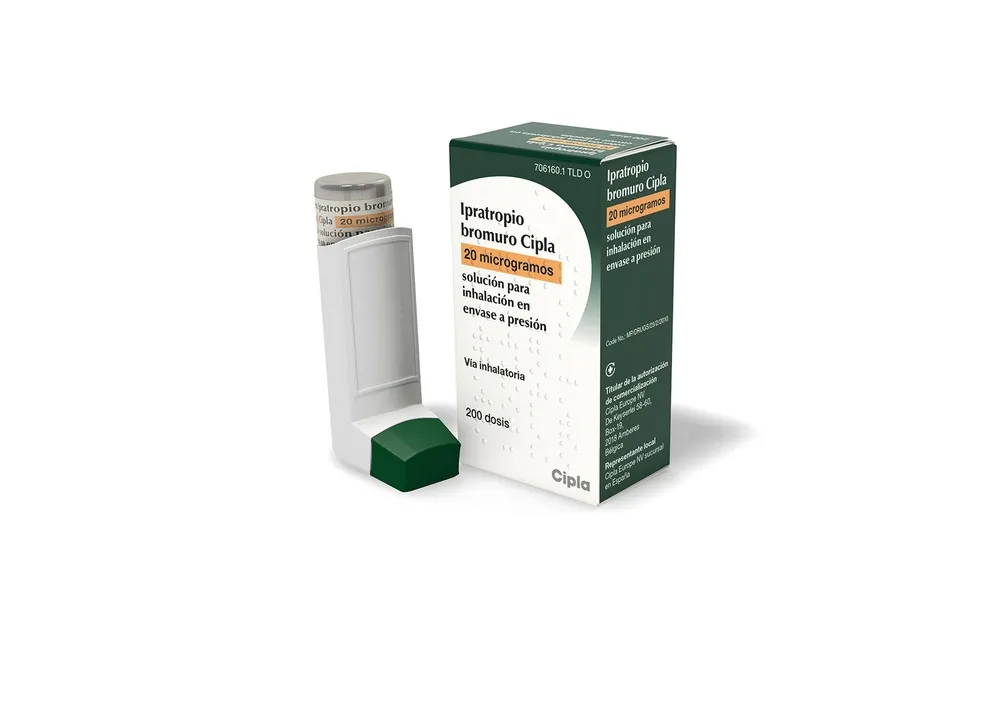
Table of Contents
- Package leaflet: Information for the user
- Introduction
- 1. What Ipratropio bromuro Cipla is and what it is used for
- 2. What you need to know before using Ipratropium bromide Cipla
- 3. How to use Ipratropium bromide Cipla
- 4. Possible adverse effects
- 5. Storage of Ipratropium bromide Cipla
- 6. Contents of the pack and other information
Package leaflet: Information for the user
Introduction
Package leaflet: Information for the userIpratropium bromide Cipla20 micrograms inhalation solution in pressurised container
Read the entire leaflet carefully before you start using this medicine, as it contains important information for you.
- Keep this leaflet, as you may need to read it again.
- If you have any questions, ask your doctor or pharmacist.
- This medicine has been prescribed for you only and must not be given to other people, even if they have the same symptoms as you, as it may harm them.
- If you experience any adverse effects, consult your doctor or pharmacist, even if they are effects not listed in this leaflet. See section 4.
Contents of the leaflet
- What Ipratropium bromide Cipla is and what it is used for
- What you need to know before using Ipratropium bromide Cipla
- How to use Ipratropium bromide Cipla
- Possible adverse effects
- How to store Ipratropium bromide Cipla
- Contents of the pack and other information
1. What Ipratropio bromuro Cipla is and what it is used for
Ipratropio bromuro Cipla belongs to a group of medicines called inhaled anticholinergic bronchodilators, which work by relaxing the muscles of the bronchi, thus facilitating airflow and improving breathing.
This medicine belongs to the group of medicines known as inhaled bronchodilators. Ipratropio bromuro Cipla is used for the maintenance treatment of bronchospasm associated with chronic obstructive pulmonary disease (COPD). COPD is a lung disease characterized by obstruction of airflow through the bronchi, leading to breathing difficulties.
2. What you need to know before using Ipratropium bromide Cipla
Do not use Ipratropium bromide Cipla:
- If you are allergic to ipratropium bromide or to any of the other ingredients of this medicine (listed in section 6).
- If you are allergic to medicines similar to ipratropium, such as atropine or its derivatives.
- If you are experiencing acute attacks of cough, wheezing, and breathing difficulty (bronchospasm) that require rapid relief.
Warnings and precautions
Talk to your doctor or pharmacist before using Ipratropium bromide Cipla:
- If you are predisposed to increased internal eye pressure (narrow-angle glaucoma).
- If you have benign prostatic hyperplasia (enlarged prostate) or bladder neck obstruction (if the urinary passage from the bladder is blocked).
- If you have cystic fibrosis (a disease affecting secretions of mucous and sweat glands, impacting several organs), as you may be more prone to gastrointestinal motility disorders.
- If you experience acute breathing difficulty that worsens rapidly. You must consult your doctor immediately.
- If immediate allergic reactions occur, such as hives, angioedema (swelling of the face, lips, mouth, tongue, or throat that may cause difficulty swallowing or breathing), skin rash, cough, wheezing, breathing difficulty (bronchospasm), swelling of the mouth and throat (oropharyngeal edema), or generalized allergic reaction (anaphylaxis).
- If the solution is sprayed into the eyes, eye complications may occur, such as pupil dilation, increased intraocular pressure (narrow-angle glaucoma), and eye pain. Therefore, you must strictly follow your doctor's instructions for administration. The risk of spray entering the eye is limited, as inhalation is performed using a mouthpiece and manually controlled.
- If you develop a combination of eye symptoms such as eye pain or discomfort, blurred vision, visual halos (diffuse lights), or colored images, along with eye redness, these may be signs of narrow-angle glaucoma. In such cases, you must consult a doctor immediately.
Using Ipratropium bromide Cipla with other medicines
Tell your doctor or pharmacist if you are taking, have recently taken, or might need to take any other medicines.
Beta-adrenergic agents (e.g., salbutamol) and xanthine derivatives (e.g., theophylline) are other bronchodilator medicines and may enhance the bronchodilating effect. Ipratropium bromide Cipla may intensify the anticholinergic effects of other drugs.
Ipratropium bromide Cipla may be administered together with other medicines commonly used in the treatment of chronic obstructive pulmonary disease (COPD), including beta-adrenergic agents, methylxanthines (e.g., theophylline), corticosteroids, and disodium cromoglycate, without any harmful interactions occurring.
Pregnancy, breastfeeding, and fertility
Pregnancy: If you are pregnant or breastfeeding, think you may be pregnant, or plan to become pregnant, consult your doctor or pharmacist before using this medicine.
The safety of this medicine during pregnancy has not been established. The benefit of using the medicine should be carefully weighed against the potential risk to the fetus, and usual precautions for drug use during pregnancy should be observed.
Breastfeeding: It is unknown whether Ipratropium bromide Cipla passes into breast milk. However, it is unlikely that significant amounts of Ipratropium bromide Cipla would be ingested by the nursing infant, especially since the preparation is administered by inhalation. Nevertheless, since many drugs can pass into breast milk, it should be used with caution in women who are breastfeeding.
Fertility:
The effect of Ipratropium bromide Cipla on fertility has not been studied, and no data are available. Therefore, if you are planning to become pregnant, this medicine should be used with caution and only after consulting your doctor.
Driving and using machines
There are no studies on the effects of this medicine on the ability to drive or operate machinery. You may feel dizzy, have difficulty concentrating, dilated pupils, or blurred vision while using Ipratropium bromide Cipla. If this occurs, do not drive or operate tools or machinery.
Important information about some of the ingredients of Ipratropium bromide Cipla
This medicine contains 15% ethanol in the final product. Each spray contains 0.0084 g of ethanol, which may pose a risk in children, pregnant women, and patients with liver disease, alcoholism, epilepsy, or brain damage or injury. It may alter or enhance the effect of other medicines.
3. How to use Ipratropium bromide Cipla
Follow exactly the administration instructions for Ipratropium bromide Cipla provided by your doctor. Consult your doctor, nurse, or pharmacist if you have any doubts.
The recommended dose is:
Adults and children over 6 years of age with COPD
- 2 inhalations four times daily
- Occasionally, at the beginning of treatment, up to 4 inhalations may be used in a single dose. Since the need for increasingly higher doses may suggest that additional treatment with another medicine is required, a total daily dose exceeding 12 inhalations (240 micrograms of ipratropium bromide monohydrate) should generally not be exceeded.
Use in children
Due to insufficient information on the use of Ipratropium bromide Cipla in children, it should only be administered to children following the doctor's recommendations and under adult supervision.
Consult your doctor if you do not achieve significant improvement or if your condition worsens, so that it can be determined whether a new treatment is necessary. You should also consult a doctor immediately if you experience significant difficulty breathing (acute dyspnea) or if breathing difficulty worsens rapidly.
Checking the inhaler
When using the inhaler for the first time, you must check whether it is working properly.
Also check its function if it has not been used for 3 or more days. Before each use, follow the instructions below:
- Remove the mouthpiece cap by gently pressing the sides with your thumb and index finger.
- Point the mouthpiece away from you and press the inhaler twice (one spray at a time) to release two sprays into the air.
Using the inhaler
FIGURE 1
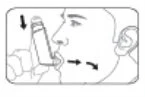
- Remain upright, either standing or sitting, while using Ipratropium bromide Cipla.
- Remove the protective cap from the mouthpiece.
- Before inhalation, inspect the inside and outside of the inhaler mouthpiece to ensure it is clean, free of dust, dirt, or loose particles.
- Hold the inhaler vertically, with your thumb at the base of the mouthpiece and your index finger on the top of the inhaler (the arrow at the base of the canister should be pointing upward). Breathe out as fully, deeply, and slowly as possible.
- Immediately after exhaling, place the mouthpiece in your mouth between your teeth and close your lips around it, without biting it.
- Breathe in slowly and deeply through your mouth, and immediately after starting to inhale, press firmly on the top of the inhaler to release one spray of the inhalation solution, continuing to breathe in steadily and deeply.
- Hold your breath, remove the inhaler from your mouth, and remove your finger from the top of the inhaler. Hold your breath for as long as you can, ideally for 10 seconds.
- Exhale slowly through your nose. Do not exhale into the inhaler.
- If a second inhalation is required, wait at least one minute, then repeat steps 4 to 8.
- Replace the protective cap after use.
IMPORTANT
- Do not inhale too quickly. Begin breathing in as slowly and continuously as possible before pressing the inhaler.
- Do not rush through the procedure.
- Elderly patients with weak hands may use the inhaler with both hands.
The mouthpiece is specially designed for exclusive use with this product. Do not use any other mouthpiece with this product, and do not use the mouthpiece from this inhaler with any other product. Practice in front of a mirror the first few times. If you see a "mist" escaping from the top of your inhaler or from the sides of your mouth, you should start again.
If you find it difficult to breathe and press the inhaler at the same time (step 6), consult your doctor or pharmacist, as you may benefit from using a spacer device (Aerochamber Plus™) with your inhaler. A spacer is a device designed to make step 6 easier. A spacer is generally a plastic chamber with a mouthpiece at one end and an opening to insert the inhaler mouthpiece at the other. The medication dose from the inhaler is sprayed into the spacer, and the medication mist remains inside the spacer until you inhale it through the spacer's mouthpiece with your lips sealed around it. This means you do not need to coordinate breathing and pressing the inhaler simultaneously.
When using Ipratropium bromide Cipla, take care to avoid spraying into your eyes. Please see section 4 for information on possible side effects that may occur if this medicine is accidentally sprayed into the eyes.
Cleaning the inhaler
To prevent the inhaler from becoming blocked, clean it at least once a week.
- Remove the inhaler canister and the protective cap.
- Wash and clean the white mouthpiece with warm soapy water.
- Rinse with warm water and allow to air-dry without using any drying method.
- Ensure the small opening in the mouthpiece is thoroughly cleaned.
- Once the mouthpiece is dry, reattach it to the canister and replace the protective cap.
Do not place the metal canister in water.
Do not use more medication than prescribed by your doctor.
Contact your doctor immediately if:
- You think your inhaler is not working as well as usual.
- You need to use the inhaler more often than your doctor recommended. Your doctor may need to review whether the medication is working properly. In some cases, your doctor may need to change your medication.
Make sure you do not run out of Ipratropium bromide Cipla
The inhaler is designed to deliver 200 sprays of medication. However, it is not possible to determine when the inhaler is empty or when the 200 sprays have been used. Even after all sprays have been used, there may still be a small amount of liquid remaining in the canister. Please ensure you replace the inhaler after 200 inhalations (usually after 3–4 weeks of regular use) to ensure you receive the correct dose of medication with each spray.
If you use more Ipratropium bromide Cipla than you should
If you use the inhaler more than prescribed, consult your doctor or go to a hospital immediately. Bring the inhaler and any other medications you are taking (preferably in their original packaging). If you take more Ipratropium bromide Cipla or too many sprays, you may experience dry mouth, tachycardia (increased heart rate), or blurred vision.
If you have used more Ipratropium bromide Cipla than you should, contact your doctor or pharmacist immediately, or call the Toxicology Information Service at 91 562 04 20, indicating the medication and the amount taken.
If you forget to use Ipratropium bromide Cipla
- If you miss a dose, take it as soon as you remember.
- However, if it is almost time for your next dose, do not take the missed dose.
- Do not take a double dose to make up for missed doses.
If you have any doubts, consult your doctor or pharmacist.
If you stop using Ipratropium bromide Cipla
Do not stop using Ipratropium bromide Cipla unless instructed by your doctor. If you have any further questions about the use of this medicine, consult your doctor or pharmacist.
4. Possible adverse effects
Like all medicines, Ipratropium bromide Cipla can cause adverse effects, although not everyone experiences them.
Frequent adverse effects (occur in at least 1 out of every 100 patients) with the administration of Ipratropium bromide Cipla are headache, dizziness, cough, throat irritation, nausea, dry mouth, and gastrointestinal motility disorders (e.g.: change in bowel habits, gastroesophageal reflux, dyspepsia (indigestion)).
Uncommon adverse effects (occur in at least 1 out of every 1,000 patients) include hypersensitivity, anaphylactic reaction (severe allergic reaction), blurred vision, mydriasis (pupil dilation), increased intraocular pressure, visual halos (diffuse lights), or colored images associated with eye redness (glaucoma), eye pain, visual halos (diffuse lights), eye redness, corneal edema (swelling of the cornea), palpitations, supraventricular tachycardia, constipation, diarrhea, vomiting, stomatitis (inflammation of the mouth), oral edema (mouth swelling), rash, pruritus (itching), angioedema (swelling of the face, lips, mouth, tongue, or throat that may cause difficulty swallowing or breathing), and urinary retention.
Rare adverse effects (occur in at least 1 out of every 10,000 patients) include bronchospasm (chest tightness, wheezing, or shortness of breath), paradoxical bronchospasm (narrowing of the bronchial walls due to the inhalation itself), laryngeal spasm, pharyngeal edema (throat swelling), dry throat, visual accommodation disorder (difficulty of the eye to focus), urticaria, increased heart rate, and atrial fibrillation.
Reporting of adverse effects
If you experience any type of adverse effect, consult your doctor or pharmacist, even if it is a possible adverse effect not listed in this leaflet. You may also report them directly through the Spanish Pharmacovigilance System for Human Medicines: https://www.notificaram.es. By reporting adverse effects, you can help provide more information on the safety of this medicine.
5. Storage of Ipratropium bromide Cipla
Keep this medicine out of sight and reach of children.
Do not use Ipratropium bromide Cipla after the expiry date stated on the packaging after EXP. The expiry date refers to the last day of the month indicated.
Do not store above 25°C. Protect from direct sunlight, heat, and frost.
If the inhaler has been exposed to low temperatures, the patient should remove the metal container from the plastic casing and warm it in their hands for at least two minutes.
The container holds a pressurized liquid. Do not expose to temperatures above 50°C. Do not attempt to open, pierce, or burn the container, even when it appears to be empty.
Medicines must not be disposed of via wastewater or household waste. Unused medicines and waste materials, including packaging, should be returned to the SIGRE point at your pharmacy. If in doubt, ask your pharmacist how to properly dispose of any unused medicines and packaging. This will help protect the environment.
6. Contents of the pack and other information
Composition of Ipratropium bromide Cipla
- The active substance is ipratropium bromide. Each spray (ex-valve) contains 20 micrograms of ipratropium bromide (as monohydrate). This corresponds to a delivered dose (ex-actuator) of 17 micrograms of ipratropium bromide (as monohydrate). Each container provides 200 sprays, each spray containing 20 micrograms of ipratropium bromide (as monohydrate).
- The other components are: non-CFC propellant, HFC-134a propellant (norflurane), anhydrous citric acid, anhydrous ethanol and purified water. Ipratropium bromide Cipla does not contain chlorofluorocarbon (CFC) propellants.
- This medicinal product contains fluorinated greenhouse gases.
- Each inhaler contains 12.3 g of HFC-134a (norflurane), equivalent to 0.018 tonnes of CO2 (global warming potential GWP = 1430).
Appearance of Ipratropium bromide Cipla and contents of the pack
Ipratropium bromide Cipla consists of a pressurized aluminium container holding the pressurized solution for inhalation, closed with a metering valve and a plastic actuator equipped with a white mouthpiece and a protective cap. Each pack contains one inhaler.
Marketing Authorization Holder and Manufacturer Responsible
Cipla Europe NV
De Keyserlei 60C, Bus-1301,
2018 Antwerp
Belgium
Local Representative
Cipla Europe NV, Spanish branch
C/ Guzmán el Bueno, 133, Edif. Britannia - 28003 - Madrid, Spain
Date of the latest revision of this leaflet: January 2025
Detailed and up-to-date information on this medicinal product is available on the website of the Spanish Agency for Medicines and Health Products (AEMPS): http://www.aemps.es/