Iomeprol 300 mg iodine/ml solution for injection
Spain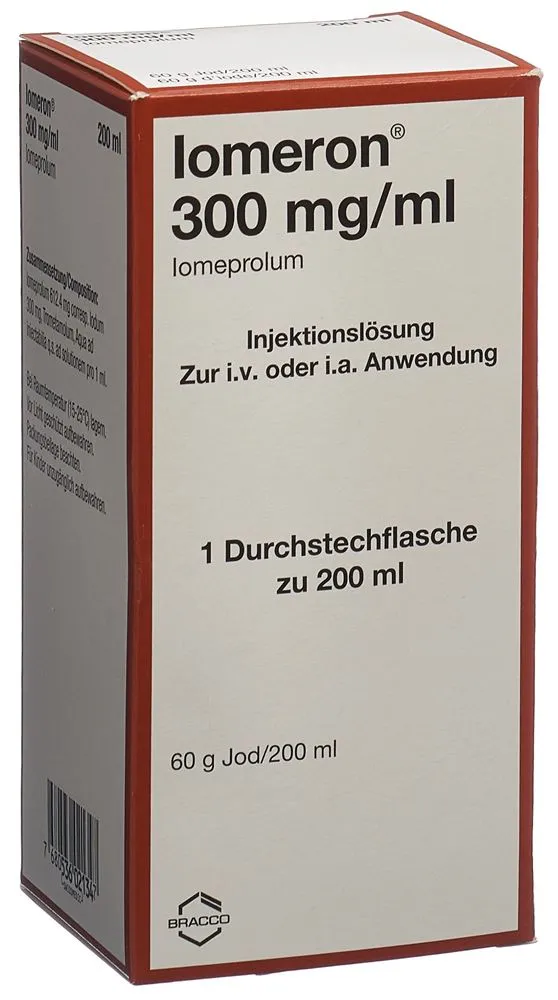
Table of Contents
- Package leaflet: Information for the user
- Introduction
- 1. What Iomeron 300 mg Iodine/ml injectable solution is and what it is used for
- 2. What you need to know before using Iomeron 300 mg Iodine/ml injectable solution
- 3. How to use Iomeron 300 mg Iodine/ml injectable solution
- 4. Possible adverse effects
- 5. Storage of Iomeron 300 mg Iodine/ml injectable solution
- 6. Contents of the container and other information
Package leaflet: Information for the user
Introduction
PACKAGE LEAFLET: INFORMATION FOR THE USER
Iomeron 300 mg Iodine/ml injection solution
Iomeprol
Read the entire leaflet carefully before you start using this medicine, because it contains important information for you.
- Keep this leaflet. You may need to read it again.
- If you have any questions, ask your doctor or pharmacist.
- This medicine has been prescribed for you only and must not be given to other people, even if they have the same symptoms as you, because it could harm them.
- If you experience any adverse effects, consult your doctor, even if they are effects not listed in this leaflet. See section 4.
Leaflet contents:
- What Iomeron 300 mg Iodine/ml injection solution is and what it is used for
- What you need to know before using Iomeron 300 mg Iodine/ml injection solution
- How to use Iomeron 300 mg Iodine/ml injection solution
- Possible adverse effects
- Storage of Iomeron 300 mg Iodine/ml injection solution
- Contents of the pack and other information
1. What Iomeron 300 mg Iodine/ml injectable solution is and what it is used for
This medicine is for diagnostic use only.
Iomeron belongs to a group of medicines called low-osmolar, water-soluble, nephrotropic X-ray contrast media.
Iomeron is used to enhance the visualization of different body areas using certain radiological techniques. In adults, it is used for intravenous urography, computed tomography (CT) of the head and body, cavernosography, conventional angiography, angiocardiography, selective conventional coronary arteriography, peripheral venography, digital subtraction venography, digital subtraction arteriography, CPER, arthrography, hysterosalpingography, fistulography, discography, galactography, dacryocystography, sialography, retrograde cholangiography, retrograde ureterography, retrograde pyeloureterography, and myelography. In children from 0 to 18 years of age, it is used for intravenous urography, computed tomography (CT) of the head and whole body, conventional angiography, angiocardiography, digital subtraction venography, and digital subtraction arteriography.
2. What you need to know before using Iomeron 300 mg Iodine/ml injectable solution
Do not use Iomeron 300 mg Iodine/ml injectable solution
- If you are allergic to iomeprol or any of the other ingredients of this medicine (listed in section 6).
- If you have Waldenström's macroglobulinemia.
- If you have severe liver or kidney disorders.
- If you have multiple myeloma.
Feminine genital investigations are contraindicated in case of suspected or confirmed pregnancy and in case of acute inflammation.
Immediate repetition of Iomeron administration is contraindicated in case of technical failure during myelography.
Warnings and precautions
- Before starting the examination, you should be adequately hydrated, and you should refrain from eating for two hours prior to the examination.
- In cases of anxiety and pain, as adverse reactions related to the contrast medium may be intensified. In such cases, a sedative may be administered.
- If you are elderly.
- If you have asthma.
- If you have ever developed a severe skin rash, skin peeling, blisters, and/or mouth sores after receiving iodinated contrast media.
- If you suffer from hay fever, urticaria, or food allergies, as patients with a history of allergy are more susceptible to adverse reactions to iodinated contrast media.
- If you have hyperthyroidism and/or nodular goiter, as the use of non-ionic contrast media may trigger thyroid crises.
- If you have renal insufficiency.
- If you have diabetes mellitus; these patients may develop lactic acidosis if they are being treated with biguanides (e.g., Metformin). As a precaution, in patients with moderate renal impairment, biguanides should be discontinued at the time of or 48 hours before contrast medium examination and restarted only after renal function has been confirmed to have recovered.
- If you have acute pancreatitis and are undergoing ERCP (endoscopic retrograde cholangiopancreatography) to examine your pancreas.
- If you have pheochromocytoma (a type of tumor), as hypertensive crises may occur after intravascular use of contrast medium. Premedication with alpha-adrenergic blockers is recommended.
- If you have sickle cell anemia (a type of anemia), as contrast media may worsen your condition.
- If you have myasthenia gravis (a disease causing muscle weakness), as your condition could worsen.
- In case of severe cardiovascular disease, especially if you have heart failure, coronary artery disease (heart blood vessel disease), pulmonary hypertension, or coronary valvular disease.
- When you have central nervous system disorders, as convulsive crises may occur.
- In cases of alcoholism and drug addiction.
Fluoroscopy is recommended to minimize extravasation during injection.
You may experience a short-term brain disorder called encephalopathy during or shortly after the imaging procedure. Inform your doctor immediately if you notice any symptoms related to this condition, described in section 4.
Thyroid disorders have been observed after administration of Iomeron in both children and adults. Infants may also be exposed through the mother during pregnancy. Your doctor may need to perform thyroid function tests before and/or after administration of Iomeron.
Severe skin reactions including Stevens-Johnson syndrome (SJS), toxic epidermal necrolysis (TEN), acute generalized exanthematous pustulosis (AGEP), and drug reaction with eosinophilia and systemic symptoms (DRESS) have been reported with the use of Iomeron. Seek immediate medical attention if you notice any symptoms related to these severe skin reactions described in section 4.
Consult your doctor before using Iomeron 300 mg Iodine/ml injectable solution.
Children
Infants under one year of age, and especially neonates, are particularly susceptible to electrolyte imbalances and hemodynamic disturbances.
Other medicines and Iomeron 300 mg Iodine/ml injectable solution
Inform your doctor if you are taking, have recently taken, or might need to take any other medicines.
Anticonvulsant treatment should not be interrupted, and optimal dosing should be ensured.
In patients treated with immunomodulating agents such as Interleukin-2, allergic-type reactions to contrast media are more frequent and may present as delayed reactions.
This medicine must not be mixed with other medicinal products.
Interferences with laboratory tests:
Iodinated contrast media may interfere with thyroid function tests, as the thyroid's ability to uptake radioisotopes may be reduced for periods of two weeks or longer.
High concentrations of contrast media in plasma and urine may alter laboratory test results for bilirubin, proteins, and inorganic substances (e.g., iron, copper, calcium, phosphate).
Use of Iomeron 300 mg Iodine/ml injectable solution with food and drink
Unless specifically instructed otherwise by your doctor, you may follow a normal diet on the day of the examination. Ensure adequate fluid intake. However, you should refrain from eating for two hours before the examination.
Pregnancy and breastfeeding
If you are pregnant or breastfeeding, think you may be pregnant, or plan to become pregnant, consult your doctor before using this medicine.
Pregnancy
You must inform your doctor if you are pregnant or think you might be.
As with other non-ionic contrast media, there are no controlled studies in pregnant women confirming the safety of this product in humans. Since exposure to radiation should be avoided during pregnancy whenever possible, the risk-benefit ratio of any X-ray examination, with or without contrast media, should be carefully evaluated.
If you are pregnant and have received Iomeron during pregnancy, it is recommended to test your newborn's thyroid function.
Breastfeeding
Contrast media are excreted in minimal amounts in breast milk, and the possibility of harm to the infant is remote.
Driving and using machines
No effects on the ability to drive or operate machinery are known.
3. How to use Iomeron 300 mg Iodine/ml injectable solution
This medicine will always be administered by qualified and properly trained personnel in hospitals or clinics equipped with the necessary staff and equipment.
The dose you will receive varies depending on the type of examination, age, body weight, cardiac output, your general condition, and the technique used.
If you use more Iomeron 300 mg Iodine/ml injectable solution than you should
Overdosing may cause serious adverse reactions, primarily due to effects on the cardiovascular and respiratory systems.
Treatment of overdose is aimed at maintaining all vital functions and includes prompt initiation of symptomatic therapy. Iomeron can be removed from the body by dialysis.
In case of overdose or accidental ingestion, consult your doctor or pharmacist, or call the Toxicology Information Service at telephone number 91 562 04 20, indicating the medicine and the amount ingested.
If you have any doubts about using this product, consult your doctor or pharmacist.
4. Possible adverse effects
Like all medicines, this medicine can cause adverse effects, although not everyone will experience them.
Generally, adverse effects are mild to moderate in intensity and transient in nature. However, serious and potentially life-threatening reactions have been reported, sometimes resulting in death. In most cases, reactions occur within minutes after administration, although they may occasionally appear later.
Contact your doctor immediately if you experience any of the following symptoms: sudden wheezing, difficulty breathing, swelling of the eyelids, face or lips, skin rash or itching affecting the whole body.
The following adverse effects have been reported:
Intravascular administration
Frequent (may affect up to 1 in 10 people):
- sensation of warmth
Uncommon (may affect up to 1 in 100 people):
- headache
- dizziness
- increased blood pressure
- difficulty breathing
- nausea, vomiting
- flushing, urticaria, itching
- chest pain, warmth and pain at injection site
Rare (may affect up to 1 in 1,000 people):
- fainting
- slow or fast heart rate
- decreased blood pressure
- skin rash
- back pain
- asthenia, rigidity, fever
- increased creatinine in blood
Frequency not known (cannot be estimated from available data):
-
Contact a doctor as soon as possible if you experience a severe skin reaction such as:
-
blistering, skin peeling, mouth ulcers, ulcers in the throat, nose, genitals and eyes. These severe skin reactions may be preceded by fever and flu-like symptoms (Stevens-Johnson syndrome, toxic epidermal necrolysis).
-
a red, scaly rash with bumps under the skin and blisters accompanied by fever. Symptoms usually appear at the beginning of treatment (acute generalized exanthematous pustulosis).
-
widespread rash, high body temperature and swollen lymph nodes (DRESS syndrome or drug hypersensitivity syndrome).
-
anxiety, hyperkinetic syndrome (increased motor activity), confusion
-
allergic reactions
-
hyperthyroidism
-
loss of appetite (anorexia)
-
altered taste, difficulty speaking, illness affecting brain function, cerebral edema (fluid in the brain), transient problems with blood supply to the brain with few or no sequelae (transient ischemic attacks), memory loss, drowsiness, altered sensation (tingling, itching), stroke, loss of consciousness, tremors, coma, seizures, altered sense of smell
-
brain disorder (encephalopathy) with symptoms including headache, vision difficulties, vision loss, confusion, seizures, loss of coordination, loss of movement in part of the body, speech problems and loss of consciousness
-
temporary blindness, visual deterioration, conjunctivitis, increased tearing, photopsia (perception of lights)
-
myocardial infarction, cardiac arrest, chest tightness, heart rhythm disorders, angina pectoris, heart failure, clot formation in coronary arteries (after catheter insertion), irregular heartbeat, cardiac conduction disorders, rapid and weak pulse
-
redness, shock (severe drop in blood pressure), pallor, fatigue, cold and clammy skin, reduced consciousness due to sudden and severe dilation of blood vessels, bluish discoloration of skin and mucous membranes, blood clots, vasospasm and, as a consequence, ischemia
-
circulatory failure (circulatory collapse)
-
obstruction of the coronary artery (after catheter insertion)
-
respiratory arrest, cough, acute respiratory distress syndrome (ARDS), wheezing, asthma attacks, fluid accumulation in the throat, fluid in the lungs, inflammation of the nasal mucosa characterized by nasal congestion, sneezing and discharge (rhinitis), hoarseness (dysphonia), insufficient oxygen supply to tissues (hypoxia), sore throat and larynx pain, sudden constriction of the airways (bronchospasm)
-
intestinal incontinence, diarrhea, abdominal pain, excessive salivation, difficulty swallowing, inflammation of the pancreas accompanied by severe upper abdominal pain radiating to the back with nausea and vomiting (pancreatitis), enlargement of the salivary glands, intestinal obstruction
-
severe hypersensitivity reactions characterized by symptoms such as increased sweating, dizziness, itching, pulsating headache, throat tightness, swelling of the mucous membranes of the mouth and throat, making breathing difficult
-
eczema, skin rash, increased sweating, sudden fluid accumulation in skin and mucous membranes (e.g. throat or tongue), possibly with difficulty breathing and/or itching and skin rash (angioedema), appearance of circular blisters on the skin (usually with a paler center) (erythema multiforme)
-
joint pain, muscle stiffness
-
acute kidney failure, urinary incontinence, abnormalities in urine, decreased urine output
-
general feeling of illness (malaise), chills, localized feeling of cold, thirst, reaction at injection site, bruising at injection site
-
blood disorders (decreased platelet count) accompanied by bruising and tendency to bleed (thrombocytopenia)
-
hemolytic anemia (abnormal decrease in red blood cells which may cause fatigue, rapid heartbeat and difficulty breathing)
Transient hypothyroidism may occur in children under 3 years of age.
In some cases, abnormalities are detected during medical examinations (blood tests, cardiac and liver function tests).
Administration into the cerebrospinal fluid
Very common (more than 1 in 10 people):
- headache
Common (more than 1 in 100 and less than 1 in 10 people):
- dizziness
- increased blood pressure
- nausea, vomiting
- back pain, limb pain
- reaction at injection site
Uncommon (more than 1 in 1,000 and less than 1 in 100 people):
- loss of consciousness
- altered sensation
- drowsiness
- decreased blood pressure
- redness
- muscle rigidity
- neck pain
- sensation of warmth
- chest pain
- fever
Frequency not known (cannot be estimated from available data):
- allergic reactions
- epilepsy
- skin rash
- general malaise
- brain disorder (encephalopathy) with symptoms including headache, vision difficulties, vision loss, confusion, seizures, loss of coordination, loss of movement in part of the body, speech problems and loss of consciousness
Administration into body cavities
- allergic reactions
- changes in blood test results (following pancreatic examinations)
- as with other iodinated contrast media, pelvic pain and general malaise may occur after examination of the cervix, fallopian tubes and ovaries.
Consult your doctor if you experience severe symptoms or allergic reactions (hypersensitivity), or if symptoms persist for long periods.
The safety profile of iomeprol is similar in adults and children for all routes of administration.
Reporting of adverse effects
If you experience any type of adverse effect, consult your doctor, even if they are possible adverse effects not listed in this leaflet. You may also report them directly via the Spanish Pharmacovigilance System for Human Medicines: http://www.notificaram.es. By reporting adverse effects, you can help provide more information on the safety of this medicine.
5. Storage of Iomeron 300 mg Iodine/ml injectable solution
Keep this medicine out of the sight and reach of children.
Store the vial in the outer packaging to protect it from light.
Although iomeprol is only slightly sensitive to X-rays, it is advisable to store the product away from ionizing radiation.
Do not use this medicine after the expiry date stated on the packaging after EXP. The expiry date refers to the last day of the month indicated.
Medicines should not be disposed of via wastewater or household waste. If you are unsure how to dispose of unused medicines and their packaging, please consult your pharmacist. This will help protect the environment.
6. Contents of the container and other information
Composition of Iomeron 300 mg Iodine/ml injectable solution
- The active substance is iomeprol. 1 ml of injectable solution contains 612.4 mg of iomeprol, equivalent to 300 mg of iodine.
- The other components are trometamol, hydrochloric acid for pH adjustment, and water for injections q.s.
Appearance of the product and contents of the container
Iomeron is packaged in glass vials closed with halobutyl rubber stoppers and an aluminum seal.
Vials of 50 ml, 75 ml, 100 ml and 500 ml. The 50 ml, 75 ml and 100 ml vials are single-dose; the 500 ml vial is multi-dose.
Only certain pack sizes may be marketed.
Marketing Authorization Holder and Manufacturer
Marketing Authorization Holder
Bracco Imaging s.p.a.
Via E. Folli 50
20134 (Milan – Italy)
Manufacturer
Patheon Italia s.p.a.
2º Trav. SX Via Morolense, 5
03013 Ferentino (Italy)
BIPSO GmbH
Robert-Gerwig-Strasse 4
78224 Singen (Germany)
Bracco Imaging S.p.A.
Bioindustry Park - Via Ribes, 5
10010 Colleretto Giacosa (TO) (Italy)
You may request further information about this medicinal product by contacting the local representative of the Marketing Authorization Holder:
Laboratorios Farmacéuticos ROVI, S.A.
Julián Camarillo, 35
28037 Madrid
Tel: 913756230
Date of the most recent review of this summary: September 2023
Detailed and up-to-date information on this medicinal product is available on the website of the Spanish Agency of Medicines and Health Products (AEMPS) http://www.aemps.gob.es/
<-------------------------------------------------------------------------------------------------------------->
This information is intended for healthcare professionals only:
Iomeron 300 mg Iodine/ml is an injectable solution for administration via intravenous, intra-arterial, intracavernous, intracholangiopancreatic, intra-articular, intrauterine, intradiscal, intramammary, intraglandular, intravesical and intrathecal routes.
Whenever possible, intravascular administration of contrast media should be performed with the patient lying down. Keep the patient under observation for at least 30 minutes after administration.
Indication | Route of administration | Proposed dosages | |
Intravenous urography | Intravenous | Adults: 50 - 150 ml Neonates: 3 - 4.8 ml Children: < 1 year: 2.5 - 4 ml/kg > 1 year: 1 - 2.5 ml/kg | |
Computed tomography of the head | Intravenous | Adults: 50 - 200 ml Children a | |
Computed tomography of the body | Intravenous | Adults: 100 - 200 ml Children a | |
Cavernosography | Intracavernosal | Adults: up to 100 ml | |
Conventional angiography | |||
Peripheral venography | Intravenous | Adults: 10 - 100 ml, repeat if necessaryb (10 - 50 ml for upper extremities; 50 - 100 ml for lower extremities) | |
Arteriography of upper extremities | Intra-arterial | Adults b | |
Arteriography of pelvis and lower extremities | Intra-arterial | Adults b | |
Abdominal arteriography | Intra-arterial | Adults b | |
Descending aorta arteriography | Intra-arterial | Adults b | |
Pulmonary angiography | Intravenous/Intra-arterial | Adults: up to 170 ml | |
Cerebral angiography | Intravenous/Intra-arterial | Adults: up to 100 ml | |
Pediatric arteriography | Intra-arterial | Children: up to 130 mla | |
Interventional arteriography | Intra-arterial | Adults b Children a | |
Digital subtraction angiography | |||
Cerebral | Intra-arterial | Adults: 30 - 60 ml for general imaging; 5 - 10 ml for selective angiography Children a | |
Thoracic | Intra-arterial | Adults b: 20 - 25 ml (aorta), repeat if necessary; 20 ml (bronchial arteries) | |
Aortic arch | Intra-arterial | Adults c | |
Abdomen | Intra-arterial | Adults c | |
Aortography | Intra-arterial | Adults c | |
Translumbar aortography | Intra-arterial | Adults b | |
Peripheral arteriography | Intra-arterial | Adults: 5 - 10 ml for selective injections, up to 250 ml Children a | |
Interventional | Intra-arterial | Adults: 10 - 30 ml for selective injections, up to 250 ml Children a | |
Digital subtraction venography | Intravenous | Adults: 100 - 250 mlb Children a | |
Angiocardiography | Intravenous/Intra-arterial | Adults b Children: 3 - 5 ml/kg | |
Conventional selective coronary arteriography | Intra-arterial | Adults: 4 - 10 ml per artery, repeat if necessary | |
Endoscopic retrograde cholangiopancreatography | Intracholangiopancreatic | Adults: up to 100 ml | |
Retrograde cholangiography | Intracholangiopancreatic | Adults: up to 60 ml | |
Arthrography | Intra-articular | Adults: up to 10 ml per injection | |
Hysterosalpingography | Intrauterine | Adults: up to 35 ml | |
Fistulography* | Route of administration not applicable* | Adults: up to 100 ml | |
Discography | Intradiscal | Adults: up to 4 ml | |
Galactography | Intramammary | Adults: 0.15 - 1.2 ml per injection | |
Dacryocystography | Intraglandular | Adults: 2.5 - 8 ml per injection | |
Sialography | Intraglandular | Adults: 1 - 3 ml per injection | |
Retrograde ureterography | Intravesical | Adults: 20 - 100 ml | |
Retrograde pyeloureterography | Intravesical | Adults: 10 - 20 ml per injection | |
Myelography | Intrathecal | Adults: 8 - 15 ml | |
a According to body weight and age, as determined by the physician in charge of the procedure. b Do not exceed 250 ml. The volume of each single injection depends on the vascular area to be examined. c Do not exceed 350 ml.
|
Before use, the solution should be visually inspected. Only solutions without visible signs of deterioration or particulate matter should be used.
Instructions for administration when using single-dose vials:
Multiple doses must not be withdrawn from a single contrast medium vial. The rubber stopper should never be punctured more than once. It is recommended to use an appropriate extraction cannula to pierce the stopper and withdraw the contrast medium. The solution should not be drawn into the syringe until immediately before use. Any unused portion of the solution remaining after an examination must be discarded.
Instructions for administration when using multidose vials:
Multidose vials should only be used when connected to auto-injectors/pumps.
Auto-injectors/pumps must not be used in young children.
Only a single puncture should be performed.
The tubing connecting the auto-injector/pump to the patient must be changed after each patient.
Any residual contrast medium remaining in the vial, as well as the connecting tubes and all disposable components of the injection system, must be discarded within eight hours.
It is essential to strictly follow the additional instructions provided by the manufacturer of the auto-injector/pump.
Disposal of unused medicinal product and of all materials that have come into contact with it must be carried out in accordance with local regulations.
Precautions
- Regarding the patient:
Hydration – Any severe disturbance in fluid and electrolyte balance should be corrected. Adequate hydration should be ensured prior to the medical examination, especially in patients with severe renal functional impairment, multiple myeloma or other paraproteinemias, sickle cell anemia, diabetes mellitus, polyuria, oliguria, hyperuricemia, as well as in neonates, children, and elderly patients.
Dietary recommendations – Unless specific instructions are given by the physician, a normal diet may be followed. Ensure adequate fluid intake. However, patients should refrain from eating for two hours prior to the examination.
Hypersensitivity – In patients with a predisposition to allergies, known hypersensitivity to iodinated contrast media, or a history of asthma, premedication with antihistamines and/or corticosteroids may be considered to prevent possible anaphylactoid reactions.
Severe cutaneous adverse reactions (SCARs) – Severe cutaneous adverse reactions (SCARs), including Stevens-Johnson syndrome (SJS), toxic epidermal necrolysis (TEN), acute generalized exanthematous pustulosis (AGEP), and drug reaction with eosinophilia and systemic symptoms (DRESS), some of which may be fatal or potentially fatal, have been reported in patients receiving intravascular iodinated contrast media. Patients should be informed of the signs and symptoms at the time of administration, and closely monitored for the development of skin reactions. If signs or symptoms suggestive of such reactions occur, administration of Iomeron must be immediately discontinued. Iomeron must not be re-administered to any patient who has previously experienced a severe reaction such as SJS, TEN, AGEP, or DRESS.
Anxiety – States of excitement, anxiety, and pain may cause adverse effects or may intensify contrast medium-related reactions. In such cases, a sedative may be administered.
Concomitant treatments – Consider interrupting treatment with drugs that lower the seizure threshold for up to 24 hours after the procedure in case of intrathecal use, and in patients with blood-brain barrier disorders (see “Neurological symptoms”).
- Regarding the procedure:
Coagulation, catheterization – A property of non-ionic contrast media is minimal interference with physiological functions. As a result, non-ionic contrast media have less in vitro anticoagulant activity than ionic contrast media. Medical and paramedical personnel performing vascular catheterization should be aware of this and pay particular attention to angiographic technique. Non-ionic contrast media should not be allowed to remain in contact with blood in the syringe, and intravascular catheters should be flushed frequently to minimize the risk of procedure-related thromboembolism.
Patient monitoring – Whenever possible, intravascular administration of contrast media should be performed with the patient lying down. The patient should remain under observation for at least 30 minutes after administration.
Sensitivity testing – A sensitivity test is virtually useless, as the occurrence of severe or fatal reactions to contrast media cannot be predicted by such a test.
Risk of inflammation and extravasation – Caution is recommended during injection of contrast media to avoid extravasation.
Warnings
- Common to all routes of administration
Due to the potential for serious adverse effects, the use of organic iodine-containing contrast media should be restricted to situations where there is a clear need for contrast imaging.
This need should be evaluated based on the patient's clinical condition, particularly in relation to cardiovascular, urinary, and hepatobiliary diseases.
Contrast media for angiocardiographic examinations should be used only in hospitals or clinics equipped with trained personnel and appropriate equipment for intensive care in case of emergency. In centers performing more common diagnostic examinations requiring iodinated contrast media, radiology departments must have therapeutic measures and resuscitation equipment proven effective by experience (Ambu bag, oxygen, antihistamines, vasoconstrictors, etc.).
Use in:
Pediatric population – Children under one year of age, and especially neonates, are particularly susceptible to electrolyte imbalances and hemodynamic disturbances. Careful attention must be paid to the dosage used, the procedural technique, and the patient's condition. Hypothyroidism or transient thyroid suppression may occur following exposure to iodinated contrast media. Special attention should be given to pediatric patients under 3 years of age, as episodes of low thyroid activity during the first years of life may impair motor, auditory, and cognitive development and may require temporary T4 replacement therapy. The incidence of hypothyroidism in patients under 3 years exposed to iodinated contrast media has been reported between 1.3% and 15%, depending on patient age and contrast dose, and is more frequently observed in neonates and preterm infants. Thyroid function should be evaluated in all pediatric patients under 3 years of age after exposure to iodinated contrast media. If hypothyroidism is detected, the need for treatment should be considered, and thyroid function should be monitored until it normalizes.
Elderly patients – Elderly patients should be considered at special risk for reactions due to excessive contrast medium dosage. The frequent presence of neurological disorders and vascular pathologies constitutes an aggravating factor.
Patients with specific pathological conditions
-
Hypersensitivity to iodinated contrast media – Hypersensitivity or previous reactions to iodinated contrast media increase the risk of recurrence of a severe reaction, even with non-ionic contrast media.
-
Allergic predisposition – Adverse reactions to iodinated contrast media are known to be more common in patients with a history of allergies: hay fever, urticaria, and food allergies.
-
Asthmatic patients – Patients taking beta-adrenergic blockers, particularly asthmatic patients, may have a lower threshold for bronchospasm and a reduced response to treatment with beta-agonists and adrenaline, which may require higher doses.
-
Thyroid function and thyroid function tests – Small amounts of free inorganic iodide may be present in contrast media, which may affect thyroid function. These effects are more evident in patients with latent or overt hyperthyroidism or goiter. Hyperthyroidism or even thyroid crisis has been reported following administration of iodinated contrast media.
-
Intra-arterial and intravenous administration
Use in patients with specific pathological conditions
Renal impairment – In patients with compromised renal function, administration of contrast media may cause episodes of renal failure. Preventive measures include: identifying high-risk patients; ensuring adequate hydration before contrast administration, preferably by maintaining intravenous infusion before, during, and until the contrast medium has been eliminated by the kidneys; avoiding, if possible, administration of nephrotoxic drugs and major surgical interventions or procedures such as renal angioplasty until the contrast medium has been completely eliminated; postponing further contrast examinations until renal function returns to pre-examination levels. Patients on dialysis may receive contrast media such as iomeprol, which are readily dialyzable.
Diabetes mellitus – The presence of renal damage in diabetic patients is one of the factors predisposing to renal dysfunction following contrast medium administration.
Renal impairment may lead to lactic acidosis in diabetic patients with renal damage treated with biguanides (metformin). To prevent this, treatment with biguanides should be discontinued in the following cases: before intra-arterial administration of a contrast medium with first-pass renal exposure; in patients with eGFR < 30 ml/min/1.73 m² receiving intravenous contrast medium or intra-arterial contrast medium with second-pass renal exposure; or in patients with acute renal injury. Treatment should only be resumed 48 hours later, provided that renal function has not significantly changed.
CPER – The risk associated with CPER procedures in patients with acute pancreatitis, obstructive or non-obstructive, should be carefully weighed against the expected benefits.
Pheochromocytoma – These patients may develop severe hypertensive crises (rarely uncontrollable) after intravascular contrast medium administration during radiological procedures.
In patients with pheochromocytoma, premedication with alpha-receptor blockers is advised due to the risk of hypertensive crises.
Myasthenia gravis – Administration of iodinated contrast media may exacerbate signs and symptoms of myasthenia.
Cardiac disease and pulmonary hypertension – There is a high risk of severe reactions in patients with severe cardiovascular disease, particularly those with heart failure and coronary artery disease. Intravascular injection of contrast media may cause pulmonary edema in patients with manifest or incipient cardiac decompensation, while administration in cases of pulmonary hypertension and valvular heart disease may promote hemodynamic disturbances. ECG signs of ischemia and severe arrhythmias are more common in older patients and those with pre-existing heart disease; their frequency and severity appear related to the severity of cardiac pathology.
Neurological symptoms – Particular attention should be paid when administering contrast media to patients with acute cerebral infarction, intracranial hemorrhage, blood-brain barrier disruption, cerebral edema, or acute demyelination. The presence of intracranial tumors or metastases and a history of epilepsy may increase the likelihood of seizure occurrence. Contrast medium administration may exacerbate neurological symptoms due to degenerative, ischemic, inflammatory, or neoplastic cerebrovascular diseases. These patients are at higher risk of transient neurological complications. Intravascular injections of contrast media may cause angiospasm and episodes of cerebral ischemia.
Contrast-induced encephalopathy – Encephalopathy has been reported with the use of iomeprol.
Contrast-induced encephalopathy may present with neurological dysfunction symptoms and signs such as headache, visual disturbances, cortical blindness, confusion, seizures, loss of coordination, hemiparesis, aphasia, unconsciousness, coma, and cerebral edema, occurring minutes to hours after iomeprol administration, and usually resolves within a few days.
The product should be used with caution in patients with conditions affecting the integrity of the blood-brain barrier (BBB), which may increase contrast permeability across the BBB and increase the risk of encephalopathy. If contrast-induced encephalopathy is suspected, iomeprol administration should be discontinued and appropriate medical management initiated.
Alcoholism – Acute or chronic alcoholism has been shown experimentally and clinically to increase blood-brain barrier permeability, facilitating the passage of iodinated agents into brain tissue and potentially causing CNS disturbances. A possible reduction in the epileptic threshold in alcoholics should be considered.
Drug addiction – Drug-addicted patients require special attention due to a possible reduction in the seizure threshold.
Fluoroscopy is recommended to minimize extravasation during injection.
Overdose
If the responsible physician diagnoses an accidental intravascular overdose of the contrast medium, the patient's hydration and electrolyte balance should be monitored and corrected if necessary. In this situation, renal function should be monitored for at least three days.
In case of accidental intrathecal overdose, the patient should be carefully monitored for at least 24 hours for signs and symptoms of central nervous system disorders. Such signs may include increased hyperreflexia or tonic-clonic spasms, generalized seizures, hyperthermia, stupor, and respiratory depression.