Intrarosa 6.5 mg ovules
Spain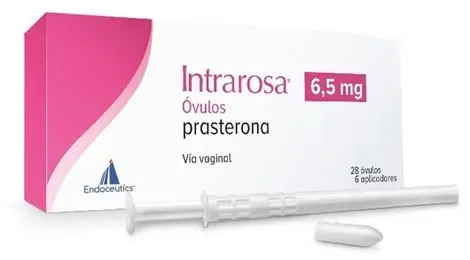
Table of Contents
Package leaflet: Information for the user
Introduction
Package leaflet: information for the user
Intrarosa 6.5 mg vaginal inserts
prasterone
Read the entire leaflet carefully before you start using this medicine, because it contains important information for you.
- Keep this leaflet, as you may need to read it again.
- If you have any questions, ask your doctor or pharmacist.
- This medicine has been prescribed for you only and must not be given to other people, even if they have the same symptoms as you, because it could harm them.
- If you experience any adverse reactions, consult your doctor or pharmacist, even if they are possible adverse reactions not listed in this leaflet. See section 4.
Contents of the leaflet
- What Intrarosa is and what it is used for
- What you need to know before using Intrarosa
- How to use Intrarosa
- Possible adverse effects
- How to store Intrarosa
- Contents of the pack and other information
1. What Intrarosa is and what it is used for
Intrarosa contains the active substance prasterone.
What Intrarosa is used for
Intrarosa is used to treat postmenopausal women with moderate to severe vulvar and vaginal atrophy. It is used to relieve menopausal symptoms affecting the vagina, such as dryness or irritation. The cause is a decrease in estrogen levels in the body, which occurs naturally after menopause.
How Intrarosa works
Prasterone corrects the symptoms and signs of vulvar and vaginal atrophy by replacing estrogens normally produced by women's ovaries before menopause. It is inserted into the vagina, allowing the hormone to be released exactly where it is needed. This may relieve vaginal discomfort.
2. What you need to know before using Intrarosa
The use of hormone replacement therapy (HRT) carries risks that must be considered before deciding to start or continue this therapy.
Experience in treating women with premature menopause (due to ovarian failure or surgery) is limited. If you have premature menopause, the risks of using HRT may differ. Please consult your doctor.
Before starting (or resuming) HRT, your doctor will ask about your personal and family medical history. Your doctor may decide that a physical examination is necessary, which may include a breast examination and/or a pelvic examination, if needed.
Once you have started taking Intrarosa, you should visit your doctor for regular check-ups (at least every 6 months). During these visits, you can discuss with your doctor the benefits and risks of continuing Intrarosa.
Attend regular breast examinations as recommended by your doctor.
Do not use Intrarosa:
if any of the following conditions apply to you. If you are unsure about any of the following points, consult your doctor before using Intrarosa.
- If you have or have had breast cancer, or suspect you may have it;
- If you have or have had estrogen-sensitive cancer, such as cancer of the lining of the womb (endometrium), or suspect you may have it;
- If you have any vaginal bleeding of unknown origin;
- If you have excessive thickening of the lining of the womb (endometrial hyperplasia) that is not being treated;
- If you have or have had a blood clot in a vein (thrombosis), either in the legs (deep vein thrombosis) or in the lungs (pulmonary embolism);
- If you have a blood clotting disorder (such as protein C deficiency, protein S deficiency, or antithrombin deficiency);
- If you have or have recently had an arterial disease caused by blood clots, such as myocardial infarction, stroke, or angina pectoris;
- If you have or have had liver disease and liver function tests have not yet returned to normal;
- If you have a rare inherited blood disorder called "porphyria";
- If you are allergic to prasterone or to any of the other ingredients of this medicine (listed in section 6 "Contents of the pack and other information").
If any of these conditions develops for the first time while you are using Intrarosa, stop treatment immediately and consult your doctor.
Warnings and precautions
When to be especially careful with Intrarosa
Inform your doctor if you have ever had any of the following conditions before starting treatment, as they may reappear or worsen during treatment with Intrarosa. If so, you should visit your doctor more frequently for check-ups:
-
Uterine fibroids;
-
Growth of the uterine lining outside the uterus (endometriosis) or history of excessive thickening of the uterine lining (endometrial hyperplasia);
-
History of blood clot formation (see "Blood clots in a vein (thrombosis)");
-
Increased risk of estrogen-sensitive cancer (such as having a mother, sister, or grandmother who had breast cancer);
-
High blood pressure;
-
Liver disorders, such as benign liver tumor;
-
Diabetes;
-
Gallstones;
-
Migraine or headaches (severe);
-
An autoimmune disease affecting multiple body organs (systemic lupus erythematosus, SLE);
-
Epilepsy;
-
Asthma;
-
A condition affecting the eardrum and hearing (otosclerosis);
-
Very high levels of fat in the blood (triglycerides);
-
Fluid retention due to heart or kidney problems.
Stop taking Intrarosa and see your doctor immediately
If you experience any of the following symptoms while using HRT:
-
Any of the conditions mentioned in the section "Do not use Intrarosa";
-
Yellowing of the skin or whites of the eyes (jaundice). These may be symptoms of liver disease;
-
If you become pregnant;
-
A significant increase in blood pressure (with symptoms such as headache, fatigue, dizziness);
-
New-onset migraine-type headache;
-
If you notice symptoms of a blood clot, such as:
-
Swelling, pain, and redness in the legs;
-
Sudden chest pain;
-
Difficulty breathing.
For more information, see "Blood clots in a vein (thrombosis)".
Note: Intrarosa is not a contraceptive. If less than 12 months have passed since your last menstrual period or if you are under 50 years of age, you may still need to use contraceptive methods to avoid pregnancy. Seek advice from your doctor.
HRT and cancer
Intrarosa has not been studied in women with a current diagnosis or history of cancer.
Excessive thickening of the lining of the womb (endometrial hyperplasia) and cancer of the womb lining (endometrial cancer)
Long-term use of oral estrogen-only HRT may increase the risk of developing cancer of the lining of the womb (endometrium). Intrarosa does not stimulate endometrial growth, as demonstrated by endometrial atrophy in all women treated with Intrarosa for one year in clinical trials.
It is unclear whether there is any risk when Intrarosa is used for long-term treatment (more than one year). However, absorption of Intrarosa into the bloodstream is very low, so there is no need to add a progestogen.
If you experience vaginal bleeding or spotting, it is usually not concerning, but you should schedule a visit with your doctor. It may be a sign that the endometrium has thickened.
The following risks are associated with systemic HRT medications that circulate in the blood. However, Intrarosa is used for local vaginal treatment and its absorption into the blood is very low. It is less likely that the conditions listed below will worsen or reappear during treatment with Intrarosa, but you should see your doctor if you are concerned.
Breast cancer
Available data indicate that combined estrogen-progestogen HRT, and possibly also estrogen-only HRT, increases the risk of breast cancer. The additional risk depends on how long HRT is used. The increased risk becomes evident after several years of HRT. However, it returns to normal within a few years (at most 5) after stopping treatment.
-
Examine your breasts regularly. See your doctor if you notice any changes, such as:
-
Dimpling of the skin;
-
Changes in the nipples;
-
Any lump you can see or feel.
In addition, you are advised to participate in breast cancer screening programs with mammography when offered.
Ovarian cancer
Ovarian cancer is rare, much rarer than breast cancer. The use of estrogen-only HRT has been associated with a slight increase in the risk of ovarian cancer.
The risk of ovarian cancer varies with age. For example, in women aged 50 to 54 years who do not receive HRT, about 2 cases of ovarian cancer will be diagnosed per 2000 women over a 5-year period. In women who have received HRT for 5 years, about 3 cases will occur per 2000 HRT users (i.e., about 1 additional case).
Rare cases of ovarian and breast cancer have been reported in women treated with 6.5 mg of prasterone for 52 weeks.
Effect of HRT on the heart and circulation
Intrarosa has not been studied in women with a history of thromboembolic disorders, uncontrolled hypertension, or heart disease.
Blood clots in a vein (thrombosis)
The risk of blood clots in veins is approximately 1.3 to 3 times higher in HRT users compared to non-users, especially during the first year of treatment.
Blood clots can be serious, and if one travels to the lungs, it can cause chest pain, difficulty breathing, fainting, or even death.
The likelihood of developing blood clots increases with age and if any of the following factors apply. If any of these situations may apply to you, inform your doctor:
- You cannot walk for long periods due to major surgery, injury, or illness (see also section 3, If you need to undergo surgery);
- You are significantly overweight (BMI > 30 kg/m²);
- You have a blood clotting disorder requiring long-term anticoagulant treatment;
- A close relative has ever had a blood clot in the legs, lungs, or other organs;
- You have systemic lupus erythematosus (SLE);
- You have cancer.
For symptoms of a blood clot, see the section "Stop taking Intrarosa and see your doctor immediately".
In clinical trials, deep vein thrombosis was not observed with intravaginal prasterone, and the single case of pulmonary embolism reported suggests a lower incidence with Intrarosa compared to the placebo group.
Comparison
It is estimated that, over a 5-year period, an average of between 4 and 7 out of every 1000 women around the age of 50 who do not receive HRT will develop a blood clot in a vein.
Heart disease (myocardial infarction)/Hypertension
In women receiving estrogen-only therapy, the risk of heart disease does not increase.
Stroke
The risk of stroke is approximately 1.5 times higher in HRT users than in non-users. The number of additional stroke cases due to HRT use increases with age.
No cases of stroke were observed with Intrarosa in clinical trials.
Comparison
It is estimated that, over a 5-year period, an average of 8 out of every 1000 women around the age of 50 who do not receive HRT will suffer a stroke. In women around the age of 50 who are receiving HRT, the number will be 11 per 1000 users over a 5-year period (i.e., 3 additional cases).
Other conditions
- HRT does not prevent memory loss. There is some evidence of an increased risk of memory loss in women who started HRT after age 65. Seek advice from your doctor.
- You may experience vaginal discharge due to the melting of the "fat base," which adds to the increased vaginal secretions caused by treatment. If vaginal discharge occurs, there is no need to interrupt Intrarosa administration.
- Intrarosa may damage latex condoms, diaphragms, and cervical caps.
- If you have a vaginal infection, you will need to complete a course of antibiotics before taking Intrarosa.
Children and adolescents
Intrarosa is only used in adult women.
Other medicines and Intrarosa
Inform your doctor or pharmacist if you are taking, have recently taken, or might need to take any other medicines.
There are no efficacy and safety data available in women currently receiving hormonal treatments such as androgens, HRT (estrogens alone or combined with progestogens).
The use of Intrarosa in combination with HRT (estrogen-only, estrogen-progestogen, or androgen therapy) or with vaginal estrogens is not recommended.
Pregnancy, breastfeeding and fertility
Pregnancy and breastfeeding
Intrarosa should only be used in postmenopausal women. If you become pregnant, stop taking Intrarosa and consult your doctor.
Fertility
Intrarosa is contraindicated in women of reproductive age. It is not known whether this medicine affects fertility.
Driving and using machines
Intrarosa generally does not affect the ability to drive or use machines.
3. How to use Intrarosa
Follow exactly the instructions for administration of this medicine given by your doctor or pharmacist. If in doubt, consult your doctor or pharmacist again.
Your doctor will aim to prescribe the lowest dose to treat your symptoms for the shortest duration necessary. Talk to your doctor if you think this dose is too high or too low.
How much to use
Use one suppository once a day, at bedtime.
How to use Intrarosa
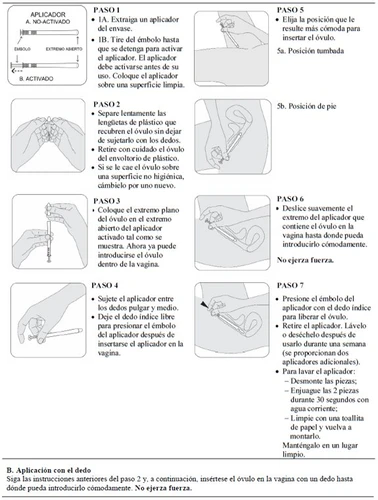
Insert the suppository into the vagina with your finger or with the applicator supplied in the package.
Read carefully the instructions for use of Intrarosa at the end of this leaflet before using this medicine.
How long to use it
Once treatment has started, visit your doctor at least every 6 months to check whether you need to continue using Intrarosa.
If you use more Intrarosa than you should
A vaginal douche is recommended.
If you forget to use Intrarosa
If you forget to use a suppository, insert one as soon as you remember. However, if less than 8 hours remain before the next dose, skip the missed suppository.
Do not use two suppositories to make up for a forgotten dose.
If you need to undergo surgery
If you are scheduled for surgery, inform the surgeon that you are using Intrarosa. You may need to stop using Intrarosa between 4 and 6 weeks before the operation to reduce the risk of a blood clot (see section 2, "Blood clots in a vein (thrombosis)"). Ask your doctor when you can start using Intrarosa again.
4. Possible adverse effects
Like all medicines, this medicine can cause adverse effects, although not everyone will experience them.
The following diseases are observed more frequently in women using systemic hormone replacement therapy (HRT) that circulates in the blood, compared to women who do not use HRT. These risks are lower with estrogen treatments administered vaginally:
- breast cancer;
- ovarian cancer;
- blood clots in the veins of the legs or lungs (venous thromboembolism);
- stroke;
- possible memory loss if HRT is started after the age of 65.
For more information about these adverse effects, see section 2.
The most frequently reported adverse effect in clinical studies was vaginal discharge. This is likely due to the melting of the hard fat base, which adds to the expected increase in vaginal secretions caused by the treatment. Vaginal discharge does not require discontinuation of Intrarosa.
The following adverse effects were also reported:
- Common (may affect up to 1 in 10 people): abnormal vaginal cytology (in most cases, ASCUS or LGSIL), weight fluctuations (increase or decrease);
- Uncommon (may affect up to 1 in 100 people): benign cervical or uterine polyps, benign breast mass.
The following adverse effects have been reported with HRT containing estrogens, but not with Intrarosa, during clinical trials:
-
gallbladder disease
-
various skin disorders:
-
skin pigmentation, especially on the face and neck, known as "pregnancy mask" (chloasma)
-
red and painful skin nodules (erythema nodosum)
-
rash with ulcers or target-shaped redness (erythema multiforme)
Reporting of adverse effects
If you experience any type of adverse effect, consult your doctor or pharmacist, even if they are possible adverse effects not listed in this leaflet. You may also report them directly through the Spanish Pharmacovigilance System for Human Medicinal Products: www.notificaRAM.es
By reporting adverse effects, you can help provide more information on the safety of this medicine.
5. Storage of Intrarosa
Keep this medicine out of the sight and reach of children.
Do not use this medicine after the expiry date stated on the carton and blister after EXP. The expiry date refers to the last day of the month indicated.
Store below 30 °C.
Do not freeze.
Medicines must not be disposed of via wastewater or household waste. Ask your pharmacist how to dispose of unwanted medicines and their packaging. This will help protect the environment.
6. Contents of the pack and other information
Composition of Intrarosa
- The active substance is prasterone. Each ovule contains 6.5 mg of prasterone.
- The other component is hard fat (adeps solidus).
Appearance of the product and contents of the pack
Intrarosa is a white or almost white ovule, bullet-shaped, approximately 28 mm in length and 9 mm in diameter at its widest end.
The applicator is made of LDPE and 1% colouring (titanium dioxide).
It is packaged in blister packs containing 28 ovules with 6 applicators.
Marketing Authorization Holder
Endoceutics S.A.
Rue Belliard 40
1040 Brussels
Belgium
Manufacturer responsible for manufacturing
Basic Pharma Manufacturing B.V.
Burgemeester Lemmensstraat 352
6163 JT Geleen
The Netherlands
You can request further information about this medicine by contacting the local representative of the marketing authorisation holder: Belgium, Luxembourg, Netherlands Theramex Belgium BVBA Tél/Tel: + 32 (0) 28088080 |
Germany, Austria Theramex Germany GmbH Tel: + 49 (0) 32 2122 490 37 |
Spain Theramex Ireland Limited Tel: + 34 911 143 487 |
France Theramex France S.A.S. Tél: + 33 (0) 800100350 |
Italy Theramex Italy S.r.l. Tel: + 39 02 81480024 |
Poland Theramex Poland sp. z o.o. Tel.: + 48 (0) 22 30 77 166 |
Portugal Tecnimede - Sociedade Técnico-Medicinal, S.A. Tel: + 351 210 414 100 |
United Kingdom (Northern Ireland), Ireland, Malta Theramex UK Limited Tel: + 44 (0) 3330096795 |
Denmark, Iceland, Norway, Finland, Sweden Avia Pharma AB Sverige/Svíþjóð/Ruosti Tlf/Sími/Tlf/Puh/Tel: + 46 (0) 8 544 900 22 Czech Republic, Estonia, Greece, Croatia, Cyprus, Latvia, Lithuania, Hungary, Romania, Slovenia, Slovakia Theramex Ireland Limited Tel/Te?./Τηλ: + 353 (0) 15138855 Date of the most recent review of this leaflet: 12/2023. Other sources of information Detailed information on this medicine is available on the European Medicines Agency website: http://www.ema.europa.eu. Instructions for use of Intrarosa How to use Intrarosa
Before you start
A. Using the applicator
|