Intestifalk 3 mg gastro-resistant capsules
Spain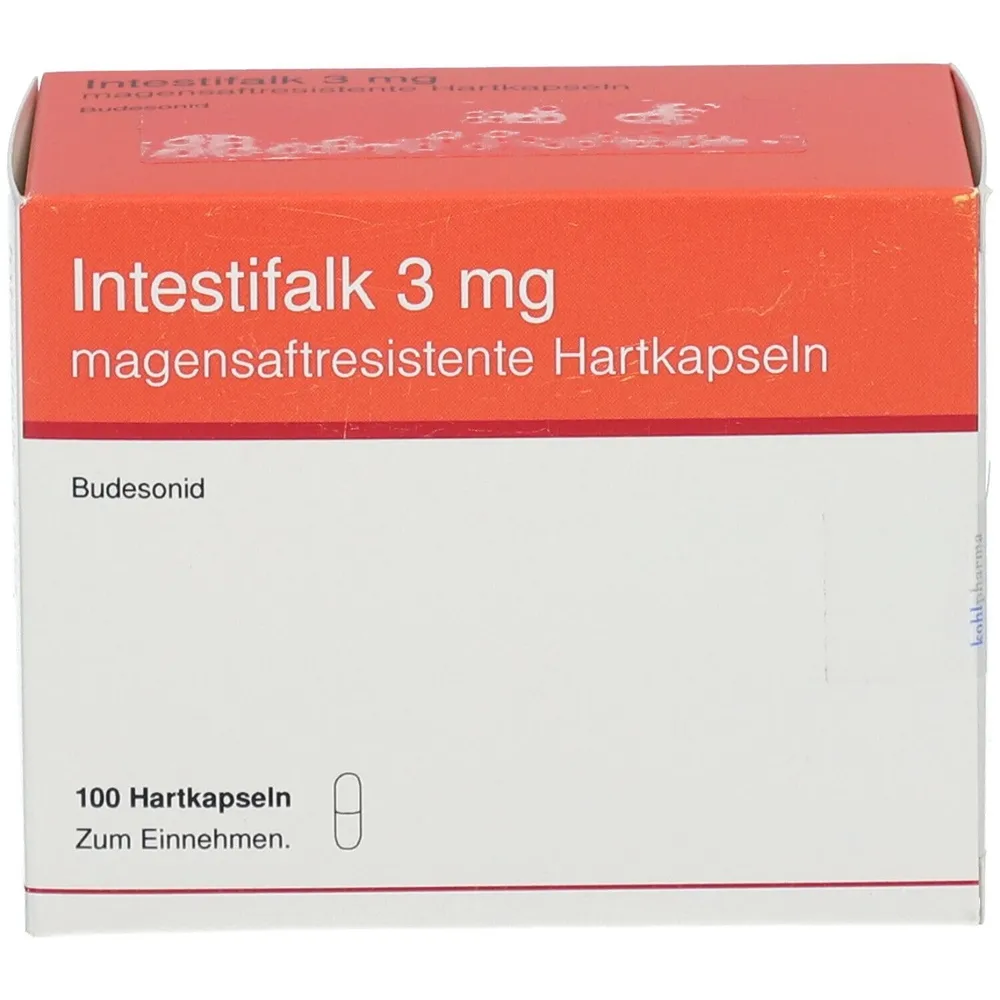
Table of Contents
Package leaflet: Information for the user
Introduction
PACKAGE LEAFLET: INFORMATION FOR THE USER
Intestifalk 3 mg gastro-resistant capsules
budesonide
Read the entire leaflet carefully before you start taking this medicine, because it contains important information for you.
- Keep this leaflet, as you may need to read it again.
- If you have any questions, ask your doctor or pharmacist.
- This medicine has been prescribed for you only and must not be given to other people, even if they have the same symptoms as you, because it could harm them.
- If you experience any adverse effects, consult your doctor or pharmacist, even if the adverse effects are not listed in this leaflet. See section 4.
Contents of the leaflet
- What Intestifalk is and what it is used for
- What you need to know before taking Intestifalk
- How to take Intestifalk
- Possible adverse effects
- How to store Intestifalk
- Contents of the pack and other information
1. What Intestifalk is and what it is used for
Intestifalk contains the active substance budesonide, a type of locally-acting corticosteroid used to treat chronic inflammatory diseases of the intestine and liver.
Intestifalk is used to treat:
- Crohn's disease: mild to moderate acute flare-ups of chronic intestinal inflammation affecting the lower part of the small intestine (ileum) and/or the upper part of the large intestine (ascending colon).
- Microscopic colitis: a disease with subtypes collagenous colitis and lymphocytic colitis, characterized by chronic inflammation of the large intestine, usually accompanied by chronic watery diarrhea.
Autoimmune hepatitis: a disease with chronic inflammation of the liver.
2. What you need to know before taking Intestifalk
Do not take Intestifalk:
- if you are allergic to budesonide or to any of the other components of this medicine (listed in section 6)
- if you have severe liver disease (liver cirrhosis)
Warnings and precautions
Talk to your doctor before starting Intestifalk if you have:
- tuberculosis
- high blood pressure
- diabetes, or if any member of your family has been diagnosed with diabetes
- brittle bones (osteoporosis)
- stomach or first part of the small intestine ulcer (peptic ulcer)
- increased pressure in the eye (glaucoma) or conditions such as clouding of the lens (cataracts), or if any member of your family has been diagnosed with glaucoma
- severe liver problems
Intestifalk is not suitable for patients with Crohn's disease affecting the upper gastrointestinal tract.
Sometimes this disease may cause extraintestinal symptoms (e.g. affecting the skin, eyes, and joints) that are unlikely to respond to this medicine.
Typical effects of cortisone preparations may occur and may affect all parts of the body, particularly if you take this medicine at high doses and for prolonged periods (see section 4. Possible side effects).
Additional precautions during treatment with Intestifalk
- Inform your doctor if you have an infection. Symptoms of some infections may be atypical or less pronounced.
- Avoid contact with people who have chickenpox or shingles (herpes zoster) if you have never had these diseases before. They may seriously affect you. If you come into contact with chickenpox or shingles, see your doctor immediately.
- Inform your doctor if you have never had measles.
- If you need to receive any vaccine during treatment with this medicine, inform your doctor beforehand.
- Inform your doctor that you are taking this medicine if you are scheduled for surgery.
- If you were previously treated with a more potent cortisone preparation before starting Intestifalk, your symptoms may reappear when switching medications. If this occurs, inform your doctor.
- Contact your doctor if you experience blurred vision or other visual disturbances.
- If you have autoimmune hepatitis, your doctor will regularly monitor liver function and periodically adjust the dose of this medicine.
Taking Intestifalk with other medicines
Inform your doctor or pharmacist if you are taking, have recently taken, or might need to take any other medicines. In particular:
- cardiac glycosides such as digoxin (a medicine used to treat heart conditions)
- diuretics (medicines used to treat excess fluid in the body)
- ketoconazole or itraconazole (used to treat fungal infections)
- antibiotics, medicines to treat infections (such as clarithromycin)
- carbamazepine (used in the treatment of epilepsy)
- rifampicin (used to treat tuberculosis)
- estrogens or oral contraceptives
- cimetidine (used to reduce stomach acid production)
Some medicines may increase the effects of Intestifalk, so your doctor will monitor you closely if you are taking these medicines (including some used for HIV: ritonavir, cobicistat).
If you take cholestyramine (used to treat hypercholesterolemia and also used to treat diarrhea) or antacids (for indigestion) together with Intestifalk, take these medicines at least two hours apart.
Intestifalk may alter the results of tests performed by your doctor or in a hospital. Inform your doctor that you are taking Intestifalk before any test is carried out.
Taking Intestifalk with food and drink
You should not drink grapefruit juice during treatment with this medicine, as it may alter its effects.
Pregnancy and breastfeeding
If you are pregnant or breastfeeding, think you may be pregnant, or plan to become pregnant, consult your doctor before using this medicine.
You should only take Intestifalk during pregnancy if prescribed by your doctor.
Budesonide passes into breast milk in small amounts. If you are breastfeeding, you should only take Intestifalk if instructed by your doctor.
Driving and using machines
Intestifalk is not expected to affect your ability to drive or operate machinery.
Intestifalk contains sucrose and lactose
If your doctor has informed you that you have an intolerance to certain sugars, consult with him before taking this medicine.
3. How to take Intestifalk
Follow exactly the instructions for using this medicine given by your doctor. If in doubt, consult your doctor or pharmacist again.
Crohn's disease
Take three capsules once daily in the morning, or one capsule three times a day (morning, midday, and night), unless your doctor tells you otherwise.
Duration of treatment
Your treatment should last approximately 8 weeks.
Microscopic colitis (collagenous and lymphocytic colitis)
Treatment of acute inflammation
Take three capsules once daily in the morning, unless your doctor tells you otherwise.
Maintenance treatment
Maintenance treatment should only be started if symptoms reappear after stopping initial treatment. Depending on the course of the disease, your doctor will decide how many capsules you should take each day. The usual dose is two capsules once daily in the morning (a total of 6 mg of budesonide per day). Alternatively, take two capsules in the morning on the first day and one capsule in the morning on the second day (corresponding to an average of 4.5 mg of budesonide per day). Continue taking the medicine, alternating the daily dose between two capsules and one capsule.
Duration of treatment
Treatment for acute inflammation should last approximately 8 weeks. Your doctor will determine the duration of maintenance treatment. Maintenance treatment is usually administered for up to 12 months. If indicated, your doctor may extend the treatment duration.
Autoimmune hepatitis
Treatment of acute inflammation:
Take one capsule three times a day (morning, midday, and night), unless your doctor tells you otherwise. Depending on laboratory results, your doctor will decide how long you should continue taking three capsules per day.
Maintenance treatment:
Take one capsule twice daily (morning and night), unless your doctor tells you otherwise. Depending on laboratory results, your doctor will decide how long you should continue taking two capsules per day.
Note: In most cases, your doctor will prescribe Intestifalk together with azathioprine, a medicine that works by reducing the body's immune response.
Duration of treatment
Depending on the results of your blood and liver tissue tests, your doctor will decide how long you need to continue taking the medication and how many capsules per day you should take.
Use in children (all indications)
Intestifalk must not be used in children under 12 years of age.
There is only limited experience with the use of this medicine in children over 12 years of age.
Method of administration
Intestifalk must only be taken orally.
The capsules must be swallowed whole with a glass of water approximately half an hour before meals. Do not chew the capsules.
If you take more Intestifalk than you should
If you take too much medicine at once, go back to taking the prescribed dose at your next scheduled dose.
Do not take a lower dose. If you have any doubts, contact your doctor so that he or she can decide what you should do. If possible, bring the package and the leaflet with you.
If you forget to take Intestifalk
If you forget to take a dose, continue treatment with the prescribed dose. Do not take a double dose to make up for the missed dose.
If you stop taking Intestifalk
Talk to your doctor if you wish to stop or end your treatment early. It is important not to stop taking your medicine suddenly, as this could make you unwell. Continue taking your medicine until your doctor tells you otherwise, even if you start to feel better.
Your doctor will likely want to gradually reduce your dose over a period of two weeks.
If you have any further questions about the use of this medicine, ask your doctor or pharmacist.
4. Possible adverse effects
Like all medicines, this medicine can cause adverse effects, although not everyone experiences them.
If you experience any of the following symptoms after taking this medicine, you should contact your doctor immediately:
- Infection
- Headache
- Changes in behaviour such as depression, irritability, euphoria, restlessness, anxiety, or aggression.
The following adverse effects have also been reported:
Common: may affect up to 1 in 10 people
- Cushing's syndrome – for example, moon-shaped face, increased body weight, reduced glucose tolerance, increased blood sugar, high blood pressure, fluid retention in tissues (e.g. swollen legs), increased potassium excretion (hypokalaemia), irregular menstrual periods in women, unwanted hirsutism in women, impotence, abnormal laboratory findings (reduced adrenal function), development of red stretch marks on the skin (striae), acne
- Indigestion, upset stomach (dyspepsia), abdominal pain
- Increased risk of infection
- Muscle and joint pain, muscle weakness, muscle cramps
- Bone fragility (osteoporosis)
- Headache
- Mood changes such as depression, irritability, or euphoria
- Skin rash due to hypersensitivity reactions, red spots due to bleeding under the skin, delayed wound healing, local skin reactions such as contact dermatitis
Uncommon: may affect up to 1 in 100 people
- Ulcers in the stomach or small intestine
- Restlessness with increased physical activity, anxiety
Rare: may affect up to 1 in 1,000 people
- Blurred vision
- Inflammation of the pancreas
- Bone loss due to poor blood supply (osteonecrosis)
- Aggression
- Bruising
Very rare: may affect up to 1 in 10,000 people
- Growth retardation in children
- Constipation
- Increased intracranial pressure, possibly with increased ocular pressure (optic disc swelling) in adolescents
- Increased risk of thrombosis, inflammation of blood vessels (associated with discontinuation of cortisone treatment after long-term use)
- Fatigue, general feeling of malaise
These adverse effects are typical of steroid medicines, and most of them are also expected with treatment using other steroids. They may occur depending on the dose, duration of treatment, whether you have previously received or are currently receiving treatment with other cortisone preparations, and individual sensitivity.
If you have previously been treated with a more potent cortisone preparation before starting treatment with Intestifalk, your symptoms may reappear when switching medications.
Reporting of adverse effects
If you experience any adverse effect, consult your doctor or pharmacist, even if it is a possible adverse effect not listed in this leaflet. You can also report them directly via the Spanish Pharmacovigilance System for Human Medicinal Products: www.notificaRAM.es. By reporting adverse effects, you can help provide more information on the safety of this medicine.
5. Storage of Intestifalk
Keep this medicine out of sight and reach of children.
This medicine requires no special storage conditions.
Do not use this medicine after the expiry date stated on the packaging and blister. The expiry date refers to the last day of the month.
Medicines must not be disposed of via wastewater or household waste. Dispose of unused medicines and their packaging at the SIGRE Point located at your pharmacy. Ask your pharmacist how to properly dispose of medicines and packaging you no longer need. This will help protect the environment.
6. Contents of the pack and other information
Composition of Intestifalk
The active substance in Intestifalk is budesonide. Each gastro-resistant capsule contains 3 mg of budesonide.
The other components are ammonium methacrylate copolymer (type A) (Eudragit RL), ammonium methacrylate copolymer (type B) (Eudragit RS), lactose monohydrate, corn starch, methacrylic acid and methyl methacrylate copolymer (1:1) (Eudragit L 100), methacrylic acid and methyl methacrylate copolymer (1:2) (Eudragit S 100), povidone K25, purified water, sucrose, talc, triethyl citrate, gelatin, erythrosine (E 127), titanium dioxide (E 171), iron oxide red and black (E 172), sodium lauryl sulfate (see also the end of section 2 for important additional information on lactose and sucrose).
Nature of the product and pack contents
Intestifalk consists of pink gastro-resistant hard capsules contained in blister strips.
Intestifalk is available in pack sizes of 10, 50, 90, 100 or 120 capsules.
Not all pack sizes may be marketed.
Marketing Authorization Holder and Manufacturer
DR. FALK PHARMA GmbH
Leinenweberstr. 5
79108 Freiburg
Germany
Tel.: +49 (0) 761 / 1514-0
Fax: +49 (0) 761 / 1514-321
E-mail: [email protected]
Further information on this medicinal product is available from the local representative of the Marketing Authorization Holder:
Spain
Dr. Falk Pharma España
Camino de la Zarzuela, 19
28023 Madrid
Tel.: 91 372 95 08
This medicinal product is authorized in the European Economic Area member states under the following names:
Denmark, Finland, Great Britain, Ireland, Sweden: Budenofalk
Spain: Intestifalk 3 mg gastro-resistant capsules
France: Mikicort
Italy: Intesticort
Date of the most recent review of this leaflet: 12/2019
Detailed information on this medicinal product is available on the website of the Spanish Agency for Medicines and Health Products (AEMPS) http://www.aemps.es/