Influvac suspension for injection in pre-filled syringe
Spain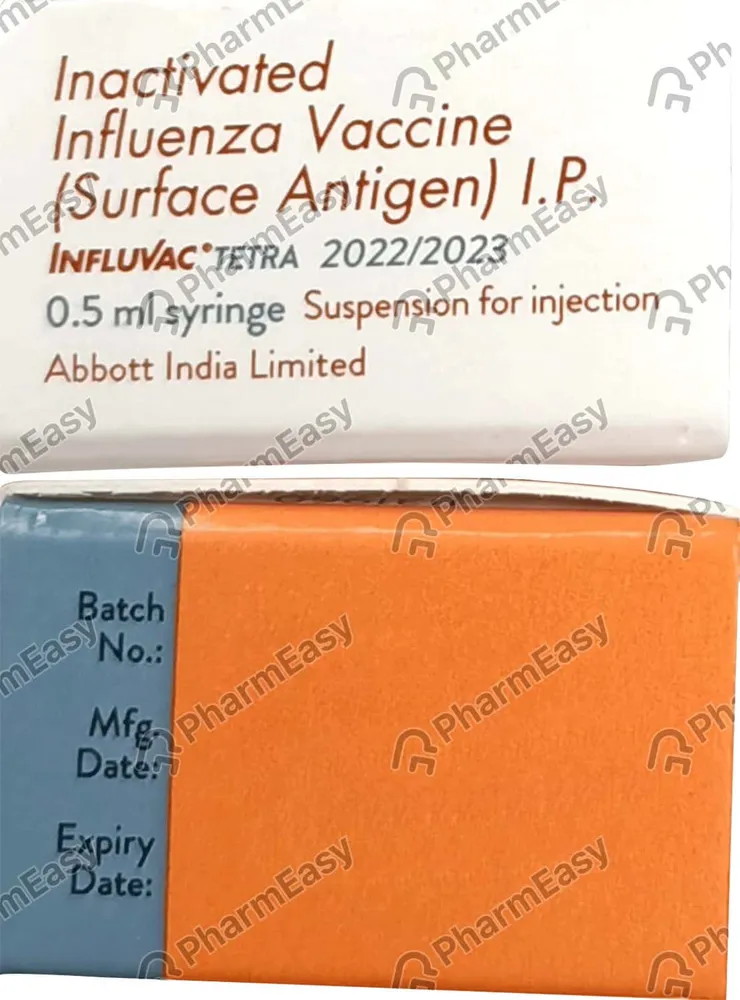
Instructions for Use
Package leaflet: Information for the user
Introduction
Package leaflet: Information for the user
Influvac suspension for injection in a pre-filled syringe
Influenza vaccine (inactivated surface antigen)
2025/2026 campaign
Read all of this leaflet carefully before you or your child are vaccinated, because it contains important information for you and your child.
- Keep this leaflet, as you may need to read it again.
- If you have any questions, ask your doctor, pharmacist or nurse.
- This vaccine has been prescribed only for you or your child. Do not give it to other people.
- If you or your child experience any adverse reactions, consult your doctor, pharmacist or nurse. This includes any adverse reactions not listed in this leaflet. See section 4.
Contents of this leaflet:
-
What Influvac is and what it is used for
-
What you need to know before you or your child are given Influvac
-
How to use Influvac
-
Possible side effects
-
How to store Influvac
-
Contents of the pack and other information
1. What Influvac is and what it is used for
Influvac is a vaccine for adults and children from 6 months of age. This vaccine helps protect you or your child against the influenza virus. The use of Influvac should be based on official recommendations.
When the Influvac vaccine is administered to a person, the immune system (the body's natural defence system) will produce its own protection (antibodies) against the disease. None of the components of the vaccine can cause influenza.
Influenza is an illness that can spread rapidly and is caused by different strains that may change each year. For this reason, you or your child may need to be vaccinated every year. The highest risk of contracting influenza occurs during the colder months, between October and March. If you or your child were not vaccinated in the autumn, it is still reasonable to get vaccinated until spring, as you or your child remain at risk of catching influenza until then. Your doctor can advise you on the best time to be vaccinated.
Influvac will protect you or your child against the three virus strains contained in the vaccine from approximately 2 to 3 weeks after the injection.
The incubation period for influenza is a few days, so if you or your child are exposed to the influenza virus immediately before or after vaccination, it is possible that you or your child may still develop the disease.
The vaccine will not protect you or your child against the common cold, even though some of its symptoms may be similar to those of influenza.
2. What you need to know before you or your child use Influvac
To ensure that Influvac is suitable for you or your child, it is important that you consult your doctor, pharmacist, or nurse if any of the following apply to you or your child. If there is anything you do not understand, ask your doctor, pharmacist, or nurse to explain it to you.
Do not use Influvac
- If you or your child are allergic (hypersensitive) to:
- the active substances, or
- any of the other components of Influvac (see section 6), or
- any of the components that may be present in very small amounts, such as eggs (ovalbumin or chicken proteins), formaldehyde, cetyltrimethylammonium bromide, polysorbate 80, or gentamicin (an antibiotic used to treat bacterial infections).
Warnings and precautions
Before vaccination, you must inform your doctor if you or your child have:
- a weakened immune response (immunodeficiency or use of medicines affecting the immune system).
- a bleeding disorder or bruise easily.
Your doctor will decide whether you or your child should receive the vaccine.
If you or your child have an illness with high fever or an acute infection, vaccination should be postponed until you or your child have recovered.
Fainting (syncope), dizziness, or other stress-related reactions may occur after or even before an injection with a needle. Therefore, you should inform your doctor or nurse if you have experienced or have previously experienced such reactions with an injection.
If, for any reason, you or your child undergo a blood test a few days after the flu vaccination, please inform your doctor. This is because false positive blood test results have been observed in some patients who had recently been vaccinated.
Like all vaccines, Influvac may not fully protect all individuals who are vaccinated.
Other medicines and Influvac
- Inform your doctor, pharmacist, or nurse if you or your child are using, have recently used, or might need to use any other vaccines or medicines, including those obtained without a prescription.
- Influvac can be administered at the same time as other vaccines, but in different limbs. Note that adverse effects could be more intense.
- The immune response may be reduced during immunosuppressive treatment, such as corticosteroids, cytotoxic medicines, or radiotherapy.
Pregnancy and breastfeeding
If you are pregnant or breastfeeding, think you might be pregnant, or are planning to become pregnant, consult your doctor for advice before using this medicine.
Inactivated influenza vaccines can be used at all stages of pregnancy.
More safety data are available for the second and third trimesters compared to the first trimester. However, data on the use of influenza vaccines worldwide do not indicate that the vaccine may have harmful effects on pregnancy or the baby.
Influvac can be used during breastfeeding.
Your doctor, pharmacist, or nurse will decide whether you should receive Influvac.
Consult your doctor, pharmacist, or nurse before taking any medicine.
Driving and using machines
The influence of Influvac on the ability to drive or use machines is none or negligible.
Influvac contains sodium and potassium
This medicine contains less than 1 mmol of sodium (23 mg) per dose, i.e., essentially "sodium-free".
This medicine contains potassium, less than 1 mmol (39 mg) per dose, i.e., essentially "potassium-free".
3. How to use Influvac
Posology
Adults should receive a single 0.5 ml dose.
Use in children and adolescents
Children from 6 months to 17 years of age should receive a single 0.5 ml dose.
Children under 9 years of age who have not previously been vaccinated against seasonal influenza: a second dose should be administered after an interval of at least 4 weeks.
The safety and efficacy of Influvac in infants under 6 months of age has not been established.
Route(s) and/or method of administration
Your doctor or nurse will administer the recommended dose of the vaccine by intramuscular or deep subcutaneous injection.
If you have any further questions about the use of this medicine, consult your doctor, pharmacist, or nurse.
4. Possible adverse effects
Like all medicines, Influvac can cause adverse effects, although not everyone experiences them.
Contact your doctor immediately if you or your child experience any of the following adverse effects; you or your child may require urgent medical attention.
Severe allergic reactions (frequency not known, occasionally reported during general use of Influvac):
- leading to medical emergencies due to circulatory system failure to maintain adequate blood flow to the various organs (shock) in rare cases,
- with marked swelling of the head and neck, including face, lips, tongue, throat, or any other part of the body (angioedema) in very rare cases.
The following adverse effects have been observed during clinical trials with Influvac and/or Influvac Tetra. Their frequency has been estimated as:
- very common (may affect more than 1 in 10 people);
- common (may affect up to 1 in 10 people);
- uncommon (may affect up to 1 in 100 people);
- frequency not known (adverse effects derived from post-marketing experience; cannot be estimated from the available data).
Adverse reactions | Adults and elderly population | Children | ||
18 years or older | 6 to 35 months | 3 to 5 years | 6 to 17 years | |
Headache | Very common* | - | - | Very common |
Somnolence | - | Very common | Very common | - |
Sweating | Common | Very common | Common | Common |
Loss of appetite | - | Very common | Very common | - |
Nausea | - | - | - | Very common |
Abdominal pain | - | - | - | Very common |
Diarrhea | - | Very common | Common | Very common |
Vomiting | - | Very common | Common | Very common |
Irritability/agitation | - | Very common | Very common | - |
Muscle pain (myalgia) | Common | - | - | Very common |
Joint pain (arthralgia) | Common | - | - | Common |
Fatigue | Very common | - | - | Very common |
Fever | Uncommon | Very common | Common | Common |
General malaise | Common | - | - | Very common |
Chills | Common | - | - | Common |
Pain at injection site | Very common | Very common | Very common | Very common |
Redness | Common | Very common | Very common | Very common |
Swelling | Common | Common | Very common | Very common |
Hardening (induration) | Common | Common | Very common | Very common |
Bruising (ecchymosis) | Common | Common | Common | Common |
For all age groups: Frequency not known (cannot be estimated from available data) | Skin reactions that may spread throughout the body, including itching (pruritus, urticaria), rash. | |||
Inflammation of blood vessels that may lead to skin rashes (vasculitis) and, in very rare cases, temporary kidney problems. | ||||
Localized pain in nerve endings (neuralgia), abnormalities in the perception of touch, pain, heat and cold (paresthesia), febrile seizures, neurological disorders that may cause neck stiffness, confusion, numbness, pain and weakness in limbs, loss of balance, loss of reflexes, paralysis of all or part of the body (encephalomyelitis, neuritis, Guillain-Barré syndrome). | ||||
Temporary reduction in the number of certain blood particles called platelets; low platelet count may cause excessive bruising or bleeding (transient thrombocytopenia); temporary inflammation of glands in the neck, armpits or groin (transient lymphadenopathy). | ||||
*Common in elderly population (≥ 61 years) |
In all age groups, most of the previously mentioned reactions usually occur within the first 3 days after vaccination and resolve spontaneously within 1 to 3 days after onset. In general, the intensity of these reactions was mild.
Reporting of adverse reactions
If you or your child experience any type of adverse reaction, consult your doctor, pharmacist, or nurse, even if it is a possible adverse reaction not listed in this leaflet. You may also report them directly through the Spanish Pharmacovigilance System for Human Medicines: www.notificaRAM.es. By reporting adverse reactions, you can help provide more information on the safety of this medicine.
5. Storage of Influvac
Keep out of the sight and reach of children.
Do not use Influvac after the expiry date stated on the packaging after EXP. The expiry date refers to the last day of the month indicated.
Store Influvac in a refrigerator (between 2°C - 8°C). Do not freeze.
Keep the product in the original packaging to protect it from light.
Medicines should not be disposed of via wastewater or household waste. Dispose of unused medicines and their packaging at the SIGRE collection point at your pharmacy. If you are in doubt, ask your pharmacist how to dispose of medicines and packaging you no longer need. This will help protect the environment.
6. Contents of the pack and other information
Composition of Influvac
The active substances are:
Influenza virus surface antigens (haemagglutinin and neuraminidase) from the following strains*:
-
Strain similar to A/Victoria/4897/2022 (H1N1) pdm09
(A/Victoria/4897/2022, IVR-238).......15 micrograms HA** -
Strain similar to A/Croatia/10136RV/2023 (H3N2)
(A/Croatia/10136RV/2023, X-425A).......................15 micrograms HA** -
Strain similar to B/Austria/1359417/2021
(B/Austria/1359417/2021, BVR-26)…........15 micrograms HA**
per 0.5 ml dose
- grown in embryonated hens' eggs from healthy chickens
** haemagglutinin
This vaccine complies with the World Health Organization (WHO) recommendation (northern hemisphere) and with the European Union recommendation for the 2025/2026 season.
The other components are: potassium chloride, potassium dihydrogen phosphate, disodium phosphate dihydrate, sodium chloride, calcium chloride dihydrate, magnesium chloride hexahydrate and water for injections.
Appearance of Influvac and contents of the pack
Influvac is an injectable suspension supplied in pre-filled glass syringes (with or without needle), with a plunger stopper (bromobutyl rubber), containing 0.5 ml of clear, colourless injectable liquid. Each syringe is for single use only.
Pack containing 1 or 10 syringes.
Not all pack sizes may be marketed.
Marketing Authorisation Holder:
Viatris Healthcare Limited
Damastown Industrial Park
Mulhuddart, Dublin 15
Dublin
Ireland
Manufacturer:
Abbott Biologicals B.V.
Veerweg 12
NL - 8121 AA Olst
The Netherlands
Further information on this medicine is available upon request by contacting the local representative of the Marketing Authorisation Holder:
Viatris Pharmaceuticals, S.L.
C/ General Aranaz, 86
28027 Madrid
Spain
This medicine is authorised in the Member States of the European Economic Area and in the United Kingdom (Northern Ireland) under the following names:
Austria | Influvac - Tri Injection suspension in a prefilled syringe, (influenza vaccine, inactivated surface antigens) |
Belgium | Influvac, suspension for injection in a prefilled syringeInfluenza vaccine (surface antigens, inactivated) |
Bulgaria | Influvac съдържащ ваксина срещу грип в предварително пълнен шприц (антигени от повърхността, неактивирана) |
Croatia | Influvac suspension for injection in a prefilled syringe, influenza vaccine (surface antigen), inactivated |
Cyprus, Malta | Influvac sub-unit, suspension for injection(influenza vaccine, surface antigen, inactivated) |
Czech Republic, Denmark, Estonia, Finland, Germany, Iceland, Norway, Poland, Portugal, Slovakia, Sweden | Influvac |
France | INFLUVAC, suspension for injection in a prefilled syringeInactivated influenza vaccine containing surface antigens |
Greece | Influvac sub-unit |
Hungary | Influvac suspension for injection in a prefilled syringe |
Ireland | Influvac sub-unit, suspension for injection in pre-filled syringeInfluenza vaccine (surface antigen, inactivated) |
Italy | Influvac S |
Latvia | Influvac suspension for injection in a prefilled syringe |
Lithuania | Influvac suspension for injection in a prefilled syringe |
Luxembourg | Influvac, suspension for injection in a prefilled syringeVaccine against influenza (surface antigens, inactivated) |
Netherlands | Influvac, suspension for injection in a 0.5 ml prefilled syringe |
Romania | Influvac suspension for injection in a prefilled syringe |
Slovenia | Influvac suspension for injection in a prefilled syringe |
Spain | Influvac injectable suspension in a prefilled syringe |
This leaflet was last reviewed in: July 2025
Detailed and up-to-date information on this medicine is available on the website of the Spanish Agency of Medicines and Health Products (AEMPS) https://www.aemps.gob.es/
This information is intended for healthcare professionals only
As with all injectable vaccines, appropriate medical treatment and supervision should always be readily available in case of an anaphylactic reaction following vaccine administration.
Allow the vaccine to reach room temperature before use.
Shake well before use.
Inspect visually before administration.
Do not use the vaccine if the colour has changed or if foreign particles in suspension are observed.
Do not mix with other medicines in the same syringe.
The vaccine must not be administered directly into any blood vessel.
The recommended sites for intramuscular injection are the anterolateral aspect of the thigh (or the deltoid muscle if muscle mass is adequate) in children aged 6 to 35 months, or the deltoid muscle in children aged 36 months and adults.
Traceability
To improve traceability of biological medicines, the name and batch number of the administered medicine should be clearly recorded.
See also section 3: How to use Influvac
Similar Medications
-
Efluelda solution for injection in pre-filled syringe
Form: suspension for injection, in pre-filled syringe
Active substance Dosage INACTIVATED FRACTIONATED INFLUENZA A H1N1 VIRUS 60 Microgramo(s) Hemaglutinina INACTIVATED FRACTIONATED INFLUENZA A H3N2 VIRUS 60 Microgramo(s) Hemaglutinina INACTIVATED FRACTIONATED INFLUENZA B VIRUS 60 Microgramo(s) Hemaglutinina Manufacturer: Sanofi Winthrop Industrie
-
Fluad injectable suspension in pre-filled syringe
Form: suspension for injection, in pre-filled syringe
Active substance Dosage INACTIVATED INFLUENZA A H1N1 VIRUS ≥ 15 µg/dosis INACTIVATED INFLUENZA A H3N2 VIRUS ≥ 15 µg/dosis ANTIGEN OF A STRAIN SIMILAR TO B (VICTORIA LINEAGE) ≥ 15 µg/dosis Manufacturer: Seqirus Netherlands B.V.
-
Fluarix suspension for injection in pre-filled syringe
Form: suspension for injection, in pre-filled syringe
Active substance Dosage INFLUENZA VIRUS A/VICTORIA/4897/2022 IVR-238 (H1N1) INACTIVATED 15 Microgramo(s) Hemaglutinina INFLUENZA VIRUS FLU A/THAILAND/8/2022 (H3N2) IVR-237 STRAIN SIMILAR TO (A/THAILAND/8/2022) 15 Microgramo(s) Hemaglutinina INFLUENZA VIRUS STRAIN SIMILAR TO B/AUSTRIA/1359417/2021-(B/AUSTRIA/1359417/2021, BVR-26) 15 Microgramo(s) Hemaglutinina Manufacturer: Glaxosmithkline S.A.
-
Flucelvax suspension for injection in pre-filled syringe
Form: suspension for injection, in pre-filled syringe
Active substance Dosage INACTIVATED INFLUENZA A H1N1 VIRUS Aproximadamente igual a 15 microgramos/ml INACTIVATED INFLUENZA A H3N2 VIRUS Aproximadamente igual a 15 microgramos/ml ANTIGEN OF A STRAIN SIMILAR TO B (VICTORIA LINEAGE) Aproximadamente igual a 15 microgramos/ml Manufacturer: Seqirus Netherlands B.V.
-
Vaxigrip solution for injection in pre-filled syringe
Form: suspension for injection, in pre-filled syringe
Active substance Dosage INACTIVATED FRACTIONATED INFLUENZA A H1N1 VIRUS 15 Microgramo(s) Hemaglutinina INACTIVATED FRACTIONATED INFLUENZA A H3N2 VIRUS 15 Microgramo(s) Hemaglutinina INACTIVATED FRACTIONATED INFLUENZA B VIRUS 15 Microgramo(s) Hemaglutinina Manufacturer: Sanofi Winthrop Industrie
This page has been machine-translated and may contain inaccuracies. The original data is available in the manufacturing country's language.
Last data check: May 18, 2026 · Data source: CIMA — AEMPS