Indapamide Normon 2.5 mg coated tablets EFG
Spain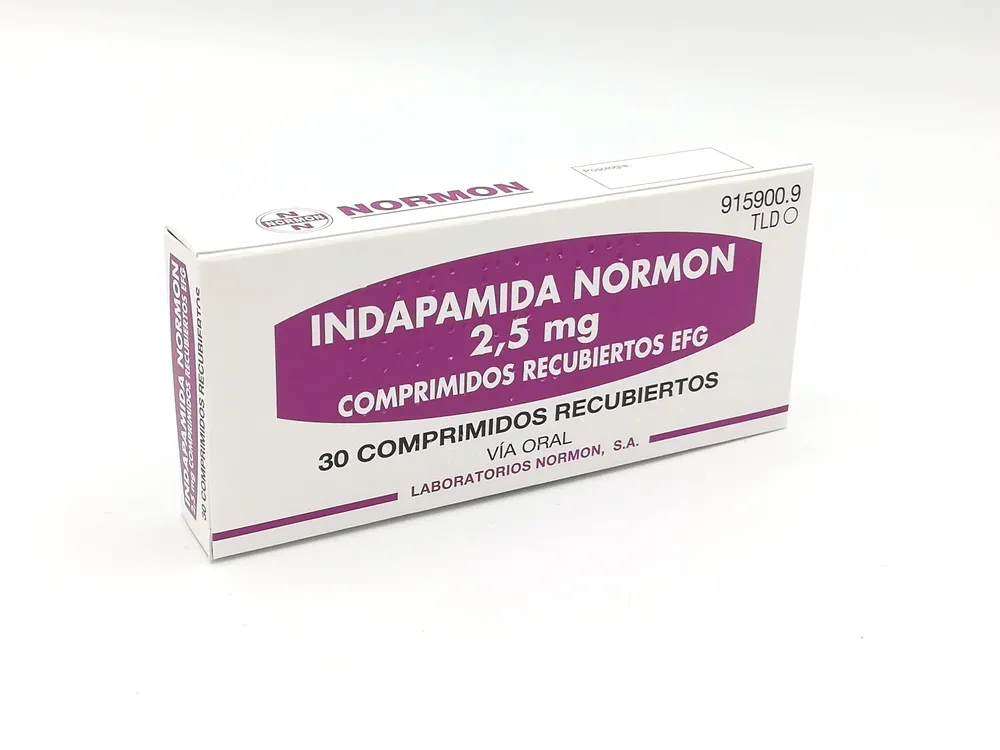
Table of Contents
- Package leaflet: Information for the user
- Introduction
- 1. What Indapamida NORMON is and what it is used for
- 2. What you need to know before taking Indapamide NORMON
- 3. How to take Indapamida NORMON
- 4. Possible adverse effects
- 5. Storage of Indapamide NORMON
- 6. Contents of the pack and other information
Package leaflet: Information for the user
Introduction
Package leaflet: information for the patient
Indapamida Normon 2.5 mg film-coated tablets EFG
indapamide
Read all of this leaflet carefully before you start taking this medicine because it contains important information for you.
- Keep this leaflet. You may need to read it again.
- If you have any questions, ask your doctor or pharmacist.
- This medicine has been prescribed for you only and must not be given to other people, even if they have the same symptoms as you, because it may harm them.
- If you experience any side effects, talk to your doctor or pharmacist, even if they are side effects not listed in this leaflet. See section 4.
Contents of the leaflet
-
What Indapamida Normon is and what it is used for
-
What you need to know before taking Indapamida Normon
-
How to take Indapamida Normon
-
Possible side effects
-
How to store Indapamida Normon
-
Contents of the pack and other information
1. What Indapamida NORMON is and what it is used for
Indapamida NORMON is available as a film-coated tablet containing indapamide as the active substance.
Indapamide is a diuretic. Most diuretics increase the amount of urine produced by the kidneys. However, indapamide differs from other diuretics in that it produces only a slight increase in the amount of urine formed.
This medicine is used to lower high blood pressure (hypertension) in adults.
2. What you need to know before taking Indapamide NORMON
Do not take Indapamide NORMON
- if you are allergic to indapamide or to any other sulfonamide, or to any of the other ingredients of this medicine (listed in section 6),
- if you have severe kidney disease,
- if you have severe liver disease or suffer from a condition called hepatic encephalopathy (a degenerative brain disorder),
- if you have low blood potassium levels.
Warnings and precautions
Talk to your doctor or pharmacist before taking Indapamide NORMON
- if you have liver problems,
- if you have diabetes,
- if you have gout,
- if you have any heart rhythm disorders or kidney problems,
- if you need to undergo any test to check whether your parathyroid gland is functioning properly.
- if you experience decreased vision or eye pain, these could be symptoms of fluid accumulation in the vascular layer of the eye (choroidal effusion) or increased eye pressure, which may occur within hours to a week after taking Indapamide. This could lead to permanent vision loss if not treated. If you have previously had an allergy to penicillin or sulfonamides, you may have an increased risk of developing such a reaction.
You must inform your doctor if you have previously experienced photosensitivity reactions.
Your doctor may prescribe blood tests to check whether you have low levels of sodium or potassium, or high levels of calcium.
Use in athletes
Athletes should be aware that this medicine contains an active substance that may cause a positive result in doping control tests.
Taking Indapamide NORMON with other medicines
Tell your doctor or pharmacist if you are taking, have recently taken, or might need to take any other medicines.
You must not take Indapamide NORMON with lithium (used to treat depression) due to the risk of increased lithium levels in the blood.
Make sure to inform your doctor if you are taking any of the following medicines, as special care may be required:
- medicines for heart rhythm disorders (e.g. quinidine, hydroquinidine, disopyramide, amiodarone, sotalol, ibutilide, dofetilide, digitalis),
- medicines used to treat mental disorders such as depression, anxiety, schizophrenia… (e.g. tricyclic antidepressants, antipsychotics, neuroleptics),
- bepridil (used to treat angina pectoris, a disorder causing chest pain),
- cisapride, difemethilium (used to treat gastrointestinal problems),
- sparfloxacin, moxifloxacin, intravenous erythromycin (antibiotics used to treat infections),
- intravenous vincamine (used to treat symptomatic cognitive disorders in elderly patients including memory loss),
- halofantrine (an antiparasitic used to treat certain types of malaria),
- pentamidine (used to treat certain types of pneumonia),
- mizolastine (used to treat allergic reactions, such as hay fever),
- non-steroidal anti-inflammatory drugs for pain relief (e.g. ibuprofen) or high doses of acetylsalicylic acid,
- angiotensin-converting enzyme inhibitors (ACE inhibitors) (used to treat high blood pressure and heart failure),
- intravenous amphotericin B (antifungal medicines),
- oral corticosteroids used in various treatments, including severe asthma and rheumatoid arthritis,
- stimulant laxatives,
- baclofen (for the treatment of muscle stiffness occurring in diseases such as multiple sclerosis),
- potassium-sparing diuretics (amiloride, spironolactone, triamterene),
- metformin (for the treatment of diabetes),
- iodinated contrast agents (used in X-ray tests),
- calcium tablets or other calcium supplements,
- cyclosporine, tacrolimus or other immunosuppressant medicines used after transplantation, or for the treatment of autoimmune diseases, or severe dermatological or rheumatological conditions,
- tetracosactide (for the treatment of Crohn's disease),
- allopurinol (for the treatment of gout).
Pregnancy and breast-feeding
If you are pregnant or breast-feeding, think you may be pregnant or are planning to become pregnant, consult your doctor or pharmacist before using any medicine.
This medicine is not recommended during pregnancy. When pregnancy is planned or confirmed, treatment should be switched to an alternative as soon as possible. Inform your doctor if you are pregnant or wish to become pregnant.
The active substance is excreted in breast milk. Breast-feeding is not recommended while taking this medicine.
Driving and using machines
This medicine may cause adverse effects due to lowering of blood pressure, such as dizziness or fatigue (see section 4). These adverse effects are more likely to occur at the beginning of treatment or after dose increases. If this happens, you should refrain from driving or performing other activities requiring alertness. However, once blood pressure is well controlled, these effects are unlikely.
Indapamide NORMON contains lactose and sodium.
This medicine contains lactose. If your doctor has informed you that you have an intolerance to certain sugars, consult with him before taking this medicine.
This medicine contains less than 1 mmol of sodium (23 mg) per tablet; hence, it is essentially “sodium-free”.
3. How to take Indapamida NORMON
Follow exactly the instructions for use of this medicine as given by your doctor or pharmacist. If in doubt, consult your doctor or pharmacist again.
The recommended dose is one tablet per day, preferably in the morning.
The tablets should be swallowed whole with a glass of water. Do not break or chew them.
Treatment for high blood pressure is usually lifelong.
If you take more Indapamida NORMON than you should
A very high dose of Indapamida NORMON may cause nausea, vomiting, low blood pressure, cramps, dizziness, drowsiness, confusion, and changes in the amount of urine produced by the kidneys.
In case of overdose or accidental ingestion, contact your doctor or pharmacist immediately or call the Toxicology Information Service, telephone: 91 562 04 20, stating the medicine and the amount ingested.
If you forget to take Indapamida NORMON
If you forget to take a dose of this medicine, take the next dose at your usual time. Do not take a double dose to make up for missed doses.
If you stop taking Indapamida NORMON
Since treatment for high blood pressure is usually lifelong, you should speak with your doctor before stopping this medicine.
If you have any further questions about the use of this medicine, ask your doctor or pharmacist.
4. Possible adverse effects
Like all medicines, this medicine can cause adverse effects, although not everyone will experience them.
Stop taking this medicine and contact your doctor immediately if you experience any of the following adverse effects:
- Angioedema and/or urticaria. Angioedema is characterized by swelling of the skin in the limbs or face, swelling of the lips or tongue, swelling of the mucous membranes in the throat or airways causing difficulty breathing or difficulty swallowing. If this occurs, contact your doctor immediately. (Very rare) (may affect up to 1 in 10,000 people).
- Severe skin reactions including intense rash, redness of the skin all over the body, intense itching, blisters, peeling and swelling of the skin, inflammation of mucous membranes (Stevens-Johnson Syndrome), or other allergic reactions. (Very rare) (may affect up to 1 in 10,000 people).
- Life-threatening irregular heartbeat (Frequency not known).
- Inflammation of the pancreas which may cause severe abdominal and back pain accompanied by intense discomfort (Very rare) (may affect up to 1 in 10,000 people).
- Brain disease caused by liver disease (Hepatic Encephalopathy) (Frequency not known).
- Inflammation of the liver (Hepatitis) (Frequency not known).
Other adverse effects, listed in decreasing order of frequency, may include:
Common (may affect up to 1 in 10 people):
- Skin rash with redness.
- Allergic reactions, mainly dermatological, in individuals predisposed to allergic and asthmatic reactions.
- Low blood potassium levels.
Uncommon (may affect up to 1 in 100 people):
- Vomiting.
- Red spots on the skin (Purpura).
- Low blood sodium levels, which may cause dehydration and low blood pressure.
- Impotence (inability to achieve or maintain an erection).
Rare (may affect up to 1 in 1,000 people):
- Feeling of tiredness, headache, tingling (paresthesia), dizziness.
- Gastrointestinal disorders (such as nausea, constipation), dry mouth.
- Low blood chloride levels.
- Low blood magnesium levels.
Very rare (may affect up to 1 in 10,000 people):
- Changes in blood cells, such as thrombocytopenia (decreased number of platelets, which increases the risk of bruising and nosebleeds), leucopenia (decreased white blood cells, which may cause fever without apparent cause, sore throat or other flu-like symptoms – if this occurs, contact your doctor), and anemia (decreased red blood cells).
- Irregular heart rhythm, low blood pressure.
- Kidney disease.
- Abnormal liver function.
Frequency not known:
- Fainting.
- If you have systemic lupus erythematosus (a type of collagen disease), it may worsen.
- Cases of photosensitivity reactions (skin changes) after exposure to sunlight or artificial UVA radiation have also been reported.
- Shortness of vision (myopia).
- Blurred vision.
- Decreased vision or eye pain due to increased pressure [possible signs of fluid accumulation in the vascular layer of the eye (choroidal effusion) or acute angle-closure glaucoma].
- Visual disturbances.
- Changes may be observed in your laboratory tests (blood tests), so your doctor may prescribe blood tests to monitor your condition. The following changes may be observed in your laboratory tests:
- increased uric acid, a substance that may cause or worsen gout (joint pain, especially in the feet).
- increased blood glucose levels in diabetic patients.
- high blood calcium levels.
- increased levels of liver enzymes.
- Abnormal electrocardiogram.
Reporting of adverse effects
If you experience any type of adverse effect, consult your doctor, even if it is a possible adverse effect not listed in this leaflet. You can also report them directly via the Spanish Pharmacovigilance System for Human Medicines: https://www.notificaram.es. By reporting adverse effects, you can help provide more information on the safety of this medicine.
5. Storage of Indapamide NORMON
Do not store above 25°C.
Keep this medicine out of the sight and reach of children.
Do not use this medicine after the expiry date stated on the packaging after EXP. The expiry date refers to the last day of the month indicated.
Medicines must not be disposed of via wastewater or household waste. Dispose of unused medicines and their packaging at the SIGRE Point at your pharmacy. If you are unsure, ask your pharmacist how to properly dispose of unused medicines and their packaging. This will help protect the environment.
6. Contents of the pack and other information
Composition of Indapamide NORMON
The active substance is indapamide. Each tablet contains 2.5 mg of indapamide.
The other components are:
- tablet core: Lactose, corn starch, magnesium stearate (E470B), povidone, talc.
- film coating: Titanium dioxide, white beeswax, glycerol, sodium lauryl sulfate, macrogol 6000, methylhydroxypropylcellulose, magnesium stearate.
Appearance of the medicine and contents of the pack
This medicine is a white, film-coated, lens-shaped tablet.
Tablets are available in blisters of 30 tablets packed in a cardboard box.
Marketing Authorization Holder and Manufacturer
LABORATORIOS NORMON, S.A.
Ronda de Valdecarrizo, 6 - 28760 Tres Cantos - Madrid (SPAIN)
or
LES LABORATOIRES SERVIER INDUSTRIE
905 Route de Saran - 45520 Gidy (FRANCE)
Date of the most recent revision of this leaflet: October 2021
Detailed information about this medicine is available on the website of the Spanish Agency for Medicines and Health Products (AEMPS) http://www.aemps.gob.es/.
You can access detailed information about this medicine by scanning with your mobile phone (smartphone) the QR code included in the package leaflet and outer packaging. You can also access this information at the following internet address: https://cima.aemps.es/cima/dochtml/p/63368/P_63368.html