Imovax Polio injectable suspension in pre-filled syringe
Spain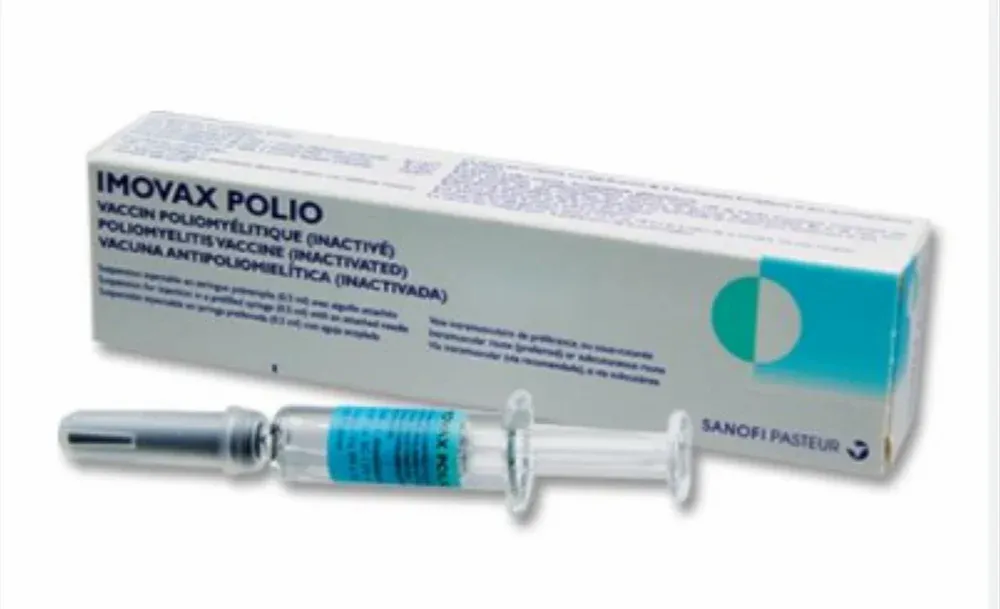
Table of Contents
- Package leaflet: Information for the user
- Introduction
- 1. What Imovax Polio is and what it is used for
- 2. What you need to know before Imovax Polio is administered to you or your child
- 3. How to use Imovax Polio
- 4. Possible adverse effects
- 5. Storage of Imovax Polio
- 6. Package contents and other information
Package leaflet: Information for the user
Introduction
Package leaflet: information for the user
IMOVAX POLIO injectable suspension in a pre-filled syringe
Read the entire leaflet carefully before you or your child are vaccinated, as it contains important information for you or your child.
- Keep this leaflet, as you may need to read it again.
- If you have any questions, consult your doctor, pharmacist, or nurse.
- This vaccine has been prescribed only for you or your child, and you must not give it to others.
- If you experience adverse effects, consult your doctor, pharmacist, or nurse, even if these adverse effects are not listed in this leaflet. See section 4.
Leaflet contents
- What Imovax Polio is and what it is used for
- What you need to know before you or your child receive Imovax Polio
- How to use Imovax Polio
- Possible adverse effects
- How to store Imovax Polio
- Contents of the pack and other information
1. What Imovax Polio is and what it is used for
Imovax Polio (IPV) is a vaccine. Vaccines are used to protect against infectious diseases. This vaccine helps protect against polio. When an injection of Imovax Polio is given, the body's natural defenses produce protection against infection by poliovirus (polio). Imovax Polio can be administered to infants from 2 months of age, children, and adults.
Polio is an infectious disease that is usually transmitted by ingesting the polioviruses present in food or drinks. It can also be contracted by eating with unwashed hands if viruses are present on them. The viruses spread to the nervous system and can cause permanent paralysis. The viruses in the vaccine have been inactivated so they cannot cause polio; however, they can stimulate your body to produce antibodies to protect you against future infections.
2. What you need to know before Imovax Polio is administered to you or your child
Do not use Imovax Polio
- if you or your child are allergic (hypersensitive) to the active substance, to any of the excipients, or to any residual component from the manufacturing process (streptomycin, neomycin, or polymyxin B) that may be present in trace amounts (listed in section 6)
- if you or your child currently have an acute illness, including a feverish illness with high fever. It may be necessary to delay vaccination with Imovax Polio until after recovery from the infection. A mild illness without fever, such as a minor upper respiratory tract infection, is generally not a reason to delay vaccination.
Warnings and precautions
Before vaccination, consult your doctor, pharmacist, or nurse:
-
if you or your child have ever had an allergic reaction to a vaccine containing inactivated poliomyelitis vaccine together with other active components. Your doctor or nurse will advise whether Imovax Polio can still be administered.
-
if you or your child have immune system problems for any reason (including HIV infection), resulting in a weakened immune system. Nevertheless, Imovax Polio may be given to you or your child, but protection against infections after vaccination may not be as effective as in individuals with a normal immune system. Your doctor or nurse may recommend that a blood test be performed some time after vaccination to check whether an adequate immune response has occurred.
-
if you or your child have a blood disorder causing easy bruising or prolonged bleeding after minor cuts. Your doctor or nurse may advise administering Imovax Polio to you or your child, but additional precautions are necessary due to the risk of bleeding at the injection site. In some cases, to reduce the risk of bleeding, your doctor or nurse may administer Imovax Polio as a deep subcutaneous injection rather than intramuscularly (see section 3).
Fainting may occur after, or even before, any injection with a needle. Therefore, inform your doctor or nurse if you or your child have previously fainted following an injection.
Like all vaccines, Imovax Polio may not provide complete protection against the infection it is intended to prevent, and protection may not last for life.
Other medicines, vaccines, and Imovax Polio
Imovax Polio can generally be administered at the same time as other vaccines. If this is necessary, the different vaccines will be given separately at different injection sites.
If you or your child are receiving medical treatment that affects the body's natural defenses, refer to the previous section "Warnings and precautions".
Inform your doctor or nurse if you or your child are taking, have recently taken, or might need to take any other medicines.
Pregnancy, breastfeeding, and fertility
If you or your daughter is pregnant or breastfeeding, think you or your daughter might be pregnant, or plan to become pregnant, consult your doctor or nurse before using this medicine.
Imovax Polio should only be given to pregnant women if clearly necessary. Your doctor or nurse can advise whether vaccination should be delayed or not.
The effect of vaccination during breastfeeding has not been evaluated.
Driving and using machines
Some of the possible adverse reactions mentioned in section 4 of this leaflet (such as dizziness) may affect your ability to drive or operate machinery.
Imovax Polio contains phenylalanine, ethanol, and sodium
Imovax Polio contains 12.5 micrograms of phenylalanine in each 0.5 ml dose. Phenylalanine may be harmful in individuals with phenylketonuria (PKU), a rare genetic disorder in which phenylalanine accumulates because the body cannot properly eliminate it.
Imovax Polio contains 2 mg of alcohol (ethanol) in each 0.5 ml dose. The small amount of alcohol contained in this vaccine will not have any noticeable effect.
Imovax Polio contains less than 1 mmol of sodium per dose, i.e., essentially "sodium-free".
3. How to use Imovax Polio
Vaccination should be administered by medical or healthcare professionals trained in the use of vaccines and equipped to respond to any rare, severe allergic reactions to the injection.
Imovax Polio is generally administered by injection into a muscle in the upper arm, or in infants and very young children, into the upper thigh. For individuals at high risk of bleeding following a deep intramuscular injection, the vaccine may be injected under the skin. Your doctor or nurse will avoid administering the injection into a blood vessel.
Primary vaccination cycle
You or your child will need three injections of 0.5 millilitres of Imovax Polio if you have never previously been vaccinated against poliomyelitis (polio). The vaccine can be given from the age of 2 months onwards. There must be an interval of at least one month between each of the three doses. Your doctor or nurse will advise you when the second and third doses will be administered.
Booster vaccination
Booster doses of Imovax Polio are required to ensure continued protection. Your doctor or nurse will advise you on when booster doses should be given. Imovax Polio may be administered to you or your child as a booster injection if you previously received doses of oral poliomyelitis vaccine.
4. Possible adverse effects
Like all medicines and vaccines, Imovax Polio may cause adverse effects, although not everyone will experience them.
Severe allergic reactions are a very rare possibility following the administration of any vaccine. These reactions occur in fewer than 1 in 10,000 people. Symptoms may include difficulty breathing, bluish discoloration of the tongue or lips, skin rash, swelling of the face or throat, and low blood pressure. When these signs or symptoms occur, they usually develop very rapidly after the injection is given, while you or your child are still at the clinic or doctor's office. If any of these symptoms occur after leaving the place where the injection was administered, you must consult a doctor IMMEDIATELY.
Other adverse reactions
-
Very common adverse reactions (may affect more than 1 in 10 people):
-
Pain at the injection site.
-
Fever (high temperature).
-
Common adverse reactions (may affect up to 1 in 10 people):
-
Redness at the injection site.
-
Dizziness.
-
Nausea, vomiting, diarrhea.
-
Joint and muscle pain.
-
Headache, drowsiness.
-
Irritability and crying.
-
Inability to sleep.
-
Vertigo.
-
Uncommon adverse reactions (may affect up to 1 in 100 people):
-
Lump at the injection site.
-
Adverse reactions reported during commercial use (frequency cannot be estimated from available data):
-
Swollen glands.
-
Swelling or rash at the injection site lasting 1-2 days.
-
Rashes in other parts of the body that may be raised and itchy.
-
Flu-like symptoms, usually only on the day of vaccination.
-
Seizures with or without fever.
-
Muscle soreness within 2 weeks after vaccination that will resolve without treatment.
-
Restlessness or drowsiness.
In very premature newborns (at 28 weeks of gestation or earlier), abnormally long pauses in breathing may occur during the 2-3 days following vaccination.
Reporting of adverse effects
If you experience any type of adverse effect, consult your doctor, pharmacist, or nurse, even if it is a possible adverse effect not listed in this leaflet. You may also report them directly via the Spanish Pharmacovigilance System for Human Medicines: www.notificaRAM.es. By reporting adverse effects, you can help provide more information on the safety of this medicine.
5. Storage of Imovax Polio
Keep this vaccine out of the sight and reach of children.
Do not use this vaccine after the expiry date stated on the packaging and label after CAD/EXP. The expiry date is the last day of the month indicated.
Store in a refrigerator (between 2 °C and 8 °C).
Do not freeze. The vaccine must not be used if it has been frozen.
Keep the vaccine in its outer packaging to protect it from light.
Medicines should not be disposed of via wastewater or household waste. Dispose of unused medicines and their containers at the SIGRE Point at your pharmacy. If you are unsure, ask your pharmacist how to dispose of unused medicines and their containers. This will help protect the environment.
6. Package contents and other information
Composition of Imovax Polio
The active substances in each 0.5 ml dose of vaccine are:
Inactivated poliovirus type 1 (Mahoney)1: 29 D antigen units2
Inactivated poliovirus type 2 (MEF-1)1: 7 D antigen units2
Inactivated poliovirus type 3 (Saukett)1: 26 D antigen units2
1 Cultivated on Vero cells
2 These antigen quantities are strictly equivalent to those previously expressed as 40-8-32 D antigen units for virus types 1, 2 and 3 respectively, when measured by another suitable immunochemical method.
The other components are:
2-phenoxyethanol, ethanol, formaldehyde, Medium 199 without phenol red (a complex mixture of amino acids (including phenylalanine), mineral salts, vitamins and other components (including glucose), supplemented with polysorbate 80 and diluted in water for injectable preparations), hydrochloric acid or sodium hydroxide to adjust pH.
Appearance of the product and contents of the pack
Imovax Polio is an injectable suspension in a pre-filled syringe.
It is supplied as a 0.5 millilitre pre-filled syringe (sufficient for one dose). It is available in packs of 1, 10 or 20 pre-filled syringes (doses). Only certain pack sizes may be marketed.
Marketing Authorization Holder and Manufacturer
The Marketing Authorization Holder is:
Sanofi Winthrop Industrie
82 avenue Raspail
94250 Gentilly
France
The Manufacturer is:
Sanofi Winthrop Industrie
1541 avenue Marcel Mérieux
69280 Marcy l’Etoile
France
Or
Sanofi-Aventis Zrt.
Building DC5
Campona utca 1.
Budapest, 1225
Hungary
Local representative
sanofi-aventis, S.A.
C/ Rosselló i Porcel, 21
08016 Barcelona
Spain
Tel: +34 93 485 94 00
This medicinal product is authorized in the Member States of the European Economic Area under the following names:
Germany | IPV Mérieux |
Spain | Imovax Polio |
Date of the last review of this leaflet: July 2023
Up-to-date information on this medicine is available on the website of the Spanish Agency of Medicines and Health Products (AEMPS) http://www.aemps.gob.es/
This information is intended for healthcare professionals only:
The vaccine should reach room temperature before use.
The vaccine must not be used if it is cloudy, contains particles, or has been frozen.
Shake well before use.
See also section 3. How to use Imovax Polio