Imikeraderm 50 mg/g cream
Spain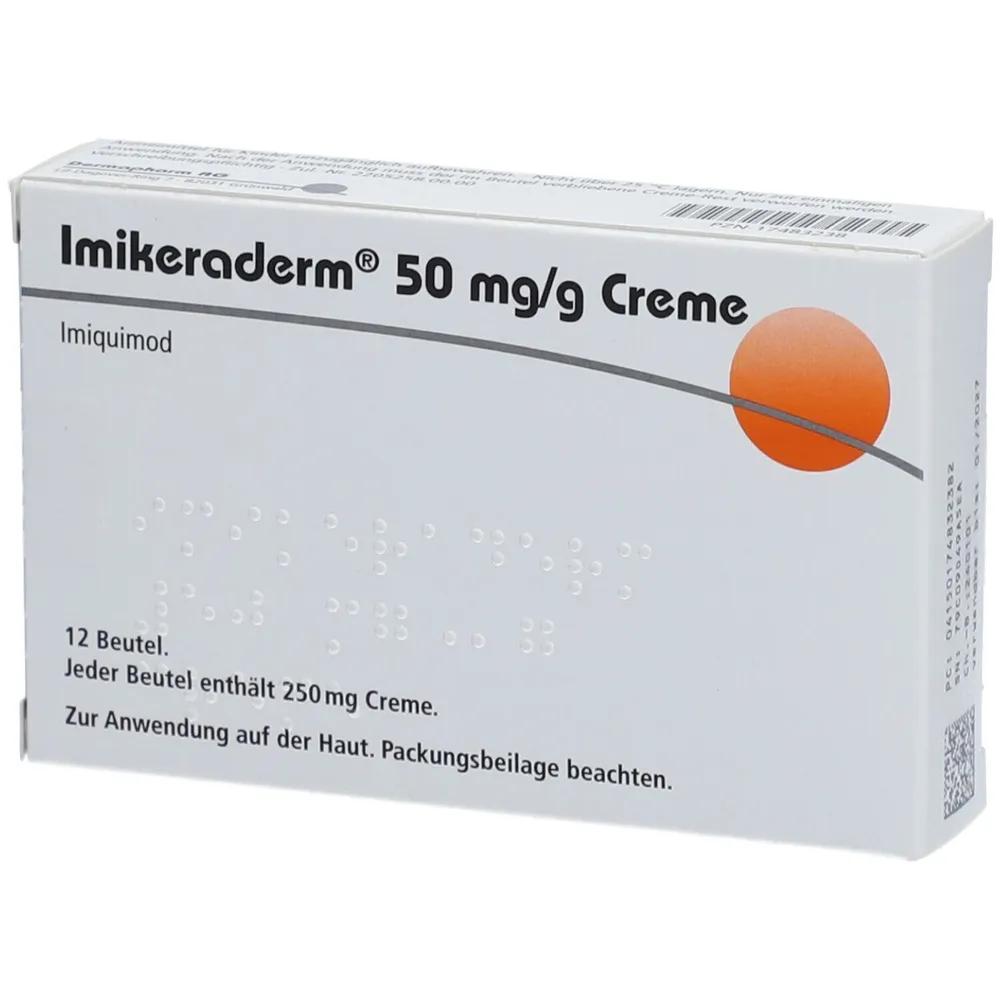
Table of Contents
Package leaflet: Information for the user
Introduction
Package leaflet: information for the user
Imikeraderm 50 mg/g cream
Imiquimod
Read the entire leaflet carefully before you start using this medicine, because it contains important information for you.
- Keep this leaflet, as you may need to read it again.
- If you have any questions, ask your doctor or pharmacist.
- This medicine has been prescribed for you only, and you should not give it to other people, even if they have the same symptoms as you, because it could harm them.
- If you experience any adverse effects, consult your doctor or pharmacist, even if they are effects not listed in this leaflet. See section 4.
Leaflet contents:
- What Imikeraderm is and what it is used for
- What you need to know before using Imikeraderm
- How to use Imikeraderm
- Possible adverse effects
- How to store Imikeraderm
- Contents of the pack and other information
1. What Imikeraderm is and what it is used for
Imikeraderm is indicated for the treatment of actinic keratosis.
Actinic keratosis consists of rough skin areas occurring in individuals who have had significant sun exposure throughout their lives. These lesions may be skin-colored, or appear gray, pink, red, or brown. They can be flat and scaly, or raised, hard, and warty. Imikeraderm should be used exclusively for flat actinic keratoses on the face and scalp of immunocompetent patients when their physician determines that Imikeraderm is the most appropriate treatment.
Imikeraderm works by stimulating the body's own immune system to produce natural substances that help fight actinic keratosis.
2. What you need to know before using Imikeraderm
Do not use Imikeraderm
- if you are allergic to imiquimod or to any of the other ingredients of this medicine (listed in section 6).
Warnings and precautions
Consult your doctor or pharmacist before starting to use imiquimod cream.
- If you have previously used imiquimod cream or other similar preparations, you must consult your doctor before starting this treatment.
- If you have autoimmune disorders.
- If you have had an organ transplant.
- Do not use imiquimod cream until the area to be treated has healed after a previous medical or surgical treatment.
- Avoid contact with the eyes, lips, and nostrils. In case of accidental contact, remove the cream by washing with water.
- Do not apply the cream internally.
- Do not use more cream than your doctor has advised.
- Do not cover the treated area with bandages or other dressings after applying imiquimod cream.
- If excessive discomfort occurs in the treated area, remove the cream with mild soap and water.
Once the problem has resolved, you may resume applying the cream.
- Inform your doctor if you have abnormalities in your blood counts.
Due to the mechanism of action of imiquimod cream, there is a possibility that the cream may worsen existing inflammation in the treatment area.
Do not use sunlamps or tanning devices and avoid sunlight as much as possible during treatment with imiquimod cream. When going outdoors, wear protective clothing and wide-brimmed hats.
During treatment with imiquimod cream and until healing is complete, the treated area may look noticeably different from normal skin.
Children and adolescents
Not recommended for use in children and adolescents.
Other medicines and Imikeraderm
Inform your doctor or pharmacist if you are using, have recently used, or might need to use any other medicines.
No medicines are known to be incompatible with imiquimod cream.
Pregnancy and breastfeeding
If you are pregnant or breastfeeding, think you may be pregnant, or are planning to become pregnant, consult your doctor or pharmacist before using this medicine.
You must tell your doctor if you are pregnant or planning to become pregnant. Your doctor will assess the risks and benefits of using imiquimod cream during pregnancy. Animal studies do not indicate direct or indirect harmful effects during pregnancy.
Do not breastfeed while using imiquimod cream, as it is not known whether imiquimod is excreted in breast milk.
Driving and using machines
This medicine has no or negligible effect on the ability to drive and use machines.
Imikeraderm contains methyl parahydroxybenzoate and propyl parahydroxybenzoate (E218 and E216)
Methyl parahydroxybenzoate (E218) and propyl parahydroxybenzoate (E216) may cause allergic reactions (possibly delayed).
Imikeraderm contains cetyl alcohol and stearyl alcohol
Cetyl alcohol and stearyl alcohol may cause local skin reactions (such as contact dermatitis).
Imikeraderm contains benzyl alcohol
This medicine contains 5 mg of benzyl alcohol in each sachet. Benzyl alcohol may cause allergic reactions and moderate local irritation.
Imikeraderm contains butylhydroxytoluene (E321)
Butylhydroxytoluene (E321) may cause local skin reactions (such as contact dermatitis) or irritation of the eyes and mucous membranes.
3. How to use Imikeraderm
Children and adolescents:
Not recommended for use in children and adolescents.
Adults:
Follow exactly the instructions for use of this medicine as given by your doctor. If in doubt, consult your doctor or pharmacist again.
Wash your hands thoroughly before and after applying the cream. Do not cover the treated area with bandages or other dressings after imiquimod cream has been applied.
Open a new sachet each time you apply the cream. Discard any remaining cream in the sachet after use. Do not save the opened sachet for use on another day.
Instructions for applying Imikeraderm
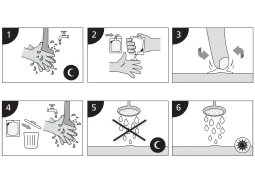
Application instructions: - (Mon, Wed, Fri)
- Before going to bed, wash your hands and the treatment area with mild soap and water. Dry thoroughly.
- Open a new sachet and squeeze a small amount of cream onto the fingertip.
- Apply imiquimod cream to the affected area. Gently spread it over the area until the cream disappears.
- After applying the cream, discard the opened sachet and wash your hands with water and soap.
- Leave imiquimod cream on the skin for approximately 8 hours. During this time, do not shower or bathe.
- After approximately 8 hours, wash the area where imiquimod cream was applied with mild soap and water.
Apply imiquimod cream 3 times a week. For example, apply the cream on Mondays, Wednesdays, and Fridays. One sachet contains enough cream to cover an area of 25 cm². Continue treatment for 4 weeks. Four weeks after completing the first course of treatment, your doctor will evaluate your skin. If not all lesions have disappeared, an additional 4 weeks of treatment may be necessary.
If you use more Imikeraderm than you should
Remove any excess with water and mild soap. When the skin reaction has subsided, you may continue treatment.
In case of accidental ingestion of imiquimod, consult your doctor.
In case of overdose or accidental ingestion, contact your doctor or pharmacist immediately or call the Toxicology Information Service at telephone number 91 562 04 20, indicating the medicine and the amount ingested.
If you forget to use Imikeraderm
If you miss a dose, apply the cream as soon as possible and then continue with your regular schedule.
Do not apply the cream more than once a day.
If you have any further questions about the use of this medicine, ask your doctor or pharmacist.
4. Possible adverse effects
Like all medicines, this medicine may cause adverse effects, although not everyone will experience them.
Consult your doctor or pharmacist if you do not feel well during treatment with imiquimod.
Some patients have experienced changes in skin pigmentation at the site where imiquimod was applied. Although these changes tend to improve over time, they could be permanent in some patients. If your skin has an adverse reaction while using imiquimod cream, stop applying the cream, wash the area with water and a mild soap, and contact your doctor or pharmacist.
In some individuals, a decrease in blood cell counts has been detected. A reduction in blood cell counts may make you more susceptible to infections, cause you to bruise more easily, or lead to fatigue. If you notice any of these symptoms, inform your doctor.
Some patients with autoimmune disorders may experience worsening of their condition. Consult your doctor if you notice any changes during treatment with imiquimod cream.
In rare cases, severe dermatological reactions have occurred. Stop treatment with imiquimod cream and contact your doctor immediately if you notice skin lesions or spots that start as small red areas and progress to resemble small targets, possibly accompanied by swelling, fever, general malaise, visual disturbances, burning sensation, swollen or painful eyes, or mouth inflammation.
A small number of patients have experienced hair loss in the treated area or in the surrounding skin.
Many of the adverse effects of imiquimod cream are due to its local action on the skin. Local skin reactions may be a sign that the medicine is working as intended.
Very common (observed in more than 1 in 10 patients):
Very commonly, the treated skin may experience mild itching.
Common (observed in less than 1 in 10 patients):
Common effects include: pain, burning, irritation, or redness.
If any skin reaction becomes too bothersome during treatment, consult your doctor. Your doctor may advise you to temporarily stop using imiquimod cream for a few days (i.e., a short treatment break). If pus or other signs of infection appear, inform your doctor. Apart from skin reactions, other common effects include headache, anorexia, nausea, muscle and joint pain, and fatigue.
Uncommon (observed in less than 1 in 100 patients):
Uncommonly, some patients may experience application site reactions (bleeding, inflammation, discharge, sensitivity, swelling, small inflamed skin areas, tingling, scaling, scarring, ulceration, or sensation of heat or discomfort), or inflammation of the skin lining the nose, nasal congestion, flu or flu-like symptoms, depression, eye irritation, eyelid inflammation, sore throat, diarrhea, actinic keratosis, redness, facial swelling, ulcers, limb pain, fever, weakness, or tremors.
Reporting of adverse effects
If you experience any adverse effects, talk to your doctor or pharmacist, even if they are possible adverse effects not listed in this leaflet. You can also report them directly via the Spanish Pharmacovigilance System for Human Medicines: https://www.notificaram.es. By reporting adverse effects, you can help provide more information on the safety of this medicine.
5. Storage of Imikeraderm
Keep this medicine out of the sight and reach of children.
Do not store above 25 ºC.
Do not use this medicine after the expiry date stated on the outer packaging and label following EXP. The expiry date refers to the last day of that month.
Once the sachets are opened, they should not be reused.
Medicines should not be disposed of via wastewater drains or household waste. Dispose of unused containers and medicines at the SIGRE collection point at your pharmacy. Ask your pharmacist how to dispose of containers and medicines you no longer need. This will help protect the environment.
6. Contents of the pack and other information
Composition of Imikeraderm
The active substance is:
Imiquimod
Each sachet contains 250 mg of cream (100 mg of cream contain 5 mg of imiquimod).
The other components are:
Isostearic acid, benzyl alcohol, white soft paraffin (stabilised with butylhydroxytoluene E321), cetyl alcohol, stearyl alcohol, polysorbate 60, sorbitan stearate type I, glycerol, methyl parahydroxybenzoate (E 218), propyl parahydroxybenzoate (E 216), xanthan gum and purified water (see also section 2 “Imikeraderm 50 mg/g cream contains methyl parahydroxybenzoate, propyl parahydroxybenzoate, cetyl alcohol, stearyl alcohol, benzyl alcohol and butylhydroxytoluene”).
Appearance of the product and contents of the pack
Each Imikeraderm sachet contains 250 mg of a white or yellowish cream. Each pack contains 12 or 24 single-use polyester/aluminium paper sachets.
Only certain pack sizes may be marketed.
Marketing Authorisation Holder and Manufacturer
Marketing Authorisation Holder:
Mibe Pharma España S.L.U.
C/Amaltea 9, 4th floor, letter B,
28045, Madrid
Spain
Manufacturer
Mibe GmbH Arzneimittel
Münchener Straße 15
06796 Brehna
Germany
or
Sun-Farm Sp. z o.o.
Ul. Dolna 21, Lomianki
05-092 Mazowieckie
Poland
Date of the most recent revision of this leaflet: May 2022
Detailed information on this medicine is available on the website of the Spanish Agency of Medicines and Medical Devices (AEMPS) (http://www.aemps.gob.es/).