Imfinzi 50 mg/ml concentrate for solution for infusion
Spain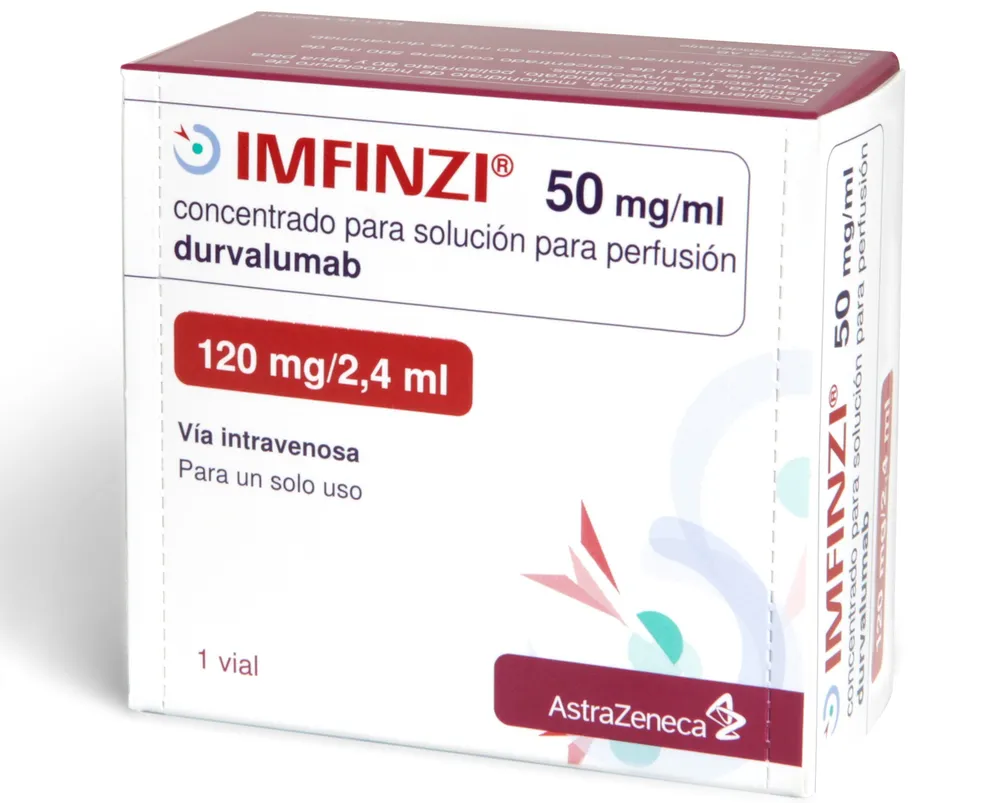
Table of Contents
Patient Information Leaflet
Introduction
Patient Information Leaflet
IMFINZI 50mg/ml concentrate for solution for infusion
durvalumab
Read the entire leaflet carefully before you start using this medicine, as it contains important information for you.
- Keep this leaflet, as you may need to read it again.
- If you have any questions, consult your doctor.
- If you experience any adverse reactions, consult your doctor, even if they are adverse reactions not listed in this leaflet. See section 4.
Leaflet Contents
- What IMFINZI is and what it is used for
- What you need to know before using IMFINZI
- How to use IMFINZI
- Possible side effects
- How to store IMFINZI
- Contents of the pack and other information
1. What IMFINZI is and what it is used for
IMFINZI contains the active substance durvalumab, which is a monoclonal antibody, a type of protein designed to recognise a specific target substance in the body. IMFINZI works by helping the immune system fight cancer.
IMFINZI is used in adults to treat a type of lung cancer called non-small cell lung cancer (NSCLC). It is used as monotherapy when the NSCLC:
- has spread within the lung, and cannot be surgically removed, and
- has responded to or has stabilised after initial treatment with chemotherapy and radiotherapy.
It is used in combination with tremelimumab and chemotherapy when the NSCLC:
- has spread to both lungs (and/or to other parts of the body), cannot be surgically removed, and
- does not show changes (mutations) in genes called EGFR (epidermal growth factor receptor) or ALK (anaplastic lymphoma kinase).
It is used in combination with platinum-based chemotherapy before surgery (neoadjuvant treatment) and as monotherapy after surgery (adjuvant treatment) when the NSCLC:
- has spread within the lung and can be surgically removed.
IMFINZI is used in adults to treat a type of lung cancer called limited-stage small cell lung cancer (SCLC-LS). It is used when the SCLC:
- has not been surgically removed, and
- has responded to or has stabilised after initial treatment with chemotherapy and radiotherapy.
IMFINZI in combination with chemotherapy is used in adults to treat a type of lung cancer called extensive-stage small cell lung cancer (SCLC-ES). It is used when the SCLC:
- has spread within the lungs (or to other parts of the body) and
- has not been previously treated.
IMFINZI in combination with chemotherapy is used in adults to treat a type of bile duct cancer (cholangiocarcinoma) and gallbladder cancer, collectively known as biliary tract cancers (BTC). It is used when the BTC:
- has spread within the bile ducts and gallbladder (or to other parts of the body).
IMFINZI is used alone or in combination with tremelimumab to treat a type of liver cancer called advanced or unresectable hepatocellular carcinoma (HCC) in adults. It is used when the HCC:
- cannot be surgically removed (unresectable), and
- may have spread within the liver or to other parts of the body.
IMFINZI is used in adult women to treat a type of uterine cancer (endometrial cancer) that has spread beyond the original tumour or has recurred. It is used in combination with chemotherapy (carboplatin and paclitaxel), followed by:
- IMFINZI as monotherapy when the tumour is MMR-deficient, or
- IMFINZI in combination with olaparib when the tumour is MMR-proficient.
An MMR status test is used to determine the MMR status of the endometrial cancer.
IMFINZI is used to treat a type of bladder cancer called muscle-invasive bladder cancer (MIBC), which occurs when bladder cancer has spread to the muscular layer of the bladder but not to other parts of the body. It is used in combination with chemotherapy (neoadjuvant treatment) before surgical removal of the bladder, followed by IMFINZI as monotherapy after surgery (adjuvant treatment).
If you have any questions about how IMFINZI works or why this medicine has been prescribed for you, consult your doctor or pharmacist.
When IMFINZI is administered in combination with other anticancer medicines, it is important that you also read the package leaflet for these other medicines. If you have any questions about these medicines, consult your doctor.
2. What you need to know before using IMFINZI
Do not use IMFINZI
- If you are allergic to durvalumab or to any of the other ingredients of this medicine (listed in section 6 “Contents of the pack and other information”). If in doubt, consult your doctor.
Warnings and precautions
Talk to your doctor before starting treatment with IMFINZI if:
- you have an autoimmune disease (a condition in which your body's immune system attacks your own cells);
- you have received an organ transplant;
- you have lung or breathing problems;
- you have liver problems.
If you are in any of the above situations (or are unsure), speak to your doctor before using IMFINZI.
When you are given IMFINZI, you may experience some serious side effects.
If you develop any of the following, call your doctor or seek medical help immediately. Your doctor may give you other medicines to prevent more serious complications and help relieve your symptoms. Your doctor may decide to delay the next dose of IMFINZI or stop your treatment with IMFINZI altogether if you have:
- inflammation of the lungs: symptoms may include new or worsening cough, shortness of breath, or chest pain;
- inflammation of the liver: symptoms may include nausea or vomiting, loss of appetite, pain on the right side of your abdomen, yellowing of the skin or whites of the eyes, unusual tiredness, dark urine, or bleeding or bruising more easily than usual;
- inflammation of the intestines: symptoms may include diarrhoea or increased bowel movements, or black, tarry, or sticky stools with blood or mucus, severe stomach pain or tenderness, or a hole in the intestine;
- inflammation of glands (especially the thyroid gland, adrenal glands, pituitary gland, and pancreas): symptoms may include increased heart rate, extreme tiredness, weight gain or weight loss, dizziness or fainting, hair loss, feeling cold, constipation, persistent or unusual headaches, abdominal pain, nausea, and vomiting;
- type 1 diabetes mellitus: symptoms may include high blood sugar levels, increased hunger or thirst, frequent urination, rapid and deep breathing, confusion, or a sweet, metallic taste in the mouth, sweet breath, or a different smell in urine or sweat;
- inflammation of the kidneys: symptoms may include reduced urine output;
- inflammation of the skin: symptoms may include rash, itching, skin blistering, or mouth or other mucosal ulcers;
- inflammation of the heart muscle: symptoms may include chest pain, shortness of breath, or irregular heartbeat;
- inflammation or problems with muscles: symptoms may include muscle pain, stiffness, muscle weakness, or rapid muscle fatigue;
- inflammation of the spinal cord (transverse myelitis): symptoms may include pain, numbness, tingling, or weakness in arms or legs; bladder or bowel problems such as needing to urinate more often, urinary incontinence, difficulty passing urine, or constipation;
- infusion-related reactions: symptoms may include chills or shaking, itching or rash, flushing, shortness of breath or wheezing (whistling sounds when breathing), dizziness, or fever;
- inflammation of the brain (encephalitis) or inflammation of the membranes surrounding the brain and spinal cord (meningitis): symptoms may include seizures, neck stiffness, headache, fever, chills, vomiting, sensitivity of the eyes to light, confusion, and drowsiness;
- inflammation of the nerves: symptoms may include pain, weakness, and paralysis in the limbs (Guillain-Barré syndrome);
- inflammation of the joints: signs and symptoms include joint pain, swelling, and/or stiffness (immune-mediated arthritis);
- inflammation of the eye: signs and symptoms include red eyes, eye pain, light sensitivity, and/or changes in vision (uveitis);
- low platelet count in blood: symptoms may include bleeding (such as nosebleeds or bleeding gums) and/or bruising;
- low red blood cell counts in blood tests: symptoms may include shortness of breath, fatigue, pale skin, and/or rapid heartbeat. When IMFINZI is used in combination with another cancer medicine (olaparib), low red blood cell counts could be a sign of "pure red cell aplasia" (PRCA), a condition in which red blood cells are not produced, or "autoimmune haemolytic anaemia" (AIHA), excessive destruction of red blood cells.
If you experience any of these symptoms, call your doctor or seek medical help immediately.
IMFINZI works on your immune system. It may cause inflammation in parts of your body. The risk of these side effects may be higher if you already have an autoimmune disease (a condition in which the body attacks its own cells). You may also experience frequent flare-ups of your autoimmune disease, which in most cases are mild.
Children and adolescents
IMFINZI must not be given to children or adolescents under 18 years of age, as it has not been studied in these patients.
Other medicines and IMFINZI
Tell your doctor if you are taking, have recently taken, or might need to take any other medicines. This includes herbal medicines and medicines obtained without a prescription.
Pregnancy
- This medicine is not recommended during pregnancy.
- If you are pregnant, think you may be pregnant, or plan to become pregnant, consult your doctor before using this medicine.
- If you are a woman who can become pregnant, you should use an effective method of contraception during treatment with IMFINZI and for at least 3 months after your last dose.
Breast-feeding
- Inform your doctor if you are breast-feeding.
- Ask your doctor whether you can breast-feed during or after treatment with IMFINZI.
- It is unknown whether IMFINZI passes into breast milk.
Driving and using machines
IMFINZI is unlikely to affect your ability to drive or use machines.
However, if you experience side effects that affect your ability to concentrate or react, you should be cautious when driving or operating machinery.
IMFINZI contains Polysorbate 80
This medicine contains 2 mg of polysorbate 80 in each 10 ml of concentrate, equivalent to 0.2 mg/ml. Polysorbates may cause allergic reactions. Inform your doctor if you have any known allergies.
3. How to use IMFINZI
IMFINZI will be administered to you in a hospital or clinic under the supervision of an experienced doctor.
- The recommended dose of IMFINZI is 10 mg per kg of body weight every 2 weeks, 20 mg per kg body weight every 4 weeks, 1,120 mg every 3 weeks, or 1,500 mg every 3 or 4 weeks.
- Your doctor will administer IMFINZI to you as an intravenous infusion (drip) over approximately 1 hour.
- Your doctor will decide how many treatments you will need.
- Depending on your type of cancer, IMFINZI may be given in combination with other anticancer medicines.
- When IMFINZI is given in combination with tremelimumab and chemotherapy for your lung cancer, you will first receive tremelimumab, followed by IMFINZI, and then chemotherapy.
- When IMFINZI is given in combination with chemotherapy for your lung cancer or endometrial cancer, you will first receive IMFINZI, followed by chemotherapy.
- When IMFINZI is given in combination with tremelimumab for your liver cancer, you will first receive tremelimumab, followed by IMFINZI.
- Please refer to the package leaflet of the other anticancer medicines to understand how these other medicines are used. If you have any questions about these medicines, consult your doctor.
If you miss an appointment for IMFINZI treatment
- Contact your doctor immediately to reschedule your appointment.
- It is very important that you do not miss any doses of this medicine.
If you have any further questions about your treatment, ask your doctor.
4. Possible adverse effects
Like all medicines, this medicine can cause adverse effects, although not everyone experiences them.
When you are administered IMFINZI, you may experience some serious adverse effects (see section 2).
Contact your doctor immediately if you experience any of the following adverse effects reported in clinical trials in patients receiving IMFINZI as monotherapy:
Very common (may affect more than 1 in 10 people)
- Upper respiratory tract infections
- Reduced activity of the thyroid gland, which may cause tiredness or weight gain
- Cough
- Diarrhea
- Stomach pain
- Skin rash or itching
- Joint pain (arthralgia)
- Fever
Common (may affect up to 1 in 10 people)
- Severe lung infections (pneumonia)
- Flu-like illness
- Fungal infection in the mouth
- Infections of teeth and soft tissues of the mouth
- Excessive activity of the thyroid gland, which may cause increased heart rate or weight loss
- Inflammation of the lungs (pneumonitis)
- Hoarseness (dysphonia)
- Inflammation of the liver, which may cause nausea or loss of appetite (hepatitis)
- Abnormalities in liver function tests (elevated aspartate aminotransferase; elevated alanine aminotransferase)
- Night sweats
- Muscle pain (myalgia)
- Abnormalities in tests measuring kidney function (elevated blood creatinine)
- Painful urination (dysuria)
- Swelling of the legs (peripheral edema)
- Reaction to the infusion of the medicine, which may cause fever or flushing
Uncommon (may affect up to 1 in 100 people)
- Low platelet count in the blood due to an autoimmune reaction (immune thrombocytopenia)
- Inflammation of the thyroid gland (thyroiditis)
- Reduced secretion of hormones produced by the adrenal glands, which may cause tiredness
- Insufficient activity of the pituitary gland; inflammation of the pituitary gland
- A condition causing high blood sugar levels (type 1 diabetes mellitus)
- A disorder in which muscles become weak and fatigue rapidly (myasthenia gravis)
- Inflammation of the brain (encephalitis)
- Inflammation of the heart (myocarditis)
- Scarring of lung tissue
- Inflammation of the intestine (colitis)
- Inflammation of the pancreas (pancreatitis)
- Inflammation of the skin (dermatitis)
- Thickened, red, dry, scaly, itchy skin patches (psoriasis)
- Blisters on the skin (bullous pemphigoid)
- Inflammation of the muscles (myositis)
- Inflammation of the joints (immune-mediated arthritis)
- Inflammation of the kidneys (nephritis), which may cause reduced urine output
- Inflammation of the bladder (cystitis). Signs and symptoms may include frequent and/or painful urination, urgent need to urinate, blood in the urine, pain or pressure in the lower abdomen
Rare (may affect up to 1 in 1,000 people)
- Diabetes insipidus
- Inflammation of the eye (uveitis)
- Inflammation of the membrane surrounding the spinal cord and brain (meningitis)
- Coeliac disease (characterized by symptoms such as stomach pain, diarrhea, and bloating after consuming foods containing gluten)
- Inflammation of muscles causing pain or stiffness (polymyalgia rheumatica)
- Inflammation of muscles and blood vessels (polymyositis)
- Absence or reduced production of digestive enzymes by the pancreas (exocrine pancreatic insufficiency)
Other adverse effects reported with unknown frequency (cannot be estimated from available data)
- Inflammation of nerves (Guillain-Barré syndrome)
- Inflammation of part of the spinal cord (transverse myelitis)
The following additional adverse effects have been reported when receiving IMFINZI as monotherapy in clinical trials in patients who received IMFINZI in combination with chemotherapy (the frequency and severity of adverse effects may vary depending on the antineoplastic agents received):
Very common (may affect more than 1 in 10 people)
- Low white blood cell count
- Low red blood cell count
- Low platelet count in the blood
- Nausea; vomiting; constipation
- Hair loss
- Loss of appetite
- Feeling tired or weak
- Inflammation of nerves causing numbness, weakness, tingling, or burning in arms and legs (peripheral neuropathy)
Common (may affect up to 1 in 10 people)
- Low white blood cell count with signs of fever (febrile neutropenia)
- Inflammation of the mouth or lips (stomatitis)
Uncommon (may affect up to 1 in 100 people)
- Low red blood cell count, white blood cell count, and platelets (pancytopenia)
The following additional adverse effects have been reported when receiving IMFINZI as monotherapy in clinical trials in patients who received IMFINZI in combination with tremelimumab and platinum-based chemotherapy (the frequency and severity of adverse effects may vary depending on the antineoplastic agents received):
Very common (may affect more than 1 in 10 people)
- Low red blood cell count
- Low white blood cell count
- Low platelet count in the blood
- Loss of appetite
- Nausea; vomiting; constipation
- Hair loss
- Feeling tired or weak
Common (may affect up to 1 in 10 people)
- Low white blood cell count with signs of fever (febrile neutropenia)
- Low red blood cell count, white blood cell count, and platelets (pancytopenia)
- Inflammation of nerves causing numbness, weakness, tingling, or burning in arms and legs (peripheral neuropathy)
- Inflammation of the mouth or lips (stomatitis)
- Abnormalities in tests of pancreatic function
Other adverse effects reported with unknown frequency (cannot be estimated from available data)
- Hole in the intestine (intestinal perforation)
The following additional adverse effects have been reported when receiving IMFINZI as monotherapy in clinical trials in patients who received IMFINZI in combination with tremelimumab:
Common (may affect up to 1 in 10 people)
- Abnormalities in tests of pancreatic function
Other adverse effects reported with unknown frequency (cannot be estimated from available data)
- Hole in the intestine (intestinal perforation)
The following additional adverse effects have been reported when receiving IMFINZI as monotherapy in clinical trials in patients who received IMFINZI in combination with platinum-based chemotherapy followed by IMFINZI with olaparib:
Very common (may affect more than 1 in 10 people)
- Low red blood cell count
- Low white blood cell count (neutropenia and leucopenia)
- Low platelet count in the blood
- Loss of appetite
- Inflammation of nerves causing numbness, weakness, tingling, or burning in arms and legs (peripheral neuropathy)
- Nausea; vomiting; constipation
- Dizziness
- Headache
- Changes in taste (dysgeusia)
- Difficulty breathing (dyspnea)
- Inflammation of the mouth or lips (stomatitis)
- Hair loss
- Feeling tired or weak
Common (may affect up to 1 in 10 people)
- Low white blood cell count with fever (febrile neutropenia)
- Low levels of lymphocytes, a type of white blood cell
- Allergic reactions
- Indigestion or heartburn (dyspepsia)
- Blood clot in a deep vein, usually in the leg (venous thrombosis), which may cause symptoms such as leg pain or swelling
- Inability to produce red blood cells (pure red cell aplasia), which may cause symptoms such as difficulty breathing, fatigue, pale skin, or rapid heartbeat
Uncommon (may affect up to 1 in 100 people)
- Low red blood cell count, white blood cell count, and platelets (pancytopenia)
Contact your doctor immediately if you experience any of the adverse effects listed above.
Reporting of adverse effects
If you experience any adverse effect, consult your doctor, even if it is a possible adverse effect not listed in this leaflet. You may also report them directly through the national reporting system included in Appendix V. By reporting adverse effects, you can help provide more information on the safety of this medicine.
5. Storage of IMFINZI
IMFINZI will be administered in a hospital or clinic, and healthcare professionals will be responsible for its storage. The storage details are as follows:
Keep this medicine out of the sight and reach of children.
Do not use this medicine after the expiry date stated on the carton and vial label after EXP. The expiry date refers to the last day of the month indicated.
Store in a refrigerator (between 2 °C and 8 °C).
Do not freeze.
Keep in the original packaging to protect from light.
Do not use this medicine if it is cloudy, has changed colour, or contains visible particles.
Do not save any unused portion of the infusion solution for later use. Disposal of unused medicine and all materials that have come into contact with it must be carried out in accordance with local regulations.
6. Contents of the container and other information
Composition of IMFINZI
The active substance is durvalumab.
Each ml of concentrate for solution for infusion contains 50 mg of durvalumab.
Each vial contains 500 mg of durvalumab in 10 ml of concentrate or 120 mg of durvalumab in 2.4 ml of concentrate.
The other components are: histidine, histidine monohydrochloride monohydrate, trehalose dihydrate, polysorbate 80 (E 433), and water for injections.
Appearance of the product and contents of the container
IMFINZI concentrate for solution for infusion (sterile concentrate) is a preservative-free, transparent to opalescent, colourless to slightly yellow solution, free from visible particles.
It is supplied in containers containing either 1 glass vial of 2.4 ml concentrate or 1 glass vial of 10 ml concentrate.
Marketing Authorisation Holder
AstraZeneca AB
SE‑151 85 Södertälje
Sweden
Manufacturer responsible for manufacturing
AstraZeneca AB
Gärtunavägen
SE-152 57 Södertälje
Sweden
For further information about this medicinal product, please contact the local representative of the Marketing Authorisation Holder:
Belgium/Belgium/Belgium AstraZeneca S.A./N.V. Tel: +32 2 370 48 11 | Lithuania UAB AstraZeneca Lietuva Tel: +370 5 2660550 |
| Luxembourg/Luxembourg AstraZeneca S.A./N.V. Tél/Tel: +32 2 370 48 11 |
Czech Republic AstraZeneca Czech Republic s.r.o. Tel: +420 222 807 111 | Hungary AstraZeneca Kft. Tel.: +36 1 883 6500 |
Denmark AstraZeneca A/S Tlf.: +45 43 66 64 62 | Malta Associated Drug Co. Ltd Tel: +356 2277 8000 |
Germany AstraZeneca GmbH Tel: +49 40 809034100 | Netherlands AstraZeneca BV Tel: +31 85 808 9900 |
Estonia AstraZeneca Tel: +372 6549 600 | Norway AstraZeneca AS Tlf: +47 21 00 64 00 |
Greece AstraZeneca A.E. Tel: +30 210 6871500 | Austria AstraZeneca Österreich GmbH Tel: +43 1 711 31 0 |
Spain AstraZeneca Farmacéutica Spain, S.A. Tel: +34 91 301 91 00 | Poland AstraZeneca Pharma Poland Sp. z o.o. Tel.: +48 22 245 73 00 |
France AstraZeneca Tél: +33 1 41 29 40 00 | Portugal AstraZeneca Produtos Farmacêuticos, Lda. Tel: +351 21 434 61 00 |
Croatia AstraZeneca d.o.o. Tel: +385 1 4628 000 | Romania AstraZeneca Pharma SRL Tel: +40 21 317 60 41 |
Ireland AstraZeneca Pharmaceuticals (Ireland) DAC Tel: +353 1609 7100 | Slovenia AstraZeneca UK Limited Tel: +386 1 51 35 600 |
Iceland Vistor Sími: +354 535 7000 | Slovakia AstraZeneca AB, o.z. Tel: +421 2 5737 7777 |
Italy AstraZeneca S.p.A. Tel: +39 02 00704500 | Finland/Sweden AstraZeneca Oy Puh/Tel: +358 10 23 010 |
Cyprus Aléactor Pharmaceutical Ltd Tel: +357 22490305 | Sweden AstraZeneca AB Tel: +46 8 553 26 000 |
Latvia SIA AstraZeneca Latvija Tel: +371 67377100 |

Date of the most recent review of this leaflet:
Other sources of information
Detailed information on this medicine is available on the European Medicines Agency website: https://www.ema.europa.eu
This information is intended for healthcare professionals only:
Preparation and administration of the infusion
- Parenteral medicines should be inspected visually for particles and discoloration prior to administration. The concentrate is a sterile, clear to opalescent, colorless to slightly yellow solution, free from visible particles. Discard the vial if the solution is cloudy, discolored, or contains visible particles.
- Do not shake the vial.
- Withdraw the required volume of concentrate from the vial(s) and transfer it to an intravenous infusion bag containing either 9 mg/ml (0.9%) sodium chloride injection solution or 50 mg/ml (5%) glucose injection solution to prepare a diluted solution with a final concentration between 1 mg/ml and 15 mg/ml. Gently invert the diluted solution to mix.
- Once diluted, the medicine should be used immediately. The diluted solution must not be frozen. Chemical and physical in-use stability has been demonstrated for up to 30 days between 2°C and 8°C and up to 24 hours at room temperature (up to 25°C) from the time of preparation.
- From a microbiological standpoint, the prepared infusion solution should be used immediately. If not used immediately, the in-use storage times and conditions prior to use are the responsibility of the user and, in general, should not exceed 24 hours between 2°C and 8°C or 12 hours at room temperature (up to 25°C), unless dilution has taken place under controlled and validated aseptic conditions.
- If refrigerated, intravenous infusion bags should be removed from the refrigerator and allowed to reach room temperature before use. Administer the infusion solution intravenously over 1 hour using a sterile in-line filter of 0.2 to 0.22 microns with low protein binding.
- Do not administer other medicines concomitantly through the same infusion line.
- IMFINZI is for single use only. Any unused portion remaining in the vial should be discarded.
Disposal of unused medicine and all materials that have come into contact with it must be carried out in accordance with local regulations.