IMCivree 10 mg/ml solution for injection
Spain
Table of Contents
Package leaflet: Information for the user
Introduction
Package leaflet: Information for the patient
IMCIVREE 10 mg/ml injection solution
setmelanotide
This medicine is subject to additional monitoring, which will allow quicker detection of new safety information. You can help by reporting any side effects you may experience. Information on how to report side effects is provided at the end of section 4.
Read this entire leaflet carefully before you start using this medicine, because it contains important information for you.
- Keep this leaflet, as you may need to read it again.
- If you have any questions, consult your doctor, pharmacist, or nurse.
- This medicine has been prescribed for you only and must not be given to other people, even if they have the same symptoms as you, because it could harm them.
- If you experience any side effects, consult your doctor, pharmacist, or nurse, even if they are side effects not listed in this leaflet. See section 4.
Leaflet contents
- What IMCIVREE is and what it is used for
- What you need to know before using IMCIVREE
- How to use IMCIVREE
- Possible side effects
- How to store IMCIVREE
- Contents of the pack and other information
1. What IMCIVREE is and what it is used for
IMCIVREE contains the active substance setmelanotide. It is used in adults and children from the age of 2 years to treat obesity caused by certain genetic diseases that affect how the brain controls the sensation of hunger.
The genetic diseases for which this medicine is used as a treatment are:
- Bardet-Biedl syndrome (BBS)
- POMC (proopiomelanocortin) deficiency obesity
- PCSK1 (proprotein convertase subtilisin/kexin type 1) deficiency obesity
- LEPR (leptin receptor) deficiency obesity
People with these diseases lack certain natural substances involved in appetite control, or these substances do not function properly. This leads to increased levels of hunger and results in obesity. This medicine helps restore appetite control and reduces disease symptoms.
2. What you need to know before using IMCIVREE
Do not use IMCIVREE
- if you are allergic to setmelanotide or to any of the other ingredients of this medicine (listed in section 6).
Warnings and precautions
Talk to your doctor, pharmacist, or nurse before starting to use IMCIVREE.
Before starting treatment with this medicine, and during treatment, your doctor should examine your skin for moles or dark spots. While using this medicine, you may develop additional moles or dark spots on your skin. An examination before starting treatment will help identify any new spots that may appear after you begin using this medicine.
Spontaneous penile erections are very common (may affect more than 1 in 10 people) in male patients using this medicine. If an erection lasts longer than 4 hours, seek medical attention immediately. Prolonged erections (priapism) may reduce your ability to have erections in the future if not treated.
Children
Do not give this medicine to children under 2 years of age, as there is no information available on its use in children younger than this.
Other medicines and IMCIVREE
Tell your doctor or pharmacist if you are taking, have recently taken, or might need to take any other medicines.
Pregnancy and breastfeeding
If you are pregnant or breastfeeding, think you may be pregnant, or are planning to become pregnant, consult your doctor or pharmacist before using this medicine.
Use of IMCIVREE is not recommended in women who are pregnant or trying to become pregnant, as it has not been studied in pregnant women. Weight loss during pregnancy may harm the baby.
Talk to your doctor before starting this medicine if you are breastfeeding. Your doctor will explain the benefits and risks of taking IMCIVREE during this period.
Driving and using machines
This medicine is not expected to affect your ability to drive or use machines.
IMCIVREE contains benzyl alcohol
This medicine contains 10 mg of benzyl alcohol per 1 ml, equivalent to 1 mg per mg of your dose.
Benzyl alcohol has been associated with a risk of serious adverse effects in young children (under 3 years of age). There is an increased risk of benzyl alcohol accumulating in the body (called "metabolic acidosis") and causing "gasping syndrome." Children aged 2 years should be monitored by their doctor for signs of accumulation (such as rapid heartbeat, fast breathing, or confusion).
Benzyl alcohol may cause allergic reactions.
Consult your doctor or pharmacist if you are pregnant or breastfeeding. This is because large amounts of benzyl alcohol may accumulate in your body and cause adverse effects (metabolic acidosis).
Consult your doctor or pharmacist if you have liver or kidney disease. This is because accumulation may occur and lead to adverse effects (metabolic acidosis).
IMCIVREE contains sodium
This medicine contains less than 1 mmol of sodium (23 mg) per dose; therefore, it is essentially
"sodium-free".
3. How to use IMCIVREE
Follow exactly the instructions for administering this medicine given by your doctor or pharmacist. If in doubt, consult your doctor or pharmacist again.
IMCIVREE is administered as a subcutaneous injection once daily at the beginning of the day. This medicine is intended for long-term use.
Your doctor will advise you on the appropriate dose to inject.
Obesity due to proopiomelanocortin deficiency, obesity due to proprotein convertase subtilisin/kexin type 1 deficiency, and obesity due to leptin receptor deficiency.
In adults and children 12 years of age and older, the recommended doses are as follows:
Week of treatment | Daily dose in mg | Volume to be injected |
Weeks 1 – 2 | 1 mg once daily | 0.1 ml once daily |
Week 3 onwards | 2 mg once daily | 0.2 ml once daily |
If the dose is not sufficient and adverse effects are acceptable | 2.5 mg once daily | 0.25 ml once daily |
If the dose is not sufficient and adverse effects are acceptable | 3 mg once daily | 0.3 ml once daily |
In children aged 6 to < 12 years, the recommended doses are as follows:
Week of treatment | Daily dose in mg | Volume to be injected |
Weeks 1 – 2 | 0.5 mg once daily | 0.05 ml once daily |
Week 3 – 4 | 1 mg once daily | 0.1 ml once daily |
Week 5 onwards | 2 mg once daily | 0.2 ml once daily |
If the dose is not sufficient and adverse effects are acceptable | 2.5 mg once daily | 0.25 ml once daily |
In children from 2 to <6 years of age, the recommended doses are as follows:
Patient weight/treatment week | Daily dose | Volume to be injected |
<20 kg | ||
Week 1 onwards | 0.5 mg once daily | 0.05 ml once daily |
20–<30 kg | ||
Weeks 1–2 | 0.5 mg once daily | 0.05 ml once daily |
Week 3 onwards (if dose is insufficient and adverse effects are acceptable) | 1 mg once daily | 0.1 ml once daily |
30–<40 kg | ||
Weeks 1–2 | 0.5 mg once daily | 0.05 ml once daily |
Weeks 3–4 (if dose is insufficient and adverse effects are acceptable) | 1 mg once daily | 0.1 ml once daily |
Week 5 onwards (if dose is insufficient and adverse effects are acceptable) | 1.5 mg once daily | 0.15 ml once daily |
≥40 kg | ||
Weeks 1–2 | 0.5 mg once daily | 0.05 ml once daily |
Weeks 3–4 (if dose is insufficient and adverse effects are acceptable) | 1 mg once daily | 0.1 ml once daily |
Weeks 5–6 (if dose is insufficient and adverse effects are acceptable) | 1.5 mg once daily | 0.15 ml once daily |
Weeks 7–8 (if dose is insufficient and adverse effects are acceptable) | 2 mg once daily | 0.2 ml once daily |
Week 9 onwards (if dose is insufficient and adverse effects are acceptable) | 2.5 mg once daily | 0.25 ml once daily |
After the initial dose, if the adverse effects of a subsequent dose are not acceptable, the dose will be reduced to the level of the previous dose. If the adverse effects of the reduced dose are acceptable, dose escalation will continue.
In patients with mild or moderate renal impairment, no change in the dosing regimen is required.
For adults and children aged 12 to 17 years with severe renal impairment, the recommended doses are as follows:
Week of treatment | Daily dose in mg | Volume to be injected |
Weeks 1 – 2 | 0.5 mg once daily | 0.05 ml once daily |
Week 3 onwards (if adverse effects are acceptable) | 1 mg once daily | 0.1 ml once daily |
If the dose is not sufficient and adverse effects are acceptable | 2 mg once daily | 0.2 ml once daily |
If the dose is not sufficient and adverse effects are acceptable | 2.5 mg once daily | 0.25 ml once daily |
If the dose is not sufficient and adverse effects are acceptable | 3 mg once daily | 0.3 ml once daily |
If the adverse effects of the initial dose of 0.5 mg are not acceptable, it will be reduced to 0.25 mg (0.025 ml). If the adverse effects of the 0.25 mg once-daily dose are acceptable, dose escalation will continue.
After the initial dose, if the adverse effects of a subsequent dose are not acceptable, the dose will be reduced to the previous dose level. If the adverse effects of the reduced dose are acceptable, dose escalation will continue.
If the adverse effects of the 3 mg dose are not acceptable, the dose will be reduced to 2.5 mg, and this dose will be maintained.
In children aged 6 to less than 12 years with severe renal impairment, the recommended doses are as follows:
Week of treatment | Daily dose in mg | Volume to be injected |
Weeks 1 – 2 | 0.25 mg once daily | 0.025 ml once daily |
Week 3 – 4 (if adverse effects are acceptable) | 0.5 mg once daily | 0.05 ml once daily |
Week 5 onwards (if adverse effects are acceptable) | 1 mg once daily | 0.1 ml once daily |
If the dose is not sufficient and adverse effects are acceptable | 2 mg once daily | 0.2 ml once daily |
If the adverse effects of the initial dose of 0.25 mg are not acceptable, treatment should be discontinued.
After the initial dose, if the adverse effects of a subsequent dose are not acceptable, the dose will be reduced to the previous dose level. If the adverse effects at the reduced dose are acceptable, dose escalation may continue.
If the adverse effects of the 2 mg dose are not acceptable, the dose will be reduced to 1 mg and this dose will be maintained.
In children from 2 to less than 6 years of age with severe renal impairment, the recommended doses are as follows:
Patient weight/treatment week | Daily dose | Volume to be injected |
<20kg | ||
Week 1 onwards | 0.25 mg once daily | 0.025 ml once daily |
20–<30kg | ||
Weeks 1–2 | 0.25 mg once daily | 0.025 ml once daily |
Week 3 onwards (if dose is insufficient and adverse effects are acceptable) | 0.5 mg once daily | 0.05 ml once daily |
30–<40kg | ||
Weeks 1–2 | 0.25 mg once daily | 0.025 ml once daily |
Weeks 3–4 (if dose is insufficient and adverse effects are acceptable) | 0.5 mg once daily | 0.05 ml once daily |
Week 5 onwards (if dose is insufficient and adverse effects are acceptable) | 1 mg once daily | 0.1 ml once daily |
≥40kg | ||
Weeks 1–2 | 0.25 mg once daily | 0.025 ml once daily |
Weeks 3–4 (if dose is insufficient and adverse effects are acceptable) | 0.5 mg once daily | 0.05 ml once daily |
Weeks 5–6 (if dose is insufficient and adverse effects are acceptable) | 1 mg once daily | 0.1 ml once daily |
Week 7 onwards (if dose is insufficient and adverse effects are acceptable) | 1.5 mg once daily | 0.15 ml once daily |
If the adverse effects of the initial dose of 0.25 mg are not acceptable, treatment should be discontinued.
After the initial dose, if the adverse effects of a subsequent dose are not acceptable, the dose will be reduced to the previous dose level. If the adverse effects of the reduced dose are acceptable, dose escalation will continue.
Bardet-Biedl Syndrome
In adults and children from the age of 16 years, the recommended doses are as follows:
Treatment week | Daily dose in mg | Volume to be injected |
Weeks 1 – 2 | 2 mg once daily | 0.2 ml once daily |
Week 3 onwards (if adverse effects are acceptable) | 3 mg once daily | 0.3 ml once daily |
If the adverse effects of the initial 2 mg dose are not acceptable, it will be reduced to 1 mg (0.1 ml). If the adverse effects of the 1 mg once-daily dose are acceptable, dose escalation will continue.
After the initial dose, if the adverse effects of a subsequent dose are not acceptable, the dose will be reduced to the previous dose level. If the adverse effects of the reduced dose are acceptable, dose escalation will continue.
If the adverse effects of the 3 mg dose are not acceptable, it will be reduced to 2 mg, and this dose will be continued.
In children aged 6 to less than 16 years, the recommended doses are as follows:
Treatment week | Daily dose in mg | Volume to be injected |
Week 1 | 1 mg once daily | 0.1 ml once daily |
Week 2 (if adverse effects are acceptable) | 2 mg once daily | 0.2 ml once daily |
Week 3 onwards (if adverse effects are acceptable) | 3 mg once daily | 0.3 ml once daily |
If the adverse effects of the initial dose of 1 mg are not acceptable, it will be reduced to 0.5 mg (0.05 ml). If the adverse effects of the 0.5 mg dose are acceptable, dose escalation will continue.
After the initial dose, if the adverse effects of a subsequent dose are not acceptable, the dose will be reduced to the previous dose level.
If the adverse effects of the reduced dose are acceptable, dose escalation will continue.
If the adverse effects of the 3 mg dose are not acceptable, it will be reduced to 2 mg, and this dose will be maintained.
In children aged 2 to <6 years, the recommended doses are as follows:
Patient weight/treatment week | Daily dose | Volume to be injected |
<20 kg | ||
Week 1 onwards | 0.5 mg once daily | 0.05 ml once daily |
20–<30 kg | ||
Weeks 1–2 | 0.5 mg once daily | 0.05 ml once daily |
Week 3 onwards (if dose is not sufficient and adverse effects are acceptable) | 1 mg once daily | 0.1 ml once daily |
30–<40 kg | ||
Weeks 1–2 | 0.5 mg once daily | 0.05 ml once daily |
Weeks 3–4 (if dose is not sufficient and adverse effects are acceptable) | 1 mg once daily | 0.1 ml once daily |
Week 5 onwards (if dose is not sufficient and adverse effects are acceptable) | 1.5 mg once daily | 0.15 ml once daily |
≥40 kg | ||
Weeks 1–2 | 0.5 mg once daily | 0.05 ml once daily |
Weeks 3–4 (if dose is not sufficient and adverse effects are acceptable) | 1 mg once daily | 0.1 ml once daily |
Weeks 5–6 (if dose is not sufficient and adverse effects are acceptable) | 1.5 mg once daily | 0.15 ml once daily |
Weeks 7–8 (if dose is not sufficient and adverse effects are acceptable) | 2 mg once daily | 0.2 ml once daily |
Week 9 onwards (if dose is not sufficient and adverse effects are acceptable) | 2.5 mg once daily | 0.25 ml once daily |
After the initial dose, if the adverse effects of a subsequent dose are not acceptable, the dose will be reduced to the previous dose level. If the adverse effects of the reduced dose are acceptable, dose escalation will continue.
In patients with mild or moderate renal impairment, no adjustment of the dosing regimen is required.
For adults and children aged 16 to 17 years with severe renal impairment, the recommended doses are as follows:
Treatment week | Daily dose in mg | Volume to be injected |
Weeks 1 – 2 | 0.5 mg once daily | 0.05 ml once daily |
Week 3 onwards (if adverse effects are acceptable) | 1 mg once daily | 0.1 ml once daily |
If the dose is not sufficient and adverse effects are acceptable | 2 mg once daily | 0.2 ml once daily |
If the dose is not sufficient and adverse effects are acceptable | 2.5 mg once daily | 0.25 ml once daily |
If the dose is not sufficient and adverse effects are acceptable | 3 mg once daily | 0.3 ml once daily |
If the adverse effects of the initial 0.5 mg dose are not acceptable, the dose will be reduced to 0.25 mg (0.025 ml). If the adverse effects of the 0.25 mg once-daily dose are acceptable, dose escalation will continue.
After the initial dose, if the adverse effects of a subsequent dose are not acceptable, the dose will be reduced to the previous dose level. If the adverse effects of the reduced dose are acceptable, dose escalation will continue.
If the adverse effects of the 3 mg dose are not acceptable, the dose will be reduced to 2.5 mg, and this dose will be maintained.
In children aged 6 to less than 16 years with severe renal impairment, the recommended doses are as follows:
Treatment week | Daily dose in mg | Volume to be injected |
Weeks 1 – 2 | 0.25 mg once daily | 0.025 ml once daily |
Weeks 3 – 4 (if adverse effects are acceptable) | 0.5 mg once daily | 0.05 ml once daily |
Week 5 onwards (if adverse effects are acceptable) | 1 mg once daily | 0.1 ml once daily |
If the dose is not sufficient and adverse effects are acceptable | 2 mg once daily | 0.2 ml once daily |
If the adverse effects of the initial dose of 0.25 mg are not acceptable, treatment should be discontinued.
After the initial dose, if the adverse effects of a subsequent dose are not acceptable, the dose should be reduced to the previous dose level.
If the adverse effects at the reduced dose are acceptable, dose escalation may continue.
If the adverse effects of the 2 mg dose are not acceptable, the dose should be reduced to 1 mg, and this dose should be continued.
In children aged 2 to less than 6 years with severe renal impairment, the recommended doses are as follows:
Patient weight/treatment week | Daily dose | Volume to be injected |
<20kg | ||
Week 1 onwards | 0.25 mg once daily | 0.025 ml once daily |
20–<30kg | ||
Weeks 1–2 | 0.25 mg once daily | 0.025 ml once daily |
Week 3 onwards (if dose is insufficient and adverse effects are acceptable) | 0.5 mg once daily | 0.05 ml once daily |
30–<40kg | ||
Weeks 1–2 | 0.25 mg once daily | 0.025 ml once daily |
Weeks 3–4 (if dose is insufficient and adverse effects are acceptable) | 0.5 mg once daily | 0.05 ml once daily |
Week 5 onwards (if dose is insufficient and adverse effects are acceptable) | 1 mg once daily | 0.1 ml once daily |
≥40kg | ||
Weeks 1–2 | 0.25 mg once daily | 0.025 ml once daily |
Weeks 3–4 (if dose is insufficient and adverse effects are acceptable) | 0.5 mg once daily | 0.05 ml once daily |
Weeks 5–6 (if dose is insufficient and adverse effects are acceptable) | 1 mg once daily | 0.1 ml once daily |
Week 7 onwards (if dose is insufficient and adverse effects are acceptable) | 1.5 mg once daily | 0.15 ml once daily |
If the adverse effects of the initial dose of 0.25 mg are not acceptable, treatment should be discontinued.
After the initial dose, if the adverse effects of a subsequent dose are not acceptable, the dose will be reduced to the level of the previous dose. If the adverse effects of the reduced dose are acceptable, dose escalation may continue.
Your doctor should regularly check the effectiveness of the medicine; the doctor may adjust the dose if necessary. In children and adolescents during growth periods, the impact on weight loss and their growth and development should be monitored.
This medicine is intended for long-term use. Interrupting or irregular use may result in the recurrence or worsening of symptoms. Make sure to carefully follow the dosing schedule indicated by your doctor or pharmacist.
How to inject IMCIVREE
IMCIVREE is injected into the fatty layer under the skin of the stomach. Your doctor, pharmacist, or nurse will show you how to do this. Once you feel comfortable administering the injection yourself or giving it to your child, you may do so at home.
IMCIVREE should be injected at the beginning of the day to maximize hunger reduction while you are awake. IMCIVREE may be taken independently of meal times.
Before injecting IMCIVREE, carefully read the following instructions.
Step 1. Prepare for injection
- Gather the items you need and place them on a clean, flat surface.
You will need the following items, which are supplied separately:
|
|
|
|
|


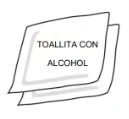
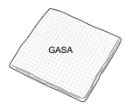
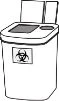
- Wash your hands with soap and hot water.
- Open the 2 alcohol wipes and the gauze.
Step 2. Inspect the vial
- Check the expiration date on the vial label, shown after the marking «EXP»: MM/YYYY.
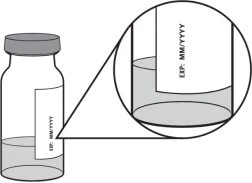
- The liquid should be clear to slightly yellowish.
- Do not use IMCIVREE if:
- the expiration date has passed
- the liquid is cloudy
- there are floating particles in the vial
- the plastic cap of a new vial is broken or missing
- the vial has been stored at temperatures above 30 °C.
Step 3. Prepare the vial
- Before use, allow the vial to reach room temperature. To do this, remove the vial from the refrigerator 15 minutes before injection, or gently roll the vial between the palms of your hands for 60 seconds.
- Do not use hot water, a microwave, or any other device to warm the vial.
- Do not shake the vial.
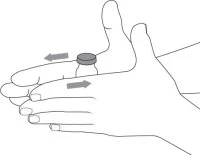
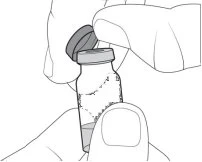
- If using a new vial, remove the plastic cap and dispose of it with household waste.
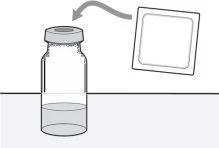
- Clean the top of the gray stopper of the vial with an alcohol wipe. Dispose of the used alcohol wipe with household waste.
- Do not remove the stopper from the vial.
Step 4. Prepare the syringe
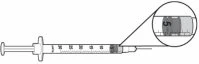
- For doses of 0.25 mg (0.025 ml or 2.5 units), use a 0.3 ml syringe with 0.5 (half) unit increments and a needle of size 29 to 31 gauge with a length of 6 to 13 mm, suitable for subcutaneous injection.
dose of 0.25 mg = 0.025 ml or 2.5 units
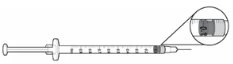
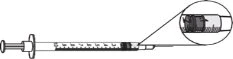
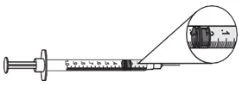
- For doses of 0.5 mg to 3 mg (0.05 ml to 0.3 ml), use a 1 ml syringe with 0.01 ml increments and a needle of size 28 to 29 gauge with a length of 6 to 13 mm, suitable for subcutaneous injection.
Dose of 0.5 mg = 0.05 ml | Dose of 1 mg = 0.1 ml |
|
|
Dose of 2 mg = 0.2 ml | Dose of 3 mg = 0.3 ml |
|
|
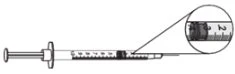
- Leave the protective needle cap in place and pull the plunger to fill the syringe with an amount of air equal to the amount of medication to be used.
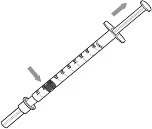
-
Remove the needle cap from the syringe. Pull the cap straight off and away from your body.
-
Place the vial upright on a flat surface. Hold the syringe and position it directly over the vial. Insert the needle straight down into the center of the gray rubber stopper of the vial.
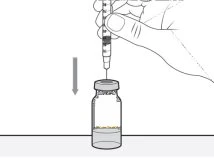
- Push the plunger to inject the air from the syringe into the vial.
- Without removing the needle, carefully turn the vial downward.
- Make sure the tip of the needle is fully immersed in the liquid medication and not in the air above the liquid.
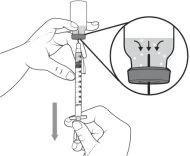
-
Slowly pull the plunger to fill the syringe with the amount of medication required for your dose. When measuring the dose, make sure to read the units starting from the end closest to the black rubber plunger.
-
Keep the needle in the vial and check whether large air bubbles have formed in the syringe.
Small air bubbles |
| Large air bubbles |
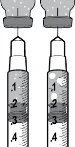
-
If you see air bubbles, you must remove them from the syringe. To remove them:
-
Gently tap the side of the syringe with your finger to allow the air bubbles to move to the top of the syringe.
-
Empty the syringe back into the vial.
-
Repeat the previous steps to fill the syringe again. This time, pull the plunger more slowly and ensure the needle tip remains fully submerged in the liquid in the vial to reduce the likelihood of air bubbles forming.
-
When there are no large air bubbles in the syringe, place the vial upright on a hard surface.
-
Hold the vial with one hand and the barrel of the syringe between the fingertips of the other hand. Pull the needle straight up and out of the vial.
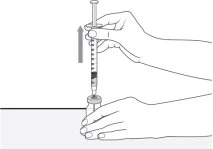
- Place the syringe on the hard surface and ensure the needle does not touch the surface.
Do not recap the syringe.
Step 5. Prepare the injection site
- Choose an area on the abdomen to administer the injection.
- Change the injection site each day.
- Ensure the injection site is at least 5 cm away from the navel.
- Do not administer the injection into any area that is red, swollen, or irritated.
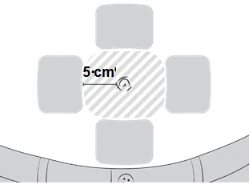
-
Clean the selected injection site with the second alcohol wipe using a circular motion.
-
Allow the skin to dry for about 10 seconds.
-
Do not touch, fan, or blow on the cleaned area.
Step 6. Inject IMCIVREE
- Hold the syringe between the thumb and index finger of your writing hand.
- With your other hand, gently pinch about 5 cm of skin between your thumb and index finger.
Make sure to keep holding the skin fold until the injection is complete.
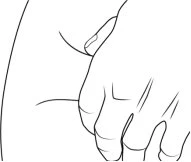
- Hold the center of the syringe at a 90º angle to the skin and push the needle straight into the injection site, ensuring the needle is fully inserted.
- Do not hold or push the plunger while inserting the needle.
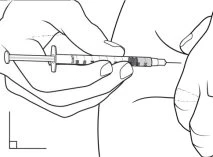
- Holding the barrel of the syringe between your thumb and middle finger, use your index finger to slowly push the plunger and inject the medication.
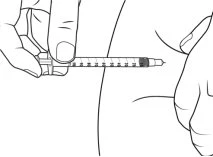
- After injecting IMCIVREE, count to 5 to ensure all the medication has been delivered from the syringe.
- Release the skin fold and remove the needle.
- Use a gauze pad to gently press on the injection site, then discard it with household waste.
- Dispose of the used syringe in a dedicated sharps container. Do not dispose of it with household waste.
- If there is still medication remaining in the vial, return the vial to its carton and store it in the refrigerator or in a safe place at a temperature below 30 °C until the next dose.
If you use more IMCIVREE than you should
If you or your child use more IMCIVREE than prescribed, contact your doctor.
If you forget to use IMCIVREE
If you forget to inject the medication, skip the missed dose and inject the next dose at the usual time. Do not take a double dose to make up for a missed dose.
If you stop using IMCIVREE
If you stop using this medicine, hunger may return and you may stop losing weight.
If you have any further questions about the use of this medicine, ask your doctor, pharmacist, or nurse.
4. Possible adverse effects
Like all medicines, this medicine can cause adverse effects, although not everyone experiences them.
Very common (may affect more than 1 in 10 people)
- Skin markings or darkened areas
- Pain, bruising, or swelling (redness or inflammation) at the injection site
- Fatigue
- Nausea or vomiting
- Headache
- Spontaneous penile erections
- Increased penile erections
- Cutaneous neoplasia
Common (may affect up to 1 in 10 people)
- Dry, red, or itchy skin
- Rash
- Skin lesions
- Hair loss
- Feeling of weakness
- Pain
- Dry mouth
- Indigestion
- Diarrhea
- Feeling of constipation
- Stomach pain
- Heartburn
- Dizziness
- Female genital discomfort
- Sleep problems
- Feeling of depression
- Disturbance in the sexual arousal process
- Increased sexual desire
- Eosinophilia, a type of white blood cell
- Back pain
- Muscle cramps
- Cough
Uncommon (may affect up to 1 in 100 people)
- Redness of the skin
- Lines or spots on the skin
- Increased sweating
- Abnormal distribution of fat tissue
- Itchy rash
- Scaly skin
- Sensitivity to heat or cold
- Chills
- Feeling of cold
- Feeling of heat
- Change in gum color
- Abdominal swelling
- Increased salivation
- Flatulence
- Blood tests showing elevated liver enzyme levels
- Drowsiness
- Migraine
- Loss or change in sense of smell
- Taste disturbances
- Inability in females to achieve or maintain sexual arousal
- Genital discomfort or sensitivity
- Decreased sexual desire
- Female genital disorder
- Menstrual pain
- Sleep disorder
- Nightmares
- Flat, pigmented skin mole
- Joint pain
- Yawning
- Runny nose
- Pain in muscles or bones
- Pain in arms or legs
- Blood tests showing elevated muscle enzyme levels
- Discoloration of the white part of the eyes
- Hot flushes
- Dizziness
- Appetite disorders
- Feeling of thirst
Reporting of adverse effects
If you experience any type of adverse effect, consult your doctor, pharmacist, or nurse, even if these adverse effects are not listed in this leaflet. You may also report them directly through the national reporting system detailed in Appendix V. By reporting adverse effects, you can help provide more information on the safety of this medicine.
5. Storage of IMCIVREE
Keep this medicine out of the sight and reach of children.
Do not use this medicine after the expiry date stated on the carton and on the vial. The expiry date refers to the last day of the month indicated.
IMCIVREE should be stored in a refrigerator (between 2 °C and 8 °C) until the expiry date stated on the carton. Alternatively, IMCIVREE may be stored at room temperature not exceeding 30 °C for up to 30 days or until the expiry date, whichever comes first. Keep all vials (including those that have been opened) in the original carton to protect them from light. After first use of a vial, discard it after 28 days.
Do not freeze this medicine.
If IMCIVREE is exposed to temperatures above 30 °C, do not use it and dispose of it according to local guidelines. Do not use this medicine if you notice floating particles or if it appears cloudy.
Always use a new syringe for each injection.
Medicines should not be disposed of via wastewater or household waste. Ask your pharmacist how to dispose of medicines and packaging no longer required. This will help protect the environment.
6. Contents of the container and other information
Composition of IMCIVREE
- The active substance is setmelanotide. Each multidose vial contains 10 mg of setmelanotide in 1 ml of solution.
The other components are:
- benzyl alcohol (see section 2, "What you need to know before using IMCIVREE")
- sodium N-(carbonyl-methoxypolyethylene glycol 2000)-1,2-distearoyl-glycero-3-phosphoethanolamine (mPEG-2000-DSPE)
- sodium carmellose (see section 2, "What you need to know before using IMCIVREE")
- mannitol
- phenol
- disodium edetate (see section 2, "What you need to know before using IMCIVREE")
- water for injections
- hydrochloric acid (to adjust pH)
- sodium hydroxide (to adjust pH)
Appearance of the medicine and contents of the pack
IMCIVREE is a solution ranging from clear to slightly coloured.
This medicine is presented in clear glass vials with a stopper and a cap, containing 1 ml of injectable solution.
IMCIVREE is available in packs containing 1 or 10 multidose vials.
Only certain pack sizes may be marketed.
Marketing Authorisation Holder and Manufacturer
Rhythm Pharmaceuticals Netherlands B.V.
Radarweg 29,
1043NX Amsterdam,
The Netherlands
Date of the most recent revision of this leaflet:
Other sources of information
Detailed information on this medicine is available on the website of the European Medicines Agency: http://www.ema.europa.eu.