Imatinib Teva 400 mg film-coated tablets EFG
Spain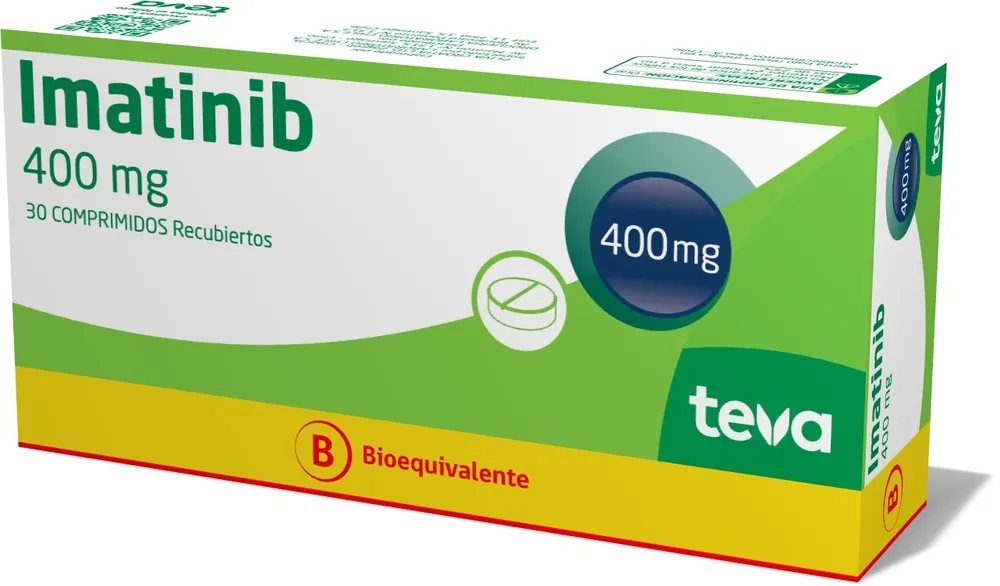
Table of Contents
Patient Information Leaflet
Introduction
Patient Information Leaflet
Imatinib Teva 400 mg film-coated tablets EFG
imatinib
Read the entire leaflet carefully before you start taking this medicine, because it contains important information for you.
- Keep this leaflet, as you may need to read it again.
- If you have any questions, ask your doctor, pharmacist, or nurse.
- This medicine has been prescribed for you only, and you should not give it to others, even if they have the same symptoms as you, because it may harm them.
- If you experience any adverse effects, consult your doctor, pharmacist, or nurse, even if these effects are not listed in this leaflet. See section 4.
Leaflet Contents
- What Imatinib Teva is and what it is used for
- What you need to know before taking Imatinib Teva
- How to take Imatinib Teva
- Possible side effects
- How to store Imatinib Teva
- Contents of the pack and other information
1. What Imatinib Teva is and what it is used for
Imatinib Teva is a medicine that contains an active substance called imatinib. This medicine works by inhibiting the growth of abnormal cells in the diseases described below. These include certain types of cancer.
Imatinib Teva is a treatment for adults and children for:
-
Chronic myeloid leukaemia (CML). Leukaemia is a cancer of the white blood cells. These white cells normally help the body fight infections. Chronic myeloid leukaemia is a form of leukaemia in which abnormal white cells (called myeloid cells) begin to grow uncontrollably.
-
Philadelphia chromosome-positive acute lymphoblastic leukaemia (Ph+ ALL). Leukaemia is a cancer of the white blood cells. These white cells normally help the body fight infections. Acute lymphoblastic leukaemia is a form of leukaemia in which abnormal white cells (called lymphoblasts) begin to grow uncontrollably. Imatinib Teva inhibits the growth of these cells.
Imatinib Teva is also a treatment for adults for:
- Myelodysplastic/myeloproliferative diseases (MDS/MPD). These are a group of blood disorders in which certain blood cells begin to grow uncontrollably. Imatinib Teva inhibits the growth of these cells in a specific subtype of these diseases.
- Hypereosinophilic syndrome (HES) and/or chronic eosinophilic leukaemia (CEL). These are blood disorders in which certain blood cells (called eosinophils) begin to grow uncontrollably. Imatinib Teva inhibits the growth of these cells in a specific subtype of these diseases.
- Gastrointestinal stromal tumours (GIST). GIST is a cancer of the stomach and intestine. It arises from uncontrolled cell growth in the supportive tissues of these organs.
- Dermatofibrosarcoma protuberans (DFSP). DFSP is a cancer of the tissue beneath the skin in which certain cells begin to grow uncontrollably. Imatinib Teva inhibits the growth of these cells.
In the remainder of this leaflet, these abbreviations are used when referring to these diseases.
If you have any questions about how Imatinib Teva works or why this medicine has been prescribed for you, ask your doctor.
2. What you need to know before starting to take Imatinib Teva
Imatinib Teva will only be prescribed by a doctor experienced in using medicines to treat blood cell cancers or solid tumours.
Carefully follow all your doctor's instructions, even if they differ from the general information contained in this leaflet.
Do not take Imatinib Teva
- if you are allergic to imatinib or to any of the other ingredients of this medicine (listed in section 6).
If this applies to you, inform your doctor and do not take Imatinib Teva.
If you think you may be allergic but are unsure, consult your doctor.
Warnings and precautions
Talk to your doctor before starting to take Imatinib Teva:
- if you have or have had any liver, kidney, or heart problems.
- if you are taking a medicine containing levothyroxine because your thyroid gland has been removed.
- if you have ever had or may currently have an infection with hepatitis B virus. This is because Imatinib Teva could cause hepatitis B to become active again, which may be fatal in some cases. Your doctor will need to carefully check for signs of this infection before starting treatment.
- if you develop bruising, bleeding, fever, fatigue, or confusion while taking Imatinib Teva, please contact your doctor immediately. These could be signs of damage to blood vessels called thrombotic microangiopathy (TMA).
If any of these apply to you, inform your doctor before taking Imatinib Teva.
You may become more sensitive to sunlight while taking Imatinib Teva. It is important to cover skin areas exposed to sunlight and to use high-protection sunscreen. These precautions also apply to children.
During treatment with Imatinib Teva, inform your doctor immediately if you gain weight rapidly. Imatinib Teva may cause fluid retention in the body (severe fluid retention).
While taking Imatinib Teva, your doctor will regularly monitor whether the medicine is working. You will also have regular blood tests and be weighed regularly.
Children and adolescents
Imatinib Teva is also a treatment for children and adolescents with CML. There is no experience in children with CML under 2 years of age. Experience in children with Ph-positive ALL is limited, and experience in children with MDS/MPN, DFSP, GIST, and HES/CEL is very limited.
Some children and adolescents taking Imatinib Teva may have slower than normal growth. Your doctor will monitor growth during regular visits.
Other medicines and Imatinib Teva
Tell your doctor or pharmacist if you are taking, have recently taken, or might need to take any other medicines, including those obtained without a prescription (such as paracetamol), and even herbal medicines (such as St. John’s wort). Some medicines may interfere with the effect of Imatinib Teva when taken together. These may increase or decrease the effect of Imatinib Teva, leading to an increase in side effects or making Imatinib Teva less effective. Imatinib Teva may also affect other medicines in the same way.
Inform your doctor if you are taking medicines that prevent blood clots from forming.
Pregnancy, breast-feeding, and fertility
- If you are pregnant or breast-feeding, think you may be pregnant, or are planning to become pregnant, consult your doctor before using this medicine.
- Use of Imatinib Teva during pregnancy is not recommended unless clearly necessary, as it may harm your baby. Your doctor will discuss with you the potential risks of taking Imatinib Teva during pregnancy.
- Women who could become pregnant are advised to use an effective method of contraception during treatment and for 15 days after stopping treatment.
- Do not breast-feed during treatment with Imatinib Teva or for the following 15 days after stopping treatment, as it may harm your baby.
- Patients concerned about fertility while taking Imatinib Teva should discuss this with their doctor.
Driving and use of machines
You may experience dizziness, drowsiness, or blurred vision while taking this medicine. If you do, do not drive or operate tools or machinery until you feel well again.
3. How to take Imatinib Teva
Your doctor has prescribed Imatinib Teva because you suffer from a serious illness. Imatinib Teva can help you fight this disease.
However, follow exactly the administration instructions for this medicine given by your doctor, pharmacist, or nurse. It is important that you do so for the length of time specified by your doctor, pharmacist, or nurse. If in doubt, consult your doctor, pharmacist, or nurse.
Do not stop taking Imatinib Teva unless your doctor tells you to. If you are unable to take the medicine as prescribed by your doctor or think you no longer need to take it, contact your doctor immediately.
How much to take of Imatinib Teva
Use in adults
Your doctor will tell you exactly how many Imatinib Teva tablets you should take.
- If you are being treated for CML:
Depending on your condition, the normal starting dose is 400 mg or 600 mg:
-
400 mg, i.e. 1 tablet once daily,
-
600 mg, i.e. 1 tablet of 400 mg plus 2 tablets of 100 mg or 1 and a half tablets of 400 mg once daily.
-
If you are being treated for GIST:
The starting dose is 400 mg, i.e. 1 tablet once daily.
For CML and GIST, your doctor may prescribe a higher or lower dose depending on your response to treatment. If your daily dose is 800 mg (2 tablets), you should take 1 tablet in the morning and a second tablet in the evening.
- If you are being treated for Ph+ ALL:
The starting dose is 600 mg, i.e. 1 tablet of 400 mg plus 2 tablets of 100 mg or 1 and a half tablets of 400 mg once daily.
- If you are being treated for MDS/MPD:
The starting dose is 400 mg, i.e. 1 tablet once daily.
- If you are being treated for HES/CEL:
The starting dose is 100 mg, i.e. 1 tablet of 100 mg once daily. Your doctor may decide to increase the dose to 400 mg, i.e. 1 tablet of 400 mg once daily, depending on your response to treatment.
- If you are being treated for DFSP:
The dose is 800 mg per day (2 tablets), i.e. 1 tablet in the morning and a second tablet in the evening.
Use in children and adolescents
Your doctor will tell you how many Imatinib Teva tablets to give to the child. The amount of Imatinib Teva given will depend on the child's condition, body weight, and height. The total daily dose in children and adolescents must not exceed 800 mg in CML and 600 mg in Ph+ ALL. The treatment may be given to the child once daily or, alternatively, the dose may be divided into two doses (half in the morning and half in the evening).
When and how to take Imatinib Teva
- Take Imatinib Teva with food. This will help protect you from stomach problems when taking Imatinib Teva.
- Swallow the tablets with a large glass of water.
If you are unable to swallow the tablets, you may dissolve them in a glass of still water or apple juice:
- Use approximately 200 ml for each 400 mg tablet
- Stir with a spoon until the tablets are completely dissolved
- Once the tablet has dissolved, drink the entire contents of the glass immediately. There may be remnants of the dissolved tablet at the bottom of the glass.
The tablet may be divided into equal doses.
How long to take Imatinib Teva
Continue taking Imatinib Teva every day for as long as your doctor tells you.
If you take more Imatinib Teva than you should
If you have accidentally taken too many tablets, speak to your doctor immediately. Medical attention may be required. Take the medicine packaging with you.
If you forget to take Imatinib Teva
- If you forget to take a dose, take it as soon as you remember. However, if it is almost time for your next dose, do not take the missed dose,
- Then continue with your regular dosing schedule.
- Do not take a double dose to make up for missed doses.
If you have any further questions about the use of this medicine, ask your doctor, pharmacist, or nurse.
4. Possible adverse effects
Like all medicines, this medicine can cause adverse effects, although not everyone gets them. These are usually mild to moderate.
Some adverse effects may be serious. Inform your doctor immediately if you experience any of the following:
Very common (may affect more than 1 in 10 patients) or common (may affect up to 1 in 10 patients):
- Rapid weight gain. Imatinib Teva may cause your body to retain fluid (severe fluid retention).
- Signs of infection such as fever, severe chills, sore throat or mouth ulcers. Imatinib Teva may reduce the number of white blood cells, so you may be more prone to infections.
- Unexpected bleeding or bruising (when you have not sustained an injury).
Uncommon (may affect up to 1 in 100 patients) or rare (may affect up to 1 in 1,000 patients):
- Chest pain, irregular heartbeat (signs of heart problems).
- Cough, with difficulty breathing or painful breathing (signs of lung problems).
- Dizziness, lightheadedness or fainting (signs of low blood pressure).
- Nausea, loss of appetite, dark-coloured urine, yellowing of the skin or eyes (signs of liver problems).
- Rash, redness of the skin, blisters on the lips, eyes, skin or mouth, skin peeling, fever, red or purple skin spots, itching, burning sensation, pustular rash (signs of skin problems).
- Severe abdominal pain, blood in vomit, stools or urine, black stools (signs of gastrointestinal disturbances).
- Markedly reduced urine output, feeling thirsty (signs of kidney problems).
- Nausea, with diarrhoea and vomiting, abdominal pain or fever (signs of intestinal problems).
- Severe headache, weakness or paralysis in limbs or face, difficulty speaking, sudden loss of consciousness (signs of nervous system problems such as bleeding or swelling in the skull/brain).
- Pale skin, feeling tired and short of breath, dark-coloured urine (signs of low red blood cell count).
- Eye pain or vision disturbances, bleeding in the eyes.
- Bone or joint pain (signs of osteonecrosis).
- Blisters on the skin or mucous membranes (signs of pemphigus).
- Numbness or cold sensation in the feet and toes (signs of Raynaud's syndrome).
- Sudden swelling and redness of the skin (sign of a skin infection called cellulitis).
- Hearing difficulties.
- Muscle weakness and muscle spasms, with an abnormal heartbeat (signs of changes in blood potassium levels).
- Bruising.
- Stomach pain with nausea.
- Muscle cramps with fever, red-brown urine, muscle pain or weakness (signs of muscle problems).
- Pelvic pain, sometimes with nausea and vomiting, unexpected vaginal bleeding, dizziness or fainting due to low blood pressure (signs of problems in the ovaries or uterus).
- Nausea, difficulty breathing, irregular heartbeat, cloudy urine, fatigue and/or joint discomfort associated with abnormal laboratory test results (e.g. elevated potassium, uric acid and calcium levels and low phosphate levels in the blood).
- Blood clots in small blood vessels (thrombotic microangiopathy).
Frequency not known (cannot be estimated from available data):
-
Combination of widespread rash, feeling unwell, fever, elevated levels of certain blood cells or yellowing of the skin or eyes (jaundice) with difficulty breathing, chest pain/discomfort, severely reduced urine output and feeling thirsty, etc. (signs of a treatment-related allergic reaction).
-
Chronic kidney failure.
-
Recurrence (reactivation) of hepatitis B virus infection if you have previously had hepatitis B (a liver infection).
If you experience any of the above, inform your doctor immediately.
Other adverse effects may include:
Very common (may affect more than 1 in 10 people):
- Headache or feeling tired.
- Nausea, vomiting, diarrhoea or indigestion.
- Rash.
- Muscle cramps or pain in joints, muscles or bones, during treatment with Imatinib Teva or after stopping Imatinib Teva.
- Swelling such as swollen ankles or eyes.
- Weight gain.
If any of these affect you significantly, inform your doctor.
Common (may affect up to 1 in 10 people):
- Loss of appetite, weight loss or altered taste.
- Feeling tired or weak.
- Difficulty sleeping (insomnia).
- Watery, itchy, red and swollen eyes (conjunctivitis), watery eyes or blurred vision.
- Nosebleeds.
- Pain or swelling in the abdomen, flatulence, heartburn or constipation.
- Itching.
- Unusual hair thinning or hair loss.
- Numbness in hands or feet.
- Mouth ulcers.
- Joint pain with swelling.
- Dry mouth, dry skin or dry eyes.
- Decreased or increased skin sensitivity.
- Hot flushes, chills or night sweats.
If any of these affect you significantly, consult your doctor.
Uncommon (may affect up to 1 in 100 patients):
- Cough, runny or blocked nose, feeling of heaviness or pain when pressing the area around the eyes or sides of the nose, nasal congestion, sneezing, sore throat, with or without headache (signs of upper respiratory tract infection).
- Severe headache, such as a stabbing pain or pulsating sensation, usually on one side of the head and often accompanied by nausea, vomiting and sensitivity to light or sound (signs of migraine).
- Flu-like symptoms (influenza).
- Pain or burning sensation when urinating, fever, pain in the groin or pelvis, cloudy or reddish-brown urine (signs of urinary tract infection).
- Pain and swelling in joints (signs of arthralgia).
- Persistent feeling of sadness and loss of interest, interfering with normal daily life (signs of depression).
- A feeling of apprehension and worry accompanied by physical symptoms such as palpitations, sweating, trembling, dry mouth (signs of anxiety).
- Numbness/drowsiness/excessive sleepiness.
- Tremors or involuntary movements (tremor).
- Memory impairment.
- An uncontrollable urge to keep moving the legs (restless legs syndrome).
- Hearing noises (e.g. ringing, buzzing) in the ears that do not come from outside (tinnitus).
- High blood pressure (hypertension).
- Belching or gas.
- Swelling of the lips.
- Difficulty swallowing.
- Increased sweating.
- Skin discolouration.
- Brittle nails.
- Red bumps or pimples around the hair roots, possibly with pain, itching or burning sensation (signs of inflammation of hair follicles, also called folliculitis).
- Skin rash with skin peeling or flaking (exfoliative dermatitis).
- Breast enlargement (can occur in men or women).
- Dull and/or heavy sensation in the testicles or lower abdomen, pain when urinating, during sexual intercourse or ejaculation, blood in the urine (signs of testicular oedema).
- Inability to achieve or maintain an erection (erectile dysfunction).
- Heavy or irregular menstrual periods.
- Difficulty achieving/maintaining sexual arousal.
- Decreased sexual desire.
- Nipple pain.
- General feeling of being unwell (malaise).
- Viral infections such as cold sores.
- Lower back pain due to a kidney disorder.
- Increased frequency of urination.
- Increased appetite.
- Pain or burning sensation in the upper abdomen and/or chest (heartburn), nausea, vomiting, acid reflux, feeling of fullness and bloating, black stools (signs of stomach ulcer).
- Stiffness in joints or muscles.
- Abnormal laboratory test results.
- Painful red lumps on the skin, skin pain, redness of the skin (inflammation of fatty tissue beneath the skin).
If any of these affect you significantly, consult your doctor.
Rare (may affect up to 1 in 1,000 patients):
- Confusion.
- Discolouration of the nails.
If any of these affect you significantly, consult your doctor.
Frequency not known (cannot be estimated from available data):
- Redness and/or swelling of the palms of the hands and soles of the feet, which may be accompanied by tingling and burning pain.
- Painful and/or blistering skin lesions.
- Delayed growth in children and adolescents.
If any of these affect you significantly, consult your doctor.
Reporting of adverse effects
If you experience any adverse effects, talk to your doctor, pharmacist or nurse, even if they are possible adverse effects not listed in this leaflet. You can also report them directly through the national reporting system included in Appendix V. By reporting adverse effects, you can help provide more information on the safety of this medicine.
5. Storage of Imatinib Teva
Keep this medicine out of sight and reach of children.
Do not use this medicine after the expiry date stated on the carton and blister after EXP. The expiry date refers to the last day of the month indicated.
This medicine does not require any special storage conditions.
Do not use any packaging if it appears damaged or shows signs of tampering.
Medicines should not be disposed of via wastewater or household waste. Ask your pharmacist how to dispose of medicines and packaging that you no longer need. This will help protect the environment.
6. Contents of the pack and other information
Composition of Imatinib Teva
-
The active substance is imatinib (as mesilate).
-
Each film-coated tablet of Imatinib Teva contains 400 mg of imatinib (as mesilate).
-
The other components are calcium hydrogen phosphate, crospovidone and magnesium stearate.
-
The tablet coating consists of partially hydrolysed polyvinyl alcohol, macrogol, yellow iron oxide (E172), talc, titanium dioxide (E171) and red iron oxide (E172).
Appearance of the product and contents of the pack
Imatinib Teva 400 mg film-coated tablets are oblong, film-coated tablets of dark yellow to brownish-orange colour, with a score on one side. The tablet is marked with "IT" and "4" on either side of the score. The tablets are approximately 20 mm in length and 10 mm in width.
Imatinib Teva 400 mg film-coated tablets are available in pack sizes of 30 or 90 film-coated tablets in blister packs.
Imatinib Teva 400 mg film-coated tablets are also available in pack sizes of 30x1 or 90x1 film-coated tablets in perforated unit dose blisters.
Not all pack sizes may be marketed.
Marketing Authorisation Holder
Teva B.V.
Swensweg 5
2031 GA Haarlem
The Netherlands
Manufacturer
Teva Pharmaceutical Works Private Limited Company
Pallagi út 13
Debrecen H-4042
Hungary
Teva Czech Industries s.r.o.
Ostravska 29, c.p. 305, 74770
Opava-Komarov
Czech Republic
TEVA PHARMA, S.L.U.
C/C, n. 4, Poligono Industrial Malpica
50016 Zaragoza
Spain
Merckle GmbH
Graf-Arco-Str. 3, 89079 Ulm
Germany
Teva Operations Poland Sp. z o.o.
ul. Mogilska 80 31-546 Krakow
Poland
Teva Pharma B.V.
Swensweg 5,
2031 GA Haarlem
The Netherlands
PLIVA Croatia Ltd.
Prilaz baruna Filipovica 25
10000 Zagreb
Croatia
For more information about this medicine, contact the local representative of the Marketing Authorisation Holder:
Belgium/Belgium/Belgium Teva Pharma Belgium N.V./S.A./AG Tel/Tel: +32 38207373 | Lithuania UAB Teva Baltics Tel: +370 52660203 |
Bulgaria Teva Bulgaria EOOD Tel: +359 24899582 | Luxembourg/Luxembourg Teva Pharma Belgium N.V./S.A./AG, Belgium/Belgium Tel/Tel: +32 38207373 |
Czech Republic Teva Pharmaceuticals CR, s.r.o. Tel: +420 251007111 | Hungary Teva Gyógyszergyár Zrt. Tel.: +36 12886400 |
Denmark Teva Denmark A/S Tlf: +45 44985511 | Malta Teva Pharmaceuticals Ireland, Malta Tel: +353 19127700 |
Germany AbZ-Pharma GmbH Tel: +49 73140205 | Netherlands Teva Nederland B.V. Tel: +31 8000228400 |
Estonia UAB Teva Baltics Estonia branch Tel: +372 6610801 | Norway Teva Norway AS Tlf: +47 66775590 |
Greece Specifar A.B.E.E. Tel: +30 2118805000 | Austria ratiopharm Arzneimittel Vertriebs-GmbH Tel: +43 1970070 |
Spain Teva Pharma, S.L.U. Tel: +34 913873280 | Poland Teva Pharmaceuticals Polska Sp. z o.o. Tel.: +48 223459300 |
France Teva Santé Tél: +33 155917800 | Portugal Teva Pharma - Produtos Farmacêuticos, Lda. Tel: +351 214767550 |
Croatia Pliva Hrvatska d.o.o. Tel: +385 13720000 | Romania Teva Pharmaceuticals S.R.L. Tel: +40 212306524 |
Ireland Teva Pharmaceuticals Ireland Tel: +353 19127700 | Slovenia Pliva Ljubljana d.o.o. Tel: +386 15890390 |
Iceland Teva Finland Oy Finland Sími: +358 201805900 | Slovakia TEVA Pharmaceuticals Slovakia s.r.o. Tel: +421 257267911 |
Italy Teva Italia S.r.l. Tel: +39 028917981 | Finland/Suomi Teva Finland Oy Puh/Tel: +358 201805900 |
Cyprus Specifar A.B.E.E. Greece Tel: +30 2118805000 | Sweden Teva Sweden AB Tel: +46 42121100 |
Latvia UAB Teva Baltics branch Latvia Tel: +371 67323666 | United Kingdom Teva UK Limited Tel: +44 1977628500 |
Date of the most recent review of this leaflet: {Month/Year}.
Other sources of information
Detailed information on this medicinal product is available on the European Medicines Agency website: http://www.ema.europa.eu/.