IG Vena 50 g/l solution for infusion
Spain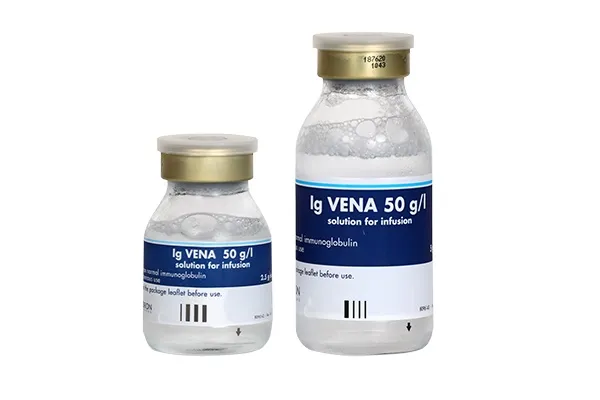
Table of Contents
Package leaflet: Information for the user
Introduction
Package leaflet: information for the user
Ig Vena 50 g/l, infusion solution
normal human immunoglobulin (IgIV)
Read the entire leaflet carefully before you start using this medicine, because it contains important information for you.
- Keep this leaflet, as you may need to read it again.
- If you have any questions, consult your doctor or nurse.
- If you experience any adverse reactions, consult your doctor or nurse, even if they are adverse reactions not listed in this leaflet. See section 4.
Leaflet contents
- What Ig Vena is and what it is used for
- What you need to know before using Ig Vena
- How to use Ig Vena
- Possible adverse effects
- How to store Ig Vena
- Contents of the pack and other information
1. What Ig Vena is and what it is used for
Ig Vena is a solution of normal human immunoglobulin for intravenous administration. Immunoglobulins are human antibodies that are also present in blood.
Ig Vena is used for:
Treatment in adults, children and adolescents (0–18 years) who lack sufficient antibodies (replacement therapy) in the following conditions:
- Patients with congenital deficiency in antibody production (primary immunodeficiency syndromes).
- Patients with acquired deficiency in antibody production (secondary immunodeficiencies) who suffer from severe or recurrent infections due to various medical conditions (e.g., oncological or autoimmune diseases or as a result of treatment for these diseases). These patients have undergone antibiotic therapy that has proven ineffective and have not shown a sufficiently significant increase in IgG antibody titres after vaccination (pneumococcal vaccines with polysaccharide and polypeptide antigens), or have a blood IgG level of < 4 g/l.
Treatment in adults, children and adolescents (0–18 years) with certain inflammatory conditions (immunomodulation) in the following conditions:
- Patients with low platelet counts (Primary Immune Thrombocytopenia, ITP), who are at high risk of bleeding or prior to undergoing surgery to correct platelet count.
- Patients with Guillain-Barré syndrome. This is an acute disease characterized by inflammation of the peripheral nerves causing severe muscle weakness, primarily in the legs and upper limbs.
- Patients with Kawasaki disease (in combination with acetylsalicylic acid). This is an acute disease affecting mainly young children and characterized by inflammation of blood vessels throughout the body.
- Patients with Chronic Inflammatory Demyelinating Polyneuropathy (CIDP). This chronic disease is a rare disorder of the peripheral nerves characterized by gradually increasing weakness in the legs and, to a lesser extent, in the arms.
- Patients with Multifocal Motor Neuropathy (MMN). This is a rare disease affecting motor nerves and characterized by asymmetric, slowly progressive weakness of the limbs without loss of sensation.
2. What you need to know before using Ig Vena
Do not use Ig Vena
- If you are allergic (hypersensitive) to human immunoglobulins or to any of the other components of this medicine (listed in section 6).
- If you have antibodies against IgA-type immunoglobulins in your blood, as administration of a product containing IgA may cause a severe allergic reaction.
Warnings and precautions
Talk to your doctor or nurse before using Ig Vena.
Your doctor or healthcare professional will closely monitor you and observe you carefully during the Ig Vena infusion to ensure you do not experience adverse reactions.
Certain adverse reactions may occur more frequently:
-
if the infusion rate is too high;
-
if you have uncontrolled signs of untreated infections (e.g., fever) or signs of chronic inflammation;
-
if you are receiving normal human immunoglobulin for the first time;
-
in rare cases, when switching from another normal human immunoglobulin product, or after a long interval since the previous infusion.
-
In certain cases, immunoglobulins may increase the risk of myocardial infarction, stroke, pulmonary embolism, or deep vein thrombosis, as they increase blood viscosity.
Therefore, your doctor will exercise special caution in the following cases:
-
if you are overweight;
-
if you are elderly;
-
if you have diabetes;
-
if you have high blood pressure (hypertension);
-
if your blood volume is very low (hypovolemia);
-
if you have or have had blood vessel problems (vascular diseases);
-
if you have an increased tendency to form blood clots (hereditary or acquired thrombotic disorders);
-
if you have experienced thrombotic episodes;
-
if you have a disease causing increased blood thickness (viscosity);
-
if you have been bedridden for a prolonged period;
-
if you have or have had kidney problems, or if you are taking medications that may harm your kidneys (nephrotoxic drugs), as cases of acute renal failure have been reported. In case of kidney dysfunction, your doctor will consider discontinuing treatment.
-
You may be allergic (hypersensitive) to immunoglobulins (antibodies) without knowing it.
This may occur even if you have previously taken normal human immunoglobulins and tolerated them well. It may occur especially if you lack IgA-type immunoglobulins (IgA deficiency with anti-IgA antibodies). In these rare cases, allergic reactions (hypersensitivity) such as sudden drop in blood pressure or shock may occur.
If an adverse reaction occurs, your doctor may decide to reduce the infusion rate or stop the infusion. Your doctor will also determine the necessary treatment depending on the nature and severity of the adverse effect.
In case of shock, appropriate standard medical treatment must be administered. Please inform your doctor if you have any of the conditions listed above; your doctor will take special care when prescribing and administering Ig Vena.
Viral safety
Medicines derived from human blood or plasma are subject to a number of safety measures to prevent transmission of infections to patients. These include careful selection of blood or plasma donors to exclude those at risk of carrying infections, and testing of each donation and plasma pools for signs of viruses. Manufacturers of these medicines also include steps in the processing of blood or plasma to inactivate or eliminate pathogens. Despite these measures, when medicines made from human blood or plasma are administered, the possibility of transmitting an infection cannot be completely ruled out. This also applies to any unknown or emerging viruses or other types of infections.
The measures taken are considered effective against enveloped viruses such as human immunodeficiency virus (HIV), hepatitis B virus (HBV), hepatitis C virus (HCV), and against non-enveloped hepatitis A virus (HAV).
The measures taken may have limited effect against non-enveloped viruses such as parvovirus B19.
Immunoglobulins have not been associated with hepatitis A or parvovirus B19 infections, possibly because the antibodies against these infections contained in the medicine are protective.
It is highly recommended that each time you receive a dose of Ig Vena, the name and batch number of the product be recorded to maintain a record of the batches used.
Children and adolescents
Transient and mild glucosuria (presence of glucose in urine) without clinical signs has been observed after Ig Vena administration in pediatric patients. This event may be related to the maltose contained in Ig Vena, as maltose is hydrolyzed to glucose in the renal tubules, where it is reabsorbed and usually excreted in very small amounts in urine. Glucose reabsorption is age-dependent. The transient increase in plasma maltose may exceed the kidney's capacity to reabsorb sugars, leading to positive urine glucose test results.
Other medicines and Ig Vena
Inform your doctor if you are taking, have recently taken, or might need to take any other medicines.
Intravenous human normal immunoglobulin must not be mixed with other medicines or with any other IgIV product.
Live attenuated virus vaccines
Administration of immunoglobulin may interfere with the effectiveness of live attenuated virus vaccines such as measles, rubella, mumps, and varicella for a period of at least 6 weeks up to 3 months. A 3-month interval should be observed after administration of this medicine before administering live attenuated virus vaccines. In the case of measles, interference may last up to 1 year. Therefore, antibody levels should be monitored in patients receiving measles vaccine.
Loop diuretics (a group of medicines that increase urine flow)
Avoid concomitant use of loop diuretics.
Blood tests
Ig Vena may interfere with certain blood tests due to the transient increase in various antibodies passively transferred into the blood after immunoglobulin injection; this increase in antibodies may lead to misleading results in serological tests. Passive transfer of antibodies to erythrocyte antigens, for example, A, B, D (which determine blood group), may interfere with certain serological tests for red blood cell antibodies, such as the direct antiglobulin test (direct Coombs test, DAT).
Blood glucose testing
Some blood glucose monitoring systems (e.g., those based on pyrroloquinolinequinone glucose dehydrogenase (GDH-PQQ) or glucose-colorant-oxidoreductase methods) falsely interpret the maltose (100 mg/ml) contained in Ig Vena as glucose. This may result in falsely elevated glucose readings during an infusion and for approximately 15 hours after the infusion ends, potentially leading to inappropriate insulin administration, causing life-threatening hypoglycemia or even death. Additionally, true hypoglycemia may go untreated if the hypoglycemic state is masked by falsely elevated glucose readings. Therefore, when Ig Vena or other parenteral products containing maltose are administered, blood glucose measurement should be performed using a glucose-specific method. The product information of the blood glucose monitoring system, including test strips, should be carefully reviewed to determine whether the system is suitable for use with parenteral products containing maltose. If in doubt, contact the manufacturer of the glucose monitoring system to confirm its suitability for use with parenteral products containing maltose.
Children and adolescents
Although no specific interaction studies have been conducted in the pediatric population, no differences between children and adults are expected.
Pregnancy, breastfeeding, and fertility
- If you are pregnant or breastfeeding, think you may be pregnant, or plan to become pregnant, consult your doctor before using this medicine. Your doctor will decide whether you can use Ig Vena during pregnancy or breastfeeding.
- Clinical studies with Ig Vena have not been conducted in pregnant women. It has been shown that IgIV products cross the placenta, particularly during the third trimester. However, antibody-containing medicines have been used in pregnant women for years, and no harmful effects on pregnancy, the fetus, or newborn are expected.
- If you are breastfeeding and receive Ig Vena, the medicine's antibodies may pass into breast milk. Therefore, your baby may be protected against certain infections.
- Clinical experience with immunoglobulins indicates that harmful effects on fertility are not expected.
Driving and using machines
The ability to drive and use machines may be affected by certain adverse reactions related to Ig Vena. Patients experiencing adverse reactions during treatment should wait until these reactions have resolved before driving or operating machinery.
Ig Vena contains maltose and sodium
This medicine contains 100 mg of maltose per ml.
This medicine contains 69 mg of sodium per liter. Patients on a low-sodium diet should take this into account.
3. How to use Ig Vena
Ig Vena can only be administered in hospitals or healthcare centers by physicians or healthcare professionals.
The dose and treatment regimen depend on the indication; your doctor will determine the appropriate dose and treatment for you.
At the beginning of the infusion, Ig Vena will be administered at a slow infusion rate. If you tolerate it well, your doctor may gradually increase the infusion rate.
Use in children and adolescents
The dosage in children and adolescents (0 to 18 years of age) is not different from that in adults, as the dosage for each indication is calculated according to body weight and adjusted based on the patient's clinical response.
If you use more Ig Vena than you should
If you use more Ig Vena than you should, fluid overload may occur and the blood may become too thick (hyperviscosity); this may occur particularly in at-risk patients, especially elderly patients or those with cardiac or renal problems.
If you have any further questions about the use of this medicine, ask your doctor or nurse.
4. Possible adverse effects
Like all medicines, this medicine can cause adverse effects, although not everyone experiences them.
The following adverse effects may generally occur after treatment with immunoglobulins:
- chills, headache, dizziness, fever, vomiting, nausea, allergic reactions, arthralgia (joint pain), low blood pressure, and moderate back pain have occasionally been reported;
- isolated cases of temporary reduction in the number of red blood cells in blood (reversible hemolytic anemia / hemolysis);
- rare cases of sudden drop in blood pressure have been reported and, in isolated cases, hypersensitivity reactions (anaphylactic shock) may occur, even when the patient has not shown hypersensitivity in previous administrations;
- rare cases of transient skin reactions have been observed;
- very rare reports of thromboembolic events (blood clot formation) which may lead to myocardial infarction, stroke, blockage of the pulmonary veins (pulmonary embolism), and deep vein thrombosis;
- cases of transient non-infectious meningitis (reversible aseptic meningitis);
- increased serum creatinine levels in blood and/or acute renal failure have been observed;
- cases of transfusion-related acute lung injury (TRALI).
The list below includes, in decreasing order of frequency, the adverse effects reported after administration of Ig Vena in clinical trials and those reported following marketing of the medicine.
Frequent (may affect up to 1 in 10 people)
- Back pain
- Nausea
- Generalized weakness, fatigue, fever
- Muscle pain
- Headache, somnolence
Frequency not known (cannot be estimated from available data)
- Non-infectious meningitis
- Destruction and consequent lack of red blood cells
- Allergic reactions and potentially life-threatening anaphylactic shock
- Confusion
- Stroke, dizziness, uncontrollable tremor, numbness or tingling sensation in the skin or in a limb
- Heart attack, blue or purple skin discoloration, tachycardia, bradycardia, irregular heartbeat
- Blood clots in large veins and blood vessels, low blood pressure, high blood pressure, pallor
- Blood clots in the main pulmonary artery, abnormal fluid accumulation in the lungs, difficulty breathing with wheezing or cough
- Vomiting, diarrhea, abdominal pain
- Rapid skin swelling, urticaria, redness and inflammation of the skin, skin rash, pruritus, eczema, excessive sweating
- Muscle and joint pain, back pain, neck pain, musculoskeletal stiffness
- Sudden kidney failure
- Inflammation of the vein at injection site, chills, chest pain or discomfort, facial swelling, general feeling of malaise
- Elevated blood creatinine levels
Other adverse effects in children and adolescents
The frequency, type, and severity of adverse reactions in children are expected to be the same as in adults.
Transient and mild glucosuria (presence of glucose in urine) without clinical significance has been observed after administration of Ig Vena in children.
For information on viral safety, see section 2 "Before starting to use Ig Vena".
Reporting of adverse effects
If you experience any type of adverse effect, consult your doctor or nurse, even if it is a possible adverse effect not listed in this leaflet. You may also report them directly via the Spanish Pharmacovigilance System for Human Medicines: www.notificaRAM.es. By reporting adverse effects, you can help provide more information on the safety of this medicine.
5. Storage of Ig Vena
Keep this medicine out of the sight and reach of children.
Do not use this medicine after the expiry date stated on the label and on the outer carton following “EXP”. The expiry date refers to the last day of the month indicated. Store in a refrigerator (between 2°C and 8°C).
Prior to use and within the shelf life, the medicine may be stored at room temperature, not exceeding 25°C, for a maximum period of 6 consecutive months.
After this period, the medicine must be discarded. In any case, once stored at room temperature, the medicine must no longer be refrigerated.
Record the date of starting storage at room temperature on the outer packaging.
Once the infusion container has been opened, the contents should be used immediately.
Keep the vial in the outer packaging. Do not freeze.
Do not use this medicine if you notice that the solution is cloudy, contains sediment, or has changed in colour.
Medicines should not be disposed of via wastewater or household waste. Ask your pharmacist how to dispose of medicines you no longer need. This will help protect the environment.
6. Contents of the container and other information
Composition of Ig Vena
The active substance is human normal immunoglobulin.
1 ml of solution contains 50 mg of human normal immunoglobulin.
The solution contains 50 g/l of human proteins, of which at least 95% is immunoglobulin G (IgG).
The IgG subclasses (IgG) have the following distribution:
IgG1 62.1 %
IgG2 34.8 %
IgG3 2.5 %
IgG4 0.6 %
The maximum IgA content is 50 micrograms/ml.
Produced from human donor plasma.
The other components are maltose and water for injections.
Appearance of Ig Vena and contents of the container
Ig Vena is a solution for infusion, supplied in single vials of 20, 50, 100 or 200 ml, with integrated hanger (vial + hanger). The solution is transparent or slightly opalescent, colourless or pale yellow.
Container sizes:
Single container presentations:
1 vial with 1 g/20 ml.
1 vial with 2.5 g/50 ml.
1 vial with 5 g/100 ml.
1 vial with 10 g/200 ml.
Multiple container presentations:
Multiple pack containing 2 single containers of 1 vial with 10 g/200 ml.
Multiple pack containing 3 single containers of 1 vial with 10 g/200 ml.
Only some container sizes may be marketed.
Marketing Authorization Holder and Manufacturer
Marketing Authorization Holder
Kedrion S.p.A. - Loc. Ai Conti, 55051 Castelvecchio Pascoli, Barga (Lucca), ITALY.
Manufacturer
Kedrion S.p.A., 55027 Bolognana, Gallicano (Lucca), ITALY.
This medicinal product is authorized in the EEA Member States under the following names:
Austria | Ig Vena 50 g/l Infusion Solution |
Germany | Ig Vena 50 g/l Infusion Solution |
Greece | Ig VENA |
Italy | Ig VENA |
Poland | Ig VENA |
Portugal | Ig Vena |
Spain | Ig Vena |
Date of last review of this summary:
The following information is intended for healthcare professionals only:
Instructions for proper use
-
Ig Vena must reach room or body temperature before administration.
-
Prior to administration, the solution should be visually inspected for the presence of suspended particles and color changes. Do not use solutions that are cloudy or contain sediment.
-
Normal human immunoglobulin should be administered intravenously at an initial rate of 0.46–0.92 ml/kg/h (10–20 drops per minute) for 20–30 minutes. In case of an adverse reaction, the infusion rate must be reduced or the infusion stopped. If well tolerated, the infusion rate may be gradually increased to a maximum of 1.85 ml/kg/h (40 drops/minute).
-
In patients with PID who tolerate an infusion rate of 0.92 ml/kg/h, the infusion rate may be gradually increased to 2 ml/kg/h, 4 ml/kg/h, and up to a maximum of 6 ml/kg/h every 20–30 minutes, provided the patient tolerates the infusion well.
-
In general, dosage and infusion rates should be individually determined according to patient needs. Depending on body weight, dose, and occurrence of adverse reactions, the patient may not reach the maximum infusion rate. In case of adverse reactions, the infusion must be immediately interrupted and resumed at an appropriate infusion rate for the patient.
Special populations
In pediatric patients (0 to 18 years) and elderly patients (>64 years of age), the initial infusion rate should be 0.46–0.92 ml/kg/h (10–20 drops per minute) for 20–30 minutes. If well tolerated and depending on the patient's clinical condition, the rate may be gradually increased to a maximum of 1.85 ml/kg/h (40 drops/minute).
Instructions for using the hanger
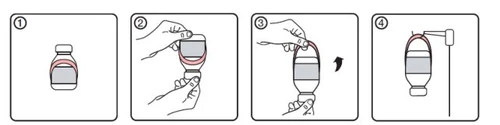
- Initial state of the vial with hanger label
- Turn the vial upside down
- Activate hanger by unfolding it from the label
- Hang the vial on the infusion stand
Special precautions
Some serious adverse reactions to the product may be due to the infusion rate.
Potential complications can often be avoided by ensuring that:
- patients are not sensitive to normal human immunoglobulin by starting the infusion slowly (infusion rate 0.46–0.92 ml/kg/h);
- patients are closely monitored for any symptoms during the infusion period. In particular, patients receiving normal human immunoglobulin for the first time, patients who have switched from another IgIV product, or those with a long interval since the previous infusion should be monitored during the first infusion and for the first hour afterward to detect possible adverse reactions. Other patients should be observed for at least 20 minutes after administration.
In all patients, IgIV administration requires:
- adequate hydration before initiating IgIV infusion;
- monitoring of diuresis;
- monitoring of serum creatinine levels;
- avoidance of concomitant use of loop diuretics.
In case of an adverse reaction, the infusion rate must be reduced or the infusion stopped.
The required treatment depends on the nature and severity of the adverse reaction.
In case of shock, follow standard medical treatment protocols.
Infusion reaction
Certain adverse reactions (e.g., headache, flushing, chills, myalgia, wheezing, tachycardia, back pain, nausea, and hypotension) may be related to the infusion rate.
The recommended infusion rate must be strictly observed.
Patients must be closely monitored and carefully observed for any symptoms during the infusion period.
Adverse reactions may be more frequent:
- in patients receiving normal human immunoglobulin for the first time, or, rarely, when switching from another normal human immunoglobulin product, or when a prolonged interval has elapsed since the previous infusion.
- in patients with untreated infection or underlying chronic inflammation.
Children and adolescents
No specific measures or monitoring are required for the pediatric population.
No differences are expected in the pediatric population (0 to 18 years).
Thromboembolism
Clinical evidence associates IgIV administration with thromboembolic events such as myocardial infarction, stroke (including ischemic stroke), pulmonary embolism, and deep vein thrombosis, which are presumed to be related to increased relative blood viscosity due to the high immunoglobulin load in at-risk patients. Caution should be exercised when prescribing and administering IgIV in obese patients and in patients with pre-existing risk factors for thrombotic events (such as advanced age, hypertension, diabetes mellitus, history of vascular disease or thrombotic events, congenital or acquired thrombophilia, prolonged immobilization, severe hypovolemia, and conditions increasing blood viscosity).
In patients at risk of thromboembolic adverse reactions, IgIV products should be administered at the lowest feasible infusion rate and dose.
Acute renal failure
Cases of acute renal failure have been reported in patients receiving IgIV treatment. In most cases, risk factors such as pre-existing renal insufficiency, diabetes mellitus, hypovolemia, obesity, concomitant use of nephrotoxic drugs, or age over 65 years have been identified.
Renal parameters should be assessed before IgIV administration, especially in patients at potentially high risk of acute renal failure, and at appropriate intervals thereafter. In patients at risk of acute renal failure, IgIV products should be administered at the lowest feasible infusion rate and dose.
In case of renal failure, discontinuation of IgIV treatment should be considered.
While cases of renal dysfunction and acute renal failure have been associated with the use of many authorized IgIV products containing various excipients such as sucrose, glucose, and maltose, a higher incidence has been observed in products containing sucrose as a stabilizer. In at-risk patients, IgIV products not containing such excipients should be considered.
Aseptic Meningitis Syndrome (AMS)
Aseptic meningitis syndrome has been reported in association with IgIV treatment.
The syndrome typically occurs from several hours to 2 days after IgIV administration. Cerebrospinal fluid (CSF) studies usually show pleocytosis with several thousand cells/mm³, predominantly granulocytic, and elevated protein levels of several hundred mg/dL.
AMS usually occurs more frequently with high-dose IgIV treatment (2 g/kg).
Patients presenting these signs and symptoms should undergo a thorough neurological evaluation, including CSF studies, to rule out other causes of meningitis.
Discontinuation of IgIV treatment has led to resolution of AMS within several days without sequelae.
Hemolytic anemia
IgIV products may contain blood group antibodies that can act as hemolysins and induce in vivo coating of red blood cells with immunoglobulin, resulting in a positive direct antiglobulin reaction (Coombs test) and, rarely, hemolysis. Hemolytic anemia may develop as a consequence of IgIV treatment due to increased red blood cell uptake. Clinical signs and symptoms of hemolysis should be monitored in patients receiving IgIV.
Neutropenia/Leukopenia
A transient decrease in neutrophil count and/or episodes of neutropenia, sometimes severe, have been reported after IgIV treatment. This typically occurs within hours or days after IgIV administration and resolves spontaneously within 7 to 14 days.
Transfusion-Related Acute Lung Injury (TRALI)
Acute non-cardiogenic pulmonary edema [Transfusion-Related Acute Lung Injury (TRALI)] has occasionally been reported in patients receiving IgIV. TRALI is characterized by severe hypoxia, dyspnea, tachypnea, cyanosis, fever, and hypotension. TRALI symptoms usually develop during or within 6 hours after infusion, typically within 1–2 hours. Therefore, recipients of IgIV should be monitored, and IgIV administration must be immediately stopped in case of pulmonary adverse reactions. TRALI is a potentially life-threatening condition requiring immediate treatment in an intensive care unit.
This medicine contains 100 mg of maltose per ml as an excipient. Maltose interference in blood glucose analysis may result in falsely elevated glucose readings and, consequently, inappropriate insulin administration, leading to life-threatening hypoglycemia that may result in death. Additionally, actual hypoglycemic episodes may remain untreated if masked by falsely elevated glucose values. For further details, see section "Blood glucose analysis."
Recommended dose
Replacement therapy should be initiated and monitored under the supervision of a physician experienced in the treatment of immunodeficiencies.
Dosage
The dose and dosing regimen depend on the indication. Dose individualization may be necessary for each patient based on clinical response.
Body weight-based dosing may require adjustment in patients with low or high body weight.
The following dosing regimens may be used as a general guide.
Replacement therapy in primary immunodeficiency syndromes
The dosing regimen should achieve a minimum IgG concentration (measured just before the next infusion) of at least 6 g/L or within the normal reference range for the patient's age group. Three to six months are required from treatment initiation to reach equilibrium (steady-state IgG levels). The recommended initial dose is 0.4–0.8 g/kg as a single infusion, followed by at least 0.2 g/kg every three or four weeks. The dose required to achieve a minimum IgG concentration of 6 g/L is approximately 0.2–0.8 g/kg/month. The dosing interval at steady state ranges from 3 to 4 weeks.
Minimum IgG concentrations should be measured and evaluated together with infection frequency. To reduce the rate of bacterial infections, it may be necessary to increase the dose to achieve higher minimum concentrations.
Secondary immunodeficiencies
The recommended dose is 0.2–0.4 g/kg every three or four weeks.
Minimum IgG concentrations should be measured and evaluated together with infection frequency. The dose should be adjusted as needed to achieve optimal protection against infections; dose increases may be necessary in patients with persistent infection; dose reduction may be considered when the patient remains infection-free.
Primary immune thrombocytopenia
Two alternative treatment regimens are available:
- 0.8–1 g/kg on the first day; this dose may be repeated once within the following 3 days;
- 0.4 g/kg administered daily for two to five days.
Treatment may be repeated in case of relapse.
Guillain-Barré syndrome
0.4 g/kg/day for 5 days (possible repeat dosing in case of relapse).
Kawasaki disease
A single dose of 2.0 g/kg should be administered. Patients should receive concomitant treatment with acetylsalicylic acid.
Chronic inflammatory demyelinating polyneuropathy (CIDP)
Initial dose: 2 g/kg over 2–5 consecutive days.
Maintenance dose:
1 g/kg over 1–2 consecutive days every 3 weeks.
The treatment effect should be evaluated after each cycle. If no treatment effect is observed after 6 months, treatment should be discontinued.
If treatment is effective, long-term therapy will be at the physician’s discretion based on patient response and maintenance response. Dosing and intervals may need to be adapted according to the individual course of the disease.
Multifocal motor neuropathy (MMN)
Initial dose: 2 g/kg administered over 2–5 consecutive days.
Maintenance dose: 1 g/kg every 2–4 weeks or 2 g/kg every 4–8 weeks.
The treatment effect should be evaluated after each cycle. If no treatment effect is observed after 6 months, treatment should be discontinued.
If treatment is effective, long-term therapy will be at the physician’s discretion based on patient response and maintenance response. Dosing and intervals may need to be adapted according to the individual course of the disease.
The recommended doses are summarized in the following table:
Indication | Dosage | Frequency of injections |
Replacement therapy: | ||
Primary immunodeficiency syndromes | Initial dose: | every 3 – 4 weeks |
Secondary immunodeficiencies | 0.2 – 0.4 g/kg | every 3 – 4 weeks |
Immunomodulation: | ||
Primary immune thrombocytopenia | 0.8 – 1 g/kg | Day 1, with possibility of repeating once within 3 days |
Guillain-Barré syndrome | 0.4 g/kg/day | for 5 days |
Kawasaki disease | 2 g/kg | as a single dose, in combination with acetylsalicylic acid |
Chronic inflammatory demyelinating polyneuropathy (CIDP) | Initial dose: | divided over 2–5 days |
Multifocal motor neuropathy (MMN) | Initial dose: | for 2–5 consecutive days |
Pediatric population
The dosage in children and adolescents (0 to 18 years of age) is not different from that in adults, since the dosage for each indication is calculated according to body weight and adjusted based on the clinical outcomes of the aforementioned diseases.
Hepatic impairment
There are no data available that necessitate a dose adjustment.
Renal impairment
Dose adjustment is not required unless clinically justified.
Elderly patients
Dose adjustment is not required unless clinically justified.
PID
Due to the rarity of this disease and, consequently, the low total number of patients, experience with intravenous immunoglobulins in children with PID is limited; therefore, only data from the literature are available. However, published data consistently show that treatment with IVIg is equally effective in adults and children, as is the case for the already established indications for IVIg.