Ibufarmalid 200 mg oral suspension
Spain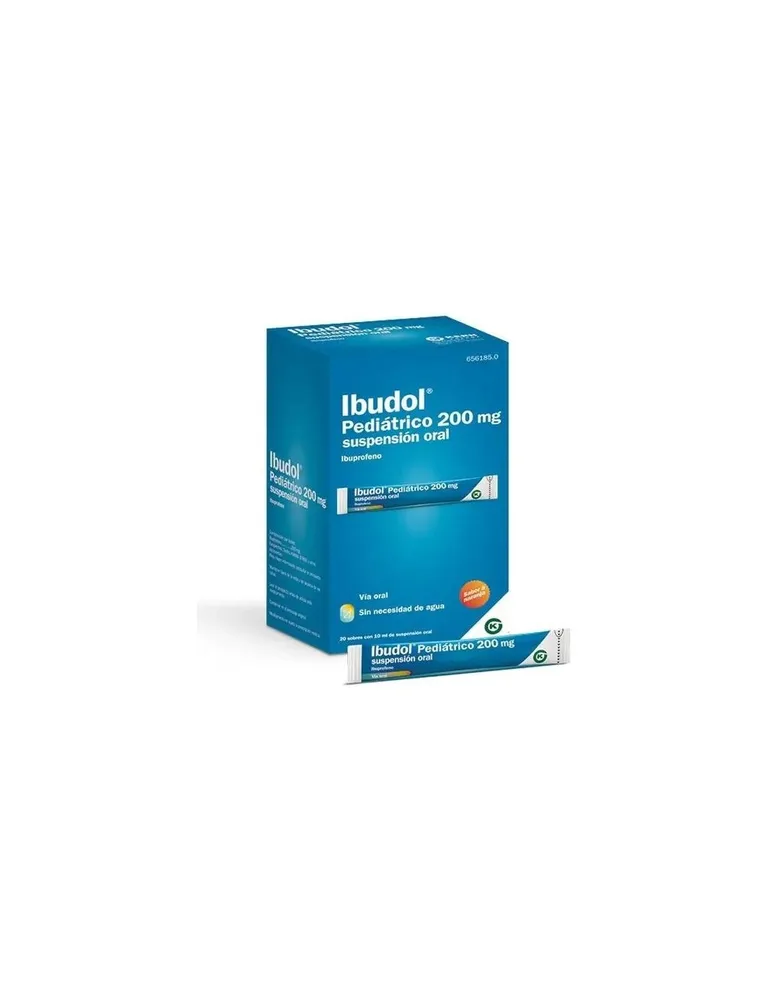
Table of Contents
- Patient Information Leaflet
- Introduction
- 1. What Ibufarmalid 200 mg oral suspension is and what it is used for
- 2. What you need to know before taking Ibufarmalid 200 mg oral suspension
- 3. How to take Ibufarmalid 200 mg oral suspension
- 4. Possible adverse effects
- 5. Storage of Ibufarmalid 200 mg oral suspension
- 6. Additional information
Patient Information Leaflet
Introduction
Patient Information Leaflet
Ibufarmalid 200 mg oral suspension
Ibuprofen
Read the entire leaflet carefully before you start taking this medicine.
- Keep this leaflet as you may need to read it again.
- If you have any questions, ask your doctor or pharmacist.
- This medicine has been prescribed for you; do not give it to others, even if they have the same symptoms as you, because it may harm them.
- If you consider any of the side effects you experience to be severe, or if you notice any side effects not listed in this leaflet, inform your doctor or pharmacist (see section 4).
Leaflet Contents
- What Ibufarmalid 200 mg oral suspension is and what it is used for
- What you need to know before taking Ibufarmalid 200 mg oral suspension
- How to take Ibufarmalid 200 mg oral suspension
- Possible side effects
- How to store Ibufarmalid 200 mg oral suspension
- Contents of the pack and other information
1. What Ibufarmalid 200 mg oral suspension is and what it is used for
Ibuprofen belongs to a group of medicines called non-steroidal anti-inflammatory drugs (NSAIDs).
This medicine is indicated for the treatment of fever, and for the treatment of mild to moderate pain. It is also indicated for the symptomatic relief of pain, fever, and inflammation associated with conditions such as pharyngitis (inflammation of the upper part of the throat), tonsillitis (inflammation of the tonsils), and otitis (inflammation of certain structures of the middle ear), among others. It is also indicated for the treatment of juvenile rheumatoid arthritis and primary dysmenorrhea (painful menstruation).
2. What you need to know before taking Ibufarmalid 200 mg oral suspension
It is important that you use the lowest dose that relieves/controls your pain and that you do not take this medicine, Ibufarmalid 200 mg oral suspension, for longer than necessary to control your symptoms.
Do not take Ibufarmalid 200 mg if:
-
You are allergic (hypersensitive) to ibuprofen, to other medicines in the group of non-steroidal anti-inflammatory drugs (NSAIDs), or to any of the excipients of this medicine.
Such reactions could include: itchy skin rash, swelling of the face, lips or tongue, runny nose, breathing difficulties, or asthma. -
You have previously experienced a stomach or duodenal bleed or perforation of the gastrointestinal tract while taking a non-steroidal anti-inflammatory drug.
-
You currently have or have had more than once: a stomach or duodenal ulcer or gastrointestinal bleeding.
-
You suffer from severe liver or kidney disease.
-
You have severe heart failure.
-
You have bleeding disorders or blood coagulation problems, or you are taking anticoagulants (medicines used to "thin" the blood).
-
You are in the third trimester of pregnancy.
Warnings and precautions:
-
You have had or develop a stomach or duodenal ulcer, bleeding, or perforation, which may present as severe or persistent abdominal pain and/or black stools, even without prior warning symptoms.
-
The risk is higher when high doses are used, with prolonged treatment, in patients with a history of peptic ulcer, and in elderly patients. In such cases, your doctor may consider prescribing a stomach-protective medicine.
-
Allergic reactions to ibuprofen have been reported, including respiratory problems, facial and neck swelling (angioedema), and chest pain. Immediately stop using Ibufarmalid 200 mg oral suspension and contact your doctor or emergency medical services immediately if you experience any of these symptoms.
Tell your doctor:
-
If you are taking medicines that affect blood coagulation, such as oral anticoagulants or antiplatelet agents like acetylsalicylic acid. You should also mention the use of other medicines that may increase the risk of bleeding, such as corticosteroids and selective serotonin reuptake inhibitor (SSRI) antidepressants.
-
If you have Crohn’s disease or ulcerative colitis, as medicines like Ibufarmalid 200 mg oral suspension may worsen these conditions.
-
If you have previously suffered from kidney or liver disease.
-
If you experience edema (fluid retention).
-
If you have heart failure or high blood pressure.
-
If you suffer from asthma or any other respiratory disorder.
-
If you are being treated for an infection, as Ibufarmalid 200 mg may mask fever, an important sign of infection.
-
If you have heart, kidney, or liver disease, are over 60 years old, or need to take the medicine for a prolonged period (more than 1–2 weeks), your doctor may need to perform regular monitoring. Your doctor will advise you on how often these checks should occur.
-
If you have an infection; see the section “Infections” below.
Infections
Ibufarmalid 200 mg oral suspension may mask signs of infection, such as fever and pain. Therefore, treatment with Ibufarmalid 200 mg oral suspension may delay appropriate treatment of the infection, increasing the risk of complications. This has been observed in bacterial pneumonia and bacterial skin infections associated with chickenpox. If you take this medicine while having an infection and infection symptoms persist or worsen, consult a doctor immediately.
Cardiovascular precautions
Non-steroidal anti-inflammatory/analgesic medicines such as ibuprofen may be associated with a small increased risk of heart attack or stroke, especially when used at high doses. Do not exceed the recommended dose or duration of treatment.
Discuss your treatment with your doctor or pharmacist before taking Ibufarmalid 200 mg if:
- You have heart problems, including heart failure, angina (chest pain), a previous heart attack, coronary bypass surgery, peripheral arterial disease (circulation problems in legs or feet due to narrowed or blocked arteries), or any type of stroke (including a "mini-stroke" or transient ischemic attack "TIA").
- You have high blood pressure, diabetes, high cholesterol, a family history of heart disease or stroke, or if you are a smoker.
These types of medicines may also cause fluid retention, particularly in patients with heart failure and/or high blood pressure (hypertension).
Skin reactions
Serious skin reactions have been reported with treatment using Ibufarmalid 200 mg oral suspension. Stop taking Ibufarmalid 200 mg oral suspension and contact your doctor immediately if you develop any skin rash, mucosal lesions, blisters, or other signs of allergy, as these may be early signs of a severe skin reaction. See section 4.
Pregnancy and fertility precautions
Because administration of medicines like Ibufarmalid 200 mg oral suspension has been associated with an increased risk of congenital malformations or miscarriage, their use is not recommended during the first and second trimesters of pregnancy unless strictly necessary. In such cases, the dose and duration should be limited to the minimum possible.
Administration of Ibufarmalid 200 mg oral suspension is contraindicated during the third trimester of pregnancy.
For women of childbearing age, it should be noted that medicines like Ibufarmalid 200 mg oral suspension have been associated with reduced fertility.
Taking Ibufarmalid 200 mg with food and drinks:
You may take Ibufarmalid 200 mg directly from the sachet or dissolved in water. You may take it with or without food. In general, it is recommended to take it before meals to reduce the possibility of stomach discomfort.
Pregnancy, breastfeeding, and fertility
Pregnancy:
Consult your doctor or pharmacist before using any medicine.
You should not take ibuprofen during the last 3 months of pregnancy, as it may harm the fetus or cause problems during delivery. It may cause kidney and heart problems in your unborn baby. It may affect your and your baby’s ability to bleed and may delay or prolong labor. You should not take this medicine during the first 6 months of pregnancy unless clearly necessary and as directed by your doctor. If treatment is needed during this period or while trying to become pregnant, you should take the lowest effective dose for the shortest possible time. From week 20 of pregnancy, ibuprofen may cause kidney problems in the fetus if taken for more than a few days, leading to low levels of amniotic fluid surrounding the baby (oligohydramnios) or narrowing of a blood vessel (ductus arteriosus) in the baby’s heart. If treatment for more than a few days is required, your doctor may recommend additional monitoring.
Breastfeeding:
Although levels of the medicine in breast milk are negligible, it is recommended to consult your doctor during long-term treatment or when using high doses while breastfeeding.
Use in children:
Do not administer to children under 6 months of age without consulting a doctor.
Driving and using machines:
If you experience dizziness, vertigo, visual disturbances, or other symptoms while taking this medicine, you should not drive or operate machinery. If you take only a single dose of ibuprofen or use it for a short period, special precautions are generally not required.
Use of Ibufarmalid with other medicines:
Inform your doctor or pharmacist if you are currently using, or have recently used, any other medicines, including those obtained without a prescription, as it may be necessary to interrupt treatment or adjust the dose of one or more medicines.
Ibufarmalid may affect or be affected by other medicines. For example:
- Anticoagulant medicines (e.g., used to treat or prevent blood clotting, such as acetylsalicylic acid, warfarin, ticlopidine)
- Medicines that lower high blood pressure (ACE inhibitors such as captopril, beta-blockers such as atenolol, angiotensin-II receptor antagonists such as losartan)
Ibuprofen should not be taken together with:
- Other non-steroidal anti-inflammatory drugs (NSAIDs): as this may increase the risk of adverse effects.
- Lithium (a medicine used to treat depression): as this may increase blood levels of lithium and the risk of adverse effects. If you must take both lithium and ibuprofen, your doctor may need to adjust your lithium dose.
- Methotrexate: taking methotrexate and ibuprofen simultaneously (within 24 hours) may increase blood levels of methotrexate and the risk of toxicity. Your doctor may advise against taking ibuprofen if you are receiving high-dose methotrexate treatment.
- Hydantoins such as phenytoin (used to treat epilepsy)
- Sulphonamides: as they may increase their toxic effects.
Other medicines may also interact with or be affected by Ibufarmalid treatment. Therefore, always consult your doctor or pharmacist before using Ibufarmalid with other medicines.
- Corticosteroids such as cortisone and prednisolone, diuretics, fluconazole, pentoxifylline, probenecid, quinolones (such as norfloxacin), sulfinpyrazone, sulfonylureas (such as tolbutamide), tacrolimus, cyclosporine, zidovudine – as these may increase the risk of gastrointestinal ulcer or bleeding.
- Selective serotonin reuptake inhibitor (SSRI) antidepressants may also increase the risk of gastrointestinal bleeding.
Information about some of the components of Ibufarmalid 200 mg
Due to the presence of azorubine as an excipient, it may cause allergic-type reactions, including asthma, particularly in patients allergic to acetylsalicylic acid.
Each sachet contains 36 mg of sodium, which should be taken into account in patients on low-sodium diets.
3. How to take Ibufarmalid 200 mg oral suspension
Follow these instructions unless your doctor has given you different ones.
This medicine is taken orally.
The lowest effective dose should be used for the shortest duration necessary to relieve symptoms. If you have an infection, consult a doctor immediately if symptoms (such as fever and pain) persist or worsen (see section 2).
Children:
The dose of ibuprofen to be administered depends on the child's age and weight. As a general rule, the recommended daily dose is 20 to 30 mg/kg body weight, divided into three or four individual doses.
However, the following dosage guidelines are recommended:
- Children weighing less than 25 kg: The recommended daily dose is 150–600 mg of ibuprofen, divided into 3 or 4 doses, with the maximum recommended daily dose being 800 mg.
- Children weighing 25 to 40 kg: The recommended daily dose is 600–800 mg of ibuprofen, divided into 3 or 4 doses (1 sachet 3 or 4 times daily), with the maximum recommended daily dose being 1200 mg.
- Children weighing over 40 kg: The recommended daily dose is 1,200–1,600 mg of ibuprofen, divided into 3 or 4 doses (2 sachets 3 or 4 times daily), with the maximum recommended daily dose being 1,600 mg.
For the treatment of juvenile rheumatoid arthritis, higher doses may be required, although it is recommended not to exceed 40 mg/kg/day of ibuprofen.
The interval between doses will depend on the progression of symptoms, but must never be less than 4 hours. Ibuprofen is not recommended for children under six months of age.
Adults:
The recommended daily dose is 1,200–1,800 mg of ibuprofen, divided into 3 or 4 doses (2 or 3 sachets 3 or 4 times daily), with the maximum recommended daily dose being 2,400 mg.
Elderly:
The pharmacokinetics of ibuprofen are not altered in elderly patients; therefore, dose adjustment or changes in dosing frequency are not considered necessary. However, caution should be exercised in these patients, as they are generally more susceptible to adverse effects and more likely to have impaired renal, cardiovascular, or hepatic function and to be receiving concomitant medications.
In cases of renal, hepatic, or cardiac insufficiency, the dose should be reduced (see Warnings section).
Always take the lowest effective dose. The duration of treatment will be determined by your doctor; do not stop treatment prematurely.
This product is a suspension. It should be homogenized before use by pressing several times with your fingers on the upper and lower parts of the sachet. It can be taken directly from the sachet or diluted in water.
For accurate dosing, the packaging contains a double-ended spoon with measuring marks of 1.25 ml, 2.5 ml, and 5 ml.
If gastrointestinal discomfort occurs, it is recommended to take the medicine with food.
Remember to take your medicine as prescribed. If you feel that the effect of Ibufarmalid 200 mg oral suspension is too strong or too weak, inform your doctor or pharmacist.
If you take more Ibufarmalid 200 mg than you should:
If you have taken more Ibufarmalid 200 mg than prescribed, or if a child has accidentally ingested the medicine, contact a doctor or the Toxicology Information Service immediately at telephone number: 91 562 04 20, stating the medicine and the amount ingested, or go to the nearest hospital to assess the risk and obtain advice on necessary measures. It is recommended to bring the medicine's packaging and leaflet to the healthcare professional.
Symptoms of overdose may include nausea, stomach pain, vomiting (which may contain blood-stained sputum), headache, tinnitus, confusion, and involuntary eye movements. At high doses, symptoms such as drowsiness, chest pain, palpitations, loss of consciousness, seizures (mainly in children), weakness, dizziness, blood in urine, low blood potassium levels, chills, and breathing difficulties have been reported.
The most frequent symptoms in case of overdose are: nausea, vomiting, abdominal pain, headache, dizziness, drowsiness, involuntary eye movements, blurred vision, tinnitus, sometimes low blood pressure, and fainting.
If you forget to take Ibufarmalid 200 mg:
Do not take a double dose to make up for missed doses.
If you forget to take your scheduled dose, take it as soon as you remember. However, if it is almost time for your next dose, skip the missed dose and take the next one at your usual time.
4. Possible adverse effects
Like all medicines, Ibufarmalid 200 mg may have adverse effects.
Chest pain, which may be a sign of a potentially serious allergic reaction called Kounis syndrome.
The following adverse effects have been observed:
Gastrointestinal:
The most frequent adverse effects occurring with medicines such as Ibufarmalid 200 mg oral suspension are gastrointestinal: peptic ulcers, gastrointestinal bleeding, perforations (in some cases fatal), especially in the elderly. Nausea, vomiting, diarrhoea, flatulence, constipation, heartburn, abdominal pain, blood in stools, mouth ulcers, worsening of ulcerative colitis and Crohn's disease have also been observed. Less frequently, gastritis has been reported.
Frequent: nausea, vomiting, abdominal pain, heartburn, flatulence and constipation.
Uncommon: gastrointestinal bleeding, stomach or duodenal ulcers.
Rare: gastric or intestinal perforation, inflammation of the oesophagus, and ulceration or inflammation of the intestine.
Skin and allergic reactions:
Frequent: skin rash.
Uncommon: skin redness, itching or swelling of the skin, swelling of the lips, face or tongue, increased nasal discharge and breathing difficulties.
Rare: severe allergic reactions (anaphylactic shock).
Very rare: sudden onset of intense itching or blisters on the skin, joint pain and fever (systemic lupus erythematosus), hair loss, photosensitivity skin reactions, aseptic meningitis (inflammation of the membranes covering the brain and spinal cord), mostly in patients with autoimmune diseases such as systemic lupus erythematosus.
Severe allergic reaction that may present with nausea, vomiting, swelling of the face, tongue and throat, breathing difficulties, asthma, palpitations, hypotension or shock.
Medicines such as Ibufarmalid 200 mg oral suspension may, very rarely, be associated with serious blistering reactions such as Stevens-Johnson syndrome, toxic epidermal necrolysis and allergic vasculitis.
Frequency not known: A severe skin reaction known as DRESS syndrome may occur. Symptoms of DRESS syndrome include: skin rash, swollen lymph nodes and elevated eosinophils (a type of white blood cells). Also, generalized red scaly rash with bumps under the skin and blisters mainly located in skin folds, trunk and upper limbs, accompanied by fever at the beginning of treatment (acute generalized exanthematous pustulosis). Stop taking Ibufarmalid 200 mg oral suspension if you experience these symptoms and seek immediate medical attention. See also section 2. The skin becomes sensitive to light.
Central nervous system:
Frequent: headache, dizziness, nervousness.
Uncommon: fatigue or drowsiness, insomnia, anxiety, visual disturbances, tinnitus (ringing or buzzing in the ears).
Rare: disorientation or confusion, depression, abnormal or blurred vision, and hearing difficulties.
Very rare: aseptic meningitis.
Blood:
Very rare: prolonged bleeding time, blood cell disorders (early symptoms may include: fever, sore throat, mouth ulcers, flu-like symptoms, excessive tiredness, nosebleeds and skin bleeding).
Cardiovascular:
Medicines such as Ibufarmalid 200 mg oral suspension may be associated with a moderately increased risk of heart attack ("myocardial infarction") or stroke.
Oedema (fluid retention), hypertension and heart failure have also been observed in association with treatment using medicines of the Ibufarmalid 200 mg oral suspension type.
Kidney:
Kidney disease.
Liver:
Rare: hepatitis (liver inflammation) and jaundice (yellowing of the skin). Medicines such as Ibufarmalid 200 mg oral suspension may, on rare occasions, be associated with liver injury.
Reporting of adverse effects
If you experience any type of adverse effect, talk to your doctor, pharmacist or nurse, even if it is a possible adverse effect not listed in this leaflet. You can also report them directly via the Spanish Pharmacovigilance System for Human Medicines: https://www.notificaram.es. By reporting adverse effects, you can help provide more information on the safety of this medicine.
5. Storage of Ibufarmalid 200 mg oral suspension
Keep Ibufarmalid 200 mg out of the reach and sight of children.
Store in the original packaging.
Expiry date:
Do not use Ibufarmalid 200 mg after the expiry date stated on the packaging.
The expiry date refers to the last day of the month indicated.
Medicines should not be disposed of via wastewater or household waste. Dispose of unused medicines and their packaging at the SIGRE collection point in your pharmacy. If in doubt, ask your pharmacist how to properly dispose of unused medicines and packaging. This will help protect the environment.
6. Additional information
Composition
The active substance is Ibuprofen. Each sachet contains 200 mg of ibuprofen.
The other components (excipients) are: Sodium benzoate (E-211), anhydrous citric acid, sodium citrate, sodium saccharin, sodium chloride, hypromellose, xanthan gum, liquid maltitol, strawberry flavor, azorubine (E-122), glycerol and purified water.
Appearance of the medicine and contents of the pack
Ibufarmalid 200 mg is presented as an oral suspension to be taken directly from the sachet or diluted in water. Each pack contains 20 sachets.
Marketing Authorization Holder
Laboratorios Farmalider, S.A.
C/Aragoneses, nº 15
28108 Alcobendas (Madrid)
Spain
Manufacturer
Industrial Farmacéutica Cantabria, S.A.
Carretera Cazoña/Adarzo s/n
39011 Santander
Spain
This leaflet was approved in October 2024
Detailed and up-to-date information on this medicine is available on the website of the Spanish Agency of Medicines and Health Products (AEMPS) http://www.aemps.gob.es/