Ibis 6 mg/ml eye drops solution
Spain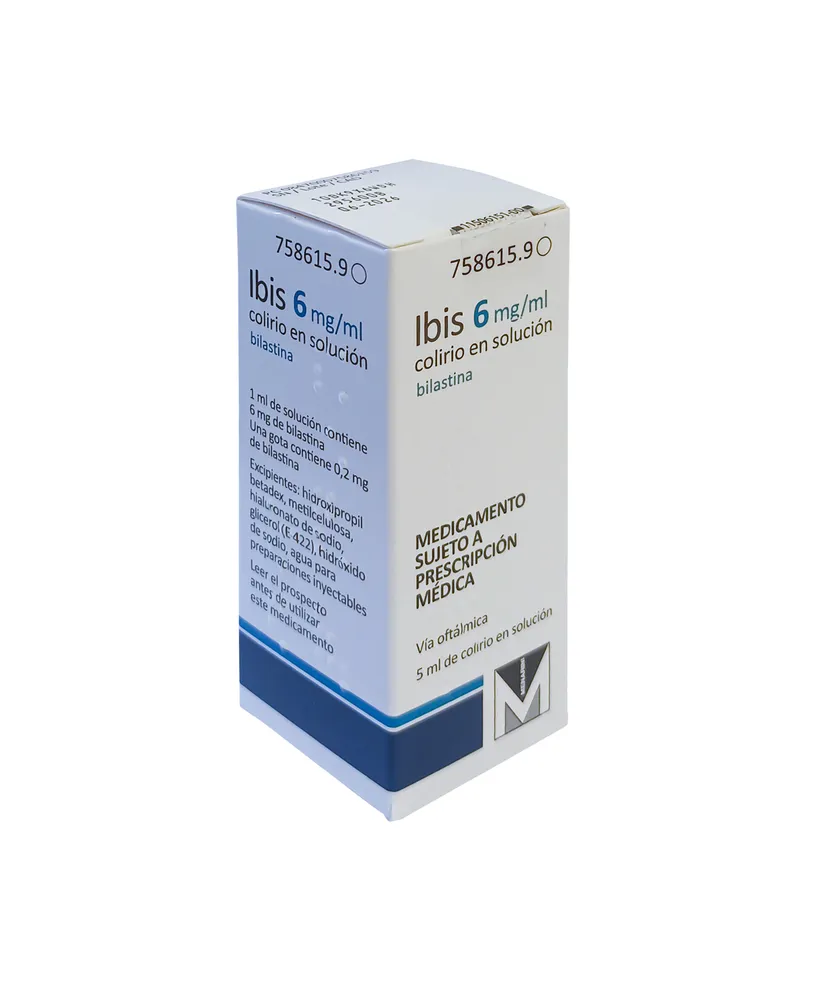
Table of Contents
Package leaflet: Information for the user
Introduction
Package leaflet: information for the patient
Ibis 6 mg/ml eye drops, solution
bilastina
Read all of this leaflet carefully before you start using this medicine because it contains important information for you.
- Keep this leaflet. You may need to read it again.
- If you have any questions, ask your doctor or pharmacist.
- This medicine has been prescribed for you only. Do not pass it on to others. It may harm them even if their symptoms are the same as yours.
- If you experience any side effects, talk to your doctor or pharmacist, even if it is a side effect not listed in this leaflet. See section 4.
Contents of the leaflet
- What Ibis is and what it is used for
- What you need to know before using Ibis
- How to use Ibis
- Possible side effects
- How to store Ibis
- Contents of the pack and other information
1. What Ibis is and what it is used for
This medicine contains bilastine, which belongs to a group of medicines called antihistamines. Antihistamines work by preventing the effects of a substance called histamine, which the body produces as part of an allergic reaction.
This medicine is used to treat signs and symptoms of ocular disorders associated with seasonal allergic conjunctivitis in adults and children from 2 years of age.
This medicine is also used to treat signs and symptoms of ocular disorders caused by allergies to substances such as house dust mites or animal hair (perennial allergic conjunctivitis) in adults and children from 2 years of age.
2. What you need to know before using Ibis
Do not use Ibis
- if you are allergic to bilastine or any of the other ingredients of this medicine (listed in section 6).
Warnings and precautions
Consult your doctor or pharmacist before starting to use Ibis if you experience adverse effects during treatment, such as eye irritation, pain, redness, or changes in vision, or if your condition worsens. It may be necessary to discontinue treatment.
After administering Ibis anti-allergic eye drops into the conjunctival sac of the eye, visual acuity may decrease for a few minutes due to the formation of spots.
In case of inflammation, including allergic conjunctivitis, consult your ophthalmologist about whether you can wear contact lenses despite symptoms.
Children and adolescents
This medicine is indicated for use in adults and children aged 2 years and older.
Do not administer this medicine to children under 2 years of age, as efficacy and safety have not been studied in these groups.
Other medicines and Ibis
Inform your doctor or pharmacist if you are taking, have recently taken, or might need to take any other medicines.
If you are using other eye medications, leave at least 5 minutes between each medication.
Ophthalmic ointments should be administered last.
Pregnancy, breastfeeding and fertility
Ibis may be used during pregnancy and breastfeeding. If you are pregnant or breastfeeding, think you may be pregnant, or are planning to become pregnant, consult your doctor or pharmacist before using this medicine.
Driving and using machines
After instillation of this medicine, temporary blurred vision or other visual disturbances may occur, which may affect your ability to drive or operate machinery. Wait until your vision is clear before driving or operating machinery.
Contact lenses
The use of this medicine does not affect the properties of contact lenses. You may continue wearing contact lenses during treatment with this medicine.
However, you must remove your contact lenses before applying the eye drops and wait at least 15 minutes after administration before reinserting them.
3. How to use Ibis
Follow exactly the instructions for administration of this medicine given by your doctor or pharmacist. If in doubt, consult your doctor or pharmacist again.
The recommended dose for adults and children from 2 years of age is one drop in each affected eye once daily.
This medicine may be used for up to a maximum of 8 weeks. Your doctor will decide and advise you on how long you should use it, depending on your condition.
For ocular use only.
Method of administration
- Always wash your hands and dry them with a clean towel before administering this medicine.
- Gently clean the eyelids by wiping the closed eyelid from the inner to the outer part using a cotton pad moistened with warm water, if there is any discharge.
- Open the bottle and avoid contact between the dropper tip and your eye or any other surface: the drops and dropper must remain clean.
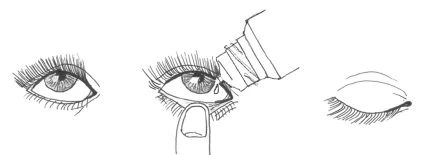
- Tilt your head backwards, or lie down, and look upwards (Figure 1). Using your finger, gently pull down the lower eyelid (Figure 2).
- Look upwards and squeeze the bottle so that one drop falls into the eye.
- Release the lower eyelid and keep the eye closed for a while to spread the drop over the eye surface (Figure 3).
- Repeat the above steps in the other eye if necessary.

To avoid contamination during use of this medicine, do not touch any surface (eyelids, areas around the eye, or other surfaces) with the dropper tip, and dry the dropper tip after use with a clean paper tissue to remove any residual liquid.
If you use more Ibis than you should
You may rinse your eye with warm water. If in doubt, consult your doctor. In case of overdose or accidental ingestion, contact the Toxicology Information Service at Tel.: 91 562 04 20.
If you forget to use Ibis
Do not use a double dose to make up for missed doses.
If you forget to apply the drop on time, apply the missed dose as soon as possible, then continue with your usual dosing schedule.
If you stop using Ibis
Treatment with this medicine should, if possible, be continued regularly until symptoms have resolved. If you stop using Ibis while still exposed to allergens, typical allergy symptoms may return.
If you have any further questions about the use of this medicine, consult your doctor or pharmacist.
4. Possible adverse effects
Like all medicines, this medicine may produce adverse effects, although not everyone will experience them.
The following adverse effects have been reported.
Uncommon adverse effects (may affect up to 1 in 100 people):
Taste disturbance (dysgeusia), headache.
Dry eye, eye discharge, eye irritation, increased tear production, eye discomfort.
If any of the adverse effects listed above occur, stop using this medicine and consult your doctor immediately. The adverse effects mentioned are usually mild and resolve quickly in all cases. Therefore, no specific measures are required.
Reporting of adverse effects
If you experience any type of adverse effect, consult your doctor or pharmacist, even if it is a possible adverse effect not listed in this leaflet. You may also report them directly through the Spanish Pharmacovigilance System for Human Medicinal Products: www.notificaRAM.es. By reporting adverse effects, you can help provide more information on the safety of this medicine.
5. Storage of Ibis
Keep this medicine out of sight and reach of children.
Do not use this medicine after the expiry date which is stated on the label or on the packaging after EXP. The expiry date refers to the last day of the month indicated.
This medicine does not require any special storage conditions.
After first opening of the bottle: do not use this medicine if the bottle has been open for more than 2 months.
Medicines should not be disposed of via wastewater or household waste. Dispose of empty containers and unused medicines at a SIGRE collection point at your pharmacy. If you are unsure, please ask your pharmacist how to properly dispose of containers and unused medicines. This will help protect the environment.
6. Contents of the pack and other information
Composition of Ibis
- The active substance is bilastine 6 mg/ml.
One drop contains 0.2 mg of bilastine.
- The other components are hydroxypropyl betadex, methylcellulose, sodium hyaluronate, glycerol (E 422), sodium hydroxide 1 N (for pH adjustment), water for injections.
Appearance of the product and contents of the container
Ibis is a clear, colourless ophthalmic solution, supplied in one 5 ml multidose LDPE white bottle containing a preservative-free solution, with a white HDPE dropper and a tamper-evident safety seal.
Pack size: 1 bottle of 5 ml.
Marketing Authorisation Holder and Manufacturer
Marketing Authorisation Holder
Menarini International Operations Luxembourg, S.A.
1, Avenue de la Gare
L-1611 Luxembourg
Local representative:
Laboratorios Menarini, S.A.
Alfons XII, 587 – 08918 Badalona (Barcelona), Spain
Manufacturer
FAMAR Health Care Services Madrid, S.A.U.
Avenida Leganés, 62
28923 Alcorcón, Madrid
Spain
This medicinal product is authorised in the Member States of the European Economic Area under the following names:
Germany: Bilaxten 6 mg/ml Augentropfen, Lösung;
Austria: Olisir 6 mg/ml Augentropfen, Lösung;
Belgium: Bellozal 6 mg/ml eye drops, solution;
Croatia: Nixar 6 mg/ml kapi za oko, otopina;
Cyprus: Bilaz 6mg/ml οφθαλμικές σταγόνες;
Slovenia: Bilador 6 mg/ml kapljice za oko, raztopina;
Spain: Ibis 6 mg/ml eye drops, solution;
Estonia: Opexa;
France: Bilaska 6 mg/ml eye drops, solution;
Greece: Bilaz;
Hungary: Lendin 6 mg/ml szemcsepp;
Ireland: Drynol 6 mg/ml eye drops, solution;
Italy: Bysabel 6 mg/ml collirio, soluzione;
Latvia: Opexa 6 mg/ml acu pilieni, šķidrums;
Lithuania: Opexa 6 mg/ml akių lašai, tirpalas;
Luxembourg: Bellozal 6 mg/ml eye drops, solution;
Malta: Gosall 6 mg/ml eye drops, solution;
Poland: Clatra;
Portugal: Lergonix 6 mg/ml eye drops, solution;
Czech Republic: Xados;
Slovakia: Omarit 6 mg/ml očná instilácia;
Romania: Borenar 6 mg/ml picături oftalmice, soluție.
Date of the most recent revision of this leaflet: June 2025
Detailed information on this medicinal product is available on the website of the Spanish Agency of Medicines and Health Products (AEMPS) (http://www.aemps.gob.es/).