Hyrimoz 80 mg solution for injection in pre-filled pen
Spain
Table of Contents
Package leaflet: Information for the user
Introduction
Package leaflet: information for the patient
Hyrimoz 80 mg solution for injection in pre-filled pen
adalimumab
Read all of this leaflet carefully before you start using this medicine, because it contains important information for you.
- Keep this leaflet, as you may need to read it again.
- Your doctor will give you a patient information card containing important safety information you need to know before and during treatment with Hyrimoz.
Keep this patient information card throughout your treatment and for 4 months after your (or your child’s) last injection of Hyrimoz.
- If you have any questions, consult your doctor or pharmacist.
- This medicine has been prescribed for you only, and you should not give it to other people, even if they have the same symptoms as you, because it may harm them.
- If you experience any adverse reactions, consult your doctor or pharmacist, even if they are adverse reactions not listed in this leaflet. See section 4.
Contents of the leaflet
- What Hyrimoz is and what it is used for
- What you need to know before using Hyrimoz
- How to use Hyrimoz
- Possible side effects
- How to store Hyrimoz
- Contents of the pack and other information
- Instructions for use
1. What Hyrimoz is and what it is used for
Hyrimoz contains the active substance adalimumab, a medicine that acts on the immune (defence) system of your body.
Hyrimoz is indicated for the treatment of the following inflammatory diseases:
- rheumatoid arthritis,
- plaque psoriasis,
- hidradenitis suppurativa,
- Crohn's disease,
- ulcerative colitis,
- non-infectious uveitis.
The active substance in Hyrimoz, adalimumab, is a monoclonal antibody. Monoclonal antibodies are proteins that target a specific site in the body.
Adalimumab targets another protein called tumour necrosis factor (TNFα), which is present at high levels in the inflammatory diseases described above. By binding to TNFα, Hyrimoz blocks its action and reduces inflammation in these diseases.
Rheumatoid arthritis
Rheumatoid arthritis is an inflammatory disease of the joints.
Hyrimoz is used to treat rheumatoid arthritis in adults. If you have moderate to severe active rheumatoid arthritis, you may have been given other disease-modifying medicines such as methotrexate first. If these medicines do not work well enough, you will be given Hyrimoz to treat your rheumatoid arthritis.
Hyrimoz may also be used in the treatment of severe, active and progressive rheumatoid arthritis without prior treatment with methotrexate.
Hyrimoz can reduce joint damage to cartilage and bone caused by the disease and improve physical function.
Hyrimoz is usually used in combination with methotrexate. If your doctor considers methotrexate to be inappropriate, Hyrimoz may be given alone.
Plaque psoriasis
Plaque psoriasis is an inflammatory skin disease that causes red, scaly, crusted areas covered with silvery scales. Plaque psoriasis can also affect the nails, causing them to deteriorate, thicken, and lift from the nail bed, which can be painful. Psoriasis is thought to be caused by a defect in the body's immune system that leads to an increased production of skin cells.
Hyrimoz is used to treat moderate to severe plaque psoriasis in adults.
Hidradenitis suppurativa in adults and adolescents
Hidradenitis suppurativa (sometimes called inverse acne) is a long-lasting and often painful inflammatory skin disease. Symptoms may include tender nodules (lumps) and abscesses (boils) that may discharge pus.
It usually affects specific areas of the skin, such as under the breasts, under the arms, inner thighs, groin, and buttocks. Scarring may also occur in the affected areas.
Hyrimoz is used to treat
- moderate to severe hidradenitis suppurativa in adults and
- moderate to severe hidradenitis suppurativa in adolescents from 12 to 17 years of age.
Hyrimoz can reduce the number of nodules and abscesses, and the pain usually associated with this disease. You may have received other medicines previously. If those medicines do not work well enough, you will receive Hyrimoz.
Crohn's disease in adults and children
Crohn's disease is an inflammatory disease of the digestive tract.
Hyrimoz is used to treat
- moderate to severe Crohn's disease in adults and
- moderate to severe Crohn's disease in children and adolescents from 6 to 17 years of age.
If you have Crohn's disease, you will first be treated with other medicines. If you do not respond sufficiently to these medicines, you will receive Hyrimoz to reduce the signs and symptoms of Crohn's disease.
Ulcerative colitis in adults and children
Ulcerative colitis is an inflammatory disease of the large intestine.
Hyrimoz is used to treat
- moderate to severe ulcerative colitis in adults and
- moderate to severe ulcerative colitis in children and adolescents from 6 to 17 years of age.
If you have ulcerative colitis, you may first be prescribed other medicines. If these medicines do not work well enough, Hyrimoz will be prescribed to reduce the signs and symptoms of the disease.
Non-infectious uveitis in adults and children
Non-infectious uveitis is an inflammatory disease affecting certain parts of the eye. The inflammation causes reduced vision and/or the presence of floaters in the eye (black spots or thin lines moving across the field of vision). Hyrimoz works by reducing this inflammation.
Hyrimoz is used to treat
- adults with non-infectious uveitis with inflammation affecting the back of the eye,
- children from 2 years of age with chronic non-infectious uveitis with inflammation affecting the front of the eye.
You may have received other medicines previously. If you do not respond sufficiently to those medicines, you will receive Hyrimoz.
2. What you need to know before your child starts using Hyrimoz
Do not use Hyrimoz
-
If your child is allergic to adalimumab or to any of the other ingredients of this medicine (listed in section 6).
-
If your child has a serious infection, including tuberculosis, sepsis (blood poisoning), or other opportunistic infections (uncommon infections associated with a weakened immune system). If your child has symptoms of any infection, such as fever, wounds, fatigue, or dental problems, it is important to inform your doctor (see “Warnings and precautions”).
-
If your child has moderate or severe heart failure. It is important to tell your doctor if your child has had or currently has any serious heart problems (see “Warnings and precautions”).
Warnings and precautions
Talk to your doctor or pharmacist before starting Hyrimoz.
Allergic reaction
- If your child experiences an allergic reaction with symptoms such as chest tightness, difficulty breathing, dizziness, swelling, or rash, stop administering Hyrimoz and contact your doctor immediately, as in rare cases these reactions may be life-threatening.
Infections
-
If your child has any infection, including chronic or localized infections (e.g., a leg ulcer), consult your doctor before starting treatment with Hyrimoz. If you are unsure, contact your doctor.
-
While being treated with Hyrimoz, your child may be more likely to get infections. This risk may be higher if your child has reduced lung function. These infections may be serious and include tuberculosis, infections caused by viruses, fungi, parasites, bacteria, or other uncommon infectious organisms, and sepsis (blood poisoning).
-
In rare cases, these infections may be life-threatening. It is important to inform your doctor if your child develops symptoms such as fever, wounds, fatigue, or dental problems. Your doctor may recommend temporarily stopping treatment with Hyrimoz.
Tuberculosis (TB)
- Cases of tuberculosis have been reported in patients treated with adalimumab. Therefore, your doctor will examine your child for signs or symptoms of tuberculosis before starting treatment with Hyrimoz. This will include a thorough medical evaluation, including medical history and diagnostic tests (e.g., chest X-ray and tuberculin skin test). The performance and results of these tests should be recorded on your patient information card. It is very important to inform your doctor if your child has ever had tuberculosis or has been in contact with someone who has tuberculosis. Tuberculosis may develop during treatment even if your child has received preventive treatment for tuberculosis. If symptoms of tuberculosis (persistent cough, weight loss, lack of energy, low-grade fever) or any other infection appear during or after treatment, contact your doctor immediately.
Travel/recurrent infection
-
Inform your doctor if your child has lived in or traveled to areas where fungal infections such as histoplasmosis, coccidioidomycosis, or blastomycosis are common.
-
Inform your doctor if your child has a history of recurrent infections or other conditions or risk factors that increase the risk of infections.
Hepatitis B virus
- Inform your doctor if your child is a carrier of the hepatitis B virus (HBV), has active HBV infection, or thinks they may be at risk of contracting HBV. Your doctor should perform a test for HBV. Adalimumab may reactivate HBV in carriers of this virus. In rare cases, especially if your child is also taking other medicines that suppress the immune system, reactivation of HBV infection may be life-threatening.
Age over 65 years
- If your child is over 65 years of age, they may be more susceptible to infections while being treated with Hyrimoz. Both you and your doctor should pay special attention to the appearance of signs of infection during treatment. It is important to inform your doctor if your child develops symptoms of infection, such as fever, wounds, fatigue, or dental problems.
Dental procedures or surgery
- If your child is scheduled for surgery or a dental procedure, inform the doctor or dentist that your child is using Hyrimoz. Your doctor may recommend temporarily stopping treatment with Hyrimoz.
Demyelinating disease
- If your child has or develops a demyelinating disease (a disease affecting the protective covering of nerves, such as multiple sclerosis), your doctor will decide whether treatment with Hyrimoz should be started or continued. Inform your doctor immediately if your child experiences symptoms such as changes in vision, weakness in arms or legs, or numbness or tingling anywhere in the body.
Vaccines
- Certain vaccines contain live but weakened forms of bacteria or viruses that cause disease and should not be given during treatment with Hyrimoz, as they may cause infections. Consult your doctor before administering any type of vaccine. It is recommended, if possible, that children receive all age-appropriate scheduled vaccines before starting treatment with Hyrimoz. If your child receives Hyrimoz while you are pregnant, your child may have an increased risk of infections for approximately 5 months after your last dose of Hyrimoz during pregnancy. It is important to inform your child’s doctor and other healthcare professionals about your use of Hyrimoz during pregnancy, so they can decide whether your child should receive any vaccines.
Heart failure
- It is important to inform your doctor if your child has had or currently has serious heart problems. If your child has mild heart failure and is being treated with Hyrimoz, your doctor should closely monitor the heart failure. If new symptoms of heart failure appear or existing symptoms worsen (e.g., difficulty breathing or swelling of the feet), contact your doctor immediately.
Fever, bruising, bleeding, or paleness
- In some patients, the body may become unable to produce enough white blood cells (which fight infections) or platelets (which help stop bleeding). If your child has persistent fever, bruising, easy bleeding, or appears very pale, consult your doctor immediately. Your doctor may decide to stop treatment.
Cancer
-
Very rarely, cases of certain types of cancer have been reported in children and adults treated with adalimumab or other TNFα-blocking agents. People with more severe rheumatoid arthritis or who have had the disease for a long time may have a higher than average risk of developing lymphoma and leukemia (cancer affecting blood cells and bone marrow). If your child is being treated with Hyrimoz, the risk of developing lymphoma, leukemia, and other types of cancer may increase. A specific and serious type of lymphoma has been observed in rare cases in patients treated with adalimumab.
-
Some of these patients were also being treated with azathioprine or mercaptopurine. Inform your doctor if your child is taking azathioprine or mercaptopurine with Hyrimoz.
-
In addition, cases of non-melanoma skin cancer have been observed in patients using adalimumab. Inform your doctor if new skin lesions appear or if existing marks or damaged areas change in appearance during or after treatment.
-
Cases of cancers other than lymphoma have occurred in patients with a specific lung disease called chronic obstructive pulmonary disease (COPD) who were treated with another TNFα blocker. If your child has COPD or is a heavy smoker, consult your doctor to determine whether treatment with a TNFα blocker is appropriate.
Autoimmune diseases
- Rarely, treatment with Hyrimoz may lead to a lupus-like syndrome. Contact your doctor if your child develops symptoms such as a persistent unexplained rash, fever, joint pain, or fatigue.
Children and adolescents
- Vaccines: if possible, your child should be up to date with all recommended vaccines before starting Hyrimoz.
Other medicines and Hyrimoz
Inform your doctor or pharmacist if your child is taking, has recently taken, or might need to take any other medicines.
Hyrimoz may be taken together with methotrexate or certain disease-modifying antirheumatic drugs (DMARDs) (sulfasalazine, hydroxychloroquine, leflunomide, and injectable gold salts), corticosteroids, or pain medications, including non-steroidal anti-inflammatory drugs (NSAIDs).
Do not use Hyrimoz together with medicines containing anakinra or abatacept due to an increased risk of serious infection. Combining adalimumab and other TNF antagonists with anakinra or abatacept is not recommended because of the possible increased risk of infections, including serious infections, and other potential drug interactions. If you have any doubts, consult your doctor.
Pregnancy and breastfeeding
- You should consider using effective contraception to avoid becoming pregnant and continue using it for at least 5 months after the last dose of Hyrimoz.
- If you are pregnant, think you may be pregnant, or plan to become pregnant, consult your doctor about using this medicine.
- Hyrimoz should only be used during pregnancy if clearly needed.
- According to a pregnancy study, there was no increased risk of congenital malformations when mothers received adalimumab during pregnancy compared to mothers with the same disease who did not receive adalimumab.
- Hyrimoz may be used during breastfeeding.
- If you use Hyrimoz while pregnant, your child may have a higher risk of infection.
- It is important to inform your child’s pediatrician and other healthcare professionals about your use of Hyrimoz during pregnancy before your child receives any vaccines (for more information on vaccines, see the section “Warnings and precautions”).
Driving and using machines
The effect of Hyrimoz on the ability to drive, ride a bicycle, or operate machinery is minimal. Dizziness and visual disturbances may occur after using Hyrimoz.
Hyrimoz contains sodium
This medicine contains less than 1 mmol (23 mg) of sodium per 0.8 mL dose; hence, it is essentially “sodium-free”.
3. How to use Hyrimoz
Follow exactly your doctor's instructions on how to administer this medicine. If in doubt, consult your doctor again.
The recommended doses of Hyrimoz for each of its approved uses are shown in the table below. Your doctor may prescribe a different dose of Hyrimoz if needed.
Rheumatoid arthritis, psoriatic arthritis, ankylosing spondylitis, or non-radiographic axial spondyloarthritis | ||
Age or body weight | What dose and how often should be taken? | Notes |
Adults | 40 mg every other week as a single dose | In the case of rheumatoid arthritis, treatment with methotrexate should be continued during the use of Hyrimoz. If your doctor determines that methotrexate is inappropriate, Hyrimoz may be administered alone. If you have rheumatoid arthritis and are not receiving methotrexate during your treatment with Hyrimoz, your doctor may decide to give you 40 mg of Hyrimoz weekly or 80 mg every other week. |
Plaque Psoriasis | ||
Age or body weight | What amount and how often should be taken? | Notes |
Adults | An initial dose of 80 mg (as one 80 mg injection), followed by 40 mg every other week starting one week after the first dose. | You must continue injecting Hyrimoz for as long as your doctor has instructed. If that dose does not work well enough, your doctor may increase the dose to 40 mg weekly or 80 mg every other week. |
Hidradenitis suppurativa | ||
Age or body weight | What amount and how often should it be taken? | Notes |
Adults | An initial dose of 160 mg (as two injections of 80 mg on one day or one injection of 80 mg per day for two consecutive days), followed by a dose of 80 mg (as one injection of 80 mg) two weeks later. After another two weeks, continue with a dose of 40 mg weekly or 80 mg every other week, as prescribed by your doctor. | It is recommended to use an antiseptic wash daily on affected areas. |
Adolescents from 12 to 17 years of age weighing 30 kg or more | An initial dose of 80 mg (as one injection of 80 mg), followed by 40 mg every other week starting one week later. | If this dose is not effective sufficiently, your doctor may increase the dose to 40 mg weekly or 80 mg every other week. It is recommended to use an antiseptic wash daily on affected areas. |
Crohn's Disease | ||
Age or body weight | What amount and how often should it be taken? | Notes |
Children, adolescents, and adults | An initial dose of 80 mg | If this dose is not effective enough, |
Pediatric Crohn's Disease | ||
Age or body weight | What dose and how often should it be taken? | Notes |
Children and adolescents from 6 to 17 years of age with a body weight less than 40 kg | An initial dose of 40 mg followed by 20 mg every other week starting two weeks later. If a more rapid response is required, your doctor may prescribe an initial dose of 80 mg (as 80 mg injections on one day) followed by 40 mg two weeks later. Thereafter, the usual dose is 20 mg every other week. | If this dose does not work well enough, your child's doctor may increase the dosing frequency to 20 mg weekly. |
Ulcerative colitis | ||
Age or body weight | What dose and how often should it be taken? | Notes |
Adults | An initial dose of 160 mg (as two injections of 80 mg in one day or one injection of 80 mg per day for two consecutive days), followed by 80 mg (as one injection of 80 mg) two weeks later. After that, the usual dose is 40 mg every other week. | If this dose is not effective sufficiently, your doctor may increase the dose to 40 mg weekly or 80 mg every other week. |
Pediatric Ulcerative Colitis | ||
Age and body weight | What dose and how often should be taken? | Notes |
Children and adolescents aged 6 years and older weighing 40 kg or more | An initial dose of 160 mg (as two injections of 80 mg in one day or one injection of 80 mg per day for two consecutive days), followed by 80 mg (as one injection of 80 mg) two weeks later. Thereafter, the usual dose is 80 mg every other week. | Patients who turn 18 years old while being treated with 80 mg every other week should continue with the prescribed dose. |
Children and adolescents aged 6 years and older weighing less than 40 kg | An initial dose of 80 mg (as one injection of 80 mg), followed by 40 mg (as one injection of 40 mg) two weeks later. Thereafter, the usual dose is 40 mg every other week. | Patients who turn 18 years old while being treated with 40 mg every other week should continue with the prescribed dose. |
Non-infectious uveitis | ||
Age or body weight | What dose and how often should it be taken? | Notes |
Adults | An initial dose of 80 mg | In non-infectious uveitis, treatment |
Children and adolescents aged | 40 mg every other week | Your doctor may also prescribe an |
Children and adolescents aged | 20 mg every other week | Your doctor may also prescribe an |
Form and route of administration
Hyrimoz is injected under the skin (subcutaneous route).
Detailed instructions on how to inject Hyrimoz are provided in section 7, "Instructions for use".
If you use more Hyrimoz than you should
If Hyrimoz is accidentally injected more frequently than recommended, contact your doctor or pharmacist and inform them that you have taken more than the prescribed amount. Always keep the medicine pack with you, even if it is empty.
If you forget to use Hyrimoz
If you miss an injection, you should inject the next dose of Hyrimoz as soon as you remember. Then, administer the following dose as usual, as if no dose had been missed.
If you stop using Hyrimoz
The decision to discontinue treatment with Hyrimoz should be discussed with your doctor. Your symptoms may return after stopping treatment.
If you have any further questions about the use of this medicine, ask your doctor or pharmacist.
4. Possible adverse effects
Like all medicines, this medicine can cause adverse effects, although not everyone experiences them. Most of the adverse effects are mild to moderate. However, some may be serious and require treatment. Adverse effects may occur up to 4 months or more after the last injection of Hyrimoz.
Seek urgent medical attention if you notice any of the following signs of an allergic reaction or heart failure:
- severe rash, hives;
- swelling of the face, hands, feet;
- difficulty breathing, swallowing;
- shortness of breath with physical activity or when lying down, or swelling of the feet.
Contact your doctor as soon as possible if you notice any of the following:
- signs and symptoms of infection such as fever, nausea, wounds, dental problems, burning sensation when urinating, feeling weak, tired, or cough;
- symptoms of nervous system problems, such as tingling, numbness, double vision, weakness in arms or legs;
- signs of skin cancer, such as a lump or an open sore that does not heal;
- signs and symptoms of blood disorders such as persistent fever, bruising, bleeding, and paleness.
The following adverse effects have been observed with adalimumab:
Very common (may affect more than 1 in 10 people)
- injection site reactions (including pain, swelling, redness, or itching);
- lower respiratory tract infections (including cold, runny nose, sinusitis, pneumonia);
- headache;
- abdominal pain;
- nausea and vomiting;
- rash;
- muscle pain.
Common (may affect up to 1 in 10 people)
- serious infections (including blood poisoning and flu);
- intestinal infections (including gastroenteritis);
- skin infections (including cellulitis and herpes);
- ear infection;
- mouth infections (including dental infection and cold sores);
- infections in the reproductive system;
- urinary tract infection;
- fungal infections;
- joint infections;
- benign tumors;
- skin cancer;
- allergic reactions (including seasonal allergies);
- dehydration;
- mood changes (including depression);
- anxiety;
- drowsiness and difficulty sleeping;
- sensory disturbances such as tingling, burning, or numbness;
- migraine;
- symptoms of nerve root compression (including lower back and leg pain);
- visual disturbances;
- eye inflammation;
- eyelid inflammation and eye swelling;
- dizziness (sensation that the room is spinning);
- sensation of rapid heartbeat;
- high blood pressure;
- flushing;
- bruising (solid swelling with clotted blood);
- cough;
- asthma;
- difficulty breathing;
- gastrointestinal bleeding;
- dyspepsia (indigestion, bloating, and heartburn);
- acid reflux;
- dry eye syndrome (including dry eyes and mouth);
- itching;
- itchy rash;
- bruises;
- skin inflammation (such as eczema);
- breaking of fingernails and toenails;
- increased sweating;
- hair loss;
- new onset psoriasis or worsening of existing psoriasis;
- muscle spasms;
- blood in urine;
- kidney problems;
- chest pain;
- edema (fluid accumulation in the body that may cause swelling of affected tissue);
- fever;
- decreased platelet count in blood, increasing the risk of bleeding or bruising;
- problems with wound healing.
Uncommon (may affect up to 1 in 100 people)
- unusual infections (including tuberculosis) and other infections that occur when disease resistance is reduced;
- neurological infections (including viral meningitis);
- eye infections;
- bacterial infections;
- diverticulitis (inflammation and infection of the large intestine);
- cancer, including cancer affecting the lymphatic system (lymphoma) and melanoma (a type of skin cancer);
- immune system disorders that may affect the lungs, skin, and lymph nodes (most commonly presenting as a disease called sarcoidosis);
- vasculitis (inflammation of blood vessels);
- tremor (feeling shaky);
- neuropathy (nerve damage);
- stroke;
- hearing loss, ringing in the ears;
- sensation of irregular heartbeat such as palpitations;
- heart problems that may cause difficulty breathing or ankle swelling;
- heart attack;
- aneurysm (sac in the wall of a major artery), inflammation and clotting in a vein, blockage of a blood vessel;
- lung diseases that may cause difficulty breathing (including inflammation);
- pulmonary embolism (blockage of an artery in the lung);
- pleural effusion (abnormal fluid accumulation in the pleural space);
- pancreatitis (inflammation of the pancreas causing severe abdominal and back pain);
- difficulty swallowing;
- facial edema (swelling);
- gallbladder inflammation; gallstones;
- fatty liver (accumulation of fat in liver cells);
- night sweats;
- scarring;
- abnormal muscle spasms;
- systemic lupus erythematosus (an immune disorder involving inflammation of the skin, heart, lungs, joints, and other organs);
- sleep disturbances;
- impotence;
- inflammations.
Rare (may affect up to 1 in 1,000 people)
- leukemia (cancer affecting blood and bone marrow);
- severe allergic reaction with shock;
- multiple sclerosis;
- nervous system disorders (such as optic neuritis and Guillain-Barré syndrome, a disease that may cause muscle weakness, abnormal sensations, tingling in arms and upper body);
- cardiac arrest;
- pulmonary fibrosis (scarring in the lungs);
- intestinal perforation (a hole in the intestinal wall);
- hepatitis (liver inflammation);
- reactivation of hepatitis B virus infection;
- autoimmune hepatitis (liver inflammation caused by the body's own immune system);
- cutaneous vasculitis (inflammation of blood vessels in the skin);
- Stevens-Johnson syndrome (a potentially life-threatening illness with flu-like symptoms and blistering rash);
- facial edema (swelling) associated with allergic reactions;
- erythema multiforme (inflammatory skin rash);
- lupus-like syndrome;
- angioedema (localized swelling of the skin);
- lichenoid skin reaction (reddish-purple itchy rash).
Frequency not known (cannot be estimated from available data)
- hepatosplenic T-cell lymphoma (a rare, often fatal blood cancer);
- Merkel cell carcinoma (a type of skin cancer);
- Kaposi's sarcoma, an uncommon cancer associated with human herpesvirus 8 infection. Kaposi's sarcoma usually presents more frequently as purplish skin lesions;
- liver failure;
- worsening of a condition called dermatomyositis (seen as skin rash accompanied by muscle weakness);
- weight gain (for most patients, weight gain was minimal).
Some adverse effects observed in clinical studies with adalimumab have no symptoms and can only be detected through blood tests. These include:
Very common (may affect more than 1 in 10 people)
- low blood count of white blood cells;
- low blood count of red blood cells;
- increased blood lipids;
- elevated liver enzymes.
Common (may affect up to 1 in 10 people)
- high blood count of white blood cells;
- low blood count of platelets;
- increased blood uric acid;
- abnormal blood sodium levels;
- low blood calcium levels;
- low blood phosphate levels;
- high blood sugar;
- high blood lactate dehydrogenase levels;
- presence of autoantibodies in blood;
- low blood potassium levels.
Uncommon (may affect up to 1 in 100 people)
- high bilirubin levels (blood test for liver function).
Rare (may affect up to 1 in 1,000 people)
- low blood counts of white blood cells, red blood cells, and platelets.
Reporting of adverse effects
If you experience any adverse effect, consult your doctor or pharmacist, even if it is a possible adverse effect not listed in this leaflet.
You may also report them directly through the national reporting system included in Appendix V. By reporting adverse effects, you can help provide more information on the safety of this medicine.
5. Storage of Hyrimoz
Keep this medicine out of the sight and reach of children.
Do not use this medicine after the expiry date stated on the label/blister pack/carton after “CAD” or “EXP”. The expiry date refers to the last day of the month indicated.
Store in a refrigerator (between 2 °C and 8 °C). Do not freeze.
Keep the pre-filled pen in the outer packaging to protect it from light.
Alternative storage:
When necessary (for example, when traveling), Hyrimoz may be stored at room temperature (up to 25 °C) for a maximum period of 42 days (ensure protection from light). Once removed from the refrigerator for storage at room temperature, the pre-filled pen must be used within the following 42 days or discarded, even if later returned to the refrigerator. You should record the date on which the pre-filled pen was removed from the refrigerator and the date after which it must be discarded.
Medicines must not be disposed of via wastewater or household waste. Ask your pharmacist how to dispose of medicines and packaging that you no longer need. This will help protect the environment.
6. Contents of the pack and other information
Composition of Hyrimoz
- The active substance is adalimumab. Each pre-filled pen contains 80 mg of adalimumab in 0.8 ml of solution.
- The other components are: adipic acid, mannitol (E 421), polysorbate 80 (E 433), hydrochloric acid (E 507), sodium hydroxide (E 524), and water for injections (see section 2 “Hyrimoz contains sodium”).
Appearance of the product and contents of the pack
Hyrimoz 80 mg solution for injection (injection) in a pre-filled pen is supplied as 0.8 ml of a solution that is clear to slightly opalescent, colourless or slightly yellowish.
Hyrimoz is supplied in a single-use pre-filled syringe attached to a triangular-shaped pen with a transparent viewing window and label. The syringe inside the pen is made of Type I glass with a 29-gauge stainless steel needle and an inner needle cap made of rubber (thermoplastic elastomer), containing 0.8 ml of solution.
Cartons containing 1, 2 and 3 pre-filled pens of Hyrimoz.
Only some pack sizes may be marketed.
Hyrimoz is available in pre-filled syringe and pre-filled pen.
Marketing Authorisation Holder
Sandoz GmbH
Biochemiestr. 10
6250 Kundl
Austria
Manufacturer
Sandoz GmbH Schaftenau
Biochemiestr. 10
6336 Langkampfen
Austria
Novartis Pharmaceutical Manufacturing GmbH
Biochemiestrasse 10
6336 Langkampfen
Austria
More information on this medicinal product is available upon request by contacting the local representative of the Marketing Authorisation Holder:
Belgium/Belgium/Belgium Sandoz nv/sa Tel/Tel: +32 2 722 97 97 | Lithuania Sandoz Pharmaceuticals d.d. branch Tel: +370 5 2636 037 |
| Luxembourg/Luxembourg Sandoz nv/sa (Belgium/Belgium) Tel/Tel.: +32 2 722 97 97 |
Czech Republic Sandoz s.r.o. Tel: +420 225 775 111 | Hungary Sandoz Hungária Kft. Tel.: +36 1 430 2890 |
Denmark/Norway/Iceland/Sweden Sandoz A/S Tlf/Sími/Tel: +45 63 95 10 00 | Malta Sandoz Pharmaceuticals d.d. Tel: +356 21222872 |
Germany Hexal AG Tel: +49 8024 908 0 | Netherlands Sandoz B.V. Tel: +31 36 52 41 600 |
Estonia Sandoz d.d. Estonian branch Tel: +372 665 2400 | Austria Sandoz GmbH Tel: +43 5338 2000 |
Greece Novartis (Hellas) A.E.B.E. Tel: +30 210 281 17 12 | Poland Sandoz Polska Sp. z o.o. Tel.: +48 22 209 70 00 |
Spain Sandoz Farmacéutica, S.A. Tel: +34 900 456 856 | Portugal Sandoz Farmacêutica Lda. Tel: +351 21 196 40 00 |
France Sandoz SAS Tel: +33 1 49 64 48 00 | Romania Sandoz SRL Tel: +40 21 407 51 60 |
Croatia Sandoz d.o.o. Tel: +385 1 23 53 111 | Slovenia Lek pharmaceutical company d.d. Tel: +386 1 580 21 11 |
Ireland Rowex Ltd. Tel: +353 27 50077 | Slovak Republic Sandoz d.d. - organizational unit Tel: +421 2 48 200 600 |
Italy Sandoz S.p.A. Tel: +39 02 96541 | Finland/Finland Sandoz A/S Puh/Tel: +358 10 6133 400 |
Cyprus SANDOZ HELLAS MONOPROSOPIKI E.P.E. (Greece) Tel: +30 216 600 5000 | United Kingdom (Northern Ireland) Sandoz GmbH Tel: +43 5338 2000 |
Latvia Sandoz d.d. Latvia branch Tel: +371 67 892 006 |

Date of the most recent review of this leaflet
Other sources of information
Detailed information on this medicine is available on the European Medicines Agency website: http://www.ema.europa.eu.
- Instructions for use
To help prevent possible infections and ensure proper use of Hyrimoz, it is important that you follow these instructions.
Make sure you read, understand, and follow these instructions for use before injecting Hyrimoz. Your healthcare professional should train you on how to correctly prepare and inject Hyrimoz using the Hyrimoz single-dose prefilled pen before you use it for the first time. If you have any questions, consult your healthcare professional.
Your single-use prefilled pen of Hyrimoz
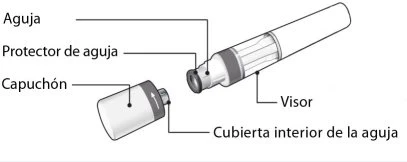
Figure A: parts of the Hyrimoz pen
Figure A shows the pen after removal of the cap. Do not remove the cap until you are ready to administer the injection.
It is important that: |
|
Storage of the pen |
Keep Hyrimoz and all medicines out of the reach of children. |
What is needed for the injection? |
Place the following items on a clean, flat surface. The carton includes:
The pen carton does not include (see Figure B):
Figure B: items not included in the carton |

Before injection Preparing the pen | |
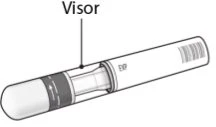
If the pen fails any of the above checks, contact your pharmacist. |
Figure C: safety checks before injection |
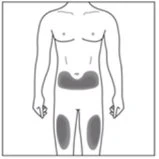
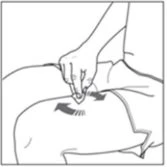
1 Selection of the injection site: | |
|
Figure D: choose the injection site |
| |
|
Figure E: clean the injection site |
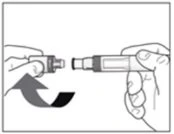
| |
|
Figure F: removing the cap |
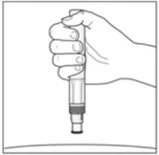
| |
|
Figure G: hold the pen |

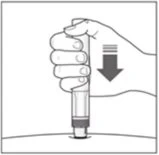
Injection |
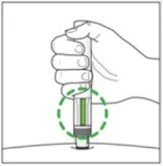
Before injecting, read the following: During the injection, you will hear 2 loud clicks:
You must continue to hold the pen firmly against the skin until you see a green indicator completely fill the viewing window and stop moving. |
| |
|
Figure H: start the injection |
| |
|
Figure I: complete the injection |
After injection | |
| |
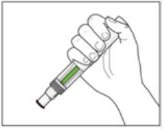
There may be a small amount of blood at the injection site. You may press a cotton ball or gauze pad against the site for 10 seconds. Do not rub the injection site. If needed, you may cover it with a small adhesive bandage. |
Figure J: check the green indicator green |
| |
|
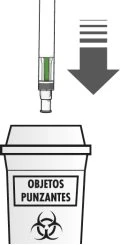
Figure K: disposal of used pen used |
If you have any questions, consult a doctor, pharmacist, or nurse familiar with Hyrimoz.