Hypnomidate 2 mg/ml solution for injection
Spain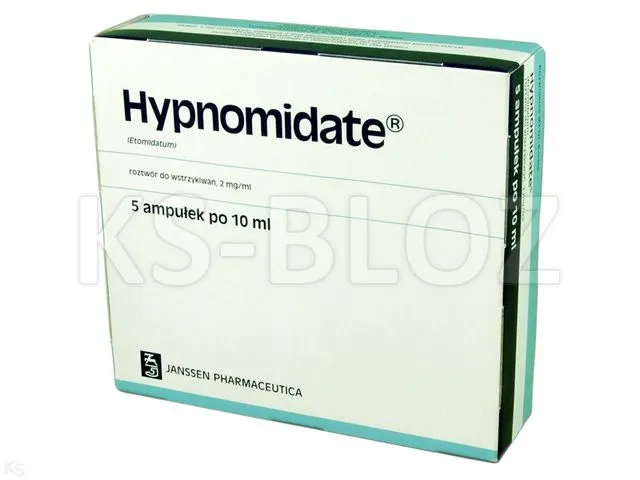
Table of Contents
- Package leaflet: Information for the user
- Introduction
- 1. What HYPNOMIDATE 2 mg/ml injectable solution is and what it is used for
- 2. What you need to know before HYPNOMIDATE 2 mg/ml injectable solution is administered to you
- 3. How HYPNOMIDATE 2 mg/ml injectable solution is administered
- 4. Possible adverse effects
- 5. Storage of HYPNOMIDATE 2 mg/ml solution for injection
- 6. Contents of the pack and other information
Package leaflet: Information for the user
Introduction
PACKAGE LEAFLET: INFORMATION FOR THE USER
HYPNOMIDATE 2 mg/ml injectable solution
Etomidate
Read the entire leaflet carefully before you start using this medicine, as it contains important information for you.
- Keep this leaflet as you may need to read it again.
- If you have any questions, consult your doctor or pharmacist.
- If you experience any side effects, consult your doctor or pharmacist, even if they are not listed in this leaflet. See section 4.
Contents of the leaflet:
- What HYPNOMIDATE 2 mg/ml injectable solution is and what it is used for
- What you need to know before you are administered HYPNOMIDATE 2 mg/ml injectable solution
- How HYPNOMIDATE 2 mg/ml injectable solution is administered
- Possible side effects
- How to store HYPNOMIDATE 2 mg/ml injectable solution
- Contents of the pack and other information
1. What HYPNOMIDATE 2 mg/ml injectable solution is and what it is used for
HYPNOMIDATE 2 mg/ml injectable solution is a sterile injectable solution containing a substance called etomidate, which belongs to the group of general anesthetics.
HYPNOMIDATE 2 mg/ml injectable solution is used to induce general anesthesia (induces sleep during a surgical procedure).
2. What you need to know before HYPNOMIDATE 2 mg/ml injectable solution is administered to you
Do not use HYPNOMIDATE 2 mg/ml injectable solution
If you are allergic (hypersensitive) to etomidate or to any of the components of HYPNOMIDATE 2 mg/ml injectable solution.
Warnings and precautions
Talk to your doctor or nurse before HYPNOMIDATE 2 mg/ml injectable solution is administered to you.
- Single induction doses of etomidate may cause transient adrenal insufficiency and reduced serum cortisol levels.
- If you have impaired function of a gland called the adrenal gland (located above the kidneys), as you may require supplementation with a substance called cortisol.
- HYPNOMIDATE must not be used for maintenance of anesthesia, as it may lead to decreased blood levels of substances known as cortisol and aldosterone.
- Etomidate should be used with caution in critically ill patients, including patients with sepsis, as it has been associated with increased mortality risk in these patient groups in some studies.
- If you have a hereditary disorder (a disturbance in heme group production), the use of HYPNOMIDATE should be avoided unless no better anesthetic is available.
- If you have hypotension, as the use of HYPNOMIDATE may be accompanied by a slight and transient decrease in blood pressure.
- In elderly patients, as higher than recommended doses have been associated with an increased risk of reduced cardiac performance.
Hepatic or adrenal function impairment
Always inform your doctor if you have liver or kidney disease.
Other medicines and HYPNOMIDATE 2 mg/ml injectable solution
Tell your doctor or pharmacist if you are taking or have recently taken any other medicines, including those obtained without a prescription.
Some medicines, when taken together with HYPNOMIDATE, may alter its effect. This is especially important in the case of medicines used to calm (such as neuroleptics), pain-relieving medicines (such as opioids), and medicines with sedative effects, as they may enhance the hypnotic effect (drowsiness) of HYPNOMIDATE.
Induction with etomidate may potentiate the blood pressure-lowering effects of other drugs.
Concomitant use of HYPNOMIDATE with alfentanil (an opioid anesthetic) decreases etomidate concentrations below the hypnotic threshold (the level at which sleep is induced).
Your doctor will assess whether it is necessary to administer HYPNOMIDATE together with an analgesic to relieve pain.
Before using HYPNOMIDATE, your doctor may administer other medicines (narcotic analgesics or diazepam) to reduce uncontrolled spontaneous muscle movements that may occur in some patients.
Use of HYPNOMIDATE 2 mg/ml injectable solution with food and drinks
Alcohol may increase the hypnotic effect (drowsiness, sleep) of HYPNOMIDATE.
Pregnancy and breastfeeding
Consult your doctor or pharmacist before using any medicine.
Etomidate has been detected in human milk. The effect of etomidate on neonates is unknown. Breastfeeding should be discontinued during treatment and for approximately 24 hours after treatment with HYPNOMIDATE.
If you think you are pregnant, inform the nurse or doctor.
Driving and using machines
Do not drive or operate tools or machinery during the first 24 hours after receiving HYPNOMIDATE, as this medicine may affect your reaction ability or capacity to drive. Your doctor will advise you how long you should wait before resuming driving or using machines.
Important information about some of the components of HYPNOMIDATE
This medicine contains propylene glycol. It may produce alcohol-like symptoms and therefore may impair your ability to drive or operate machinery.
HYPNOMIDATE contains propylene glycol
If the child is under 5 years of age, consult your doctor or pharmacist, particularly if other medicines containing propylene glycol or alcohol have been administered.
If you are pregnant or breastfeeding, do not take this medicine unless recommended by your doctor. Your doctor may perform additional monitoring while you are taking this medicine.
If you have hepatic or renal insufficiency, do not take this medicine unless recommended by your doctor. Your doctor may perform additional monitoring while you are taking this medicine.
3. How HYPNOMIDATE 2 mg/ml injectable solution is administered
HYPNOMIDATE is a hospital-use medicine and will therefore be administered intravenously in a hospital setting by qualified healthcare personnel.
HYPNOMIDATE must be administered exclusively by experienced physicians, and equipment for artificial respiration must be readily available at all times.
It should be injected slowly, usually over approximately 30 seconds. It must not be mixed with any other product.
The physician will adjust the dose according to each patient's response and clinical effects.
The recommended usual dose is:
Use in adults
The effective anesthetic dose (inducing sleep) to achieve a duration of sleep of 4–5 minutes is 0.3 milligrams/kilogram of body weight. This dose may be adjusted according to body weight.
Hypnosis (sleep) can be prolonged by additional injections of HYPNOMIDATE, without exceeding a total amount of 3 vials (30 milliliters).
Since HYPNOMIDATE has no analgesic effect, it is advisable to administer an appropriate opioid intravenously, for example 1–2 ml of fentanyl, 1–2 minutes before the injection of HYPNOMIDATE.
Use in children
In children under 15 years of age, if sufficient depth of sleep is not achieved with the usual adult dose, the dose may need to be increased up to 0.4 milligrams/kilogram of body weight (a maximum increase of 30%), carefully weighing the potential risks against the expected benefits.
Use in elderly patients
The recommended dose is a single dose of 0.15 to 0.2 milligrams/kilogram of body weight, subsequently adjusted according to clinical effects.
The dose of HYPNOMIDATE should be adjusted:
- if you have a serious liver disease (hepatic cirrhosis)
- if you have previously received treatment with tranquilizers (neuroleptics), painkillers (opioids), or sedatives.
If you have been given more HYPNOMIDATE 2 mg/ml injectable solution than you should have:
In case of overdose, the most frequent symptoms are: drop in blood pressure, temporary interruption of breathing (apnea), prolonged sleep duration, increased depth of sleep, disorientation, and/or difficulty waking up. Respiratory depression may also occur, potentially leading to respiratory arrest; in such cases, assisted ventilation should be performed.
In case of overdose or accidental ingestion, contact the Toxicology Information Service.
Telephone (91) 562 04 20
Information for the physician in case of overdose
In addition to supportive measures (e.g., assisted respiration), administration of 50–100 mg of hydrocortisone (not Adrenocorticotropic Hormone [ACTH]) may be required.
General supportive measures and close monitoring are recommended.
4. Possible adverse effects
Like all medicines, HYPNOMIDATE 2 mg/ml injectable solution may cause adverse effects, although not everyone experiences them.
Very common adverse effects (affect more than 1 in 10 patients)
- Involuntary muscle movements
- Decreased cortisol
Common adverse effects (affect less than 1 in 10 patients)
- Involuntary muscle movements with muscle spasms, muscle contractions, or slow, rigid, or spasmodic movements
- Pain around the vein area
- Low blood pressure
- Temporary cessation of breathing
- Increased breathing rate
- Wheezing during breathing
- Vomiting
- Nausea
- Rash
Uncommon adverse effects (affect less than 1 in 100 patients)
-
Muscle tension and/or rigidity
-
Involuntary muscle contractions
-
Involuntary eye muscle movements
-
You may feel changes in your heart rate or rhythm (such as slow heart rate, irregular heartbeat, or palpitations)
-
Venous inflammation
-
High blood pressure
-
Abnormally slow and/or weak breathing
-
Hiccups
-
Coughing attack
-
Excessive salivation
-
Skin redness
-
Pain at the injection site
-
Effects related to anaesthesia including delayed recovery from anaesthesia, inadequate pain relief, or other complications such as nausea
Adverse effects of unknown frequency (cannot be estimated from the available clinical trial data)
- Allergic reaction (including anaphylactic shock, anaphylactic reaction, and anaphylactoid reaction) characterized by skin rash or redness, hives or itching, difficulty breathing, or facial swelling
- Insufficient production of cortisol (a hormone produced by the adrenal glands)
- Seizures
- Cardiac arrest
- Cardiac arrhythmias such as complete atrioventricular block
- Inadequate blood flow to body tissues (shock)
- Venous inflammation associated with blood clot formation (including superficial thrombophlebitis and deep vein thrombosis)
- Slow and inadequate breathing (respiratory depression)
- Spasms of the airways (including fatal outcome)
- A severe form of rash called Stevens-Johnson Syndrome may occur
- Hives or itching
- Contractions of the muscles around the jaw responsible for chewing
You may also experience problems recovering from anaesthesia, such as delayed recovery or inadequate pain relief.
Other adverse effects usually occur while you are asleep. During these times, a doctor is always present to monitor you. Sometimes, you may experience some of these effects upon waking, typically in the form of nausea and/or vomiting, hiccups, coughing attack, muscle tension or rigidity, or excessive salivation.
Reporting of adverse reactions If you experience any type of adverse reaction, consult your doctor or pharmacist, even if it is a possible adverse reaction not listed in this leaflet. You may also report them directly through the Spanish Pharmacovigilance System for Human Medicinal Products: https://www.notificaRAM.es By reporting adverse reactions, you can help provide more information on the safety of this medicine. |
5. Storage of HYPNOMIDATE 2 mg/ml solution for injection
Keep HYPNOMIDATE 2 mg/ml solution for injection out of the sight and reach of children.
Store between 15 and 25°C.
Do not use HYPNOMIDATE 2 mg/ml solution for injection after the expiry date stated on the packaging. The expiry date is the last day of the month indicated.
Medicines should not be disposed of via wastewater or household waste. Ask your pharmacist how to dispose of medicines and packaging you no longer need. This helps protect the environment.
6. Contents of the pack and other information
Composition of HYPNOMIDATE 2 mg/ml INJECTABLE SOLUTION
- The active substance is etomidate.
- The other components are: propylene glycol and water for injectable preparations.
Nature of the product and pack size
HYPNOMIDATE is a transparent, colourless injectable solution free from visible extraneous particles.
It is supplied in 10-millilitre glass ampoules, packaged in packs of 5 units.
Each ampoule (10 millilitres) contains 20 milligrams of etomidate in an injectable solution ready for administration, i.e. 2 milligrams of etomidate per millilitre of solution.
Marketing Authorisation Holder and Manufacturer
- Marketing Authorisation Holder
Piramal Critical Care B.V.
Rouboslaan 32, 2252 TR
Voorschoten
The Netherlands
- Manufacturer
Piramal Critical Care B.V.
Rouboslaan 32, 2252 TR
Voorschoten
The Netherlands
For further information about this medicinal product, please contact the local representative of the Marketing Authorisation Holder:
Euromed Pharma Spain, S.L.
C/Eduard Maristany, 430-432
08918 Badalona
Barcelona - Spain
Date of the most recent revision of the package leaflet: November 2021
Detailed and up-to-date information on this medicinal product is available on the website of the Spanish Agency for Medicines and Health Products (AEMPS) http://www.aemps.gob.es/.
Information for the person administering Hypnomidate
Dosage
Hypnomidate 2 mg/ml injectable solution ampoules contain 10 ml of a ready-prepared solution containing 20 mg of etomidate, i.e. 2 mg of etomidate per ml of solution. The effective hypnotic dose of HYPNOMIDATE is 0.3 mg/kg body weight, sufficient to achieve a duration of sleep of 4–5 minutes. This dose may be adjusted according to body weight.
HYPNOMIDATE must be administered by slow intravenous injection.
Hypnosis may be prolonged by additional injections of HYPNOMIDATE.
The total amount administered must not exceed 3 ampoules (30 ml).
Since HYPNOMIDATE has no analgesic effect, it is recommended to administer an appropriate opioid intravenously, for example 1–2 ml of fentanyl, 1–2 minutes prior to the injection of HYPNOMIDATE.
The dose should be adjusted according to the individual patient's response and the desired clinical effect.
In elderly patients, a single dose of 0.15–0.2 mg/kg body weight should be administered, followed by adjustment according to the observed effects.
In children under 15 years of age, if sufficient depth of hypnosis is not achieved with the usual adult dose, the dose may need to be increased by up to 30%, i.e. up to 0.4 mg/kg body weight, carefully weighing the potential risks against the expected benefit.
Instructions for use
The injectable solution must not be mixed with other products.
Wear gloves when opening or handling the ampoule.
In case of accidental skin exposure to the product, the exposed area should be thoroughly rinsed with abundant water. Avoid using soap, alcohol, or other cleaning agents, as they may cause chemical or physical irritation to the skin.