Hympavzi 150 mg solution for injection in pre-filled pen
Spain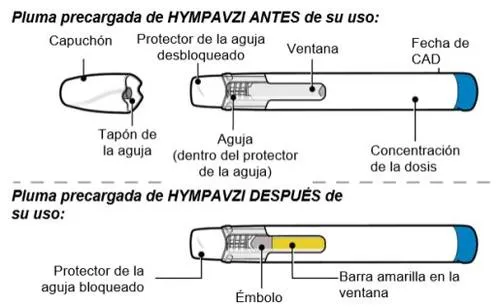
Table of Contents
Package leaflet: Information for the user
Introduction
Package leaflet: information for the patient
Hympavzi 150 mg solution for injection in pre-filled pen
marstacimab
This medicine is subject to additional monitoring, which will allow for quicker detection of new safety information. You can help by reporting any side effects you may experience. Section 4 at the end of this leaflet includes information on how to report side effects.
Read this entire leaflet carefully before you start using this medicine, as it contains important information for you.
- Keep this leaflet, as you may need to read it again.
- If you have any questions, consult your doctor, pharmacist, or nurse.
- This medicine has been prescribed for you only and must not be given to other people, even if they have the same symptoms as you, since it could harm them.
- If you experience any side effects, consult your doctor, pharmacist, or nurse, even if they are side effects not listed in this leaflet. See section 4.
Leaflet contents
- What Hympavzi is and what it is used for
- What you need to know before using Hympavzi
- How to use Hympavzi
- Possible side effects
- How to store Hympavzi
- Contents of the pack and other information
1. What Hympavzi is and what it is used for
Hympavzi contains the active substance marstacimab. Marstacimab is a monoclonal antibody, a type of protein designed to recognize a specific target in the body called tissue factor pathway inhibitor (TFPI), and bind to it.
Hympavzi is a medicine used to prevent or reduce bleeding in patients aged 12 years and older and weighing at least 35 kg with:
- severe haemophilia A (congenital factor VIII deficiency, when factor VIII levels in the blood are less than 1 %), who have not developed factor VIII inhibitors, or
- severe haemophilia B (congenital factor IX deficiency, when factor IX levels in the blood are less than 1 %), who have not developed factor IX inhibitors.
Haemophilia A is an inherited bleeding disorder caused by a lack of factor VIII. Haemophilia B is an inherited bleeding disorder caused by a lack of factor IX. Factor VIII and factor IX are essential proteins that enable blood to clot and thereby stop bleeding. Some patients with haemophilia may develop factor VIII or factor IX inhibitors (antibodies in the blood that act against factor VIII or factor IX replacement therapies and prevent them from working properly).
The active substance in Hympavzi, marstacimab, recognizes and binds to TFPI, a protein that prevents blood from clotting excessively. By binding to TFPI, marstacimab reduces its activity, thereby triggering thrombin formation (a protein that plays a key role in blood coagulation following injury or tissue damage). This helps improve blood clotting and control bleeding in patients with haemophilia.
2. What you need to know before using Hympavzi
Do not use Hympavzi
- if you are allergic to marstacimab or to any of the other ingredients of this medicine (listed in section 6). If you are unsure whether you are allergic, speak with your doctor, pharmacist, or nurse before using Hympavzi.
Warnings and precautions
Talk to your doctor before starting treatment with Hympavzi.
Before starting Hympavzi, it is very important that you discuss with your doctor the use of other factor VIII and factor IX products (products that promote blood clotting in a different way than Hympavzi) while using Hympavzi. You may need to use other factor VIII or factor IX products to treat spontaneous bleeding episodes during treatment with Hympavzi. Follow your healthcare provider's instructions precisely regarding when and how to use these factor VIII or factor IX products alongside Hympavzi.
Blood clots (thromboembolic events)
Hympavzi increases the blood's ability to clot and may cause blood clots in blood vessels (called thromboembolic events). Blood clots can be life-threatening. Inform your doctor if you have a history of blood clots or if you have a condition that increases your risk of blood clots, such as:
- history of coronary artery disease (heart disease caused by narrowing or blockage of blood vessels supplying the heart muscle)
- history of ischemic disease (reduced blood flow due to narrowing or blockage of blood vessels)
- history of blood clots in veins or arteries
- genetic conditions that increase the risk of blood clotting (such as Factor V Leiden)
- being bedridden, immobilized, or unable to stand for long periods
- obesity (excess weight)
- smoking
- severe infections
- sepsis (blood infection)
- trauma or crush injuries
- cancer
Stop using Hympavzi and contact your doctor immediately if you experience any symptoms of a possible blood clot, including the following adverse effects:
|
|
legs |
|
|
|
back pain |
|
| |
|
Allergic reactions
Symptoms of an allergic reaction have been observed in individuals using Hympavzi. Discontinue use of Hympavzi and seek immediate medical attention if you notice any symptoms of a possible severe allergic reaction, including the following:
|
|
throat |
|
Children under 12 years of age
Hympavzi must not be used in children under 1 year of age, and its use is not recommended in children under 12 years of age. The safety and benefits of this medicine in this population are still unknown.
Other medicines and Hympavzi
Inform your doctor or pharmacist if you are taking, have recently taken, or might need to take any other medicines.
Pregnancy, contraception, and breastfeeding
If you are able to become pregnant, you must use an effective method of contraception during treatment with Hympavzi and for at least 1 month after the last injection of Hympavzi.
If you are pregnant, think you might be pregnant, or plan to become pregnant, consult your doctor before using this medicine. Your doctor will consider the benefit of your treatment with Hympavzi and the potential risk to the fetus.
If you are breastfeeding, consult your doctor whether you should stop breastfeeding or stop using Hympavzi. Your doctor will consider the benefit of your treatment with Hympavzi and the benefits of breastfeeding for your baby.
Driving and using machines
Hympavzi has no or negligible effect on the ability to drive or use machines.
Hympavzi contains polysorbate 80
This medicine contains 0.2 mg of polysorbate 80 per ml. Polysorbates may cause allergic reactions. Consult your doctor if you have any known allergies.
Hympavzi contains sodium
This medicine contains less than 1 mmol of sodium (23 mg) per 1 ml; hence, it is essentially "sodium-free".
3. How to use Hympavzi
You will start your treatment under the supervision of a qualified doctor experienced in managing patients with haemophilia. Always follow your doctor's instructions for administering this medicine exactly. If in doubt, consult your doctor or pharmacist.
Your healthcare professional will provide instructions for discontinuing your current treatment when switching from factor-based or non-factor-based therapies to Hympavzi. If you are unsure what to do, contact your healthcare professional.
If you have a serious illness or require major surgery, inform your healthcare professional that you are using Hympavzi.
Keep a record
Each time you use Hympavzi, record the name and batch number of the medicine.
How Hympavzi is administered
- Hympavzi is given by injection under the skin (subcutaneous injection). Do not inject it into a vein or into muscle.
- To make the injection more comfortable, Hympavzi may be allowed to reach room temperature by leaving it in its carton, away from direct sunlight, for 15 to 30 minutes before use. Do not heat Hympavzi in any other way, such as in hot water or in a microwave.
Before you use the pen for the first time, your doctor, nurse, or pharmacist will show you and/or your caregiver how to inject Hympavzi. If you or your caregiver will be injecting Hympavzi, you must carefully read and follow the detailed instructions for use provided on the reverse side of this leaflet.
Where to inject Hympavzi
- Your doctor or nurse will show you and/or your caregiver the appropriate body areas for injecting Hympavzi. The best sites for administering Hympavzi are the abdominal area (abdomen) or the thigh. Injections into the buttocks should only be given by a caregiver, doctor, nurse, or pharmacist.
- Change the injection site each time you receive an injection.
- If more than one injection is required to administer a full dose, each injection must be given at a different injection site.
- If you are using other medicines that are injected under the skin, they should be administered at different injection sites.
How much Hympavzi to use
Your treatment will begin with a loading dose, followed by a weekly maintenance dose.
-
Loading dose (an initial higher dose to rapidly increase levels in the body):
The recommended dose is 300 mg.
-
Maintenance dose: The recommended dose is 150 mg.
You should use this medicine once weekly (at any time of day), on the same day each week.
You should record which day of the week you use Hympavzi to help you remember to inject this medicine once a week.
Depending on your response to Hympavzi, your doctor may adjust your maintenance dose as needed, up to a maximum of 300 mg weekly.
Use in adolescents
Hympavzi can be used in adolescents aged 12 years and older. An adolescent may self-inject the medicine provided their doctor or nurse, and parent or caregiver, agree and the patient is adequately trained to do so.
If you use more Hympavzi than you should
If you have used more Hympavzi than prescribed, inform your doctor immediately. You may be at risk of developing adverse effects such as blood clots and may require medical attention. Always follow your doctor's instructions for administering Hympavzi exactly. If in doubt, consult your doctor, pharmacist, or nurse.
If you forget to use Hympavzi
- If you miss a scheduled dose, inject the missed dose as soon as possible before the next scheduled dose. Then continue injecting the medicine as planned. Do not inject a double dose to make up for a missed dose.
- If you miss two consecutive scheduled doses (i.e., more than 13 days have passed since your last injection), contact your doctor as soon as possible and ask for advice.
- If you are unsure what to do, contact your doctor, pharmacist, or nurse.
If you stop using Hympavzi
Do not stop using Hympavzi without consulting your doctor. If you discontinue treatment with Hympavzi, you may lose protection against bleeding episodes.
If you have any further questions about the use of this medicine, ask your doctor, pharmacist, or nurse.
4. Possible adverse effects
Like all medicines, this medicine can cause adverse effects, although not everyone experiences them.
Serious adverse effects
Hympavzi may cause a skin rash (in up to 1 in 100 people), which can be serious. Contact your doctor immediately if you develop a significant rash, as some rashes may be severe. Do not use Hympavzi again until you have consulted your doctor about the rash.
Hympavzi may cause blood clots (thromboembolism) (in up to 1 in 100 people). Stop using Hympavzi and contact your doctor immediately if you notice any signs or symptoms of a possible blood clot. See the list of possible symptoms of a blood clot (thromboembolic event) in section 2, "What you need to know before starting to use Hympavzi".
Other adverse effects
Tell your doctor, nurse, or pharmacist if you experience any of the following adverse effects.
Very common (may affect more than 1 in 10 people)
- reaction at the injection site (including itching, swelling, redness, pain, bruising, and hardening)
Common (may affect up to 1 in 10 people)
- headache
- high blood pressure
- itching (pruritus)
Reporting of adverse effects
If you experience any adverse effect, consult your doctor, pharmacist, or nurse, even if it is a possible adverse effect not listed in this leaflet. You may also report them directly through the national reporting system listed in Appendix V. By reporting adverse effects, you can help provide more information on the safety of this medicine.
5. Storage of Hympavzi
Keep this medicine out of the sight and reach of children.
Do not use this medicine after the expiry date which is stated on the label of the pre-filled pen and on the carton after EXP. The expiry date refers to the last day of the month indicated.
Store in a refrigerator (between 2 °C and 8 °C). Do not freeze.
Keep the pre-filled pen in the original carton to protect it from light.
Hympavzi may be removed from the refrigerator and stored at room temperature (up to 30 °C) in the original carton for a maximum of 7 days. Once Hympavzi has been stored at room temperature, do not return it to the refrigerator. If Hympavzi has been kept at room temperature for more than 7 days, discard it, even if medicine remains unused.
Do not shake.
Remove Hympavzi from the refrigerator before use. To make the injection less uncomfortable, Hympavzi may be left at room temperature for 15 to 30 minutes inside the carton and away from direct sunlight.
Before using the medicine, check that the solution contains no particles and has not changed colour. Do not use the medicine if it appears cloudy, has turned dark yellow, or contains flakes or particles.
Medicines should not be disposed of via wastewater or household waste. Ask your pharmacist how to dispose of medicines and packaging no longer required. This will help protect the environment.
6. Contents of the container and other information
Composition of Hympavzi
- The active substance is marstacimab.
- The other components are disodium edetate, L-histidine, L-histidine monohydrochloride, polysorbate 80 (E 433), sucrose, water for injections (see section 2, "Hympavzi contains polysorbate 80" and "Hympavzi contains sodium").
Nature of the product and contents of the container
Hympavzi is a clear, colourless to slightly yellow injectable solution (injection) in a pre-filled pen.
Hympavzi 150 mg solution for injection in a pre-filled pen is available in a pack containing 1 single-dose pre-filled pen and in a multiple pack containing 4 pre-filled pens (4 packs of 1).
Only certain pack sizes may be marketed.
Marketing Authorization Holder
Pfizer Europe MA EEIG
Boulevard de la Plaine 17
1050 Brussels
Belgium
Manufacturer
Pfizer Manufacturing Belgium NV
Rijksweg 12
2870 Puurs-Sint-Amands
Belgium
For more information about this medicine, please contact the local representative of the Marketing Authorization Holder:
Belgium/Belgium/Belgium Luxembourg/Luxembourg Pfizer NV/SA Tel/Tel: +32 (0)2 554 62 11 | Lithuania Pfizer Luxembourg SARL branch in Lithuania Tel: +370 5 251 4000 |
| Hungary Pfizer Ltd. Tel.: +36 1 488 37 00 |
Czech Republic Pfizer, spol. s r.o. Tel: +420 283 004 111 | Malta Vivian Corporation Ltd. Tel: +356 21344610 |
Denmark Pfizer ApS Tlf.: +45 44 20 11 00 | Netherlands Pfizer bv Tel: +31 (0)800 63 34 636 |
Germany PFIZER PHARMA GmbH Tel: +49 (0)30 550055-51000 | Norway Pfizer AS Tlf: +47 67 52 61 00 |
Estonia Pfizer Luxembourg SARL Estonia branch Tel: +372 666 7500 | Austria Pfizer Corporation Austria Ges.m.b.H. Tel: +43 (0)1 521 15-0 |
Greece Pfizer Hellas S.A. Tel: +30 210 6785800 | Poland Pfizer Polska Sp. z o.o. Tel.: +48 22 335 61 00 |
Spain Pfizer, S.L. Tel: +34 91 490 99 00 | Portugal Laboratórios Pfizer, Lda. Tel: +351 21 423 5500 |
France Pfizer Tél: +33 (0)1 58 07 34 40 | Romania Pfizer Romania S.R.L. Tel: +40 (0) 21 207 28 00 |
Croatia Pfizer Croatia d.o.o. Tel: +385 1 3908 777 | Slovenia Pfizer Luxembourg SARL Pfizer, advisory branch for pharmaceutical activities, Ljubljana Tel: +386 (0)1 52 11 400 |
Ireland Pfizer Healthcare Ireland Unlimited Company Tel: +1800 633 363 (toll free) Tel: +44 (0)1304 616161 | Slovak Republic Pfizer Luxembourg SARL, organizational unit Tel: +421 2 3355 5500 |
Iceland Icepharma hf. Sími: +354 540 8000 | Finland Pfizer Oy Puh/Tel: +358 (0)9 430 040 |
Italy Pfizer S.r.l. Tel: +39 06 33 18 21 | Sweden Pfizer AB Tel: +46 (0)8 550 520 00 |
Cyprus Pfizer Hellas S.A. (Cyprus Branch) Tel: +357 22817690 | |
Latvia Pfizer Luxembourg SARL branch in Latvia Tel: +371 670 35 775 |

Date of the most recent review of this leaflet:
Other sources of information
Detailed information on this medicinal product is available on the website of the European Medicines Agency: https://www.ema.europa.eu.
INSTRUCTIONS FOR USE
Hympavzi 150 mg solution for injection in a pre-filled pen
These “Instructions for Use” contain information on how to inject Hympavzi.
Please read these “Instructions for Use” carefully before using the pre-filled pen of Hympavzi and each time you are given a new prescription, as there may be new information.
Your doctor, nurse, or pharmacist must show you or your caregiver how to properly prepare and inject a dose of Hympavzi before you use it for the first time.
Do not inject Hympavzi yourself or inject it into anyone until you have been shown how to perform the injection.
Important information
- Each pre-filled pen of Hympavzi is a single-dose pre-filled pen (referred to as “pen” in these “Instructions for Use”). The Hympavzi pre-filled pen contains 150 mg of Hympavzi for subcutaneous injection (under the skin).
- Do not inject Hympavzi into a vein or into muscle.
- Do not shake Hympavzi.
- To help you remember when to inject Hympavzi, you may mark your calendar in advance. Contact your doctor, nurse, or pharmacist if you or your caregiver have any questions about the correct way to inject Hympavzi.
Storage of Hympavzi
- Store unused Hympavzi in a refrigerator at between 2 °C and 8 °C. Do not freeze Hympavzi. Keep Hympavzi in the original carton to protect it from direct light.
- If necessary, Hympavzi may be stored at room temperature up to 30 °C in the original carton for a maximum of 7 days. Do not use Hympavzi if it has been out of the refrigerator for more than 7 days. Discard Hympavzi if it has been stored at room temperature for longer than 7 days.
- Do not use Hympavzi after the expiry date printed on the pre-filled pen.
- Keep Hympavzi and all medicines out of the reach of children.
Materials needed for injection of Hympavzi
Gather the following materials on a clean, flat surface:
- 1 pre-filled pen of Hympavzi.
- 1 alcohol swab (not included).
- 1 cotton ball or gauze pad (not included).
- 1 sharps container for disposal of the pen (not included).
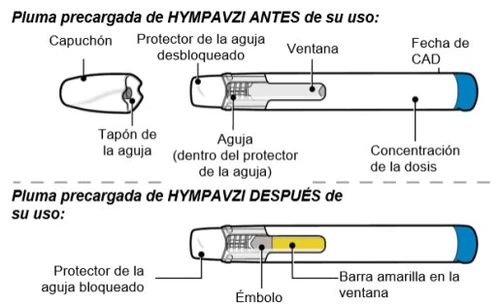
Steps for preparation
Step 1: Preparation
-
Remove the pen from the carton and keep it away from direct sunlight.
-
Ensure that the carton and the pen label display the name Hympavzi.
-
Inspect the pen for visible damage such as cracks or leaks.
-
Wash and dry your hands.
-
Do not remove the cap until you are ready for injection.
-
Discard the pen if it is damaged, or if the pen or the carton containing the pen has been dropped.
-
Do not use the pen if:
-
it has been stored under direct light. Exposure to room light during dose preparation is acceptable.
-
it has been frozen and thawed, or if it has been out of the refrigerator for more than 7 days.
-
Do not shake the pen, as this may damage Hympavzi.
Note: To make the injection less uncomfortable, allow the pen to reach room temperature for 15 to 30 minutes inside the carton and away from direct sunlight.
Do not use any other method to warm the pen, such as placing it in hot water or a microwave.
Step 2: Check the expiry date (EXP)
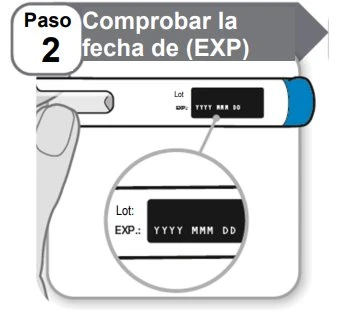
- Check the expiry date (EXP) printed on the pen label.
- Do not use if the expiry date has passed.
Step 3: Check the medicine
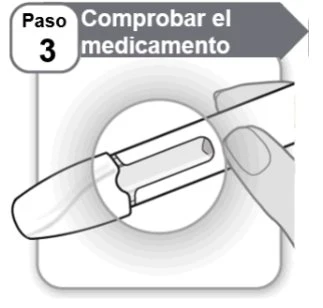
-
Carefully examine the medicine through the viewing window of the pen.
-
It should be clear and colourless to pale yellow.
-
Do not use the pen if the medicine is cloudy, dark yellow, or contains flakes or particles.
Note: It is normal to see air bubbles through the viewing window.
If you have any questions about the medicine, contact your doctor, nurse, or pharmacist.
Step 4: Choose and clean the injection site
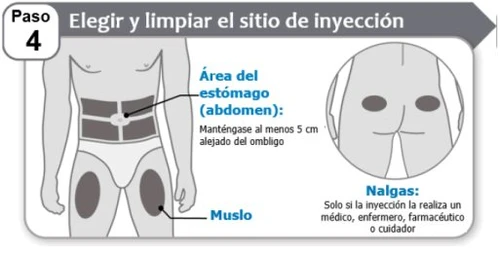
- Select an injection site on the stomach (abdomen) or thigh, unless your doctor, nurse, or pharmacist has instructed otherwise. Hympavzi may also be administered in the buttocks, but only if the injection is given by a doctor, nurse, pharmacist, or caregiver. Stay at least 5 cm away from the navel.
- Alternate the injection site each time you administer Hympavzi. You may use the same body area, but be sure to select a different injection site within that area.
- Clean the injection site with water and soap, or with an alcohol swab if appropriate.
- Allow the area to dry. Do not touch, fan, or blow on the cleaned injection site.
- Do not inject Hympavzi near bones or in areas where the skin is bruised, red, hard, or tender to the touch. Avoid injecting into areas with scars or stretch marks.
- Do not inject Hympavzi into a vein or into muscle.
- Do not inject Hympavzi through clothing.
Step 5: Twist off the cap
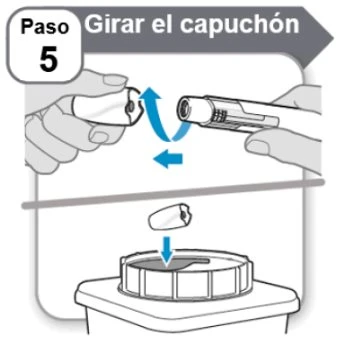
- Twist the cap and pull it off.
- Immediately place the cap into a sharps container. You will not need it again.
Note:
- It is normal to see a few drops of medicine at the needle tip.
- The needle cap will remain inside the removed cap.
Caution: Handle the pen carefully, as it contains a needle.
Do not place your hand over the needle shield or press your hand against it. Otherwise, you could be injured by the needle.
Steps for injection
Step 6: Inject the medicine
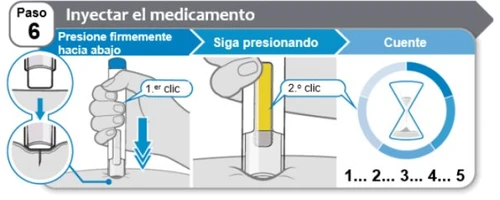
- Press the pen firmly downward against the skin at a 90º angle and continue pressing until the injection is complete (Step 7). You will hear the 1st click when the injection begins.
- Continue pressing the pen firmly against the skin while the yellow bar moves across the viewing window. You will hear a 2nd click when the injection is almost complete.
- After hearing the 2nd click, slowly count to 5 to ensure you receive the full dose.
Do not remove the pen from the skin until you have slowly counted to 5 after hearing the 2nd click and until the yellow marker completely fills the viewing window.
Note: The needle enters the skin when you press downward. Your doctor, nurse, or pharmacist may suggest gently pinching the skin during the injection.
Note: If you do not hear a click when pressing the pen against the skin, press more firmly downward. If you still cannot start the injection, use a new pre-filled pen of Hympavzi.
Caution: If you change your mind about the injection site after inserting the needle into the skin, you must discard the pen and use a new pre-filled pen of Hympavzi.
Step 7: Remove the pen
-
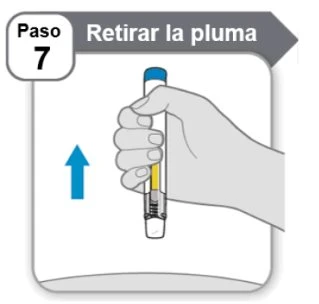
Remove the pen from the skin.
-
If you see a drop of medicine on the skin, wait a little longer next time before removing the pen.
Note: After removing the pen from the skin, the needle will automatically be covered and the needle shield will lock.
The pen cannot be reused.
Step 8: Check the viewing window
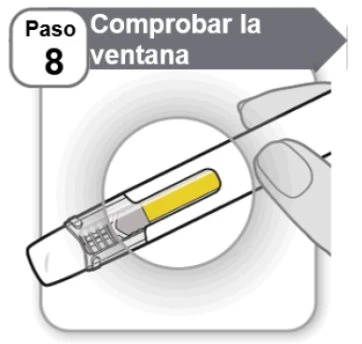
- Check the viewing window to ensure the entire medicine has been injected.
If the yellow bar is not in the position shown, it means you did not receive the full dose. Seek help from your doctor, nurse, or pharmacist.
Do not inject another dose.
Step 9: Post-injection care
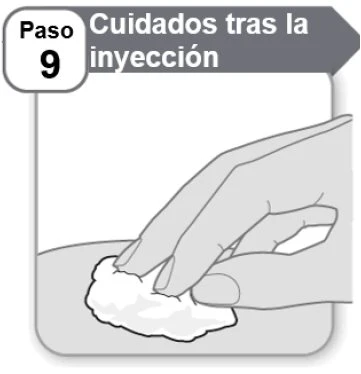
- Gently press the injection site for a few seconds with a clean cotton ball or gauze pad if you see a drop of blood.
- Do not rub the area.
Note: If bleeding does not stop, contact your doctor, nurse, or pharmacist.
Step 10: Disposal
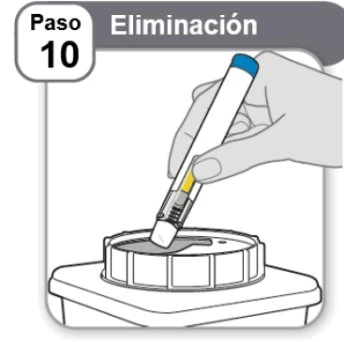
- Place the used pen in a sharps container according to instructions from your doctor, nurse, or pharmacist and in accordance with local health and safety regulations.
- Do not dispose of pens in household waste.