Hydrocortisone Normon 100 mg powder and solvent for solution for injection and for infusion EFG
Spain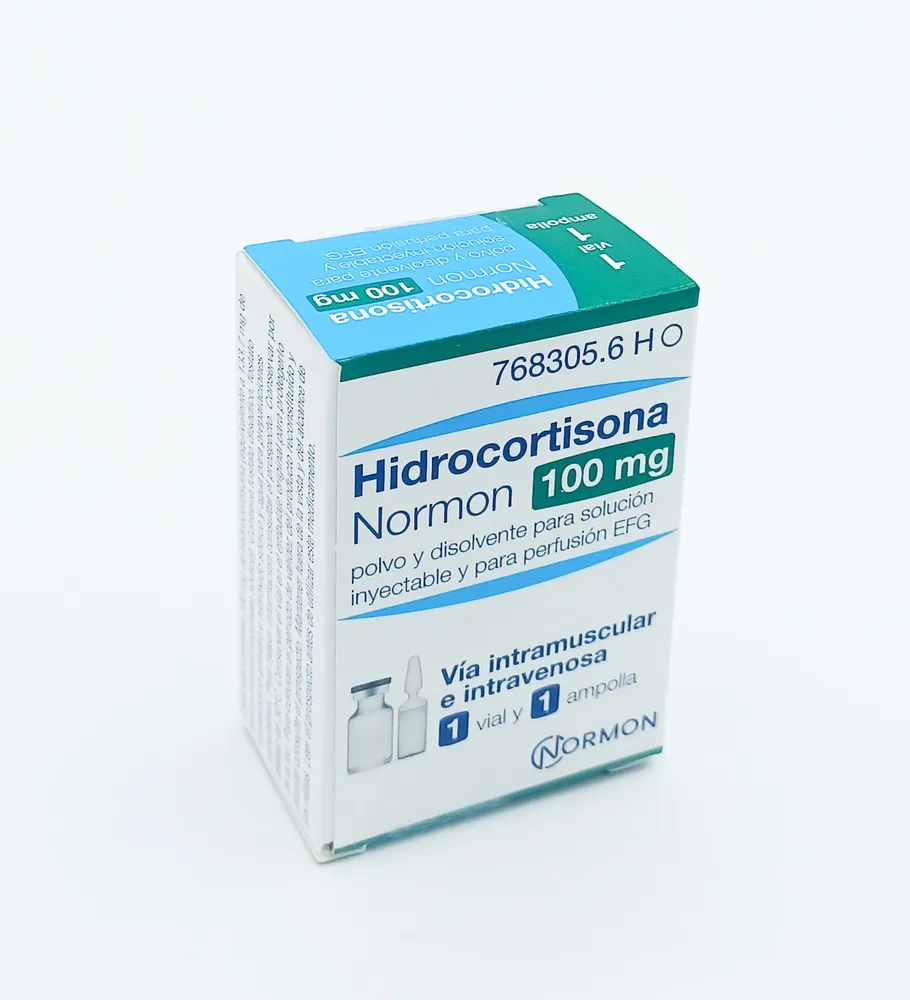
Table of Contents
- Package leaflet: Information for the user
- Introduction
- 1. What Hidrocortisona Normon is and what it is used for
- 2. What you need to know before Hidrocortisona Normon is administered to you
- 3. How Hidrocortisona Normon is administered
- 4. Possible adverse effects
- 5. Storage of Hydrocortisone Normon
- 6. Contents of the container and other information
Package leaflet: Information for the user
Introduction
Package leaflet: information for the user
Hydrocortisone Normon 100 mg Powder and solvent for solution for injection and infusion EFG
Hydrocortisone (as sodium succinate)
Read the entire leaflet carefully before you are given this medicine because it contains important information for you.
- Keep this leaflet. You may need to read it again.
- If you have any questions, ask your doctor or nurse.
- If you experience any side effects, talk to your doctor or nurse, even if they are not listed in this leaflet. See section 4.
Contents of the leaflet
- What Hydrocortisone Normon is and what it is used for
- What you need to know before you are given Hydrocortisone Normon
- How Hydrocortisone Normon is administered
- Possible side effects
- How to store Hydrocortisone Normon
- Contents of the pack and other information
1. What Hidrocortisona Normon is and what it is used for
Hidrocortisona Normon contains hydrocortisone as sodium succinate. Hydrocortisone belongs to a group of medicines called corticosteroids or steroids. Corticosteroids are naturally produced in our body and are important for many bodily functions.
The use of additional corticosteroids, such as hydrocortisone, is an effective way to treat various diseases involving inflammatory processes in the body. Hydrocortisone reduces this inflammation, which otherwise could worsen. You should take this medicine regularly to get the maximum benefit.
Corticosteroids can also help treat shocks following surgery or injury, hypersensitivity reactions (anaphylactic) or other stressful conditions. These include inflammatory or allergic conditions affecting:
- Intestines, for example, Crohn's disease (inflammation of the intestine) or ulcerative colitis (inflammation of the lower part of the intestine)
- Lungs, e.g. bronchial asthma or inflammation caused by inhalation (aspiration) of vomit or stomach contents,
- Skin, e.g. Stevens-Johnson syndrome (an autoimmune disorder in which the immune system causes the skin to blister and peel) or systemic lupus erythematosus (lupus).
This medicine may be prescribed to treat conditions other than those listed above, such as adrenal insufficiency and other medical emergencies including treatment of shock associated with this condition. Treatment of organ transplant rejection or other medical conditions such as myxedema coma, necrotizing vasculitis, and rheumatoid arthritis.
You should consult a doctor if you do not feel better or if you feel worse, or if you are unsure why this medicine has been administered to you.
2. What you need to know before Hidrocortisona Normon is administered to you
Do not use Hidrocortisona Normon
- If you think you have ever had an allergic reaction, or any other type of reaction after receiving this medicine, or any other medicine containing corticosteroids, or any of the components of this medicine (a list of excipients is included in section 6). An allergic reaction may cause a rash or redness of the skin, swelling of the face or lips, or difficulty breathing.
- If you have a fungal infection (such as candidiasis).
- If you have recently received or are about to receive any vaccine.
This medicine must not be injected:
- Into the spinal cord (intrathecal) [except as part of certain chemotherapy regimens], or via the epidural route. This medicine is not recommended for use via the intrathecal route of administration.
Children and adolescents
This medicine should be administered with caution in children, as prolonged use may interfere with the child's growth and development and may cause cataracts.
If hydrocortisone is administered to premature newborns, monitoring of heart function and structure may be required.
Contact your doctor immediately in any of the above cases.
Warnings and precautions
Talk to your doctor, pharmacist, or nurse before starting to use Hidrocortisona Normon.
Inform your doctor before taking this medicine if you are in any of the following situations. Your doctor may need to monitor your treatment more closely, adjust your dose, or prescribe another medicine.
-
Chickenpox, shingles, or a herpes eye infection. If you think you have been in contact with someone who has chickenpox or shingles and you have not had these diseases, or if you are unsure whether you have had them.
-
Severe depression or manic depression (bipolar disorder). This includes having depression before or while taking steroid medicines like this one, or if any of your close family members have had these conditions.
-
If you experience mood changes, insomnia, or personality changes.
-
If you are under an unusual stress condition.
-
If you develop adrenal insufficiency.
-
Cushing's syndrome (a hormonal disorder caused by high levels of cortisol in the blood).
-
Diabetes (or if there is a family history of diabetes).
-
Epilepsy, seizures, or convulsions.
-
Glaucoma (increased pressure in the eye) or if there is a family history of glaucoma.
-
Cataracts.
-
Contact your doctor if you experience blurred vision or other visual disturbances.
-
Heart problems, including heart failure or infections.
-
Hypertension (high blood pressure).
-
Fluid retention in the body.
-
Hypothyroidism (an underactive thyroid).
-
Pancreatitis (inflammation of the pancreas causing severe pain in the abdomen and back).
-
Peritonitis (inflammation of the thin lining (peritoneum) around the intestines and stomach).
-
Joint infection.
-
Kidney or liver disease.
-
If you have previously had muscle problems (pain or weakness) while taking steroids.
-
Myasthenia gravis (a condition causing tired and weak muscles).
-
Osteoporosis (brittle bones – bones that break easily).
-
Pheochromocytoma (a rare tumor of the adrenal gland tissue. The adrenal glands are located above the kidneys).
-
Skin abscess.
-
Stomach ulcer, diverticulitis (inflammation of the intestinal wall), or other serious stomach or intestinal problems.
-
Thrombophlebitis: vein problems due to thrombosis (blood clots in veins) resulting in phlebitis (red, swollen, and tender veins).
-
Traumatic brain injury.
-
Tuberculosis (TB) or if you have had tuberculosis in the past.
-
If you have overactivity of the thyroid gland (hyperthyroidism).
Caution should be exercised with corticosteroids, as they may cause a condition affecting the eye (central serous chorioretinopathy), in which fluid accumulates beneath the light-sensitive layer at the back of the inner eye (retina), leading to visual impairment and potentially retinal detachment.
Long-term, high-dose corticosteroid therapy may cause abnormal fat deposition inside or outside the lining of the spinal column (epidural lipomatosis).
Contact your doctor immediately if you experience muscle weakness, muscle pain, cramps, and stiffness while using hydrocortisone. These may be symptoms of a condition called thyrotoxic periodic paralysis, which may occur in patients with overactivity of the thyroid gland (hyperthyroidism) treated with hydrocortisone. You may require additional treatment to relieve this condition.
Use in athletes:
Athletes are advised that this medicine contains a component that may result in a positive analytical finding in doping control tests.
Other medicines and Hidrocortisona Normon
Inform your doctor or pharmacist if you are taking or have recently taken any other medicines.
You should inform your doctor if you are using any of the following medicines, which may affect how Hidrocortisona or any other medicine works:
- Acetazolamide – used to treat glaucoma and epilepsy.
- Anticoagulants – used to "thin" the blood, such as acenocoumarol, phenindione, and warfarin.
- Anticholinergics – medicines known as neuromuscular blockers used in some surgical procedures.
- Anticholinesterases – used to treat myasthenia gravis (a muscle condition), such as distigmine and neostigmine.
- Antibacterials – such as isoniazid, erythromycin, clarithromycin, troleandomycin.
- Antidiabetics – medicines used to treat high blood sugar levels.
- Antiemetics – such as aprepitant and fosaprepitant to prevent nausea and vomiting.
- Antifungals – ketoconazole or itraconazole.
- Antituberculosis agents – rifampicin and rifabutin – antibiotics used to treat tuberculosis (TB).
- Antivirals – used to treat HIV infections.
- Aromatase inhibitors – aminoglutethimide – used to treat cancer.
- NSAIDs – aspirin (high dose) and non-steroidal anti-inflammatory drugs, such as ibuprofen, used to treat mild to moderate pain.
- Antiepileptics/anticonvulsants – barbiturates, carbamazepine, and phenytoin, used to treat epilepsy.
- Carbenoxolone – used for stomach acidity.
- Cyclosporine – used to treat conditions such as severe rheumatoid arthritis, severe psoriasis, or after an organ or bone marrow transplant.
- Calcium channel blockers – diltiazem.
- Cardiac glycosides – digoxin – used for heart failure and/or irregular heartbeats.
- Immunosuppressants – tacrolimus and cyclophosphamide – used after organ transplant to prevent organ rejection.
- Neuromuscular blocking agents – pancuronium, used in some surgical procedures.
- Oral contraceptives – products containing oestrogen.
- Pharmacokinetic enhancers: products containing cobicistat.
- Agents that reduce potassium, such as diuretics, amphotericin B, xanthines, or beta2 agonists (e.g., medicines used to treat asthma).
- Vaccines – inform your doctor or nurse if you have recently been vaccinated or are about to be vaccinated. You must not receive "live" vaccines while using this medicine. Other vaccines may be less effective.
- Grapefruit juice.
If you are taking medication continuously:
If you are being treated for diabetes, high blood pressure, or fluid retention (oedema), inform your doctor, as you may need to adjust the dose of the medicines used to treat these conditions.
Before undergoing surgery, inform your doctor, dentist, or anaesthetist that you are taking this medicine.
If you need a test performed by your doctor or in hospital, it is important that you inform your doctor or nurse that you are taking this medicine. This medicine may affect the results of certain tests.
Pregnancy and breastfeeding
Pregnancy
If you are pregnant, think you might be pregnant, or plan to become pregnant, consult your doctor or pharmacist before using this medicine, as it could delay the baby's growth. Corticosteroids can cross the placenta, which is associated with the risk of low birth weight.
Cataracts have been observed in babies born to mothers treated with corticosteroids long-term during pregnancy.
Breastfeeding
Inform your doctor if you are breastfeeding, as small amounts of corticosteroids may be present in breast milk. If you continue breastfeeding while on treatment, your baby may require additional tests to ensure they are not being affected by this medicine.
Consult your doctor or pharmacist before taking any medicine.
Driving and using machines
The effect of this type of medicine on the ability to drive or use machines has not been studied. Since adverse effects such as seizures may occur with corticosteroid use, you should not drive or operate machinery if you experience these symptoms.
Hidrocortisona Normon contains sodium.
This medicine contains less than 1 mmol of sodium (23 mg) per vial; hence, it is essentially “sodium-free.”
3. How Hidrocortisona Normon is administered
Follow exactly the instructions for administering this medicine as given by your doctor. If in doubt, consult your doctor or pharmacist again.
Dosage information
Your doctor will decide the injection site, the amount of medicine, and how many injections you will receive, depending on the condition being treated and its severity. Your doctor will administer the lowest possible dose for the shortest possible time needed to achieve effective relief of your symptoms. Your doctor may also want you to take a second type of steroid or a salt supplement to help balance your salt levels.
Adults
Your doctor or nurse will administer this medicine by injection, either into a vein (intravenous) or into a muscle (intramuscular). Usually, the first dose is given intravenously, especially in an emergency.
The injection will be given slowly over a period of 1–10 minutes. Depending on your condition, repeated doses may be administered at intervals of 2 to 6 hours. High doses are generally used for only two or three days.
This medicine is first dissolved in sterile water for injectable preparations. If the medicine is to be administered by infusion (via pump or drip), it is also mixed with another suitable liquid. No other medicines should be mixed with it.
Elderly patients
Treatment will usually be the same as for younger adults. However, your doctor may want to see you more regularly to monitor how you are responding to this medicine.
Use in children and adolescents
Corticosteroids may affect children's growth; therefore, your doctor will prescribe the lowest effective dose (not less than 25 mg per day).
If you use more Hidrocortisona Normon than you should
If you think you have received more injections of this medicine than prescribed, speak to your doctor immediately.
If you forget to use Hidrocortisona Normon
Since this medicine will be administered under close medical supervision, it is unlikely that a dose will be missed. However, you should inform your doctor if you believe a dose has not been administered.
If you stop treatment with Hidrocortisona Normon
Your doctor will decide when it is time to stop your treatment. You must discontinue this treatment gradually if:
- you have received corticosteroids, such as this medicine, for a long time,
- you have received high doses of corticosteroids, such as this medicine,
- you have previously received treatment with corticosteroid tablets or injections within the past year,
- you already have adrenal gland problems (adrenocortical insufficiency) before starting this treatment.
You must stop taking this medicine gradually to avoid withdrawal symptoms. These symptoms may include skin itching, fever, muscle and joint pain, runny nose, sticky eyes, sweating, and weight loss.
If your symptoms appear to return or worsen as the dose of this medicine is reduced, inform your doctor immediately.
Mental health problems while taking this medicine
Mental health problems may occur while taking steroids such as this medicine (see also section 4, Possible side effects).
- These conditions can be serious.
- They usually begin within a few days or weeks after starting the medicine.
- They are more likely to occur with high doses.
- Most of these problems resolve if the dose is reduced or the medicine is stopped. However, if such problems occur, treatment may be required.
Talk to a doctor if you (or someone who takes this medicine) show signs of mental health problems. This is particularly important if you are depressed or may be thinking about suicide. Mental health problems have occurred in some cases when doses were reduced or discontinued.
If you have any further questions about the use of this medicine, ask your doctor or nurse.
4. Possible adverse effects
Like all medicines, this medicine can cause adverse effects, although not everyone will experience them. Your doctor may have prescribed this medicine because your illness is not being adequately controlled and could worsen.
In certain medical conditions, medicines such as hydrocortisone (steroids) should not be stopped abruptly. If you experience any of the following symptoms, seek immediate medical attention.
Your doctor will then decide whether you should continue taking your medicine.
- Allergic reactions, such as skin rash, swelling of the face, or wheezing and difficulty breathing. This type of side effect is rare, but can be serious.
- Acute pancreatitis, stomach pain that may extend to the back, possibly accompanied by vomiting, shock, and loss of consciousness.
- Ulcers or bleeding ulcers, whose symptoms include severe stomach pain that may radiate to the back and may be associated with rectal bleeding, black or blood-stained stools, and/or vomiting blood.
- Infections. This medicine may mask or alter the signs and symptoms of certain infections, or reduce your resistance to infection, making early diagnosis difficult. Symptoms may include high temperature and feeling unwell. Symptoms of a flare-up of a previous TB infection may include coughing up blood or chest pain. This medicine may also make you more likely to develop a serious infection. It may also increase your susceptibility to infections that can mask or alter the usual reactions of skin tests, such as the tuberculosis test.
- Symptoms of pulmonary embolism (blood clot in the lung) include sudden, sharp chest pain, difficulty breathing, and coughing up blood.
- Increased pressure in the skull in children (pseudotumor cerebri), whose symptoms include headaches with vomiting, lack of energy, and drowsiness. This side effect usually occurs after treatment has been stopped.
- Thrombophlebitis (blood clots or thrombosis in a leg vein), whose symptoms include painful, swollen, red, and tender veins.
If you experience any of the following adverse effects, or notice any other unusual effects not mentioned in this leaflet, inform your doctor immediately.
The frequency of side effects is unknown. Frequency cannot be estimated from the available data.
Blood, heart, and circulation
- Problems with your heart's pumping function (heart failure), whose symptoms include swollen ankles and difficulty breathing.
- High blood pressure (hypertension), whose symptoms include headaches or general malaise.
- Increased number of white blood cells (leukocytosis).
- Low blood pressure.
- Thickening of the heart muscle (hypertrophic cardiomyopathy) in premature infants.
Body water and salts
- Swelling and high blood pressure caused by elevated levels of water and salt in the body.
- Swelling of body extremities, e.g., ankles.
- Cramps and spasms due to loss of potassium from the body. In rare cases, this may lead to congestive heart failure (when the heart cannot pump properly).
Digestive system
- Nausea (feeling sick) or vomiting (being sick).
- Ulcers or mouth sores in the throat (pain when swallowing).
- Indigestion.
- Bloating of the stomach.
- Abdominal pain.
- Diarrhea.
Ears
- Dizziness or spinning sensation (vertigo).
Eyes
- Glaucoma (increased pressure inside the eye, causing eye pain and headaches).
- Inflammation of the optic nerve (causing a condition called papilledema, which may lead to vision disturbances).
- Damage to the optic nerve or cataracts (indicated by vision failure).
- Thinning of the clear front part of the eye (cornea) or the white part of the eye (sclera).
- Worsening of viral or fungal eye infections.
- Protrusion of the eyeballs (exophthalmos).
- Visual impairment, such as blind spots, reduced or blurred vision, and distortion of shapes, caused by fluid accumulation beneath the tissue lining the back of the eye (retina).
- Blurred vision.
General disorders
- Feeling tired or unwell.
- Skin reactions at the injection site.
Hormones and metabolic system
- Slowed normal growth in babies, children, and adolescents, which may be permanent.
- Irregular or absent periods in women.
- Round or moon-shaped face (Cushingoid facies).
- Increased appetite and weight gain.
- Diabetes or worsening of existing diabetes.
- Prolonged therapy may lead to lower levels of certain hormones, which in turn can cause low blood pressure and dizziness. This effect may persist for months.
- Increased blood urea levels.
- The amount of certain chemical substances (enzymes) called alanine transaminase, aspartate transaminase, and alkaline phosphatase—which help the body process medicines and other substances—may increase after corticosteroid treatment. The change is usually small, and enzyme levels return to normal after the medicine has been naturally eliminated from your system. You will not notice any symptoms if this occurs, but it will show up in a blood test.
- Drug withdrawal syndrome, including symptoms such as runny nose, fever, headache, loss of appetite, fatigue, joint pain, skin peeling, weight loss, and low blood pressure.
- Abnormal levels of fats, for example, cholesterol in the blood.
- Abnormal fat deposition in the body.
Muscles and bones
- Muscle pain.
- Muscle weakness or wasting.
- Brittle bones (bones that break easily).
- Broken bones or fractures.
- Bone and joint collapse due to poor blood supply, causing hip pain.
- Torn muscle tendons causing pain and/or inflammation.
- Muscle cramps or spasms.
Nervous system and mood problems
Steroids, including this medicine, can cause serious mental health problems.
These are common in both adults and children. They may affect about 5 out of every 100 people taking medicines like this.
- Feeling depressed, even with thoughts of suicide.
- Feeling euphoric (mania) or experiencing mood swings.
- Feeling anxious, having trouble sleeping, difficulty thinking, confusion, or memory loss.
- Feeling, seeing, or hearing things that are not real. Having strange and frightening thoughts, changes in behavior, or feelings of isolation. If you notice any of these problems, speak to a doctor immediately.
Other nervous system side effects may include:
- Seizures (fits), dizziness, drowsiness, difficulty breathing, irritability, sensation of cold, heat, or numbness, tinnitus, or loss of consciousness.
- Headache.
- Back pain, decreased strength or sensation in the legs, or imbalance, caused by fat accumulation within the spinal canal (epidural lipomatosis).
Skin
- Abscess, especially near injection sites.
- Acne.
- Poor wound healing.
- Thinning of the skin with stretch marks.
- Striae (stretch marks on the skin).
- Bruising.
- Small purple/red spots on the skin.
- Pale or dark patches on the skin, or increased unusual pigmentation.
- Excessive growth of body and facial hair.
- Rash, itching, hives.
- Increased sweating.
Reporting of adverse effects
If you experience any type of adverse effect, consult your doctor, even if it is a possible adverse effect not listed in this leaflet. You may also report them directly via the Spanish Pharmacovigilance System for Human Medicines: www.notificaRAM.es.
By reporting adverse effects, you can help provide more information on the safety of this medicine.
5. Storage of Hydrocortisone Normon
Keep this medicine out of the sight and reach of children.
Do not use this medicine after the expiry date stated on the label and the carton after "EXP". The expiry date refers to the last day of the month indicated.
Store below 30°C.
Keep in the original packaging to protect from light.
Solution after reconstitution and dilution:
Chemical and physical stability of the solution has been demonstrated for 4 hours when stored at 25°C.
From a microbiological standpoint, unless the reconstitution method excludes the risk of microbial contamination, the product should be used immediately.
If not used immediately, the user is responsible for the duration and conditions of in-use storage.
Medicines must not be disposed of via wastewater or household waste. Ask your pharmacist how to dispose of medicines and packaging that you no longer need. These measures will help protect the environment.
6. Contents of the container and other information
Composition of Hidrocortisona Normon
- The active substance is hydrocortisone sodium succinate. Each vial contains 133.7 mg of hydrocortisone sodium succinate (equivalent to 100 mg of hydrocortisone).
- The other components are: disodium phosphate, anhydrous monosodium phosphate, and sodium hydroxide.
Each solvent ampoule contains 2 ml of water for injections.
The solvent contains no excipients.
Appearance of the product and contents of the container
This medicine is supplied as vials containing a white or almost white sterile lyophilized powder and ampoules containing 2 ml of water for injections.
The lyophilized powder is presented in 2 ml colourless type I glass vials and the solvent in 2 ml colourless type I glass ampoules.
This medicine is available in clinical packs containing 50 vials and 50 solvent ampoules, or in packs containing 1 vial and 1 solvent ampoule.
Marketing Authorization Holder and Manufacturer
LABORATORIOS NORMON, S.A.
Ronda de Valdecarrizo, 6
28760 Tres Cantos
Madrid (SPAIN)
Date of the most recent review of this leaflet: August 2025
Detailed information on this medicine is available on the website of the Spanish Agency of Medicines and Health Products (AEMPS) (http://www.aemps.gob.es/)
This information is intended for healthcare professionals only:
For further information, please refer to the Product Information (Technical Data Sheet).
Dosage and method of administration
This medicine may be administered by intravenous injection, intravenous infusion, or intramuscular injection. The preferred route for initial emergency use is intravenous injection. After the initial emergency period, consideration should be given to using a long-acting injectable formulation or an oral preparation.
The usual dose ranges from 100 mg to 500 mg, depending on the severity of the condition, administered by intravenous injection over 1 to 10 minutes. The dose may be repeated at intervals of 2, 4, or 6 hours, as indicated by the patient's response and clinical status.
Dosage requirements are variable and must be individualized according to the disease being treated, its severity, and the patient's response throughout the treatment duration. A continuous risk/benefit assessment should be made for each individual case.
The appropriate maintenance dose should be determined by gradually reducing the initial dose in small decrements at appropriate time intervals until the lowest effective dose, capable of maintaining an adequate clinical response, is reached.
In general, high-dose corticosteroid therapy should be continued only until the patient's condition has stabilized, which typically does not exceed 48 to 72 hours. When treatment with high-dose hydrocortisone must continue beyond 72 hours, hypernatremia may occur. In such cases, it may be necessary to switch to another corticosteroid such as methylprednisolone sodium succinate, which causes little or no sodium retention.
If discontinuation of the drug is required after long-term treatment, it should be withdrawn gradually rather than abruptly (see section 4.4 of the Technical Data Sheet).
Adverse effects can be minimized by using the lowest effective dose for the shortest possible duration (see section 4.4 of the Technical Data Sheet).
Corticosteroid therapy is an adjunct and not a substitute for conventional treatment.
In patients with hepatic disease, an increased effect may occur (see section 4.4 of the Technical Data Sheet), and therefore a dose reduction should be considered.
Elderly population: Hydrocortisone is primarily used for short-term acute conditions. When used according to instructions, there is no evidence to justify a dosage adjustment in elderly patients. However, treatment in elderly patients should take into account the potentially more severe consequences of common corticosteroid adverse effects in this age group, and closer clinical monitoring is required (see section 4.4 of the Technical Data Sheet).
Paediatric population: Although dosage may be reduced in infants and children, it is more dependent on the severity of the condition and the patient's response than on age or body weight, but should not be less than 25 mg per day (see section 4.4 of the Technical Data Sheet).
Use of this medicine by the intrathecal route is not recommended.
Method of administration
Preparation of solutions:
For intravenous or intramuscular administration, prepare the solution aseptically by adding up to 2 ml of sterile water for injections to the vial containing the lyophilized powder, shake well, and withdraw the required amount.
The reconstituted solution is isotonic or nearly isotonic.
For intravenous infusion, first prepare the solution by adding up to 2 ml of sterile water for injections to the vial. This solution may then be added to 100 ml - 1000 ml (but not less than 100 ml) of 5% dextrose in water (or isotonic saline solution if the patient has no sodium restriction).
This medicine must not be mixed with other medicinal products except those mentioned in section 6.6 of the Technical Data Sheet.
After reconstitution, the pH of the solution will range from 7.0 to 8.0.
Parenteral medicinal products should be visually inspected for particles and discoloration prior to administration. The reconstituted solution must be clear and free from visible particles.
Disposal:
Any unused medicinal product or waste material should be disposed of in accordance with local requirements.