Hydrochlorothiazide Sandoz 25 mg tablets EFG
Spain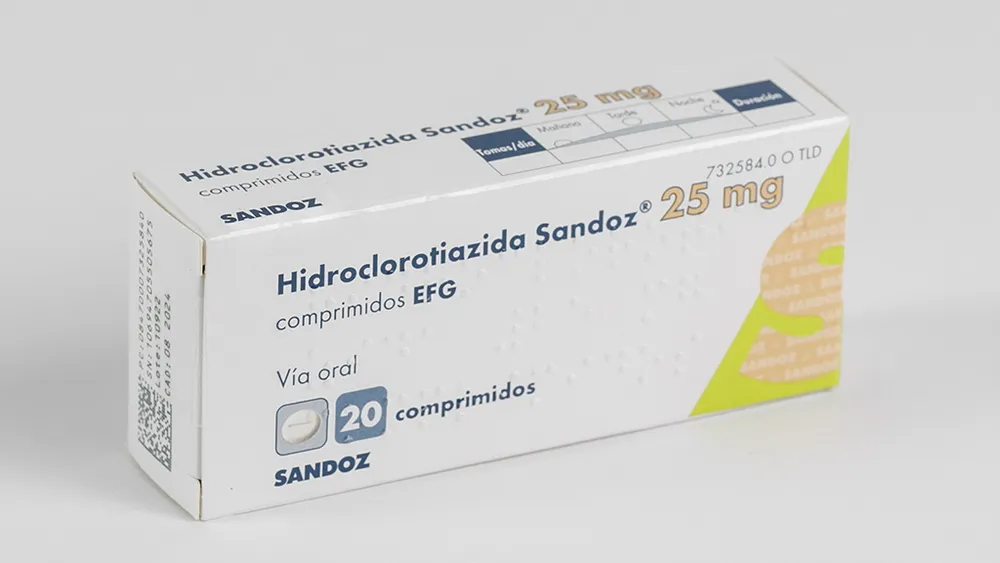
Table of Contents
- Package leaflet: Information for the user
- Introduction
- 1. What Hidroclorotiazida Sandoz is and what it is used for
- 2. What you need to know before taking Hidroclorotiazida Sandoz
- 3. How to take Hydrochlorothiazide Sandoz
- 4. Possible adverse effects
- 5. Storage of Hydrochlorothiazide Sandoz
- 6. Contents of the pack and other information
Package leaflet: Information for the user
Introduction
Package leaflet: information for the patient
Hydrochlorothiazide Sandoz 25 mg tablets EFG
Read the entire leaflet carefully before you start taking this medicine, because it contains important information for you.
-
Keep this leaflet, as you may need to read it again.
-
If you have any questions, consult your doctor or pharmacist.
-
This medicine has been prescribed for you only and must not be given to other people, even if they have the same symptoms as you, because it could harm them.
-
If you experience any adverse effects, consult your doctor or pharmacist, even if they are effects not listed in this leaflet. See section 4.
Contents of the leaflet
- What Hydrochlorothiazide Sandoz is and what it is used for
- What you need to know before taking Hydrochlorothiazide Sandoz
- How to take Hydrochlorothiazide Sandoz
- Possible adverse effects
- How to store Hydrochlorothiazide Sandoz
- Contents of the pack and other information
1. What Hidroclorotiazida Sandoz is and what it is used for
Hydrochlorothiazide belongs to a group of medicines called "diuretics". Diuretics increase the amount of urine produced by the kidneys and are sometimes referred to as water pills.
Hydrochlorothiazide is indicated for the treatment of:
- high blood pressure (hypertension),
- excessive fluid retention in the tissues due to heart, kidney, or liver disease (cardiac, hepatic, or renal edema).
2. What you need to know before taking Hidroclorotiazida Sandoz
Do not take Hidroclorotiazida Sandoz
- if you are allergic to hydrochlorothiazide or other sulfonamide-derived medicines, or to any of the other ingredients of this medicine (listed in section 6),
- if you have severe kidney function disorders and your kidneys produce very little or no urine (oliguria or anuria),
- if you suffer from acute inflammation of the kidneys (glomerulonephritis),
- if you have severe liver diseases such as liver failure with loss of consciousness (hepatic coma or precoma),
- if you have low levels of potassium in the blood (hypokalemia),
- if you have low levels of sodium in the blood (hyponatremia),
- if you have reduced circulating blood volume (hypovolemia),
- if you have elevated levels of calcium in the blood (hypercalcemia),
- if you have elevated levels of uric acid in the blood causing symptoms (patients who have suffered from gout),
- if you suffer from gout.
Warnings and precautions
Talk to your doctor or pharmacist before taking this medicine if you have:
-
very low blood pressure (hypotension),
-
a condition called Addison's disease,
-
systemic lupus erythematosus (SLE),
-
insufficient blood flow to the brain (cerebrovascular insufficiency),
-
coronary heart disease,
-
diabetes, or latent diabetes (manifest or latent diabetes mellitus),
-
renal impairment (serum creatinine of 1.1–1.8 mg/100ml or moderately reduced creatinine clearance of 30–60 ml/min),
-
hepatic impairment,
-
if you have had skin cancer or develop an unexpected skin lesion during treatment. Treatment with hydrochlorothiazide, particularly long-term use at high doses, may increase the risk of certain types of non-melanoma skin and lip cancer. Protect your skin from exposure to sunlight and UV rays while taking hydrochlorothiazide.
-
if you experience vision changes or eye pain, which could be symptoms of fluid accumulation in the vascular layer of the eye (choroidal effusion) or increased eye pressure, occurring within hours to a week after taking hydrochlorothiazide. If you have previously had an allergic reaction to penicillin or sulfonamides, you have a higher risk of an allergic reaction to this medicine,
-
if you have previously experienced respiratory or lung problems (such as inflammation or fluid in the lungs) after taking hydrochlorothiazide. If you develop severe shortness of breath or difficulty breathing after taking hydrochlorothiazide, seek medical attention immediately.
In cases of severe renal impairment (creatinine clearance below 30 ml/min and/or serum creatinine above 1.8 mg/100ml), hydrochlorothiazide is ineffective. It may even be harmful by further reducing kidney function.
In cases of chronic abuse of diuretic medications, a pseudo-Bartter syndrome may develop along with fluid retention in body tissues (edema).
During long-term treatment with this medicine, your doctor will regularly monitor your blood electrolyte levels (especially sodium, potassium, and calcium). They will also monitor creatinine, urea, serum lipids (cholesterol and triglycerides), uric acid, and blood glucose levels.
During treatment with this medicine, you should drink sufficient fluids. Because potassium loss increases, you should follow a potassium-rich diet (e.g., bananas, vegetables, nuts). Potassium loss can also be reduced or prevented by concomitant treatment with potassium-sparing diuretics.
Special observations
Treatment must be discontinued in case of:
- persistent disturbances in electrolyte metabolism unresponsive to therapy,
- abnormally low blood pressure causing dizziness when changing position, e.g., standing up (orthostatic hypotension),
- allergic reaction,
- severe gastrointestinal problems,
- disorders of the central nervous system,
- pancreatitis,
- changes in blood counts (anemia, leukopenia, thrombocytopenia),
- acute cholecystitis,
- vasculitis,
- worsening of myopia,
- serum creatinine above 1.8 mg/100ml or creatinine clearance below 30 ml/min.
Elderly (65 years or older)
In treating these patients, attention should be paid to possible reductions in kidney function (see section 3, "How to take Hidroclorotiazida Sandoz").
Children and adolescents (< 18 years)
There is no experience with this medicine in this age group. Therefore, this medicine should not be used in children and adolescents.
Other medicines and Hidroclorotiazida Sandoz
Tell your doctor or pharmacist if you are taking, have recently taken, or might need to take any other medicines.
Concomitant use not recommended:
Medicines associated with potassium loss and low blood potassium levels (hypokalemia), e.g., potassium-wasting diuretics (e.g., furosemide), glucocorticoids, ACTH, laxatives, carbenoxolone, amphotericin B, sodium penicillin G, salicylic acid and its derivatives:
Concomitant administration of hydrochlorothiazide and medicines that increase potassium loss may lead to increased potassium depletion. Monitoring of potassium levels is advised. Therefore, such combinations are not recommended.
Lithium:
Concomitant administration of hydrochlorothiazide and lithium increases the harmful effects of lithium on the heart and nervous system. Therefore, concomitant use of lithium and hydrochlorothiazide should only be allowed under strict medical supervision and is not recommended. If the combination is necessary, monitoring of serum lithium levels during concomitant treatment is recommended.
Concomitant use requiring caution:
Other diuretics, blood pressure-lowering medicines, beta-blockers (a group of medicines for high blood pressure, heart problems, or high eye pressure), nitrates (medicines used for angina), barbiturates (anxiolytic and anesthetic medicines), phenothiazines (such as certain antipsychotics), tricyclic antidepressants (medicines for depression, mainly), vasodilators (medicines that widen blood vessels), alcohol: The blood pressure-lowering effect of hydrochlorothiazide may be increased by concomitant use of these medicines or alcohol consumption.
ACE inhibitors (e.g., captopril, enalapril):
During treatment with hydrochlorothiazide and concomitant use of ACE inhibitors (e.g., captopril, enalapril), there is a risk of a severe drop in blood pressure at the start of treatment and worsening of kidney function. Therefore, treatment with hydrochlorothiazide should be interrupted 2–3 days before starting therapy with an ACE inhibitor to reduce the possibility of a sudden drop in blood pressure at the beginning of therapy.
Salicylates and other non-steroidal anti-inflammatory drugs (NSAIDs) (e.g., indomethacin), including selective COX-2 inhibitors:
These medicines may reduce the blood pressure-lowering and diuretic effects of hydrochlorothiazide. Isolated cases of worsening kidney function have been reported, especially in patients with pre-existing poor kidney function.
When salicylates are taken in high doses, their toxic effects on the central nervous system may be enhanced. In patients with reduced circulating blood volume during treatment with hydrochlorothiazide, concomitant use of NSAIDs may cause acute renal failure.
Beta-blockers and diazoxide:
Concomitant use of hydrochlorothiazide with beta-blockers or diazoxide may increase the risk of elevated blood sugar (hyperglycemia).
Insulin or other oral medicines for the treatment of diabetes mellitus (antidiabetics), medicines for treating gout (e.g., probenecid, sulfinpyrazone), norepinephrine, adrenaline:
The effect of insulin or oral antidiabetic medicines, gout treatments (e.g., probenecid, sulfinpyrazone), norepinephrine, and adrenaline may be reduced during concomitant treatment with hydrochlorothiazide. Dose adjustments may be necessary.
Metformin:
Metformin should be used with caution due to the risk of lactic acid buildup in the blood caused by possible renal impairment associated with hydrochlorothiazide use.
Cardiac glycosides:
The effect and side effects of cardiac glycosides may be increased.
Cytostatic agents (e.g., cyclophosphamide, fluorouracil, methotrexate):
During concomitant treatment with cytostatic agents, increased bone marrow toxicity (especially reduced white blood cells [granulocytopenia]) may be expected.
Skeletal muscle relaxants of the curare type:
The effect of curare-type muscle relaxants, which may be administered during certain surgeries, may be increased or prolonged by hydrochlorothiazide. Therefore, inform the anesthesiologist about your hydrochlorothiazide treatment before undergoing surgery.
Cholestyramine, colestipol:
Concomitant use of cholestyramine or colestipol reduces the absorption of hydrochlorothiazide.
Methyldopa:
During concomitant use of methyldopa, cases of red blood cell breakdown (hemolysis) have been reported.
Medicines affected by changes in blood potassium levels:
Periodic monitoring of serum potassium levels and ECG is recommended when hydrochlorothiazide is administered with the following medicines:
- Class Ia antiarrhythmics (e.g., quinidine, hydroquinidine, disopyramide),
- Class III antiarrhythmics (e.g., amiodarone, sotalol, dofetilide, ibutilide),
- some antipsychotics (e.g., thioridazine, chlorpromazine, levomepromazine, trifluoperazine, cyamemazine, sulpiride, amisulpride, tiapride, pimozide, haloperidol, droperidol),
- other medicines, e.g., bepridil, cisapride, difemanil, intravenous erythromycin, halofantrine, mizolastine, pentamidine, esprafloxacin, terfenadine, intravenous vincamine.
Allopurinol:
Concomitant administration of thiazides may increase the incidence of allergic reactions to allopurinol.
Amantadine:
Hydrochlorothiazide may increase the risk of side effects caused by amantadine.
Calcium salts:
Hydrochlorothiazide may increase serum calcium levels. If calcium supplements are prescribed, serum calcium levels should be monitored and the calcium dose adjusted accordingly.
Vitamin D supplements:
Concomitant administration of hydrochlorothiazide with vitamin D supplements may increase serum calcium levels due to reduced calcium excretion.
Cyclosporine:
Concomitant administration of hydrochlorothiazide with cyclosporine may increase the risk of elevated uric acid levels (hyperuricemia) and gout complications.
Carbamazepine:
Concomitant administration of hydrochlorothiazide with carbamazepine may reduce blood sodium levels. Therefore, blood sodium levels should be monitored.
Quinine:
The clearance of quinina may be reduced when administered together with hydrochlorothiazide.
Tetracyclines:
Concomitant use of hydrochlorothiazide and tetracyclines may cause an increase in serum urea.
Taking Hidroclorotiazida Sandoz with food and alcohol
Do not drink alcohol while being treated with this medicine, especially if you are also taking barbiturates (e.g., phenobarbital) or opioids, as orthostatic hypotension (a sudden drop in blood pressure causing dizziness due to positional changes such as standing up) may be intensified.
Pregnancy, breastfeeding, and fertility
If you are pregnant, breastfeeding, think you may be pregnant, or are planning to become pregnant, consult your doctor or pharmacist before using this medicine.
Pregnancy:
There are insufficient data on the use of this medicine during the first trimester of pregnancy to assess potential harm. No evidence of harmful effects has been found in animal studies. Hydrochlorothiazide crosses the placenta. Hydrochlorothiazide may be harmful during the second and third trimesters. You should only take this medicine during pregnancy if advised by your doctor.
Breastfeeding:
Hydrochlorothiazide passes into breast milk. Do not take this medicine while breastfeeding unless advised by your doctor.
Fertility:
There are no data on the possible effects of hydrochlorothiazide on fertility.
Driving and using machines
Hydrochlorothiazide has a minor or moderate influence on the ability to drive or use machines.
Even when taken as directed, this medicine may affect your reactions. Therefore, your ability to drive or operate machinery or work in locations without solid support may be impaired.
This is especially likely at the beginning of treatment, when the dose is increased, when changing medication, or when taken with alcohol.
Hidroclorotiazida Sandoz contains lactose.
This medicine contains lactose. If your doctor has informed you that you are intolerant to certain sugars, consult them before taking this medicine.
3. How to take Hydrochlorothiazide Sandoz
Follow exactly the instructions for using this medicine as given by your doctor. If in doubt, consult your doctor or pharmacist again.
This medicine is available in 25 mg tablets.
The dose should be individually adjusted, especially after treatment has proven effective.
The recommended dose is:
Adults
High blood pressure (hypertension):
The recommended initial dose is 12.5 mg or 25 mg of hydrochlorothiazide (half a tablet to one tablet daily).
The recommended dose for long-term treatment is usually 12.5 mg of hydrochlorothiazide daily (half a tablet daily).
Cardiac, hepatic, and renal edema:
The recommended initial dose is 25 mg or 50 mg daily.
The recommended dose for long-term treatment is usually 25 mg to 100 mg daily.
Patients with hepatic or renal impairment:
In patients with hepatic or renal impairment, the dose should be adjusted according to the degree of impairment.
Patients with severe cardiac decompensation:
In patients with fluid retention due to severe cardiac muscle weakness (severe cardiac decompensation), absorption of hydrochlorothiazide may be considerably reduced.
Elderly patients:
When treating elderly patients (65 years of age or older), attention should be paid to possible limitations in renal function.
Use in children and adolescents (<18 years)
There is no experience in children and adolescents. Therefore, hydrochlorothiazide should not be administered to children or adolescents.
Method of administration
Oral use.
Take the tablets with breakfast. Swallow the tablet whole with sufficient liquid; do not chew it.
The 25 mg tablet may be divided into equal doses.
Duration of treatment
The duration of treatment is not limited and will depend on the severity of your condition. After long-term treatment, hydrochlorothiazide should be discontinued gradually.
Please inform your doctor or pharmacist if you notice that the effect of this medicine is too strong or too weak.
If you take more Hydrochlorothiazide Sandoz than you should
If you take more hydrochlorothiazide than you should, contact your doctor immediately; he or she will decide which measures to take depending on your symptoms. In cases of poisoning and/or severe symptoms, immediate medical treatment is required.
Symptoms of acute or chronic overdose depend on the amount of fluid and electrolytes lost.
When fluid and sodium loss is considerable, an overdose may result in thirst, weakness, dizziness, vomiting, muscle pain and muscle spasms (e.g., cramps), and headache. Also, rapid heartbeat, decreased blood pressure (hypotension), and a drop in blood pressure causing dizziness upon standing (orthostatic hypotension).
Dehydration and reduced blood volume may lead to blood thickening. In addition, seizures, feeling faint (obnubilation), lethargy, confusion, brief episodes of unconsciousness that resolve spontaneously due to reduced blood flow to the brain (circulatory collapse), and renal failure may occur.
Potassium loss may result in fatigue, muscle weakness, tingling, itching, or prickling sensations in arms and legs (paresthesia), partial paralysis (paresis), apathy, flatulence, bloating, constipation, and cardiac rhythm disturbances. Severe potassium loss may lead to intestinal paralysis (paralytic ileus), decreased level of consciousness, or even unconsciousness (hypokalemic coma).
In case of overdose or accidental ingestion, contact your doctor or pharmacist immediately or call the Toxicology Information Service at: 91 562 04 20, indicating the medicine and the amount ingested.
If you forget to take Hydrochlorothiazide Sandoz
If you forget to take a dose, take it as soon as you remember. Do not take a double dose to make up for forgotten doses, but continue treatment with the prescribed dose.
If you stop taking Hydrochlorothiazide Sandoz
Do not stop treatment with hydrochlorothiazide or change the dose without first consulting your doctor.
If you have any further questions about the use of this medicine, ask your doctor or pharmacist.
4. Possible adverse effects
Like all medicines, this medicine can cause adverse effects, although not everyone will experience them.
If you experience any of the following effects, stop taking this medicine immediately and inform your doctor or go to the nearest hospital emergency department.
- Decrease in the number of platelets in the blood (thrombocytopenia, sometimes with purpura), causing bleeding or bruising more easily than normal.
- Anaphylactic reaction, e.g., sudden signs of allergy such as rash, itching, or hives on the skin.
- Swelling of the face, lips, tongue, or other parts of the body.
- Shortness of breath, wheezing, or difficulty breathing.
- Severe skin reactions (toxic epidermal necrolysis, cutaneous lupus erythematosus, lupus-like reactions, reactivation of lupus erythematosus).
- Acute breathing difficulty (symptoms include severe shortness of breath, fever, weakness, and confusion); this is a very rare adverse reaction (may affect up to 1 in 10,000 people).
The following side effects may occur due to disturbances in fluid and electrolyte balance
If you take hydrochlorothiazide for a long time, disturbances in hydroelectrolytic metabolism occur very frequently. In particular, reduced levels of sodium and potassium (hypokalaemia and hyponatraemia), reduced levels of magnesium and chloride (hypomagnesaemia, hypochloraemia), and elevated levels of calcium in the blood (hypercalcaemia).
At high doses, loss of fluid and sodium may occur. These may cause the following symptoms: dry mouth and thirst, feeling of weakness and dizziness, muscle pain and muscle cramps (e.g., cramps in the calf), headache, restlessness, palpitations, decreased blood pressure (hypotension), and drop in blood pressure causing dizziness upon changing posture, e.g., when standing up (orthostatic hypotension).
In cases of excessive urine excretion, dehydration and reduction in circulating blood volume (hypovolaemia) may occur, resulting in blood becoming thicker (haemoconcentration). In rare cases, seizures, feeling faint (obnubilation), confusion, brief periods of unconsciousness that resolve spontaneously, caused by reduced blood flow to the brain (circulatory collapse), and acute renal failure may occur.
Thrombosis and embolism have also been reported, especially in elderly patients or those with venous diseases.
Consequences of potassium loss may include fatigue, drowsiness, muscle weakness, sensory disturbances in the limbs (paraesthesia), partial paralysis (paresis), and apathy. In addition, constipation, flatulence, and bloating (meteorism) may occur, as well as disturbances in heart rhythm.
Severe potassium loss may result in partial intestinal paralysis (subileus) or intestinal obstruction (paralytic ileus), altered consciousness, or even coma.
Changes in the ECG and increased sensitivity to digitalis preparations (sensitivity to glycosides) may occur.
Increased excretion of magnesium in urine (hypermagnesuria) is common and may sometimes lead to magnesium deficiency in the blood.
As a consequence of electrolyte and fluid losses, metabolic alkalosis may develop or pre-existing metabolic alkalosis may worsen.
This medicine may also cause the following side effects:
Very common adverse effects (may affect more than 1 in 10 people)
- Disturbances in fluid and electrolyte balance, especially decreased levels of potassium, sodium, magnesium, and chloride, and increased levels of calcium in blood (hypokalaemia, hyponatraemia, hypochloraemia, and hypercalcaemia).
- Increased blood sugar levels (hyperglycaemia) and presence of sugar in urine (glucosuria), observed in patients with healthy metabolism, patients in pre-diabetic states (latent diabetes mellitus), diabetic patients, and patients with potassium deficiency.
- Elevated levels of uric acid in blood (hyperuricaemia), which may lead to gout attacks in predisposed patients.
- Increase in blood lipids (cholesterol, triglycerides).
- Increased presence of sugar in urine (glucosuria).
Common adverse effects (may affect 1 in 10 people)
- Sensation of increased heartbeat (palpitations).
- Loss of appetite, gastrointestinal discomfort (e.g., nausea, vomiting, diarrhoea, abdominal pain, and cramps).
- Temporary increase in substances excreted in urine (creatinine, urea).
Uncommon adverse effects (may affect 1 in 100 people)
- Decrease in the number of white blood cells (leucopenia).
- Visual disturbances (e.g., blurred vision, seeing objects as yellow, lack of tears, worsening of myopia).
- Reduced blood pressure upon changing posture, e.g., when standing up (orthostatic hypotension), especially in patients with intravascular volume depletion, e.g., patients with severe heart failure or on high-dose diuretic treatment (increases when taken together with alcohol, anaesthetics, or sedative medicines).
- Inflammation of blood vessels (vasculitis).
- Shortness of breath (respiratory distress), acute interstitial pneumonia.
- Elevated concentration of certain liver enzymes (amylase) in blood (hyperamylasaemia), inflammation of the pancreas (pancreatitis), yellowish discoloration (jaundice, intrahepatic cholestasis).
- Skin allergic reactions (e.g., itching, redness of the skin, skin rashes, or rash caused by hypersensitivity to sunlight (photoallergic exanthema), localized haemorrhagic petechiae on the skin and mucous membranes (purpura), intensely itchy wheals (urticaria).
- Acute kidney inflammation (interstitial nephritis).
- Impotence.
- Drug fever (fever caused by an allergic reaction to the medicine).
Rare adverse effects (may affect up to 1 in 1,000 people):
- Sleep disorders, depression.
- Headache, dizziness, itching or tingling in arms or legs (paraesthesia).
- Changes in heart rhythm (arrhythmias).
- Constipation.
Very rare adverse effects (may affect up to 1 in 10,000 people):
- Bone marrow depression, significant reduction in certain white blood cells with a tendency towards infections and severe general symptoms (agranulocytosis).
- Anaemia due to disturbances in blood formation in the bone marrow (aplastic anaemia).
- Destruction of red blood cells (haemolytic anaemia) or autoimmune haemolytic anaemia due to antibody formation against hydrochlorothiazide during concomitant administration with methyldopa, resulting in increased breakdown of red blood cells.
- Hypochloraemic acidosis.
- Pulmonary oedema (excess fluid in the lungs).
Adverse effects of unknown frequency (cannot be estimated from available data):
- In patients with diabetes (manifest diabetes mellitus), metabolic status may worsen. In patients with pre-diabetic conditions (latent diabetes), diabetes may become apparent.
- In cases of pre-existing gallstones (cholelithiasis), acute inflammation of the gallbladder (cholecystitis) may occur.
- Skin and lip cancer (non-melanoma skin cancer).
- Decreased vision or eye pain due to increased pressure (possible signs of fluid accumulation in the vascular layer of the eye (choroidal effusion) or acute angle-closure glaucoma).
Reporting of adverse effects
If you experience any type of adverse effect, consult your doctor or pharmacist, even if they are possible adverse effects not listed in this leaflet. You may also report them directly via the Spanish Pharmacovigilance System for Human Medicines: https://www.notificaram.es. By reporting adverse effects, you can help provide more information on the safety of this medicine.
5. Storage of Hydrochlorothiazide Sandoz
Keep this medicine out of the sight and reach of children.
Do not use this medicine after the expiry date stated on the packaging after CAD/EXP. The expiry date refers to the last day of the month indicated.
Store this medicine in the original packaging to protect it from light.
Medicines must not be disposed of via wastewater or household waste. Dispose of unused medicines and their containers at a SIGRE collection point at your pharmacy. If you are unsure, please ask your pharmacist how to dispose of unused medicines and their containers. This will help protect the environment.
6. Contents of the pack and other information
Composition of Hydrochlorothiazide Sandoz
The active substance is hydrochlorothiazide.
Each tablet contains 25 mg of hydrochlorothiazide.
The other components are: monohydrate lactose, corn starch, talc (E553b), anhydrous colloidal silica (E 551), and magnesium stearate (E470b).
Appearance of the product and contents of the pack
The 25 mg tablets are white, round, flat, with a diameter of 7.8 to 8.2 mm and a thickness of 2.7 to 3.4 mm, marked on one side.
The tablets are packed in transparent or coloured aluminium blisters, or non-transparent PVC blisters.
Pack sizes: 20, 30 or 90 tablets.
Only some pack sizes may be marketed.
Marketing Authorization Holder and Manufacturer
Marketing Authorization Holder
Sandoz Farmacéutica, S.A.
Centro Empresarial Parque Norte
Edificio Roble
C/ Serrano Galvache, 56
28033 Madrid
Spain
Manufacturer
Zaklady Farmaceutyczne Polpharma S.A.
Ul Pelplinska 19
Starogard Gdanski
Pomorskie 83-200
Poland
This medicinal product is authorised in the European Economic Area member states under the following names:
Netherlands Hydrochloorthiazide Sandoz 25 mg glutenvrij, tabletten
Spain Hidroclorotiazida Sandoz 25 mg comprimidos EFG
Date of the most recent review of this leaflet: April 2022
Detailed information on this medicine is available on the website of the Spanish Agency of Medicines and Health Products (AEMPS) http://www.aemps.gob.es/