Humulina NPH 100 IU/mL injection suspension in vial
Spain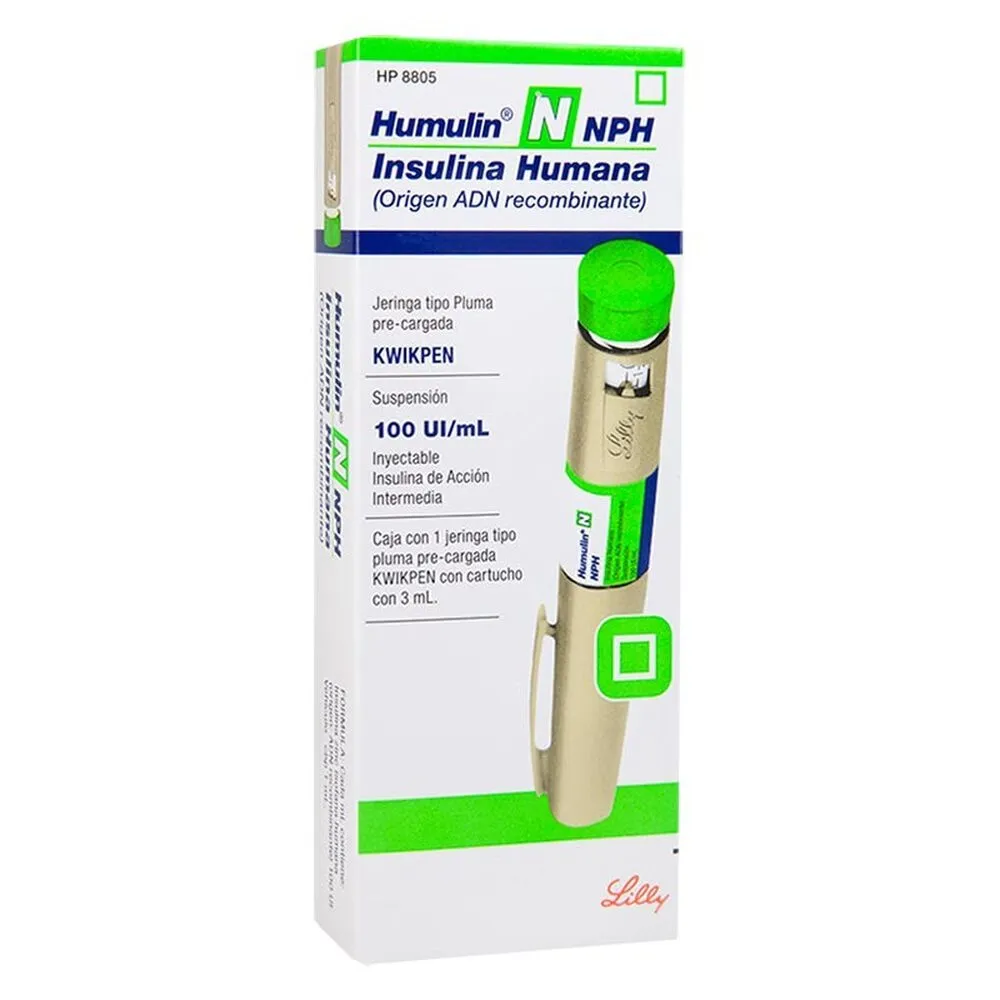
Table of Contents
Package leaflet: Information for the user
Introduction
Package leaflet: Information for the user
HUMULINA NPH 100UI/ml injectable suspension in vial
(Human insulin)
Read the entire leaflet carefully before you start using this medicine, because it contains important information for you.
- Keep this leaflet, as you may need to read it again.
- If you have any questions, ask your doctor, pharmacist or nurse.
- This medicine has been prescribed for you only, and you should not give it to other people, even if they have the same symptoms as you, because it could harm them.
- If you experience any adverse reactions, consult your doctor, pharmacist or nurse, even if they are adverse reactions not listed in this leaflet. See section 4.
Leaflet contents
- What Humulina NPH is and what it is used for
- What you need to know before using Humulina NPH
- How to use Humulina NPH
- Possible adverse effects
- How to store Humulina NPH
- Contents of the pack and other information
1. What Humulina NPH is and what it is used for
Humulina NPH contains human insulin as the active substance, which is used to treat diabetes. You have diabetes if your pancreas does not produce enough insulin to control your blood glucose levels (blood sugar). Humulina NPH is used for long-term glucose control. Its prolonged action is due to the inclusion of protamine sulfate in the suspension.
Your doctor may instruct you to use Humulina NPH together with a rapid-acting insulin. Each insulin comes with its own package leaflet providing information about it. Do not change your insulin unless your doctor tells you to. Be careful if you switch from one insulin to another. Each type of insulin has a different color and symbol on the packaging and on the vial to help you easily distinguish them.
2. What you need to know before using Humulina NPH
Do not use Humulina NPH:
- If you think you are beginning to have hypoglycemia (low blood sugar). Later in this leaflet you will find instructions on how to treat mild hypoglycemia (see section 4, subsection A).
- If you are allergic to human insulin or to any of the other ingredients of this medicine (listed in section 6).
Warnings and precautions
Talk to your doctor, pharmacist, or nurse before using Humulina NPH.
- If your blood sugar levels are well controlled with your current insulin, you may not feel the warning symptoms when your blood sugar drops to too low levels. The warning signs are listed later in this leaflet. You should carefully consider when to eat meals, how often and how intensely you exercise. You should also monitor your blood sugar levels very carefully by frequently checking your blood glucose.
- Some people who have experienced hypoglycemia (low blood sugar) after switching from animal insulin to human insulin have reported that the early warning symptoms were less obvious or different. If you frequently experience hypoglycemia or have difficulty recognizing the symptoms, consult your doctor.
- If your answer to any of the following questions is YES, inform your doctor, pharmacist, or nurse.
- Have you recently become ill?
- Do you have kidney or liver problems?
- Are you exercising more than usual?
- If you consume alcohol, the amount of insulin you need may also change.
- You should also inform your doctor, pharmacist, or nurse if you plan to travel abroad. Time zone differences between countries may require you to take your injections and meals at different times than when you are at home.
- Some patients with long-standing type 2 diabetes and heart problems or who have previously had a stroke, treated with pioglitazone and insulin, have experienced the development of heart failure. Inform your doctor as soon as possible if you experience signs of heart failure, such as unusual shortness of breath, rapid weight gain, or localized swelling (edema).
- Skin changes at the injection site:
- You should rotate your injection site to avoid skin changes such as lumps under the skin. Insulin may not work as well if injected into a lumpy area (see How to use Humulina NPH). Contact your doctor if you are currently injecting into a lumpy area, before starting to inject into a different area. Your doctor may advise you to monitor your blood sugar levels more closely and may adjust your insulin dose or the dose of your other antidiabetic medications.
Use of Humulina NPH with other medicines
Inform your doctor or pharmacist if you are taking, have recently taken, or might need to take any other medicines.
Your insulin requirements may change if you are taking any of the following:
- Steroids,
- thyroid hormone replacement therapy,
- oral hypoglycemic agents (antidiabetic medications),
- acetylsalicylic acid (aspirin),
- growth hormone,
- octreotide, lanreotide,
- beta2-stimulants (e.g., ritodrine, salbutamol, or terbutaline),
- beta-blockers,
- thiazides or certain antidepressants (monoamine oxidase inhibitors),
- danazol,
- some angiotensin-converting enzyme inhibitors (ACE inhibitors) (e.g., captopril, enalapril) or angiotensin II receptor blockers.
Pregnancy, breastfeeding, and fertility
The amount of insulin you normally need usually decreases during the first three months of pregnancy and increases during the remaining six months. If you are breastfeeding, you may need to adjust your insulin dose or diet.
If you are pregnant or breastfeeding, think you may be pregnant, or are planning to become pregnant, consult your doctor or pharmacist before using this medicine.
Driving and using machines
Your ability to concentrate and react may be reduced if you experience hypoglycemia (low blood sugar). Please keep this in mind in any situation where it could pose a risk to yourself or others (e.g., driving a car or operating machinery). You should consult your doctor or nurse about whether it is safe for you to drive if you:
- have frequent episodes of hypoglycemia,
- have difficulty perceiving the symptoms of hypoglycemia or do not perceive them at all.
Humulina NPH contains Sodium
This medicine contains less than 1 mmol of sodium (23 mg) per dose; hence, it is essentially "sodium-free".
3. How to use Humulina NPH
Always check the name and type of insulin on the package and on the vial label when you receive it from the pharmacy. Make sure you are receiving the Humulina your doctor has prescribed for you.
Follow exactly the dosing instructions for this medicine given by your doctor or pharmacist. If in doubt, consult your doctor or pharmacist again.
Dosage
- Humulina NPH is usually injected as your basal insulin. Your doctor has told you which insulin to use, how much, and when and how often to inject it. These instructions are intended specifically for you. Follow them exactly and attend your diabetes clinic regularly.
- If you switch from one type of insulin to another (e.g., from animal to human insulin), you may need to use more or less than before. This change may occur only with the first injection or may develop gradually over several weeks or months.
- Inject Humulina NPH under the skin. Do not administer it by any other route. Under no circumstances should Humulina NPH be injected into a vein.
Preparing Humulina NPH
- Vials containing Humulina NPH must be rolled several times between the palms of the hands before use to resuspend the insulin until it appears uniformly cloudy or milky. Do not shake vigorously, as foaming may occur, which could interfere with accurate dose measurement. Vials should be examined frequently and must not be used if clumps of material or white solid particles are adhering to the bottom or sides of the vial, giving it a frost-like appearance. Check this each time before injecting.
Injecting Humulina NPH
- First, wash your hands.
- Before injecting, clean the skin thoroughly as instructed. Clean the rubber stopper of the vial, but do not remove it.
- Use a new, sterile syringe and needle to pierce the rubber stopper and draw up the required amount of Humulina NPH. Your doctor or nurse will show you how to do this. Do not share your needles or syringes.
- Inject under the skin as you have been taught. Do not inject directly into a vein. After injection, keep the needle in the skin for 5 seconds to ensure the full dose has been delivered. Do not rub the injection site. Make sure you inject at least 1 centimeter away from your last injection site and rotate injection sites as instructed.
- Your doctor will tell you if you need to mix Humulina Regular with Humulina NPH. For example, if you need to inject a mixture, draw up Humulina Regular into the syringe before drawing up the long-acting insulin. Inject the mixture as soon as it has been prepared. Repeat this procedure each time you need to inject a mixed dose. Normally, Humulina NPH should not be mixed with other human insulin combinations. Humulina NPH must never be mixed with insulins produced by other manufacturers or with animal insulins.
If you use more Humulina NPH than you should
If you use more Humulina NPH than prescribed, your blood sugar may drop. Check your blood sugar (see section 4, subsection A).
In case of overdose or accidental ingestion, contact the Toxicology Information Service. Telephone: 91 562 04 20.
If you forget to use Humulina NPH
If you use less Humulina NPH than prescribed, your blood sugar levels may rise. Check your blood sugar. Do not inject a double dose to make up for missed doses.
If you stop using Humulina NPH
If you use less Humulina NPH than prescribed, your blood sugar levels may become too high. Do not change your insulin unless instructed by your doctor.
If you have any further questions about the use of this medicine, ask your doctor, pharmacist, or nurse.
4. Possible adverse effects
Like all medicines, this medicine can cause adverse effects, although not everyone gets them.
Human insulin can cause hypoglycaemia (low blood sugar). See further information on hypoglycaemia below in the subsection "Common diabetes-related problems".
Possible adverse effects
Systemic allergy: very rare (affects less than 1 in 10,000 treated patients). The symptoms are the following:
|
|
|
|
|
|
If you think you have this type of allergy to insulin with Humulina NPH, inform your doctor immediately.
Local allergy: Common (affects fewer than 1 in 10 patients treated). In some patients, the injection site may become red, swollen, or itchy. Usually, these symptoms disappear within a few days or weeks. If this happens to you, consult your doctor.
Skin changes at the injection site:
If you inject insulin too frequently in the same spot, fatty tissue may shrink (lipoatrophy) or become thicker (lipohypertrophy) (may affect up to 1 in 100 people). Lumps under the skin may also occur due to the buildup of a protein called amyloid (cutaneous amyloidosis; frequency unknown). Insulin may not work well if injected into a lumpy area. Rotate your injection sites to help prevent these skin changes.
Edema (e.g., swelling of arms, ankles, fluid retention) has been reported, particularly at the beginning of insulin treatment or during changes in treatment aimed at improving blood glucose control.
Common diabetes-related problems
A. Hypoglycemia
Hypoglycemia (low blood sugar) means there is not enough sugar in the blood. This can happen if:
- you use too much Humulina NPH or another insulin;
- you skip or delay meals or change your diet;
- you exercise or work too hard just before or after a meal;
- you have an infection or illness (especially diarrhea or vomiting);
- your insulin requirement changes; or
- you have worsening liver or kidney problems.
Alcohol and certain other medications can affect your blood sugar levels.
The early symptoms of low blood sugar usually appear quickly and include the following:
|
|
|
|
|
|
Until you are certain you recognize the warning symptoms, avoid situations such as driving a car, since hypoglycemia may pose a risk to you or others.
Do not use Humulina NPH if you think you are beginning to experience hypoglycemia (low blood sugar).
If your blood sugar is low, take glucose tablets, sugar, or drink a sugary beverage. Afterwards, eat a piece of fruit, biscuits, or a snack as directed by your doctor, and rest. This will likely help you recover from mild hypoglycemia or a minor overdose of insulin. If your condition worsens and your breathing becomes shallow and your skin turns pale, inform your doctor immediately. An injection of glucagon may be used to treat a severe hypoglycemic episode. Take glucose or sugar after the glucagon injection. If there is no response to glucagon, go to the hospital immediately. Ask your doctor for information about glucagon.
B. Hyperglycemia and diabetic ketoacidosis.
Hyperglycemia (too much sugar in the blood) means your body does not have enough insulin.
Hyperglycemia may be caused by:
- not taking your Humulina NPH or other insulin;
- taking less insulin than prescribed by your doctor;
- eating much more than your diet allows; or
- fever, infection, or emotional stress.
Hyperglycemia can lead to diabetic ketoacidosis. Early symptoms develop slowly over several hours or days. Symptoms include the following:
|
|
|
|
|
|
Severe symptoms include labored breathing and rapid pulse. Seek immediate medical assistance.
If hypoglycemia (low blood sugar) or hyperglycemia (high blood sugar) are not treated, they can become very serious and cause headaches, nausea, vomiting, dehydration, loss of consciousness, coma, or even death.
Three simple steps to avoid hypoglycemia or hyperglycemia are:
- Always keep extra syringes and an additional vial of Humulina NPH available.
- Always carry identification indicating you are a diabetic patient.
- Always carry sugar with you.
C. Illness
If you become ill, especially if you experience nausea or vomiting, the amount of insulin you need may change. You must continue taking insulin even if you are not eating as usual. Perform urine or blood tests, follow the guidelines provided to you for such situations, and inform your doctor or nurse.
Reporting of adverse reactions
If you experience any type of adverse reaction, consult your doctor, pharmacist, or nurse, even if it is a possible adverse reaction not listed in this leaflet. You may also report them directly via the Spanish Pharmacovigilance System for Human Medicinal Products: www.notificaRAM.es. By reporting adverse reactions, you can help provide more information on the safety of this medicine.
5. Storage of Humulina NPH
Keep this medicine out of the sight and reach of children.
Before first use, store your Humulina NPH in the refrigerator (between 2 °C and 8 °C). Do not freeze.
You may keep your in-use vial at room temperature (below 30 °C) for up to 28 days. Do not place it near heat sources or expose it to direct sunlight.
Do not use this medicine after the expiry date stated on the packaging and label. The expiry date refers to the last day of the month indicated.
Do not use this medicine if you notice clumps of material or white solid particles attached to the bottom or walls of the vial, giving it a frost-like appearance. Check this each time before injecting.
Medicines must not be disposed of via wastewater or household waste. Return unused containers and medicines to the SIGRE collection point at your pharmacy. Ask your pharmacist how to properly dispose of containers and medicines you no longer need. This helps protect the environment.
6. Contents of the pack and other information
Composition of Humulina NPH
-
The active substance is human insulin. Human insulin is produced in the laboratory using recombinant DNA technology and has the same structure as the natural hormone produced by the pancreas. Therefore, it differs from animal insulins. The human insulin in Humulina NPH is formulated as a suspension together with protamine sulfate.
-
The other components are protamine sulfate, metacresol, phenol, glycerol, disodium phosphate 7H2O, zinc oxide, and water for injections. During manufacturing, sodium hydroxide and/or hydrochloric acid may have been used to adjust the pH.
Appearance of the product and contents of the pack of Humulina NPH
Humulina NPH 100 UI/ml injectable suspension is a sterile, white suspension containing 100 units of human insulin per milliliter (100 UI/ml). Each vial contains 1,000 units (10 milliliters).
Humulina NPH 100 UI/ml is available in packs containing 1 vial or 2 vials, or in multiple packs of 5 (5 x 1) vials.
Only certain pack sizes may be commercially available.
Marketing Authorization Holder and Manufacturer
Marketing Authorization Holder: Lilly S.A., Avda. de la Industria, nº 30. 28108 Alcobendas, Madrid. Spain.
Manufacturer:
- Lilly S.A., Avda. de la Industria nº 30. 28108 Alcobendas, Madrid. Spain.
- Lilly France S.A.S., Rue du Colonel Lilly, 67640 Fegersheim, France.
This medicinal product is authorized in the Member States of the European Economic Area under the following names:
Huminsulin “Lilly” Basal (Austria)
Humuline NPH (Belgium, Luxembourg)
Humulin N (Czech Republic)
Huminsulin Basal (NPH) 100 (Germany)
Humulin NPH (Denmark, Greece, Sweden)
Humulina NPH (Spain)
Humulin I (Ireland, Italy, United Kingdom)
Umuline NPH (France)
Date of the most recent revision of this leaflet: August 2020.
Detailed and up-to-date information on this medicinal product is available on the website of the Spanish Agency of Medicines and Health Products (AEMPS) http://www.aemps.gob.es/