Humalog KwikPen 100 U/ml solution for injection
Spain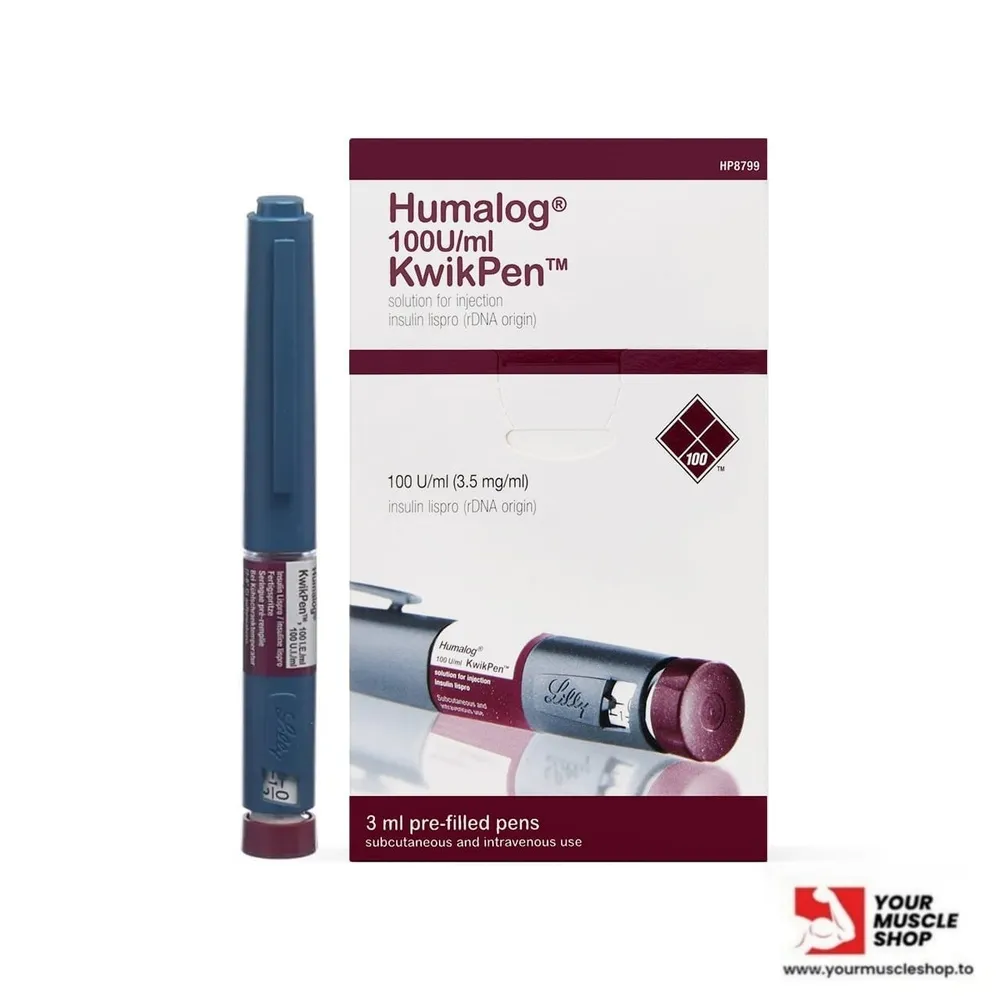
Table of Contents
Patient Information Leaflet
Introduction
Patient Information Leaflet
Humalog KwikPen 100 units/ml solution for injection in a pre-filled pen
insulin lispro
Each KwikPen delivers 1 to 60 units in 1-unit increments.
Read this entire leaflet carefully before you start using this medicine, as it contains important information for you.
-
Keep this leaflet, as you may need to read it again.
-
If you have any questions, ask your doctor or pharmacist.
-
This medicine has been prescribed for you only, and you should not give it to other people, even if they have the same symptoms as you, because it may harm them.
-
If you experience any adverse effects, talk to your doctor or pharmacist, even if they are effects not listed in this leaflet. See section 4.
Leaflet Contents
-
What Humalog KwikPen is and what it is used for
-
What you need to know before using Humalog KwikPen
-
How to use Humalog KwikPen
-
Possible side effects
-
How to store Humalog KwikPen
-
Contents of the pack and other information
1. What Humalog KwikPen is and what it is used for
Humalog KwikPen is used to treat diabetes. It works more quickly than regular human insulin because the insulin molecule has been slightly modified.
You have diabetes when your pancreas does not produce enough insulin to control your blood glucose levels. Humalog acts as a replacement for your own insulin and is used to control glucose levels over the long term. It starts working very quickly and acts for a shorter duration than soluble insulin (2 to 5 hours). Humalog is usually taken within 15 minutes around mealtime.
Your doctor may recommend that you use Humalog KwikPen in addition to a longer-acting insulin. Each of these comes with its own package leaflet containing specific information. Do not change your insulin unless your doctor tells you to. Be very careful when switching from one insulin to another.
Humalog can be used in adults and children.
The KwikPen is a disposable pre-filled pen containing 3 ml (300 units, 100 units/ml) of insulin lispro. One KwikPen contains multiple insulin doses. The KwikPen displays doses in 1-unit increments. The number of units appears in the dose window; always check it before your injection. You can inject from 1 to 60 units in a single injection. If your dose is greater than 60 units, you will need to give more than one injection.
2. What you need to know before you start using Humalog KwikPen
DO NOT use Humalog KwikPen
-
If you think you are experiencing hypoglycemia (low blood sugar). How to manage mild hypoglycemia is described later in this leaflet (see Section 3: If you use more Humalog than you should).
-
If you are allergic to insulin lispro or to any of the other ingredients of this medicine (listed in section 6).
Warnings and precautions
-
Always check at the pharmacy the name and type of insulin shown on the packaging and label of the pre-filled pen. Make sure you are taking home the Humalog KwikPen prescribed by your doctor.
-
If your blood sugar levels are well controlled with your current insulin therapy, you may not notice the warning symptoms that alert you to falling blood sugar levels. These warning symptoms are specified later in this leaflet.
You must carefully plan your meal times, exercise schedule, and the extent of physical activity. You must also closely monitor your blood sugar levels by frequently testing your blood glucose.
-
Some patients who have switched from animal insulin to human insulin have reported that the early warning symptoms of hypoglycemia were less obvious or different. If you experience frequent episodes of hypoglycemia or have difficulty recognizing them, please inform your doctor.
-
If you answer YES to any of the following questions, please discuss this with your doctor, pharmacist, or diabetes educator:
- Have you recently become ill?
-
- Do you have liver or kidney problems?
- Are you exercising more than usual?
-
The amount of insulin you need may change if you consume alcohol.
-
If you are planning to travel abroad, inform your doctor, pharmacist, or diabetes educator. Time differences between certain countries may require you to follow a different schedule for injections and meals than the one you normally follow in your home country.
-
Some patients with long-standing type 2 diabetes and a history of heart disease or prior stroke, who were treated with pioglitazone and insulin, developed heart failure. Inform your doctor as soon as possible if you experience signs of heart failure such as difficulty breathing, rapid weight gain, or localized swelling (edema).
-
It is not recommended that blind individuals or people with visual impairments use this pen without the assistance of a trained person.
Other medicines and Humalog KwikPen
Your insulin requirements may change if you are taking
-
contraceptives,
-
steroids,
-
thyroid hormone replacement therapy,
-
oral hypoglycemics,
-
acetylsalicylic acid,
-
sulfa antibiotics,
-
octreotide,
-
beta2-stimulants (e.g. ritodrine, salbutamol, or terbutaline),
-
beta-blockers, or
-
certain antidepressants (monoamine oxidase inhibitors or selective serotonin reuptake inhibitors),
-
danazol,
-
certain angiotensin-converting enzyme inhibitors (e.g. captopril, enalapril), and
-
angiotensin II receptor blockers.
Inform your doctor if you are taking, have recently taken, or might need to take any other medicines, including those obtained without a prescription (see section “Warnings and precautions”).
Pregnancy and breastfeeding
Are you pregnant or planning to become pregnant? Are you breastfeeding? Your insulin requirement generally decreases during the first three months of pregnancy and increases during the following six months. If you are breastfeeding, you may need to adjust your insulin dose or diet. If you are pregnant or breastfeeding, think you may be pregnant, or plan to become pregnant, consult your doctor or pharmacist before using this medicine.
Driving and using machines
Your ability to concentrate or react may be reduced if you experience hypoglycemia. Be aware of this potential problem and consider all situations that could pose a risk to yourself or others (e.g., driving a vehicle or operating machinery). You should consult your doctor about whether it is safe for you to drive if you have:
-
frequent episodes of hypoglycemia
-
difficulty perceiving or not perceiving symptoms of hypoglycemia
Humalog KwikPen contains sodium
This medicine contains less than 1 mmol of sodium (23 mg) per dose; essentially “sodium-free”.
3. How to use Humalog KwikPen
Follow exactly the administration instructions for this medicine given by your doctor. If in doubt, consult your doctor again. To prevent the possible transmission of disease, each pen must be used only by you, even if the needle is changed.
Dosage
-
Humalog should normally be injected within 15 minutes around mealtime. If needed, you may inject it shortly after a meal. However, your doctor will have told you exactly how much to use, when to take it, and how often. These instructions are specific to you. Follow them precisely and attend your diabetes clinic regularly.
-
If you switch the type of insulin you use (for example, from animal or human insulin to a product containing Humalog), you may need to use a different amount—either more or less than before. This may apply only for the first injection, or it may require a gradual adjustment lasting several weeks or months.
-
Humalog KwikPen is intended only for subcutaneous injection. Consult your doctor if you need to administer insulin by another method.
How to prepare Humalog KwikPen
- Humalog comes already dissolved in water, so it does not need to be mixed. However, only use it if it appears like water—clear, colorless, and free of solid particles. Check this before each injection.
How to prepare the KwikPen (please read the user manual)
-
First, wash your hands.
-
Read the instructions on how to use your pre-filled insulin pen. Follow the instructions carefully. Below are some reminders.
-
Use a new needle. (Needles are not included.)
-
Prime your KwikPen before each use. This ensures that insulin flows properly and removes air bubbles from your KwikPen. Small air bubbles may still remain in the pen; these are harmless. However, if the air bubble is too large, the injection dose may be less accurate.
How to inject Humalog
-
Before injecting, clean your skin as instructed. Inject under the skin as you have been taught. Do not inject directly into a vein. After the injection, leave the needle in the skin for five seconds to ensure the full dose has been delivered. Do not rub the injection site. Make sure to inject at least 1 cm away from your last injection site and rotate injection sites as instructed.
-
Humalog will always act faster than soluble human insulin, regardless of the injection site (upper arms, thighs, buttocks, or abdomen).
-
Do not administer Humalog intravenously (into a vein). Inject Humalog as taught by your doctor or diabetes educator. Only your doctor may administer Humalog intravenously. Your doctor will only administer Humalog intravenously under special circumstances, such as during surgery or if you have been ill and your glucose levels are too high.
After the injection
- As soon as you finish injecting, unscrew the needle from the KwikPen using the outer needle cap. This keeps the insulin sterile, prevents leakage, avoids air entering the pen, and prevents needle clogging. Do not share needles. Do not share your pen. Replace the cap on the pen.
Subsequent injections
-
Each time you use the KwikPen, use a new needle. Before each injection, remove all air bubbles. You can see the remaining insulin by holding the KwikPen with the needle pointing upward. The scale on the cartridge shows approximately how many units remain.
-
Do not mix any other insulin into the disposable pen. When the KwikPen is empty, it cannot be reused. Dispose of the pen responsibly; your pharmacist or diabetes educator will advise you how to do this.
Use of Humalog in an insulin infusion pump
- Humalog KwikPen is intended only for subcutaneous injection. Do not use the pen to administer Humalog by any other route. If needed, other presentations of Humalog 100 units/mL are available. Consult your doctor if you need to administer insulin by another method.
If you use more Humalog than you should
If you use more Humalog than required, or if you are unsure how much you have injected, you may experience low blood sugar (hypoglycemia). Check your blood glucose.
If your blood sugar is low (mild hypoglycemia), take glucose tablets, sugar, or a sugary drink. Then eat fruit, biscuits, or a snack as instructed by your doctor, and rest afterward. This usually resolves mild hypoglycemia or a small insulin overdose. If your condition worsens and you develop shallow breathing and pale skin, call your doctor immediately. Severe hypoglycemia can be treated with a glucagon injection. After a glucagon injection, glucose or sugar should be taken. If there is no response to glucagon, you must go to the hospital. Ask your doctor for information about glucagon.
If you forget to use Humalog
If you use less Humalog than needed, or if you are unsure how much you have injected, you may experience high blood sugar (hyperglycemia). Check your blood glucose.
If not properly treated, hypoglycemia (low blood sugar) or hyperglycemia (high blood sugar) can become serious and cause headache, nausea, vomiting, dehydration, loss of consciousness, coma, and even death (see A and B in section 4 “Possible side effects”).
Three simple measures to avoid hypoglycemia or hyperglycemia are:
-
Always keep spare syringes and vials of Humalog, or extra pens and cartridges, in case you lose your KwikPen or it becomes damaged.
-
Always wear a medical identification tag indicating you have diabetes.
-
Always carry a source of sugar with you.
If you stop using Humalog
If you use less Humalog than needed, you may experience high blood sugar. Do not change insulin unless instructed by your doctor.
If you have any further questions about the use of this medicine, ask your doctor or pharmacist.
4. Possible adverse effects
Like all medicines, this medicine can produce adverse effects, although not everyone will experience them.
Systemic allergy is rare (≥1/10,000 to <1/1,000). It presents the following symptoms:
• | rash all over the body | • | low blood pressure |
• | difficulty breathing | • | strong palpitations |
• | wheezing | • | sweating |
If you think you are experiencing this type of allergy with Humalog, speak to your doctor immediately.
Local allergy is common (≥ 1/100 to <1/10). In some people, the area where insulin has been injected becomes red, swollen, or itchy. This condition usually disappears within a few days or weeks. If this happens to you, inform your doctor.
Lipodystrophy (skin thickening or formation of a kind of pit) is uncommon (≥ 1/1,000 to <1/100). If you notice that the skin at the injection sites becomes thicker or forms a kind of pit, inform your doctor.
Cases of edema (e.g., swelling in the arms, ankles; fluid retention) have been reported, particularly at the beginning of insulin treatment or during changes in treatment aimed at improving blood sugar control.
Reporting of adverse reactions
If you experience any type of adverse reaction, consult your doctor or pharmacist, even if it is a possible adverse reaction not listed in this leaflet. You can also report them directly through the national reporting system included in Appendix V. By reporting adverse reactions, you can help provide more information on the safety of this medicine.
Common diabetes-related problems
- Hypoglycemia
Hypoglycemia (low blood sugar level) means that you do not have enough sugar in your blood.
It may be caused by:
-
injecting too much Humalog or any other type of insulin;
-
skipping a meal, delaying a meal, or changing your diet;
-
exerting yourself too much or exercising excessively just before or after a meal;
-
having an infection or being unwell (especially diarrhea or vomiting);
-
changes in your insulin requirements; or
-
worsening of kidney or liver disease.
Alcohol and certain medicines can affect your blood sugar levels.
The first symptoms of low blood sugar usually occur suddenly and include:
• |
fatigue |
• |
palpitations |
• |
nervousness and tremors |
• |
nausea |
• |
headache |
• |
cold sweats |
Until you are certain you recognize the warning symptoms, avoid situations (e.g., driving a car) in which you or others might be endangered if hypoglycemia occurs.
- Hyperglycemia and diabetic ketoacidosis
Hyperglycemia (too much sugar in the blood) means the body does not have enough insulin. Hyperglycemia may be caused by:
-
not administering Humalog or any other type of insulin;
-
administering less insulin than prescribed by your doctor;
-
eating much more than allowed by your diet; or
-
having fever, an infection, or emotional stress.
Hyperglycemia may progress to diabetic ketoacidosis. Early symptoms develop slowly over several hours or days. These symptoms include:
• | drowsiness | • | loss of appetite |
• | facial flushing | • | fruity breath |
• | thirst | • | nausea or vomiting |
Severe symptoms are labored breathing and rapid pulse. Seek medical assistance immediately.
- Illnesses
If you are ill, especially if you have nausea or vomiting, the amount of insulin you need may vary. Even if you are not eating as usual, you still need insulin. Test your urine or blood, follow the instructions you have been given for when you are ill, and call your doctor.
5. Storage of Humalog KwikPen
Before first use, store Humalog KwikPen in the refrigerator (between 2°C and 8°C). Do not freeze.
Keep the Humalog KwikPen in use at room temperature (below 30°C) and discard it after 28 days. Do not place it near heat sources or expose it to direct sunlight. Do not store the KwikPen you are currently using in the refrigerator. The KwikPen must not be stored with the needle attached.
Keep this medicine out of the sight and reach of children.
Do not use this medicine after the expiry date stated on the label and packaging. The expiry date refers to the last day of the month indicated.
Do not use this medicine if it has changed in colour or if you notice solid particles. Only use it if it appears clear, like water. Check this before each injection.
Medicines must not be disposed of via wastewater or household waste. Ask your pharmacist how to dispose of medicines and containers you no longer need. This will help protect the environment.
6. Contents of the pack and other information
Composition of Humalog KwikPen 100 units/ml solution for injection
-
The active substance is insulin lispro. Insulin lispro is produced in the laboratory by a "recombinant DNA technology" process. It is a modified form of human insulin and therefore differs from other human insulins and from animal-source insulins. Insulin lispro is closely related to human insulin, which is a natural hormone produced by the pancreas.
-
The other components are m-cresol, glycerol, dibasic sodium phosphate.7H2O, zinc oxide, and water for injections. Sodium hydroxide or hydrochloric acid may have been used to adjust acidity.
Nature of the product and pack contents
Humalog KwikPen 100 units/ml solution for injection is a sterile, clear, colourless, aqueous solution containing 100 units of insulin lispro per millilitre of solution for injection (100 units/ml). Each Humalog KwikPen contains 300 units (3 millilitres). Humalog KwikPen is available in a pack of 5 pre-filled pens or in a multiple pack consisting of 2 packs of 5 pre-filled pens. Not all pack sizes may be marketed. The Humalog 100 units/ml contained in your pre-filled pen is identical to the Humalog 100 units/ml available in individual cartridges for Humalog 100 units/ml. The KwikPen simply contains a cartridge inside. When the pre-filled pen is empty, it cannot be reused.
Marketing Authorisation Holder and Manufacturer
Humalog KwikPen 100 units/ml solution for injection is manufactured by:
-
Lilly France, S.A.S., Rue du Colonel Lilly, 67640 Fegersheim, France,
-
Eli Lilly Italia S.p.A., Via Gramsci 731-733, 50019 Sesto Fiorentino, (FI) Italy.
The Marketing Authorisation Holder is Eli Lilly Nederland B.V., Papendorpseweg 83, 3528 BJ Utrecht, Netherlands.
For further information on this medicinal product, please contact the local representative of the Marketing Authorisation Holder:
Belgium/Belgium/Belgium Eli Lilly Benelux S.A./N.V. Tel/Tel: + 32-(0)2 548 84 84 | Lithuania Eli Lilly Lietuva Tel. +370 (5) 2649600 |
Bulgaria LLC "ELI LILLY BULGARIA" - Sofia Tel. + 359 2 491 41 40 | Luxembourg/Luxembourg Eli Lilly Benelux S.A./N.V. Tel/Tel: + 32-(0)2 548 84 84 |
Czech Republic ELI LILLY CR, s.r.o. Tel: + 420 234 664 111 | Hungary Lilly Hungária Kft. Tel: + 36 1 328 5100 |
Denmark Eli Lilly Danmark A/S Tlf: +45 45 26 6000 | Malta Charles de Giorgio Ltd. Tel: + 356 25600 500 |
Germany Lilly Deutschland GmbH Tel. + 49-(0) 6172 273 2222 | Netherlands Eli Lilly Nederland B.V. Tel: + 31-(0) 30 60 25 800 |
Estonia Eli Lilly Nederland B.V. Tel: +372 6817 280 | Norway Eli Lilly Norge A.S. Tlf: + 47 22 88 18 00 |
Greece FARMASERV-LILLY S.A. Tel: +30 210 629 4600 | Austria Eli Lilly Ges. m.b.H. Tel: + 43-(0) 1 711 780 |
Spain Lilly S.A. Tel: + 34-91 663 50 00 | Poland Eli Lilly Polska Sp. z o.o. Tel: +48 22 440 33 00 |
France Lilly France S.A.S. Tél: +33-(0) 1 55 49 34 34 | Portugal Lilly Portugal - Produtos Farmacêuticos, Lda Tel: + 351-21-4126600 |
Croatia Eli Lilly Hrvatska d.o.o. Tel: +385 1 2350 999 | Romania Eli Lilly România S.R.L. Tel: + 40 21 4023000 |
Ireland Eli Lilly and Company (Ireland) Limited Tel: + 353-(0) 1 661 4377 | Slovenia Eli Lilly farmacevtska družba, d.o.o. Tel: +386 (0) 1 580 00 10 |
Iceland Icepharma hf. Sími + 354 540 8000 | Slovakia Eli Lilly Slovakia s.r.o. Tel: + 421 220 663 111 |
Italy Eli Lilly Italia S.p.A. Tel: + 39- 055 42571 | Finland Oy Eli Lilly Finland Ab Puh/Tel: + 358-(0) 9 85 45 250 |
Cyprus Phadisco Ltd Tel: +357 22 715000 | Sweden Eli Lilly Sweden AB Tel: + 46-(0) 8 7378800 |
Latvia Eli Lilly (Suisse) S.A. Representative Office Latvia Tel: +371 67364000 | United Kingdom Eli Lilly and Company Limited Tel: + 44-(0) 1256 315000 |
Date of the most recent review of this summary:
USER MANUAL
The user manual text is included at the end.
Detailed information on this medicine is available on the website of the European Medicines Agency: http://www.ema.europa.eu.