HMG-Lepori 75 IU powder and solvent for solution for injection
Spain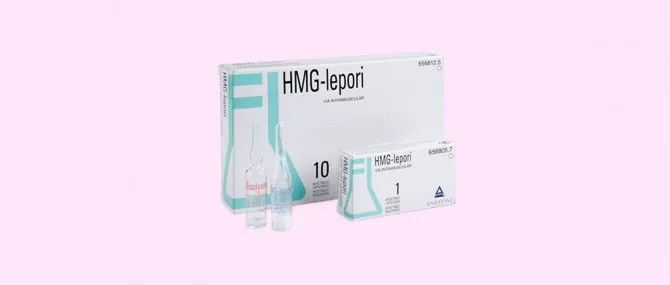
Instructions for Use
Table of Contents
Patient Information Leaflet
Introduction
Patient Information Leaflet
HMG-lepori 75 IU powder and solvent for injectable solution
Menotropin
Read the entire leaflet carefully before you start using this medicine, as it contains important information for you.
- Keep this leaflet, as you may need to read it again.
- If you have any questions, consult your doctor or pharmacist.
- This medicine has been prescribed for you only, and you should not give it to other people, even if they have the same symptoms as you, because it could harm them.
- If you experience adverse effects, consult your doctor or pharmacist, even if they are
adverse effects not listed in this leaflet. See section 4.
Leaflet contents
- What HMG-lepori is and what it is used for
- What you need to know before using HMG-lepori
- How to use HMG-lepori
- Possible adverse effects
- Storage of HMG-lepori
- Contents of the pack and other information
1. What HMG-lepori is and what it is used for
HMG-lepori contains menotropin (also called human menopausal gonadotropin or hMG).
It is an extract from the urine of postmenopausal women and contains two hormones known as follicle-stimulating hormone (FSH) and luteinizing hormone (LH).
FSH and LH are present in both men and women and help the reproductive organs function normally.
In adult women, HMG-lepori is used:
- to help release an egg from the ovary (ovulation) in women who are unable to ovulate and who have not responded to treatment with a substance called “clomiphene citrate”.
- to help develop several follicles (each containing an egg) in women undergoing assisted reproductive techniques (techniques that may help them become pregnant), such as in vitro fertilization, gamete intrafallopian transfer, or other assisted reproductive techniques.
- to help release an egg from the ovary (ovulation) in women who are not ovulating because their body produces very low amounts of gonadotropins (FSH and LH).
In adult men, HMG-lepori is used:
in combination with another hormone called “human chorionic gonadotropin” (hCG), to help produce sperm in men who are infertile due to low levels of certain hormones.
2. What you need to know before using HMG-lepori
This medicine must be used under strict medical supervision.
This medicine must be used under strict medical supervision. Before starting treatment with HMG-lepori, you and your partner should be evaluated by a doctor to determine the causes of infertility.
Do not use HMG-lepori
- If you are allergic to menotropin or any of the other ingredients of this medicine (listed in section 6).
- If you have enlarged ovaries or ovarian cysts not caused by a hormonal disorder (polycystic ovary syndrome).
- If you have vaginal bleeding of unknown origin.
- If you have ovarian, uterine, or breast cancer.
- If you have a tumor in the pituitary gland or hypothalamus (in the brain).
- If you have active thromboembolic disorders (thrombosis).
- If you are pregnant or breastfeeding.
- If you have testicular, prostate, or breast cancer (in men).
You should not use this medicine in conditions such as premature menopause, malformation of the genital organs, primary testicular failure, uterine tumors that prevent normal pregnancy, or in the postmenopausal period.
If you know you have any of these conditions, inform your doctor before using this medicine.
Warnings and precautions
Talk to your doctor before starting to use HMG-lepori.
Before starting treatment, the type of infertility in the couple and any possible contraindications to pregnancy should be assessed. In particular, disorders of the thyroid and adrenal glands, as well as increased prolactin secretion (a hormone secreted by a part of the nervous system called the pituitary gland), must be ruled out, and appropriate specific treatment initiated if necessary.
Ovarian hyperstimulation syndrome (OHSS)
This treatment increases the risk of developing a condition known as ovarian hyperstimulation syndrome (OHSS). This is uncommon if you are not ovulating and your treatment is administered as recommended. However, if unexpected ovarian hyperstimulation occurs, your treatment should be stopped and you should avoid becoming pregnant. Early signs of ovarian hyperstimulation include lower abdominal pain, nausea (feeling unwell), vomiting, weight gain, difficulty breathing, reduced urine output, and enlarged ovaries. If these symptoms occur, you should be examined as soon as possible. In rare but severe cases, the ovaries may twist, and fluid may accumulate in the abdomen or chest cavity, potentially leading to myocardial infarction or stroke.
Multiple pregnancy
The occurrence of multiple pregnancies and births is increased in patients receiving ovulation induction treatment compared to natural conception. However, this risk can be reduced by using the recommended dose.
Multiple pregnancies and parental characteristics in fertility treatments (e.g., maternal age, sperm characteristics) may be associated with an increased risk of maternal and neonatal complications. There is a slightly increased risk of ectopic pregnancy in women with damaged fallopian tubes.
Ectopic pregnancy
Because infertile women undergoing assisted reproduction, particularly IVF (in vitro fertilization), often have tubal abnormalities, the incidence of ectopic pregnancies (outside the uterus) may be increased. Therefore, early ultrasound confirmation that a pregnancy is intrauterine is important.
Spontaneous abortion
It should be noted that women with fertility problems have a higher rate of spontaneous abortions than the general population.
Tumors of the reproductive system
There have been reports of benign and malignant ovarian and other reproductive system tumors in women undergoing multiple infertility treatments. It has not yet been proven that gonadotropin treatment increases the baseline risk of these tumors in infertile women.
Blood clotting disorders (thromboembolic events)
Women at risk of blood clots should inform their doctor, as gonadotropins may increase this risk.
Allergic reactions
Although there is no available information on allergic reactions with HMG-lepori, you should inform your doctor if you have had allergic reactions to similar medicines.
Children and adolescents
HMG-lepori is not indicated for use in children and adolescents under 18 years of age.
Use of HMG-lepori with other medicines
Tell your doctor or pharmacist if you are taking, have recently taken, or might need to take any other medicines.
Using HMG-lepori together with other hormones or drugs used in infertility treatment may increase follicular response.
Pregnancy, breastfeeding, and fertility
HMG-lepori must not be used if you are pregnant or breastfeeding.
Driving and using machines
No studies have been conducted on the effects of HMG-lepori on the ability to drive or operate machinery.
However, it is very rare for HMG-lepori to affect the ability to drive or use machines.
Important information about some of the ingredients of HMG-lepori
This medicine contains less than 23 mg (1 mmol) of sodium per dose and is therefore considered essentially "sodium-free."
Use in athletes
Male athletes should be informed that this medicine contains chorionic gonadotropin, which may result in a positive doping test.
3. How to use HMG-lepori
Follow exactly your doctor's instructions on how to administer this medicine. If in doubt, consult your doctor again.
The solution for injection must be prepared under aseptic conditions immediately before use. The solvent is injected into the vial containing the powder, which dissolves rapidly to form a clear solution. The solution must be administered immediately by intramuscular injection. Each vial is for single use only.
- Women who do not ovulate (do not produce eggs):
Treatment will begin within the first 7 days of the menstrual cycle (day 1 being the first day of menstruation). Treatment should be given daily for at least 7 days.
The initial dose is normally 75–150 IU daily (1–2 vials), which may be adjusted according to the individual patient's response (up to a maximum of 225 IU, 3 vials of powder). This individual dose should be administered for at least 7 days before any dose adjustment. The recommended dose increase is 37.5 IU per adjustment, and should not exceed 75 IU. The treatment cycle should be discontinued if there is no adequate response after 4 weeks.
When an optimal response is achieved, a single injection of another hormone called human chorionic gonadotropin (hCG: 5000 to 10,000 IU, or hCG-r: 250 mcg) should be administered one day after the last injection of HMG-lepori. The patient is advised to have intercourse on the same day and the day following hCG administration. Alternatively, intrauterine insemination (injection of sperm directly into the uterus) may be performed. Your doctor should monitor your progress closely for at least 2 weeks after administration of hCG/hCG-r.
Your doctor will monitor the effect of HMG-lepori treatment. Depending on your response, your doctor may decide to discontinue HMG-lepori treatment and not administer the hCG/hCG-r injection. In this case, you must use a contraceptive method (condom) or abstain from sexual intercourse until your next period begins.
II. Women in assisted reproduction programs:
If you are also receiving treatment with GnRH agonists, HMG-lepori treatment should begin approximately 2 weeks after starting GnRH agonist therapy, with both treatments continuing until adequate follicular development is achieved.
In patients not receiving GnRH agonists, HMG-lepori treatment should begin on day 2 or 3 of the menstrual cycle (day 1 being the first day of menstruation).
Treatment should be given daily for at least 5 days. The recommended initial dose of HMG-lepori is 150–225 IU (2–3 vials of powder).
This dose may be increased according to your response to treatment, up to a maximum of 450 IU (6 vials) per day. Normally, treatment is not recommended for longer than 20 days.
When a sufficient number of egg sacs (follicles) have developed, a single injection of human chorionic gonadotropin (hCG: 5,000 IU to 10,000 IU or hCG-r: 250 micrograms) will be administered to induce ovulation (release of an egg).
Your doctor should monitor your progress closely for at least 2 weeks after administration of hCG/hCG-r.
Your doctor will monitor the effect of HMG-lepori treatment. Depending on your response, your doctor may decide to discontinue HMG-lepori treatment and not administer the hCG/hCG-r injection. In this case, you must use a contraceptive method (condom) or abstain from sexual intercourse until your next period begins.
III. Women who are not ovulating due to very low levels of FSH and LH hormones:
The recommended initial dose of HMG-lepori is 75 IU daily together with 75–150 IU of FSH. Treatment should be tailored to the individual patient's response.
If increasing the FSH dose is considered appropriate, dose adjustments should preferably be made at intervals of 7–14 days, with increments preferably of 37.5–75 IU. It may be acceptable to extend the duration of treatment up to 5 weeks.
When an optimal response is achieved, a single injection of human chorionic gonadotropin (hCG: 5,000 IU to 10,000 IU or hCG-r: 250 micrograms) should be administered 24–48 hours after the last injection of HMG. The patient is advised to have intercourse on the day of hCG administration and the following day.
If there is an excessive response, treatment should be discontinued and hCG should not be administered. Treatment should be restarted in the next cycle using a lower FSH dose than in the previous cycle.
IV. Infertility in men:
Treatment consists of a dose of HMG-lepori of 150 IU, administered 3 times per week, together with hCG, for a minimum of 4 months. If there is no response, treatment may be continued for several more months.
HMG-lepori is administered slowly into the muscle via injection at the same site.
Each vial is for single use only, and the injection must be given immediately after reconstitution.
If you use more HMG-lepori than you should
The effects of an overdose of HMG-lepori are unknown, although ovarian hyperstimulation syndrome may occur (see section 2).
In case of overdose or accidental ingestion, contact your doctor or pharmacist immediately or call the Toxicology Information Service at telephone number: 91 562 04 20, indicating the medicine and the amount used or ingested.
If you forget to use HMG-lepori
Do not administer a double dose to make up for a missed dose. Consult your doctor as soon as you realize you have missed a dose.
If you have any further questions about the use of this medicine, ask your doctor.
4. Possible adverse effects
Like all medicines, this medicine may cause adverse effects, although not everyone will experience them.
The reported adverse effects are:
Frequent, may affect up to 1 in 10 people:
- headache,
- sensation of bloating,
- diarrhoea,
- ovarian hyperstimulation syndrome,
- pain at the injection site.
Uncommon, may affect up to 1 in 100 people:
- nausea,
- abdominal pain,
- slow digestion,
- fatigue,
- difficulty breathing (dyspnoea),
- redness and itching after injection,
- breast enlargement,
- breast pain,
- hot flushes,
- dizziness,
- feeling of lack of energy (lethargy),
- mood changes,
- somnolence,
- increased thyroid gland activity,
- nosebleeds,
- prolonged bleeding time (test to assess blood clot formation during bleeding),
- cystitis (urinary tract infection).
Rare, may affect up to 1 in 1,000 people:
- pain, redness, and bruising at the injection site,
- blood clot formation (thromboembolism).
Reporting of adverse effects
If you experience any type of adverse effect, consult your doctor, pharmacist, or nurse, even if it is a possible adverse effect not listed in this leaflet. You may also report them directly via the Spanish Pharmacovigilance System for Human Medicinal Products: https://www.notificaram.es. By reporting adverse effects, you can help provide more information on the safety of this medicine.
5. Storage of HMG-lepori
Keep this medicine out of the sight and reach of children.
Do not store above 25°C.
Store the powder and solvent vials in the outer packaging to protect them from moisture.
Do not use after the expiry date stated on the carton and on the vials, after EXP. The expiry date refers to the last day of the month indicated.
Use immediately after reconstitution. The solution should be clear and colourless.
Medicines must not be disposed of via wastewater or household waste. Dispose of containers and unused medicines at a SIGRE collection point at your pharmacy. If you have any doubts, ask your pharmacist how to dispose of containers and medicines you no longer need. This will help protect the environment.
6. Package contents and other information
Composition of HMG-lepori
- The active substance is menotropin (human menopausal gonadotropin, hMG), corresponding to 75 IU of follicle-stimulating hormone (FSH) activity and 75 IU of luteinizing hormone (LH) activity.
- The other components are:
For the powder: lactose.
For the solvent: sterile physiological solution.
Appearance of the product and contents of the container
HMG-lepori is supplied as a powder and solvent for injectable solution.
Pack: 1 vial of powder + 1 vial of solvent.
Pack: 10 vials of powder + 10 vials of solvent.
The powder is a solidified mass, white to off-white in colour, and the solvent is a clear, colourless solution.
Marketing Authorization Holder and Manufacturer
Marketing Authorization Holder:
ANGELINI PHARMA ESPAÑA, S.L.
c/ Antonio Machado, 78-80
3rd floor, module A-Building Australia
08840 Viladecans, Barcelona (Spain)
Manufacturer:
Labiana Pharmaceuticals, S.L.
Casanova 27-31
08757 Corbera de Llobregat
Barcelona
Date of latest revision of this leaflet: March 2015
Detailed and up-to-date information on this medicinal product is available on the website of the Spanish Agency of Medicines and Health Products (AEMPS):
http://www.aemps.gob.es/
Similar Medications
-
Menopur 1200 IU powder and solvent for solution for injection
Form: powder and solvent for solution for injection
Active substance Dosage Menotropin 1200 UI Manufacturer: Ferring S.A.U.
-
Menopur 600 IU powder and solvent for solution for injection
Form: powder and solvent for solution for injection
Active substance Dosage Menotropin 600 UI Manufacturer: Ferring S.A.U.
-
Meriofert Kit 150 IU powder and solvent for solution for injection
Form: powder and solvent for solution for injection
Active substance Dosage Menotropin 150 UI Manufacturer: Ibsa Farmaceutici Italia S.R.L.
-
Meriofert Kit 75 UI powder and solvent for solution for injection
Form: powder and solvent for solution for injection
Active substance Dosage Menotropin 75 UI Manufacturer: Ibsa Farmaceutici Italia S.R.L.
-
Meriofert Kit 900 IU powder and solvent for solution for injection
Form: powder and solvent for solution for injection
Active substance Dosage Menotropin 1012,5 UI Manufacturer: Ibsa Farmaceutici Italia S.R.L.
This page has been machine-translated and may contain inaccuracies. The original data is available in the manufacturing country's language.
Last data check: May 18, 2026 · Data source: CIMA — AEMPS