Hipertene 20 mg tablets
Spain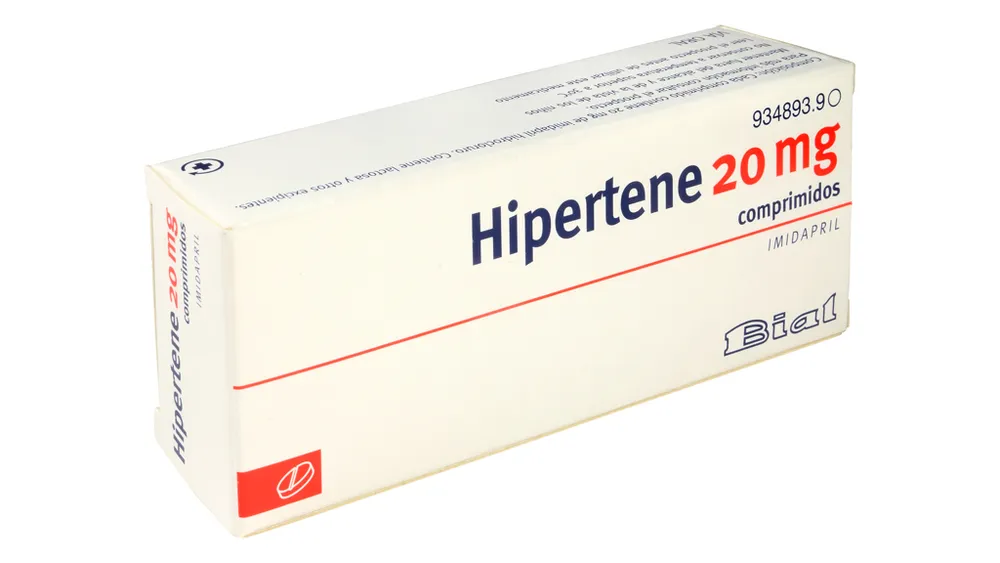
Table of Contents
Patient Information Leaflet
Introduction
Patient Information Leaflet
HIPERTENE 20 mg tablets
Imidapril
Read the entire leaflet carefully before you start taking this medicine, as it contains important information for you.
- Keep this leaflet, as you may need to read it again.
- If you have any questions, ask your doctor or pharmacist.
- This medicine has been prescribed for you only; do not give it to others, even if they have the same symptoms as you, as it may harm them.
- If you experience any adverse effects, consult your doctor or pharmacist, even if they are adverse effects not listed in this leaflet. See section 4.
Leaflet Contents
- What HIPERTENE is and what it is used for
- What you need to know before taking HIPERTENE
- How to take HIPERTENE
- Possible side effects
- How to store HIPERTENE
- Contents of the pack and other information
1. What HIPERTENE is and what it is used for
HIPERTENE is indicated for the treatment of high blood pressure (hypertension). HIPERTENE belongs to a group of medicines called ACE inhibitors (angiotensin-converting enzyme inhibitors).
If you have high blood pressure, HIPERTENE will work by dilating your blood vessels, allowing blood to flow more easily. Since blood pressure depends on the diameter of the blood vessels, your blood pressure will decrease with the help of HIPERTENE. It will also be easier for your heart to pump blood through the vessels to the entire body.
2. What you need to know before taking HIPERTENE
Do not take HIPERTENE
- If you are allergic to imidapril, to other ACE inhibitors, or to any of the other components of this medicine (listed in section 6).
- If you have ever had angioedema (a severe allergic reaction) characterized by swelling of the hands, feet or ankles, face, lips, tongue and throat, which may lead to difficulty swallowing or breathing, after taking a medicine similar to imidapril (an ACE inhibitor).
- If you or a close family member has ever experienced angioedema.
- If you have any kidney disease or if you require dialysis.
- If you have diabetes or renal impairment and are being treated with a blood pressure-lowering medicine containing aliskiren.
- If you are more than 3 months pregnant (HIPERTENE should also be avoided at the beginning of pregnancy – see Pregnancy section).
Do not take HIPERTENE if any of the above apply to you.
Warnings and precautions
Talk to your doctor or pharmacist before taking HIPERTENE
- If you are dehydrated due to treatment with diuretics (medicines to increase urine), dialysis, a low-salt diet, or because you have had severe and prolonged vomiting or diarrhoea. You may be more likely to experience a significant drop in blood pressure (hypotension) when starting the tablets, which could cause dizziness or fainting.
- If you have been diagnosed with heart problems. Consult your doctor if you think you may have them.
- If you have liver problems.
- If you are diabetic.
- If you are taking potassium supplements or potassium-containing salt substitutes.
- If you are taking allopurinol to prevent gout, kidney stones, or high levels of uric acid.
- If you are taking procainamide to correct irregular heartbeats or to slow a rapid heartbeat.
- If you are taking a medicine containing lithium, used to treat mania or depression.
- If you are allergic to insect stings and are undergoing desensitization therapy.
- If you are receiving treatment affecting your immune system, for example after an organ transplant.
- If you have recently undergone a kidney transplant.
- If you are undergoing a treatment called "LDL apheresis" to reduce cholesterol levels in the blood.
- If you suffer from a condition known as "cerebrovascular disease" (narrowing of blood vessels in the brain).
- If you have a condition known as "collagen vascular disease", such as rheumatoid arthritis.
- If you are scheduled for surgery or will receive anesthesia, inform your doctor or dentist.
- If your blood pressure is not sufficiently lowered. This type of medicine appears to be less effective in people of black origin.
- If you experience sudden swelling of the lips and face, tongue and throat, neck, and possibly also hands and feet, difficulty swallowing and breathing, hives, or hoarseness ("angioedema"). This may occur at any time during treatment. People of black origin may have an increased risk of this reaction. If you develop these symptoms, inform your doctor immediately.
- If you are taking any of the following medicines used to treat high blood pressure (hypertension):
- An angiotensin II receptor antagonist (ARA) (also known as "sartans" – e.g., valsartan, telmisartan, irbesartan), particularly if you have kidney problems related to diabetes.
- Aliskiren.
Your doctor may monitor your kidney function, blood pressure, and blood electrolyte levels (e.g., potassium) at regular intervals.
See also the information under the heading “Do not take HIPERTENE”.
If you are pregnant (or suspect you might be), inform your doctor. The use of HIPERTENE is not recommended during early pregnancy and must not be used after the third month of pregnancy, as it may cause serious harm to your baby (see section Pregnancy).
Children and adolescents
The use of HIPERTENE tablets is not recommended in children.
While taking HIPERTENE
If you develop any of the following symptoms, inform your doctor immediately:
- If you feel lightheaded after the first dose. Some people may experience dizziness, weakness, fainting, or nausea after the first dose or when the dose is increased.
- High temperature, sore throat, or mouth ulcers (these may be signs of infection due to a decrease in white blood cells).
- Yellowing of the skin and eyes (jaundice), which may be a sign of liver disease.
Regular medical check-ups will be necessary while you are taking HIPERTENE, including regular blood tests. Close monitoring will be carried out when starting treatment or if your dose is changed. Your doctor will advise you on how often you need to attend check-ups.
Taking HIPERTENE with other medicines
Tell your doctor or pharmacist if you are taking, have recently taken, or might need to take any other medicines.
Medications | Used for example in the treatment of: |
Potassium-sparing diuretics (medicines to increase urine output) (spironolactone, triamterene or amiloride) | Heart failure, liver disease, certain kidney diseases |
Potassium tablets or liquid salt substitutes containing potassium | Low blood potassium levels |
Non-potassium-sparing diuretics (medicines to increase urine output) (thiazides, furosemide) | High blood pressure, edema (swelling in the fingers, legs, toes, and face) |
Lithium | Mania or depression |
Non-steroidal anti-inflammatory drugs (NSAIDs) (indomethacin, diflunisal, diclofenac, celecoxib or valdecoxib, and aspirin) | Muscle pain, stiffness, and inflammation (arthritis) |
Injectable gold | Pain, stiffness, and inflammation (arthritis) |
Antihypertensives (such as methyldopa, clonidine, moxonidine) | High blood pressure |
Nitroglycerin and other nitrates | Heart disease, chest pain |
Antidiabetic agents (insulin), oral antidiabetics (metformin, pioglitazone) | Diabetes |
Thrombolytics (clopidogrel); beta-blockers (bisoprolol, metoprolol) | Heart attack, high blood pressure |
Tricyclic antidepressants (such as amitriptyline); antipsychotics (such as phenothiazines or butyrophenones) | Depression and mental illnesses |
Rifampicin | Tuberculosis (TB) and other mycobacterial infections |
Antacids (ranitidine, pantoprazole) | Acidity, heartburn, acid indigestion |
Sympathomimetics (medicines that stimulate the central nervous system) such as ephedrine, salbutamol (which may also be used in some cough and cold remedies), and noradrenaline or adrenaline | Low blood pressure, shock, heart failure, asthma or allergies |
Allopurinol | Prevention of gout, treatment of kidney stones or elevated uric acid levels |
Procainamide | Irregular heartbeats and to reduce rapid heart rate |
Anesthetics (agents that block nerve impulses) | Used in surgery, including dental procedures |
Immunosuppressants (medicines that suppress the body's immune response) | Used, for example, after an organ transplant |
Your doctor may need to adjust your dose and/or take other precautions:
If you are taking an angiotensin II receptor antagonist (ARA) or aliskiren (see also the information under the headings “Do not take HIPERTENE” and “Warnings and precautions”).
Pregnancy and breastfeeding
Pregnancy
You must inform your doctor if you are pregnant, think you may be pregnant, or plan to become pregnant, before using this medicine. Your doctor will generally advise you to stop taking HIPERTENE before becoming pregnant or as soon as you become pregnant, and will recommend another antihypertensive medicine instead. HIPERTENE is not recommended during early pregnancy and must not be administered from the third month of pregnancy onwards, as it may cause serious harm to your baby when used from that stage.
Breastfeeding
Inform your doctor if you are planning to breastfeed or are currently breastfeeding, as HIPERTENE is not recommended for administration to women during breastfeeding. Your doctor may decide to prescribe a treatment more suitable for you if you wish to breastfeed, especially if the infant is a newborn or premature.
Driving and use of machines:
HIPERTENE may cause dizziness or drowsiness. Do not drive or operate machinery until you know how HIPERTENE affects you.
HIPERTENE contains lactose.
If your doctor has informed you that you have an intolerance to certain sugars, consult your doctor before taking this medicine.
3. How to take HIPERTENE
Follow exactly the instructions for use of this medicine as given by your doctor or pharmacist. If in doubt, consult your doctor or pharmacist again.
Instructions
- Take the tablets approximately 15 minutes before meals
- Swallow the tablets with plenty of water
- Take the tablets at the same time every day
- The tablet may be divided into equal doses
Dosage (adults)
The usual starting dose is 5 mg once daily. After 3 weeks, your blood pressure should be measured again to assess the response. Your doctor may increase the daily dose to 10 mg or up to 20 mg.
Your doctor may advise starting with 2.5 mg daily
- if you have mild kidney or liver problems
- if you have heart problems, chest pain, conditions related to cerebral blood vessels, low levels of salt and/or fluids, or
- if there is a risk that your blood pressure might drop suddenly
Patients over 65 years of age
Your doctor will start your treatment with 2.5 mg once daily and may increase it up to 10 mg, depending on your response to treatment.
The use of HIPERTENE tablets is not recommended in children.
If you take more HIPERTENE than you should
If you have accidentally taken more tablets than prescribed, consult your doctor immediately. Remember to bring the remaining tablets and the packaging with you. The most common signs and symptoms of overdose include low blood pressure, shock, and stupor (a state of near-complete loss of consciousness), reduced heart rate, disturbances in potassium or other electrolyte levels, and kidney failure. This may cause a general feeling of discomfort, awareness of your heartbeat (palpitations), or swelling in your hands, legs, and feet (edema).
If you forget to take HIPERTENE
Do not take the missed dose; instead, continue with your next scheduled dose at the usual time. Do not take a double dose to make up for a missed dose.
If you stop taking HIPERTENE
Do not stop taking HIPERTENE unless your doctor advises you to do so. If you stop taking this medicine, your blood pressure may rise. If your blood pressure becomes too high, it may affect the functioning of your heart and kidneys.
If you have any further questions about the use of this medicine, ask your doctor or pharmacist.
4. Possible adverse effects
Like all medicines, this medicine can cause adverse effects, although not everyone will experience them.
It is very important that you contact your doctor immediately and stop taking HIPERTENE if you develop any of the following symptoms:
- headache, dizziness, lightheadedness, possibly accompanied by vision disturbances. This is particularly important when starting treatment or when the dose is increased
- difficulty breathing
- rash or itching
- a severe allergic reaction causing swelling of the face or throat (angioedema)
- blistering of the skin, mouth, eyes, and genital organs (toxic epidermal necrolysis, Stevens-Johnson syndrome)
- yellowing of the skin and eyes due to liver or blood problems (jaundice)
Tell your doctor or pharmacist if you experience any of the following adverse effects:
Common adverse effects (may affect up to 1 in 10 people)
- fatigue/sleepiness
- cough
- feeling sick (nausea)
Uncommon adverse effects (may affect up to 1 in 100 people)
- awareness of your own heartbeat (palpitations)
- narrowing of blood vessels in the brain (cerebrovascular disease)
- feeling faint
- tingling or numbness in the hands or feet
- nasal congestion and irritation
- vomiting
- upper abdominal pain
- indigestion (stomach discomfort)
- bronchitis
- viral infection
- upper respiratory tract infection
- chest pain
- limb pain
- swelling of fingers, legs, and toes (edema)
Rare adverse effects (may affect up to 1 in 1,000 people)
- reduction (decrease in number) of white blood cells, increasing the likelihood of infections
- reduction (decrease in number) of red blood cells, which may cause paleness of the skin, weakness, and shortness of breath
Effects on blood test results
HIPERTENE may cause changes in blood composition. Your doctor will carry out regular blood tests and explain the results to you.
The following adverse effects have been reported with this type of medicine:
- blurred vision
- balance disorders; confusion; ringing in the ears
- tiredness; depression; sleep disturbances; impotence
- taste disturbances
- changes in heart rhythm (faster, irregular); heart attack; transient ischemic symptoms
- increased risk of bleeding or bruising
- hives; skin redness
- hair loss
- shortness of breath; wheezing
- inflammations – for example, of the nasal cavities (sinusitis), tongue (glossitis), liver (hepatitis), pancreas (pancreatitis), or stomach lining (gastritis)
- diarrhea; constipation; dry mouth
- intestinal obstruction; inflammation of the intestines causing colic
- kidney problems
- fever
- muscle pain; joint pain
Reporting of adverse effects
If you experience any adverse effect, consult your doctor or pharmacist, even if it is a possible adverse effect not listed in this leaflet. You may also report them directly via the Spanish Pharmacovigilance System for Human Medicines: https://www.notificaram.es. By reporting adverse effects, you can help provide more information on the safety of this medicine.
5. Storage of HIPERTENE
Keep this medicine out of sight and reach of children.
Do not store the tablets above 30°C. Store in the original packaging.
Do not use this medicine after the expiry date stated on the packaging and blister after EXP. The expiry date refers to the last day of the month indicated.
Medicines must not be disposed of via wastewater or household waste. Dispose of packaging and unused medicines at the SIGRE Point at your pharmacy. If you have any doubts, ask your pharmacist how to dispose of packaging and unused medicines. This way, you will help protect the environment.
6. Contents of the pack and other information
Composition of HIPERTENE
- The active substance is imidapril (hydrochloride). Each tablet contains 20 mg of imidapril hydrochloride.
- The other components are: anhydrous calcium hydrogen phosphate, pregelatinized starch, monohydrate lactose, sodium croscarmellose, and glycerol distearate.
Appearance of the medicine and contents of the pack
HIPERTENE tablets are biconvex, whitish, with a flat edge, scored on both sides.
The medicine is available in aluminum/aluminum blisters, in packs containing 7, 10, 14, 15, 20, 28, 30, 50, 56, 100, and 1000 tablets.
Only certain pack sizes may be marketed.
Marketing Authorization Holder
Laboratorios BIAL, S.A.
C/ Alcalá 265, Edificio 2, Planta 2ª
28027 Madrid
Spain
Manufacturer
BIAL - PORTELA & CIA, S.A.
À Avenida da Siderurgia Nacional (S. Mamede do Coronado) - 4745-457 - Portugal
G.L. PHARMA GMBH
Schlossplatz, 1 (Lannach) - 8502 - Austria
Central Pharma (Contract Packing) Limited
Caxrton Road Bedford MK41 0XZ United Kingdom
This medicine is authorized in the Member States of the European Economic Area under the following names
Tanatril: Austria, France, Greece, United Kingdom
Cardipril: Portugal
Hipertene: Spain
Date of the most recent revision of this leaflet: 04/2016
Detailed and up-to-date information on this medicine is available on the website of the Spanish Agency of Medicines and Health Products (AEMPS) http://www.aemps.gob.es/.