Hepcludex 2 mg powder for injection solution
Spain
Table of Contents
Package leaflet: Information for the user
Introduction
Package leaflet: Information for the patient
Hepcludex 2 mg powder for injectable solution
bulevirtide
This medicinal product is subject to additional monitoring, which will enable rapid identification of new safety information. You can help by reporting any side effects you may experience. Information on how to report side effects is included at the end of section 4.
Read all of this leaflet carefully before you start using this medicine, as it contains important information for you.
- Keep this leaflet, as you may need to read it again.
- If you have any questions, ask your doctor or nurse.
- This medicine has been prescribed for you only and must not be given to other people, even if they have the same symptoms as you, as it may harm them.
- If you experience any side effects, consult your doctor or nurse, even if they are side effects not listed in this leaflet. See section 4.
Contents of this leaflet
- What Hepcludex is and what it is used for
- What you need to know before using Hepcludex
- How to use Hepcludex
- Possible side effects
- How to store Hepcludex
- Contents of the pack and other information
- Step-by-step injection guide
1. What Hepcludex is and what it is used for
What Hepcludex is
Hepcludex contains the active substance bulevirtide, which is an antiviral medicine.
What Hepcludex is used for
Hepcludex is used to treat long-term (chronic) hepatitis delta virus (HDV) infection in adults with compensated liver disease (when the liver is still functioning adequately). Hepatitis delta virus infection causes inflammation of the liver.
How Hepcludex works
HDV uses a specific protein on liver cells to enter these cells. Bulevirtide, the active substance in this medicine, blocks this protein and thereby prevents HDV from entering liver cells. This reduces the spread of HDV in the liver and reduces inflammation.
2. What you need to know before using Hepcludex
Do not take Hepcludex:
- if you are allergic to bulevirtide or to any of the other components of this medicine (listed in section 6).
If you have any doubts, consult your doctor before taking this medicine.
Warnings and precautions
Do not stop treatment with Hepcludex unless your doctor advises you to do so. Stopping treatment may reactivate the infection and worsen your condition.
Consult your doctor or pharmacist before starting Hepcludex:
-
if your liver is not functioning properly – it is not known how Hepcludex works under these circumstances; Hepcludex is not recommended if your liver function is impaired.
-
if you have had kidney disease or if blood tests indicate kidney problems. Before and during treatment, your doctor may request blood tests to monitor proper kidney function.
-
if you have HIV or hepatitis C infection – it is not known how Hepcludex works in these circumstances; your doctor may request blood tests to monitor the status of HIV or hepatitis C infection.
Children and adolescents
Hepcludex should not be used in children and adolescents under 18 years of age.
Other medicines and Hepcludex
Inform your doctor if you are taking, have recently taken, or might need to take any other medicines.
Some medicines may increase the adverse effects of Hepcludex and should not be taken at the same time. For this reason, you must inform your doctor if you are taking any of the following medicines:
- cyclosporine, a medicine that suppresses the immune system;
- ezetimibe, used to treat high blood cholesterol levels;
- irbesartan, used to treat high blood pressure and heart disease;
- ritonavir, used to treat HIV infection;
- sulfasalazine, used to treat rheumatoid arthritis, ulcerative colitis, and Crohn's disease.
Some medicines may increase or decrease the effects of Hepcludex when taken together. In some cases, tests may be required or your doctor may need to adjust your dose or carry out periodic monitoring:
- cancer treatments (e.g., dasatinib, docetaxel, ibrutinib, or paclitaxel);
- antihistamines used for allergies (e.g., ebastine or fexofenadine);
- medicines for the immune system (e.g., everolimus, sirolimus, or tacrolimus);
- medicines for the treatment of hepatitis C and HIV (e.g., darunavir, glecaprevir, grazoprevir, indinavir, maraviroc, paritaprevir, saquinavir, simeprevir, tipranavir, or voxilaprevir);
- medicines for diabetes (e.g., glibenclamide, nateglinide, or repaglinide);
- medicines for erectile dysfunction (e.g., avanafil, sildenafil, or vardenafil);
- medicines for high blood pressure and heart disease (e.g., olmesartan, telmisartan, or valsartan);
- statins, medicines used for high blood cholesterol levels (e.g., atorvastatin, fluvastatin, lovastatin, pitavastatin, pravastatin, rosuvastatin, or simvastatin);
- thyroid hormones used to treat thyroid problems;
- alfentanil, an opioid medicine used to treat severe pain;
- bosentan, used for pulmonary arterial hypertension;
- buspirone, a medicine for anxiety;
- budesonide, used for asthma and chronic obstructive pulmonary disease;
- conivaptan and tolvaptan, used to treat hyponatremia (low sodium levels);
- darifenacin, used to treat urinary incontinence;
- dronedarone, a medicine for cardiac arrhythmias;
- eletriptan, used for migraine-type headaches;
- eplerenone, used for high blood pressure;
- estrone 3-sulfate, a hormonal medicine for menopause;
- felodipine and nisoldipine (heart medicines);
- lomitapide, used for high blood cholesterol levels;
- lurasidone and quetiapine, antipsychotic medicines for psychiatric disorders;
- midazolam and triazolam, medicines used to treat insomnia (difficulty sleeping) and for anesthesia (to prevent pain during surgery);
- naloxegol, used to treat opioid dependence for severe pain;
- ticagrelor, an anticoagulant to prevent blood clotting.
Pregnancy, breastfeeding, and fertility
If you are pregnant or breastfeeding, think you may be pregnant, or plan to become pregnant, consult your doctor before using this medicine. You should not use this medicine unless specifically instructed by your doctor.
If you are a woman of childbearing age, do not use this medicine without using an effective method of contraception.
Talk to your doctor to decide whether you can breastfeed during treatment with Hepcludex. It is unknown whether Hepcludex is excreted in breast milk. Therefore, a decision must be made to either discontinue breastfeeding or discontinue treatment with Hepcludex.
Driving and use of machines
Dizziness and fatigue are adverse effects that may affect your ability to drive and operate machinery. If you have any doubts, consult your doctor.
Hepcludex contains sodium
This medicine contains less than 1 mmol of sodium (23 mg) per ml; hence, it is essentially "sodium-free".
3. How to use Hepcludex
Follow exactly the instructions for administration of this medicine given by your doctor. If in doubt, consult your doctor again.
Dosage
The recommended dose is 2 mg once daily by subcutaneous injection (just under the skin). Your doctor will tell you for how long you should use the medicine.
Your doctor and nurse will teach you how to prepare and inject Hepcludex. This leaflet contains a step-by-step injection guide to help you self-administer the medicine (see section 7).
If you use more Hepcludex than you should
The usual dose is 2 mg (1 vial) per day. If you think you may have received more than you should, tell your doctor immediately.
If you forget to use Hepcludex
If less than 4 hours have passed since you missed your dose of Hepcludex, the missed dose should be injected as soon as possible, and the next scheduled dose should be taken at the usual time.
If more than 4 hours have passed since you missed your dose of Hepcludex, the missed dose should not be administered. The next dose should be given the following day at the usual time. Do not administer a double dose to make up for missed doses. Inform your doctor if you have missed a dose of Hepcludex.
If you stop using Hepcludex
If you no longer wish to continue using Hepcludex, consult your doctor before stopping treatment. Stopping treatment may reactivate the infection and worsen your condition. Inform your doctor immediately of any changes in symptoms after stopping treatment.
If you have any further questions about the use of Hepcludex, ask your doctor or nurse.
4. Possible side effects
Like all medicines, this medicine can cause side effects, although not everyone gets them.
If you experience any side effect or notice any not mentioned in this leaflet, consult your doctor.
The following side effect is very common (may affect more than 1 in 10 people):
- headache.
The following side effects are common (may affect up to 1 in 10 people):
- dizziness
- nausea
- fatigue
- flu-like illness
- itching
- joint pain
- injection site reactions which may include swelling, redness, irritation, bruising, itching, skin rash, induration, infection or local pain.
The following side effects are uncommon (may affect up to 1 in 100 people):
- allergic reactions, including anaphylactic reaction (a sudden potentially life-threatening allergic reaction).
Symptoms of allergic reactions may include:
- difficulty breathing or wheezing
- swelling of the face, lips, tongue or throat (angioedema)
- skin rashes
- changes in blood pressure or heart rate.
Symptoms of an anaphylactic reaction are the same as those of an allergic reaction, but are more intense and require immediate medical attention.
Blood tests may also show:
- increased bile acids in the blood (very common)
- increased white blood cells (eosinophils) (common).
Reporting of side effects
If you experience side effects, consult your doctor or nurse, even if they are possible side effects not listed in this leaflet. You may also report them directly through the national reporting system included in Appendix V. By reporting side effects, you can help provide more information on the safety of this medicine.
5. Storage of Hepcludex
Keep this medicine out of the sight and reach of children.
Do not use this medicine after the expiry date stated on the carton and vial after "EXP". The expiry date refers to the last day of the stated month.
Store in a refrigerator (between 2 °C and 8 °C). To protect from light, keep the vials in the outer packaging.
The reconstituted solution should be used immediately. However, if this is not possible, it may be stored for up to 2 hours at a temperature not exceeding 25 °C.
Do not dispose of medicines or used needles via wastewater or household waste. Ask your pharmacist how to dispose of used containers and needles properly.
6. Contents of the pack and other information
Composition of Hepcludex
The active substance is bulevirtide 2 mg. Each vial contains bulevirtide acetate equivalent to 2 mg of bulevirtide.
The other components are anhydrous sodium carbonate, sodium hydrogen carbonate, mannitol, hydrochloric acid, and sodium hydroxide.
Appearance of the medicinal product and contents of the pack
Bulevirtide is a powder for injectable solution and is presented as a white or almost white powder.
Each carton contains 30 individual doses.
Marketing Authorization Holder
Gilead Sciences Ireland UC
Carrigtohill
County Cork, T45 DP77
Ireland
Manufacturer
LYOCONTRACT GmbH
Pulverwiese 1
38871 Ilsenburg
Germany
or
Gilead Sciences Ireland UC
IDA Business and Technology Park
Carrigtohill
Co. Cork
Ireland
For more information about this medicinal product, please contact the local representative of the Marketing Authorization Holder:
Belgium/Belgium/Belgium Gilead Sciences Belgium SRL-BV Tel/Tel: + 32 (0) 24 01 35 50 | Lithuania Gilead Sciences Poland Sp. z o.o. Tel.: + 48 (0) 22 262 8702 |
Gilead Sciences Ireland UC Tel.: + 353 (0) 1 686 1888 | Luxembourg/Luxembourg Gilead Sciences Belgium SRL-BV Tel/Tel: + 32 (0) 24 01 35 50 |
Czech Republic Gilead Sciences s.r.o. Tel: + 420 (0) 910 871 986 | Hungary Gilead Sciences Ireland UC Tel.: + 353 (0) 1 686 1888 |
Denmark Gilead Sciences Sweden AB Tlf: + 46 (0) 8 5057 1849 | Malta Gilead Sciences Ireland UC Tel: + 353 (0) 1 686 1888 |
Germany Gilead Sciences GmbH Tel: + 49 (0) 89 899890-0 | Netherlands Gilead Sciences Netherlands B.V. Tel: + 31 (0) 20 718 36 98 |
Estonia Gilead Sciences Poland Sp. z o.o. Tel.: +48 (0) 22 262 8702 | Norway Gilead Sciences Sweden AB Tlf: + 46 (0) 8 5057 1849 |
Greece Gilead Sciences Hellas MEPE Tel: + 30 (0) 210 8930 100 | Austria Gilead Sciences GesmbH Tel: + 43 (0) 1 260 830 |
Spain Gilead Sciences, S.L. Tel: + 34 (0) 91 378 98 30 | Poland Gilead Sciences Poland Sp. z o.o. Tel.: + 48 (0) 22 262 8702 |
France Gilead Sciences Tél: + 33 (0) 1 46 09 41 00 | Portugal Gilead Sciences, Lda. Tel: + 351 (0) 21 7928790 |
Croatia Gilead Sciences Ireland UC Tel: + 353 (0) 1 686 1888 | Romania Gilead Sciences (GSR) S.R.L. Tel: +40 31 631 18 00 |
Ireland Gilead Sciences Ireland UC Tel: + 353 (0) 214 825 999 | Slovenia Gilead Sciences Ireland UC Tel: + 353 (0) 1 686 1888 |
Iceland Gilead Sciences Sweden AB Sími/Tel: + 46 (0) 8 5057 1849 | Slovakia Gilead Sciences Slovakia s.r.o. Tel: + 421 (0) 232 121 210 |
Italy Gilead Sciences S.r.l. Tel: + 39 02 439201 | Finland Gilead Sciences Sweden AB Puh/Tel: + 46 (0) 8 5057 1849 |
Cyprus Gilead Sciences Hellas MEPE Tel: + 30 (0) 210 8930 100 | Sweden Gilead Sciences Sweden AB Tel: + 46 (0) 8 5057 1849 |
Latvia Gilead Sciences Poland Sp. z o.o. Tel.: + 48 (0) 22 262 8702 | United Kingdom (Northern Ireland) Gilead Sciences Ireland UC Tel: + 44 (0) 8000 113 700 |
Date of the most recent review of this leaflet: <{MM/YYYY}> <{month YYYY}>.
This medicine has been authorised under a "conditional approval". This type of approval means that further information on this medicine is expected.
The European Medicines Agency will review new information on this medicine at least once a year, and this leaflet will be updated as necessary.
- Step-by-step injection guide
Before using Hepcludex, you should first read sections 1–6 of this leaflet.
Before starting treatment with this medicine at home, your doctor or nurse will teach you how to prepare and inject Hepcludex. This guide explains how you should administer the medicine yourself. Consult your doctor or nurse if anything is unclear, if you have any questions, or if you need further information or assistance. Take the necessary time to carefully prepare and inject Hepcludex.
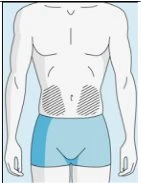
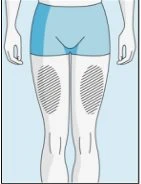
Injection sites | Abdomen | Upper thigh | |
To reduce injection site reactions, you may rotate bulevirtide injection sites regularly. Do not inject bulevirtide into the following areas: knee, groin, lower or inner buttocks, directly into a blood vessel, around the navel, scar tissue, bruises, moles, surgical scars, tattoos, or burns, or where an injection site reaction has previously occurred. |
|
| |
|
|
|
|
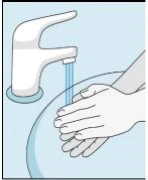
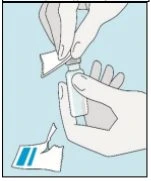
1A Storage | 1B Mixing dose | 1C Wash hands | 1D Clean vial |
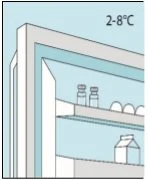
Bulevirtide vials should be kept in their original packaging in the refrigerator (between 2 and 8 °C) to protect bulevirtide from light. | Reconstituted bulevirtide must be used immediately. The following instructions are for dissolving a single dose. | Wash your hands thoroughly with soap and warm water and dry them with a clean towel. Once your hands are clean, do not touch anything other than the medication, the administration supplies, and the area around the injection site. | Wipe the top of the vial with a new alcohol-soaked cotton swab and allow it to air dry. If you touch the rubber stopper after cleaning it, clean it again with another alcohol-soaked cotton swab. |
|
|
| |
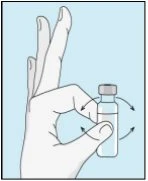
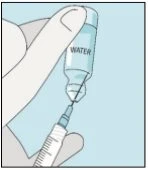
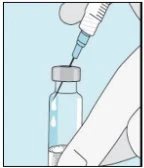
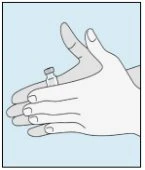
2A Draw sterile water | 2B Inject sterile water into the powder | 2C Gently mix bulevirtida | |
Take the syringe and attach the longer needle. | Gently tap the bulevirtida vial to loosen the powder. Insert the needle containing sterile water into the bulevirtida vial at an angle. | Gently tap the bulevirtida vial with your fingertips for 10 seconds to start dissolving the powder. Then gently rotate the vial between your hands to ensure complete mixing. | |
|
| ||
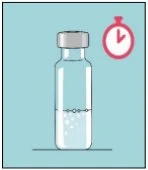
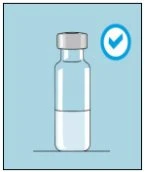
2D Inspect bulevirtida | 2E Bulevirtida ready for injection | ||
Once the powder begins to dissolve, leave it undisturbed until fully dissolved. After tapping, it may take up to 3 minutes to completely dissolve. | When fully mixed, the bulevirtida solution must be clear and transparent. |
|
|
|
|
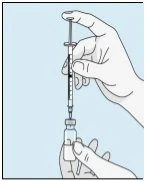
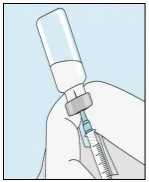
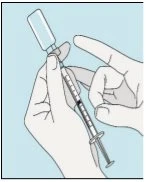
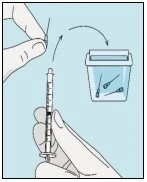
3A Insert the needle into the vial | 3B Draw up bulevirtida | 3C Complete the preparation | 3D Change and discard the needle |
Take the syringe. Insert the needle into the vial of liquid bulevirtida. | Invert the vial gently. Make sure the tip of the needle remains below the surface of the bulevirtida solution at all times to prevent air bubbles from entering the syringe. Slowly pull back the plunger to draw 1.0 cc/ml of bulevirtida. | Gently tap or shake the syringe and push/pull the plunger to remove any excess air and bubbles. To ensure exactly 1.0 cc/ml of bulevirtida remains in the syringe, you may need to pull the plunger slightly past the 1.0 cc/ml mark. Carefully remove the needle and syringe from the vial. | Remove the longer needle from the syringe and dispose of it properly to prevent injury to anyone. Important! Do not recap the plastic cap onto the needle. |
|
|
|
|
3E Insert the injection needle | 3F Choose the injection site | 3G Prepare the injection site | 3H Inject bulevirtide |
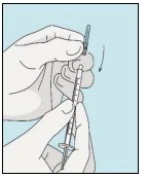
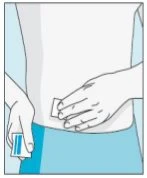
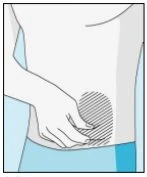
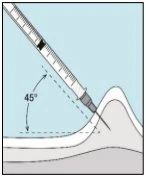
Attach the shorter needle to the syringe. Important! Make sure the capped needle is securely fastened by gently pressing and turning it clockwise. Remove the plastic cap. | Choose a different site from the one used for your last injection. Clean the injection site with a new alcohol-soaked cotton pad. Starting at the center, apply pressure and clean in a circular motion outward. Important! Allow the area to air dry. Prepare the bulevirtide vial. Clean the top of the bulevirtide vial again with a new alcohol-soaked cotton pad. Allow it to air dry. | Pinch a fold of skin around the injection site. | Insert the needle at a 45-degree angle. Most of the needle should be inserted. Slowly push the plunger all the way to inject bulevirtide. Remove the needle from the skin. Detach the needle from the syringe and dispose of both properly to prevent injury to anyone (see 3D). |