Haloperidol Esteve 5 mg/ml solution for injection
Spain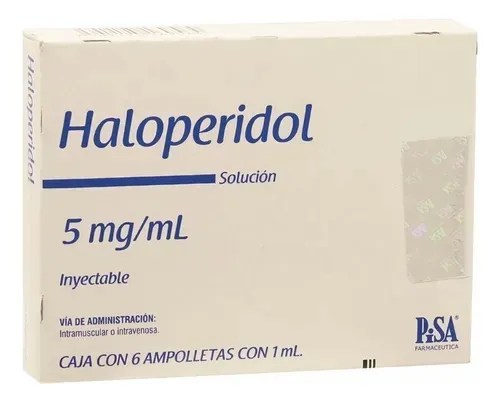
Table of Contents
- Package leaflet: Information for the user
- Introduction
- 1. What Haloperidol Esteve is and what it is used for
- 2. What you need to know before using Haloperidol Esteve
- 3. How to use Haloperidol Esteve
- 4. Possible adverse effects
- 5. Storage of Haloperidol Esteve
- 6. Additional Information
- **Appearance of the product and contents of the pack**
- **Marketing Authorization Holder and Manufacturing Responsible Party**
Package leaflet: Information for the user
Introduction
Package leaflet: information for the user
Haloperidol Esteve 5 mg/ml injection solution
Haloperidol
Read the entire leaflet carefully before you start using this medicine, because it contains important information for you.
- Keep this leaflet, as you may need to read it again.
- If you have any questions, ask your doctor or pharmacist.
- This medicine has been prescribed for you only and must not be given to other people, even if they have the same symptoms as you, since it could harm them.
- If you experience any adverse reactions, consult your doctor, pharmacist, or nurse, even if they are adverse reactions not listed in this leaflet. See section 4.
Leaflet contents
- What Haloperidol Esteve is and what it is used for
- What you need to know before using Haloperidol Esteve
- How to use Haloperidol Esteve
- Possible adverse effects
- How to store Haloperidol Esteve
- Contents of the pack and other information
1. What Haloperidol Esteve is and what it is used for
The name of this medicine is Haloperidol Esteve.
Haloperidol Esteve contains the active substance haloperidol, which belongs to a group of medicines called "antipsychotics".
Haloperidol Esteve is used in adult patients to treat illnesses that affect the way a person thinks, feels, or behaves. These include mental health disorders (such as schizophrenia and bipolar disorder) and behavioral problems.
These conditions may cause the patient to:
- Feel confused (confusional syndrome)
- See, hear, feel, or smell things that are not real (hallucinations)
- Believe things that are not true (delusions)
- Become extremely distrustful (paranoia)
- Feel highly excited, agitated, emotional, impulsive, or hyperactive
- Become very aggressive, hostile, or violent.
Haloperidol Esteve is also used in adults to:
- Help control movements in Huntington's disease
- Prevent or treat nausea and vomiting after surgery.
Haloperidol Esteve may be used alone or together with other medicines, and is sometimes used when other medicines or treatments have not worked, have caused unacceptable side effects, or cannot be administered orally.
2. What you need to know before using Haloperidol Esteve
Do not use Haloperidol Esteve:
- If you are allergic to haloperidol or to any of the other ingredients of this medicine (listed in section 6).
- If your perception has decreased or you believe that you or your reactions have become particularly slow.
- If you have Parkinson's disease.
- If you suffer from a type of dementia called "dementia with Lewy bodies".
- If you have progressive supranuclear palsy (PSP).
- If you have a heart condition called "prolonged QT interval" or any other heart rhythm disorder that appears as an abnormal tracing on the electrocardiogram (ECG).
- If you have heart failure or have recently had a heart attack.
- If you have untreated low levels of potassium in the blood.
- If you are taking any of the medicines listed in the section "Other medicines and Haloperidol Esteve – Do not use Haloperidol Esteve if you are taking certain medicines to treat the following conditions".
You must not use this medicine if any of the above apply to you. If you are unsure, consult your doctor, pharmacist, or nurse before starting to use Haloperidol Esteve.
Warnings and precautions
Serious adverse effects
Haloperidol Esteve may cause heart problems, difficulties controlling body or limb movements, and a serious adverse effect known as "neuroleptic malignant syndrome". It may also cause severe allergic reactions and blood clots. You should be aware of possible serious adverse effects while using Haloperidol Esteve, as you might require urgent medical treatment. See the section "Be aware of serious adverse effects" in section 4.
Elderly patients and patients with dementia
A small increase in the number of deaths and strokes has been reported in elderly patients with dementia who were taking antipsychotic medicines. Consult your doctor before starting to use Haloperidol Esteve if you are elderly, especially if you have dementia.
Consult your doctor if:
- You have a slow heart rate, suffer from a heart disease, or if a close family member has died suddenly due to heart problems.
- You have low blood pressure or feel dizzy when standing up from a sitting position or after standing for some time.
- You have low levels of potassium or magnesium (or other electrolytes) in the blood. Your doctor will decide how to manage this condition.
- You have ever had a brain hemorrhage or your doctor has told you that you are more likely than others to have a stroke.
- You have epilepsy or have ever had seizures (fits).
- You have kidney, liver, or thyroid problems.
- You have high levels of the hormone prolactin in the blood or suffer from a cancer that could be caused by high prolactin levels (such as breast cancer).
- You have a personal or family history of blood clots.
- You suffer from depression or have a bipolar disorder and have recently started feeling depressed.
You may require closer monitoring, and it may also be necessary to adjust the dose of Haloperidol Esteve you receive.
If you are unsure whether any of the above apply to you, consult your doctor or nurse before starting to use Haloperidol Esteve.
Medical examinations
Your doctor may request that you undergo an electrocardiogram (ECG) before or during treatment with Haloperidol Esteve. The ECG measures the electrical activity of the heart.
Blood tests
Your doctor may want to check your blood levels of potassium or magnesium (or other electrolytes) before or during treatment with Haloperidol Esteve.
Children and adolescents
Haloperidol Esteve must not be used in children and adolescents under 18 years of age, as this medicine has not been studied in these age groups.
Other medicines and Haloperidol Esteve
Inform your doctor, pharmacist, or nurse if you are taking, have recently taken, or might need to take any other medicine.
Do not use Haloperidol Esteve if you are taking certain medicines to treat the following conditions:
- Heart rhythm disorders (such as amiodarone, dofetilide, disopyramide, dronedarone, ibutilide, quinidine, and sotalol).
- Depression (such as citalopram and escitalopram).
- Psychosis (such as fluphenazine, levomepromazine, perphenazine, pimozide, prochlorperazine, promazine, sertindole, thioridazine, trifluoperazine, triflupromazine, and ziprasidone).
- Bacterial infections (such as azithromycin, clarithromycin, erythromycin, levofloxacin, moxifloxacin, and telithromycin).
- Fungal infections (such as pentamidine).
- Malaria (such as halofantrine).
- Nausea and vomiting (such as dolasetron).
- Cancer (such as toremifene and vandetanib).
Also consult your doctor if you are taking bepridil (for chest pain or to lower blood pressure) or methadone (for pain relief or to treat drug addiction).
These medicines may increase the risk of heart problems; therefore, consult your doctor if you are taking any of them and do not use Haloperidol Esteve (see "Do not use Haloperidol Esteve if").
Special monitoring may be required if you are using lithium and Haloperidol Esteve at the same time. Contact your doctor immediately and stop taking both medicines if you experience:
- Unexplained fever or uncontrollable movements.
- Confusion, disorientation, headache, balance problems, or drowsiness.
These are signs of a serious disorder.
Certain medicines may affect how Haloperidol Esteve works or may increase the risk of heart problems
Consult your doctor if you are taking:
- Alprazolam or buspirone (for anxiety).
- Duloxetine, fluoxetine, fluvoxamine, nefazodone, paroxetine, sertraline, St. John's wort (Hypericum perforatum), or venlafaxine (for depression).
- Bupropion (for depression or to help quit smoking).
- Carbamazepine, phenobarbital, or phenytoin (for epilepsy).
- Rifampicin (for bacterial infections).
- Itraconazole, posaconazole, or voriconazole (for fungal infections).
- Ketoconazole tablets (to treat Cushing's syndrome).
- Indinavir, ritonavir, or saquinavir (for human immunodeficiency virus or HIV).
- Chlorpromazine or promethazine (for nausea and vomiting).
- Verapamil (for blood pressure or heart problems).
Also consult your doctor if you are taking any other medicine to lower blood pressure, such as water retention tablets (diuretics).
Your doctor may need to adjust your dose of Haloperidol Esteve if you are taking any of these medicines.
Haloperidol Esteve may affect how the following types of medicines work
Consult your doctor if you are taking medicines for:
- Calming or helping you sleep (tranquilizers).
- Pain (strong analgesics).
- Depression (tricyclic antidepressants).
- Lowering blood pressure (such as guanethidine and methyldopa).
- Severe allergic reactions (epinephrine).
- Attention deficit hyperactivity disorder (ADHD) or narcolepsy (known as "stimulants").
- Parkinson's disease (such as levodopa).
- Preventing blood clotting (phenindione).
If you are taking any of these medicines, consult your doctor or nurse before starting to use Haloperidol Esteve.
Use of Haloperidol Esteve with alcohol
Haloperidol Esteve must not be used together with alcohol, as you may feel drowsy and your alertness may be reduced. Therefore, you should be very careful with alcoholic drinks. Consult your doctor about drinking alcohol while using Haloperidol Esteve and inform them about how much alcohol you consume.
Pregnancy, breastfeeding, and fertility
Pregnancy: If you are pregnant, think you may be pregnant, or plan to become pregnant, consult your doctor before using this medicine. Your doctor may advise you not to use Haloperidol Esteve during pregnancy.
Newborn babies of mothers who have used Haloperidol Esteve during the last three months (the third trimester) of pregnancy may experience:
- Muscle tremors, stiffness, or weakness.
- Drowsiness or agitation.
- Breathing problems or difficulty feeding.
The exact frequency of these problems is unknown. If you use Haloperidol Esteve during pregnancy and the newborn shows any of these adverse effects, contact your doctor.
Breastfeeding: Consult your doctor if you are breastfeeding or plan to breastfeed, as small amounts of the medicine may pass into breast milk and therefore to the infant. Your doctor will discuss with you the risks and benefits of breastfeeding while using Haloperidol Esteve.
Fertility: Haloperidol Esteve may increase levels of a hormone called "prolactin", which could affect fertility in both men and women. Consult your doctor if you have any concerns about this.
Driving and using machines
Haloperidol Esteve may cause symptoms such as drowsiness, dizziness, or vision disturbances, and may reduce your reaction capacity, especially at the beginning of treatment or when high doses are used. These effects, as well as the illness itself, may impair your ability to drive vehicles or operate machinery. Therefore, do not drive, operate machinery, or perform other activities requiring special attention until your doctor has assessed your response to this medicine.
3. How to use Haloperidol Esteve
What is the recommended dose of the medicine
Your doctor will tell you how much Haloperidol Esteve you should take and for how long. It may take some time before you notice the desired effect of the medicine. Generally, your doctor will prescribe a low dose at first, and then adjust it according to your response. The dose of Haloperidol Esteve will depend on:
- Your age.
- The condition being treated.
- Whether you have kidney or liver problems.
- What other medicines you are taking.
Adults
- The starting dose will usually be between 1 and 5 mg.
- Additional doses may be given, generally 1 to 4 hours later.
- A total daily dose exceeding 20 mg will not be administered.
Use in elderly patients
- In elderly patients, treatment is usually started with half of the lowest adult dose.
- Your doctor will then adjust the dose to reach the one considered most appropriate for you.
- A total daily dose exceeding 5 mg will not be administered, unless your doctor decides that you require a higher dose.
How Haloperidol Esteve is administered
Haloperidol Esteve must be administered by a doctor or nurse. It is for intramuscular use and must be given by injection into a muscle.
If you miss a dose or use more Haloperidol Esteve than you should
This medicine is administered by a healthcare professional, so it is unlikely that you will miss a dose or use more than you should. If in doubt, speak to your doctor or nurse.
In case of overdose or accidental ingestion, contact your doctor, pharmacist, or call the Toxicology Information Service immediately at telephone number: 91 562 04 20, stating the name of the medicine and the amount ingested.
If you stop treatment with Haloperidol Esteve
Unless your doctor advises otherwise, treatment with Haloperidol Esteve should be gradually withdrawn. Abruptly stopping treatment may cause effects such as:
- Nausea and vomiting.
- Difficulty sleeping.
Always follow your doctor's instructions exactly.
If you have any further questions about the use of this medicine, ask your doctor, pharmacist, or nurse.
4. Possible adverse effects
Like all medicines, this medicine can cause adverse effects, although not everyone will experience them.
Pay attention to serious adverse effects
Contact your doctor or nurse immediately if you experience or suspect you may be experiencing any of the following effects. You may require urgent medical attention.
Heart problems:
- Abnormal heart rhythm; this prevents the heart from functioning properly and may lead to loss of consciousness.
- Abnormally fast heartbeat.
- Extra heartbeats.
Heart problems are uncommon in patients taking Haloperidol Esteve (may affect up to 1 in 100 people). Sudden deaths have occurred in patients treated with this medicine, but the exact frequency of such deaths is unknown. Cardiac arrests (the heart stops beating) have also occurred in patients taking antipsychotic medicines.
A serious condition called "neuroleptic malignant syndrome." This causes high fever, severe muscle stiffness, confusion, and loss of consciousness. This is a rare adverse effect in patients taking Haloperidol Esteve (may affect up to 1 in 1000 people).
Problems controlling body or limb movements (extrapyramidal disorder), such as:
- Movements of the mouth, tongue, jaw, and sometimes limbs (tardive dyskinesia).
- Feeling restless or unable to sit still, increased body movements.
- Slowed or reduced body movements, jerking or twisting.
- Tremors or muscle stiffness, shuffling gait.
- Inability to move.
- Lack of normal facial expression, which may appear mask-like.
These are very common adverse effects in patients taking Haloperidol Esteve (may affect more than 1 in 10 people). If you experience any of these problems, you may be given an additional medicine.
Serious allergic reactions such as:
- Swelling of the face, lips, mouth, tongue, or throat.
- Difficulty swallowing or breathing.
- Itchy rash (urticaria).
Allergic reactions are uncommon in patients taking Haloperidol Esteve (may affect up to 1 in 100 people).
Blood clots in the veins, usually in the legs (deep vein thrombosis or DVT). These have been reported in patients taking antipsychotic medicines. Signs of DVT in the legs include swelling, pain, and redness of the legs, but the clot may travel to the lungs, causing chest pain and difficulty breathing. Blood clots can be very serious, so contact your doctor immediately if you notice these symptoms.
Contact your doctor immediately if you experience any of the serious adverse effects listed above.
Other adverse effects
Contact your doctor if you experience or suspect you may be experiencing any of the following adverse effects.
Very common (may affect more than 1 in 10 people):
- Agitation.
- Difficulty sleeping.
- Headache.
Common (may affect up to 1 in 10 people):
- Severe mental health problems, such as believing things that are not true (delusions) or seeing, feeling, hearing, or smelling things that are not real (hallucinations).
- Depression.
- Abnormal muscle tension.
- Dizziness when sitting or standing up.
- Drowsiness.
- Upward eye movements or rapid, uncontrolled eye movements.
- Vision problems such as blurred vision.
- Low blood pressure.
- Nausea, vomiting.
- Constipation.
- Dry mouth or increased saliva.
- Skin rash.
- Difficulty urinating or inability to completely empty the bladder.
- Difficulty achieving or maintaining an erection (impotence).
- Weight gain or weight loss.
- Changes in blood tests measuring liver function.
Uncommon (may affect up to 1 in 100 people):
- Effects on blood cells, such as low numbers of all types of blood cells, including significant decreases in white blood cells and reduced platelet count (cells that help blood clotting).
- Confusion.
- Loss or decrease in sexual desire.
- Epileptic seizures (convulsions).
- Stiffness in muscles and joints.
- Spasms, jerks, or uncontrolled muscle contractions, including neck spasms that may cause the head to turn to one side.
- Difficulty walking.
- Difficulty breathing.
- Liver inflammation or liver problems causing yellowing of the skin or eyes (jaundice).
- Increased sensitivity of the skin to sunlight.
- Itching.
- Excessive sweating.
- Changes in menstrual cycle, such as absence of periods or long, heavy, and painful periods.
- Unexpected milk secretion from the breasts.
- Breast pain or discomfort.
- Increased body temperature.
- Swelling due to fluid accumulation in the body.
Rare (may affect up to 1 in 1000 people):
- High levels of the hormone "prolactin" in the blood.
- Narrowing of the airways causing difficulty breathing.
- Difficulty or inability to open the mouth.
- Problems with sexual performance.
The following adverse effects have also been reported, although their exact frequency is unknown:
- Elevated levels of "antidiuretic hormone" in the blood (syndrome of inappropriate antidiuretic hormone secretion).
- Low blood sugar levels.
- Swelling of the larynx or brief spasms of the vocal cords that may cause difficulty speaking or breathing.
- Sudden liver failure.
- Reduced bile secretion through the bile ducts.
- Skin peeling or exfoliation.
- Inflammation of small blood vessels leading to a skin rash with small red or purple spots.
- Breakdown of muscle tissue (rhabdomyolysis).
- Persistent and painful penile erection.
- Enlargement of the breasts in males.
- Decreased body temperature.
Reporting of adverse effects
If you experience any adverse effect, consult your doctor or pharmacist, even if it is a possible adverse effect not listed in this leaflet. You may also report them directly through the Spanish Pharmacovigilance System for Human Medicines: https://www.notificaram.es. By reporting adverse effects, you can help provide more information on the safety of this medicine.
5. Storage of Haloperidol Esteve
Keep this medicine out of the sight and reach of children.
Do not use this medicine after the expiry date stated on the label and on the packaging. The expiry date refers to the last day of the month indicated.
No special storage conditions are required.
Medicines must not be disposed of via wastewater or household waste. Dispose of containers and unused medicines at the SIGRE collection point at your pharmacy. If you have any doubts, ask your pharmacist how to dispose of containers and unused medicines. This will help protect the environment.
6. Additional Information
Composition of Haloperidol Esteve 5 mg/ml Injectable Solution
The active substance is haloperidol. Each millilitre contains 5 mg of haloperidol.
The other components are: lactic acid and water for injections.
Appearance of the product and contents of the pack
Haloperidol Esteve 5 mg/ml solution for injection is presented as a clear, colorless, and transparent solution in packs containing 5 ampoules of 1 ml.
Marketing Authorization Holder and Manufacturing Responsible Party
Marketing Authorization Holder
Esteve Pharmaceuticals, S.A.
Passeig de la Zona Franca, 109
08038 Barcelona
Spain
Manufacturing Responsible Party
Kern Pharma, S.L.
Venus, 72 – Pol. Industrial Colón II
08228 Terrasa - (Barcelona)
Spain
Date of the most recent review of this leaflet: May 2020
Detailed information on this medicinal product is available on the website of the Spanish Agency of Medicines and Health Products (AEMPS) http://www.aemps.gob.es/