Halcion 0.125 mg tablets
Spain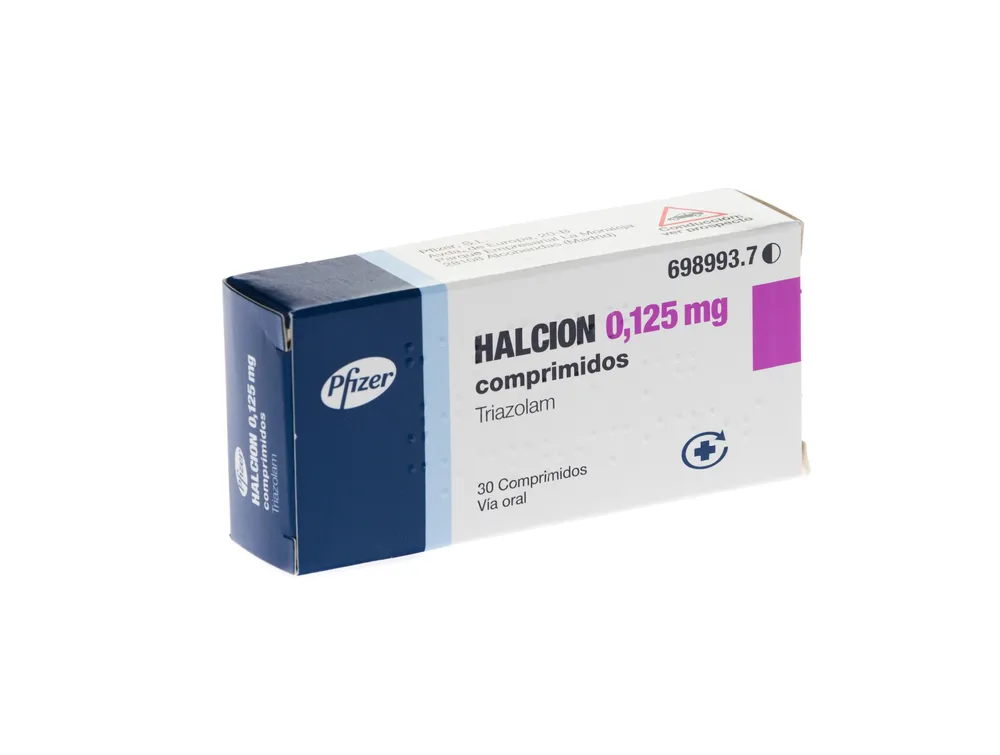
Table of Contents
Patient Information Leaflet
Introduction
Patient Information Leaflet
Halcion 0.125 mg tablets
Triazolam
Read this entire leaflet carefully before you start taking this medicine, as it contains important information for you.
- Keep this leaflet, as you may need to read it again.
- If you have any questions, consult your doctor or pharmacist.
- This medicine has been prescribed for you only, and you should not give it to others, even if they have the same symptoms as you, since it could harm them.
- If you experience any adverse effects, consult your doctor or pharmacist, even if they are adverse effects not listed in this leaflet. See section 4.
Leaflet contents
- What Halcion is and what it is used for
- What you need to know before taking Halcion
- How to take Halcion
- Possible side effects
- How to store Halcion
- Contents of the pack and other information
1. What Halcion is and what it is used for
Halcion (triazolam) is a hypnotic medicine (promotes sleep) indicated for the treatment of patients with insomnia (difficulty falling asleep or disturbance in sleep duration), particularly in those with transient insomnia. Halcion is indicated only when the sleep disorder is acute, limits the patient's activity, or causes extreme exhaustion.
2. What you need to know before taking Halcion
Do not take Halcion:
- if you are allergic to the active substance or to any of the other components of this medicine (listed in section 6).
- if you have a known hypersensitivity (allergy) to a group of medicines called benzodiazepines.
- if you have myasthenia gravis (a disease characterized by muscle weakness).
- if you have severe respiratory problems.
- if you suffer from sleep apnea (episodes of brief respiratory arrest during sleep).
- if you have severe liver problems.
- if you are simultaneously taking:
- antifungal medications containing ketoconazole or itraconazole;
- antidepressant medications containing nefazodone;
- medications for treating HIV infection containing efavirenz or HIV protease inhibitors (e.g., ritonavir);
- or other medications that strongly reduce the activity of certain liver enzymes (see section “Taking Halcion with other medicines”).
Warnings and precautions
Consult your doctor or pharmacist before starting to take Halcion. Be especially cautious with Halcion under the following circumstances:
- If you have a serious psychiatric disorder.
- If you are over 65 years old, are weakened, or have mild to moderate liver impairment or lung problems, as your doctor may need to reduce your dose.
- If you feel depressed or have thoughts of suicide, contact your doctor as soon as possible.
- Halcion is not recommended for children or adolescents under 18 years of age.
- Before taking this medicine, inform your doctor if you have a history of alcoholism or drug/medication dependence.
- This medicine may cause amnesic episodes (memory loss). This effect usually occurs several hours after taking the medicine. To reduce this risk, ensure that before taking the medicine you have the opportunity to sleep uninterrupted for at least 7–8 hours.
- When treatment with triazolam is stopped, insomnia (difficulty sleeping) may temporarily return, often more intensely than before (rebound insomnia), as with other benzodiazepines. Since the risk of rebound insomnia is greater after abrupt discontinuation, your doctor will recommend gradually reducing the dose over a period of time.
- As with other sedative-hypnotic medicines, complex sleep-related behaviors have been reported during treatment with triazolam, such as driving while not fully awake after taking the medicine and having no memory of doing so. If this happens to you, contact your doctor immediately.
- The use of Halcion together with opioid medicines (strong painkillers, medications for substitution therapy [treatment of opioid addiction], and some cough medicines) increases the risk of drowsiness, breathing difficulties (respiratory depression), coma, and may be potentially fatal. Therefore, concomitant use should only be considered when no other treatment options are possible. However, if your doctor prescribes Halcion together with opioids, the dose and duration of concomitant treatment must be limited by your doctor. Inform your doctor about all opioid medicines you are taking and closely follow your doctor's dosage recommendations. It may be helpful to inform friends or family members so they are aware of the signs and symptoms mentioned above. Contact your doctor if you experience any of these symptoms.
- Since triazolam may cause sedation (drowsiness, dizziness, and impaired motor control), patients—especially the elderly—are at increased risk of falls.
- If during treatment you experience reactions such as restlessness, agitation, irritability, aggression, delirium, rage attacks, nightmares, hallucinations, psychosis, inappropriate behavior, or other adverse behavioral effects, contact your doctor, as treatment must be discontinued.
Tolerance, dependence, withdrawal reactions, and drug/medication abuse
You may experience a reduced effectiveness of this medicine (tolerance) after continuous use. Halcion is recommended for short-term treatment only.
Treatment with this medicine also increases sensitivity to the effects of alcohol and other medicines that affect brain function. Therefore, consult your doctor if you consume alcohol or are using such medicines.
The use of benzodiazepines, including Halcion, may lead to dependence. The risk of dependence increases with higher doses and prolonged use. The risk is also higher if you have a history of alcohol or drug/medication abuse.
Inform your doctor if:
- you have taken or are currently taking any drugs;
- you regularly consume alcohol, or in the past frequently consumed large amounts of alcohol;
- you have previously or currently experienced urges to take large amounts of medication.
In principle, benzodiazepines should only be used for short periods and discontinued gradually. You and your doctor should agree on the duration of treatment before starting.
If you stop taking the medicine abruptly or reduce the dose too quickly, withdrawal reactions may occur. Do not stop taking this medicine suddenly. Seek advice from your doctor on how to discontinue treatment.
Some withdrawal reactions may be potentially fatal.
Withdrawal reactions may range from mild depressive mood, insomnia, and headaches to a severe syndrome including muscle pain, muscle and abdominal cramps, vomiting, sweating, tremors, seizures, anxiety, tension, restlessness, confusion, and irritability. The most severe withdrawal symptoms, including potentially fatal reactions, may include: feelings of detachment or alienation from oneself and the external world, heightened perception of noise, numbness and tingling in the limbs, increased sensitivity to light, noise, and physical contact, hallucinations, delirium tremens, depression, mania, psychosis, epileptic seizures, and suicidal tendencies.
The symptoms for which this medicine was prescribed may also reappear temporarily (rebound phenomena).
Do not give Halcion to family members or friends. Store this medicine safely to prevent harm to others.
Other medicines and Halcion
Inform your doctor or pharmacist if you are taking, have recently taken, or might need to take any other medicine.
Halcion may alter the effect of other medicines, and other medicines may alter the effect of Halcion.
Halcion must not be used together with the following medicines:
- Ketoconazole, itraconazole (medicines for fungal infections).
- Nefazodona (an antidepressant medicine).
- Efavirenz and other medicines used to treat HIV infection (e.g., ritonavir).
- Other medicines that strongly reduce the activity of certain liver enzymes.
Inform your doctor if you are taking the following medicines, as they may interact with Halcion and alter its activity:
- Medicines used to treat fungal infections.
- Cimetidine (used to treat gastroduodenal ulcers).
- Erythromycin, clarithromycin, troleandomycin, rifampicin, and isoniazid (used to treat bacterial infections).
- Fluvoxamine, sertraline, paroxetine (used to treat depression).
- Diltiazem and verapamil (used to treat heart problems or high blood pressure).
- Oral contraceptives.
- Imatinib (used to treat leukemia and other types of cancer).
- Carbamazepine (used to treat epilepsy).
- Aprepitant (used to prevent nausea and vomiting after surgery).
- Some medicines that act by depressing the central nervous system may enhance the effects of Halcion, such as those used to treat psychosis (antipsychotics), depression (antidepressants), insomnia (hypnotics), anxiety (anxiolytics/sedatives), severe pain (narcotic analgesics, anesthetics, and opioids), epilepsy (antiepileptics), and allergic reactions (sedating antihistamines).
Taking Halcion with food, drinks, and alcohol
Halcion must not be taken with alcohol, as the sedative effect of the medicine may be intensified.
Concomitant intake of grapefruit juice may increase the effect of Halcion.
Pregnancy, breastfeeding, and fertility
If you are pregnant, breastfeeding, think you may be pregnant, or plan to become pregnant, consult your doctor or pharmacist before taking this medicine.
Halcion will only be used during pregnancy if strictly necessary, and only after careful consideration of the benefits to the patient and the potential risks to the fetus.
Administration during breastfeeding is not recommended.
Driving and using machines
Halcion is a medicine that causes drowsiness. Do not drive or operate machinery if you feel sleepy or if your attention and reaction ability are impaired. Pay special attention at the beginning of treatment or when the dose is increased.
Halcion contains lactose, sodium, and sodium benzoate
This medicine contains lactose. If your doctor has informed you that you have an intolerance to certain sugars, consult with your doctor before taking this medicine.
This medicine contains less than 23 mg of sodium (1 mmol) per tablet; hence, it is essentially “sodium-free.”
This medicine contains 0.15 mg of sodium benzoate (E-211) in each tablet.
3. How to take Halcion
Follow exactly the instructions for use of this medicine as indicated by your doctor. If in doubt, consult your doctor or pharmacist again.
Your doctor will determine the most appropriate dose for you. The recommended dose is:
- Adults: 0.125 mg – 0.250 mg (1 or 2 tablets).
- Elderly: 0.125 mg (1 tablet).
The duration of treatment should be as short as possible, not exceeding two weeks. In certain cases, your doctor may consider it appropriate to extend the treatment for a longer period and even increase the dose up to 0.5 mg (4 tablets).
The dose and duration of administration should be adjusted according to your individual condition. Your doctor will advise you on the dose, the number of times per day you should take the medicine, and the duration of your treatment with Halcion, so that you take the lowest possible dose for the shortest possible time, as there is a risk of becoming dependent. Do not change or exceed the prescribed dose. To discontinue treatment, the dose should be gradually reduced after consulting your doctor. This reduces the risk of withdrawal reactions, which may be potentially fatal in some cases (see section 2).
If you have any type of liver or lung disorder, your doctor may consider reducing your dose.
Halcion is for oral use only. You should take it as a single dose immediately before going to bed.
If you take more Halcion than you should
If you have taken more Halcion than you should, contact your doctor, pharmacist, or call the Toxicology Information Service immediately at telephone: 91 562 04 20, indicating the medicine and the amount taken. It is recommended to bring the medicine's packaging and leaflet to the healthcare professional.
Overdose with benzodiazepines generally manifests as varying degrees of central nervous system depression, ranging from drowsiness to coma.
Treatment of overdose includes measures such as inducing vomiting within a maximum of 1 hour after the overdose or performing gastric lavage, as well as maintaining respiratory and cardiovascular functions.
If you forget to take Halcion
Do not take a double dose to make up for forgotten doses.
If you stop treatment with Halcion
Do not stop treatment abruptly. Gradual reduction of the dose is recommended, always in accordance with your doctor's instructions.
When stopping administration, symptoms such as restlessness, anxiety, insomnia, difficulty concentrating, headache, and sweating may occur.
If you have any further questions about the use of this medicine, ask your doctor or pharmacist.
4. Possible adverse effects
Like all medicines, this medicine may cause adverse effects, although not everyone will experience them.
Some adverse effects associated with this type of medicine (benzodiazepines) include daytime drowsiness, emotional blunting, confusion, fatigue, headache, dizziness, muscle weakness, ataxia (abnormal coordination), and double vision. These reactions occur mainly at the beginning of treatment and usually diminish as treatment continues. Occasionally, gastrointestinal problems, changes in libido (sexual desire), and skin disorders have been reported.
During treatment with benzodiazepines, reactions such as anterograde amnesia (difficulty recalling events prior to taking the medicine), restlessness, agitation, irritability, aggressiveness, delirium, rage attacks, nightmares, hallucinations, psychosis, inappropriate behavior, and other adverse behavioral effects, as well as physical and psychological dependence (with withdrawal symptoms), have been reported.
Frequent adverse effects (may affect up to 1 in 10 patients):
- Drowsiness, dizziness, ataxia (lack of coordination in body movements)
Uncommon adverse effects (may affect up to 1 in 100 patients):
- Confusion, insomnia
- Memory impairment
- Visual disturbances
Rare adverse effects (may affect up to 1 in 1,000 patients):
- Skin rashes
- Myasthenia (a disease characterized by muscle weakness)
Adverse effects with unknown frequency (cannot be estimated from available data):
- Allergic-type reactions, which occasionally may be very severe and even fatal: such as anaphylactic shock, anaphylactoid reaction, allergic edema, or angioedema (swelling of the tongue, glottis, or larynx that may cause airway obstruction which can be fatal)
- Aggression, hallucinations, sleepwalking, anterograde amnesia (lack of memory for events prior to taking the medicine), restlessness, agitation, irritability, delirium, rage attacks, nightmares, psychosis, and inappropriate behavior
- Drug/medication abuse, drug/medication dependence
- Syncope (fainting), sedation, decreased level of consciousness, speech disorders, attention disturbance, and taste disturbance
- Respiratory depression in patients with lung problems
- Changes in libido (sexual desire)
- Gastric discomfort
- Falls
- Withdrawal syndrome
Reporting of adverse effects
If you experience any type of adverse effect, consult your doctor or pharmacist, even if it is an effect not listed in this leaflet. You may also report them directly via the Spanish Pharmacovigilance System for Human Medicines: https://www.notificaram.es/. By reporting adverse effects, you can help provide more information on the safety of this medicine.
5. Storage of Halcion
Keep this medicine out of the sight and reach of children.
No special storage conditions are required.
Do not use Halcion after the expiry date stated on the packaging. The expiry date is the last day of the month indicated.
Medicines must not be disposed of via wastewater or household waste. Dispose of unused containers and medicines at the SIGRE point at your pharmacy. Ask your pharmacist how to dispose of containers and medicines you no longer need. This will help protect the environment.
6. Contents of the pack and other information
Composition of Halcion
- The active substance is triazolam.
- The other components are: lactose, colloidal anhydrous silica, microcrystalline cellulose, magnesium stearate, and sodium docusate 85% with sodium benzoate (E-211) 15%.
Appearance of the product and contents of the pack
Halcion is presented in the form of tablets. Each pack contains 30 tablets.
Marketing Authorization Holder and Manufacturer
Marketing Authorization Holder:
Pfizer, S.L.
Avda. de Europa 20-B, Parque Empresarial La Moraleja
28108 Alcobendas (Madrid)
Manufacturer:
Pfizer Italia S.r.l.
Località Marino del Tronto - 63100
Ascoli Piceno (Italy)
Date of the most recent review of this leaflet: November 2022
Detailed and up-to-date information on this medicinal product is available on the website of the Spanish Agency for Medicines and Health Products (AEMPS) http://www.aemps.gob.es/