Grafalon 20 mg/ml concentrate for solution for infusion
Spain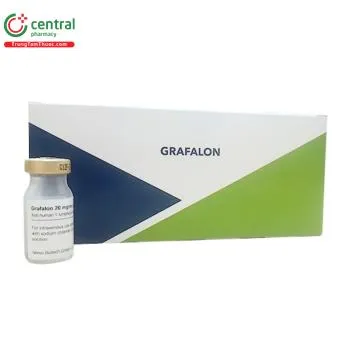
Table of Contents
Package leaflet: Information for the user
Introduction
Package leaflet: information for the user
Grafalon 20 mg/ml concentrate for solution for infusion
Human anti-T-lymphocyte immunoglobulin from rabbit
Read the entire leaflet carefully before you start using this medicine, because it contains important information for you.
- Keep this leaflet. You may need to read it again.
- If you have any questions, ask your doctor or pharmacist.
- This medicine has been prescribed for you only and must not be given to other people, even if they have the same symptoms as you. It could harm them.
- If you experience any side effects, talk to your doctor or pharmacist, even if they are side effects not listed in this leaflet. See section 4.
Leaflet contents:
- What Grafalon is and what it is used for
- What you need to know before using Grafalon
- How to use Grafalon
- Possible side effects
- How to store Grafalon
- Contents of the pack and other information
1. What Grafalon is and what it is used for
Grafalon belongs to a class of medicines called immunosuppressants.
You will be prescribed Grafalon if you have undergone or are about to undergo a kidney transplant. The function of the medicine is to prevent your immune system from rejecting the new organ. Grafalon will help you prevent or stop the rejection response by blocking the development of certain special cells that would normally attack the transplanted organ.
You may also receive Grafalon before a haematopoietic stem cell transplant (e.g. a peripheral blood or bone marrow transplant) to prevent a condition known as "graft-versus-host disease." This is a serious complication that may occur after a haematopoietic stem cell transplant when the donated cells react against the patient's own tissues.
Grafalon is used as part of an immunosuppressive treatment regimen in combination with other immunosuppressive medicines.
2. Before using Grafalon
Do not use Grafalon
- if you are allergic to the active substance of Grafalon (Anti-human T-lymphocyte rabbit immunoglobulin) or to any of the other components of this medicine (listed in section 6)
- if you have an infection and the treatment you are receiving is not working
- if you have problems stopping a bleeding episode due to a low platelet count (blood cells responsible for blood clotting)
- if you have a tumor, unless you are about to undergo a hematopoietic stem cell transplant
Warnings and precautions
Consult your doctor or pharmacist before starting to use Grafalon, especially if you have previously experienced any of the following conditions. You may be prescribed Grafalon, but you must first discuss it with your doctor.
- if you have previously had allergic reactions to these medicines (immunosuppressants) or to rabbit proteins
- if you have liver disease
- if you have heart problems
You will undergo blood tests to monitor your platelet levels (blood cells responsible for blood clotting) and other coagulation parameters, as administration of Grafalon may increase the risk of bleeding.
Infections with Grafalon
Grafalon reduces your body's defence system, and therefore your body will not be as effective as it usually is in fighting infections. Your doctor will treat any such infections appropriately. In patients treated for prevention of acute graft-versus-host disease (aGvHD), infections may be fatal.
There are no data on the use of Grafalon after allogeneic hematopoietic stem cell transplantation from umbilical cord blood.
Use of Grafalon with other medicines
Inform your doctor if you are taking, have recently taken, or might need to take any other medicines, including those obtained without a prescription.
These medicines could interfere with the effect of Grafalon.
-
Grafalon is used in combination with other immunosuppressive medicines. If you take Grafalon at the same time as these other immunosuppressants, your risk of infection, abnormal bleeding, and anaemia (a blood disorder) may increase.
-
Live vaccines are contraindicated because you are receiving immunosuppressive treatment. Inactivated vaccines may not be effective if administered at the same time as Grafalon. If you receive a vaccine, inform your doctor about your treatment.
Pregnancy, breastfeeding, and fertility
If you are pregnant or breastfeeding, think you may be pregnant, or plan to become pregnant, consult your doctor or pharmacist before using this medicine. If you need to take Grafalon, your doctor will discuss with you the risks and benefits of using this medicine during pregnancy.
Inform your doctor if you are breastfeeding. Grafalon may pass into breast milk.
Driving and use of machines
Not applicable.
Important information about the manufacturing of Grafalon
During the production of Grafalon, human components (e.g., red blood cells) are used. Therefore, a number of measures are required to prevent infectious agents from being transmitted to patients. These include careful selection of donors to ensure exclusion of those who may transmit infections, as well as testing of each donation for the presence of viruses/infections. The manufacturing process also includes several steps in the processing of human components that can inactivate or remove viruses. Despite these measures, when administering medicines produced using human components, the transmission of infections cannot be completely ruled out. This also applies to unknown or newly emerging viruses and other types of infections.
The measures taken are considered effective against enveloped viruses such as human immunodeficiency virus (HIV), hepatitis B virus, and hepatitis C virus, as well as against non-enveloped viruses such as hepatitis A virus and parvovirus B19.
3. How to use Grafalon
Follow exactly the administration instructions for this medicine as given by your doctor. If in doubt, consult your doctor or pharmacist again.
Treatment with Grafalon has been prescribed by a qualified and experienced physician in immunosuppressive therapy.
Grafalon will be administered to you in a hospital. Grafalon will be given as an intravenous infusion. Before administering the infusion, the medicine will be diluted in a sodium chloride solution.
One of the following doses may be administered to adults and children, based on their weight and condition:
If you are going to receive a kidney transplant:
Your doctor will decide which of the following doses will be administered to you:
Standard treatment: | The recommended daily dose is 2–5 mg/kg of body weight. Treatment lasts for 5 to 14 days. |
Single high-dose treatment: | A single dose of 9 mg/kg of body weight |
If you have received a kidney transplant:
The recommended daily dose is 3–5 mg/kg of body weight. Your treatment cycle will last from 5 to 14 days.
Adults who are about to undergo a stem cell transplant:
The recommended daily dose is 20 mg per kg of body weight, usually starting from day -3 to day -1 before the stem cell transplant.
Use in children and adolescents
Available information indicates that pediatric patients do not require a different dosage regimen compared to adult patients.
Elderly patients
Experience in elderly patients (≥ 65 years of age) is limited. There are no data on the prevention of CIH in patients aged 65 years or older.
If you take more Grafalon than you should
Treatment with Grafalon will be stopped immediately, and other immunosuppressive treatments will be adjusted. Your immune system may become weakened due to an overdose of Grafalon; therefore, you may be given medications to help prevent the onset of infections.
If you have any further questions about the use of this medicine, ask your doctor.
4. Possible adverse effects
Like all medicines, this medicine may cause adverse effects, although not everyone experiences them.
Immediately inform your doctor if you notice any of the following adverse effects related to allergic reactions and anaphylactic shock:
Allergic reactions are common adverse effects following treatment with Grafalon. Less than 1 in 10 patients are likely to experience them:
- chest pain
- wheezing
- muscle pain
- skin redness
In 3 out of more than 240 patients, allergic reactions progressed to anaphylactic shock. This is a serious and potentially life-threatening condition in which the patient may develop the following symptoms:
- high fever
- skin rash
- swelling
- difficulty breathing
- low blood pressure
Inform your doctor if you notice any of the following adverse effects:
Very common adverse effects (may affect more than 1 in 10 people):
- fever
- chills
- headache
- tremor
- vomiting
- nausea
- diarrhea
- abdominal pain
- difficulty breathing
- hot flushes
- increased infections
- low red blood cell count (anemia)
Common adverse effects (may affect up to 1 in 10 people):
- thrombocytopenia, leucopenia, pancytopenia (blood disorders)
- mucosal inflammation
- swelling
- feeling of fatigue
- chest pain
- joint and muscle pain
- back pain
- muscle stiffness
- low or high blood pressure
- tingling, prickling, or numbness of the skin
- rapid heartbeat (tachycardia)
- light sensitivity (photophobia)
- increased laboratory parameters
- increased bilirubin in the blood
- blood in the urine
- cough
- nosebleeds
- skin redness
- itching
- skin rash
- renal tubular necrosis (kidney function impairment)
- lymphoproliferative disorder (a type of cancer originating from certain white blood cells)
- veno-occlusive disease (blockage of small veins in the liver)
- bacterial sepsis, pneumonia, pyelonephritis, herpes infection, influenza, candidiasis, bronchitis, rhinitis, sinusitis, nasopharyngitis, skin infection
Uncommon adverse effects (may affect up to 1 in 100 people):
-
indigestion (dyspepsia)
-
mucosal inflammation caused by gastric secretion reflux into the esophagus
-
increased liver enzymes (liver laboratory parameters)
-
increased cholesterol
-
veno-occlusive disease (blockage of small veins in the liver)
-
vascular shock (blood vessel dilation)
-
increased number of red blood cells (polycythemia)
-
abnormal accumulation of lymph fluid
-
fluid retention
-
catheter site infection, Epstein-Barr virus infection, gastrointestinal infection, erysipelas, wound infection
Rare but medically important adverse effects (may affect up to 1 in 1,000 people):
- Hemolysis (abnormal breakdown of red blood cells)
In rare cases, especially if the drug is administered over a prolonged period, serum sickness may develop. This is a type of allergic reaction to a foreign protein, manifesting with symptoms such as fever, muscle and joint pain, and itchy skin rash.
Additional adverse effects in children and adolescents
Available data indicate that the adverse effects of Grafalon in children and adolescents are not fundamentally different from those observed in adults.
Immediately inform your doctor if you consider any of the adverse effects you experience to be severe, or if you notice any adverse effects not listed in this leaflet.
Some adverse effects may occur several months after Grafalon administration. These late-onset adverse effects include an increased risk of infections and certain types of cancer.
Reporting of adverse effects
If you experience any type of adverse effect, consult your doctor or pharmacist, even if it is a possible adverse effect not listed in this leaflet. You may also report them directly via the Spanish Pharmacovigilance System for Human Medicines: https://www.notificaram.es. By reporting adverse effects, you can help provide more information on the safety of this medicine.
5. Storage of Grafalon
Keep this medicine out of the sight and reach of children.
Do not use this medicine after the expiry date stated on the packaging after EXP. The expiry date is the last day of the month indicated.
Store in a refrigerator (between 2°C and 8°C). Keep the unopened vial in the outer packaging to protect it from light.
Do not use Grafalon if the solution is cloudy.
Medicines must not be disposed of via wastewater or household waste. Ask your pharmacist how to dispose of medicines and packaging that you no longer need. This will help protect the environment.
Your doctor will be responsible for disposing of unused medicines.
The withdrawal of the medicine from the vials and the preparation of the infusion solution must not be performed using siliconized syringes.
Not suitable for multiple withdrawals.
6. Contents of the pack and other information
Composition of Grafalon
The active substance is 20 mg/mL of rabbit anti-human T-lymphocyte immunoglobulin.
The other components are disodium dihydrogen phosphate dihydrate, phosphoric acid (85%), and water for injections.
Appearance of the product and contents of the container
Grafalon is a solution that is transparent to slightly opalescent and colourless to pale yellow, contained in glass vials.
The smaller vial, 5 mL, contains 100 mg of Grafalon, while the larger vial, 10 mL, contains 200 mg of Grafalon.
Grafalon is supplied in a box containing either 1 vial or 10 vials.
Marketing Authorisation Holder and Manufacturer
Neovii Biotech GmbH
Am Haag 6+7
82166 Gräfelfing
Germany
Date of the most recent review of this leaflet: September 2024
Detailed and up-to-date information on this medicinal product is available on the website of the Spanish Agency of Medicines and Medical Devices (AEMPS) http://www.aemps.gob.es/.