Gopten 0.5 mg hard capsules
Spain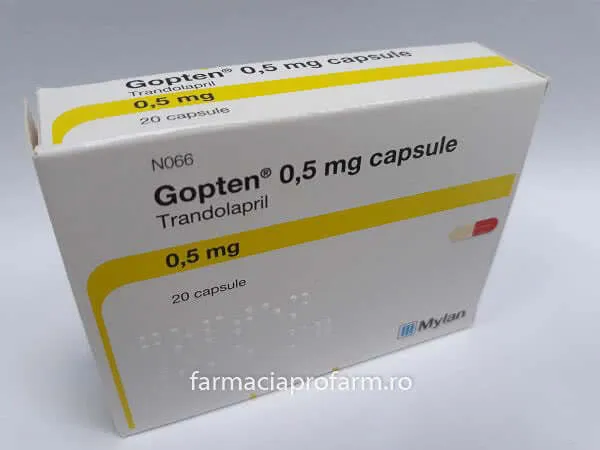
Table of Contents
- Package leaflet: Information for the user
- Introduction
- 1. What Gopten is and what it is used for
- 2. What you need to know before taking Gopten
- 3. How to take Gopten
- 4. Possible adverse effects
- 5. Storage of Gopten
- 6. Contents of the container and additional information
- **Appearance of the product and contents of the pack**
Package leaflet: Information for the user
Introduction
Package leaflet: information for the user
Gopten 0.5 mg hard capsules
trandolapril
Read the entire leaflet carefully before you start taking this medicine, because it contains important information for you.
- Keep this leaflet, as you may need to read it again.
- If you have any questions, ask your doctor or pharmacist.
- This medicine has been prescribed for you only, and you should not give it to other people, even if they have the same symptoms as you, because it may harm them.
- If you experience any adverse effects, consult your doctor or pharmacist, even if they are adverse effects not listed in this leaflet. See section 4.
Leaflet contents
-
What Gopten is and what it is used for
-
What you need to know before taking Gopten
-
How to take Gopten
-
Possible side effects
-
How to store Gopten
-
Contents of the pack and other information
1. What Gopten is and what it is used for
This medicine contains trandolapril, which belongs to a group of medicines called angiotensin-converting enzyme inhibitors (ACE inhibitors).
It is indicated for the treatment of arterial hypertension and myocardial infarction with left ventricular dysfunction (with or without heart failure).
2. What you need to know before taking Gopten
Do not take Gopten:
- If you are allergic (hypersensitive) to trandolapril or any of the other components of this medicine (listed in section 6).
- If you have a history of angioedema (Quincke's edema, characterized by swelling of the face, lips, tongue, larynx, or limbs) related to taking ACE inhibitors, or if you have hereditary or idiopathic angioedema (a disorder involving swelling of the face and airways, along with abdominal cramps).
- If you are more than 3 months pregnant [it is also recommended to avoid Gopten at the beginning of pregnancy (see section “Pregnancy, breastfeeding, and fertility”)].
- If you have diabetes or kidney failure and are being treated with a blood pressure medication containing aliskiren.
- If you have taken or are currently taking sacubitril/valsartan, a medicine used to treat chronic heart failure in adults, as the risk of angioedema (rapid swelling under the skin, for example in the throat) is high.
Warnings and precautions
Talk to your doctor or pharmacist before starting Gopten:
- If you are on a very strict salt-free diet, or have diarrhea or vomiting.
- If you are undergoing dialysis.
- If you have heart, kidney, or liver problems. Your doctor may need to monitor you and adjust your dose.
- If you have kidney disease caused by narrowing (stenosis) of the renal artery.
- If you are being treated with diuretics (medicines that increase urine elimination).
- If you have narrowing of one of the heart valves (mitral valve stenosis) or another obstruction in the left ventricular outflow tract.
- If you experience abdominal pain (with or without nausea or vomiting), as this could indicate intestinal angioedema (intestinal swelling).
- If you develop an allergic reaction with edema (swelling) of the face, limbs, lips, tongue, glottis, or larynx. Seek immediate medical attention if this occurs. The risk may be higher if you are of Black race.
- If you are undergoing blood/plasma exchange treatment (low-density lipoprotein apheresis) for familial hypercholesterolemia (an inherited condition with high levels of "bad" cholesterol in the blood).
- If you are undergoing desensitization therapy, for example, to wasp or bee venom, as some allergic reactions have been reported.
- If you have a collagen vascular disease such as scleroderma or systemic lupus erythematosus (an immune system disorder in which the body attacks its own tissues, particularly collagen fibers), and/or associated kidney disease, inform your doctor, as you may require regular blood tests.
- If you have a cough.
- If you are scheduled for major surgery or anesthesia.
- If you have diabetes, as your blood sugar levels should be closely monitored during the first month of treatment.
- If you are taking any of the following medicines for high blood pressure (hypertension):
- An angiotensin II receptor antagonist (ARA) (also known as “sartans” – e.g., valsartan, telmisartan, irbesartan), particularly if you have kidney problems related to diabetes.
- Aliskiren.
Your doctor may monitor your kidney function, blood pressure, and blood electrolyte levels (e.g., potassium) at regular intervals.
See also the information under the heading “Do not take Gopten”.
- If you are (or think you might be) pregnant. Gopten is not recommended during the first months of pregnancy and is contraindicated after the third month of pregnancy, as it may cause severe harm to the unborn child (see section “Pregnancy”).
- If you are taking any of the following medicines, as the risk of angioedema may increase:
- Racecadotril, a medicine used to treat diarrhea.
- Medicines used to prevent organ transplant rejection and for cancer (e.g., temsirolimus, sirolimus, everolimus).
- Vildagliptin, a medicine used to treat diabetes.
Taking Gopten with other medicines
Inform your doctor or pharmacist if you are taking, have recently taken, or might need to take any other medicines, including those obtained without a prescription.
Tell your doctor or pharmacist if you are taking any of the following medicines, as they may interact with Gopten:
-
Lithium: used for bipolar disorder and depression. Concomitant use of this medicine with lithium is not recommended.
-
Diuretics: medicines that increase urine production. Commonly used to treat hypertension and heart failure.
-
Potassium supplements (including salt substitutes), potassium-sparing diuretics, and other medicines that may increase blood potassium levels (e.g., trimethoprim and cotrimoxazole for bacterial infections; cyclosporine, an immunosuppressant used to prevent organ transplant rejection; and heparin, a medicine used to prevent blood clots).
-
Neuroleptics (for psychosis), tricyclic antidepressants (for depression).
-
Anesthetics.
-
Medicines for diabetes (insulin or oral hypoglycemics).
-
Non-steroidal anti-inflammatory drugs (NSAIDs).
-
Allopurinol, used to treat gout or after chemotherapy for cancer.
-
Chemotherapy for cancer.
-
Immunosuppressants, after organ transplantation or for treating certain autoimmune diseases.
-
Systemic corticosteroids, e.g., for inflammatory diseases, autoimmune conditions, or after transplantation.
-
Procainamide, used to correct irregular heartbeats.
-
Your doctor may need to adjust your dose and/or take other precautions if you are taking an angiotensin II receptor antagonist (ARA) or aliskiren (see also information under the headings “Do not take Gopten” and “Warnings and precautions”).
-
Other medicines for high blood pressure.
-
Medicines used to treat low blood pressure and colds (e.g., ephedrine and pseudoephedrine).
-
Medicines commonly used to prevent rejection of transplanted organs (sirolimus, everolimus, and other mTOR inhibitors). See section “Warnings and precautions”.
-
NEP inhibitors, such as sacubitril (available in fixed-dose combination with valsartan) and racecadotril: the risk of angioedema (rapid swelling under the skin, e.g., in the throat) may increase.
Taking Gopten with food and drinks
This medicine can be taken before, during, or after meals.
Pregnancy, breastfeeding, and fertility
If you are pregnant, breastfeeding, think you may be pregnant, or plan to become pregnant, consult your doctor before using this medicine.
Pregnancy
Talk to your doctor if you are (or think you might be) pregnant. Your doctor will generally advise stopping treatment with Gopten before becoming pregnant or as soon as pregnancy is confirmed, and will recommend switching to another medicine.
This medicine is not recommended during the first months of pregnancy and is contraindicated after the third month of pregnancy, as it may cause serious harm to the unborn child.
Breastfeeding
Inform your doctor or pharmacist if you are breastfeeding or plan to breastfeed.
This medicine is not recommended for breastfeeding mothers. Your doctor may prescribe an alternative treatment if you wish to breastfeed, especially if your baby is a newborn or premature.
Consult your doctor or pharmacist before using any medicine.
Driving and using machines
No specific effects are expected in this regard. However, in some individuals, ACE inhibitors may affect the ability to drive or operate machinery, particularly at the beginning of treatment, when switching to trandolapril, or when consuming alcohol. Therefore, after the first dose or subsequent dose adjustments, it is not advisable to drive or operate machinery for several hours.
Gopten contains lactose
If your doctor has informed you that you have an intolerance to certain sugars, consult with them before taking this medicine.
Gopten contains sodium
This medicine contains less than 23 mg of sodium (1 mmol) per tablet; therefore, it is essentially “sodium-free”.
3. How to take Gopten
Follow exactly the instructions for administration of this medicine given by your doctor or pharmacist. If in doubt, consult your doctor or pharmacist again.
Remember to take your medicine. Take the capsules at the same time every day. This medicine is administered orally.
Your doctor will determine the duration of your treatment. Do not stop treatment early, as even if you already feel better, your condition could worsen or recur.
In adult hypertension in patients who are not taking diuretics and who do not have heart, kidney, or liver disease, the recommended initial dose is 0.5 mg to 1 mg of trandolapril once daily (1 to 2 capsules of 0.5 mg) or 2 mg once daily (1 capsule of 2 mg); however, in the latter case, it is advisable to take one Gopten 2 mg hard capsule per day. If you are of Black African descent, your recommended initial dose is 2 mg per day (see section 4.4). If necessary, the dose of this medicine may be doubled after 1 to 4 weeks of treatment, up to a maximum of 4 mg to 8 mg of trandolapril per day (2 to 4 capsules of 2 mg).
If you have hypertension and also suffer from heart disease, with or without kidney disease, the initial dose is 0.5 mg to 1 mg of trandolapril once daily (1 to 2 capsules of 0.5 mg), under close medical supervision.
In myocardial infarction with left ventricular dysfunction, the initial dose is 0.5 mg to 1 mg of trandolapril (1 to 2 capsules of 0.5 mg) once daily, starting on the third day after the infarction, and should be gradually increased up to a maximum of 4 mg (2 capsules of 2 mg) as a single daily dose. If hypotension (low blood pressure causing dizziness, vertigo, blurred vision, or pallor) occurs, your treatment will be carefully reviewed by your doctor.
Inform your doctor if you are taking diuretics, as in patients previously treated with diuretics, the initial dose of trandolapril will be 1 capsule of 0.5 mg per day, and administration of the diuretic should be discontinued at least two or three days before starting treatment with this medicine.
If you have renal impairment (a kidney disease that prevents the kidney from properly performing its filtration function), your doctor will decide the most appropriate initial dose for you.
In severe hepatic insufficiency (liver disease in which the liver is unable to carry out its synthetic and metabolic functions), treatment will be initiated with a dose of 0.5 mg per day (1 capsule of 0.5 mg), under close medical supervision.
If you are an elderly patient, the recommended dose is the same as for adults.
If you feel that the effect of this medicine is too strong or too weak for treating your condition, consult your doctor or pharmacist.
Use in children
The use of this medicine has not been studied in this population, and therefore administration in children is not recommended.
If you take more Gopten than you should
If you have taken more trandolapril than you should, acute intoxication is unlikely. However, you must inform your doctor, as the recommended treatment in such cases is intravenous administration of normal saline (0.9%). If you experience hypotension (low blood pressure), you should be placed in a supine position, lying on your back with your legs elevated approximately 30 cm above the ground (higher than heart level), and you will be continuously monitored by your doctor.
Symptoms of overdose with this medicine include severe hypotension (marked drop in blood pressure), shock (a condition characterized by a sudden and severe drop in blood pressure that, if untreated, may lead to death), stupor (reduced level of consciousness), bradycardia (decreased heart rate), electrolyte imbalance (disturbance in blood electrolytes), and kidney failure.
In case of overdose or accidental ingestion, contact the Toxicology Information Service at telephone number 91.562.04.20, indicating the medicine and the amount ingested.
If you forget to take Gopten
Do not take a double dose to make up for forgotten doses.
If you have any further questions about the use of this medicine, ask your doctor, pharmacist, or nurse.
4. Possible adverse effects
Like all medicines, this medicine can cause adverse effects, although not everyone will experience them.
The following have been reported:
Frequent (may affect up to 1 in 10 people):
- In the treatment of hypertension: dizziness, headache, cough, and asthenia (weakness and lack of vitality).
- In the treatment following acute myocardial infarction: dizziness, hypotension, cough.
Uncommon (may affect up to 1 in 100 people):
- In the treatment of hypertension: hypotension, palpitations, nausea, itching, malaise.
- In both treatments: upper respiratory tract infection (nose, mouth, pharynx, and larynx), insomnia, decreased sexual appetite, somnolence, vertigo, hot flushes, upper respiratory tract inflammation, upper respiratory tract congestion, diarrhoea, gastrointestinal pain, constipation, gastrointestinal disorder, skin rash, back pain, muscle spasms, pain in arms and legs, impotence, chest pain, swelling of ankles, feet, and legs due to fluid accumulation, abnormal sensation.
Rare (may affect up to 1 in 1,000 people):
- In both treatments: urinary tract infection (kidneys, bladder, and urethra), bronchitis, pharyngitis, decrease in white blood cells, decrease in red blood cells, platelet disorder, white blood cell disorder, allergy, excessive glucose in blood, low sodium concentration in plasma, elevated blood cholesterol, excessive fats in blood, elevated uric acid, gout, loss of appetite, increased appetite, enzymatic abnormality, hallucinations, depression, sleep disorder, anxiety, agitation (restlessness, excitement and/or repetitive behaviour), apathy, cerebrovascular accident (interruption of blood supply to any part of the brain), sudden loss of consciousness, usually brief and reversible, sudden contraction or spasms of muscles, abnormal sensation of tingling, numbness, or burning, usually in the extremities, migraine (chronic and recurrent headache with other symptoms such as vomiting, nausea, or sensitivity to light), migraine without aura (migraine without visual disturbances), altered taste of food and drinks, eyelid inflammation, conjunctival eye edema, visual disturbance, eye disorder, tinnitus, myocardial infarction (death of heart muscle cells or part of it due to lack of blood supply), myocardial ischemia (inadequate blood supply, which if prolonged may lead to death of cardiac cells and thus infarction), angina pectoris (chest pain, usually oppressive in nature, resulting from myocardial ischemia), heart failure (when the heart can no longer pump sufficient blood to the rest of the body), rapid heartbeat originating in the ventricles, increased heart rate, decreased heart rate, hypertension, blood vessel disease, dizziness upon standing, decreased blood flow to legs and feet, varicose veins (enlarged and painful veins), sensation of breathlessness, nosebleed, pharyngeal inflammation, pain in mouth and throat, cough with sputum, respiratory disorder, vomiting of fresh blood, inflammation of the inner stomach walls, abdominal pain, vomiting, indigestion, dry mouth, excess intestinal gas, hepatitis, elevated bilirubin levels, angioedema (swelling under the skin), psoriasis, excessive sweating, eczema, acne, dry skin, skin disorder, pain in one or more joints, bone pain, wear between the bones' joints causing pain and stiffness, kidneys failing to function properly, elevated levels in blood of metabolic waste products, excessive urine production, increased frequency of urination, congenital arterial malformation (birth deformity in arteries), ichthyosis (a genetic skin disease in which the skin becomes dry and scaly), edema (excessive fluid accumulation in tissues), fatigue, injury.
Cases of angioedema (swelling) affecting the face, limbs, lips, tongue, glottis and/or larynx have been reported.
A complex of symptoms has been reported, which may include fever, inflammation of blood vessels, muscle pain, joint pain, a positive antinuclear antibody test for diagnosing a disease called lupus, elevated erythrocyte sedimentation rate, increased eosinophils (a type of white blood cell), and increased white blood cells in peripheral blood. Skin rash, photosensitivity (abnormal sensitivity to light causing skin rashes), or other skin manifestations may also occur.
After marketing of the medicine, the following additional adverse effects have been reported, with frequency not known:
Decrease in number of a type of white blood cells in blood, decrease in all blood cells, elevated potassium levels in blood, temporary brain dysfunction caused by lack of blood and oxygen, cerebral haemorrhage, balance disorders, disturbance in electrical conduction in the heart, cardiac arrest, irregular heartbeat, bronchoconstriction (resulting in less air entering, cough, and rapid breathing), intestinal obstruction, pancreatitis (inflammation of the pancreas), yellowing of the skin and whites of the eyes, hair loss, urticaria (skin lesions with fluid inside, usually accompanied by itching), Stevens-Johnson syndrome (a skin disorder resulting from an allergic reaction with more severe generalized symptoms), toxic epidermal necrolysis (another type of serious skin disorder with blisters), muscle pain, high fever, increased serum creatinine, increased blood urea nitrogen, increased blood alkaline phosphatase, increased blood lactate dehydrogenase, abnormal electrocardiogram, abnormal laboratory tests, abnormal liver function tests, decreased platelet count, increased transaminases, decreased hemoglobin and hematocrit.
Within the group of ACE inhibitors, to which this medicine belongs, the following adverse effects have additionally been reported:
Confusional state, blurred vision, sinusitis, rhinitis (inflammation of the nasal passages), glossitis (inflammation of the tongue), intestinal angioedema, erythema multiforme (a skin disorder resulting from an allergic reaction), psoriasis-like skin rashes, haemolytic anaemia (anaemia caused by destruction of red blood cells).
Reporting of adverse effects
If you experience any type of adverse effect, consult your doctor or pharmacist, even if it is a possible adverse effect not listed in this leaflet. You may also report them directly through the Spanish Pharmacovigilance System for Human Medicines: https://www.notificaram.es. By reporting adverse effects, you can help provide more information on the safety of this medicine.
5. Storage of Gopten
Keep this medicine out of the sight and reach of children.
Do not store above 25°C.
Do not use this medicine after the expiry date stated on the packaging after EXP. The expiry date refers to the last day of the month indicated.
Medicines must not be disposed of via wastewater or household waste. Dispose of unused medicines and their containers at the SIGRE point at your pharmacy. Ask your pharmacist how to dispose of medicines and containers you no longer need. This will help protect the environment.
6. Contents of the container and additional information
Composition of Gopten 0.5 mg hard capsules
The active substance is trandolapril. Each hard capsule contains 0.5 mg of trandolapril.
The other components are: monohydrate lactose, corn starch, povidone, stearic fumarate and sodium, gelatin, titanium dioxide (E-171), erythrosine (E-127), yellow iron oxide (E-172) and sodium lauryl sulfate.
Appearance of the product and contents of the pack
Hard capsules with a red body and white cap. Each pack contains 28 hard capsules.
Marketing Authorization Holder and Manufacturer Responsible:
Holder:
Viatris Healthcare Limited
Damastown Industrial Park
Mulhuddart, Dublin 15
Dublin
Ireland
Manufacturer Responsible:
Mylan Hungary Kft.
Mylan utca 1
Komárom, 2900
Hungary
Further information about this medicinal product is available from the local representative of the Marketing Authorization Holder:
Viatris Pharmaceuticals, S.L.
C/ General Aranaz, 86
28027 - Madrid
Spain
Date of the most recent review of this leaflet: March 2021
“Detailed information on this medicinal product is available on the website of the Spanish Agency of Medicines and Health Products (AEMPS) http://www.aemps.gob.es/”