Gobivaz 50 mg solution for injection in pre-filled pen
SpainTable of Contents
Package leaflet: Information for the user
Introduction
Package leaflet: information for the user
Gobivaz 50 mg solution for injection in pre-filled pen
golimumab
This medicinal product is subject to additional monitoring, which will allow rapid identification of new safety information. You can help by reporting any adverse reactions you may experience. See the end of section 4 for information on how to report adverse reactions.
Read this entire leaflet carefully before you start using this medicine, because it contains important information for you.
- Keep this leaflet, as you may need to read it again.
- If you have any questions, ask your doctor, pharmacist, or nurse.
- This medicine has been prescribed for you only and must not be given to other people, even if they have the same symptoms as you, because it may harm them.
- If you experience any adverse reactions, consult your doctor, pharmacist, or nurse, even if they are adverse reactions not listed in this leaflet. See section 4.
Additionally, your doctor will provide you with a Patient Information Card containing important safety information you need to know before and during treatment with Gobivaz.
Contents of this leaflet
- What Gobivaz is and what it is used for
- What you need to know before using Gobivaz
- How to use Gobivaz
- Possible adverse reactions
- How to store Gobivaz
- Contents of the pack and other information
1. What Gobivaz is and what it is used for
Gobivaz contains an active substance called golimumab.
Gobivaz belongs to a group of medicines known as “TNF blockers”. It is used in adults for the treatment of the following inflammatory conditions:
- Rheumatoid arthritis
- Psoriatic arthritis
- Axial spondyloarthritis, which includes ankylosing spondylitis and non-radiographic axial spondyloarthritis
- Ulcerative colitis
Gobivaz is used for the treatment of polyarticular juvenile idiopathic arthritis in children aged 2 years and older.
Gobivaz works by blocking the action of a protein called “tumor necrosis factor alpha” (TNF-α).
This protein plays a role in inflammatory processes in the body, and blocking it may reduce inflammation.
Rheumatoid arthritis
Rheumatoid arthritis is an inflammatory disease affecting the joints. If you have active rheumatoid arthritis, you will first be given other medications. If you do not respond adequately to these treatments, Gobivaz may be given to you in combination with another medicine called methotrexate to:
- Reduce the signs and symptoms of your disease.
- Slow down damage to bones and joints.
- Improve your physical function.
Psoriatic arthritis
Psoriatic arthritis is an inflammatory disease of the joints, usually accompanied by psoriasis, an inflammatory skin condition. If you have active psoriatic arthritis, you will first be given other medications. If you do not respond adequately to these treatments, Gobivaz may be prescribed to:
- Reduce the signs and symptoms of your disease.
- Slow down damage to bones and joints.
- Improve your physical function.
Ankylosing spondylitis and non-radiographic axial spondyloarthritis
Ankylosing spondylitis and non-radiographic axial spondyloarthritis are inflammatory diseases of the spine. If you have ankylosing spondylitis or non-radiographic axial spondyloarthritis, you will first be given other medications. If you do not respond adequately to these treatments, Gobivaz may be prescribed to:
- Reduce the signs and symptoms of your disease.
- Improve your physical function.
Ulcerative colitis
Ulcerative colitis is an inflammatory bowel disease. If you have ulcerative colitis, you will first be given other medications. If you do not respond adequately to these treatments, Gobivaz will be prescribed to treat your condition.
Polyarticular juvenile idiopathic arthritis
Polyarticular juvenile idiopathic arthritis is an inflammatory disease causing joint swelling and pain in children. If you have polyarticular juvenile idiopathic arthritis, you will first be given other medications. If you do not respond adequately to these treatments, Gobivaz will be prescribed in combination with methotrexate to treat the disease.
2. What you need to know before using Gobivaz
Do not use Gobivaz
- If you are allergic (hypersensitive) to golimumab or to any of the other ingredients of this medicine (listed in section 6).
- If you have tuberculosis (TB) or any other serious infection.
- If you have moderate or severe heart failure.
If you are unsure whether any of the above apply to you, consult your doctor, pharmacist, or nurse before using Gobivaz.
Warnings and precautions
Talk to your doctor, pharmacist, or nurse before starting treatment with Gobivaz.
Infections
Tell your doctor immediately if you currently have or develop any signs of infection during or after treatment with Gobivaz. Signs of infection may include fever, cough, difficulty breathing, flu-like symptoms, diarrhoea, wounds, dental problems, or a burning sensation when urinating.
- While taking Gobivaz, you may be more likely to get infections.
- Infections may progress more quickly and can be more severe. In addition, previous infections may recur.
Tuberculosis (TB)
Tell your doctor immediately if you develop symptoms of TB during or after treatment. Symptoms of TB include persistent cough, weight loss, fatigue, fever, or night sweats.
- Cases of tuberculosis have been reported in patients treated with Gobivaz, and in rare cases even in patients who have been treated with medications for TB. Your doctor will perform tests to check for TB. These test results will be recorded by your doctor on your Patient Information Card.
- It is very important that you inform your doctor if you have ever had TB or if you have had close contact with someone who has or had TB.
- If your doctor believes you are at risk of developing TB, you may be treated with TB medications before starting treatment with Gobivaz.
Hepatitis B virus (HBV)
- Inform your doctor if you are a carrier of, or if you currently have or have previously had hepatitis B before receiving Gobivaz.
- Tell your doctor if you think you may be at risk of contracting HBV.
- Your doctor must test you for HBV.
- Treatment with TNF blockers such as Gobivaz may lead to reactivation of hepatitis B virus in carriers of this virus, which in some cases may be potentially fatal.
Invasive fungal infections
You should tell your doctor immediately if you have lived in or travelled to areas where infections caused by certain types of fungi that can affect the lungs or other parts of the body are common (called histoplasmosis, coccidioidomycosis, or blastomycosis). If you are unsure whether these infections are common in areas where you have lived or travelled, consult your doctor.
Cancer and lymphoma
Tell your doctor if you have ever been diagnosed with lymphoma (a type of blood cancer) or any other cancer before using Gobivaz.
- If you take Gobivaz or another TNF blocker, your risk of developing lymphoma or other cancers may be increased.
- Patients with severe rheumatoid arthritis or other inflammatory diseases, especially those who have had the disease for a long time, may have a higher-than-average risk of developing lymphoma.
- In children and adolescents treated with TNF blockers, there have been cases of cancer, including some rare types, some of which have been fatal.
- Rarely, a specific and serious type of lymphoma called hepatosplenic T-cell lymphoma has been observed in patients taking other TNF blockers. Most of these patients were adolescent or young adult males. This type of cancer is usually fatal. Almost all of these patients had also been taking medications such as azathioprine or 6-mercaptopurine.
- Inform your doctor if you are taking azathioprine or 6-mercaptopurine with Gobivaz.
- Patients with severe persistent asthma, chronic obstructive pulmonary disease (COPD), or heavy smokers may have an increased risk of developing cancer when treated with Gobivaz. If you have severe persistent asthma, COPD, or are a heavy smoker, you should discuss with your doctor whether treatment with a TNF blocker is appropriate for you.
- Some patients treated with golimumab have developed certain types of skin cancer. Inform your doctor if you notice changes in the appearance of your skin or abnormal skin growths during or after treatment.
Heart failure
Tell your doctor immediately if you develop new symptoms of heart failure or if your existing symptoms worsen. Symptoms of heart failure include difficulty breathing or swelling of the feet.
- During treatment with TNF blockers, including Gobivaz, cases of new onset or worsening congestive heart failure have been reported. Some of these patients died.
- If you have mild heart failure and are being treated with Gobivaz, your doctor should monitor you carefully.
Nervous system disorders
Tell your doctor immediately if you have ever been diagnosed with or develop symptoms of a demyelinating disease such as multiple sclerosis. Symptoms may include changes in vision, weakness in arms or legs, or numbness or tingling in any part of your body. Your doctor will decide whether you should receive Gobivaz.
Surgery or dental procedures
- Inform your doctor if you are scheduled for any surgery or dental procedure.
- Inform the surgeon or dentist performing the procedure that you are being treated with Gobivaz by showing them your Patient Information Card.
Autoimmune disease
Tell your doctor if you develop symptoms of a condition called lupus. Symptoms include persistent skin rash, fever, joint pain, and fatigue.
- Rarely, patients treated with TNF blockers have developed lupus.
Blood disorders
In some patients, the body may stop producing enough blood cells that help fight infections or stop bleeding. If you develop persistent fever, bruising, easy bleeding, or paleness, inform your doctor immediately. Your doctor may decide to discontinue treatment.
If you are unsure whether any of the above apply to you, consult your doctor or pharmacist before using Gobivaz.
Vaccinations
Tell your doctor if you have been vaccinated or are planning to be vaccinated.
- You should not receive certain vaccines (live vaccines) while using Gobivaz.
- Some vaccines may cause infections. If you received Gobivaz during pregnancy, your baby may have an increased risk of such infections for up to approximately six months after your last dose during pregnancy. It is important to inform your baby's doctors and other healthcare professionals about your Gobivaz treatment so they can decide when your baby should be vaccinated.
Inform your child's doctor about any vaccines your child has received. If possible, your child should be up to date with all recommended vaccinations before starting treatment with Gobivaz.
Therapeutic infectious agents
Tell your doctor if you have recently received or are scheduled to receive treatment with therapeutic infectious agents (such as BCG instillation used for cancer treatment).
Allergic reactions
Tell your doctor immediately if you develop symptoms of an allergic reaction after receiving Gobivaz. Symptoms of an allergic reaction may include swelling of the face, lips, mouth, or throat, which may cause difficulty swallowing or breathing, skin rash, hives, or swelling of the hands, feet, or ankles.
- Some of these reactions may be serious or, rarely, potentially fatal.
- Some of these reactions occurred after the first dose of Gobivaz.
Children
Gobivaz is not recommended for children under 2 years of age with polyarticular juvenile idiopathic arthritis, as it has not been studied in this age group.
Other medicines and Gobivaz
- Tell your doctor or pharmacist if you are taking, have recently taken, or might need to take any other medicines, including other medicines used to treat rheumatoid arthritis, polyarticular juvenile idiopathic arthritis, psoriatic arthritis, ankylosing spondylitis, non-radiographic axial spondyloarthritis, or ulcerative colitis.
- You must not use Gobivaz with medicines containing the active substances anakinra or abatacept. These medicines are used to treat rheumatic diseases.
- Inform your doctor or pharmacist if you are taking any other medicine that affects your immune system.
- You should not receive certain vaccines (live virus vaccines) while being treated with Gobivaz.
If you are unsure whether you are taking any of the medicines listed above, consult your doctor or pharmacist before using Gobivaz.
Pregnancy and breastfeeding
Talk to your doctor before using Gobivaz if:
- You are pregnant or planning to become pregnant while using Gobivaz. There is limited information on the effects of this medicine in pregnant women. If you are being treated with Gobivaz, you should avoid pregnancy by using appropriate contraceptive methods during treatment and for at least 6 months after the last injection of Gobivaz. Gobivaz should only be used during pregnancy if strictly necessary.
- At least 6 months should pass from your last Gobivaz treatment before starting breastfeeding. You must stop breastfeeding if you are to be given Gobivaz.
- If you received Gobivaz during pregnancy, your baby may have an increased risk of infection. It is important to inform your baby's doctors and other healthcare professionals about your Gobivaz treatment before your baby is vaccinated (for more information, see the section on vaccinations).
If you are pregnant or breastfeeding, think you may be pregnant, or plan to become pregnant, consult your doctor or pharmacist before using this medicine.
Driving and using machines
Gobivaz has minor influence on the ability to drive and use machines. However, dizziness may occur after administration of Gobivaz. If this happens, do not drive or operate any tools or machines.
Gobivaz contains sorbitol
Sorbitol intolerance
This medicine contains 20.5 mg of sorbitol in each pre-filled pen.
3. How to use Gobivaz
Follow exactly the instructions for administration of this medicine given by your doctor or pharmacist. If in doubt, consult your doctor or pharmacist again.
What dose of Gobivaz to use
Rheumatoid arthritis, psoriatic arthritis, and axial spondyloarthritis, including ankylosing spondylitis and non-radiographic axial spondyloarthritis:
-
The recommended dose is 50 mg (the content of 1 pre-filled pen) administered once a month, on the same day each month.
-
Consult your doctor before you administer the fourth dose. Your doctor will determine whether you should continue treatment with Gobivaz.
-
If you weigh more than 100 kg, the dose may be increased to 100 mg (the content of 2 pre-filled pens) administered once a month, on the same day each month.
Polyarticular juvenile idiopathic arthritis in children aged 2 years and older:
- In patients weighing at least 40 kg, the recommended dose is 50 mg administered once a month, on the same day each month.
- Consult your doctor before you administer the fourth dose. Your doctor will determine whether you should continue treatment with Gobivaz.
Ulcerative colitis
- The following table shows how you will usually use this medicine.
Initial treatment | An initial dose of 200 mg (the contents of 4 pre-filled pens) followed by 100 mg (the contents of 2 pre-filled pens) 2 weeks later. |
Maintenance treatment |
of 1 pre-filled pen) 4 weeks after their last treatment and then every 4 weeks. Your doctor may decide to prescribe 100 mg (the contents of 2 pre-filled pens), depending on your response to Gobivaz.
of 2 pre-filled pens) 4 weeks after their last treatment and then every 4 weeks. |
How Gobivaz is administered
- Gobivaz is administered by injection under the skin (subcutaneous).
- Initially, your doctor or nurse may inject Gobivaz for you. However, you and your doctor may decide that you can self-inject Gobivaz. In this case, you will be instructed on how to self-inject Gobivaz.
Consult your doctor if you have any questions about how to self-administer an injection. Detailed “Instructions for Use” can be found at the end of this leaflet.
If you use more Gobivaz than you should
If you have used or been given too much Gobivaz (administered too much in a single dose or used too frequently), consult your doctor or pharmacist immediately. Always carry the outer packaging, even if it is empty, and this leaflet with you.
If you forget to use Gobivaz
If you forget to use Gobivaz on the scheduled date, inject the missed dose as soon as you remember.
Do not administer a double dose to make up for missed doses.
When to inject the next dose:
- If the dose is delayed by less than 2 weeks, inject the missed dose as soon as you remember and continue with your original schedule.
- If the dose is delayed by more than 2 weeks, inject the missed dose as soon as you remember and consult your doctor or pharmacist to determine when the next dose should be administered.
If you are unsure what to do, consult your doctor or pharmacist.
If you stop using Gobivaz
If you are considering stopping treatment with Gobivaz, consult your doctor or pharmacist first.
If you have any other questions about using this medicine, ask your doctor, pharmacist, or nurse.
4. Possible adverse effects
Like all medicines, this medicine can cause adverse effects, although not everyone experiences them. Some patients may experience serious adverse effects and may require treatment. The risk of certain adverse effects is higher with the 100 mg dose compared to the 50 mg dose. Adverse effects may occur several months after the last injection.
Contact your doctor immediately if you notice any of the following serious adverse effects of Gobivaz, including:
-
Allergic reactions, which may be severe, or rarely, potentially life-threatening (rare). Symptoms of an allergic reaction may include swelling of the face, lips, mouth, or throat, which may cause difficulty swallowing or breathing, skin rash, hives, swelling of the hands, feet, or ankles. Some of these reactions occurred after the first administration of Gobivaz.
-
Serious infections (including tuberculosis, bacterial infections such as severe blood infections and pneumonia, serious fungal infections, and other opportunistic infections) (frequent). Symptoms of infection may include fever, fatigue, cough (persistent), difficulty breathing, flu-like symptoms, weight loss, night sweats, diarrhea, wounds, dental problems, and a burning sensation when urinating.
-
Reactivation of hepatitis B virus if you are a carrier or have previously had hepatitis B (rare). Symptoms may include yellowing of the eyes and skin, dark brown urine, abdominal pain on the right side, fever, dizziness, vomiting, and extreme tiredness.
-
Nervous system disorders such as multiple sclerosis (rare). Symptoms of nervous system disorders may include vision changes, weakness in arms or legs, numbness or tingling in any part of your body.
-
Cancer of the lymph nodes (lymphoma) (rare). Symptoms of lymphoma may include swollen lymph nodes, weight loss, or fever.
-
Heart failure (rare). Symptoms of heart failure may include difficulty breathing or swelling of the feet.
-
Signs of immune system disorders called:
-
Lupus (rare). Symptoms may include joint pain or a skin rash on cheeks or arms that is sensitive to sunlight.
-
Sarcoidosis (rare). Symptoms may include persistent cough, shortness of breath, chest pain, fever, swollen lymph nodes, weight loss, skin rashes, and blurred vision.
-
Swelling of small blood vessels (vasculitis) (rare). Symptoms may include fever, headache, weight loss, night sweats, skin rash, and nerve problems such as numbness and tingling.
-
Skin cancer (uncommon). Symptoms of skin cancer may include changes in the appearance of the skin or abnormal skin growth.
-
Blood disorders (frequent). Symptoms of blood disorders may include persistent fever, bruising easily, or excessive bleeding, or paleness.
-
Blood cancer (leukemia) (rare). Symptoms of leukemia may include fever, feeling tired, frequent infections, easy bruising, and night sweats.
Contact your doctor immediately if you notice any of the above symptoms.
The following additional adverse effects have been observed with Gobivaz:
Very common adverse effects (may affect more than 1 in 10 patients):
- Upper respiratory tract infections, sore throat or hoarseness, runny nose
Common adverse effects (may affect up to 1 in 10 patients):
- Abnormal liver function tests (elevated liver enzymes) detected during blood tests ordered by your doctor
- Dizziness
- Headache
- Numbness or tingling sensation
- Superficial fungal infections
- Abscess
- Bacterial infections (such as cellulitis)
- Low red blood cell count
- Low white blood cell count
- Positive blood test for lupus
- Allergic reactions
- Indigestion
- Stomach pain
- Nausea
- Flu
- Bronchitis
- Sinusitis
- Herpes
- High blood pressure
- Fever
- Asthma, feeling of suffocation, difficulty breathing
- Stomach and intestinal disorders including inflammation of the inner lining of the stomach and colon, which may cause fever
- Mouth pain and sores
- Injection site reactions (including redness, hardness, pain, bruising, itching, tingling, and irritation)
- Hair loss
- Skin rash and itching
- Difficulty sleeping
- Depression
- Weakness
- Bone fractures
- Chest discomfort
Uncommon adverse effects (may affect up to 1 in 100 patients):
- Kidney infection
- Cancers, such as skin cancer and non-cancerous tumors or lumps, including moles
- Skin blisters
- Severe systemic infection (sepsis), sometimes including low blood pressure (septic shock)
- Psoriasis (including on the palms of the hands and/or soles of the feet and/or blistering-type psoriasis)
- Low platelet count
- Combined low platelet, red blood cell, and white blood cell count
- Thyroid disorders
- Increased blood sugar levels
- Increased blood cholesterol levels
- Balance disorders
- Visual disturbances
- Eye inflammation (conjunctivitis)
- Eye allergy
- Sensation of irregular heartbeat
- Narrowing of blood vessels in the heart
- Blood clots
- Flushing
- Constipation
- Chronic inflammatory lung disease
- Reflux
- Gallstones
- Liver disorders
- Breast disorders
- Menstrual cycle disorders
Rare adverse effects (may affect up to 1 in 1,000 patients):
- Bone marrow failure to produce blood cells
- Severe decrease in the number of white blood cells in the blood
- Infection of joints or surrounding tissue
- Wound healing problems
- Inflammation of blood vessels in internal organs
- Leukemia
- Melanoma (a type of skin cancer)
- Merkel cell carcinoma (a type of skin cancer)
- Lichenoid reactions (itchy, red-purple rash and/or thick white-gray lines on mucous membranes)
- Scaly, flaky skin
- Immune system disorders that could affect the lungs, skin, and lymph nodes (usually presenting as sarcoidosis)
- Pain and discoloration in fingers or toes
- Taste disturbances
- Bladder disorders
- Kidney disorders
- Inflammation of blood vessels in the skin causing rash
Adverse effects with unknown frequency:
- A rare blood cancer affecting mainly young people (hepatosplenic T-cell lymphoma)
- Kaposi's sarcoma, an uncommon cancer associated with human herpesvirus 8 infection. Kaposi's sarcoma usually presents more frequently as purplish skin lesions
- Worsening of a condition called dermatomyositis (manifested as a skin rash accompanied by muscle weakness)
Reporting of adverse effects
If you experience any adverse effect, talk to your doctor, pharmacist, or nurse, even if it is a possible adverse effect not listed in this leaflet. You may also report them directly through the national reporting system listed in Appendix V*. By reporting adverse effects, you can help provide more information on the safety of this medicine.
5. Storage of Gobivaz
- Keep this medicine out of the sight and reach of children.
- Do not use this medicine after the expiry date stated on the label and on the packaging, following "CAD". The expiry date refers to the last day of the month indicated.
- Store in a refrigerator (between 2 °C and 8 °C). Do not freeze.
- Keep the pre-filled pen in its outer packaging to protect it from light.
- This medicine may also be stored outside the refrigerator at a temperature not exceeding 25 °C for a single period of up to 30 days, but not beyond the original expiry date printed on the carton. Write the new expiry date on the carton, including day/month/year (no more than 30 days after removing the medicine from the refrigerator). Once this medicine has reached room temperature, do not return it to the refrigerator. Dispose of this medicine if it has not been used by the new expiry date or the original expiry date printed on the carton, whichever comes first.
- Do not use this medicine if you notice that the liquid is not clear or colorless, yellowish, cloudy, or contains foreign particles.
- Medicines must not be disposed of via wastewater or household waste. Ask your doctor or pharmacist how to dispose of medicines and packaging that you no longer need. This will help protect the environment.
6. Contents of the pack and other information
Composition of Gobivaz
The active substance is golimumab. One 0.5 ml pre-filled pen contains 50 mg of golimumab. The other components are sorbitol, L-histidine, L-histidine monohydrochloride monohydrate, poloxamer 188, and water for injections. For more information about sorbitol (E-420), see section 2.
Appearance of the product and contents of the pack
Gobivaz is presented as a solution for injection in a single-use pre-filled pen. Gobivaz is available in packs containing 1 pre-filled pen and multiple packs containing 3 pre-filled pens (3 packs of 1). Only certain pack sizes may be marketed.
The solution is from transparent to slightly opalescent (with a pearly sheen), colourless to pale yellow, and may contain a few small translucent or white protein particles. Do not use Gobivaz if the solution changes colour, becomes cloudy, or if foreign particles are visible.
Marketing Authorisation Holder
Advanz Pharma Limited
Unit 17 Northwood House
Northwood Crescent
Dublin 9
D09 V504
Ireland
Manufacturer
Alvotech Hf
Sæmundargata 15-19
Reykjavik, 102 Iceland
Date of the most recent revision of this leaflet:
Detailed information on this medicine is available on the European Medicines Agency website: https://www.ema.europa.eu.
INSTRUCTIONS FOR USE
If you wish to self-inject Gobivaz, a healthcare professional must first train you on how to prepare and administer the injection. If you have not been trained, please contact your doctor, nurse, or pharmacist to schedule a training session.
These instructions include:
- Preparing to use the pre-filled pen
- Selecting and preparing the injection site
- Injecting the medicine
- After the injection
The following illustration (see Figure 1) shows what the pre-filled pen looks like.
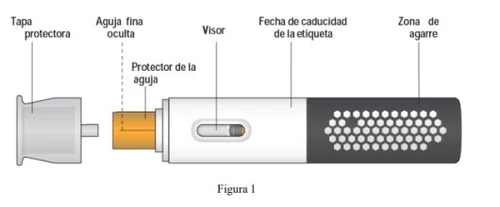
- Preparing to use the pre-filled pen
- Do not shake the pre-filled pen at any time.
- Do not remove the cap from the pre-filled pen until immediately before injection.
- Do not replace the cap on the pre-filled pen after removal, to avoid bending the needle.
Check the number of pre-filled pens
Check the pre-filled pens to ensure that:
- The number of pre-filled pens and the dose are correct.
- If your dose is 50 mg, you will receive one 50 mg pre-filled pen.
- If your dose is 100 mg, you will receive two 50 mg pre-filled pens and must administer two injections yourself. Choose two different injection sites (e.g., one injection in the right thigh and the other in the left thigh) and administer the injections one after the other.
- If your dose is 200 mg, you will receive four 50 mg pre-filled pens and must administer four injections yourself. Choose different injection sites and administer the injections consecutively.
Check the expiry date
- Check the expiry date printed or written on the carton.
- Check the expiry date (indicated by “EXP”) on the pre-filled pen.
- Do not use the pre-filled pen if the expiry date has passed. The printed expiry date refers to the last day of the month indicated. Consult your doctor or pharmacist.
Check the blister pack
- Check the blister pack’s security seal.
- Do not use the pre-filled pen if the blister is damaged. Consult your doctor or pharmacist.
Wait 30 minutes to allow the pre-filled pen to reach room temperature
- For proper injection, leave the pre-filled pen at room temperature outside the carton for 30 minutes, out of the reach of children.
- Do not use any other method to warm the pre-filled pen (e.g., do not heat it in a microwave or in hot water).
- Do not remove the cap from the pre-filled pen while waiting for it to reach room temperature.
Prepare the remaining materials
- While waiting, prepare the other materials you will need, such as an alcohol swab, cotton ball, or gauze, and a sharps container.
Check the liquid in the pre-filled pen
- Look through the viewing window to check that the liquid in the pre-filled pen is from transparent to slightly opalescent (with a pearly sheen) and colourless to pale yellow. The solution may be used if it contains a few small translucent or white particles, which are proteins.
- You may also see an air bubble, which is normal.
- Do not use the pre-filled pen if the liquid has an abnormal colour, is cloudy, or contains large particles. In such cases, inform your doctor or pharmacist.
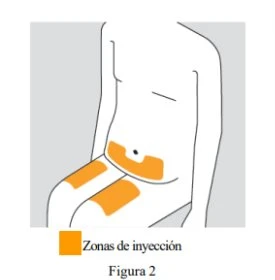
- Selecting and preparing the injection site (see Figure 2)
- The medicine can be injected into the middle portion of the front of the thigh.
- It can also be injected into the abdominal area below the navel, except for the area approximately 5 cm immediately below the navel.
- Do not inject into areas where the skin is tender, bruised, red, flaky, hard, or has scars or stretch marks.
- If multiple injections are required for a single administration, each injection should be given at a different injection site.
DO NOT inject into the arm to avoid pen failure and/or accidental injury.
Wash your hands and clean the injection site
- Wash your hands thoroughly with soap and warm water.
- Clean the injection site with an alcohol swab.
- Allow the skin to dry before injection. Do not fan or blow on the cleaned area.
- Do not touch the area again before administering the injection.
- Injecting the medicine
- Do not remove the cap until you are ready to inject the medicine.
- The medicine must be injected within 5 minutes after removing the cap.
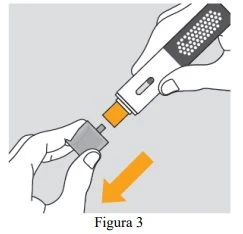
Remove the cap (Figure 3)
- When ready to inject, remove the cap and dispose of it after the injection.
- Do not replace the cap, as this may damage the needle inside the pre-filled pen.
- Do not use the pre-filled pen if it has been dropped without the cap. If this occurs, inform your doctor or pharmacist.
Prepare to press the pre-filled pen against the skin (see Figure 4).
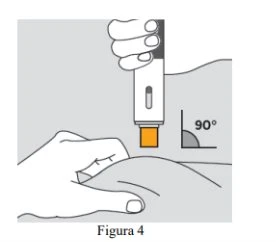
- With your other hand, pinch the skin. Prepare to place the pre-filled pen at the injection site, ensuring the orange needle shield points toward the injection site.
- Hold the pre-filled pen so that you can see the viewing window.
Press to inject (see Figure 5).
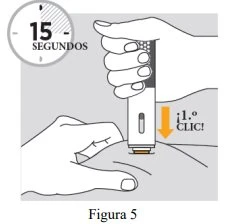
- Press the open end of the pre-filled pen firmly against the skin at a 90-degree angle (see Figure 5).
- Wait until you hear the first “click,” indicating the start of the injection. You may not feel a prick at this point.
- Continue counting to 15 to ensure the full dose is delivered.
Do not lift the pre-filled pen from the skin. Removing the pen prematurely may result in an incomplete dose.
Continue holding the pen in place until the orange indicator stops moving or you hear the second “click” (see Figure 6). It may take up to 15 seconds to hear the second “click,” which indicates the injection is complete and the needle has retracted into the pen.
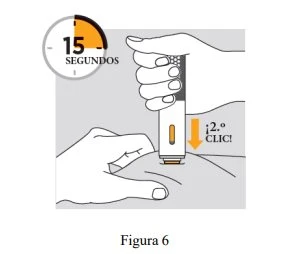
Note: If you do not hear the second “click,” wait 15 seconds from the moment you first pressed the pen against the skin, then remove the autoinjector from the injection site.
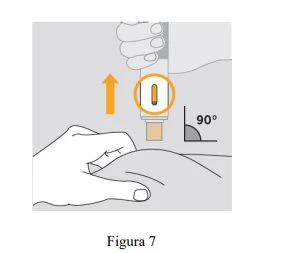
Check the viewing window: a full orange indicator confirms proper administration (see Figure 7)
- The orange indicator should completely fill the viewing window.
- Remove the pre-filled pen from the injection site.
- If the orange indicator is not visible in the viewing window or if you suspect you did not receive the full dose, contact your doctor or pharmacist. Do not administer a second dose without consulting your doctor.
- After the injection
Use a cotton ball or gauze
- A small amount of blood or fluid at the injection site is normal.
- Using a cotton ball or gauze, apply gentle pressure to the injection site for 10 seconds.
- If needed, cover the injection site with a small adhesive bandage.
- Do not rub the skin.
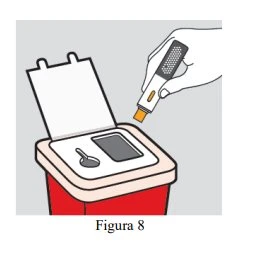
Dispose of the pre-filled pen (see Figure 8)
- Immediately place the used pen in a sharps container. Follow your doctor’s or nurse’s instructions for disposing of the container when full.
If you believe something went wrong during the injection or have any concerns, inform your doctor or pharmacist.