Glucose B. Braun 50% solution for infusion
Spain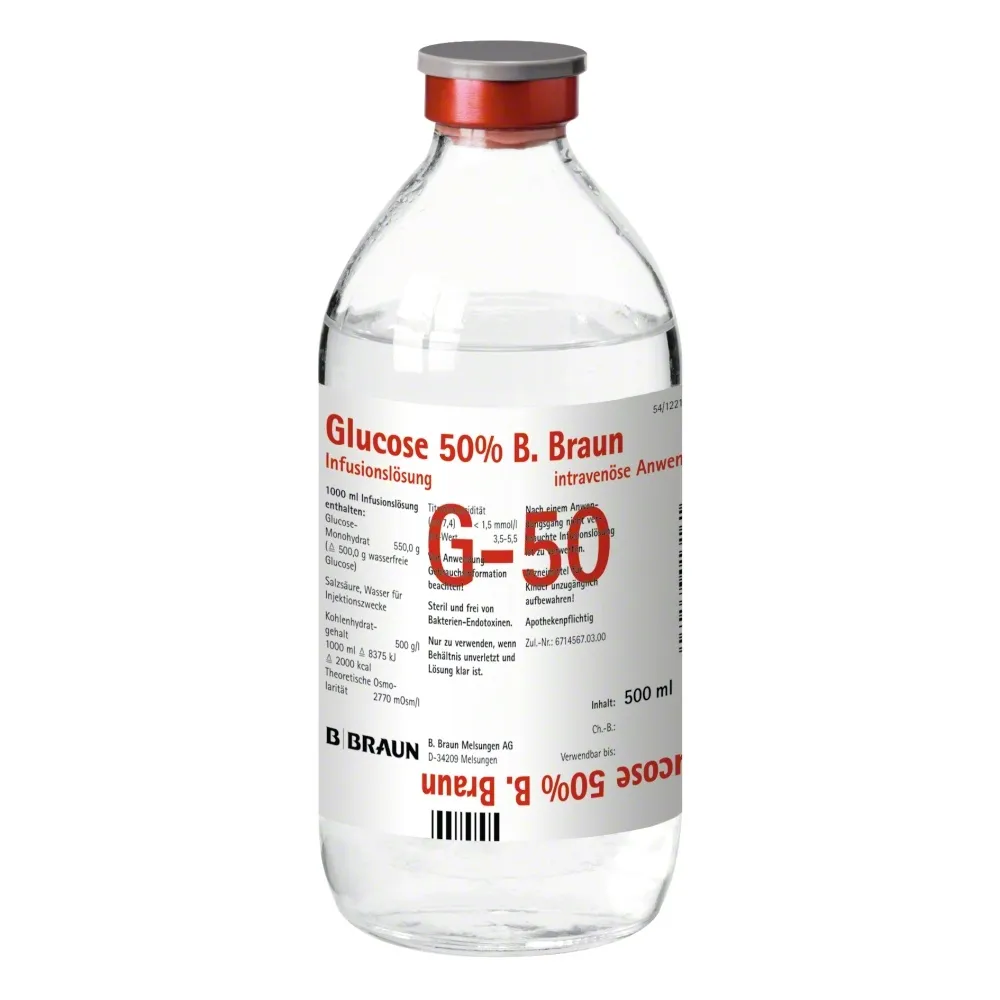
Table of Contents
- Patient Information Leaflet
- Introduction
- ***Read the entire patient information leaflet carefully before starting to use this medicine, as it contains important information for you.***
- 1. What Glucosa B.Braun 50% is and what it is used for
- 2. Before using Glucosa B.Braun 50%
- 3. How to use Glucosa B.Braun 50%
- 4. Possible adverse effects
- 5. Storage of Glucose B. Braun 50%
- 6. Contents of the package and other information
Patient Information Leaflet
Introduction
Patient Information Leaflet
Glucose B. Braun 50% solution for infusion
Read the entire patient information leaflet carefully before starting to use this medicine, as it contains important information for you.
- Keep this leaflet, as you may need to read it again.
- If you have any questions, consult your doctor or pharmacist.
- This medicine has been prescribed for you only and must not be given to other people, even if they have the same symptoms as you, since it could harm them.
- If you experience any adverse effects, consult your doctor, even if the effects are not listed in this leaflet. See section 4.
Leaflet contents:
- What Glucosa B.Braun 50% is and what it is used for
- What you need to know before using Glucosa B.Braun 50%
- How to use Glucosa B.Braun 50%
- Possible adverse effects
- Storage of Glucosa B.Braun 50%
Pack contents and additional information
1. What Glucosa B.Braun 50% is and what it is used for
Glucosa B.Braun 50% is a solution for infusion used for:
-
providing a source of carbohydrates (sugar) for parenteral nutrition. Parenteral nutrition is used to feed patients who cannot eat. It is administered by infusion (slow injection) through a vein.
-
preventing or treating low blood sugar levels (hypoglycemia)
-
providing additional fluid to the patient when the body does not have enough water (dehydration).
2. Before using Glucosa B.Braun 50%
Do not use Glucosa B.Braun 50%:
If you have:
- high blood glucose levels (hyperglycemia) or abnormally high blood lactate concentration (hyperlactatemia), diabetes mellitus or glucose intolerance, or diabetic coma.
- low blood sodium or potassium levels (hyponatremia or hypokalemia).
- blood dilution due to excessive fluid administration (hemodilution) and excess fluid in the body's extracellular spaces (extracellular hyperhydration).
- severe renal failure (when kidneys do not function properly and dialysis is required) with anuria (suppressed urine production).
- after a cerebrovascular accident (hemorrhage).
- low blood volume with hypoxia (oxygen deficiency in the body).
- during the first 24 hours after head trauma.
If large amounts of the solution need to be administered, additional contraindications may arise due to the infusion of high amounts of glucose and fluids.
Patients with critical conditions, pain, postoperative stress, infections, burns, nervous system, cardiac, hepatic or renal diseases, and patients taking medications that enhance the effect of vasopressin (a hormone regulating body fluid balance), are at a certain risk of developing abnormally low blood sodium levels (acute hyponatremia) when this solution is administered. This may lead to cerebral edema (encephalopathy).
Acute hyponatremia may cause acute hyponatremic encephalopathy (cerebral edema), characterized by headache, nausea, seizures, lethargy, and vomiting. Patients with cerebral edema are at special risk of suffering severe, irreversible, and potentially fatal brain damage.
Children, women of childbearing age, and patients with severe brain disorders such as meningitis (infection of the membranes surrounding the brain) or brain injury are at particular risk of severe and potentially fatal cerebral swelling caused by an acute decrease in blood sodium levels.
Take special care with Glucosa B.Braun 50%:
Patients should be evaluated considering water, ion, and blood glucose balance. Changes in these parameters may require appropriate treatment.
Prolonged administration of glucose may cause potassium, phosphate, or magnesium deficiency and may increase extracellular fluid volume, leading to water intoxication.
Rapid administration of concentrated glucose solutions may cause elevated blood glucose levels and hyperosmolar syndrome. Cardiovascular system overload (heart and blood circulation) with fluid accumulation in the lungs (edema) should be considered, especially in sensitive patients or when high volumes of fluid are administered.
Frequent monitoring of blood glucose levels is required, and insulin should be administered if necessary: one unit for every 10 g of glucose.
For the treatment of hypoglycemic states in neonates or young children, less concentrated glucose solutions (10–25%) are recommended.
Use with caution in elderly patients or those with liver problems.
Precautions and warnings related to any medication added to the glucose solution must be taken into account.
Use of other medicines
Inform your doctor or pharmacist if you are using or have recently used any other medicines, including those obtained without a prescription, especially medicines that increase the effect of vasopressin and the risk of low sodium levels (hyponatremia):
- Carbamazepine and oxcarbazepine used to treat epilepsy.
- Vincristine and ifosfamide used to treat cancer.
- Cyclophosphamide used to treat cancer and autoimmune diseases.
- Selective serotonin reuptake inhibitors (SSRIs) used to treat depression.
- Antipsychotics for mental disorders.
- Opioid analgesics for relief of severe pain.
- Non-steroidal anti-inflammatory drugs (NSAIDs) to relieve mild to moderate pain and treat body inflammation.
- Desmopressin to treat diabetes insipidus (extreme thirst and continuous production of large volumes of diluted urine).
- Oxytocin used during childbirth.
- Vasopressin and terlipressin used to treat bleeding esophageal varices (dilated veins in the esophagus due to liver problems).
- Diuretics (medications that increase urine output).
The use of Glucosa B.Braun 50% with other medicines may alter the effectiveness of both treatments:
Administration of glucocorticoids, diuretics, phenytoin, chlorpropamide increases blood glucose levels.
Intravenous glucose administration in patients treated with insulin or oral antidiabetics (biguanides, sulfonylureas) may reduce the therapeutic effectiveness of these agents.
If glucose is administered together with digitalis glycosides (digoxin), increased digitalis activity may occur, increasing the risk of toxicity from these medications.
Your doctor will check the compatibility of this solution with any additive before use. These solutions should not be administered using the same infusion sets used or intended for blood transfusion, due to the risk of agglutination.
Pregnancy and breastfeeding
Consult your doctor or pharmacist before using any medicine.
Glucose crosses the placenta, whereas insulin does not; therefore, the fetus itself is responsible for insulin synthesis in response to glucose administration. Infusions exceeding 10 g/hour cause increases in fetal insulin levels. Therefore, use with caution in pregnant women.
Glucose solutions should be administered with special caution in pregnant women during labor, especially when administered in combination with oxytocin, due to the risk of hyponatremia.
On the other hand, there is no evidence suggesting that glucose may cause adverse effects in the neonate during breastfeeding. Nevertheless, caution is also recommended during this period.
3. How to use Glucosa B.Braun 50%
Follow exactly the administration instructions for Glucosa B.Braun 50% as indicated by your doctor. Consult your doctor or pharmacist if you have any doubts.
It will be administered only by healthcare personnel, and the dosage depends on the requirements imposed by the patient's condition, body weight, clinical status, and metabolic state. Depending on individual needs, administer from 0.7 to 4 g of glucose per kg of body weight per day; or up to 0.5 g of glucose per kg of body weight per hour.
Your doctor will monitor fluid balance, blood glucose levels, and electrolyte levels (including sodium) in the blood before and during treatment, especially in patients with impaired vasopressin release (a hormone that regulates body fluids) and in patients taking medications that enhance the action of vasopressin, due to the risk of abnormally low sodium levels in the blood (hyponatremia).
Glucosa B.Braun 50% may become extremely hypotonic after administration due to the metabolism of glucose in the body.
If you use more Glucosa B.Braun 50% than you should
It is unlikely that this will occur, as your doctor will determine your daily doses. However, if you were to receive an overdose of the medicine, it could lead to excess body water (hyperhydration), high blood glucose levels (hyperglycemia), and disturbances in the balance of salts in the blood (hyperosmolality), which may result in altered consciousness, seizures, and coma.
If you have any further questions about the use of this product, ask your doctor or pharmacist.
In case of overdose or accidental ingestion, contact the Toxicology Information Service (telephone: 91.562 04 20) or consult your doctor or pharmacist. Take this leaflet with you.
4. Possible adverse effects
Like all medicines, Glucosa B.Braun 50% may produce adverse effects, although not everyone experiences them.
You may develop an imbalance in fluid levels and certain minerals in your body. You may develop low levels of sodium (hyponatremia), potassium, phosphate, and magnesium in the blood.
If you consider any of the adverse effects you experience to be severe, or if you notice any adverse effects not listed in this leaflet, inform your doctor or pharmacist. They may be signs of a very serious or even life-threatening allergic reaction (hypersensitivity):
- skin swelling of the face and lips or swelling of the throat.
- difficulty breathing.
- skin rash.
- redness of the skin (cutaneous erythema).
- hives (urticaria).
You will be prescribed treatment according to the symptoms.
Other adverse effects are:
- high blood sugar level (hyperglycemia).
- excess fluid in the blood vessels (hemodilution and hypervolemia).
- sugar in the urine (glucosuria).
- chills.
- sweating.
- fever (febrile reaction).
- infection at the injection site.
- administration route-related reactions:
- local reaction or pain (redness or swelling at the infusion site).
- irritation and inflammation of the vein through which the infusion is administered (phlebitis). This may cause redness, pain, burning, or swelling in the infusion vein.
- formation of a blood clot (venous thrombosis) at the infusion site, causing pain, swelling, or redness in the area of the clot.
- leakage of the infusion solution into the surrounding tissues (extravasation). This may damage tissues and lead to scarring.
- Hospital-acquired hyponatremia.
- Hyponatremic encephalopathy.
Reporting of adverse effects
If you experience any type of adverse effect, consult your doctor or pharmacist, even if it is a possible adverse effect not listed in this leaflet. You may also report them directly through the Spanish Pharmacovigilance System for Human Medicinal Products: www.notificaRAM.es. By reporting adverse effects, you can help provide more information on the safety of this medicine.
5. Storage of Glucose B. Braun 50%
Keep this medicine out of the sight and reach of children.
No special storage conditions are required.
Do not use Glucose B. Braun 50% after the expiry date stated on the packaging (after EXP). The expiry date refers to the last day of the month indicated.
Medicines should not be disposed of via wastewater or household waste. Ask your pharmacist how to dispose of unused medicines and their packaging. This helps protect the environment.
6. Contents of the package and other information
Composition of Glucose B.Braun 50%:
Active Ingredients | Per 1 ml | Per 100 ml | Per 1,000 ml |
Glucose (as glucose monohydrate, 550 mg/ml) | 500 mg | 50 g | 500 g |
Energy value | 2,000 kcal/l |
Theoretical osmolarity | 2,778 mOsm/l |
Acidity (up to pH 7.4) | <1.5 mmol/l |
pH | 3.5 – 5.5 |
The other components are: hydrochloric acid and water for injections.
Appearance of the medicinal product and content of the container
Glucose B.Braun 50% is an infusion solution presented in glass bottles of 500 ml and 1,000 ml (not all pack sizes may be marketed).
Clinical pack: | 10 bottles of 500 ml |
10 bottles of 1,000 ml |
Marketing Authorization Holder and Manufacturing Responsible Party
B|BRAUN
- Braun Medical, S.A.
Ctra. de Terrassa, 121
08191-Rubí (Barcelona)
Spain
This summary was approved in October 2019
Detailed information on this medicinal product is available on the website of the Spanish Agency of Medicines and Health Products (AEMPS) http://www.aemps.es.
This information is intended for healthcare professionals only:
Each container is intended for single use only. Any unused portion must be discarded.
The infusion solution should be visually inspected before use. The solution must be clear, free from precipitates, and the container must be intact. Do not administer if these conditions are not met.
Use an aseptic technique when administering the solution and when adding medications, if necessary.
Before adding medications to the solution or administering concomitantly with other drugs, compatibility must be verified to ensure there are no incompatibilities.
These solutions must not be administered using the same infusion sets currently being used, previously used, or intended to be used for blood transfusion, due to the risk of pseudoagglutination.
Disposal of unused medicinal product and all materials that have come into contact with it must be carried out in accordance with local regulations.