Glucosaline Vitulia 3.6%/0.3% solution for infusion
Spain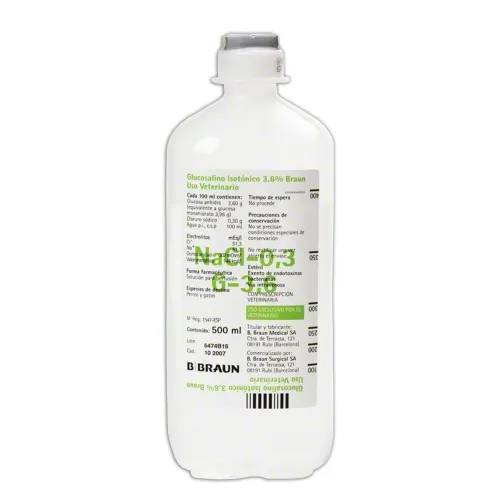
Table of Contents
- Package leaflet: Information for the user
- Introduction
- 1. What Suero Glucosalino Vitulia is and what it is used for
- 2. What you need to know before using Suero Glucosalino Vitulia
- 3. How to use Vitulia Glucosaline Solution
- 4. Possible adverse effects
- 5. Storage of Vitulia Glucosaline Solution
- 6. Contents of the container and other information
Package leaflet: Information for the user
Introduction
Package leaflet: information for the user
Suero Glucosalino Vitulia 3.6%/0.3% solution for infusion
Glucose monohydrate, Sodium chloride
Read the entire leaflet carefully before you start using this medicine because it contains important information for you.
- Keep this leaflet, as you may need to read it again.
- If you have any questions, ask your doctor or nurse.
- If you experience any adverse effects, consult your doctor, pharmacist or nurse, even if they are adverse effects not listed in this leaflet. See section 4.
Leaflet contents
- What Suero Glucosalino Vitulia is and what it is used for
- What you need to know before using Suero Glucosalino Vitulia
- How to use Suero Glucosalino Vitulia
- Possible adverse effects
- How to store Suero Glucosalino Vitulia
- Contents of the pack and other information
1. What Suero Glucosalino Vitulia is and what it is used for
Suero Glucosalino Vitulia is an infusion solution containing glucose and sodium chloride, belonging to the pharmacotherapeutic group of solutions affecting electrolyte balance – electrolytes with carbohydrates.
Suero Glucosalino Vitulia is indicated for:
- Dehydration states (loss of body water) accompanied by moderate electrolyte losses.
- Acidosis states: uremic coma, diabetic coma (with insulin administration).
- Mild alkalosis states.
- Acute abdomen syndrome: peritonitis, hepatic colic, intestinal invagination, mesenteric thrombosis.
- Acetonemic vomiting.
- As a vehicle for administering other medications or electrolytes, along with a slight energetic supply.
2. What you need to know before using Suero Glucosalino Vitulia
Do not use Suero Glucosalino Vitulia:
- If you are allergic to the active substances or to any of the other components of this medicine (listed in section 6).
- If you have hyperhydration (excess fluid in the body).
- In cases of generalized edema (fluid accumulation in body tissues) or ascitic cirrhosis (chronic progressive liver disease with fluid accumulation).
- If you have hyperglycemia (high blood glucose levels).
- If you have hypernatremia (high sodium levels in blood).
- If you have hyperchloremia (high chloride levels in blood).
- In states of hyperosmolar coma (loss of consciousness due to increased concentration of salts in the blood).
- In states of hyperlactacidemia (presence of lactic acid in blood).
- In severe cases of cardiac, hepatic, or renal failure (impaired function of the heart, liver, or kidneys, respectively).
- During the first 24 hours after head trauma.
Warnings and precautions:
Consult your doctor or nurse before using Suero Glucosalino Vitulia.
- Frequent and massive administration of glucose-saline solutions may cause fluid overload (hyperhydration), disturbances in acid-base balance, and significant ionic depletions, including hypomagnesemia (low magnesium levels in blood), hypokalemia (low potassium levels in blood), and hypophosphatemia (low phosphate levels in blood). In such cases, electrolyte supplementation may be required. Therefore, regular monitoring of blood glucose levels, serum electrolytes, water balance, and acid-base equilibrium is recommended.
- To prevent hypokalemia during prolonged infusions with glucose-saline solutions, it is recommended to add potassium to the solution as a safety measure.
- Blood glucose concentration should be carefully monitored during episodes of intracranial hypertension.
- Special caution is required if you have experienced acute ischemic attacks (reduced or absent blood flow in arteries), as hyperglycemia has been associated with increased cerebral ischemic damage and impaired recovery.
- Exercise particular care if you suffer from any of the following conditions: hypertension, heart failure, peripheral or pulmonary edema, renal dysfunction, preeclampsia (symptoms preceding seizures and drop in blood pressure in pregnant women), or other conditions associated with sodium retention.
- Administration of solutions containing glucose may lead to vitamin B1 deficiency, especially in cases of malnutrition.
- In patients with diabetes mellitus, glucose-containing solutions may be used provided appropriate initial treatment (insulin) is administered. These solutions should also be used cautiously in patients with Addison's disease or carbohydrate intolerance.
- Special care is required if the solution is administered continuously at the same injection site due to the risk of thrombophlebitis.
- This medicine should be used with caution if the heart, liver, and/or kidneys are not functioning properly, especially in elderly patients.
- Suero Glucosalino Vitulia must not be administered using the same infusion set, nor simultaneously, before, or after blood transfusion, due to possible incompatibilities.
Glucose-containing solutions for intravenous infusion are generally isotonic. However, in the body, glucose solutions may become physiologically extremely hypotonic due to the rapid metabolism of glucose.
Depending on the tonicity of the solution, the volume and rate of infusion, and the patient's initial clinical condition and ability to metabolize glucose, intravenous glucose administration may cause electrolyte disturbances, the most important of which is hyperosmolar hyponatremia.
Hyponatremia:
Patients with non-osmotic release of vasopressin (e.g., in critical illness, pain, postoperative stress, infections, burns, and CNS disorders), patients with heart, liver, or kidney disease, and patients exposed to vasopressin agonists are at special risk of developing acute hyponatremia following infusion of hypotonic solutions.
Acute hyponatremia may cause acute hyponatremic encephalopathy (cerebral edema), characterized by headache, nausea, seizures, lethargy, and vomiting. Patients with cerebral edema are at special risk of severe, irreversible, and potentially fatal brain damage.
Children, women of childbearing age, and patients with reduced cerebral compliance (e.g., in meningitis, intracranial hemorrhage, or cerebral contusion) are at special risk of severe and potentially fatal cerebral edema caused by acute hyponatremia.
Children
Suero Glucosalino Vitulia should be administered with caution to premature infants and full-term neonates due to immature renal function, to avoid excessive sodium retention.
Other medicines and Suero Glucosalino Vitulia
Inform your doctor or nurse if you are currently using, have recently used, or might need to use any other medicines.
Certain medicines may interact with Suero Glucosalino Vitulia. In such cases, it may be necessary to adjust the dose or discontinue treatment with one of the medicines.
It is important that you inform your doctor if you are taking any of the following medicines:
- Systemic corticosteroids with glucocorticoid activity (cortisol), diuretics, phenytoin, chlorpromazine may increase blood glucose levels. Mineralocorticoid-acting corticosteroids should be administered with caution due to their capacity to retain water and sodium.
- Insulin or oral antidiabetics (biguanides, sulfonylureas) may result in reduced therapeutic efficacy of the latter (antagonistic effect). Additionally, oral antidiabetics may cause changes in electrolyte balance.
- Digitalis glycosides (digoxin) may exhibit increased activity, increasing the risk of toxicity.
- Lithium carbonate, since administration of sodium chloride accelerates renal excretion of lithium, leading to reduced therapeutic effect.
Medicines that enhance the effect of vasopressin
The following medicines increase the effect of vasopressin, thereby reducing renal excretion of electrolyte-free water and increasing the risk of hospital-acquired hyponatremia during inadequately balanced intravenous infusion therapy:
- Medicines that stimulate vasopressin release; e.g.: chlorpropamide, clofibrate, carbamazepine, vincristine, selective serotonin reuptake inhibitors, 3,4-methylenedioxy-N-methamphetamine (MDMA), ifosfamide, antipsychotics, narcotics.
- Medicines that potentiate vasopressin action; e.g.: chlorpropamide, NSAIDs, cyclophosphamide.
- Vasopressin analogs; e.g.: desmopressin, oxytocin, vasopressin, terlipressin.
Other medicines known to increase the risk of hyponatremia include diuretics in general and antiepileptic drugs such as oxcarbazepine.
Pregnancy, breastfeeding, and fertility
If you are pregnant or breastfeeding, think you may be pregnant, or plan to become pregnant, consult your doctor or nurse before using this medicine.
Pregnancy
During pregnancy, your doctor will decide whether glucose-saline solution is appropriate, as it should be used with caution.
Excessive administration of glucose-containing solutions during pregnancy may cause fetal hyperglycemia, hyperinsulinemia, and acidosis, and thus may be harmful to the newborn.
Suero Glucosalino Vitulia should be administered with special caution to pregnant women during labor, especially if administered in combination with oxytocin, due to the risk of hyponatremia.
Breastfeeding
There is no evidence suggesting that Suero Glucosalino Vitulia may cause adverse effects in the neonate during breastfeeding. Nevertheless, caution is recommended during this period.
Driving and using machines
There is no indication that administration of Suero Glucosalino Vitulia may affect the ability to drive or operate machinery.
3. How to use Vitulia Glucosaline Solution
This medicine will be administered in a hospital or healthcare center by the responsible healthcare personnel.
Your doctor will decide the dose, frequency, and average infusion rate at which the solution will be administered, depending on your age, weight, clinical condition (particularly your hydration status), blood glucose levels, fluid and electrolyte and acid-base balance, and the nature of any medications that may have been added to the solution.
Recommended dose:
For adults: 500 mL to 3,000 mL every 24 hours.
For infants and children:
- From 0 to 10 kg body weight: 100 mL/kg/24 h.
- From 10 to 20 kg body weight: 1,000 mL + 50 mL/kg/24 h for weight above 10 kg.
-
20 kg body weight: 1,500 mL + 20 mL/kg/24 h for weight above 20 kg.
If you are given more Vitulia Glucosaline Solution than you should
If the administration of Vitulia Glucosaline Solution is not properly and carefully controlled, one or more of the following overdose symptoms may occur:
- fluid overload,
- an imbalance in electrolyte levels (electrically charged substances in blood and other body fluids such as: sodium, calcium, chlorides) and acid-base balance (loss of equilibrium in acidic and basic substances in the body, which must remain constant),
- an increase in blood sugar concentration.
If this occurs, treatment must be immediately discontinued and, depending on the severity, you may be given:
- medications that increase the elimination of water and salts (diuretics),
- electrolytes (such as sodium, calcium, chlorides...), or
- insulin.
If you have any further questions about the use of this medicine, ask your doctor or nurse.
4. Possible adverse effects
Like all medicines, Suero Glucosalino Vitulia may cause adverse effects, although not everyone experiences them.
Adverse reactions related to the administration technique may occur, including fever, infection at the injection site, local reaction or pain, venous irritation, venous thrombosis or phlebitis extending from the injection site, extravasation, and hypervolemia. To minimize the risk of thrombophlebitis (inflammation of a vein due to a blood clot), it is recommended to alternate the catheter insertion site (every 24–48 hours).
Hospital-acquired hyponatremia can cause irreversible brain damage and death due to the development of acute hyponatremic encephalopathy.
Adverse reactions may also be associated with medications added to the solution; the nature of the added medications will determine the possibility of any additional undesirable effects.
If any adverse reactions occur, the infusion must be discontinued.
Reporting of adverse effects
If you experience any type of adverse effect, consult your doctor or pharmacist, even if it is a possible adverse effect not listed in this leaflet. You may also report them directly via the Spanish System for Pharmacovigilance of Human Medicines: www.notificaram.es. By reporting adverse effects, you can help provide more information on the safety of this medicine.
5. Storage of Vitulia Glucosaline Solution
Keep this medicine out of the sight and reach of children.
Do not use Vitulia Glucosaline Solution after the expiry date which is stated on the packaging after EXP. The expiry date is the last day of the month indicated.
No special storage conditions are required.
6. Contents of the container and other information
Composition of Suero Glucosalino Vitulia
- The active ingredients per 100 mL of solution are: glucose (as monohydrate) 3.6 g, sodium chloride 0.3 g.
- Other components are: water for injections.
Appearance of the product and contents of the container
Suero Glucosalino Vitulia is an infusion solution supplied in low-density polyethylene bottles containing 500 mL of solution. The clinical pack contains 10 bottles.
Marketing Authorization Holder and Manufacturer
Marketing Authorization Holder:
Laboratorios ERN, S.A.
C/Perú, 228
08020 Barcelona, Spain
Manufacturer:
C/Gorgs Lladó, 188
Pol. Ind. Can Salvatella
08210 Barberá del Vallés (Barcelona), Spain
or
Parenteral Solution Industry Vioser S.A.
9th km Trikala-Larisa Nt.Rd.
42100 Trikala
Greece
Date of the most recent revision of this leaflet: November 2023.
Detailed and up-to-date information on this medicine is available on the website of the Spanish Agency of Medicines and Health Products (AEMPS) http://www.aemps.gob.es/.
This information is intended for healthcare professionals only:
Monitoring of fluid balance, serum glucose, serum sodium, and other electrolytes may be required before and during administration, especially in patients with increased non-osmotic release of vasopressin (syndrome of inappropriate antidiuretic hormone secretion, SIADH) and in patients receiving concomitant treatment with vasopressin agonists due to the risk of hyponatremia.
Monitoring of serum sodium is particularly important when physiologically hypotonic solutions are administered. Suero Glucosalino Vitulia may become extremely hypotonic after administration due to the metabolism of glucose in the body.
Infusion rate:
The usual infusion rate is 40 mL/kg/24 h in adults.
In pediatric patients, the infusion rate is typically 5 mL/kg/h, but this value varies with body weight:
- From 0 to 10 kg body weight: 6–8 mL/kg/h.
- From 10 to 20 kg body weight: 4–6 mL/kg/h.
-
20 kg body weight: 2–4 mL/kg/h.
The infusion rate should not exceed the patient's capacity for glucose oxidation in order to avoid hyperglycemia. Therefore, the maximum dose ranges from 5 mg/kg/min in adults to 10–18 mg/kg/min in infants and children, depending on age and total body mass.
The contents of each container are intended for single use only. Any unused portion must be discarded.
The infusion solution should be visually inspected before use. The solution must be clear, free from precipitates, and the container must be intact. Do not administer if these conditions are not met.
An aseptic technique must be used when administering the solution and when adding medications, if necessary.
Before adding medications to the solution or administering them simultaneously with other drugs, compatibility must be verified.
These solutions must not be administered using the same infusion sets currently being used, previously used, or intended to be used for blood transfusion, due to the risk of pseudoagglutination.
Glucose-saline solution containing 3.6% glucose and 0.3% sodium chloride has been reported to be incompatible with mitomycin due to the low pH of this solution.
In addition, incompatibility has been observed with various isotonic glucose-saline solutions and the following drugs: sodium amoxicillin, sodium heparin, sodium imipenem-cilastatin, and meropenem. However, these medications may be compatible with this type of solution depending on various factors such as drug concentration (sodium heparin) or the time interval between reconstitution and administration (sodium amoxicillin, sodium imipenem-cilastatin, and meropenem).
Furthermore, incompatibility has been reported when certain medications are diluted in glucose-containing solutions, including: sodium ampicillin, amrinone lactate, sodium amoxicillin/clavulanic acid, interferon alfa-2b, procainamide hydrochloride. However, amrinone lactate or sodium amoxicillin/clavulanic acid may be injected directly into the injection site while these infusion solutions are being administered.
Disposal of unused medication and of all materials that have come into contact with it must be carried out in accordance with local regulations.