Gibiter Easyhaler 320 micrograms/9 micrograms/inhalation powder for inhalation
Spain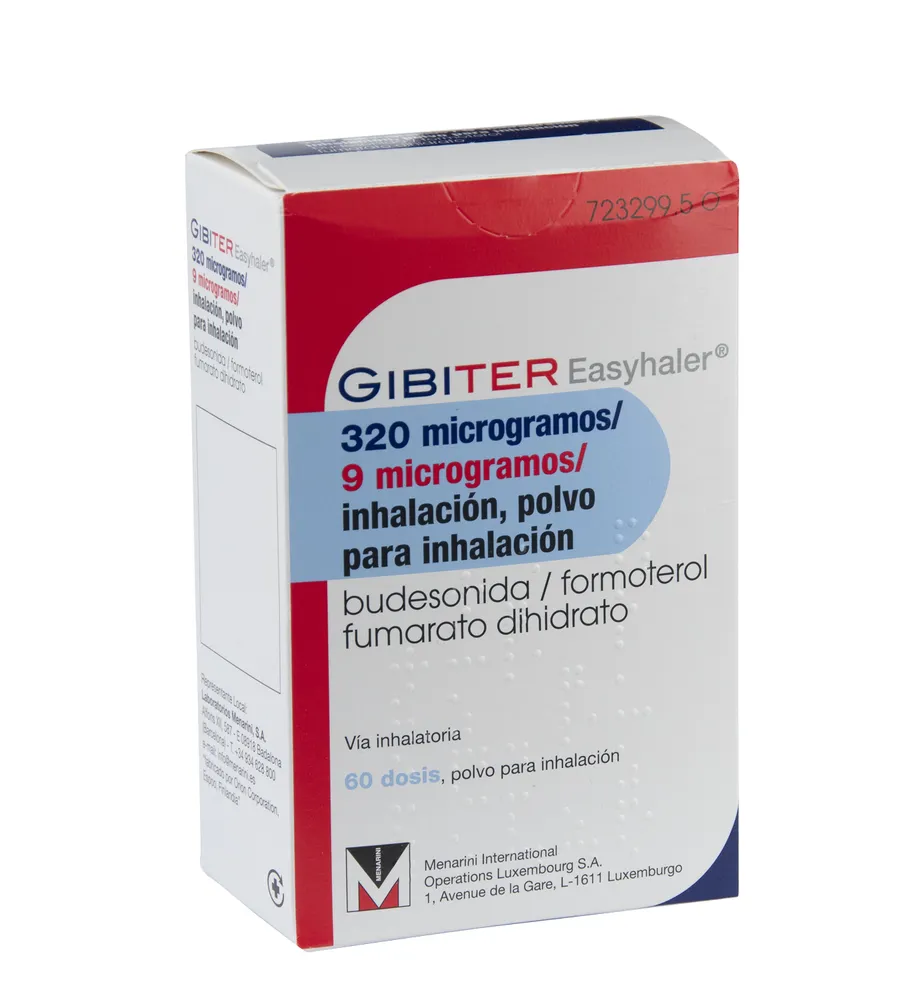
Table of Contents
- Package leaflet: Information for the user
- Introduction
- 1. What Gibiter Easyhaler 320 micrograms/9 micrograms is and what it is used for
- 2. What you need to know before using Gibiter Easyhaler 320 micrograms/9 micrograms
- 3. How to use Gibiter Easyhaler 320 micrograms/9 micrograms
- 4. Possible adverse effects
- 5. Storage of Gibiter Easyhaler 320 micrograms/9 micrograms
- 6. Contents of the pack and other information
Package leaflet: Information for the user
Introduction
QR code to https://cima.aemps.es/info/78803
To view instructions on how to use the Easyhaler inhaler, scan this code or visit https://cima.aemps.es/info/78803
Package leaflet: Information for the user
GIBITER Easyhaler 320 micrograms/9 micrograms/inhalation, Powder for inhalation
Budesonide/formoterol fumarate dihydrate
Read all of this leaflet carefully before you start using this medicine, because it contains important information for you.
- Keep this leaflet. You may need to read it again.
- If you have any questions, ask your doctor or pharmacist.
- This medicine has been prescribed for you only, and you should not give it to others, even if they have the same symptoms as you. It could harm them.
- If you experience any adverse effects, consult your doctor or pharmacist, even if they are effects not listed in this leaflet. See section 4.
Contents of the leaflet
- What Gibiter Easyhaler 320 micrograms/9 micrograms is and what it is used for
- What you need to know before using Gibiter Easyhaler 320 micrograms/9 micrograms
- How to use Gibiter Easyhaler 320 micrograms/9 micrograms
- Possible adverse effects
- How to store Gibiter Easyhaler 320 micrograms/9 micrograms
- Contents of the pack and other information
1. What Gibiter Easyhaler 320 micrograms/9 micrograms is and what it is used for
Gibiter Easyhaler is an inhaler used for the treatment of asthma in adults and adolescents aged 12 to 17 years. It is also used for the symptomatic treatment of Chronic Obstructive Pulmonary Disease (COPD) in adults over 18 years of age. It contains two different medicines: budesonide and formoterol fumarate dihydrate.
- Budesonide belongs to a group of medicines called "corticosteroids". It works by reducing and preventing inflammation in your lungs.
- Formoterol fumarate dihydrate belongs to a group of medicines known as "long-acting beta2-adrenergic agonists" or "bronchodilators". It works by relaxing the muscles in the airways, helping you to breathe more easily.
Asthma
For the treatment of asthma, your doctor will prescribe two different inhalers: Gibiter Easyhaler 320 micrograms/9 micrograms and a separate "reliever inhaler".
- Use Gibiter Easyhaler daily. This helps prevent the onset of asthma symptoms.
- Use your "reliever inhaler" when you have asthma symptoms, to help you breathe more easily.
Do not use Gibiter Easyhaler 320 micrograms/9 micrograms as a "reliever inhaler".
Chronic Obstructive Pulmonary Disease (COPD)
Gibiter Easyhaler 320 micrograms/9 micrograms can also be used to treat COPD symptoms in adults. COPD is a long-term disease of the airways, frequently caused by smoking.
2. What you need to know before using Gibiter Easyhaler 320 micrograms/9 micrograms
Do not use Gibiter Easyhaler 320 micrograms/9 micrograms:
- If you are allergic to budesonide, formoterol fumarate dihydrate, or any of the other components of this medicine (listed in section 6), including lactose (which contains small amounts of milk proteins).
Warnings and precautions
Consult your doctor or pharmacist before starting to use Gibiter Easyhaler 320 micrograms/9 micrograms:
- If you have diabetes
- If you have a lung infection
- If you have high blood pressure, or have ever had a heart condition (including irregular heartbeat, rapid pulse, narrowed arteries, or heart failure)
- If you have thyroid or adrenal gland problems
- If you have low levels of potassium in your blood
- If you have severe liver problems
Contact your doctor if you experience blurred vision or other visual disturbances.
Rinse your mouth with water after inhaling your dose to help prevent fungal infections in the mouth.
Using Gibiter Easyhaler 320 micrograms/9 micrograms with other medicines
Inform your doctor or pharmacist if you are taking, have recently taken, or might need to take any other medicines, including those obtained without a prescription.
Some medicines may increase the effects of Gibiter Easyhaler, and your doctor may consider close monitoring if you are taking these medicines (including certain medications used to treat HIV/AIDS: ritonavir, cobicistat).
In particular, inform your doctor or pharmacist if you are taking any of the following medicines:
- Beta-blockers (such as atenolol and propranolol for high blood pressure), including eye drops (such as timolol for glaucoma);
- Medicines to treat fast or irregular heartbeat (e.g., quinidine);
- Medicines such as digoxin, commonly used to treat heart failure;
- Diuretics (such as furosemide), used to treat high blood pressure;
- Oral steroid medicines (such as prednisolone);
- Xanthine medicines (such as theophylline or aminophylline), commonly used for asthma;
- Other bronchodilators (such as salbutamol);
- Tricyclic antidepressants (such as amitriptiline) and the antidepressant nefazodone;
- Phenothiazine medicines (such as chlorpromazine and prochlorperazine);
- Medicines to treat infections (such as ketoconazole, itraconazole, voriconazole, posaconazole, clarithromycin, and telithromycin);
- Medicines for Parkinson's disease (such as levodopa);
- Medicines for thyroid problems (such as levothyroxine).
If you are in any of these situations, or if you are unsure, ask your doctor or pharmacist before using Gibiter Easyhaler.
Also inform your doctor or pharmacist if you are due to undergo general anesthesia for surgery or dental treatment.
Pregnancy and breastfeeding
- If you are pregnant or breastfeeding, think you may be pregnant, or are planning to become pregnant, consult your doctor or pharmacist before using this medicine.
- Do not use Gibiter Easyhaler unless instructed by your doctor.
- If you become pregnant while using Gibiter Easyhaler, do not stop using it and contact your doctor immediately.
Driving and using machines
The effect of Gibiter Easyhaler on the ability to drive and use machinery is negligible or none.
Gibiter Easyhaler contains lactose, a type of sugar.
It may cause allergic reactions in patients allergic to cow's milk protein.
If your doctor has informed you that you have an intolerance to certain sugars, consult him before using this medicine.
3. How to use Gibiter Easyhaler 320 micrograms/9 micrograms
- Follow exactly the dosing instructions for this medicine as given by your doctor. If in doubt, consult your doctor or pharmacist again.
- It is important to use Gibiter Easyhaler daily, even if you do not have asthma or COPD symptoms at that time.
- Your doctor will want to regularly check how your asthma symptoms are progressing.
If you have been taking steroid tablets for asthma or COPD, your doctor may reduce the number of tablets you take once you start treatment with Gibiter Easyhaler. If you have been taking oral steroid tablets for a long time, your doctor may want to carry out occasional blood tests. You may feel generally unwell when your dose of oral steroids is reduced, even though your lung symptoms may be improving. Some symptoms such as nasal congestion or runny nose, weakness or muscle and joint pain, and skin rash (eczema) may appear. If any of these symptoms concern you, or if you experience other symptoms such as headache, tiredness, nausea or vomiting, contact your doctor immediately. If allergic or arthritic symptoms develop, you may need to take another medicine. You should consult your doctor if you are concerned about whether you should continue using Gibiter Easyhaler.
Your doctor may consider adding steroid tablets to your usual treatment during periods of stress (for example, when you have a chest infection or before surgery).
Important information about asthma or COPD symptoms:
If, while using Gibiter Easyhaler, you experience difficulty breathing or wheezing, you should continue using it and contact your doctor as soon as possible, as you may need additional treatment.
Contact your doctor immediately if:
- Your breathing worsens or you often wake up at night with asthma symptoms.
- You begin to feel chest tightness in the morning, or chest tightness lasts longer than usual.
These signs may indicate that your condition is not adequately controlled, and you may need different or additional treatment immediately.
ASTHMA
Use Gibiter Easyhaler daily, as it helps prevent the onset of asthma symptoms.
Adults (18 years and older)
- The usual dose is 1 inhalation twice daily.
- Your doctor may prescribe up to 2 inhalations twice daily.
- If your symptoms are well controlled, your doctor may instruct you to use the medication once daily.
Adolescents (12 to 17 years of age)
- The usual dose is 1 inhalation twice daily.
- If your symptoms are well controlled, your doctor may instruct you to use the medication once daily.
A lower strength of budesonide/formoterol is available for children aged 6–11 years.
Gibiter Easyhaler is not recommended for children under 6 years of age.
Your doctor (or nurse) will help you manage your asthma. They will adjust the dose of this medicine to the lowest dose that controls your asthma. However, do not adjust the dose without first speaking to your doctor or nurse.
Use your other “reliever inhaler” when asthma symptoms occur. Always keep this reliever inhaler with you so you can use it when needed. Do not use Gibiter Easyhaler to treat asthma symptoms—use your reliever inhaler instead.
Chronic Obstructive Pulmonary Disease (COPD)
- Use only in adults (over 18 years of age).
- The usual dose is 1 inhalation twice daily.
Your doctor may also prescribe other bronchodilator medicines, for example anticholinergics (such as ipratropium bromide or tiotropium bromide) for your COPD.
If you use more Gibiter Easyhaler than you should
It is important to use the dose indicated by your pharmacist on the package or the dose prescribed by your doctor. Do not increase your dose without consulting your doctor.
The most common symptoms and signs that may occur if you use more Gibiter Easyhaler 320 micrograms/9 micrograms than you should are tremors, headache, and rapid heartbeat.
In case of overdose or accidental ingestion, contact the Toxicology Information Service at telephone number 91 562 04 20, indicating the medicine and the amount ingested.
If you forget to use Gibiter Easyhaler
- If you miss a dose of Gibiter Easyhaler, take it as soon as you remember. However, if it is almost time for your next dose, do not worry about the missed dose.
- Do not use a double dose to make up for missed doses.
If you have any further questions about the use of this medicine, ask your doctor or pharmacist.
Instructions on how to use the inhaler are at the end of the leaflet.
4. Possible adverse effects
Like all medicines, this medicine may cause adverse effects, although not everyone experiences them.
If you experience any of the following, stop using Gibiter Easyhaler and consult your doctor immediately:
- Swelling of the face, particularly around the mouth (tongue and/or throat and/or difficulty swallowing), or hives together with breathing difficulties (angioedema) and/or a sudden feeling of faintness, which may indicate you are having an allergic reaction. This occurs rarely, affecting less than 1 in 1,000 patients.
- High-pitched "wheezing" or breathing difficulties immediately after using your inhaler. If you experience any of these symptoms, stop using your Gibiter Easyhaler immediately and use your "reliever inhaler". Contact your doctor immediately, as you may need to change your treatment. This occurs very rarely, affecting less than 1 in 10,000 patients.
Inform your doctor if you experience any of the following symptoms while taking Gibiter Easyhaler, as they may be signs of a lung infection:
- Fever or cold symptoms
- Increased mucus production, change in the color of mucus
- Worsening cough or breathing difficulties
Pneumonia (lung infection) in patients with COPD is a common adverse effect (affects less than 1 in 10 patients).
Other possible adverse effects:
Common (affects less than 1 in 10 patients)
- Palpitations (awareness of heartbeat), tremors. When these effects occur, they are usually mild and disappear with continued use of Gibiter Easyhaler.
- Oral thrush (fungal infection in the mouth); this effect is less likely if you rinse your mouth with water after using Gibiter Easyhaler.
- Mild throat irritation, cough, hoarseness
- Headache
Uncommon (affects less than 1 in 100 patients)
- Restlessness, agitation, nervousness
- Difficulty sleeping
- Dizziness
- Nausea (feeling unwell)
- Rapid heartbeat
- Bruising of the skin
- Muscle cramps
- Blurred vision
Rare (affects less than 1 in 1,000 patients)
- Rash, itching
- Bronchospasm (contraction of the muscles in the airways, causing "wheezing"). If this occurs suddenly right after using Gibiter Easyhaler, stop using it and consult your doctor immediately.
- Low levels of potassium in the blood
- Irregular heartbeat
Very rare (affects less than 1 in 10,000 patients)
- Depression
- Changes in behaviour, especially in children
- Chest pain or tightness (angina)
- Increased blood sugar (glucose) levels
- Taste disturbances, such as unpleasant taste in the mouth
- Changes in blood pressure
Inhaled corticosteroids may affect the normal production of steroid hormones in your body, especially if high doses are used for a long time. These effects include:
- Changes in bone mineral density (reduced bone strength)
- Cataracts (loss of transparency of the eye's lens)
- Glaucoma (increased pressure in the eye)
- Growth retardation in children and adolescents
- Effects on the adrenal glands (small glands located above the kidneys)
These effects are much less likely with inhaled corticosteroids than with oral corticosteroid tablets.
Reporting of adverse effects
If you experience any adverse effects, consult your doctor or pharmacist, even if they are possible side effects not listed in this leaflet. You may also report them directly via the Spanish Pharmacovigilance System for Human Medicines: www.notificaram.es. By reporting adverse effects, you can help provide more information on the safety of this medicine.
5. Storage of Gibiter Easyhaler 320 micrograms/9 micrograms
- Keep this medicine out of the sight and reach of children.
- Do not use this medicine after the expiry date stated on the carton, the aluminium pouch, and the label of your inhaler following EXP. The expiry date refers to the last day of the month indicated.
- After opening the aluminium pouch, store below 25°C and protect from moisture. You may use a protective cover with your Easyhaler inhaler.
- If your Gibiter Easyhaler inhaler becomes damp, it must be replaced with a new one.
- Replace the Gibiter Easyhaler inhaler 4 months after opening the aluminium pouch. Write down the date it was opened to help you remember.
Medicines must not be disposed of via wastewater or household waste. Return unused medicines and their packaging to the SIGRE point at your pharmacy. If you are unsure, ask your pharmacist how to dispose of medicines and packaging you no longer need. This helps protect the environment.
6. Contents of the pack and other information
Composition of Gibiter Easyhaler 320 micrograms/9 micrograms
- The active substances are budesonide and formoterol fumarate dihydrate. Each inhaled dose contains 320 micrograms of budesonide and 9 micrograms of formoterol fumarate dihydrate.
- The other component is lactose monohydrate (which contains milk proteins).
What the medicine looks like and contents of the pack
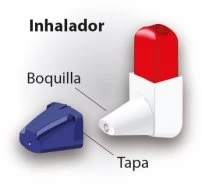
Gibiter Easyhaler 320 micrograms/9 micrograms is an inhaler containing your medicine. The inhalation powder is white to yellowish in colour. Each inhaler contains 60 doses and consists of a white body and a red top.
Gibiter Easyhaler 320 micrograms/9 micrograms is available in packs of 1 or 3 inhaler(s).
Only certain pack sizes may be marketed.
Your pack may contain a protective cover, which is available depending on the country. If you need a protective cover, please contact the Marketing Authorization Holder (see details below).
Marketing Authorization Holder and Manufacturer
Marketing Authorization Holder
Menarini International Operations Luxembourg, S.A.
1, Avenue de la Gare L-1611
Luxembourg
Manufacturer
Orion Corporation Orion Pharma
Orionintie 1
FI-02200 Espoo
Finland
Local representative
Laboratorios Menarini, S.A.
Alfons XII, 587 – E 08918 Badalona (Barcelona)
- +34 934 628 800 e-mail: [email protected]
Date of the most recent revision of this leaflet: 06/2025
Detailed information on this medicine is available on the website of the Spanish Agency of Medicines and Health Products (AEMPS) http://www.aemps.gob.es/
You can access detailed information on how to administer this medicine by scanning with your mobile phone (smartphone) the QR code included in the leaflet, packaging, and inhaler label. You can also access this information at the following internet address: https://cima.aemps.es/info/78803.
QR code to https://cima.aemps.es/info/78803
How to use the Easyhaler inhaler
About your Easyhaler inhaler
Gibiter Easyhaler may differ from other inhalers you may have used previously. Therefore, it is very important that you use it correctly, as incorrect use may result in you not receiving the proper amount of medicine. This could make you feel very unwell or mean that your asthma or COPD is not properly treated.
Your doctor, nurse, or pharmacist will show you how to use your inhaler correctly. Make sure you understand the correct way to use the inhaler. If you are unsure, contact your doctor, nurse, or pharmacist. As with all inhalers, caregivers must ensure that children prescribed Gibiter Easyhaler perform the inhalation technique correctly, as described below. You can also watch the instructional video at https://cima.aemps.es/info/78803.
When you first obtain your Easyhaler inhaler
The inhaler comes in an aluminum pouch. Do not open the aluminum pouch until you are ready to start using the medicine, as this helps keep the powder in the inhaler dry. When you are ready to start treatment, open the pouch and record the date, e.g. in your calendar. Use the inhaler within 4 months after removing it from the aluminum pouch. |
|
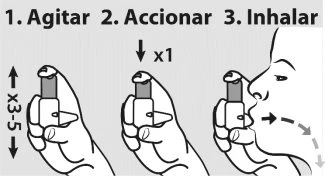
HOW TO USE IT CORRECTLY
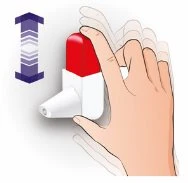
Step 1: SHAKE
| SHAKE x 3-5
| Important points to remember
|
Step 2: ACTUATE
| ACTUATE ONCE
| Important points to remember
|
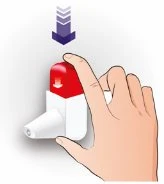
Step 3: INHALE
| INHALE
| Important points to remember
|
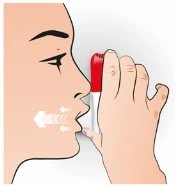
If you need to take another inhalation, repeat steps 1–3: Shake–Actuate–Inhale.
After using the inhaler:
- Replace the cap on the mouthpiece. This will prevent accidental actuation of the inhaler.
- After taking the dose, rinse your mouth with water and spit it out.
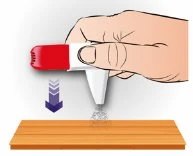
How to empty powder from the mouthpiece If you have accidentally actuated the inhaler, if you have actuated it more than once, or if you have exhaled into the inhaler, empty the mouthpiece.
|
|
Cleaning the inhaler
Keep your inhaler dry and clean. If necessary, you can clean the inhaler mouthpiece with a dry cloth or tissue. Do not use water: the powder inside the inhaler is sensitive to moisture.
Use of the inhaler with a protective cover You can use a protective cover with your Easyhaler inhaler. This may help improve the product's durability. The first time you insert the inhaler into the protective cover, make sure the inhaler has its cap on, as this prevents accidental activation. You can use the inhaler without removing it from the protective cover. Follow the same instructions above: 1. Shake – 2. Activate – 3. Inhale. Remember:
|
|
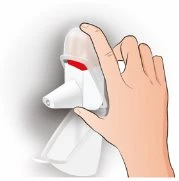
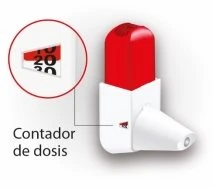
When to start using a new inhaler The dose counter shows the number of doses remaining. The counter advances every 5 actuations. When the dose counter starts turning red, 20 doses remain. If you do not yet have a new inhaler, contact your doctor for a new prescription. When the counter reaches 0 (zero), you must replace the inhaler. If you have a protective cover, you may keep it and insert your new inhaler into it. |
|
Remember
|
If you have any further questions about using this product, consult your doctor or pharmacist.