Genoxal 1000 mg powder for injection and for infusion
Spain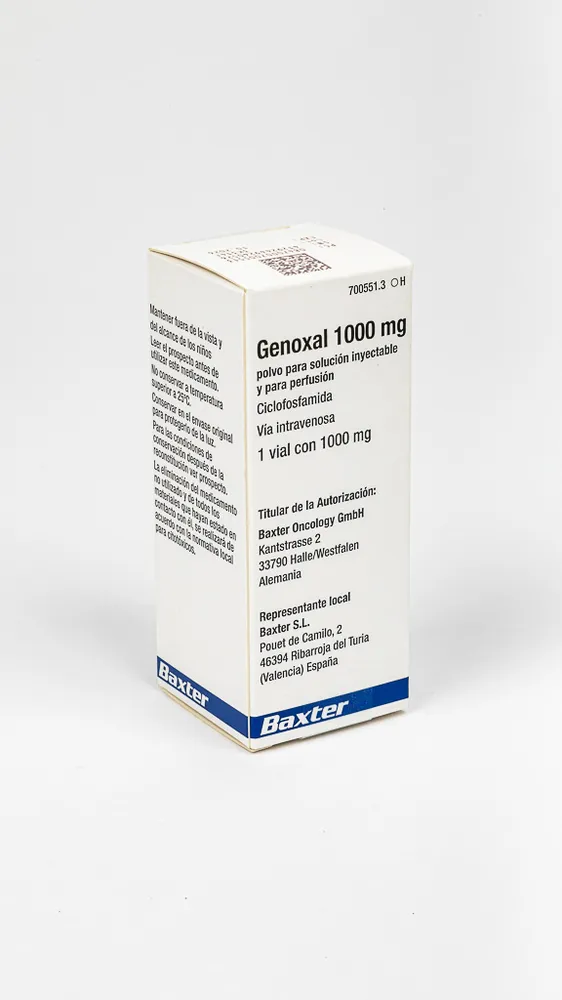
Table of Contents
Package leaflet: Information for the user
Introduction
Package leaflet: information for the patient
Genoxal 1000 mg powder for injectable solution and for infusion
Cyclophosphamide
Read the entire leaflet carefully before you start using this medicine, because it contains important information for you.
- Keep this leaflet, as you may need to read it again.
- If you have any questions, ask your doctor or pharmacist.
- This medicine has been prescribed for you only, and you should not give it to other people, even if they have the same symptoms as you, because it could harm them.
- If you experience any adverse reactions, consult your doctor or pharmacist, even if they are adverse reactions not listed in this leaflet. See section 4.
Leaflet contents:
- What Genoxal is and what it is used for
- What you need to know before Genoxal is administered to you
- How Genoxal will be administered to you
- Possible adverse effects
- How to store Genoxal
- Contents of the pack and other information
1. What Genoxal is and what it is used for
Genoxal contains the active substance Cyclophosphamide. It belongs to a group of medicines known as “cytotoxic or antineoplastic agents”, which work by stopping the growth of cancer cells.
Genoxal is usually used as monotherapy or in combination with other antineoplastic medicines or radiotherapy, for the treatment of various types of cancer. These include:
- different forms of lymphomas affecting the immune system (Hodgkin's lymphoma, non-Hodgkin's lymphoma, and multiple myeloma),
- certain types of white blood cell cancer (acute lymphocytic leukemia, chronic lymphocytic leukemia, acute lymphoblastic leukemia, chronic myeloid leukemia),
- ovarian cancer and breast cancer,
- Ewing's sarcoma (a form of bone cancer),
- small cell lung carcinoma,
- treatment of metastatic or advanced central nervous system tumors (neuroblastoma).
In addition, Genoxal is used in preparation for bone marrow transplantation.
Occasionally, some physicians may prescribe Genoxal for conditions not related to cancer:
- life-threatening autoimmune diseases: severe progressive forms of lupus nephritis (kidney inflammation caused by an immune system disease) and Wegener's granulomatosis (a rare form of vasculitis).
2. What you need to know before Genoxal is administered to you
Do not use Genoxal:
- If you are allergic to cyclophosphamide, any of its metabolites, or any of the other components of this medicine (listed in section 6). An allergic reaction may include difficulty breathing, wheezing, rash, itching, or swelling of the face and lips.
- If you currently have an infection.
- If your bone marrow is not functioning properly (especially if you have previously received chemotherapy or radiotherapy). Blood tests will be performed to check your bone marrow function.
- If you have a urinary tract infection that may present with pain when urinating (cystitis).
- If you have had kidney or bladder problems as a result of chemotherapy or radiotherapy.
- If you have a disease that reduces your ability to urinate (urinary flow obstruction).
- If you are pregnant or breastfeeding.
- For the treatment of non-malignant diseases, except for life-threatening immunosuppression.
Warnings and precautions
Talk to your doctor before starting Genoxal if:
- You have low blood cell counts,
- You have severe infections,
- You have liver or kidney problems. Your doctor will check liver and kidney function through blood tests, and whether you have had your adrenal gland removed,
- You are receiving or have recently received radiotherapy or chemotherapy; you have heart problems or have received radiotherapy to the heart area,
- You have diabetes,
- You are in poor general health or are frail or elderly,
- You have had surgery within the last 10 days.
Potentially life-threatening allergic reactions (anaphylactic reactions) may occur during treatment with Genoxal.
Genoxal can affect your blood and immune system.
Blood cells are produced in your bone marrow. There are three types of blood cells:
- Red blood cells, which carry oxygen throughout the body,
- White blood cells, which fight infections,
- Platelets, which allow blood to clot.
After receiving cyclophosphamide, the count of all three types of blood cells will decrease. This is an inevitable side effect of the medicine. Your blood count will reach its lowest level approximately 5 to 10 days after starting Genoxal and will remain low for several days after treatment ends. Most people return to normal blood counts within 21 to 28 days. If you have previously received a large amount of chemotherapy, it may take longer to return to normal.
You are more likely to develop infections if your blood cell count is low. Avoid close contact with people who have coughs, colds, or other infections. Your doctor will treat you with appropriate medication if they suspect you have an infection or are at risk of developing one.
Your doctor will ensure that your red blood cell, white blood cell, and platelet counts are sufficiently high before and during treatment with cyclophosphamide. It may be necessary to reduce your dose or delay the next dose.
Genoxal may affect normal wound healing. Keep cuts clean and dry and monitor them for proper healing. It is important to maintain good gum health, as infections and mouth ulcers may occur. Consult your doctor if you have any concerns.
Genoxal can damage the inner lining of the urinary bladder, causing bleeding in the urine or pain when urinating. Your doctor is aware of this risk and, if necessary, will prescribe a medicine called Mesna (Uromitexan) to protect your bladder. Mesna can be given as a short injection or mixed with cyclophosphamide in the infusion solution. More information about Mesna can be found in the package leaflet included with Uromitexan.
Most people receiving Genoxal with Mesna do not develop bladder problems, but your doctor may wish to test your urine for blood using a test strip or microscope. If you notice blood in your urine, inform your doctor immediately.
Cancer medicines and radiotherapy may increase the risk of developing other types of cancer; this may occur several years after treatment ends. Genoxal carries an increased risk of causing cancer in the urinary bladder area.
Genoxal may cause heart damage or affect your heart rhythm. This risk is greater at higher doses of Genoxal, if you are receiving radiotherapy or other chemotherapy drugs, or if you are elderly. Your doctor will closely monitor your heart during treatment.
Genoxal may cause lung problems such as inflammation or pulmonary fibrosis.
This may occur more than six months after treatment ends. If you develop difficulty breathing, inform your doctor immediately.
Genoxal may cause potentially life-threatening effects on your liver.
If you experience sudden weight gain, liver pain, or yellowing of the skin or whites of the eyes (jaundice), inform your doctor immediately.
Hair loss or baldness (alopecia) may occur. Your hair should regrow normally, although its texture and color may be different.
Genoxal may cause nausea and vomiting. This may last approximately 24 hours after receiving the medicine. You may need to take anti-nausea medication. Discuss this with your doctor.
Children and adolescents
Based on established treatment regimens, children and adolescents should receive doses similar to those recommended for adults.
Using Genoxal with other medicines:
Inform your doctor or pharmacist if you are taking, have recently taken, or might need to take any other medicines. In particular, inform them about the following medicines or treatments, as they may be incompatible with Genoxal.
The following medicines may reduce the effectiveness of Genoxal:
- Aprepitant (used to prevent vomiting),
- Bupropion (an antidepressant),
- Busulfan, thiotepa (used to treat cancer),
- Ciprofloxacin, chloramphenicol (used to treat bacterial infections),
- Fluconazole, itraconazole (used to treat fungal infections),
- Prasugrel (used as an anticoagulant),
- Sulfonamides, such as sulfadiazine, sulfasalazine, sulfamethoxazole (used to treat bacterial infections).
The following medicines may increase the toxicity of Genoxal:
- Allopurinol (used to treat gout),
- Chloral hydrate (used to treat insomnia),
- Cimetidine (used to reduce stomach acid),
- Disulfiram (used to treat alcoholism),
- Glycerol aldehyde (used to treat warts),
- Protease inhibitors (used to treat viruses),
- Medicines that increase liver enzymes such as: rifampicin (used to treat bacterial infections), carbamazepine, phenobarbital, phenytoin (used to treat epilepsy), St. John’s wort (a herbal remedy for mild depression), corticosteroids (used to treat inflammation),
- Benzodiazepines (used as anxiolytics),
- Ondansetron (used to prevent vomiting).
Medicines that may increase the toxic effects of Genoxal on blood cells and immunity:
- ACE inhibitors (used to treat hypertension),
- Natalizumab (used to treat multiple sclerosis),
- Paclitaxel (used to treat cancer),
- Thiazide diuretics such as hydrochlorothiazide or chlorthalidone (used to treat hypertension or fluid retention),
- Zidovudine (used to treat viral infections),
- Clozapine (used to treat symptoms of certain psychiatric disorders).
Medicines that may increase the toxic effects of Genoxal on the heart:
- Anthracyclines such as bleomycin, doxorubicin, epirubicin,
- Cytarabine, pentostatin, trastuzumab (used to treat cancer),
- Radiotherapy to the heart area.
Medicines that may increase the toxic effects of Genoxal on the lungs:
- Amiodarone (used to treat irregular heartbeat),
- G-CSF, GM-CSF hormones (used to increase white blood cell counts after chemotherapy).
Medicines that may increase the toxic effects of Genoxal on the kidneys:
- Amphotericin B (used to treat fungal infections),
- Indomethacin (used to treat pain and inflammation).
Other medicines that may affect Genoxal or be affected by it include:
- Azathioprine (used to reduce immune system activity),
- Etanercept (used to treat rheumatoid arthritis),
- Metronidazole (used to treat bacterial or protozoal infections),
- Tamoxifen (used to treat breast cancer),
- Bupropion (used to quit smoking),
- Coumarins such as warfarin (used as anticoagulants),
- Cyclosporine (used to reduce immune system activity),
- Suxamethonium (used as a muscle relaxant during medical procedures),
- Digoxin, acetyldigoxin ß (used to treat heart conditions),
- Vaccines,
- Verapamil (used to treat high blood pressure, angina, or irregular heartbeat),
- Sulfonylurea derivatives (blood glucose may decrease if cyclophosphamide and sulfonylurea derivatives are used together).
Using Genoxal with food and drink
Alcohol consumption should be avoided, as it may increase nausea and vomiting caused by cyclophosphamide.
Grapefruit (as fruit or juice) should not be consumed while taking Genoxal.
It may interfere with the normal effect of your medicine and alter its effectiveness.
Pregnancy, breastfeeding, and fertility
If you are pregnant or breastfeeding, think you may be pregnant, or plan to become pregnant, consult your doctor or pharmacist before using this medicine.
Pregnancy
Genoxal may cause miscarriage or fetal harm.
If you are a woman, you must not become pregnant during treatment with cyclophosphamide or for 12 months after treatment ends. Both men and women who are sexually active must use effective contraception during treatment and for 6 months after stopping treatment. If you become pregnant during treatment, you may be offered genetic counseling (medical advice to assess the potential risk of congenital malformations in the fetus).
Breastfeeding
You must not breastfeed while being treated with cyclophosphamide. Seek advice from your doctor.
Fertility
Genoxal may cause sterility in both sexes. Discuss with your doctor the possibility of sperm or egg cryopreservation (freezing) before treatment, due to the risk of irreversible sterility from cyclophosphamide treatment. If you are considering having children after treatment, you should discuss this with your doctor.
Driving and using machines
Some of the adverse effects of cyclophosphamide treatment may affect your ability to drive or operate machinery safely. Your doctor will decide whether it is safe for you to do so.
Patients should exercise caution when performing tasks such as driving or operating machinery until they know how the medicine affects their ability to perform these activities.
3. How Genoxal is given
Genoxal will be administered by a physician experienced in the use of antineoplastic chemotherapy (for cancer treatment).
Method of administration
Intravenous route
Genoxal is given as an injection and is usually added to a large bag of fluid and slowly infused (perfusion) directly into a vein. The vein may be located in the arm, the back of the hand, or a large vein beneath the clavicle.
Depending on the dose, the infusion will last between 30 and 120 minutes.
Genoxal is usually administered in combination with other antineoplastic drugs or radiotherapy.
Recommended dose:
Your doctor will decide how much medication you need and when it should be given. This decision will depend on the type of disease you have, your body constitution (a combination of your height and weight), your general health status, and whether you are receiving other antineoplastic drugs or undergoing radiotherapy.
It is advisable to administer Genoxal in the morning. Before, during, and after administration, it is important that you receive adequate amounts of fluid to prevent potential adverse effects on the urinary tract.
If you notice that Genoxal seems too strong or too weak, consult your doctor or pharmacist.
Your doctor may need to adjust your dose and monitor you more closely if:
- you have problems with your liver or kidneys,
- you are an elderly person (over 65 years of age).
Use in children and adolescents
Genoxal is also indicated in children. The safety profile of Genoxal in children is similar to that in adults.
If you are given more Genoxal than you should
Since Genoxal is administered under the supervision of your doctor, it is highly unlikely that you would receive too much. However, if you experience side effects after receiving the medication, inform your doctor immediately or go to the nearest hospital emergency department.
You may require urgent medical attention.
Symptoms of overdose with cyclophosphamide include the adverse effects listed in the section "Side effects," but they are generally more severe in nature.
In case of overdose or accidental ingestion, contact your doctor or pharmacist immediately or call the Toxicology Information Service at telephone number 915.620.420, indicating the medication and the amount ingested.
4. Possible adverse effects
Like all medicines, this medicine can cause adverse effects, although not everyone will experience them.
Tell your doctor immediately if you experience:
- Allergic reactions. Signs may include difficulty breathing, wheezing, increased heart rate, drop in blood pressure, rash, itching, or swelling of the face and lips. Severe allergic reactions could lead to breathing difficulties or shock, possibly resulting in death (anaphylactic shock, anaphylactic/anaphylactoid reaction).
- Appearance of bruises without injury, or bleeding gums. This could be a sign that your blood platelet levels are too low.
- Severe infection or fever, cough, shortness of breath, signs of sepsis such as fever, rapid breathing, increased heart rate, confusion, and edema. This could indicate a reduction in your white blood cell count, and antibiotics may be needed to fight infections.
- Paleness, feeling of lethargy and fatigue. This could indicate low red blood cell levels (anemia). Treatment is usually not required, as your body will eventually restore red blood cells. In cases of severe anemia, a blood transfusion may be necessary.
- Blood in the urine, pain when urinating, or reduced urine volume.
- Signs of sepsis such as fever, rapid breathing, increased heart rate, confusion, and edema.
- Severe chest pain.
- Severe lung inflammation causing shortness of breath, cough, and increased temperature.
- Symptoms such as weakness, vision loss, speech difficulties, or loss of sense of touch.
The following adverse effects may also occur during treatment with Genoxal.
Very Common (may affect more than 1 in 10 patients)
- Reduction in blood cell count (myelosuppression),
- reduction in white blood cells, which are important in fighting infections (leucopenia, neutropenia),
- nausea and vomiting,
- burning sensation when urinating and frequent need to urinate (cystitis),
- presence of blood in the urine (microhematuria),
- hair loss (alopecia),
- fever,
- suppression of the immune system.
Common (may affect up to 1 in 10 patients)
- Reduction in white blood cell count and fever (febrile neutropenia),
- blood in the urine and pain when urinating (hemorrhagic cystitis),
- presence of blood in the urine (macrohematuria),
- baldness,
- infections,
- chills,
- feeling of weakness,
- general feeling of malaise,
- inflammation of mucous membranes (mucositis),
- sterility in males.
Uncommon (may affect up to 1 in 100 patients)
- Increased lactate dehydrogenase in blood,
- increased C-reactive protein,
- changes in electrocardiogram,
- heart problems (cardiomyopathy, myocarditis, heart failure),
- rapid heartbeat,
- tendency to bruise due to thrombocytopenia (low platelet count),
- anemia (low red blood cell count) which may cause fatigue and drowsiness,
- nerve damage which may cause numbness, pain, and weakness (neuropathy),
- pain along the distribution of a nerve (neuralgia),
- reduced levels of sex hormones,
- anorexia,
- lung inflammation (pneumonia),
- sepsis,
- ovulation disorders,
- allergic reactions.
Rare (may affect up to 1 in 1,000 patients)
- Changes in heart rhythm,
- seizures,
- blurred vision,
- pain or ulcers in the mouth (stomatitis),
- diarrhea,
- constipation,
- abdominal pain,
- inflammation of the salivary glands,
- skin rash,
- dermatitis,
- skin inflammation,
- irreversible abnormalities in ovulation,
- dehydration,
- increased risk of blood cancer (acute leukemia) and some other cancers (bladder cancer, ureter cancer),
- ineffective production of myeloid blood cells (myelodysplastic syndrome),
- bleeding,
- chest pain,
- abnormalities in liver function,
- liver inflammation,
- absence of menstruation (periods),
- absence of sperm.
Very rare (may affect up to 1 in 10,000 patients)
- Weight gain,
- angina,
- myocardial infarction,
- cardiac arrest,
- ventricular fibrillation,
- pericarditis (inflammation of the pericardium),
- atrial fibrillation,
- blood clots forming in small blood vessels throughout the body (disseminated intravascular coagulation),
- hemolytic uremic syndrome (a condition affecting blood and kidneys),
- dizziness,
- altered sense of taste (dysgeusia, hypogeusia),
- tingling, prickling, stinging, or burning sensations (paresthesia),
- hepatic encephalopathy,
- conjunctivitis, eye edema, visual deterioration,
- deafness,
- lung injury (acute respiratory distress syndrome),
- pulmonary fibrosis causing difficulty breathing (chronic interstitial pulmonary fibrosis),
- respiratory failure due to fluid accumulation in the lungs (pulmonary edema),
- difficulty breathing with wheezing or cough (bronchospasm),
- shortness of breath (dyspnea),
- a condition in which the body or a region of the body lacks adequate oxygen supply (hypoxia),
- cough,
- nonspecific pulmonary disorders,
- intestinal inflammation,
- pancreatitis,
- accumulation of fluid in the abdominal cavity (ascites),
- mucosal ulceration,
- gastric or intestinal bleeding,
- suburethral hemorrhage,
- presence of fluid in the bladder wall,
- kidney problems, including renal failure,
- inflammation of the bladder wall,
- inflammation, sclerosis, and contraction of the bladder,
- high levels of creatinine in blood,
- severe hypersensitivity reactions with fever (high), red skin spots, joint pain and/or eye infection (Stevens-Johnson syndrome),
- sudden severe (hypersensitivity) reaction with fever and skin blisters/skin peeling (toxic epidermal necrolysis),
- itching,
- severe skin reactions,
- changes in the color of your nails and skin,
- radiation erythema,
- abnormal muscle breakdown which may cause kidney problems (rhabdomyolysis),
- cramps,
- increased release of antidiuretic hormone from the pituitary gland (syndrome of inappropriate antidiuretic hormone secretion). This affects the kidneys and causes low sodium levels in the body (hyponatremia) and fluid retention, leading to brain swelling due to excess water in the blood. Symptoms may include headache, personality or behavioral changes, confusion, and drowsiness,
- low sodium levels in the blood (hyponatremia),
- septic shock,
- complications that may occur after cancer treatment caused by degradation products of dying cancer cells (tumor lysis syndrome),
- blockage of a blood vessel due to a blood clot in the circulatory system (thromboembolism),
- high blood pressure (hypertension),
- low blood pressure (hypotension),
- headache,
- multi-organ failure,
- reaction at injection and infusion site,
- blood clot in the liver (veno-occlusive liver disease),
- reactivation of hepatitis virus,
- liver enlargement (hepatomegaly),
- yellowing of eyes or skin,
- confusion,
- anaphylactic shock.
Frequency not known (cannot be estimated from available data)
- Brain disorder (encephalopathy), neurotoxicity manifested as a syndrome characterized by headache, confusion, bone marrow disorders (myelopathy), seizures, and vision loss (posterior reversible leukoencephalopathy syndrome), abnormal sensation (dysesthesia, hypoesthesia), degenerative brain disease (encephalopathy), tremor, altered sense of smell (parosmia), various types of cardiac disorders (ventricular tachycardia, cardiogenic shock, pericardial effusion, myocardial hemorrhage, left ventricular failure, bradycardia, palpitations, QT interval prolongation on electrocardiogram, reduced ejection fraction),
- intrauterine death,
- fetal malformation,
- fetal growth retardation,
- various types of blood disorders (low blood cell counts, agranulocytosis, lymphopenia, reduced hemoglobin),
- increased tearing,
- tinnitus and hearing defects,
- pleural effusion,
- nasal blockage (nasal congestion),
- nasal discomfort,
- oropharyngeal pain,
- rhinorrhea,
- sneezing,
- veno-occlusive lung disease,
- obliterative bronchiolitis,
- allergic alveolitis,
- organizing pneumonia,
- pneumonitis,
- abdominal discomfort,
- certain kidney diseases (renal tubular necrosis, renal tubular disorder, toxic nephropathy, hemorrhagic ureteritis, ulcerative cystitis, bladder contracture, nephrogenic diabetes insipidus, atypical epithelial cells of the urinary bladder, elevated blood urea nitrogen),
- itching, rash, blisters on lips, eyes or mouth, skin peeling (erythema multiforme, urticaria, erythema),
- hand-foot syndrome,
- facial swelling,
- increased sweating,
- skin hardening (scleroderma),
- muscle spasm and pain,
- joint pain,
- water intoxication,
- changes in results of certain blood tests (blood glucose, hormone levels),
- various types of cancer, such as blood cancer (non-Hodgkin lymphoma), kidney cancer, renal pelvis cancer, thyroid cancer, sarcoma, carcinogenic effect in offspring,
- blockage of a blood vessel by a clot in the circulatory system (thromboembolic episodes), including possible blockage of pulmonary vessels (pulmonary embolism),
- inflammation of blood vessel walls (vasculitis),
- peripheral ischemia,
- flushing,
- edema,
- flu-like symptoms,
- premature delivery,
- liver disorders (hepatitis, cholestasis, hepatotoxicity with liver failure, increased bilirubin levels, abnormal liver function, elevated liver enzymes),
- sterility in males and females,
- changes in menstrual frequency,
- loss of ovarian function,
- testicular atrophy.
Reporting of adverse effects
If you experience any adverse effect, talk to your doctor, pharmacist, or nurse, even if it is a possible adverse effect not listed in this leaflet. You may also report them directly via the Spanish Pharmacovigilance System for Human Medicinal Products: www.notificaRAM.es.
By reporting adverse effects, you can help provide more information on the safety of this medicine.
5. Storage of Genoxal
Keep this medicine out of the sight and reach of children.
Do not store above 25°C. Store in the original container to protect from light. Exposure to direct sunlight or sources of heat should be avoided. Temperature influence may cause melting of the active substance, cyclophosphamide. If changes occur, the vials can be easily identified visually, showing a clear or yellowish viscous liquid (present in affected vials as a separate phase or in droplets). Vials containing melted active substance must be discarded.
Both the reconstituted and diluted solutions may be used up to 24 hours after reconstitution (do not store above 8°C).
Do not use this medicine after the expiry date stated on the carton after Lot/CAD. The expiry date refers to the last day of the month indicated.
Disposal of unused medicine and all materials that have been in contact with it must be carried out in accordance with local regulations for cytotoxic agents.
6. Package contents and additional information
Composition of Genoxal
The active substance is Cyclophosphamide.
One vial of Genoxal contains 1,000 mg of Cyclophosphamide (as 1,069 mg of Cyclophosphamide monohydrate).
Appearance of the product and contents of the pack
Genoxal is a white crystalline powder.
Genoxal 1,000 mg powder for solution for injection and for infusion is supplied in a pack containing 1 vial.
Vials are packaged with or without a plastic protective overwrap. This overwrap does not come into direct contact with the medicinal product and provides additional transport protection, thereby increasing safety for medical and pharmaceutical personnel.
Marketing Authorization Holder:
Baxter S.L.
Pouet de Camilo 2, 46394 Ribarroja del Turia (Valencia)
Spain
Manufacturer:
Simtra Deutschland GmbH
Kantstrasse 2
33790 Halle/Westfalen
Germany
Date of the most recent review of this summary: November 2023
Detailed and up-to-date information on this medicinal product is available on the website of the Spanish Agency for Medicinal Products and Health Products (AEMPS) http://www.aemps.gob.es/
This information is intended for healthcare professionals only
Genoxal must be administered exclusively by physicians experienced in antineoplastic chemotherapy.
Genoxal should only be administered in settings where facilities are available for periodic monitoring of clinical, biochemical, and hematological parameters before, during, and after administration, and under the supervision of a specialist oncology department.
Dosage
The doses and duration of treatment and/or treatment intervals depend on the therapeutic indication, the regimen of combination therapy, the patient's general health status and organ function, and laboratory monitoring results (particularly erythrocyte monitoring).
Dosage recommendations primarily refer to treatment with cyclophosphamide as monotherapy. When used in combination with other cytostatic agents with similar toxicity, dose reduction or longer treatment-free intervals may be required.
To reduce the risk of myelosuppressive complications and/or to facilitate administration of the intended dose, hematopoietic growth factors (colony-stimulating factors and erythropoiesis-stimulating agents) may be considered.
An adequate amount of fluid should be ingested or infused during or immediately after administration to promote diuresis and thereby reduce the risk of urothelial toxicity. Therefore, cyclophosphamide should be administered in the morning. See section 4.4.
Cyclophosphamide activation requires hepatic metabolism; therefore, oral and intravenous administration are preferred.
Dosage must be individually adjusted for each patient. Recommended doses, unless otherwise prescribed by a physician:
- For continuous treatment in adults and children: 3 to 6 mg/kg body weight per day (equivalent to 120 to 240 mg/m2 body surface area).
- For intermittent treatment in adults and children: 10 to 15 mg/kg body weight (equivalent to 400 to 600 mg/m2 body surface area) at intervals of 2 to 5 days.
- For high-dose intermittent treatment in adults and children: 20 to 40 mg/kg body weight (equivalent to 800 to 1,600 mg/m2 body surface area) at intervals of 21 to 28 days. Higher doses may be used in the context of hematopoietic progenitor cell transplantation: 60 mg/kg/day for 2 days. In such cases, rescue with MESNA and adequate hydration are mandatory to prevent hemorrhagic cystitis.
- Doses vary in combination chemotherapy with other cytostatic agents. For example, in non-Hodgkin’s lymphoma, the usual dose of cyclophosphamide is 750 mg/m2 i.v. on day 1, repeated every 21 days as part of the CHOP or CHOP-R regimen. In breast cancer, the dose is 600 mg/m2 i.v. as part of the CMF regimen.
Method of administration
Intravenous route
Cyclophosphamide is inert until activated by hepatic enzymes. However, as with all cytotoxic agents, reconstitution should be performed by trained personnel in a designated area.
Precautions to be taken before handling or administering the medicinal product:
Protective gloves must be worn during preparation. Care must be taken to avoid splashing into the eyes. The medicinal product should not be handled by women who are pregnant or breastfeeding.
Medicinal products for intravenous administration should be visually inspected for particles and discoloration prior to administration, whenever the solution and container permit.
Intravenous administration should preferably be performed as an infusion.
To reduce the likelihood of adverse reactions that appear to be dependent on the rate of administration (e.g., facial swelling, headache, nasal congestion, scalp burning), Genoxal should be injected or infused very slowly.
The duration of infusion should also be appropriate for the type and volume of the solution in which the drug is dissolved (typically between 30 minutes and 2 hours).
Direct injection
If administered by direct injection, Genoxal for intravenous use must be reconstituted with physiological saline solution (0.9% sodium chloride) by introducing the saline solution into the vial and shaking vigorously until the powder is completely dissolved. The resulting solution is clear, with a pH between 4 and 6.
For detailed reconstitution instructions, see section 6.6.
Infusion
For infusion, Genoxal must be reconstituted with water for injections or physiological saline solution (0.9% sodium chloride) and then infused into the recommended intravenous solutions. Genoxal reconstituted in water for injections is hypotonic and must not be injected directly.
Cyclophosphamide is compatible with the following infusion solutions: sodium chloride solution, glucose solution, glucose-saline solution, sodium chloride and potassium chloride solution, glucose and potassium chloride solution, or Ringer's solution.
Prior to intravenous administration, the substance must be completely dissolved.
For detailed reconstitution instructions, see section 6.6.
Duration of treatment
Treatment cycles in the intermittent regimen may be repeated every 3–4 weeks. The duration of treatment and intervals depends on the therapeutic indication, the combination therapy protocol, the patient’s general health status, laboratory test results, and recovery of blood count parameters.
Special dosage recommendations:
Dose reduction in patients with myelosuppression
White blood cell count [µl] | Platelet count [µl] | Dose of cyclophosphamide |
> 4,000 | > 100,000 | 100% of the planned dose |
4,000 - 2,500 | 100,000 - 50,000 | 50% of the planned dose |
< 2,500 | < 50,000 | Postpone until normalization or individual decision. |
If treatment is combined with other myelosuppressive agents, dose reduction may be necessary. In particular, a minimal dose of cytostatic agents is recommended. For concomitantly administered cytotoxic drugs, refer to the appropriate dose adjustment table based on hematological results at the beginning of the cycle.
Patients with hepatic impairment
Use in patients who already have pre-existing hepatic impairment prior to starting treatment should be evaluated on a case-by-case basis. Severe hepatic impairment requires dose reduction. A 25% dose reduction is recommended when serum bilirubin levels are between 3.1 and 5 mg/100 ml (see section 4.4).
Patients with renal impairment
A 50% dose reduction is recommended when creatinine clearance is less than 10 ml/min (see section 4.4).
Paediatric population
Based on established treatment regimens, doses similar to those recommended for adults should be used in children and adolescents.
Elderly and debilitated patients
In general, dosage in elderly and debilitated patients should be selected with caution, taking into account the higher likelihood of impaired hepatic, renal, or cardiac function, and of concomitant diseases or therapies with other medicinal products (see section 4.4).
Special precautions for disposal and other handling
The preparation of injectable solutions of cytotoxic medicinal products must be carried out by trained, specialized personnel familiar with the drugs used, and under conditions ensuring environmental protection and, in particular, protection of personnel handling the drugs. A dedicated preparation area is required. Smoking, eating, or drinking must be prohibited in this area.
Personnel must have appropriate equipment, including long-sleeved gowns, protective masks, caps, protective goggles, single-use sterile gloves, protective covers for the work area, and waste disposal bags.
Syringes and infusion sets must be assembled carefully to avoid spills (use of Luer-lock connectors is recommended).
Spills and leaks must be cleaned up promptly.
Caution must be taken to avoid exposing pregnant personnel to the drug.
Any contact with the eyes must be strictly avoided. If contact occurs, immediately flush the eye with normal saline solution. If irritation persists, consult an ophthalmologist. In case of skin contact, the affected area must be washed thoroughly with abundant water.
Preparation of the solution
To prepare the injectable solution, add the appropriate amount of physiological saline solution to the powder for injectable solution and perfusion in the vials.
Genoxal | 200 mg | 1,000 mg |
Solvent | 10 ml | 50 ml |
The powder dissolves rapidly by vigorously shaking the vials once the solvent has been added. If the substance does not dissolve immediately and completely, it is advisable to let the vial stand at rest for a few minutes.
When intended for short-term intravenous infusion, the prepared Genoxal solution is added to sodium chloride solution, glucose solution, glucose-saline solution, sodium chloride and potassium chloride solution, glucose and potassium chloride solution, or Ringer's solution, to obtain a total volume of approximately 500 ml.
The solution must be administered only by intravenous route, preferably as an infusion. The duration of the infusion may vary between 30 minutes and 2 hours, depending on the volume.
Before proceeding with injection, ensure that the cannula is correctly placed within the vein. If the solution infiltrates into the surrounding tissue during intravenous administration, the injection must be stopped immediately, the vein irrigated with saline solution, and the remainder of the dose administered into another vein.
Elimination
After use, any exposed surfaces must be thoroughly cleaned, and hands and face should be washed.
Excreta and vomit should be handled with care.
Disposal of unused medication and of all materials that have come into contact with it must be carried out in accordance with local regulations for cytotoxic agents.