Genotonorm Kabipen 12 mg powder and solvent for solution for injection
Spain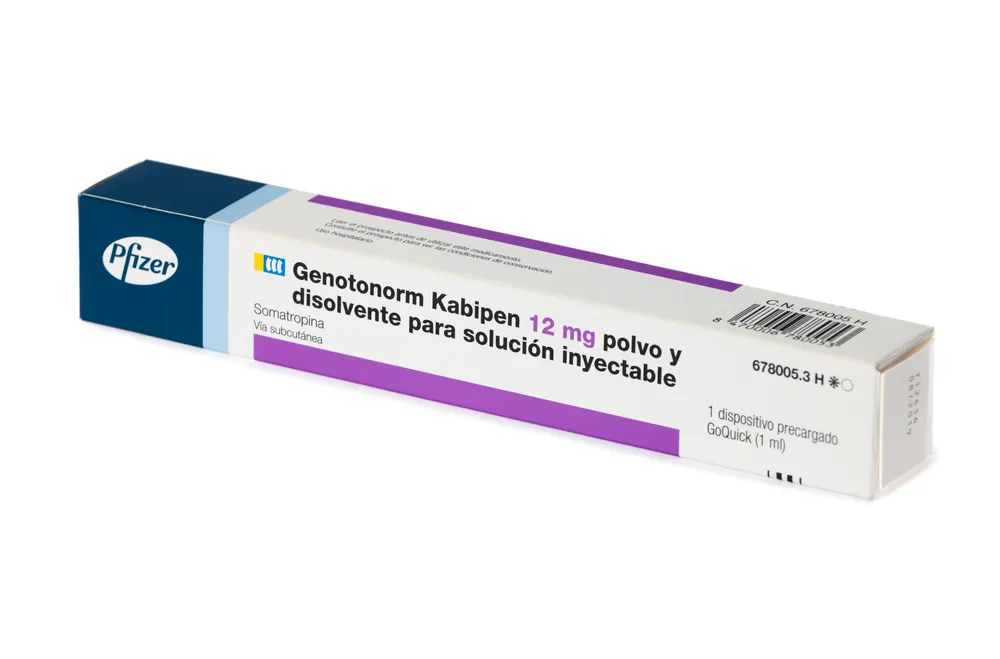
Table of Contents
- Package Leaflet: Information for the User
- Introduction
- 1. What Genotonorm Kabipen is and what it is used for
- 2. What you need to know before starting to use Genotonorm Kabipen
- 3. How to use Genotonorm Kabipen
- 4. Possible adverse effects
- 5. Storage of Genotonorm Kabipen
- 6. Contents of the pack and other information
Package Leaflet: Information for the User
Introduction
Package Leaflet: Information for the User
GENOTONORM KABIPEN 5.3 mg and 12 mg powder and solvent for solution for injection
somatropin
Read the entire leaflet carefully before you start using this medicine, because it contains important information for you.
- Keep this leaflet, as you may need to read it again.
- If you have any questions, ask your doctor or pharmacist.
- This medicine has been prescribed for you only, and you should not give it to others, even if they have the same symptoms as you, because it may harm them.
- If you think any of the side effects you experience is serious or if you notice any side effects not listed in this leaflet, inform your doctor or pharmacist.
Leaflet Contents:
- What Genotonorm Kabipen is and what it is used for
- What you need to know before using Genotonorm Kabipen
- How to use Genotonorm Kabipen
- Possible side effects
- How to store Genotonorm Kabipen
- Contents of the pack and other information
1. What Genotonorm Kabipen is and what it is used for
Genotonorm Kabipen is a recombinant human growth hormone (also known as somatropin). It has the same structure as human growth hormone, which is necessary for the growth of bones and muscles. It also helps fatty and muscle tissues develop in appropriate amounts. The term "recombinant" means that it is not derived from human or animal tissue.
In children, Genotonorm Kabipen is used to treat growth disorders:
- If the child is not growing adequately or does not produce enough of their own growth hormone.
- In cases of Turner syndrome. Turner syndrome is a chromosomal disorder occurring in girls that may affect growth – your doctor will determine whether this applies.
- In cases of chronic kidney insufficiency. If the kidneys lose their ability to function properly, growth may be impaired.
- In cases of Prader-Willi syndrome (a chromosomal disorder). Growth hormone will help the child grow if they are still in a growth phase, and will also improve body composition. Excess fat will decrease and loss of muscle mass will improve.
- In cases of being born small or with low birth weight. Growth hormone may help the child grow if they have not yet achieved or maintained normal growth by age 4 or later.
In adults, Genotonorm Kabipen is used to treat individuals with a pronounced deficiency of growth hormone. This deficiency may begin in adulthood or may have started in childhood and continue into adulthood.
If you have been treated with Genotonorm Kabipen for growth hormone deficiency during childhood, your growth hormone status should be re-evaluated after completion of the growth phase. If severe growth hormone deficiency is confirmed, your doctor will recommend continuing treatment with Genotonorm Kabipen.
This medicine can only be prescribed by a physician experienced in growth hormone therapy who has confirmed your diagnosis.
2. What you need to know before starting to use Genotonorm Kabipen
Do not use Genotonorm Kabipen and contact your doctor if
- You are allergic (hypersensitive) to somatropin or to any of the other components of Genotonorm Kabipen.
- You have an active tumour (cancer). Tumours must be inactive and anti-tumour treatment must have been completed before starting treatment with Genotonorm.
- You are seriously ill (for example, complications following open-heart surgery, abdominal surgery, acute respiratory failure, accidental trauma, or a similar condition). If you are about to undergo or have recently undergone major surgery or are to be admitted to hospital for any reason, inform your doctor and remind all other physicians examining you that you are using growth hormone.
- You have completed your growth phase (closed epiphyses) and Genotonorm Kabipen was prescribed to stimulate growth.
Take special care with Genotonorm Kabipen and contact your doctor
- If you are at risk of developing diabetes, your doctor will monitor your blood sugar levels during treatment with Genotonorm Kabipen.
- If you have diabetes, you must carefully monitor your blood sugar levels during treatment with Genotonorm Kabipen and show the results to your doctor to determine whether you need to adjust the dose of your diabetes medications.
- After starting treatment with Genotonorm Kabipen, some patients may need to start treatment with thyroid hormone.
- If you are receiving treatment with thyroid hormones, it may be necessary to adjust the dose of thyroid hormone.
- If you are receiving growth hormone treatment to stimulate growth and you develop a limp, or start limping due to hip pain during growth hormone treatment, you must inform your doctor.
- If increased intracranial pressure occurs (with symptoms such as severe headaches, vision problems, or vomiting), you must inform your doctor.
- If your doctor confirms that you have developed inflammation of the muscles near the injection site due to the preservative metacresol, you should use another formulation of Genotonorm that does not contain metacresol.
- If you are receiving Genotonorm Kabipen for growth hormone deficiency following a previous tumour (cancer), you should undergo periodic evaluations for possible tumour recurrence or any other cancer.
- If you experience abdominal pain that becomes more severe, inform your doctor.
- Experience in patients over 80 years of age is limited. Elderly individuals may be more sensitive to the action of Genotonorm Kabipen and therefore may be more prone to developing adverse effects.
Children with chronic renal insufficiency:
- Your doctor will assess your kidney function and growth rate before starting treatment with Genotonorm Kabipen. Medical treatment for your kidney disease must continue. Treatment with Genotonorm Kabipen should be discontinued in the event of kidney transplantation.
Children with Prader-Willi syndrome:
- Your doctor will give you dietary restrictions to help control your weight.
- Your doctor will perform an examination before starting treatment with Genotonorm Kabipen to determine whether you have upper airway obstruction, sleep apnoea (when breathing stops during sleep), or respiratory infections.
- If during treatment you develop signs of upper airway obstruction (including new or worsening snoring), your doctor will need to examine you and may discontinue treatment with Genotonorm Kabipen.
- During treatment, your doctor will monitor for any signs of scoliosis, a type of spinal deformity.
- If during treatment you develop a lung infection, inform your doctor so that you can be treated for the infection.
Children born small or with low birth weight:
- If you were born small or with low birth weight and are between 9 and 12 years old, consult your doctor specifically about puberty and treatment with this product.
- Your doctor will perform blood tests for sugar and insulin before starting treatment and once a year during treatment.
- Treatment should continue until your growth phase ends.
Use in athletes
This medicine contains somatropin, which may result in a positive test in doping controls.
Use of other medicines
Inform your doctor or pharmacist if you are using or have recently used any other medicines, including those obtained without a prescription.
Warnings and precautions
Consult your doctor or pharmacist before starting to use Genotonorm.
If you are receiving glucocorticoid replacement therapy, you must consult your doctor regularly, as your glucocorticoid dose may need adjustment.
Inform your doctor if you are using:
- Medicines for the treatment of diabetes
- Thyroid hormones
- Synthetic adrenal hormones (corticosteroids)
- Orally administered oestrogens or other sex hormones
- Cyclosporine (a medicine that suppresses the immune system after transplantation)
- Medicines for epilepsy control (anticonvulsants)
Your doctor may need to adjust the dose of these medicines or the dose of Genotonorm Kabipen.
Pregnancy and breastfeeding
Do not use Genotonorm Kabipen if you are pregnant, think you may be pregnant, or are trying to become pregnant.
Consult your doctor before using this medicine during breastfeeding.
Consult your doctor or pharmacist before using any medicine.
Genotonorm Kabipen contains sodium
This medicine contains less than 1 mmol of sodium (23 mg) per dose; this is essentially “sodium-free”.
3. How to use Genotonorm Kabipen
Recommended dose
The dose depends on your body surface area, the condition being treated, and how your growth hormone functions. Each person is different. Your doctor will determine your individualized dose of Genotonorm Kabipen in milligrams (mg), based either on your body weight in kilograms (kg) or on your body surface area calculated from your height and weight in square meters (m2), as well as your treatment schedule. Do not change either the dose or the treatment schedule without consulting your doctor.
Children with growth hormone deficiency:
0.025–0.035 mg/kg body weight per day or 0.7–1.0 mg/m2 body surface area per day. Higher doses may be used. When growth hormone deficiency continues during adolescence, treatment with Genotonorm Kabipen should be continued until physical development is complete.
Children with Turner syndrome:
0.045–0.050 mg/kg body weight per day or 1.4 mg/m2 body surface area per day.
Children with chronic renal insufficiency:
0.045–0.050 mg/kg body weight per day or 1.4 mg/m2 body surface area per day. If growth velocity is too low, higher doses may be necessary. Dose adjustment may be required after 6 months of treatment.
Children with Prader-Willi syndrome:
0.035 mg/kg body weight per day or 1.0 mg/m2 body surface area per day. The daily dose must not exceed 2.7 mg. This treatment should not be used in children whose growth phase has nearly ended after puberty.
Children born small or with low birth weight and with growth disorders:
0.035 mg/kg body weight per day or 1.0 mg/m2 body surface area per day. It is important to continue treatment until final height is reached. Treatment should be discontinued after the first year if there is no response, or if final height has been reached and growth has ceased.
Adults with growth hormone deficiency:
If you continue using Genotornorm after childhood treatment, start with a dose of 0.2–0.5 mg per day. This dose should be gradually increased or decreased according to laboratory results, clinical response, and adverse effects.
If growth hormone deficiency begins in adulthood, treatment should start at 0.15–0.3 mg per day. This dose should be gradually increased based on laboratory results, clinical response, and adverse effects. The daily maintenance dose rarely exceeds 1.0 mg per day. Women may require higher doses than men. Dose adjustments should be monitored every 6 months. Patients over 60 years of age should start with doses of 0.1–0.2 mg per day and increase slowly according to individual needs. Use the lowest effective dose. The maintenance dose rarely exceeds 0.5 mg per day. Follow the instructions provided by your doctor.
Injection of Genotonorm Kabipen
This medicine is administered subcutaneously, meaning it is injected with a small needle into the fatty tissue just beneath the skin. Your doctor will show you how to use it. Always use the medicine exactly as prescribed by your doctor. If you have any doubts, consult your doctor or pharmacist.
The instructions for use of the pre-filled device GoQuick are also provided in the pre-filled device box.
The instructions for using Genotonorm Kabipen in a dual-chamber vial together with the Genotonorm Pen are provided in the injection device case.
Please consult these instructions before using your medicine.
When using a pre-filled device or a Genotonorm Pen injection device, you must attach a needle to the device before mixing. Use a new needle for each injection. Needles must not be reused.
- Preparation of the injection:
You may remove the medicine from the refrigerator half an hour before injection. This allows it to reach room temperature and makes the injection more comfortable.
The pre-filled GoQuick device contains a dual-chamber vial containing growth hormone and liquid solvent. The growth hormone and liquid solvent are mixed by rotating the vial (see detailed steps in the Instructions for Use). No additional device is required.
Genotonorm is also available in a dual-chamber vial containing growth hormone and liquid solvent for use with the Genotonorm Pen device. The growth hormone and liquid solvent in the dual-chamber vial can be mixed by screwing together the Genotonorm Pen device.
In both cases—whether using the pre-filled GoQuick device or the dual-chamber vial—dissolve the powder by gently tilting until the powder is completely dissolved.
When mixing Genotonorm Kabipen, DO NOT SHAKE the solution. Mix gently. Shaking may cause foaming of the growth hormone and damage the medicine. Inspect the solution and do not inject if you notice cloudiness or particles in it.
- Injection of Genotonorm Kabipen:
Remember to wash your hands first and clean the skin at the injection site.
Inject the growth hormone at the same time every day. A good time is bedtime, as it is easy to remember. It is also normal to have higher levels of growth hormone at night.
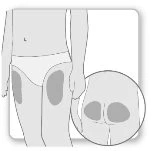
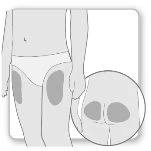
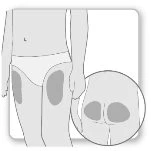
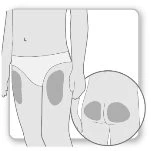
Most patients use the thighs or buttocks for injection. Inject at the site shown to you by your doctor. The fatty tissue under the skin may decrease in size at the injection site. To prevent this, change the injection site each time. This allows the skin and underlying tissue time to recover between injections before returning to the same site.
Remember to store the medicine in the refrigerator immediately after injection.
If you use more Genotonorm Kabipen than you should
If you inject more than you should, contact your doctor or pharmacist immediately. Blood sugar levels may drop sharply and subsequently rise to excessively high levels. You may feel restless, sweaty, drowsy, confused, or dizzy.
In case of overdose or accidental ingestion, contact your doctor or pharmacist immediately or call the Toxicology Information Service at telephone number 91 5620420, indicating the medicine and the amount ingested.
If you forget to administer Genotonorm Kabipen
Do not administer a double dose to make up for missed doses.
It is best to inject the growth hormone regularly. If you miss a dose, administer the next injection at the usual time the following day. Record any missed injections and inform your doctor at your next visit.
If you stop treatment with Genotonorm Kabipen
Consult your doctor before stopping treatment with this medicine.
If you have any further questions about the use of this product, ask your doctor or pharmacist.
4. Possible adverse effects
Like all medicines, this medicine can cause adverse effects, although not everyone experiences them.
Frequent and very frequent adverse effects in adults may begin during the first months of treatment and may disappear spontaneously or when the dose is reduced.
Very common adverse effects (may affect more than 1 in 10 patients) include:
In adults:
- Joint pain.
- Fluid retention (manifested as swollen fingers or swollen ankles).
Common adverse effects (may affect up to 1 in 10 patients) include:
In children:
- Joint pain.
- Redness, itching, or temporary pain at the injection site.
In adults:
- Numbness/tingling.
- Pain or burning sensation in the hands or armpits (known as carpal tunnel syndrome).
- Stiffness in arms and legs, muscle pain.
Uncommon adverse effects (may affect up to 1 in 100 people) include:
In children:
- Leukemia (reported in a small number of patients with growth hormone deficiency, some of whom have received treatment with somatropin. However, there is no evidence that the incidence of leukemia is increased in growth hormone recipients without predisposing factors).
- Increased intracranial pressure (causing symptoms such as severe headache, vision problems, or vomiting).
- Numbness/tingling.
- Rash.
- Itching.
- Itchy skin hives.
- Muscle pain.
- Breast enlargement (gynecomastia).
- Fluid retention (manifested as swollen fingers or swollen ankles, for a short period at the beginning of treatment).
In adults:
- Breast enlargement (gynecomastia).
Frequency not known: cannot be estimated from available data:
- Type II diabetes.
- Facial swelling.
- Headache.
- Decreased blood cortisol levels.
In children:
- Stiffness in arms and legs.
In adults:
- Increased intracranial pressure (causing symptoms such as severe headache, vision problems, or vomiting).
- Rash.
- Itching.
- Itchy skin hives.
- Redness, itching, or pain at the injection site.
Development of antibodies against injected growth hormone, although this does not appear to affect the hormone's action.
The skin around the injection site may become lumpy and uneven, but this should not occur if the injection is given at a different site each time.
The preservative metacresol may very rarely cause inflammation of the muscles near the injection site. If your doctor confirms that you have developed this adverse effect, you should use Genotonorm without metacresol.
Rare cases of sudden death have been reported in patients with Prader-Willi syndrome. However, a relationship between these cases and treatment with this medicine has not been established.
If you experience hip or knee pain or discomfort while receiving Genotonorm treatment, your doctor may consider the possibility of slipped capital femoral epiphysis or Legg-Calvé-Perthes disease.
Other possible side effects related to growth hormone treatment are as follows.
You (or your child) may experience increased blood sugar levels or decreased thyroid hormone concentrations. Your doctor may perform tests to monitor this and, if necessary, prescribe appropriate treatment. Pancreatitis has occasionally been reported in patients treated with growth hormone.
Reporting of adverse effects
If you experience any type of adverse effect, consult your doctor, pharmacist, or nurse, even if it is a possible adverse effect not listed in this leaflet. You may also report them directly via the Spanish Pharmacovigilance System for Human Medicines: https://www.notificaRAM.es.
By reporting adverse effects, you can help provide more information on the safety of this medicine.
5. Storage of Genotonorm Kabipen
Keep out of the sight and reach of children.
Do not use this medicine after the expiry date stated on the packaging as MM/YYYY. The expiry date refers to the last day of the stated month.
Before reconstitution
Store in a refrigerator (2ºC–8ºC). Keep the dual-chamber vial in the outer packaging to protect it from light.
Before opening, the medicine may be kept outside the refrigerator for a maximum period of 1 month at a temperature not exceeding 25ºC; after this period, it must be discarded.
After reconstitution
Store in a refrigerator (2ºC–8ºC) for a maximum of 28 days. Do not freeze. Keep the prefilled device GoQuick in the outer packaging, or the dual-chamber vial in the injection device case, to protect it from light.
Do not use this medicine if you see particles or if the solution is cloudy.
Never freeze or expose this medicine to ice. If it has been frozen, do not use it.
Never dispose of needles or empty vials in the regular household waste. After using a needle, it must be carefully discarded into a special sharps container so that no one can reuse it or get pricked.
Medicines must not be disposed of via wastewater or in household waste. Unused medicines and waste materials, including packaging, should be returned to the SIGRE point at your pharmacy. If you are unsure, ask your pharmacist how to dispose of medicines and packaging you no longer need. This helps protect the environment.
6. Contents of the pack and other information
Composition of Genotonorm Kabipen
- The active substance is somatropin*.
- A vial contains 5.3 mg or 12 mg of somatropin*.
- After reconstitution, the concentration of somatropin* is 5.3 mg or 12 mg per ml.
- The other components of the powder are: glycine (E640), mannitol (E421), anhydrous sodium hydrogen phosphate (E339), and anhydrous disodium dihydrogen phosphate (E339) (see section 2 “Genotonorm Kabipen contains sodium”).
- The ingredients of the solvent are: water for injections, mannitol (E421), and metacresol.
*Obtained from cells of Escherichia coli by recombinant DNA technology.
Appearance of Genotonorm Kabipen and contents of the pack
Powder and solvent for solution for injection, in a dual-chamber vial containing the powder in one compartment and the solvent in the other (5.3 mg/ml or 12 mg/ml). The vial may be included in a pre-filled device. Pack sizes: 1 or 5 pre-filled device(s), or 1, 5, or 20 vial(s).
Only certain pack sizes may be marketed.
The powder is white and the solvent is clear.
The vials must be used with a specific Genotonorm Kabipen injection device. Genotonorm Kabipen vials have a colour code and must be used with the matching colour-coded Genotonorm Kabipen injection device to ensure correct dosing: the Genotonorm Kabipen 5.3 mg vial (blue) must be used with the Genotonorm Kabipen 5.3 injection device (blue). The Genotonorm Kabipen 12 mg vial (violet) must be used with the Genotonorm Kabipen 12 injection device (violet).
Instructions for use of the device are included in the packaging. If you do not have an injection device, ask your doctor.
Marketing Authorization Holder
Pfizer, S.L.
Avda. de Europa 20 B
Parque Empresarial La Moraleja
28108 Alcobendas (Madrid), Spain.
Manufacturer
Pfizer Manufacturing Belgium NV
Rijksweg 12
2870 Puurs-Sint-Amands
Belgium
This medicinal product is authorized in the European Economic Area member states and in the United Kingdom (Northern Ireland) under the following names:
Genotropin: Austria, Denmark, Finland, Germany, Greece, Ireland, Italy, Netherlands, Portugal, Sweden, United Kingdom (Northern Ireland).
Genotonorm: Belgium, France, Luxembourg.
Genotonorm Kabipen: Spain.
Date of the most recent review of this leaflet: May 2024
Detailed information on this medicinal product is available on the website of the Spanish Agency of Medicines and Health Products (AEMPS) http://www.aemps.gob.es/
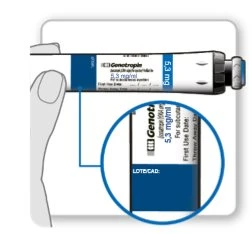
INSTRUCTIONS FOR USE OF GENOTONORM KABIPEN GOQUICK® Read these instructions completely before using the GoQuick device. If you have any questions about the dose or treatment with Genotonorm, contact your doctor or nurse. About GoQuick GoQuick is a pre-filled, multi-dose, disposable injection device containing 5.3 mg of somatropin. The device can deliver doses from 0.1 mg to 1.5 mg of medication. Each click of the black wheel changes the dose by 0.05 mg. The Genotonorm vial inside the device is mixed only once, when you start using a new device. You must never replace the vial. When the device is empty, you must start using a new one. The device has dose memory. The dose must be set each time you start using a new device. After that, the device allows you to prepare the same preset dose for each injection. This will prevent you from drawing a dose larger than the one set. Important Information
Storage and Disposal
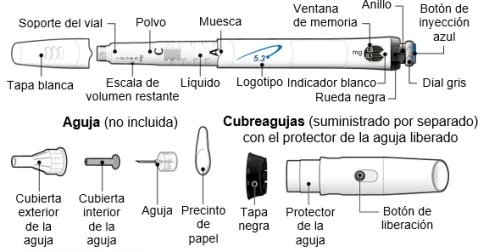
Follow local health and safety regulations for disposal of the device. Ask your doctor or nurse if you are unsure what to do. Parts of the GoQuick Device
Needles for the device are not included with the GoQuick device. You will need to obtain needles for devices up to 8 mm in length from your pharmacy.
Preparation and Use of a New GoQuick Device |
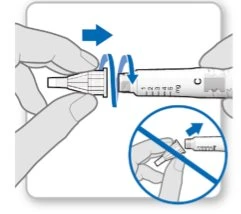
(-:Step 1. )=100%(Step 1. :-) (-:Attach the Needle )=89%(Prepare
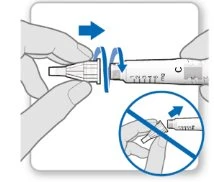
(-:Push the needle onto the cartridge holder tip.)=81%((-:Do not overtighten.)=100%( (-:Leave both needle covers on the needle.)=0%(<0} |
{0>Step 2. <}100{>Step 2. <0} {0>Mix the Genotropin <}0{>Select the injection site <0}
<0} |
Step 3. Attach a new needle <0}
Note: Be careful not to attach the needle at an angle. This may cause leakage from the device.
<0} |
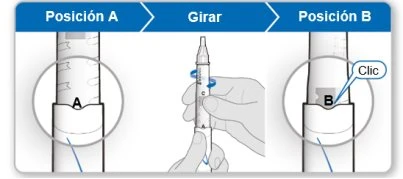
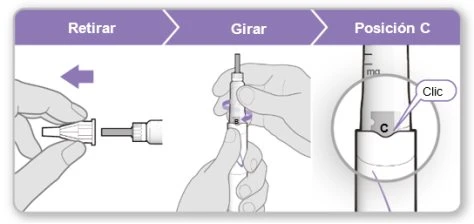
Step 4. Mix the contents of the Genotonorm vial <0}
|
|
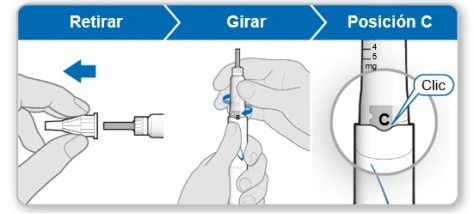
Step 5. Remove air from the device
Note: You should see an inner needle cover after removing the outer cover. If not, try attaching the needle again.
|
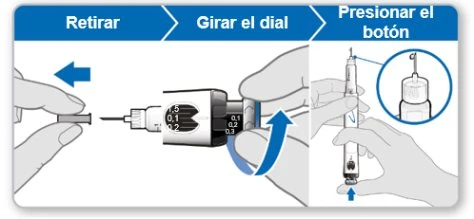
Step 6. Prime the device
Priming removes any remaining air by expelling a small amount of liquid from the device. The initial dose is 0.1 mg and is different from the dose prescribed by your doctor or nurse. Prime the device only the first time you use it.
Caution: Do not touch the needle to avoid accidental needlestick.
|
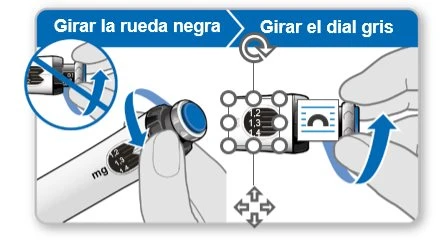
Step 7. Set and prepare your dose
The first time you use the device, you will set the dose prescribed by your doctor or nurse. There is no need to readjust the dose until you start using a new device or until your doctor or nurse instructs you otherwise.
Note: If you cannot turn the black wheel, press the blue injection button until it stops clicking, then try adjusting the dose again. Note that liquid may come out of the needle.
|
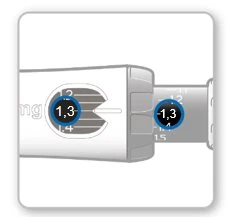
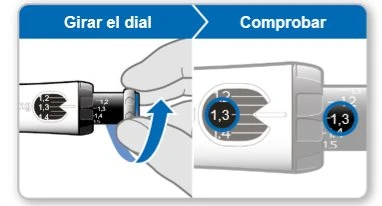
Step 8. Check your dose
Your dose must be aligned with the white indicator.
|
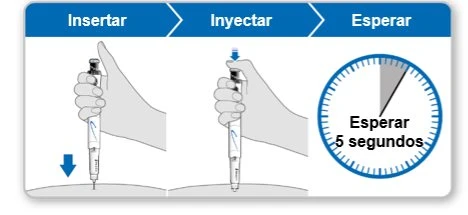
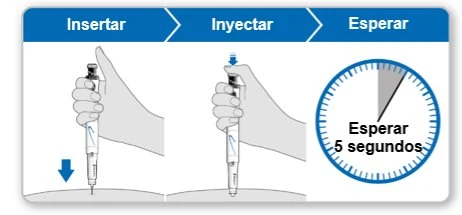
Step 9. Administer the Genotonorm Kabipen injection
Note: If you see a drop of liquid at the injection site or on the needle tip, for the next injection try pressing the blue injection button a little longer before removing the needle from the skin. |
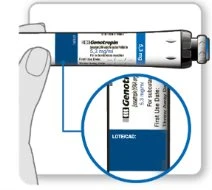
Step 10 Remove the needle
Store the device in the refrigerator until the next injection. |
Regular (daily) use of the GoQuick device | |||
Step 1: Preparation
| |||
Step 2: Choose the injection site
| |||
Step 3: Attach a new needle
| |||
Step 4: Prepare your dose
Note: If the drawn-up dose is lower, the device does not contain a full dose of Genotonorm. Follow the instructions provided by your doctor or nurse if a full dose is not available in the device. Alternatively, contact your doctor or nurse for advice. | |||
Step 5: Administer the Genotonorm Kabipen injection
Note: If you see a drop of liquid at the injection site or on the needle tip, for the next injection try pressing the blue injection button a few seconds longer before removing the needle from the skin. | |||
| |||
The needle cover is an optional accessory supplied separately to conceal the needle during injection. Attaching the needle cover: Attach the needle cover after step 5 (Adjustment and use of a new GoQuick device) to avoid needlestick injuries.
To remove the needle with the needle cover attached:
To remove the needle cover:
|
 Use of the needle cover (optional)
INSTRUCTIONS FOR USE OF GENOTONORM KABIPEN GOQUICK® |
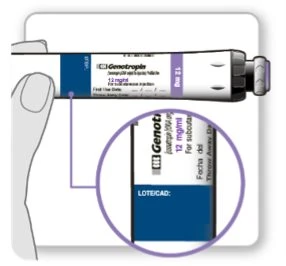
Read these instructions completely before using the GoQuick device. If you have any questions about the dose or treatment with Genotonorm Kabipen, contact your doctor or nurse. About GoQuick GoQuick is a prefilled, multidose, disposable injection device containing 12 mg of somatropin. The device can deliver doses of Genotonorm Kabipen ranging from 0.3 mg to 4.5 mg. Each click of the black wheel changes the dose by 0.15 mg. The Genotonorm vial built into the device is mixed only once, when you start using a new device. You must never replace the vial. When the device is empty, you must begin using a new one. The device has dose memory. The dose must be set each time a new device is used. Afterwards, the device allows you to prepare the same preset dose for each injection. This will prevent you from drawing a dose larger than the one set. Important information
Storage and disposal
|
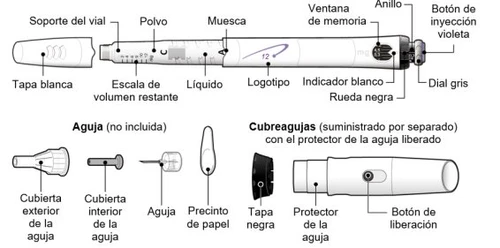
Parts of the GoQuick device
Device needles are not included with the GoQuick device. You will need to obtain device needles up to 8 mm in length from your pharmacy.
|
Preparation and use of a new GoQuick device |
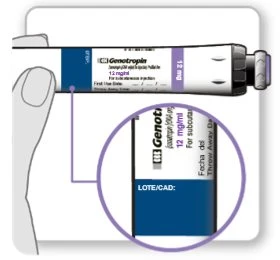
Step 1 Preparation
Step 2 Choose injection site
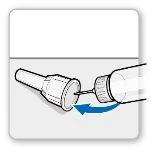
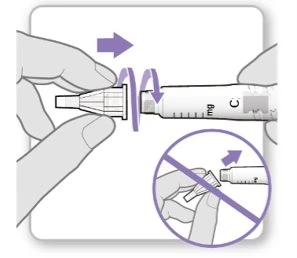
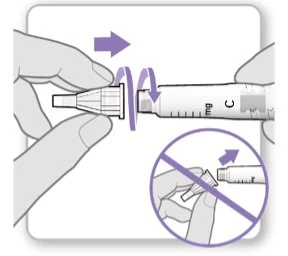
Step 3 Attach a new needle
Note: Be careful not to attach the needle at an angle. This may cause leakage from the device.
|
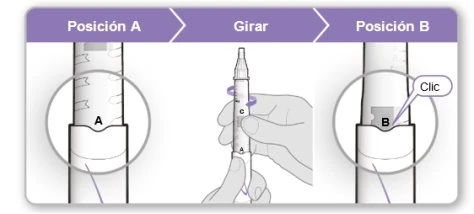
Step 4. Mix the contents of the Genotonorm vial
| |
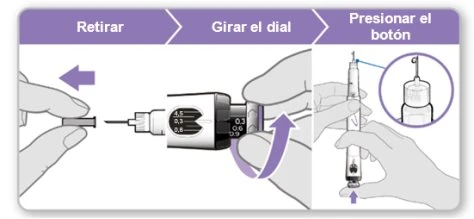
Step 5. Remove air from the device
Note: You should see an inner needle cap after removing the outer cap. If you do not, try attaching the needle again.
| |
Step 6. Prime the device
Priming removes any remaining air by expelling a small amount of liquid from the device. The initial dose is 0.3 mg and is different from the dose prescribed by your doctor or nurse. Prime the device only the first time you use it.
Caution: Do not touch the needle to avoid accidental needlestick.
| |
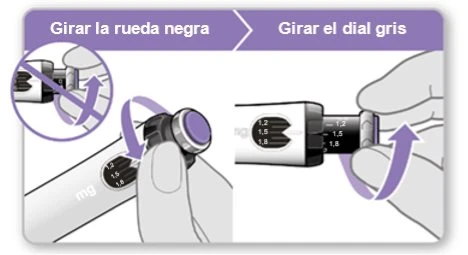
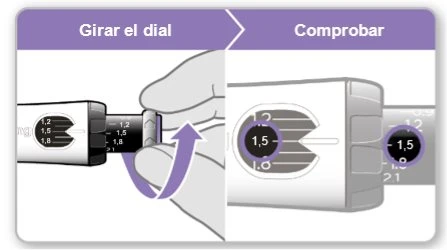
Step 7. Set and prepare your dose
The first time you use the device, you will set the dose prescribed by your doctor or nurse. There is no need to readjust the dose until you start using a new device or until instructed by your doctor or nurse.
Note: If you cannot turn the black wheel, press the purple injection button until it stops clicking. Then try adjusting your dose again. Note that liquid may come out of the needle.
| |
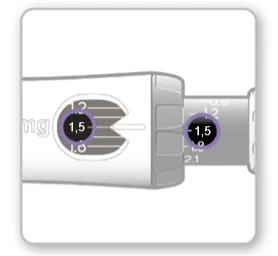
Step 8. Check your dose
Your dose should be aligned with the white indicator.
| |
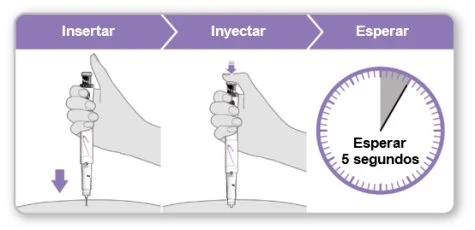
Step 9. Administer the Genotonorm Kabipen injection
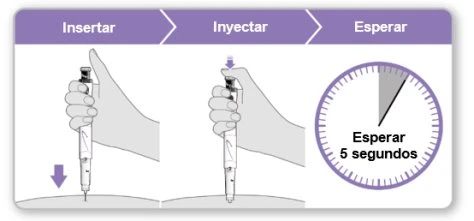
Note: If you see a drop of liquid at the injection site or on the needle tip, for the next injection try pressing the purple injection button a few seconds longer before removing the needle from the skin. | |
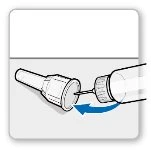
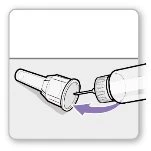
Step 10. Remove the needle
| |
Regular (daily) use of the GoQuick device | |
Step 1: Preparation
| |
Step 2: Choose the injection site
Step 3: Attach a new needle
Note: Be careful not to attach the needle at an angle. This may cause leakage from the device.
| |
Step 4: Prepare your dose
| |
Note: If the drawn dose is lower, the device does not contain a full dose of Genotonorm. Follow the instructions provided by your doctor or nurse if a full dose is not available in the device. Alternatively, contact your doctor or nurse for advice. | |
Step 5: Administer the Genotonorm Kabipen injection
Note: If you see a drop of liquid at the injection site or on the needle tip, for the next injection try pressing the purple injection button a little longer before removing the needle from the skin. | |
Step 6: Remove the needle
| |
Caution: Do not touch the needle to avoid accidental needlestick injury.
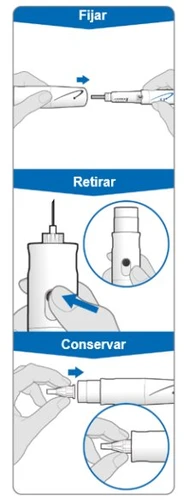
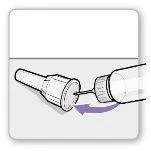
Use of the needle shield (optional) The needle shield is an optional accessory supplied separately to conceal the needle during injection.
Attach the needle shield after Step 5 (Adjustment and use of a new GoQuick device) to avoid needlestick injury.
To remove the needle with the needle shield attached:
To remove the needle shield:
|
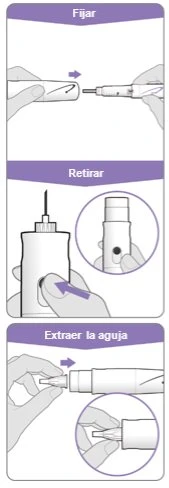 Attaching the needle shield: