Gemcitabine Flynn 200 mg powder for infusion solution EFG
Spain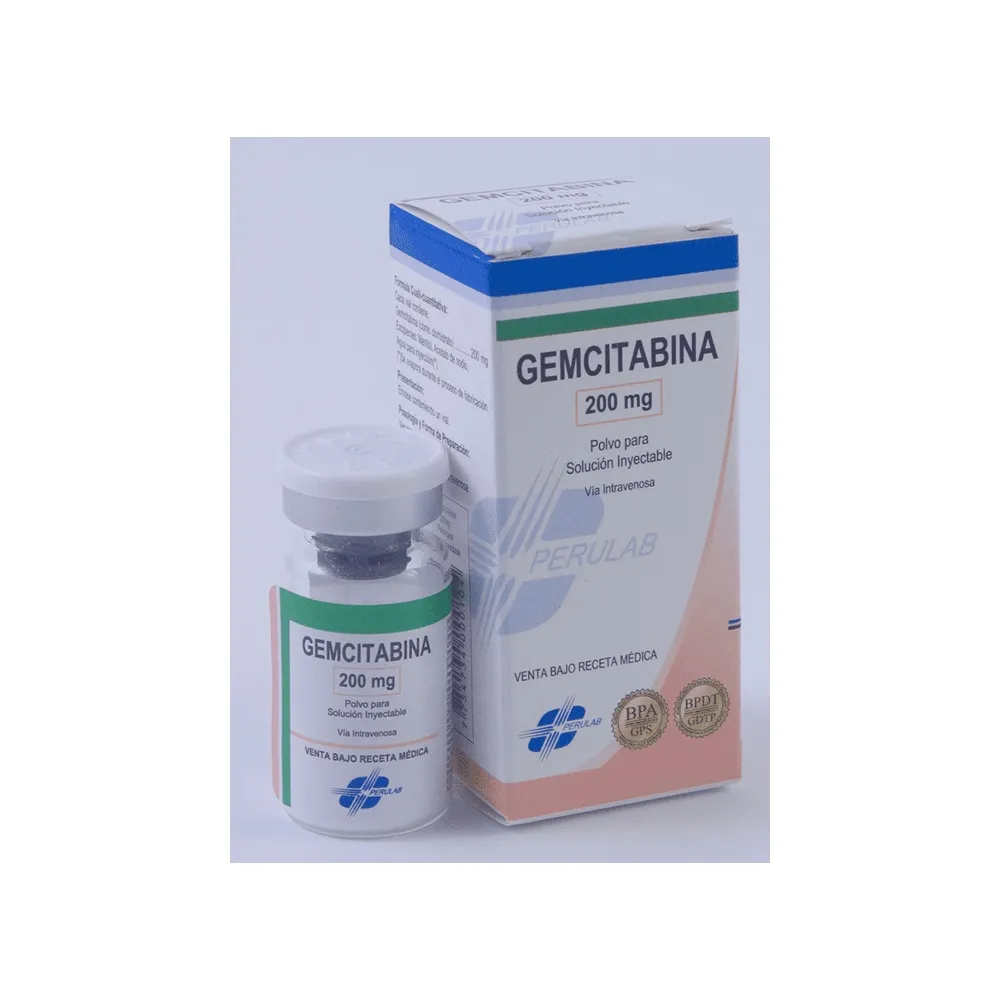
Table of Contents
- Package leaflet: Information for the user
- Introduction
- 1. What Gemcitabina Flynn powder for solution for infusion is and what it is used for
- 2. Before using Gemcitabina Flynn powder for solution for infusion
- 3. How to use Gemcitabine Flynn powder for solution for infusion
- 4. Possible adverse effects
- 5. Storage of Gemcitabine Flynn powder for solution for infusion
- 6. Information provided
Package leaflet: Information for the user
Introduction
PACKAGE LEAFLET: INFORMATION FOR THE USER
Gemcitabine FLYNN 200 mg powder for solution for infusion EFG
Gemcitabine
Read the entire leaflet carefully before you start using this medicine.
- Keep this leaflet, as you may need to read it again.
- If you have any questions, ask your doctor or pharmacist.
- This medicine has been prescribed for you only and must not be given to other people, even if they have the same symptoms as you, since it may harm them.
- If you think that any of the side effects you experience is severe or if you notice any side effect not listed in this leaflet, inform your doctor or pharmacist.
Leaflet contents:
- What Gemcitabine FLYNN powder for solution for infusion is and what it is used for
- Before you use Gemcitabine FLYNN powder for solution for infusion
- How to use Gemcitabine FLYNN powder for solution for infusion
- Possible side effects
- How to store Gemcitabine FLYNN powder for solution for infusion
- Further information
1. What Gemcitabina Flynn powder for solution for infusion is and what it is used for
Gemcitabina Flynn is a medicine used to treat cancer and belongs to a group of medicines called "cytotoxic agents". These medicines destroy dividing cells, including cancer cells.
Gemcitabina Flynn may be given alone or in combination with other anticancer medicines, depending on the type of cancer.
Gemcitabina Flynn is used to treat the following types of cancer:
- Non-small cell lung cancer (NSCLC), either alone or in combination with cisplatin
- Pancreatic cancer
- Breast cancer, in combination with paclitaxel
- Ovarian cancer, in combination with carboplatin
- Bladder cancer, in combination with cisplatin
2. Before using Gemcitabina Flynn powder for solution for infusion
Do not use Gemcitabina FLYNN powder for solution for infusion
- If you are allergic (hypersensitive) to gemcitabine or to any of the other ingredients of Gemcitabina FLYNN powder for solution for infusion.
- If you are breastfeeding, you must interrupt breastfeeding during treatment with Gemcitabina.
Take special care with Gemcitabina FLYNN powder for solution for infusion
Before the first infusion, blood samples will be taken to assess whether your liver and kidney function are adequate. Likewise, before each infusion, blood samples will be taken to evaluate whether you have enough red blood cells to receive Gemcitabina. Your doctor may decide to adjust the dose or delay treatment depending on your general condition and whether your blood cell counts are too low. Periodically, blood samples will be taken to assess the function of your kidneys and liver.
Inform your doctor if:
- You have or have previously had liver, heart, or vascular disease.
- You have recently received or are about to receive radiotherapy.
- You have recently been vaccinated.
- You experience difficulty breathing or feel very weak and pale (this may be a sign of kidney failure).
Men are advised not to father a child during treatment with Gemcitabina and for 6 months after treatment ends. If you wish to father a child during treatment or within 6 months after treatment, consult your doctor or pharmacist. You may request information about sperm preservation before starting treatment.
Use of other medicines
Inform your doctor or hospital pharmacist if you are taking or have recently taken any other medicines, including vaccines and medicines obtained without a prescription.
Pregnancy and breastfeeding
If you are pregnant or think you may become pregnant, inform your doctor. The use of Gemcitabina during pregnancy should be avoided. Your doctor will discuss with you the potential risks of taking Gemcitabina during pregnancy.
Inform your doctor if you are breastfeeding.
You must interrupt breastfeeding during treatment with Gemcitabina.
Driving and use of machines
Gemcitabina may cause drowsiness, especially if you have consumed alcohol. Avoid driving or operating machinery until you are certain that treatment with Gemcitabina does not make you drowsy.
Important information about some of the ingredients of Gemcitabina FLYNN powder for solution for infusion
Gemcitabina FLYNN powder for solution for infusion contains 3.5 mg (<1 mmol) of sodium per 200 mg vial. Patients on a sodium-controlled diet should take this into account.
3. How to use Gemcitabine Flynn powder for solution for infusion
The usual dose of Gemcitabine is 1,000–1,250 mg per square meter of your body surface area. Your height and weight will be measured to calculate your body surface area. Your doctor will use this body surface area to determine the correct dose for you. This dose may be adjusted or the treatment may be delayed depending on your general health and your blood cell counts.
The frequency with which you receive your Gemcitabine infusion depends on the type of cancer being treated.
A hospital pharmacist or doctor will have dissolved the Gemcitabine FLYNN powder for solution for infusion before it is administered to you.
Gemcitabine will always be given to you as an intravenous infusion into one of your veins. The infusion will last approximately 30 minutes.
If you have any further questions about the use of this product, ask your doctor or pharmacist.
4. Possible adverse effects
Like all medicines, Gemcitabine may cause adverse effects, although not everyone experiences them.
The frequencies of observed adverse effects are defined as follows:
- Very common: affects more than 1 in 10 patients treated
- Common: affects between 1 and 10 in every 100 patients treated
- Uncommon: affects between 1 and 10 in every 1,000 patients treated
- Rare: affects between 1 and 10 in every 10,000 patients treated
- Very rare: affects fewer than 1 in every 10,000 patients treated
- Not known: frequency cannot be estimated from available data
You must contact your doctor immediately if you notice any of the following effects:
- Fever or infection (common): if you have a temperature of 38°C or higher, sweating, or other signs of infection (since you may have lower than normal white blood cell counts, which is very common).
- Irregular heartbeat (arrhythmia) (frequency not known).
- Pain, redness, swelling, or sores in the mouth (common).
- Allergic reactions: if you develop a skin rash (very common), itching (common), or fever (very common).
- Tiredness, feeling faint, becoming breathless easily, or looking pale (since you may have lower than normal hemoglobin levels, which is very common).
- Bleeding from gums, nose, or mouth, or any bleeding that does not stop, red or pink urine, unexpected bruising (since you may have lower than normal platelet counts, which is very common).
- Difficulty breathing (it is very common to experience mild breathing difficulty immediately after Gemcitabine infusion, which quickly resolves; however, more serious lung problems may occur uncommonly or rarely).
Adverse effects with Gemcitabine may include:
Very common adverse effects
- Low hemoglobin levels (anemia)
- Low white blood cell count
- Low platelet count
- Difficulty breathing
- Vomiting
- Nausea
- Skin rash – allergic skin rash, frequently with itching
- Hair loss
- Liver problems: detected through abnormal blood test results
- Blood in the urine
- Abnormal urine tests: proteins in the urine
- Pseudoflu-like syndrome including fever
- Edema (swelling of ankles, fingers, feet, face)
Common adverse effects
- Fever accompanied by low white blood cell count
- Anorexia (poor appetite)
- Headache
- Insomnia
- Drowsiness
- Cough
- Nasal congestion
- Constipation
- Diarrhea
- Pain, redness, swelling, or sores in the mouth
- Itching
- Sweating
- Muscle pain
- Back pain
- Fever
- Weakness
- Chills
Uncommon adverse effects
- Interstitial pneumonitis (hardening of the walls of the lung alveoli)
- Respiratory tract spasm (wheezing)
- Abnormal chest X-ray/scan (hardening of the lung walls)
Rare adverse effects
- Heart attack (myocardial infarction)
- Low blood pressure
- Skin peeling, ulceration, or blistering
- Reactions at the injection site
Very rare adverse effects
- Increased platelet count
- Anaphylactic reactions (severe hypersensitivity/allergic reaction)
- Skin peeling and severe blistering of the skin
Adverse effects with unknown frequency
- Irregular heartbeat (arrhythmia)
- Adult respiratory distress syndrome (severe lung inflammation causing respiratory failure)
- Delayed skin toxicity associated with radiotherapy – a sunburn-like skin rash that may occur in skin previously exposed to radiotherapy
- Fluid in the lungs
- Radiotherapy-associated toxicity – hardening of the lung alveolar walls associated with radiotherapy
- Ischemic colitis (inflammation of the lining of the large intestine caused by reduced blood supply)
- Heart failure
- Kidney failure
- Gangrene of fingers or toes
- Severe liver damage, including liver failure
- Stroke (cerebral infarction)
You may experience any of these symptoms and/or conditions. You should inform your doctor as soon as possible if you begin to experience any adverse effects.
If you are concerned about any adverse effect, consult your doctor.
If you consider any of the adverse effects you experience to be severe, or if you notice any adverse effect not listed in this leaflet, inform your doctor or pharmacist.
5. Storage of Gemcitabine Flynn powder for solution for infusion
Keep out of the reach and sight of children.
Do not use Gemcitabine Flynn powder for solution for infusion after the expiry date (EXP) stated on the outer packaging.
Vial unopened: store below 25°C.
Reconstituted solution: The product should be used immediately. When prepared according to the instructions, the chemical and physical properties of reconstituted gemcitabine solutions have been shown to be stable for 24 hours when stored at 20–25°C. Further dilution may be performed by a healthcare professional. Reconstituted gemcitabine solutions must not be refrigerated, as crystallization may occur.
This medicinal product is for single use only. Any unused medicine and all materials that have come into contact with it must be disposed of in accordance with the hospital's standardized procedures for the disposal of cytotoxic medicinal products.
6. Information provided
What Gemcitabina FLYNN powder for solution for infusion contains
- The active substance is gemcitabine. Each vial contains 200 mg of gemcitabine (as gemcitabine hydrochloride).
- The other components are mannitol (E421), sodium acetate, hydrochloric acid, and sodium hydroxide.
Appearance of Gemcitabina FLYNN powder for solution for infusion and contents of the pack
Gemcitabina FLYNN is a white or almost white powder or compacted powder for solution for infusion, packed in a vial. Each vial contains 200 mg of gemcitabine. Each pack of Gemcitabina FLYNN powder for solution for infusion contains 1 vial.
Marketing Authorization Holder:
Flynn Pharma Ltd
Alton House, 4 Herbert Street, Dublin 2
Ireland
Manufacturer responsible:
THYMOORGAN PHARMAZIE GMBH
Schiffgraben, 23 (Vienenburg)
Germany
This medicinal product is authorized in the Member States of the European Economic Area under the following names:
Member State Name | Medicinal Product Name |
Austria | Gemcitabina Xellex 200 mg or 1g Powder for solution for infusion |
Germany | Gemcitabine Xellex 200mg or 1g Powder for solution for infusion |
Spain | GEMCITABINA FLYNN 200 mg or 1000 mg powder for solution for infusion EFG. |
United Kingdom | Gemcitabine Xellex 200mg or 1,000mg powder for solution for infusion |
This patient information leaflet was approved in April 2010
___________________________________________________________________________
INFORMATION FOR HEALTHCARE PROFESSIONALS
Gemcitabine FLYNN 200 mg powder for solution for infusion
The following information is intended exclusively for medical or healthcare personnel:
Instructions for use, handling, and disposal
-
Use aseptic techniques during reconstitution and any subsequent dilution of gemcitabine for administration by intravenous infusion.
-
Calculate the required dose and number of Gemcitabine vials needed.
-
Reconstitute each 200 mg vial with 5 ml of sterile 9 mg/ml (0.9%) sodium chloride injection solution, free of preservatives, or each 1,000 mg vial with 25 ml of sterile 9 mg/ml (0.9%) sodium chloride injection solution, free of preservatives. Shake to dissolve. The total volume after reconstitution is 5.26 ml (200 mg vial) or 26.3 ml (1,000 mg vial), respectively. The resulting gemcitabine concentration after this dilution is 38 mg/ml, taking into account the displacement volume of the lyophilized powder. This solution may be further diluted with sodium chloride injection solution, 9 mg/ml (0.9%), free of preservatives. The reconstituted solution is a clear, colorless or pale yellow solution.
-
Prior to administration, visually inspect the medicinal product for the presence of particulate matter and/or discoloration. If particulate matter is observed, the product must not be administered.
-
Reconstituted gemcitabine solutions must not be refrigerated, as crystallization may occur. Chemical and physical in-use stability has been demonstrated for 24 hours at 20–25 °C. From a microbiological standpoint, the product should be used immediately. If not used immediately, storage conditions and duration prior to use are the responsibility of the user and must not exceed 24 hours at room temperature.
-
Gemcitabine solutions are for single use only. Any unused product or waste material must be disposed of in accordance with local regulations.
Precautions for preparation and administration
Standard safety precautions for cytotoxic agents must be observed when preparing and disposing of the infusion solution. Handling of the solution should be performed in a safety cabinet, and protective clothing and gloves must be worn. If a safety cabinet is not available, protective masks and eye protection should be added to the protective equipment.
If the solution comes into contact with the eyes, it may cause severe irritation. Immediately rinse the eyes thoroughly with abundant water. If irritation persists, consult a physician. If the solution is spilled onto the skin, wash thoroughly with copious amounts of water.
Disposal
Disposal of unused medication and of all materials that have come into contact with it must be carried out in accordance with the hospital's standardized procedures for the disposal of cytotoxic drugs.