Gelocatil 500 mg granules
Spain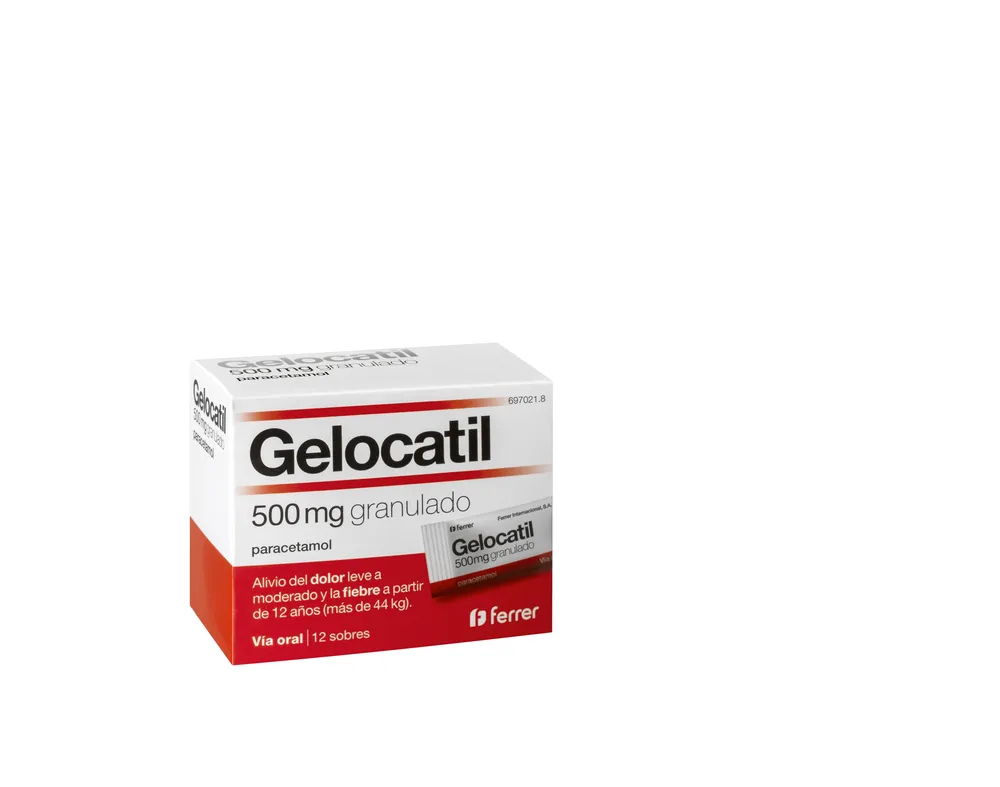
Table of Contents
Patient Information Leaflet
Introduction
Patient Information Leaflet
Gelocatil 500 mg granules
Paracetamol
Read the entire leaflet carefully before you start using this medicine, as it contains important information for you. Follow exactly the instructions for use provided in this leaflet or as advised by your pharmacist.
|
Package leaflet contents:
- What Gelocatil is and what it is used for
- What you need to know before taking Gelocatil
- How to take Gelocatil
- Possible side effects
- Storage of Gelocatil
- Contents of the pack and other information
1. What Gelocatil is and what it is used for
Paracetamol is effective in reducing pain and fever.
It is indicated for the symptomatic relief of mild to moderate occasional pain, such as headache, dental pain, muscular pain (muscle spasms), or back pain (lumbago), and for fever.
Gelocatil is indicated for use in adults and adolescents weighing over 44 kg (from 12 years of age).
2. What you need to know before taking Gelocatil
Do not take Gelocatil
- If you are allergic to paracetamol or to any of the other components of this medicine (listed in section 6).
Warnings and precautions
-
Consult your doctor or pharmacist before starting to take Gelocatil.
-
Do not take more medicine than recommended in section 3. How to take Gelocatil.
-
The simultaneous use of this medicine with other medicines containing paracetamol (e.g. cold and flu remedies) should be avoided, as high doses may cause liver damage. Do not use more than one medicine containing paracetamol without consulting your doctor.
-
Chronic alcoholics should not take more than 2 g (4 sachets) of paracetamol in 24 hours, divided into several doses.
-
You should consult your doctor before taking this medicine if you:
-
Have kidney, liver, heart or lung disease, or if you have anaemia.
-
Are an asthmatic patient sensitive to acetylsalicylic acid.
-
During treatment with Gelocatil, inform your doctor immediately if:
You have serious medical conditions such as severe renal failure or sepsis (when bacteria and their toxins circulate in the blood, causing organ damage), or if you suffer from malnutrition, chronic alcoholism, or are also taking flucloxacillin (an antibiotic). A serious condition called metabolic acidosis (an abnormality in the blood and body fluids) has been reported in patients in these situations when paracetamol is used at regular doses for a prolonged period or when paracetamol is taken together with flucloxacillin. Symptoms of metabolic acidosis may include: severe difficulty breathing with deep and rapid breathing, drowsiness, feeling unwell (nausea), and vomiting.
Taking Gelocatil with other medicines
Inform your doctor or pharmacist if you are using or have recently used any other medicines, including those obtained without a prescription.
In particular, if you are taking medicines containing any of the following active substances, it may be necessary to reduce the dose of some of them or discontinue treatment:
- Antibiotics (chloramphenicol)
- Oral anticoagulants (acenocoumarol, warfarin)
- Oral contraceptives and oestrogen treatments
- Antiepileptics (lamotrigine, phenytoin or other hydantoins, phenobarbital, methylphenobarbital, primidone, carbamazepine)
- Antituberculosis medicines (isoniazid, rifampicin)
- Barbiturates (used as sleep inducers, sedatives, and anticonvulsants)
- Activated charcoal used for diarrhoea or treatment of gas
- Colestipol (used to lower blood cholesterol levels)
- Flucloxacillin (antibiotic), due to a serious risk of blood and fluid abnormalities (called metabolic acidosis) requiring urgent treatment (see section 2).
- Medicines used to treat gout (probenecid and sulfinpyrazone)
- Medicines used for relief of spasms or contractions of the stomach, intestine, and bladder (anticholinergics)
- Medicines used for heart conditions (digitalis glycosides)
- Metoclopramide and domperidone (used to prevent nausea and vomiting)
- Propranolol used in the treatment of high blood pressure (hypertension) and heart rhythm disorders (cardiac arrhythmias)
Interference with laboratory tests:
If you are due to have any laboratory tests (including blood and urine tests), inform your doctor that you are taking this medicine, as it may alter the results of these tests.
Taking Gelocatil with food, drinks, and alcohol
The use of paracetamol in patients who habitually consume alcohol (3 or more alcoholic drinks per day) may cause liver damage.
Taking this medicine with food does not affect its effectiveness.
Pregnancy, breastfeeding, and fertility
If you are pregnant or breastfeeding, think you may be pregnant, or are planning to become pregnant, consult your doctor or pharmacist before using this medicine.
If necessary, Gelocatil may be used during pregnancy. Use the lowest possible dose that relieves pain or fever, and use it for the shortest possible time. Contact your doctor if pain or fever do not improve or if you need to take the medicine more frequently.
Breastfeeding
Paracetamol is excreted in breast milk; therefore, women who are breastfeeding should consult their doctor or pharmacist before using this medicine.
Children
Do not use in children weighing less than 44 kg (approximately under 12 years of age), as it does not allow for dosing lower than 1 sachet per dose (500 mg).
Driving and using machines
The effect of paracetamol on the ability to drive and use machines is negligible or none.
Gelocatil contains aspartame, sodium, sucrose, and glucose
- This medicine contains 23.82 mg of aspartame per sachet. Aspartame contains a source of phenylalanine, which may be harmful in individuals with phenylketonuria (PKU), a rare genetic disorder in which phenylalanine accumulates because the body cannot eliminate it properly.
- This medicine contains 107.92 mg of sodium (a main component of table/cooking salt) per sachet. This corresponds to 5.4% of the maximum daily sodium intake recommended for an adult. Consult your doctor or pharmacist if you need to take 4 or more sachets daily for a prolonged period, especially if you have been advised to follow a low-salt (sodium) diet.
- This medicine contains sucrose. If your doctor has informed you that you have an intolerance to certain sugars, consult him before taking this medicine.
- May cause dental caries.
3. How to take Gelocatil
Follow exactly the instructions for use provided in this leaflet or those given by your pharmacist. If in doubt, consult your doctor or pharmacist.
The recommended dose is:
-
Adults: The recommended dose is 1 sachet (500 mg paracetamol) every 4–6 hours as needed. If necessary, 2 sachets of 500 mg may be taken every 6–8 hours, without exceeding 6 sachets in 24 hours. Do not exceed 3 grams (6 sachets) in 24 hours.
-
Adolescents weighing more than 44 kg (from 12 years of age): The recommended dose is 1 sachet (500 mg paracetamol) every 4–6 hours as needed, without exceeding 5 sachets in 24 hours.
Patients with liver or kidney disease: Should consult their doctor before taking this medicine. If your doctor prescribes this medicine, you must wait at least 8 hours between doses.
Gelocatil is taken orally.
Open the sachet and pour the contents directly into the mouth. The granules will disperse immediately in saliva and can then be swallowed.
It may be taken with or without food.
Always use the lowest effective dose.
High daily doses of paracetamol should be avoided over prolonged periods, as this increases the risk of adverse effects such as liver damage.
This medicine should only be administered when pain or fever occurs. As symptoms subside, treatment should be discontinued.
If pain persists for more than 5 days, fever for more than 3 days, or if pain or fever worsen or new symptoms appear, discontinue treatment and consult your doctor.
If you take more Gelocatil than you should
In case of overdose or accidental ingestion, consult your doctor or pharmacist, or call the Toxicology Information Service at telephone number 91 562 04 20, indicating the medicine and the amount ingested.
If an overdose has been taken, seek immediate medical attention even if no symptoms are present, as symptoms often do not appear until up to 3 days after the overdose, even in cases of severe poisoning.
Symptoms of overdose may include: dizziness, vomiting, loss of appetite, yellowing of the skin and eyes (jaundice), abdominal pain, and inflammation of the pancreas (pancreatitis).
Treatment of overdose is most effective if started within 4 hours of taking the medicine.
Patients undergoing treatment with barbiturates or chronic alcoholics may be more susceptible to the toxic effects of a paracetamol overdose.
If you forget to take Gelocatil
Do not take a double dose to make up for missed doses.
4. Possible adverse effects
Like all medicines, Gelocatil may have adverse effects, although not everyone will experience them.
Rare adverse effects (occurring in up to 1 in 1,000 patients) are: malaise, drop in blood pressure (hypotension), and increased levels of transaminases in the blood.
-
Very rare adverse effects (occurring in up to 1 in 10,000 patients) are: kidney disorders, cloudy urine, allergic dermatitis (skin rash), jaundice (yellowing of the skin), blood disorders (agranulocytosis, leucopenia, neutropenia, haemolytic anaemia), and hypoglycaemia (low blood sugar). Very rare cases of serious skin reactions have also been reported.
-
Paracetamol may damage the liver when taken in high doses or during prolonged treatment.
- Adverse effects with frequency not known (cannot be estimated from the available data): A serious condition that may cause the blood to become more acidic (called metabolic acidosis) in patients with severe illness who use paracetamol (see section 2).
Reporting of adverse effects
If you experience any type of adverse effect, consult your doctor or pharmacist, even if it is a possible adverse effect not listed in this leaflet. You may also report them directly via the Spanish Pharmacovigilance System for Human Medicinal Products: https://www.notificaram.es. By reporting adverse effects, you can help provide more information on the safety of this medicine.
5. Storage of Gelocatil
Keep out of sight and reach of children.
No special storage conditions are required.
Do not use this medicine after the expiry date stated on the packaging after EXP. The expiry date refers to the last day of the month indicated.
Medicines must not be disposed of via wastewater drains or household waste. Dispose of unused containers and medicines at the SIGRE Point at your pharmacy. If in doubt, ask your pharmacist how to dispose of unused containers and medicines. This will help protect the environment.
6. Contents of the pack and other information
Composition of Gelocatil
The active substance is paracetamol. Each sachet contains 500 mg of paracetamol.
The other components (excipients) are calcium carbonate, sodium hydrogen carbonate, anhydrous citric acid, anhydrous sodium citrate, aspartame (E-951), flavouring (contains potato maltodextrin, sucrose and aspartame (E-951)), mannitol (E-421), lemon flavour (contains corn maltodextrin), amorphous silica, glycerol (E-422) diester type 1, croscarmellose sodium, sodium carboxymethylstarch (potato starch type A), ethyl cellulose, hydroxypropyl methylcellulose, polyethylene glycol 400.
Appearance of the medicine and contents of the pack
Gelocatil is a white lemon-flavoured granulate supplied in sachets for oral administration.
Packaged in boxes of 12 and 20 sachets.
Marketing Authorisation Holder and Manufacturer
Holder
Ferrer Internacional, S.A.
Gran Vía Carlos III, 94
08028 Barcelona
Spain
Manufacturer
Farmalider, S.A.
C/Aragoneses, 2
28108 Madrid
or
Edefarm, S.L
Polígono Industrial Enchilagar del Rullo, 117
46191 Villamarchante,
Valencia
Local Representative:
Vemedia Pharma Hispania, S.A.
C/ Aragón, 182, 5th floor
08011 - Barcelona (Spain)
Date of the most recent revision of this leaflet: February 2025
Detailed and up-to-date information on this medicine is available on the website of the Spanish Agency of Medicines and Health Products (AEMPS) http://www.aemps.gob.es/