Gazyvaro 1000 mg concentrate for solution for infusion
Spain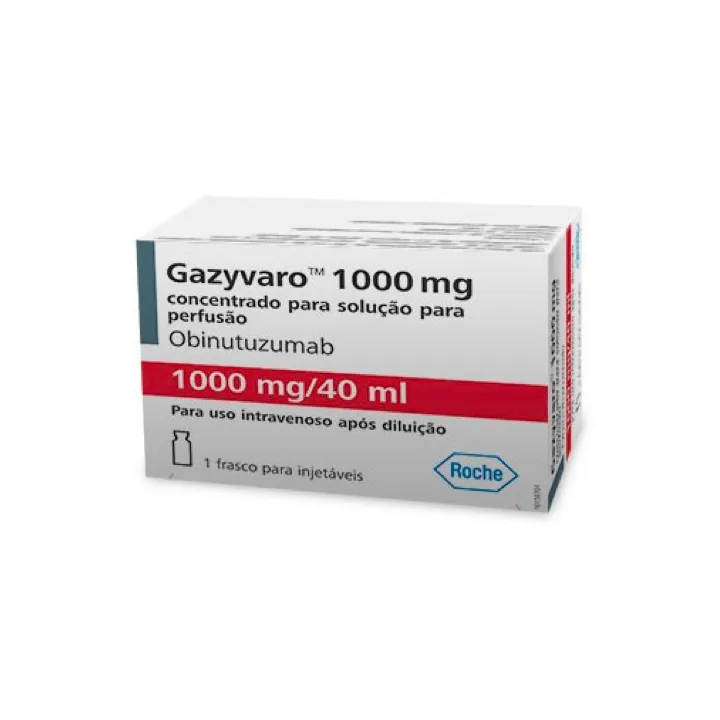
Table of Contents
Package leaflet: Information for the user
Introduction
Package leaflet: information for the patient
Gazyvaro 1,000 mg concentrate for solution for infusion
obinutuzumab
Read all of this leaflet carefully before you start using this medicine, because it contains important information for you.
- Keep this leaflet as you may need to read it again.
- If you have any questions, ask your doctor or nurse.
- If you get any side effects, talk to your doctor or nurse, even if it is a side effect not listed in this leaflet. See section 4.
Contents of the leaflet
- What Gazyvaro is and what it is used for
- What you need to know before you use Gazyvaro
- How to use Gazyvaro
- Possible side effects
- How to store Gazyvaro
- Contents of the pack and other information
1. What Gazyvaro is and what it is used for
What Gazyvaro is
Gazyvaro contains the active substance obinutuzumab, which belongs to a group of medicines known as monoclonal antibodies. Antibodies work by targeting specific sites in the body.
What Gazyvaro is used for
This medicine is used in adults to treat several different conditions. These include:
-
Chronic lymphocytic leukemia (CLL)
-
Gazyvaro is used in patients who have not received any prior treatment for CLL and who have other medical conditions that make it unlikely they would tolerate a full dose of another medicine called fludarabine, used to treat CLL.
-
Gazyvaro is used in combination with another cancer medicine called chlorambucil.
-
Follicular lymphoma (FL)
-
Gazyvaro is used in patients who have not received any prior treatment for FL.
-
Gazyvaro is used in patients who have received at least one prior treatment with a medicine called rituximab or whose FL has recurred or worsened during or after such treatment.
-
At the start of FL treatment, Gazyvaro is used together with other cancer medicines.
-
Gazyvaro may be used alone for up to 2 years as maintenance treatment.
-
Lupus nephritis (LN)
-
Gazyvaro is used in combination with mycophenolate mofetil (MMF) for the treatment of adult patients with active Class III or IV LN (kidney inflammation caused by lupus), with or without concomitant Class V LN.
How Gazyvaro works
- CLL and FL are types of cancer affecting white blood cells called B-lymphocytes. The affected B-lymphocytes multiply too rapidly and live too long.
Gazyvaro binds to targets on the surface of the affected B-lymphocytes and triggers their death.
-
When Gazyvaro is given to patients with CLL or FL in combination with other cancer medicines, it delays the time to disease progression.
-
LN is a type of kidney disease in which the body's own immune system mistakenly attacks the kidneys.
-
Gazyvaro reduces the number of B-lymphocytes, a type of immune cell involved in causing some of the symptoms of LN.
-
Gazyvaro is given to patients with LN together with other medicines. This slows down the immune system or prevents it from attacking healthy kidney cells.
2. What you need to know before using Gazyvaro
Do not use Gazyvaro:
- if you are allergic to obinutuzumab or to any of the other ingredients of this medicine (listed in section 6).
If you are unsure, consult your doctor or nurse before starting Gazyvaro.
Warnings and precautions
Talk to your doctor or nurse before starting Gazyvaro if:
- you have an infection, or have had a past infection that was long-lasting or keeps recurring
- you have previously taken or been given medicines that affect your immune system (such as chemotherapy or immunosuppressive medicines)
- you are taking medicines for high blood pressure or medicines to reduce blood thickness; your doctor may need to adjust how you take them
- you have previously had heart problems
- you have previously had brain problems (such as memory problems, difficulty with movement or sensation in the body, vision problems)
- you have previously had breathing or lung problems
- you have previously had hepatitis B – a type of liver disease
If you are in any of the above situations (or if you are unsure), consult your doctor or nurse before starting Gazyvaro.
Also speak to your doctor if you think you may need any vaccinations in the near future, including vaccines required for travel to other countries. Some vaccines should not be given at the same time as Gazyvaro or in the months following your treatment with Gazyvaro. Your doctor will check whether you need any vaccinations before you receive Gazyvaro.
Pay attention to the following adverse effects
Gazyvaro may cause some serious side effects. You should inform your doctor or nurse immediately. These include:
Infusion-related reactions
- Inform your doctor or nurse immediately if you experience any infusion-related reactions, including those listed at the beginning of section 4. Infusion-related reactions may occur during the infusion or up to 24 hours afterwards.
- If you have infusion-related reactions, you may require additional treatment or it may be necessary to slow down or stop the infusion. Once these symptoms have subsided or improved, the infusion may continue. These reactions are more likely to occur during the first infusion. Your doctor may decide to discontinue treatment with Gazyvaro if you experience a severe reaction related to the infusion.
- Before each Gazyvaro infusion, you will be given medicines to help reduce possible infusion-related reactions or tumour lysis syndrome. Tumour lysis syndrome is a potentially life-threatening complication caused by chemical changes in the blood due to the breakdown of dying cancer cells (see section 3).
Progressive multifocal leukoencephalopathy (PML)
- PML is a very rare and potentially fatal brain infection that has been reported with the use of Gazyvaro.
- Inform your doctor or nurse immediately if you experience memory loss, problems speaking, difficulty walking, or vision problems.
- If you had any of these symptoms before starting Gazyvaro, inform your doctor or nurse immediately if you notice any change in them. You may require medical treatment.
Infections
Inform your doctor or nurse immediately if you experience any signs of infection after treatment with Gazyvaro (see Infections in section 4).
Children and adolescents
Do not give Gazyvaro to children or adolescents under 18 years of age. This is because there is no information available on its use in these age groups.
Other medicines and Gazyvaro
Tell your doctor or nurse if you are taking, have recently taken, or might need to take any other medicines. This includes medicines obtained without a prescription and herbal medicines.
Pregnancy
- Inform your doctor or nurse if you are pregnant, think you may be pregnant, or plan to become pregnant. They will help you weigh the benefits of continuing Gazyvaro against the risks to your baby.
- If you become pregnant during treatment with Gazyvaro, inform your doctor or nurse as soon as possible. This is because treatment with Gazyvaro may affect your health or that of your baby.
Breast-feeding
- Do not breast-feed during treatment with Gazyvaro or for 18 months after the end of treatment with Gazyvaro. This is because small amounts of the medicine could pass into breast milk.
Contraception
- Use an effective method of contraception during treatment with Gazyvaro.
- Continue using an effective method of contraception for 18 months after the end of treatment with Gazyvaro.
Driving and using machines
Gazyvaro is unlikely to affect your ability to drive, ride a bicycle, or use tools or machines. However, if you have an infusion-related reaction (see section 4), do not drive, ride a bicycle, or use machines until the reaction has passed.
3. How to use Gazyvaro
How Gazyvaro is administered
Gazyvaro is administered under the supervision of a doctor experienced in this type of treatment. It is given into a vein as an intravenous infusion over several hours.
Gazyvaro treatment
Chronic lymphocytic leukaemia (CLL)
- You will receive 6 cycles of Gazyvaro treatment in combination with another cancer medicine called chlorambucil. Each cycle lasts 28 days.
- On day 1 of your first cycle, you will receive part of your first dose of Gazyvaro (100 mg) very slowly. Your doctor or nurse will closely monitor you for infusion-related reactions.
- If you do not experience any infusion-related reaction after the first part of your dose, the remainder of the first dose (900 mg) may be administered on the same day.
- If you experience an infusion-related reaction after the first part of your dose, the remainder of your first dose will be given on day 2.
The following is the standard administration schedule:
Cycle 1 – includes three doses of Gazyvaro within 28 days:
- Day 1 – part of the first dose (100 mg)
- Day 2 or day 1 (continued) – remainder of the first dose (900 mg)
- Day 8 – full dose (1,000 mg)
- Day 15 – full dose (1,000 mg)
Cycles 2, 3, 4, 5 and 6 – one single dose of Gazyvaro every 28 days:
- Day 1 – full dose (1,000 mg)
Follicular lymphoma (FL)
- You will receive 6 or 8 cycles of Gazyvaro treatment in combination with other cancer medicines. Each cycle lasts 28 or 21 days, depending on which other cancer medicines are administered together with Gazyvaro.
- A maintenance phase will follow the induction phase. During this time, you will receive Gazyvaro every 2 months for up to 2 years, as long as your disease does not progress. Depending on your disease status after the initial treatment cycles, your doctor will decide whether you will receive treatment during the maintenance phase.
- The following is the standard administration schedule.
Induction phase
Cycle 1 – includes three doses of Gazyvaro within 28 or 21 days, depending on which other cancer medicines are administered together with Gazyvaro:
- Day 1 – full dose (1,000 mg)
- Day 8 – full dose (1,000 mg)
- Day 15 – full dose (1,000 mg)
Cycles 2, 6 or 2–8 – one single dose of Gazyvaro every 28 or 21 days, depending on which other cancer medicines are administered together with Gazyvaro:
- Day 1 – full dose (1,000 mg)
Maintenance phase
- Full dose (1,000 mg) once every 2 months for up to 2 years, as long as your disease does not progress.
Lupus nephritis (LN)
You will receive 1,000 mg doses of Gazyvaro as intravenous infusions according to the following schedule:
- Dose 1 (initial infusion): 1,000 mg
- Dose 2 (week 2, two weeks after dose 1): 1,000 mg
- Dose 3 (week 24): 1,000 mg
- Dose 4 (week 26, two weeks after dose 3): 1,000 mg
- Dose 5 (six months after dose 4 and every six months thereafter): 1,000 mg
Medicines given before each infusion
Before each Gazyvaro infusion, you will be given medicines to reduce the risk of infusion-related reactions or tumour lysis syndrome. These may include, among others:
- fluids
- medicines to reduce fever
- medicines to relieve pain (analgesics)
- medicines to reduce inflammation (corticosteroids)
- medicines to reduce allergic reactions (antihistamines)
- medicines to prevent tumour lysis syndrome (such as allopurinol)
If you forget to use Gazyvaro
If you miss an appointment, reschedule as soon as possible. To ensure the medicine is as effective as possible, it is important to follow the prescribed administration schedule.
If you have any further questions about the use of this medicine, consult your doctor or nurse.
4. Possible adverse effects
Like all medicines, this medicine can cause adverse effects, although not everyone gets them. The following adverse effects have been reported with this medicine:
- If you are receiving treatment for chronic lymphocytic leukemia (CLL) or follicular lymphoma (FL)
Serious adverse effects
Infusion-related reactions
Tell your doctor or nurse immediately if you experience any of the following symptoms during the infusion or up to 24 hours after your infusion.
Frequently reported reactions:
- nausea
- fatigue
- dizziness
- headache
- diarrhea
- fever, flushing, or chills
- vomiting
- shortness of breath
- low or high blood pressure
- rapid heartbeat
- chest discomfort
Less frequently reported reactions:
- irregular heartbeat
- swelling of the throat or airways
- wheezing, difficulty breathing, chest tightness, or throat irritation
If you have any of the above symptoms, tell your doctor or nurse immediately.
Progressive multifocal leukoencephalopathy (PML)
PML is a very rare and potentially fatal brain infection that has been reported with the use of Gazyvaro.
Tell your doctor or nurse immediately if you experience any of the following adverse effects:
- memory loss
- problems speaking
- difficulty walking
- vision problems
If you had any of these symptoms before treatment with Gazyvaro or if you notice any changes in them, tell your doctor immediately. You may need medical treatment.
Infections
You may be more likely to get infections during and after treatment with Gazyvaro. These are often colds, but there have been cases of more serious infections. Cases of reactivation of a type of liver disease called “hepatitis B” have also been reported in patients who previously had hepatitis B.
Tell your doctor or nurse immediately if you experience any signs of infection during and after treatment with Gazyvaro. These include:
- fever
- cough
- chest pain
- fatigue
- painful rash
- sore throat
- burning sensation when urinating
- feeling weak or generally unwell
If you experience any of these signs after treatment with Gazyvaro, tell your doctor or nurse immediately. If you had infections that keep recurring or long-lasting infections before starting treatment with Gazyvaro, tell your doctor or nurse.
Other adverse effects:
Tell your doctor or nurse if you experience any of the following adverse effects:
Very common (may affect more than 1 in 10 people)
-
fever
-
lung infection
-
headache
-
joint pain, back pain
-
feeling weak
-
feeling tired
-
pain in arms and legs
-
diarrhea, constipation
-
insomnia
-
hair loss, itching
-
urinary tract infection, inflammation of nose and throat, shingles
-
changes in blood tests:
-
anemia (low red blood cell levels)
-
low levels of all types of white blood cells (combined)
-
low neutrophil levels (a type of white blood cell)
-
low platelet count (a type of blood cell that helps blood to clot)
-
upper respiratory tract infection (infection of nose, pharynx, larynx, and sinuses), cough
Common (may affect up to 1 in 10 people)
-
cold sores
-
depression, anxiety
-
flu (influenza)
-
weight gain
-
runny nose or nasal congestion
-
eczema
-
mouth and throat pain
-
muscle and bone pain in the chest
-
skin cancer (squamous cell carcinoma, basal cell carcinoma)
-
bone pain
-
irregular heartbeat (atrial fibrillation)
-
urinary problems, urinary incontinence
-
high blood pressure
-
digestive problems (e.g., heartburn), hemorrhoids
-
changes in blood tests with:
-
low lymphocyte levels (a type of white blood cell), fever associated with low neutrophil levels (a type of white blood cell)
-
increased potassium, phosphate, or uric acid, which may cause kidney problems (part of tumor lysis syndrome)
-
decreased potassium
-
perforation of the stomach or intestines (gastrointestinal perforation, especially in cases where cancer affects the gastrointestinal tract)
Uncommon (may affect up to 1 in 100 people)
- abnormal blood clotting, including a serious condition in which clots form throughout the body (disseminated intravascular coagulation)
- changes in blood tests: low levels of immunoglobulins (antibodies that help fight infections)
Tell your doctor or nurse if you experience any of the adverse effects listed above.
- If you are receiving treatment for lupus nephritis (LN)
Serious adverse effects
Infections
You may be more likely to get infections during and after treatment with Gazyvaro. These are often colds, but there have been cases of more serious infections.
Tell your doctor or nurse immediately if you experience any signs of infection during and after treatment with Gazyvaro. These include:
- sneezing
- runny nose or postnasal drip
- fever
- cough
- chest pain
- fatigue
- rash
- sore throat
- burning sensation when urinating
- flu-like symptoms, feeling weak or generally unwell
If you experience any of these signs after treatment with Gazyvaro, tell your doctor or nurse immediately.
If you had infections that keep recurring or long-lasting infections before starting treatment with Gazyvaro, tell your doctor or nurse.
Neutropenia
Neutropenia means having low levels of neutrophils (a type of white blood cell) in the blood. Tell your doctor or nurse immediately if you experience any of the following adverse effects:
- fever or chills
- cough
- sore throat
- mouth ulcers due to infections
- abnormal blood test results
Infusion-related reactions
Tell your doctor or nurse immediately if you experience any of the following symptoms during the infusion or up to 24 hours after your infusion:
- nausea
- fatigue
- dizziness or fainting
- headache
- diarrhea
- fever, flushing, or chills
- vomiting
- shortness of breath or difficulty breathing
- low or high blood pressure
- rapid heartbeat
- chest discomfort
- abdominal pain or discomfort
- redness, swelling, or discharge
- joint pain, muscle pain
Progressive multifocal leukoencephalopathy (PML)
PML is a very rare and potentially fatal brain infection that has been reported with the use of Gazyvaro in other indications.
Tell your doctor or nurse immediately if you experience any of the following adverse effects:
- memory loss
- problems speaking
- difficulty walking
- vision problems
If you had any of these symptoms before treatment with Gazyvaro, tell your doctor immediately if you notice any changes in them. You may need medical treatment.
Other adverse effects
Tell your doctor or nurse if you experience any of the following adverse effects:
Very common (may affect more than 1 in 10 people)
- inflammation of the lungs (bronchitis)
- changes in blood tests: low levels of immunoglobulins (antibodies that help fight infections)
Common (may affect up to 1 in 10 people)
- lung infection (pneumonia)
- viral infection with herpes simplex in the mouth (such as cold sores) or in the genitals
Reporting of adverse effects
If you experience any type of adverse effect, talk to your doctor, pharmacist, or nurse, even if it is a possible adverse effect not listed in this leaflet. You can also report them directly through the national reporting system listed in Appendix V. By reporting adverse effects, you can help provide more information on the safety of this medicine.
5. Storage of Gazyvaro
Healthcare professionals will store Gazyvaro in the hospital or clinic. The following are the storage conditions:
- Keep this medicine out of the sight and reach of children.
- Do not use this medicine after the expiry date which is stated on the container after EXP. The expiry date refers to the last day of the month indicated.
- Store in a refrigerator (between 2 °C and 8 °C). Do not freeze.
- Keep the vial in the outer packaging to protect it from light.
Medicines must not be disposed of via wastewater or household waste. Ask your pharmacist how to dispose of containers and medicines no longer required. This will help protect the environment.
6. Contents of the pack and other information
Composition of Gazyvaro
-
The active substance is obinutuzumab: 1,000 mg/40 ml per vial, corresponding to a concentration of 25 mg/ml prior to dilution.
-
The other components are histidine, histidine monohydrochloride monohydrate, trehalose dihydrate, poloxamer 188, and water for injections.
Nature and contents of the container
Gazyvaro is a concentrate for solution for infusion and is a colourless to slightly brown liquid. Gazyvaro is supplied in a pack containing 1 glass vial.
Marketing Authorization Holder
Roche Registration GmbH
Emil-Barell-Strasse 1
79639 Grenzach-Wyhlen
Germany
Manufacturer
Roche Pharma AG
Emil-Barell-Strasse 1
79639 Grenzach-Wyhlen
Germany
Further information on this medicinal product is available upon request by contacting the local representative of the Marketing Authorization Holder:
Belgium/Belgium/Belgium Luxembourg/Luxembourg N.V. Roche S.A. Belgium/Belgium/Belgium Tel/Tel: +32 (0) 2 525 82 11 | Latvia Roche Latvija SIA Tel: +371 - 6 7039831 |
| Lithuania UAB “Roche Lietuva” Tel: +370 5 2546799 |
Czech Republic Roche s. r. o. Tel: +420 - 2 20382111 | Hungary Roche (Hungary) Kft. Tel: +36 - 1 279 4500 |
Denmark Roche a/s Tlf: +45 - 36 39 99 99 | |
Germany Roche Pharma AG Tel: +49 (0) 7624 140 | Netherlands Roche Nederland B.V. Tel: +31 (0) 348 438000 |
Estonia Roche Eesti OÜ Tel: + 372 - 6 177 380 | Norway Roche Norge AS Tlf: +47 - 22 78 90 00 |
Greece, Cyprus Roche (Hellas) A.E. Greece Tel: +30 210 61 66 100 | Austria Roche Austria GmbH Tel: +43 (0) 1 27739 |
Spain Roche Farma S.A. Tel.: +34 - 91 324 81 00 | Poland Roche Polska Sp.z o.o. Tel: +48 - 22 345 18 88 |
France Roche Tél: +33 (0)1 47 61 40 00 | Portugal Roche Farmacêutica Química, Lda Tel: +351 - 21 425 70 00 |
Croatia Roche d.o.o. Tel: + 385 1 47 22 333 | Romania Roche România S.R.L. Tel: +40 21 206 47 01 |
Ireland, Malta Roche Products (Ireland) Ltd. Ireland/Ireland Tel: +353 (0) 1 469 0700 | Slovenia Roche farmacevtska družba d.o.o. Tel: +386 - 1 360 26 00 |
Iceland Roche Pharmaceuticals A/S c/o Icepharma hf Sími: +354 540 8000 | Slovakia Roche Slovensko, s.r.o. Tel: +421 - 2 52638201 |
Italy Roche S.p.A. Tel: +39 - 039 2471 | Finland Roche Oy Puh/Tel: +358 (0) 10 554 500 |
Sweden Roche AB Tel: +46 (0) 8 726 1200 |
Date of the most recent review of this summary:
Other sources of information
Detailed information on this medicine is available on the website of the European Medicines Agency: https://www.ema.europa.eu.
This information is intended for healthcare professionals only:
Posology
Gazyvaro should be administered under the close supervision of an experienced physician and in a setting where full resuscitation equipment is immediately available.
Prophylaxis and premedication for tumour lysis syndrome (TLS)
Patients with a high tumour burden and/or a high circulating lymphocyte count (>25 × 109/l) and/or renal impairment (CrCl < 70 mL/min) are considered at risk of TLS and should receive prophylaxis. Prophylaxis should consist of adequate hydration and administration of uricostatic agents (e.g., allopurinol), or an appropriate alternative treatment such as urate oxidase (e.g., rasburicase), starting 12 to 24 hours before initiating Gazyvaro infusion according to standard practice. All patients considered at risk should be carefully monitored during the first few days of treatment, with special attention to renal function, potassium, and uric acid levels. Any additional recommendations according to standard practice should be followed. TLS is not considered a potential or identified risk in patients with NL.
Prophylaxis and premedication for infusion-related reactions (IRRs)
Premedication to reduce the risk of IRRs is described in Table 1. Premedication with corticosteroids is recommended for patients with FL and is mandatory for patients with CLL in the first cycle and for patients with NL (see Table 1). Premedication for subsequent infusions and other premedications should be administered as described below.
During intravenous infusions of Gazyvaro, patients may experience hypotension as a symptom of IRRs. Therefore, anti-hypertensive treatments should be withheld starting 12 hours before, during, and for one hour after each Gazyvaro infusion.
Table 1 Premedication to be administered prior to Gazyvaro infusion to reduce the risk of IRRs
Indication / Treatment Day / Cycle | Patients Requiring Premedication | Pre-medication | Administration |
Cycle 1: Day 1 for CLL and FL | All patients | Intravenous corticosteroid1,4 (mandatory for CLL, recommended for FL) | Must be completed at least 1 hour before Gazyvaro infusion |
Oral analgesic/antipyretic2 | At least 30 minutes before Gazyvaro infusion | ||
Antihistamine3 | |||
Cycle 1: Day 2 only for CLL | All patients | Intravenous corticosteroid1 (mandatory) | Must be completed at least 1 hour before Gazyvaro infusion |
Oral analgesic/antipyretic2 | At least 30 minutes before Gazyvaro infusion | ||
Antihistamine3 | |||
All subsequent infusions for CLL and FL | Patients without IRR during previous infusion | Oral analgesic/antipyretic2 | At least 30 minutes before Gazyvaro infusion |
Patients with IRR (Grade 1 or 2) during previous infusion | Oral analgesic/antipyretic2 | ||
Patients with Grade 3 IRR in previous infusion, OR | Intravenous corticosteroid1,4 | Must be completed at least 1 hour before Gazyvaro infusion | |
Oral analgesic / antipyretic2 | At least 30 minutes before Gazyvaro infusion | ||
MZL | All patients | Intravenous corticosteroid5 | Must be completed 30 to 60 minutes before Gazyvaro infusion |
Oral analgesic/antipyretic6 | |||
Antihistamine3 |
1100 mg prednisone/prednisolone or 20 mg dexamethasone or 80 mg methylprednisolone.
Hydrocortisone should not be administered as it has not been effective in reducing the rate of RRP.
2 For example, 1,000 mg of acetaminophen/paracetamol
3 For example, 50 mg of diphenhydramine
4If a chemotherapy regimen that includes a corticosteroid is administered on the same day as Gazyvaro, the corticosteroid may be given as an oral medication, provided it is administered at least 60 minutes prior to Gazyvaro, in which case no additional IV corticosteroid is required as premedication.
580 mg of methylprednisolone IV
6650–1000 mg of acetaminophen/paracetamol
Dosing
Chronic Lymphocytic Leukemia (in combination with chlorambucil)
The recommended dose of Gazyvaro in combination with chlorambucil for patients with CLL is shown in Table 2.
Cycle 1
The recommended dose of Gazyvaro in combination with chlorambucil is 1,000 mg administered on day 1 and day 2 (or continuation of day 1), and on day 8 and day 15 of the first 28-day treatment cycle. Two infusion bags should be prepared for day 1 and day 2 (100 mg for day 1 and 900 mg for day 2). If the infusion of the first bag is completed without any change in infusion rate or interruption, the second bag may be administered on the same day (it is not necessary to delay the dose or repeat premedication), provided adequate time, conditions, and medical supervision are available throughout the infusion. If there is any change in infusion rate or interruption during the first 100 mg, the second bag should be administered the following day.
Cycles 2–6
The recommended dose of Gazyvaro in combination with chlorambucil is 1,000 mg administered on day 1 of each cycle.
Table 2Recommended doses of Gazyvaro to be administered during 6 cycles of 28-day duration for patients with CLL
Cycle | Treatment day | Gazyvaro dose |
Cycle 1 | Day 1 | 100 mg |
Day 2 (or day 1 continuation) | 900 mg | |
Day 8 | 1,000 mg | |
Day 15 | 1,000 mg | |
Cycles 2-6 | Day 1 | 1,000 mg |
1Chlorambucil is administered orally at a dose of 0.5 mg/kg body weight on Day 1 and Day 15 of each treatment cycle.
Treatment duration
Six treatment cycles, each lasting 28 days.
Follicular Lymphoma
For patients with FL, the recommended dose of Gazyvaro in combination with chemotherapy is shown in Table 3.
Previously untreated patients with follicular lymphoma
Induction phase (in combination with chemotherapy2)
Gazyvaro should be administered with chemotherapy as follows:
- Six 28-day cycles in combination with bendamustine2, or
- Six 21-day cycles in combination with cyclophosphamide, doxorubicin, vincristine, prednisolone (CHOP), followed by 2 additional cycles of Gazyvaro monotherapy, or
- Eight 21-day cycles in combination with cyclophosphamide, vincristine, and prednisone/prednisolone/methylprednisolone (CVP).
Maintenance phase
Patients who achieve a complete or partial response to induction treatment with Gazyvaro in combination with chemotherapy should continue to receive Gazyvaro 1,000 mg as monotherapy for maintenance treatment once every 2 months for 2 years or until disease progression (whichever occurs first).
Patients with follicular lymphoma who did not respond or progressed during or within 6 months after treatment with rituximab or a rituximab-containing regimen
Induction phase (in combination with bendamustine2)
Gazyvaro should be administered in six 28-day cycles in combination with bendamustine2.
Maintenance phase
Patients who achieve a complete or partial response to induction treatment (i.e., the initial 6 treatment cycles) with Gazyvaro in combination with bendamustine, or who have stable disease, should continue to receive Gazyvaro 1,000 mg monotherapy for maintenance treatment once every 2 months for 2 years or until disease progression (whichever occurs first).
Table 3 Follicular Lymphoma: Gazyvaro doses to be administered during induction treatment, followed by maintenance treatment
Cycle | Treatment day | Gazyvaro dose |
Cycle 1 | Day 1 | 1,000 mg |
Day 8 | 1,000 mg | |
Day 15 | 1,000 mg | |
Cycles 2–6 or 2-8 | Day 1 | 1,000 mg |
Maintenance | Every 2 months for 2 years or until disease progression (whichever occurs first) | 1,000 mg |
2 Bendamustine is administered intravenously on days 1 and 2 of all treatment cycles (cycles 1 to 6) at 90 mg/m²/day; CHOP and CVP according to standard regimens.
Treatment duration
Approximately six months of induction treatment (six 28-day treatment cycles of Gazyvaro when combined with bendamustine, or eight 21-day treatment cycles of Gazyvaro when combined with CHOP or CVP), followed by maintenance treatment every 2 months for 2 years or until disease progression (whichever occurs first).
Lupus nephritis
The recommended dose of Gazyvaro is 1,000 mg administered intravenously, according to Table 4:
Table 4 Doses of Gazyvaro for patients with lupus nephritis
Number of doses | Time of treatment | Dose |
1 | Initial infusion | 1,000 mg |
2 | Week 2 (two weeks after dose 1) | 1,000 mg |
3 | Week 24 | 1,000 mg |
4 | Week 26 (two weeks after dose 3) | 1,000 mg |
5* and subsequent | Every 6 months | 1,000 mg |
- Dose 5 must be administered six months after dose 4.
Method of administration
Gazyvaro is administered intravenously. It must be given after dilution as an intravenous infusion using a dedicated line. Gazyvaro infusions must not be administered as rapid infusions or intravenous bolus injections.
For instructions on dilution prior to administration of Gazyvaro, see below.
Tables 4–9 provide guidance on infusion rates.
Chronic Lymphocytic Leukemia
Table 5 Chronic lymphocytic leukemia: Standard infusion rate in the absence of IRR/infusion hypersensitivity and recommendations if a prior IRR occurs
Cycle | Day of treatment | Infusion rate The infusion rate may be gradually increased as long as the patient can tolerate it. For management of IRRs occurring during infusion, see Management of IRRs. |
Cycle 1 | Day 1 (100 mg) | Administer at 25 mg/h over 4 hours. Do not increase the infusion rate. |
Day 2 (or Day 1 continued) (900 mg) | If no IRRs occurred during the previous infusion, administer at 50 mg/h. The infusion rate may be increased in increments of 50 mg/h every 30 minutes up to a maximum rate of 400 mg/h. If the patient experienced an IRR during the previous infusion, start administration at 25 mg/h. The infusion rate may be increased by 50 mg/h every 30 minutes up to a maximum rate of 400 mg/h. | |
Day 8 (1,000 mg) | If no IRRs occurred during the previous infusion and the final infusion rate was 100 mg/h or faster, infusions may be initiated at a rate of 100 mg/h and increased in increments of 100 mg/h every 30 minutes up to a maximum of 400 mg/h. If the patient experienced an IRR during the previous infusion, administer at 50 mg/h. The infusion rate may be increased in increments of 50 mg/h every 30 minutes up to a maximum rate of 400 mg/h. | |
Day 15 (1,000 mg) | ||
Cycles 2–6 | Day 1 (1,000 mg) |
Follicular Lymphoma (FL)
Gazyvaro should be administered at the standard infusion rate in Cycle 1 (see Table 6). In patients who do not experience a grade ≥3 infusion-related reaction (IRR) during Cycle 1, Gazyvaro may be administered as a short-duration infusion (SDI) (approximately 90 minutes) starting from Cycle 2 onward (see Table 7).
Table 6 Follicular Lymphoma: Standard infusion rate and recommendations if a previous infusion-related reaction (IRR) occurred
Cycle | Day of treatment | Infusion rate The infusion rate may be progressively increased as long as the patient can tolerate it. For management of IRRs occurring during infusion, refer to Management of IRRs. |
Cycle 1 | Day 1 (1,000 mg) | Administer at 50 mg/h. The infusion rate may be increased in 50 mg/h increments every 30 minutes, up to a maximum of 400 mg/h. |
Day 8 (1,000 mg) | If no IRRs occurred or if a Grade 1 IRR occurred during the prior infusion given at a final infusion rate of 100 mg/h or faster, infusions may be initiated at a rate of 100 mg/h and increased in increments of 100 mg/h every 30 minutes, up to a maximum of 400 mg/h. | |
Day 15 (1,000 mg) | ||
Cycles 2–6 or 2–8 | Day 1 (1,000 mg) | |
Maintenance | Every 2 months for 2 years or until disease progression (whichever occurs first) |
Table 7 Follicular lymphoma: Short infusion and recommendations in case of RRP with previous infusion
Cycle | Day of treatment | Infusion rate For management of IRs occurring during infusion, refer to IR Management. |
Cycles 2–6 or 2–8 | Day 1 (1,000 mg) | If no Grade ≥3 IRs occurred during Cycle 1: 100 mg/h for 30 minutes, followed by 900 mg/h for approximately 60 minutes. If ongoing Grade 1–2 symptoms or Grade 3 IRs occurred during the previous infusion, administer the next obinutuzumab infusion at the standard rate (see Table 6). |
Maintenance | Every 2 months for 2 years or until disease progression (whichever occurs first) |
Lupus nephritis
The initial infusion of Gazyvaro should be administered at the standard infusion rate for dose 1 (see Table 8).
Patients who do not experience infusion-related reactions of grade ≥3 during the prior infusion may receive Gazyvaro as a shortened infusion (approximately 90 minutes) starting with dose 2 (see Table 9), with continued premedication.
Table 8 Lupus nephritis: standard infusion rate
Number of doses | Timing of administration | Infusion rate |
1 | Initial infusion (1,000 mg) | Administer at a rate of 50 mg/h. The infusion rate may be increased in increments of 50 mg/h every 30 minutes, up to a maximum of 400 mg/h. For management of IRRs occurring during infusion, see Management of IRRs. |
2 | Week 2: two weeks after dose 1 (1,000 mg) | Administer at a rate of 100 mg/h. The infusion rate may be increased by 100 mg/h every 30 minutes, up to a maximum of 400 mg/h. |
3 | Week 24 (1,000 mg) | |
4 | Week 26: two weeks after dose 3 (1,000 mg) | |
5* and subsequent | Every 6 months (1,000 mg) |
- Dose 5 must be administered six months after dose 4.
Table 9 Lupus nephritis: short-duration infusion rate (SDIR) and recommendations if an IAR occurred during the previous infusion
Number of doses | Infusion rate |
1 | See Table 8 |
2 and subsequent | If no Grade 3 or higher IRR occurred during the previous infusion: 100 mg/h for 30 minutes, followed by 900 mg/h for approximately 60 minutes. If a Grade 1-2 IRR with ongoing symptoms or a Grade 3 or higher IRR occurred during the previous infusion, administer Gazyvaro at the standard infusion rate (see Table 8). |
Management of IRRs
The management of IRRs may require temporary interruption, reduction of the infusion rate, or discontinuation of Gazyvaro treatment, as described below.
Chronic Lymphocytic Leukemia (CLL) and Follicular Lymphoma (FL)
- Grade 4 (potentially fatal): the infusion must be stopped and treatment permanently discontinued.
- Grade 3 (severe): the infusion must be temporarily stopped and symptoms treated. Once symptoms have resolved, the infusion may be restarted at a rate not exceeding half the previous rate (i.e., the rate used when the IRR occurred). If the patient does not experience further IRR symptoms, the infusion rate may be increased again in increments and intervals appropriate for the treatment dose (see Tables 5–7). For patients with CLL receiving the Day 1 (Cycle 1) dose split over two days, the infusion rate on Day 1 may be increased up to 25 mg/h after 1 hour, but should not be increased further.
- If the patient experiences a second Grade 3 IRR, the infusion must be stopped and treatment permanently discontinued.
- Grade 1–2 (mild to moderate): the infusion rate may be reduced and symptoms treated. The infusion may continue once symptoms have resolved, and if the patient does not experience further IRR symptoms, the infusion rate may be increased again in increments and intervals appropriate for the treatment dose (see Tables 5–7). For patients with CLL receiving the Day 1 (Cycle 1) dose split over two days, the infusion rate on Day 1 may be increased up to 25 mg/h after 1 hour, but should not be increased further.
IRRs occurring during PCD
- Grade 4 (potentially fatal): the infusion must be stopped and treatment permanently discontinued.
- Grade 3 (severe): the infusion must be temporarily stopped and symptoms treated. Once symptoms have resolved, the infusion may be restarted at a rate not exceeding half the previous rate (i.e., the rate used when the IRR occurred) and not exceeding 400 mg/h.
- If the patient experiences a second Grade 3 IRR after resuming the infusion, the infusion must be stopped and treatment permanently discontinued. If the patient is able to complete the infusion without further Grade 3 reactions, the next infusion should be administered at a rate not exceeding the standard rate.
- Grade 1–2 (mild to moderate): the infusion rate may be reduced and symptoms treated. The infusion may continue once symptoms have resolved, and if the patient does not experience further IRR symptoms, the infusion rate may be increased again in increments and intervals appropriate for the treatment dose (see Tables 5–6).
Lupus Nephritis
- Grade 4 (potentially fatal): the infusion must be stopped and treatment permanently discontinued.
- Grade 3 (severe): the infusion must be temporarily stopped and symptoms treated. Once symptoms have resolved, the infusion may be restarted at a rate not exceeding half the previous rate (i.e., the rate used when the IRR occurred). If the patient does not experience further IRR symptoms, the infusion rate may be increased again in increments and intervals appropriate for the treatment dose (see Tables 8 and 9).
- If the patient experiences a second Grade 3 IRR, the infusion must be stopped and treatment permanently discontinued.
- Grade 1–2 (mild to moderate): the infusion rate must be reduced to half the rate used at the time of the reaction and symptoms treated. The infusion may continue once symptoms have resolved, at the reduced rate for an additional 30 minutes. If the patient does not experience further IRR symptoms, the infusion rate may be increased again in increments and intervals appropriate for the treatment dose (see Tables 8 and 9).
IRRs occurring during PCD:
- Grade 4 (potentially fatal): the infusion must be stopped and treatment permanently discontinued.
- Grade 3 (severe): the infusion must be temporarily stopped and symptoms treated. Once symptoms have resolved, the infusion may be restarted at a rate not exceeding half the previous rate (i.e., the rate used when the IRR occurred) and not exceeding 400 mg/h.
- If the patient experiences a second Grade 3 IRR after resuming the infusion, the infusion must be stopped and treatment permanently discontinued. If the patient is able to complete the infusion without further Grade 3 reactions, the next infusion should be administered at a rate not exceeding the standard rate (see Table 8).
- Grade 1–2 (mild to moderate): the infusion rate may be reduced and symptoms treated. The infusion may continue once symptoms have resolved, and if the patient does not experience further IRR symptoms, the infusion rate may be increased again in increments and intervals appropriate for the treatment dose (see Tables 8–9). If the patient experienced ongoing symptoms or a Grade 3 or higher IRR during the previous 90-minute infusion, all subsequent Gazyvaro infusions should be administered at the standard infusion rate (see Table 8).
Instructions for Dilution
Gazyvaro must be prepared by a healthcare professional under aseptic conditions. Do not shake the vial. Use a sterile needle and syringe to prepare Gazyvaro.
For Cycles 2–6 in patients with CLL, for all cycles in patients with FL, and throughout treatment for LN
Withdraw 40 ml of concentrate from the vial and dilute in PVC or non-PVC polyolefin infusion bags containing 9 mg/ml (0.9%) sodium chloride injection solution.
Cycle 1 – only in patients with CLL
For the initial 1,000 mg dose, to distinguish between the two infusion bags, it is recommended to use bags of different sizes to differentiate between the 100 mg dose for Day 1 of Cycle 1 and the 900 mg dose for Day 1 (continued) or Day 2 of Cycle 1. To prepare the two infusion bags, withdraw 40 ml of concentrate from the vial and dilute 4 ml into a 100 ml PVC or non-PVC polyolefin infusion bag and the remaining 36 ml into a 250 ml PVC or non-PVC polyolefin infusion bag containing 9 mg/ml (0.9%) sodium chloride injection solution. Clearly label each infusion bag.
Table 10 Dilution of Gazyvaro (CLL only)
Day of treatment | Dose of Gazyvaro to be administered | Required amount of Gazyvaro concentrate | Size of PVC or non-PVC polyolefin infusion bag |
Cycle 1, Day 1 | 100 mg | 4 ml | 100 ml |
Cycle 1, Day 1 (continued) or Day 2 | 900 mg | 36 ml | 250 ml |
Cycle 1, Day 8 and subsequent days | 1,000 mg | 40 ml | 250 ml |
No incompatibilities have been observed between Gazyvaro at concentrations ranging from 0.4 mg/ml to 20 mg/ml after dilution of Gazyvaro in sodium chloride 9 mg/ml (0.9%) injection solution, and:
- PVC, polyethylene (PE), polypropylene or polyolefin bags
- PVC, polyurethane (PUR) or PE infusion sets
- Optional in-line filters with product-contact surfaces made of polyethersulfone (PES), an infusion aid with a three-way valve made of polycarbonate (PC), and catheters made of polyetherurethane (PEU).
Do not use other diluents, such as 5% glucose solution.
The bag should be gently inverted to mix the solution in order to avoid excessive foaming. The diluted solution must not be shaken or frozen.
Parenteral medicinal products should be inspected visually for particulate matter and discoloration prior to administration.
After dilution, chemical and physical stability has been demonstrated in sodium chloride 9 mg/ml (0.9%) injection solution at concentrations from 0.4 mg/ml to 20 mg/ml for 72 hours at a temperature of 2°C to 8°C, followed by 48 hours (including infusion time) at a temperature ≤30°C.
From a microbiological standpoint, the prepared infusion solution should be used immediately. If not used immediately, the in-use storage times and conditions prior to use are the responsibility of the user and normally should not exceed 24 hours between 2°C and 8°C, unless the dilution was carried out under strictly controlled and validated aseptic conditions.
Disposal
Any unused medicinal product and all materials that have come into contact with it should be disposed of in accordance with local regulations.