Gabapentin Normon 300 mg hard capsules EFG
Spain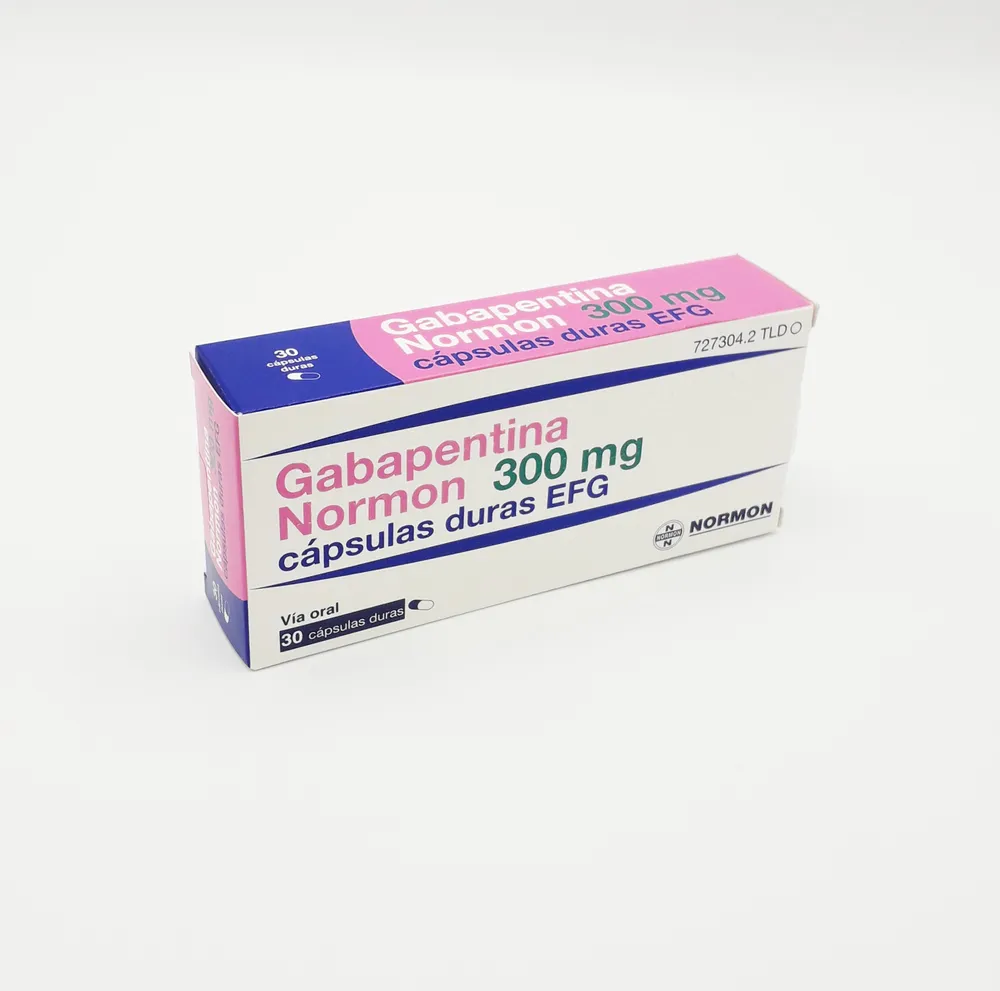
Table of Contents
- Package leaflet: Information for the user
- Introduction
- 1. What Gabapentin Normon is and what it is used for
- 2. What you need to know before taking Gabapentina Normon
- 3. How to take Gabapentina Normon
- 4. Possible adverse effects
- 5. Storage of Gabapentin Normon
- 6. Contents of the pack and other information
Package leaflet: Information for the user
Introduction
Package leaflet: information for the user
Gabapentin Normon 300 mg hard capsules EFG
Gabapentin
Read all of this leaflet carefully before you start taking this medicine, because it contains important information for you.
- Keep this leaflet, as you may need to read it again.
- If you have any questions, ask your doctor or pharmacist.
- This medicine has been prescribed for you only, and you should not give it to other people, even if they have the same symptoms as you, because it may harm them.
- If you experience any adverse effects, consult your doctor or pharmacist, even if they are adverse effects not listed in this leaflet. See section 4.
Contents of the leaflet:
- What Gabapentin Normon is and what it is used for
- What you need to know before taking Gabapentin Normon
- How to take Gabapentin Normon
- Possible side effects
- How to store Gabapentin Normon
- Contents of the pack and other information
1. What Gabapentin Normon is and what it is used for
Gabapentin Normon belongs to a group of medicines used to treat epilepsy and peripheral neuropathic pain (chronic pain caused by nerve damage).
The active substance is gabapentin.
Gabapentin is used to treat:
-
Certain types of epilepsy (seizures that initially affect only specific parts of the brain, whether or not they spread to other areas of the brain). Your doctor will prescribe Gabapentin to help manage your epilepsy when your current treatment does not fully control the condition. You should take Gabapentin in combination with your current treatment unless otherwise instructed. Gabapentin may also be given as monotherapy in the treatment of adults and children over 12 years of age.
-
Peripheral neuropathic pain (chronic pain caused by nerve damage). Various diseases can cause peripheral neuropathic pain (mainly in the legs and/or arms), such as diabetes or shingles (herpes). The pain sensation may be described as heat, burning, throbbing, shooting, stabbing, sharp pain, muscle cramps, continuous pain, tingling, numbness, or pins and needles, among others.
2. What you need to know before taking Gabapentina Normon
Do not take Gabapentina:
- If you are allergic (hypersensitive) to gabapentin or to any of the other ingredients of this medicine (listed in section 6).
Warnings and precautions
Talk to your doctor or pharmacist before starting Gabapentina:
- If you have kidney problems, your doctor may prescribe a different dosing regimen.
- If you are undergoing hemodialysis (to remove waste products due to kidney failure), inform your doctor if you begin to experience muscle pain and/or weakness.
- If you develop symptoms such as persistent stomach pain, vomiting, and nausea, notify your doctor immediately, as these may be symptoms of acute pancreatitis (inflamed pancreas).
- If you have a disorder of the nervous system or a respiratory disorder, or if you are over 65 years old, your doctor may prescribe a different dose.
- Before taking this medicine, inform your doctor if you have ever abused or been dependent on alcohol, prescription medicines, or illegal drugs; you may be at higher risk of developing dependence on Gabapentina Normon.
- If you have myasthenia gravis (a disease causing muscle weakness), as this medicine may worsen your symptoms.
Cases of abuse and dependence on gabapentin have been reported from post-marketing experience. Speak with your doctor if you have a history of substance abuse or dependence.
A small number of people taking antiepileptic medicines such as Gabapentina have had thoughts of harming themselves or of suicide. If at any time you experience such thoughts, contact your doctor as soon as possible.
Dependence
Some people may develop dependence (a need to keep taking the medicine) on Gabapentina Normon. They may experience withdrawal symptoms when they stop taking Gabapentina Normon (see section 3, "How to take Gabapentina Normon" and "If you stop taking Gabapentina Normon"). If you are concerned about developing dependence on Gabapentina Normon, it is important to consult your doctor.
If you experience any of the following signs while taking Gabapentina Normon, it may indicate that you have developed dependence:
- You feel you need to take the medicine longer than prescribed.
- You feel you need to take a higher dose than recommended.
- You are taking the medicine for reasons different from those for which it was prescribed.
- You have tried several times to stop taking the medicine or control how you take it, without success.
- You feel unwell when you stop taking the medicine and feel better when you start again.
If you notice any of the above, speak with your doctor to determine the best course of treatment for you, including when it is appropriate to stop treatment and how to do so safely.
Important information about potentially serious reactions
Serious skin rashes have been reported with the use of gabapentin, including Stevens-Johnson syndrome, toxic epidermal necrolysis, and drug reaction with eosinophilia and systemic symptoms (DRESS). Stop taking gabapentin and seek immediate medical attention if you notice any of the symptoms related to these serious skin reactions described in section 4.
Read the description of these symptoms in section 4 of this leaflet: "Contact your doctor immediately if you experience any of the following symptoms after taking this medicine, as they may be serious."
Muscle weakness, tenderness, or pain on palpation, especially if accompanied by feeling unwell or fever, could be due to abnormal breakdown of muscle fibers, which may lead to kidney problems and may be life-threatening. You may also experience discoloration of the urine and changes in blood test results (a significant increase in blood creatine phosphokinase). If you experience any of these signs or symptoms, please contact your doctor immediately.
Taking Gabapentina with other medicines
Inform your doctor or pharmacist if you are taking, have recently taken, or might need to take any other medicines. In particular, inform your doctor (or pharmacist) if you are taking or have recently taken any medicines for seizures, sleep disorders, depression, anxiety, or any other neurological or psychiatric conditions.
Medicines containing opioids such as morphine
If you are taking any medicine containing opioids (such as morphine), inform your doctor or pharmacist, as opioids may increase the effect of Gabapentina. In addition, combining Gabapentina with opioids may cause symptoms such as drowsiness and/or reduced breathing.
Antacids for indigestion
If you take Gabapentina at the same time as antacids containing aluminium and magnesium, the absorption of Gabapentina in the stomach may be reduced. Therefore, it is recommended that Gabapentina be taken at least two hours after taking an antacid.
Gabapentina:
- No interaction with other antiepileptic medicines or with oral contraceptive pills is expected.
- May interfere with certain laboratory tests; therefore, if you need a urine test, inform your doctor or hospital about the medicines you are taking.
Taking Gabapentina with food
Gabapentina can be taken with or without food.
Pregnancy, breastfeeding, and fertility
If you are pregnant or breastfeeding, think you may be pregnant, or are planning to become pregnant, consult your doctor or pharmacist before using this medicine.
Pregnancy
You should not take Gabapentina during pregnancy unless your doctor has instructed you to do so. An effective method of contraception should be used in women of childbearing age.
There are no specific studies on the use of gabapentin in pregnant women, but in the case of other medicines used to treat seizures, an increased risk of harm to the developing baby has been reported, particularly when more than one medicine is used simultaneously to treat seizures. Therefore, whenever possible, it is recommended to use only one antiseizure medicine during pregnancy, and only under the advice of your doctor.
Contact your doctor immediately if you become pregnant, think you might be pregnant, or plan to become pregnant while taking Gabapentina. Do not stop taking this medicine abruptly, as this may trigger seizures, which could have serious consequences for both you and your baby.
If taken during pregnancy, gabapentin may cause withdrawal symptoms in newborns. This risk may be higher when gabapentin is taken concomitantly with opioid analgesics (medicines for the treatment of severe pain).
Breastfeeding
Gabapentin, the active substance in Gabapentina, passes into breast milk. Breastfeeding is not recommended while taking Gabapentina, as the effect on the infant is unknown.
Fertility
No effects on fertility were observed in animal studies.
Driving and using machines
Gabapentin may cause dizziness, drowsiness, and fatigue. You should not drive, operate heavy machinery, or engage in other potentially dangerous activities until you know whether this medicine affects your ability to perform such activities.
Gabapentina Normon 300 mg hard capsules EFG contains lactose
Gabapentina Normon 300 mg hard capsules EFG contains lactose (a type of sugar). If your doctor has told you that you have an intolerance to certain sugars, consult with your doctor before taking this medicine.
3. How to take Gabapentina Normon
Follow exactly the instructions for administering this medicine as given by your doctor or pharmacist. If in doubt, consult your doctor or pharmacist again. Do not take more medicine than prescribed.
Your doctor will determine the appropriate dose for you.
Epilepsy, the recommended dose is
Adults and adolescents:
Take the number of capsules indicated by your doctor. Usually, your doctor will gradually increase your dose. The initial dose is generally 300 to 900 mg per day. From there, the dose may be increased, as directed by your doctor, up to a maximum dose of 3,600 mg per day, divided into three equal doses, for example, one in the morning, one at midday, and one at night.
Children aged 6 years or older:
Your doctor will decide the dose for your child based on the child's weight. Treatment will start with a low initial dose, which will be gradually increased over a period of approximately 3 days. The usual dose for controlling epilepsy is 25–35 mg per kg per day. This dose is usually administered by taking the capsules, divided into three equal doses per day, typically one in the morning, one at midday, and one at night.
The use of Gabapentina is not recommended in children under 6 years of age.
Peripheral neuropathic pain, the recommended dose is
Adults:
Take the number of capsules indicated by your doctor. Usually, your doctor will gradually increase your dose. The initial dose is generally 300 to 900 mg per day. From there, the dose may be increased, as directed by your doctor, up to a maximum dose of 3,600 mg per day, divided into three equal doses, for example, one in the morning, one at midday, and one at night.
If you have kidney problems or are receiving haemodialysis treatment
Your doctor may prescribe a different dosing schedule and/or different doses if you have kidney problems or are undergoing haemodialysis treatment.
If you are an elderly patient (over 65 years of age), you should take the normal dose of Gabapentina, unless you have kidney problems. Your doctor may prescribe a different dosing schedule or different doses if you have kidney problems.
If you think that the effect of Gabapentina is too strong or too weak, inform your doctor or pharmacist as soon as possible.
Method of administration
Gabapentina is administered orally. Always swallow the capsules whole with a sufficient amount of water.
Continue taking Gabapentina until your doctor tells you to stop.
If you take more Gabapentina than you should
Doses higher than recommended may cause an increase in adverse effects, including loss of consciousness, dizziness, double vision, slurred speech, numbness, and diarrhoea.
In case of overdose or accidental ingestion, contact your doctor, pharmacist, or call the Toxicology Information Service at telephone number 91 562 04 20, indicating the medicine and the amount ingested, or go to the nearest hospital emergency unit. Bring any unused capsules with the container and the package leaflet so that the hospital can easily identify the medicine you have taken.
If you forget to take Gabapentina
If you forget to take a dose, take it as soon as you remember, unless it is almost time for your next dose. Do not take a double dose to make up for forgotten doses.
If you stop taking Gabapentina
Do not stop taking Gabapentina Normon suddenly or reduce the dose without consulting your doctor. If you wish to stop taking Gabapentina Normon or reduce the dose, speak to your doctor first. Your doctor will advise you on how to proceed. If you are going to stop treatment or reduce the dose, this should be done gradually over a minimum of one week. You should be aware that you may experience certain adverse effects, known as withdrawal syndrome, after stopping short- or long-term treatment with Gabapentina Normon or after reducing the dose. These include seizures, anxiety, difficulty sleeping, feeling unwell (nausea), pain, sweating, tremors, headache, depression, abnormal sensation, dizziness, and general malaise. These effects usually occur within the first 48 hours after stopping treatment with Gabapentina Normon or reducing the dose. If you experience this withdrawal syndrome, contact your doctor.
If you have any further questions about the use of this medicine, ask your doctor or pharmacist.
4. Possible adverse effects
Like all medicines, this medicine can cause adverse effects, although not everyone experiences them.
Stop taking Gabapentin Normon and seek immediate medical attention if you notice any of the following symptoms:
- Red, non-raised circular or target-shaped patches on the trunk, often with blisters in the center; skin peeling, mouth ulcers, and sores in the throat, nose, genitals, and eyes. These serious skin rashes may be preceded by fever and flu-like symptoms (Stevens-Johnson syndrome, toxic epidermal necrolysis).
- Widespread rash, high body temperature, and enlarged lymph nodes (DRESS syndrome or drug hypersensitivity syndrome).
Contact your doctor immediately if you experience any of the following symptoms after taking this medicine, as they may be serious:
- Severe skin reactions requiring immediate attention, swelling of the lips and face, skin rash and redness, and/or hair loss (these may be signs of a severe allergic reaction).
- Persistent stomach pain, vomiting, and nausea, as these may be symptoms of acute pancreatitis (inflammation of the pancreas).
- Gabapentin may cause a severe or potentially life-threatening allergic reaction affecting the skin or other parts of the body such as the liver or blood cells. A rash may or may not be present with this type of reaction. This may require discontinuation of Gabapentin or even hospitalization. Contact your doctor immediately if you have any of the following symptoms:
- Skin rash.
- Hives.
- Fever.
- Persistent swelling of the glands.
- Swelling of the lips and tongue.
- Yellowing of the skin or whites of the eyes.
- Unusual bleeding or bruising.
- Severe fatigue or weakness.
- Unexpected muscle pain.
- Frequent infections.
- Breathing difficulties, which, if severe, may require urgent medical care to maintain normal breathing.
These symptoms may be early signs of a serious reaction. You should be examined by a doctor to determine whether you should continue taking Gabapentin.
- If you are on hemodialysis, inform your doctor if you begin to experience muscle pain and/or weakness.
Other adverse effects include:
Very common (may affect more than 1 in 10 people):
- Viral infection.
- Drowsiness, dizziness, lack of coordination.
- Feeling tired, fever.
Common (may affect up to 1 in 10 people):
- Pneumonia, respiratory infections, urinary tract infection, ear inflammation, or other infections.
- Low white blood cell count.
- Loss of appetite, increased appetite.
- Irritability, confusion, mood changes, depression, anxiety, nervousness, difficulty thinking.
- Seizures, spasms, difficulty speaking, memory loss, tremor, difficulty sleeping, headache, sensitive skin, reduced sensation (numbness), coordination problems, unusual eye movements, increased, decreased, or absent reflexes.
- Blurred vision, double vision.
- Dizziness.
- Increased blood pressure, redness or dilation of blood vessels.
- Difficulty breathing, bronchitis, sore throat, cough, dry nose.
- Vomiting, nausea, dental problems, inflamed gums, diarrhea, stomach pain, indigestion, constipation, dry mouth or throat, flatulence.
- Facial swelling, bruising, rash, itching, acne.
- Joint pain, muscle pain, back pain, jerking movements.
- Erectile difficulties (impotence).
- Swelling in arms and legs, difficulty walking, weakness, pain, feeling unwell, flu-like symptoms.
- Decreased white blood cells, weight gain.
- Accidental injuries, fractures, abrasions.
Additionally, in clinical trials in children, aggressive behavior and spasmodic movements were reported as common adverse effects.
Uncommon (may affect up to 1 in 100 people):
-
Allergic reactions such as hives.
-
Reduced movement.
-
Increased heart rate.
-
Swelling that may affect the face, trunk, and limbs.
-
Abnormal blood test results that may indicate liver problems.
-
Progressive mental impairment.
-
Falls.
-
Increased blood glucose levels (observed more frequently in patients with diabetes).
-
Agitation (a state of chronic restlessness and involuntary, purposeless movements).
-
Difficulty swallowing.
Rare (may affect up to 1 in 1,000 people):
- Loss of consciousness.
- Decreased blood glucose levels (observed more frequently in patients with diabetes).
- Breathing problems, shallow breathing (respiratory depression).
Frequency not known (cannot be estimated from available data):
- Anaphylaxis (a severe, potentially life-threatening allergic reaction including difficulty breathing, swelling of lips, throat, and tongue, and hypotension requiring urgent treatment).
- Suicidal thoughts.
- Development of dependence on Gabapentin Normon ("drug dependence").
You should be aware that you may experience certain adverse effects known as withdrawal syndrome after stopping short- or long-term treatment with Gabapentin Normon or after reducing the dose (see "If you stop taking Gabapentin Normon").
Following the marketing of Gabapentin, the following adverse effects have been reported:
- Decreased platelet count (blood clotting cells).
- Hallucinations.
- Abnormal movement problems such as twisting movements, spasms, and stiffness.
- Ringing in the ears.
- Yellowish appearance of the skin and eyes (jaundice), liver inflammation.
- Acute kidney failure, incontinence.
- Increase in breast tissue, breast enlargement.
- Adverse effects after abrupt discontinuation of gabapentin treatment (anxiety, difficulty sleeping, dizziness, pain, and sweating), chest pain.
- Muscle fiber breakdown (rhabdomyolysis).
- Changes in blood test results (elevated creatine phosphokinase).
- Sexual function problems, such as inability to reach orgasm and delayed ejaculation.
- Low sodium levels in the blood.
- Worsening of myasthenia gravis (a disease causing muscle weakness). (Frequency not known).
Reporting of adverse effects
If you experience any type of adverse effect, consult your doctor or pharmacist, even if they are possible adverse effects not listed in this leaflet. You may also report them directly via the Spanish Pharmacovigilance System for Human Medicines: https://www.notificaram.es. By reporting adverse effects, you can help provide more information on the safety of this medicine.
5. Storage of Gabapentin Normon
Keep this medicine out of the sight and reach of children.
Do not use this medicine after the expiry date stated on the packaging. The expiry date refers to the last day of the month indicated.
No special storage conditions are required.
Medicines must not be disposed of via wastewater or household waste. Dispose of empty containers and unused medicines at the SIGRE point in your pharmacy. Ask your pharmacist how to properly dispose of any containers and medicines you no longer need. This will help protect the environment.
6. Contents of the pack and other information
Composition of Gabapentina Normon 300 mg hard capsules EFG
The active substance is gabapentin. Each hard gelatin capsule contains 300 mg of gabapentin.
The other components of Gabapentina Normon 300 mg hard capsules EFG are: monohydrate lactose, maize starch and talc. The gelatin capsule shell is composed of: gelatin, quinoline yellow (E-104) and titanium dioxide (E-171).
Appearance of the product and contents of the pack
Gabapentina Normon 300 mg hard capsules EFG are presented as hard gelatin capsules, size 0, yellow in colour. Each pack contains 90 capsules.
Marketing Authorisation Holder and Manufacturer
LABORATORIOS NORMON, S.A.
Ronda de Valdecarrizo, 6 – 28760 Tres Cantos, Madrid (SPAIN)
Date of the most recent revision of this leaflet: April 2026
Detailed and up-to-date information on this medicinal product is available on the website of the Spanish Agency for Medicines and Health Products (AEMPS) http://www.aemps.gob.es/